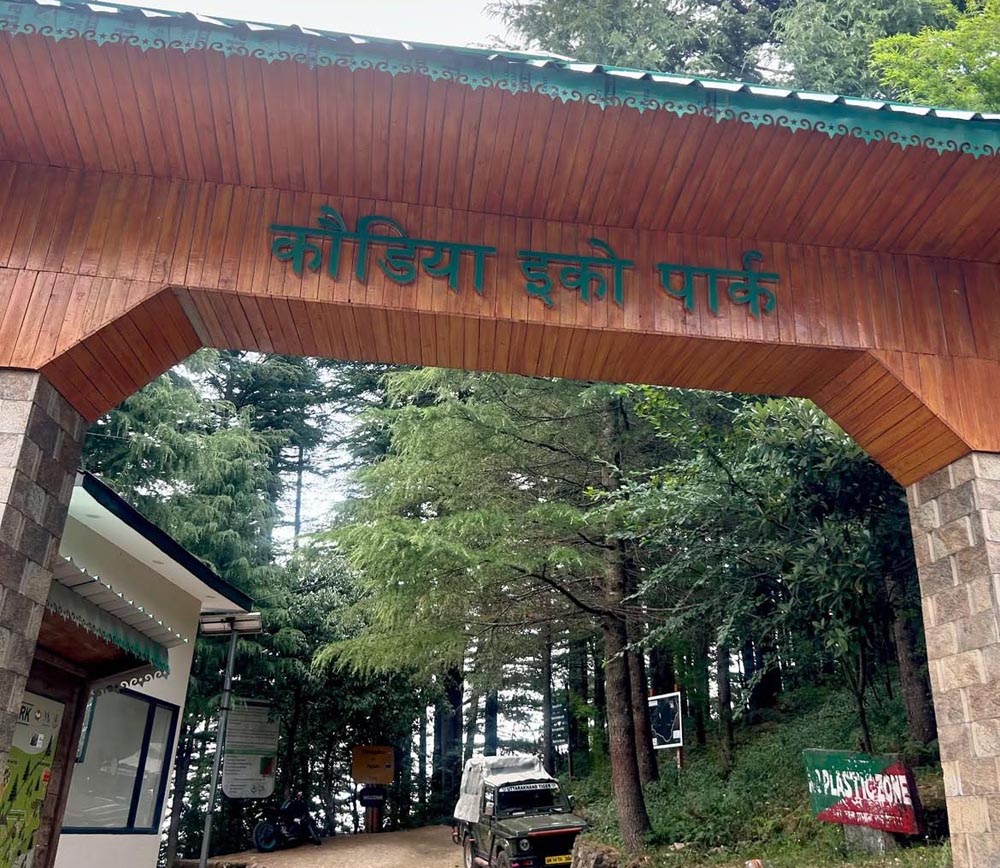
• Hidden amid the beautiful mountain landscapes of Tehri Garhwal, Kaudia Forest, also popularly known as Kodia Jungle, is one of the most peaceful natural attractions around Kanatal in Uttarakhand. Unlike the busy hill stations where sightseeing often means crowded markets, traffic and commercial attractions, Kaudia Forest offers something much simpler: tall Himalayan trees, quiet walking trails, mountain air, birdsong, natural springs and spectacular views of valleys.

    Located close to Kanatal along the Chamba–Mussoorie road, the forest has become a favourite destination for people looking for a short Himalayan escape. It is particularly appealing to nature lovers, photographers, families, hikers and travellers who want to experience the quieter side of Uttarakhand. A relatively gentle forest trail of around 6 kilometres passes through wooded sections and opens periodically toward undulating hills and valleys.

    What makes Kaudia especially attractive is that it does not require an extremely demanding trek. Visitors can explore sections of the forest on foot or experience the landscape through a local jeep safari, depending on prevailing arrangements and permissions. The combination of forest, mountain scenery and peaceful surroundings makes it an excellent addition to a Kanatal itinerary.

    Where Is Kaudia Forest Located?

    Kaudia Forest is situated near Kanatal in Tehri Garhwal district of Uttarakhand. Kanatal itself is a small Himalayan destination located between Chamba and Mussoorie and is known for forests, mountain views, camping and outdoor activities. Kaudia Forest is only a short distance from the Kanatal area, making it convenient to visit while staying at one of the local hotels, resorts or camps.

    The wider region is characterised by Himalayan forests, mountain slopes and valleys. From the forest trails, visitors can experience a dramatic transition between dense woodland and open viewpoints. According to local tourism information, Kanatal is approximately 12 kilometres from Chamba, around 38 kilometres from Mussoorie and roughly 78 kilometres from Dehradun, although actual travel times vary according to traffic, road conditions and the chosen route.

    The location is one of Kaudia Forest’s greatest advantages. It is close enough to established tourist destinations to be accessible but sufficiently removed from major urban centres to retain a peaceful atmosphere.

    The Natural Beauty of Kaudia Forest

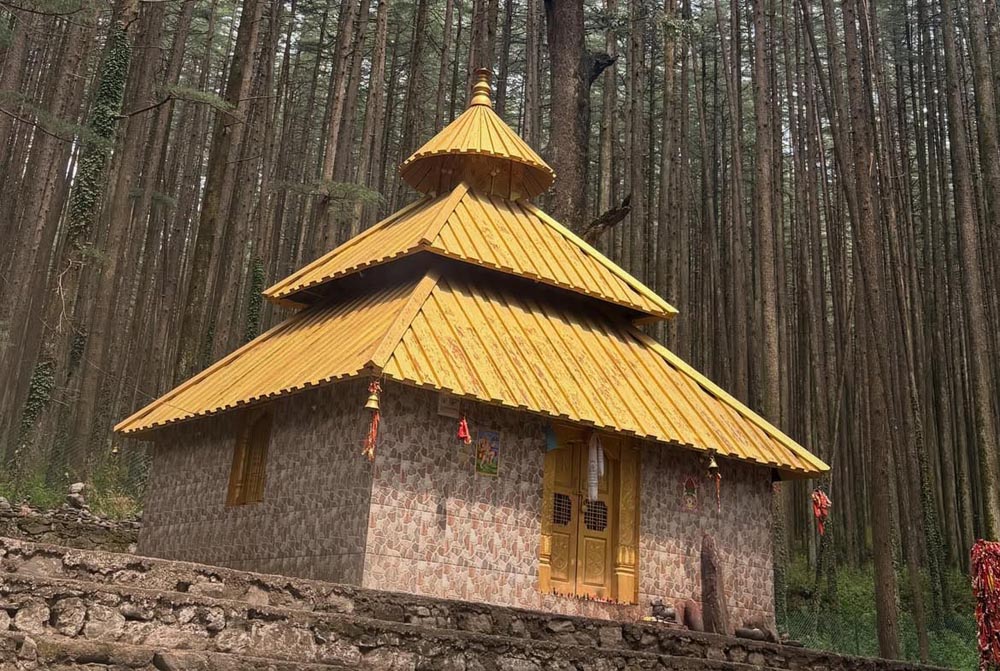
    The first thing visitors notice at Kaudia Forest is the sense of enclosure created by the trees. Tall Himalayan vegetation forms a natural canopy over portions of the trail, creating cool and shaded walking conditions. Deodar, pine, oak and other Himalayan vegetation contribute to the characteristic mountain-forest landscape, while seasonal vegetation adds changing colours throughout the year.

    The forest does not look exactly the same throughout the trail. Some sections are heavily wooded, while other stretches open toward hills, valleys and expansive mountain scenery. This changing landscape is one of the reasons the walk remains interesting even though the route itself is relatively gentle.

    Small natural springs and water channels can also be encountered along parts of the route. The sound of flowing water combined with rustling leaves and bird calls creates an atmosphere very different from that of a conventional sightseeing attraction.

    For photographers, these changing environments provide numerous subjects. Instead of focusing only on panoramic mountain views, visitors can photograph tree trunks, forest paths, moss, flowers, birds, streams, sunlight filtering through branches and distant mountain ridges.

    The Famous Kaudia Forest Walk

    The forest walk is arguably the best way to appreciate Kaudia. Tourism sources commonly describe a roughly 6-kilometre level trail through the forest, although the exact walking distance experienced by a visitor depends on where they start, how far they proceed and the route available on the day.

    The relatively gentle nature of the trail makes it suitable for people who want a Himalayan experience without undertaking a strenuous high-altitude trek. Nevertheless, visitors should remember that this is a natural forest environment rather than a manicured urban park. Uneven ground, mud, stones and seasonal changes in trail conditions are possible.

    Walking slowly is the best approach. Rather than treating the route as a race, travellers can pause to listen to birds, observe vegetation and enjoy the changing views. Early hours are particularly pleasant because the forest is generally quieter and bird activity can be rewarding.

    The walk can also be combined with photography and birdwatching. Nature lovers may find that the smaller details of the forest are just as memorable as the larger mountain vistas.

    Jeep Safari in Kaudia Forest

    For visitors who do not want to walk the entire trail, jeep exploration is another popular way to experience Kaudia. Local tourism operators describe jeep safari experiences through forest tracks, while some sources note that permission or local arrangements may be required.

    A jeep safari offers a different perspective. Instead of concentrating solely on the walking trail, passengers can cover more ground while enjoying the surrounding landscape. It can be particularly useful for families, older travellers or groups who want a forest experience without committing to a longer walk.

    However, visitors should confirm the current safari arrangements, vehicle charges and permitted routes locally before travelling. Prices and operating arrangements can change with season, local regulations and operators. One current Kanatal outdoor operator, for example, lists jeep safari experiences separately from its guided Kaudia nature trek.

    Wildlife sightings should also be treated as a bonus rather than a guarantee. A forest is not a zoo, and animals may remain hidden. The real attraction is the ecosystem itself—the opportunity to travel quietly through a Himalayan woodland.

    Flora and Fauna

    Kaudia Forest provides an opportunity to observe the characteristic flora of the middle Himalayan region. Forests around Kanatal include coniferous and broadleaf vegetation, with deodar, pine and oak frequently associated with the landscape. Rhododendrons can also add seasonal colour in the broader region.

    The forest environment also supports birds and wildlife. Visitors may encounter signs of animals or, with luck and patience, see species such as barking deer and wild boar. Local tourism descriptions also highlight the area’s birdlife and opportunities for birdwatching.

    Birdwatching is particularly rewarding for travellers who are willing to slow down. Instead of walking continuously, stop occasionally in quiet areas and listen. Birds can often be heard before they are seen.

    It is important not to approach wildlife, feed animals or attempt to attract them for photographs. Maintaining distance protects both visitors and wildlife and helps preserve the natural character of the forest.

    Birdwatching at Kaudia Forest

    Birdwatching is one of the quieter pleasures of visiting Kaudia. The dense vegetation provides habitat for a variety of Himalayan birds, and the forest environment is particularly appealing during the morning when bird activity can be high.

    A local Kanatal outdoor adventure operator specifically promotes birdwatching as part of its nature experiences and mentions species such as Himalayan blue magpies, verditer flycatchers and rosefinches.

    Visitors interested in birds should carry binoculars if available and avoid making unnecessary noise. A telephoto lens is preferable to getting physically close to birds.

    The best photographs often come from patience. Instead of trying to photograph every bird encountered, spend several minutes observing its behaviour and waiting for a clear view.

    Photography Opportunities

    Kaudia Forest is an excellent destination for nature photography because the scenery changes continually. A single walk can provide opportunities to photograph dense woodland, distant hills, forest trails, springs, flowers, birds and atmospheric mountain weather.

    Morning light can produce particularly attractive photographs as sunlight filters between trees. Mist and clouds can also dramatically change the appearance of the forest. During different seasons, vegetation creates different photographic moods, from fresh green landscapes to colourful flowering periods.

    Landscape photographers should consider carrying a wide-angle lens, while wildlife and bird photographers may benefit from a longer focal length. A tripod can be useful for certain low-light compositions, although it may be unnecessary for casual visitors.

    The most important photographic rule is to respect the environment. Avoid breaking vegetation, disturbing birds or animals, or leaving any material behind simply to obtain a better photograph.

    Best Time to Visit Kaudia Forest

    Kaudia Forest can be visited in different seasons, but the experience varies considerably.

    Spring is attractive because temperatures are generally pleasant and vegetation becomes increasingly lively. Flowers in the wider Himalayan region can add colour to the landscape.

    Summer can be a comfortable escape from hotter plains. The forest canopy provides shade, and Kanatal’s elevated location generally offers much cooler conditions than many lowland destinations.

    Monsoon brings lush greenery and a dramatically fresh appearance. However, rain can make forest trails slippery and roads more difficult. Travellers should check local conditions before planning a monsoon visit.

    Autumn and early winter are excellent for clear mountain views. After the monsoon, the atmosphere can become remarkably crisp, making distant landscapes more visible.

    Winter brings colder temperatures, especially during mornings and evenings. Travellers should carry appropriate warm clothing.

    Overall, the best season depends on what you want to experience: greenery and freshness favour the wetter months, while clearer mountain scenery is often more attractive after the monsoon.

    Kaudia Forest Timings and Entry Fee

    Published tourism information commonly lists Kaudia Forest’s visitor hours as approximately 9:00 AM to 5:00 PM and an entry charge of around ₹20 per person. However, visitors should verify these details locally because forest access, charges and operating hours can change.

    Different sources also report different opening hours and safari arrangements, which makes checking locally especially important if you are planning an early-morning or late-afternoon visit.

    Do not assume that an online listing is a substitute for current forest-department or local guidance. Weather, wildlife conditions, road conditions or temporary restrictions can affect access.

    How to Reach Kaudia Forest

    The easiest approach for most travellers is to first reach Kanatal and then travel toward the forest area. Kanatal is connected by road with Chamba, Mussoorie and other parts of Uttarakhand.

    Travellers arriving from Delhi generally travel toward Dehradun and then continue into the mountains. Another common approach is through Mussoorie and Dhanaulti before reaching Kanatal. The exact route depends on road conditions and the starting point.

    Dehradun is the nearest major transport hub for many travellers. Jolly Grant Airport near Dehradun provides air connectivity, while Dehradun railway station serves as an important railhead for the region. From there, visitors can continue by taxi or road transport toward Kanatal.

    Because mountain travel times are affected by road construction, weather and traffic, it is better to plan the journey based on driving time rather than simply calculating the distance.

    Places to Visit Near Kaudia Forest

    A visit to Kaudia Forest can easily become part of a larger Kanatal holiday.

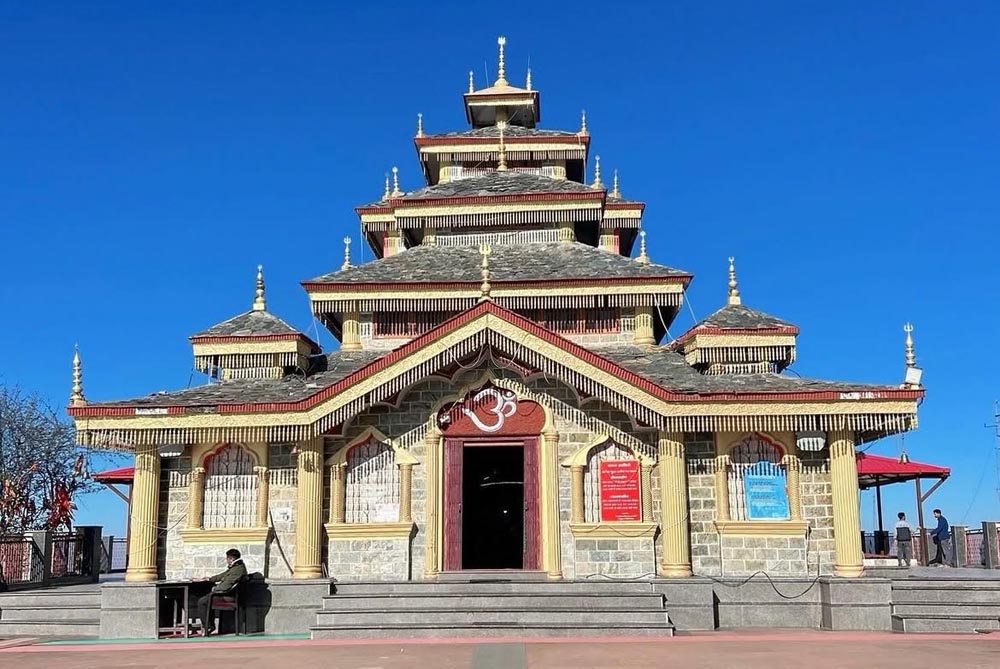
    Surkanda Devi Temple is one of the best-known attractions near Kanatal. The temple sits at a high elevation and requires a hike, rewarding visitors with extensive mountain views. Local outdoor operators list the Surkanda trek as a separate experience from the Kaudia nature trek.

    Kanatal itself is worth exploring for its peaceful mountain environment, resorts, camps and outdoor activities. It is particularly suitable for travellers who prefer a quieter alternative to more crowded Uttarakhand hill stations.

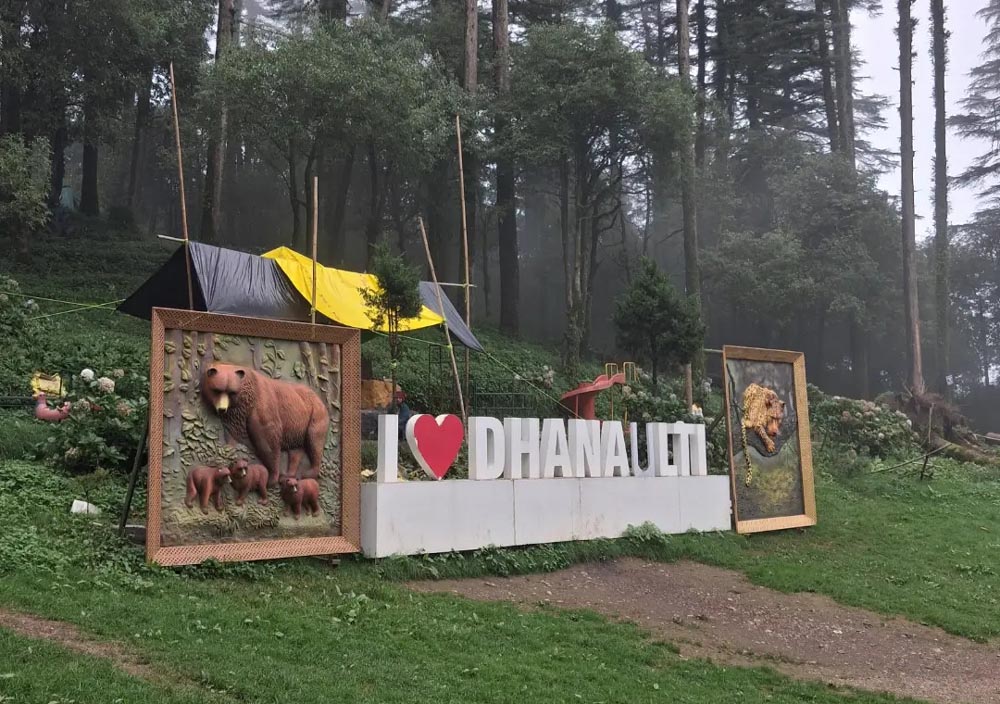
    Dhanaulti can also be included in a wider itinerary. Its forests and mountain landscapes complement the natural experience of Kaudia.

    Chamba provides another useful stop, particularly for travellers travelling between the Tehri region and other parts of Uttarakhand.

    The wider Tehri Garhwal area also provides access to numerous mountain viewpoints and the spectacular landscapes surrounding Tehri Lake.

    Where to Stay

    There are several accommodation options around Kanatal, ranging from camps and homestays to resorts and hotels. Staying near Kanatal is generally more convenient than attempting to visit Kaudia as a rushed day trip from a distant city.

    For nature lovers, a forest-facing resort or campsite can make the trip more immersive. Families may prefer properties with comfortable rooms and easy road access, while adventure travellers may enjoy camps offering guided trekking and outdoor activities.

    It is sensible to select accommodation based on the overall itinerary rather than Kaudia alone. If you also want to visit Surkanda Devi, Dhanaulti or other attractions, Kanatal provides a convenient base.

    What to Carry

    A Kaudia Forest visit does not require an elaborate trekking kit, but sensible preparation makes the experience much more comfortable.

    Wear comfortable walking shoes with a good grip, particularly if visiting after rain. Carry drinking water, some light snacks, sun protection and a light jacket because mountain temperatures can change quickly.

    A small backpack is preferable to a large suitcase. Birdwatchers should carry binoculars, while photographers should protect camera equipment from unexpected rain and dust.

    Most importantly, carry a reusable bag for your waste. Avoid disposable plastic wherever possible and take everything you bring into the forest back with you.

    Responsible Tourism at Kaudia Forest

    Kaudia’s greatest attraction is its relative natural tranquillity, and preserving that quality requires responsible tourism.

    Visitors should stay on established trails where possible, avoid loud music and unnecessary shouting, never feed wildlife and refrain from damaging plants. Plastic waste, cigarette butts and food packaging can seriously affect a forest environment.

    The principle is simple: leave Kaudia Forest looking as though you were never there.

    Hiring local guides or using locally operated nature experiences can also contribute to the local tourism economy. Guided experiences may provide better understanding of the forest while helping visitors explore responsibly.

    Is Kaudia Forest Suitable for Families?

    Yes, Kaudia can be a good family destination, particularly for families who enjoy nature rather than amusement-park-style attractions. The relatively gentle nature of the walking route makes it more accessible than many steep Himalayan treks.

    However, children should remain supervised, especially near uneven terrain, steep edges, streams and unfamiliar forest areas. Families should also follow local instructions regarding where they may walk and how far they may explore independently.

    For older travellers or anyone uncomfortable with longer walks, a locally arranged jeep experience may provide an easier alternative.

    Is Kaudia Forest Worth Visiting?

    Absolutely, particularly if your idea of a mountain holiday involves forests, silence, fresh air and slow exploration rather than crowded sightseeing.

    Kaudia Forest does not depend on a single spectacular monument. Its attraction comes from the combination of many small experiences: walking beneath tall trees, hearing birds in the canopy, watching clouds move across distant hills, finding a spring beside the trail and suddenly emerging from dense woodland to an expansive Himalayan view.

    That simplicity is precisely what makes it memorable.

    For travellers staying in Kanatal, Kaudia Forest is one of the easiest ways to experience the region’s natural side. It can be enjoyed as a short nature outing or incorporated into a longer hiking and sightseeing itinerary. Current local activity providers also offer guided Kaudia nature treks, demonstrating the growing interest in forest-based experiences around Kanatal.

    Final Thoughts

    Kaudia Forest is a reminder that some of Uttarakhand’s most rewarding experiences are not necessarily its most famous ones. Away from crowded hill-station centres, this peaceful forest provides an opportunity to reconnect with the landscape at a slower pace.

    The approximately 6-kilometre forest route, Himalayan vegetation, natural springs, birdlife, mountain viewpoints and possibilities for local jeep exploration make Kaudia appealing to a wide range of travellers.

    The best way to experience it is not to hurry. Give yourself enough time to walk slowly, listen to the forest and appreciate the landscape. Combine the visit with Kanatal, Surkanda Devi, Dhanaulti or other nearby attractions, and Kaudia can become part of a memorable Uttarakhand mountain holiday.

    For anyone seeking a destination where the mountains are experienced through trees, trails, birds, clouds and silence rather than crowds, Kaudia Forest deserves a place on the Uttarakhand travel map.
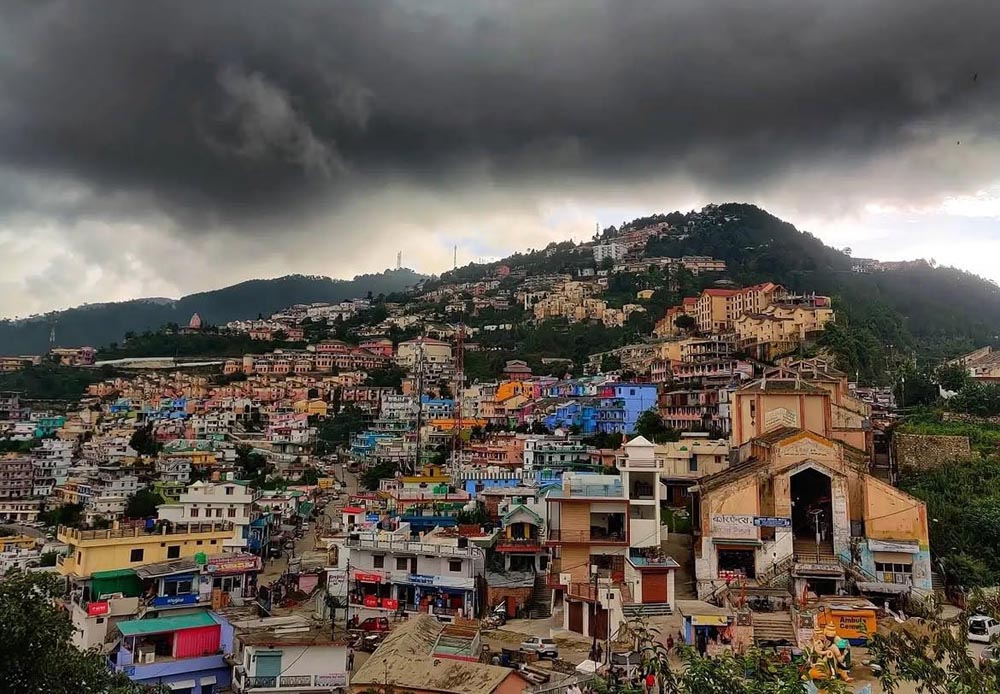
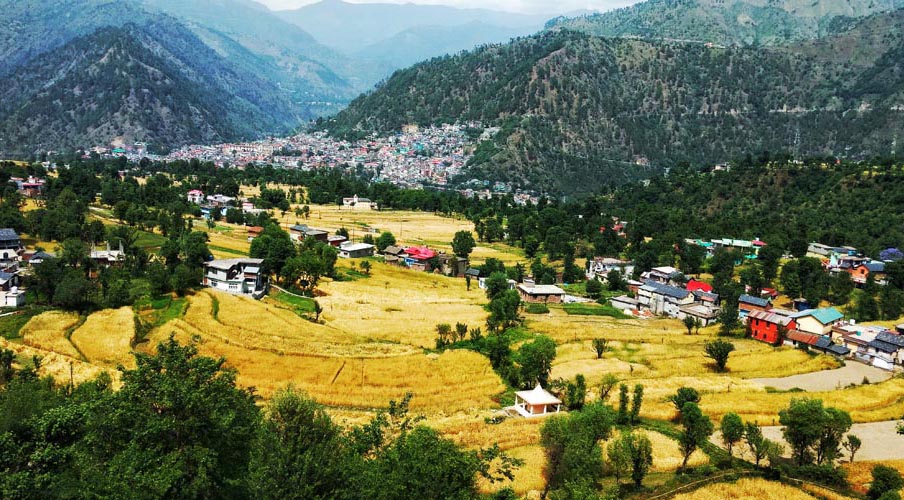
  • Nestled high in the Garhwal Himalayas, New Tehri is one of Uttarakhand’s most distinctive mountain towns. Unlike many hill destinations that grew organically around old settlements, New Tehri was deliberately planned and developed as a new township after the historic town of Tehri was submerged during the creation of the Tehri Dam reservoir. Today, the town serves as the administrative headquarters of Tehri Garhwal district and has developed into an increasingly popular destination for nature lovers, adventure seekers, families, photographers and travelers looking for a quieter Himalayan escape.

    Located at an elevation of approximately 1,550 to 1,950 metres above sea level, New Tehri overlooks the enormous Tehri Lake, with forested mountains and winding roads creating a dramatic backdrop.

    The combination of a modern hill town, spectacular reservoir, Himalayan scenery, nearby temples and a growing adventure-tourism industry gives New Tehri a character that is quite different from better-known destinations such as Mussoorie, Nainital or Rishikesh.

    The Story Behind New Tehri

    To understand New Tehri, it is important to understand the history of Old Tehri. The original town of Tehri stood at the confluence of the Bhagirathi and Bhilangna rivers and was historically associated with the Garhwal region. It was an important settlement and the capital of the erstwhile Tehri Garhwal kingdom.

    The construction of the Tehri Dam dramatically changed the landscape. As the reservoir filled, the old town was evacuated and eventually submerged beneath the waters. A new township was established on the surrounding hills to accommodate residents and provide the administrative functions of the district. This settlement became New Tehri.

    The story gives the town a particularly interesting identity. New Tehri is not simply another Himalayan hill station; it is a modern settlement born out of one of the most significant engineering and social transformations in the region. The reservoir that changed the landscape also became the foundation of a new tourism economy. The official district tourism information describes New Tehri as a newly established, well-planned township overlooking Tehri Lake and the dam.

    For visitors, this history adds another dimension to the journey. The lake is beautiful, but beneath its waters lies the memory of Old Tehri and the communities that once occupied the valley.

    Tehri Lake: The Heart of New Tehri

    The most recognizable feature of New Tehri is undoubtedly Tehri Lake. Created by the Tehri Dam, the huge artificial reservoir stretches through the surrounding mountain valleys, producing an unusual landscape in which blue water sits between steep Himalayan slopes.

    The lake has become the centerpiece of tourism in the region. The Uttarakhand government has actively promoted the area as an adventure-tourism destination, and activities around the lake have expanded considerably.

    For travelers who simply want to enjoy the scenery, the lake offers plenty. Mountain roads and viewpoints around New Tehri provide expansive views across the reservoir, while changing sunlight gives the water different shades throughout the day. Early mornings can be particularly peaceful, with mist and clouds sometimes hanging over the surrounding hills.

    Sunset is another beautiful time to experience the area. As the sun drops behind the mountains, the lake reflects the changing colors of the sky. Photographers will find countless opportunities for landscape photography, especially from elevated viewpoints overlooking the reservoir.

    Tehri Dam: An Engineering Landmark

    Tehri Dam is the engineering landmark that defines the region. Built on the Bhagirathi River, the dam transformed the geography of the area while supporting hydroelectric power generation, irrigation and water-management functions.

    The dam reaches a height of about 260 metres, making it one of the tallest dams in the world and the tallest dam in India.

    Its scale becomes particularly impressive when viewed against the surrounding Himalayan mountains.

    Visitors should remember that the dam is an important infrastructure facility rather than simply a conventional tourist monument. Access to operational or restricted areas can be controlled for security and safety reasons, so travelers should follow local instructions and use designated viewpoints rather than assuming that every section is open to visitors.

    Even without entering restricted areas, the surrounding landscape provides impressive views. The combination of the massive dam, enormous reservoir and mountains makes this one of the most visually distinctive attractions in Uttarakhand.

    Adventure Tourism at Tehri Lake

    One of the biggest reasons New Tehri has become increasingly popular is its adventure-tourism potential. Tehri Lake has given the region an opportunity to combine Himalayan scenery with water-based recreation.

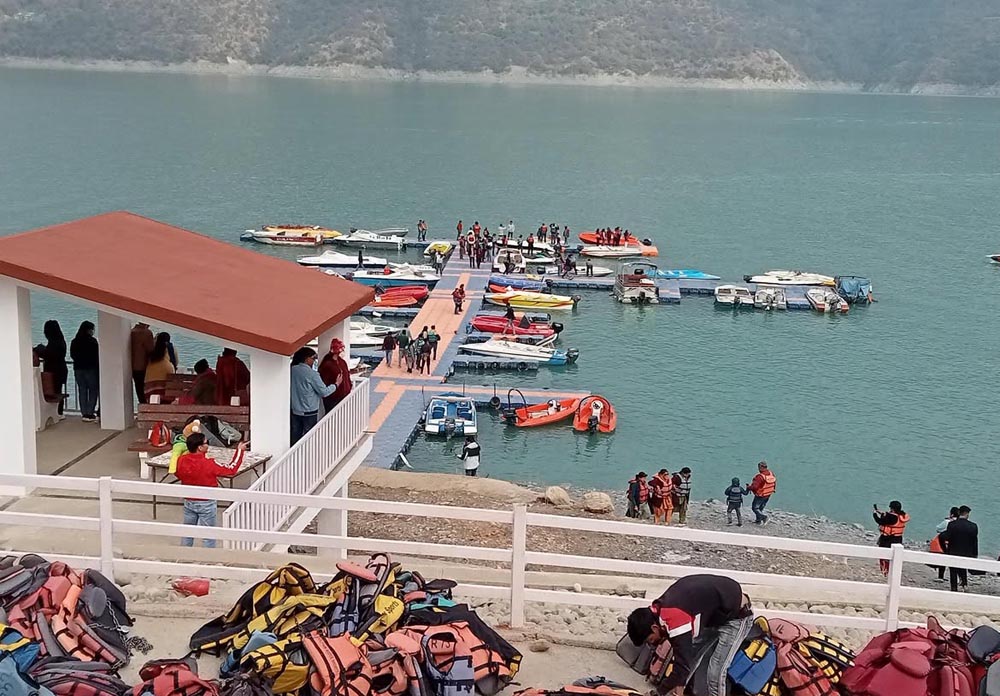
    Depending on operating conditions and seasonal availability, visitors can find activities such as boating, jet skiing, kayaking, water skiing, banana boat rides, zorbing, parasailing and other recreational experiences. Uttarakhand Tourism specifically promotes Tehri Lake for activities including jet skiing, banana boat rides, kayaking, windsurfing, yachting and parasailing.

    For first-time visitors, boating is perhaps the simplest way to experience the lake. It provides a relaxed opportunity to appreciate the scale of the reservoir and surrounding mountains. Those looking for more excitement can choose motorized water sports or other adventure activities.

    Safety should always come first. Visitors should use authorized operators, wear the required safety equipment and follow instructions. Weather and water conditions in a mountain reservoir can change, so activities should be undertaken according to local operating conditions rather than personal assumptions.

    The development of adventure tourism has also changed New Tehri’s image. Once primarily known as an administrative town and a symbol of the Tehri Dam project, it is increasingly being recognized as an outdoor destination.

    Koti Colony and the Lakeside Experience

    Koti Colony and the surrounding Tehri Lake area are important locations for visitors interested in water-based activities. The lakeside environment provides access to boating and other adventure experiences, while the surrounding hills create a dramatic setting.

    A visit to this area can easily become a half-day experience. Travelers can combine water activities with photography, a leisurely lakeside meal and time simply appreciating the scenery.

    The lake is particularly attractive for travelers who want something different from traditional mountain tourism. Instead of only visiting viewpoints and forests, visitors can actually experience the landscape from the water.

    New Tehri Town and Its Markets

    Although Tehri Lake receives most of the attention, New Tehri itself deserves exploration. It is a planned hill town rather than a traditional old mountain settlement, and its streets, residential areas, administrative buildings and markets reflect its relatively modern origin.

    The district tourism website identifies Baurari Market and Kulna Market among the town’s markets.

    These are useful places to experience the everyday side of New Tehri.

    Travelers should not expect the same commercial atmosphere found on Mall Road in Mussoorie. New Tehri is more functional and local in character. That is part of its appeal. A walk through the town provides an opportunity to see how people live, shop and work in a Himalayan district headquarters.

    Local food is another reason to explore rather than simply passing through. Visitors can look for Garhwali dishes and simple North Indian meals in local restaurants and eateries. Regional cuisine can include preparations made with lentils, grains, seasonal vegetables and local spices. Trying local food is one of the easiest ways to make a mountain trip more connected to the region.

    Dobra-Chanti Bridge and Scenic Drives

    The wider Tehri region offers several scenic drives and attractions that can be combined with a New Tehri visit. One notable attraction is the Dobra-Chanti Suspension Bridge, which has become an important landmark around the reservoir.

    The bridge provides a spectacular perspective on the lake and surrounding mountains. It is especially attractive to photographers because the structure itself creates strong visual lines against the landscape.

    The roads around New Tehri are also part of the experience. Himalayan travel is rarely just about reaching a destination; the journey itself often provides some of the most memorable scenery. Roads wind through forests, villages and mountain slopes, with occasional openings revealing distant valleys and water bodies.

    Temples and Spiritual Tourism

    Tehri Garhwal is not only an adventure destination. The wider region has a strong spiritual character, with numerous temples and sacred landscapes.

    Among the important religious destinations in the broader region are Surkanda Devi, Kunjapuri, Chandrabadni and Sem Mukhem. The district tourism authority highlights these temples as attractions for visitors from across India.

    Surkanda Devi Temple, located toward the Dhanaulti side, is particularly popular. The temple sits high in the mountains and offers expansive views of the surrounding Himalayan landscape.

    Kunjapuri is another important destination that can be incorporated into a wider Tehri itinerary. Uttarakhand Tourism describes the Kunjapuri area as offering views toward major Himalayan ranges as well as the Bhagirathi valley.

    These places demonstrate another side of Tehri tourism. A trip does not have to be focused entirely on adventure. Travelers can combine lake activities with temple visits, mountain walks and peaceful moments in the hills.

    Trekking and Outdoor Exploration

    New Tehri also serves as a useful base for exploring the broader Garhwal Himalayas. The district includes several trekking routes, including routes associated with Khatling Glacier, Panwali Kantha, Masar Tal and Vasuki Tal.

    Some of these are serious high-altitude adventures and should not be confused with short sightseeing walks. Trekkers need appropriate equipment, physical preparation, weather awareness and, where necessary, experienced local guides.

    For casual visitors, there are also opportunities for shorter nature walks and village excursions around the town. Walking through the hills allows travelers to appreciate the forests, agricultural landscapes and rural communities that can easily be missed when traveling by car.

    Nearby Destinations

    One of New Tehri’s greatest advantages is its location. It can be incorporated into a larger Garhwal itinerary involving several different landscapes.

    Chamba is relatively close and is known for its mountain scenery and relaxed atmosphere. Dhanaulti and Kanatal are attractive choices for travelers interested in forests, cool weather and peaceful mountain surroundings.

    Devprayag is another important destination in the broader region. It is famous for the confluence of the Bhagirathi and Alaknanda rivers, where the Ganga is traditionally considered to begin. The Tehri district tourism website lists Devprayag among the district’s significant tourist destinations.

    Travelers can therefore design a trip around New Tehri rather than treating it as an isolated destination. A journey could combine Rishikesh, Devprayag, New Tehri, Chamba, Kanatal and Dhanaulti, depending on available time.

    Best Time to Visit New Tehri

    The best time to visit depends on what you want to experience.

    March to June is generally pleasant for sightseeing, outdoor activities and exploring Tehri Lake. Uttarakhand’s official district tourism information specifically identifies April to June as a favorable period for visiting the lake.

    The monsoon season, generally from July into September, brings lush greenery but also the possibility of heavy rainfall, landslides and difficult road conditions in the Himalayan region. Travelers planning a monsoon trip should monitor local weather and road conditions.

    September to November can be particularly beautiful. The landscape becomes fresh after the rains, skies may become clearer and the mountains often appear exceptionally attractive.

    Winter brings colder conditions. The elevated location of New Tehri means mornings and evenings can be quite chilly, and travelers should carry warm clothing. The winter atmosphere, however, can appeal to people looking for quiet mountain scenery and crisp weather.

    How to Reach New Tehri

    New Tehri is well connected by road with important towns and cities of Uttarakhand.

    According to the Tehri district administration, the nearest airport is Jolly Grant Airport near Dehradun, approximately 86 kilometres from New Tehri. The nearest railway station is Rishikesh, approximately 72 kilometres away.

    For most travelers, road travel is the most practical option. New Tehri can be reached from Rishikesh, Haridwar and Dehradun by road, and buses, shared vehicles and taxis are available.

    The journey itself is scenic. Mountain roads can take considerably longer than the same distance on plains, so travelers should plan according to actual driving conditions rather than relying solely on map distance.

    Connectivity in the wider region is also changing. The Rishikesh-Karnaprayag railway project is progressing, with recent construction milestones reported in the Tehri area.

    Improved transportation infrastructure is expected to strengthen access to the wider Garhwal region over time.

    Where to Stay

    New Tehri offers several types of accommodation, ranging from hotels and guesthouses to homestays and nature-oriented properties. Around the lake, visitors may also find camping and floating accommodation experiences depending on the season and availability.

    The Ministry of Tourism has described the wider Tehri area as having accommodation options including hotels, floating huts, eco-tourism camps, bed-and-breakfast properties and homestays.

    For families and travelers who prefer convenience, staying in New Tehri itself can be practical. Those looking for a more immersive nature experience may prefer accommodation closer to the lake or in surrounding villages.

    When choosing accommodation, it is worth considering road access, views, heating during winter, parking and proximity to the activities you plan to undertake.

    Photography and the Beauty of New Tehri

    New Tehri is an excellent destination for photography because the scenery changes dramatically throughout the day.

    Morning light over the lake can produce soft colors and misty mountain views. During the afternoon, the deep blue reservoir contrasts with the green and brown tones of the hills. Sunset provides dramatic silhouettes and reflections.

    The town itself also offers interesting photographic contrasts: modern planned streets against ancient-looking Himalayan landscapes, enormous infrastructure beside traditional villages, and a vast reservoir occupying valleys that once contained settlements.

    Photographers interested in documenting landscapes should also remember the human story behind the lake. The region is not simply a scenic backdrop; it represents a major chapter in Uttarakhand’s modern history.

    Responsible Tourism in New Tehri

    As tourism grows, responsible travel becomes increasingly important. The Tehri Lake region is a sensitive mountain environment, and the surrounding hills are vulnerable to landslides, erosion, forest fires and other environmental pressures. A recent Uttarakhand government environmental assessment notes the vulnerability of Tehri Garhwal to hazards including forest fires, landslides, floods and drought.

    Visitors should avoid throwing plastic or other waste into the lake or along mountain roads. Travelers should also avoid disturbing wildlife, damaging vegetation or creating unnecessary noise.

    Using local guides, homestays, restaurants and activity operators can help tourism contribute directly to local communities. Visitors should also respect village customs and religious places.

    The future of New Tehri’s tourism depends not simply on attracting more visitors but on ensuring that tourism remains compatible with the environmental and cultural character of the mountains.

    A Suggested New Tehri Itinerary

    For a two-day trip, the first day can be devoted to New Tehri and the lake. Begin with a scenic drive and viewpoints around the town before heading toward Tehri Lake. Spend several hours enjoying boating or selected water sports, followed by a relaxed afternoon around the lakeside. Return to New Tehri in the evening and explore Baurari or another local market.

    The second day can be used for nearby attractions. Depending on your interests, you could visit Dobra-Chanti Bridge, explore Chamba or travel toward Kanatal and Dhanaulti. Those interested in spirituality could instead plan a temple visit to Surkanda Devi or another nearby sacred site.

    With three or four days, the journey can become considerably more relaxed. Adding Devprayag, Chamba, Kanatal or a short trek allows you to experience more of the region without rushing between destinations.

    Why New Tehri Is Worth Visiting

    New Tehri does not fit neatly into the traditional definition of a Himalayan hill station. Its identity is built from several different elements: history, engineering, mountain scenery, water, adventure, spirituality and modern urban planning.

    Its greatest attraction is the unusual relationship between the town and Tehri Lake. From the hills above, the enormous reservoir appears to merge with the mountains. On the water, visitors experience the landscape from a completely different perspective. Nearby temples and villages provide a cultural dimension, while trekking routes and adventure activities make the destination appealing to outdoor enthusiasts.

    Perhaps most importantly, New Tehri tells a story about transformation. The disappearance of Old Tehri and the creation of the new township represent a major change in the history of the region. Today, the same reservoir associated with that transformation has become a major tourism attraction.

    For travelers searching for an Uttarakhand destination that combines Himalayan views, lake adventures, local culture, spirituality and an unusual modern history, New Tehri deserves a place on the itinerary. It offers the serenity of the mountains without being merely another conventional hill station, making it one of the more fascinating places to explore in the Garhwal Himalayas.

  • Tucked away in the peaceful hills of Tehri Garhwal, Uttarakhand, Chamba is a charming mountain town that often remains quieter than the state’s better-known destinations such as Mussoorie, Nainital and Rishikesh. Surrounded by forested slopes, Himalayan landscapes and traditional Garhwali villages, Chamba offers the kind of slow, scenic holiday that appeals to travellers who want to experience the mountains without the crowds of major hill stations. The town is also strategically located between Mussoorie, Dhanaulti, New Tehri and Tehri Lake, making it an excellent base for exploring several attractions in the region.

    Chamba should not be confused with the famous Chamba in Himachal Pradesh. Chamba of Uttarakhand is a hill town in Tehri Garhwal, positioned on an important mountain road connecting the Mussoorie-Dhanaulti side with New Tehri and the Tehri Lake region. Its setting provides a combination of peaceful Himalayan scenery, pleasant weather, forested hills, village culture and access to religious and adventure destinations.

    Where Is Chamba in Uttarakhand?

    Chamba is located in Tehri Garhwal district of Uttarakhand, in the middle Himalayan region. It lies close to New Tehri and is connected by road with important destinations including Rishikesh, Mussoorie, Dhanaulti, Narendra Nagar and Tehri. New Tehri is approximately 11 km from Chamba according to the district administration, making it one of the most convenient nearby towns for travellers.

    The geographical position of Chamba is one of its biggest advantages. Travellers can approach the town from Rishikesh and Narendra Nagar, or travel through the Mussoorie and Dhanaulti side. This makes Chamba particularly suitable for road trips through the Garhwal Himalayas.

    The town sits amid mountains covered with forests and agricultural terraces. During a clear day, the surrounding landscape can reveal expansive views of distant Himalayan ranges, while the valleys below create a dramatic contrast with the green mountain slopes. The relatively peaceful atmosphere is one of the reasons Chamba is increasingly attractive to travellers searching for lesser-known destinations in Uttarakhand.

    The Natural Beauty of Chamba

    The first impression of Chamba is generally its landscape rather than a particular monument. The town is surrounded by mountains, forests, valleys and scattered settlements, creating a traditional Himalayan environment. Instead of the dense commercial development found in some popular hill stations, Chamba retains a more relaxed character.

    The surrounding hills change dramatically with the seasons. During spring and summer, greenery dominates the landscape, while the monsoon brings fresh vegetation and mist-covered mountains. Autumn often provides clearer skies and excellent visibility, making it a particularly attractive season for photography. Winter brings a colder atmosphere, and higher surrounding areas can become especially chilly.

    One of the pleasures of visiting Chamba is simply walking around the quieter roads and viewpoints. The landscape encourages travellers to slow down, enjoy the mountain air and observe everyday life in the villages and hills. Early mornings can be especially beautiful, when sunlight gradually reaches the slopes and clouds move through the valleys.

    Chamba and the Garhwali Culture

    Chamba is not simply a scenic destination; it is also part of the cultural landscape of Garhwal. Traditional villages, terraced farming, local temples, regional food and mountain architecture provide visitors with opportunities to experience a quieter side of Uttarakhand.

    Garhwali culture remains strongly connected to the natural environment. Agriculture, livestock, seasonal festivals and religious traditions have historically shaped life in the mountains. Visitors travelling around Chamba may see terraced fields carved into slopes, traditional houses and small shrines along mountain roads.

    Local food is another important part of the experience. Travellers can look for regional Garhwali preparations such as kafuli, chainsoo, aloo ke gutke, jhangore ki kheer and mandua-based dishes, depending on what is available locally. These foods are closely associated with the ingredients traditionally cultivated or used in the Himalayan region.

    Rather than expecting a large restaurant scene, visitors should approach Chamba as a destination where simple local meals and small eateries can be part of the experience.

    Chamba as a Base for Exploring Tehri Garhwal

    One of Chamba’s greatest strengths is its location. The town can be used as a convenient base for exploring several important destinations in Tehri Garhwal.

    New Tehri is one of the most obvious excursions. The modern town serves as the administrative headquarters of Tehri Garhwal and stands at an elevation between approximately 1,550 and 1,950 metres. It overlooks the enormous Tehri Lake and is only about 11 km from Chamba.

    The Tehri Lake and Tehri Dam are among the most significant attractions in the wider region. The enormous reservoir has transformed the landscape around the former Tehri area and has also become an important destination for tourism and water-based activities. The district administration identifies Tehri Dam and Tehri Lake among the major attractions of Tehri Garhwal.

    For travellers interested in combining peaceful mountain scenery with adventure, the Chamba-New Tehri area can therefore provide a good balance between relaxation and outdoor activities.

    Dhanaulti: A Perfect Excursion from Chamba

    Another major attraction nearby is Dhanaulti, a peaceful hill destination situated on the Mussoorie-Chamba route. The Uttarakhand government describes Dhanaulti as being surrounded by thick forests of deodar, rhododendron and oak. It is approximately 29 km from Chamba.

    Dhanaulti is particularly appealing to travellers who enjoy forests and peaceful mountain environments. Compared with crowded hill stations, it has a more relaxed atmosphere, and the wooded landscape makes it suitable for nature walks, photography and leisurely outdoor activities.

    The journey between Chamba and Dhanaulti is itself part of the attraction. Mountain roads wind through forests and highland landscapes, creating numerous opportunities to stop for photographs. Travellers making a circuit that includes Mussoorie, Dhanaulti and Chamba can experience several different sides of the Garhwal mountains within a relatively short trip.

    Surkanda Devi Temple and the Spiritual Side of the Region

    For visitors interested in religious tourism, Surkanda Devi Temple is one of the most important places to include in a Chamba itinerary.

    The temple is located on Surkanda Peak at an elevation of around 2,750 metres. According to the Tehri district administration, it lies about 8 km from Dhanaulti on the Mussoorie-Chamba road. The traditional approach involves leaving the main road at Kadu Khal and climbing approximately 2.5 km on foot.

    The temple’s mountain setting is a major part of its appeal. Dense forest surrounds the route, while the summit provides expansive views across the surrounding Himalayan landscape. On clear days, visitors can see towards Dehradun, Rishikesh, Chandrabadni, Pratapnagar and Chakrata.

    The religious importance of the temple also attracts pilgrims, particularly during festivals. The annual Ganga Dussehra period is traditionally an important time for visitors.

    For tourists, the Surkanda Devi excursion offers something more than sightseeing: it combines a mountain walk, forest environment, religious heritage and panoramic scenery.

    Mussoorie and Chamba: Combining Two Hill Destinations

    Travellers coming from Mussoorie can easily include Chamba in a broader Garhwal itinerary. Dhanaulti lies along the route and acts as a natural transition between the more developed environment of Mussoorie and the quieter landscapes around Chamba.

    This route is particularly enjoyable for road-trip enthusiasts. Instead of spending an entire holiday in one crowded hill station, travellers can create a circuit involving Mussoorie, Dhanaulti, Chamba and New Tehri.

    Such a journey allows visitors to experience colonial-era hill-station surroundings, dense Himalayan forests, small mountain settlements, reservoir landscapes and traditional Garhwali environments within the same trip.

    Best Time to Visit Chamba

    Chamba can be visited throughout much of the year, but the ideal season depends on the type of experience a traveller wants.

    March to June is generally comfortable for sightseeing and outdoor activities. The weather is pleasant compared with the plains, and the surrounding vegetation becomes increasingly green as summer progresses. This is a good period for travellers wanting to explore nearby attractions without dealing with extreme cold.

    July to September is the monsoon period. The mountains become exceptionally green, and mist can create beautiful scenery. However, mountain roads can become challenging during periods of heavy rainfall. Landslides and road disruptions are genuine considerations in Himalayan travel, so visitors should check local road and weather conditions before travelling.

    October and November are excellent months for clear mountain views. The post-monsoon landscape is fresh, while the skies are often clearer. Photographers and travellers interested in Himalayan panoramas may particularly enjoy this period.

    December to February brings winter conditions. Temperatures can fall considerably, especially during the night and early morning. Travellers visiting in winter should carry adequate woollens and be prepared for cold mountain weather.

    How to Reach Chamba, Uttarakhand

    Road travel is the most practical way to reach Chamba. The town is connected by motorable roads with several major destinations in Uttarakhand. Rishikesh, Narendra Nagar, Mussoorie, Dhanaulti, New Tehri and other towns provide useful connections.

    From Rishikesh, the road journey takes travellers through Narendra Nagar and onward into the hills. Chamba is also accessible from Mussoorie through Dhanaulti. Road travel is particularly rewarding because the route itself provides mountain scenery and changing landscapes.

    For air travellers, Jolly Grant Airport near Dehradun is the nearest major airport for the Tehri Garhwal region. The district administration lists Jolly Grant as the nearest airport to New Tehri, approximately 86 km away.

    From the airport, travellers can continue by taxi or other road transport.

    For rail travellers, Rishikesh Railway Station is the closest major rail connection for the New Tehri-Chamba area. The district administration gives the distance from New Tehri to Rishikesh railway station as approximately 72 km.

    Travellers from Delhi can therefore consider a combination of train or flight to the Rishikesh/Dehradun area followed by a road journey into the mountains.

    Things to Do in Chamba

    Chamba is not a destination where travellers need to follow a packed sightseeing schedule. Its appeal lies partly in its slower pace.

    One of the best activities is simply exploring the surrounding mountain roads and viewpoints. Photography enthusiasts will find plenty of opportunities to capture valleys, forests, terraced fields, villages and changing Himalayan skies.

    Nature walks are another rewarding activity. Instead of searching for heavily commercialized attractions, visitors can explore quieter trails around the town and surrounding villages, while taking care to respect private farmland and local property.

    A visit to New Tehri and Tehri Lake can add an entirely different landscape to the trip. Depending on current local operations and weather conditions, visitors can explore lake-related attractions and adventure activities.

    Religious travellers can visit nearby temples, with Surkanda Devi being one of the most prominent excursions. The wider Tehri district also contains several important religious destinations, including Kunjapuri and Chandrabadni.

    Accommodation and Food

    Accommodation in Chamba is generally more peaceful and modest than in heavily commercialized tourist destinations. Visitors can find hotels, guesthouses and other stays in and around the town, while additional accommodation options are available towards New Tehri, Dhanaulti and nearby destinations.

    Travellers seeking luxury should research their property carefully before arriving, while those interested in nature and quiet surroundings may find smaller hotels and homestay-style accommodation more appealing.

    Food options are also relatively simple. Local restaurants generally serve North Indian staples, while some accommodations offer regional Garhwali food. Trying locally prepared dishes can make the trip more memorable, especially for visitors interested in understanding the culinary traditions of the mountains.

    Chamba for Families, Couples and Nature Lovers

    Chamba works particularly well for travellers looking for a quiet mountain holiday rather than a nightlife-oriented destination.

    For families, its relatively relaxed atmosphere can be preferable to busier hill stations. Parents can combine sightseeing with nature walks and short excursions to New Tehri, Dhanaulti and other nearby attractions.

    For couples, Chamba provides peaceful mountain scenery, scenic drives and opportunities to stay away from crowded tourist centres. Sunrise and sunset views, forest walks and quiet evenings can make the destination particularly appealing for a romantic getaway.

    Nature lovers will appreciate the surrounding forests and landscapes, while photographers can use the changing light, clouds and mountain scenery as a constant source of subjects.

    Adventure enthusiasts can use Chamba as part of a larger itinerary incorporating trekking, water-based activities around Tehri Lake and excursions into the surrounding hills. The Tehri district as a whole offers numerous trekking opportunities and adventure destinations.

    Responsible Tourism in Chamba

    As Chamba and the wider Tehri region become more popular, responsible tourism is increasingly important. Mountain environments are fragile, and even small increases in tourism can create problems involving waste, water consumption, traffic and damage to natural areas.

    Visitors should avoid throwing plastic or food waste along roads and trails, carry reusable water bottles where practical and avoid disturbing wildlife. It is equally important to respect village life. Photography of people, homes and religious ceremonies should be done respectfully.

    Supporting locally owned accommodation, restaurants, guides and small businesses can help ensure that tourism benefits the communities living in the region.

    Travellers should also remember that Himalayan weather can change quickly. During the monsoon and winter, road conditions can be unpredictable, so checking local advisories before beginning a journey is sensible.

    A Suggested Chamba Travel Experience

    A two- or three-day trip can provide a good introduction to the area. Travellers could arrive in Chamba and spend the first day relaxing, exploring local surroundings and enjoying mountain views.

    The second day could be devoted to New Tehri and Tehri Lake, allowing visitors to experience the modern side of the region and its enormous reservoir landscape. Depending on time and local conditions, additional activities can be included around the lake.

    A third day could be used for a road trip towards Dhanaulti and Surkanda Devi, with time for the temple visit and exploration of the forested surroundings. Travellers with additional time can continue towards Mussoorie and turn the trip into a wider Garhwal circuit.

    Those with four or five days could expand the itinerary to include Mussoorie, Dhanaulti, Chamba, New Tehri and nearby religious or nature destinations.

    Why Chamba Deserves More Attention

    Chamba does not necessarily compete with Mussoorie in terms of shopping, nightlife or large-scale tourist infrastructure. Its strength lies somewhere else. It provides a chance to experience the mountains at a slower pace.

    The town offers access to forests, valleys, Himalayan viewpoints, Garhwali villages, temples, Tehri Lake and several popular destinations without requiring travellers to remain in a heavily commercialized hill station. Its location makes it especially useful for people who want to explore more of Tehri Garhwal rather than simply visit one attraction.

    The wider Tehri district itself contains an impressive mixture of natural, spiritual and adventure tourism, ranging from Dhanaulti and Surkanda to Tehri Lake, New Tehri and numerous trekking destinations.

    Final Thoughts

    Chamba, Uttarakhand, is a destination for travellers who value scenery, tranquillity and authentic mountain experiences over crowds and commercial entertainment. Its forested hills, pleasant climate, Garhwali culture and strategic location make it an appealing base for exploring Tehri Garhwal.

    The nearby attractions add considerably to its appeal. A traveller can begin the day surrounded by quiet mountain landscapes, visit New Tehri and Tehri Lake, explore the forests of Dhanaulti, undertake the climb to Surkanda Devi or simply spend an afternoon watching clouds move across the Himalayan valleys.

    For anyone planning a Uttarakhand road trip beyond the usual tourist circuit, Chamba deserves a place on the itinerary. It may not be the loudest or most famous hill station in the state, but that is precisely what makes it special. Chamba offers the slower, quieter and more intimate side of the Himalayas—one where the journey, the landscape and the mountain way of life become as important as the destination itself.

  • Tehri Lake is one of the most remarkable destinations in Uttarakhand, where dramatic Himalayan landscapes meet a vast expanse of shimmering blue water. Located in the Tehri Garhwal district, the lake has transformed the character of the region and emerged as an important destination for adventure tourism, scenic travel, water sports and peaceful mountain escapes. Surrounded by green hills and overlooked by New Tehri, Tehri Lake offers a landscape that feels very different from the rivers, waterfalls and traditional hill stations for which Uttarakhand is famous.

    What makes Tehri Lake especially interesting is its origin. This is not a naturally formed Himalayan lake. It is a massive reservoir created as part of the Tehri Dam project on the Bhagirathi River. The creation of the reservoir resulted in the submergence of the historic Old Tehri town, while residents were relocated to New Tehri and other areas. Today, the lake has become an important part of the region’s identity, simultaneously representing engineering, hydropower development, tourism and the profound transformation of an old Himalayan landscape. The district administration describes Tehri Lake as a major artificial lake created following the construction of the Tehri Dam.

    The Story Behind Tehri Lake

    To understand Tehri Lake, it is important to understand the history of Old Tehri and the Tehri Dam. The old town of Tehri was located near the confluence of the Bhagirathi and Bhilangna rivers. It was an old settlement with considerable historical and cultural significance in the Garhwal region. The construction of the Tehri Dam eventually changed the landscape completely, and the old settlement was evacuated as the reservoir was created.

    New Tehri was subsequently developed as a planned township and became the administrative headquarters of Tehri Garhwal. The town is situated at an elevation ranging approximately from 1,550 to 1,950 metres and overlooks the lake and dam.

    The history of the dam itself stretches back several decades. THDC India Limited records that the organisation was incorporated in 1988 to implement the Tehri Hydro Power Complex. Construction of the main dam began in the 1990s, the reservoir began its initial filling in 2005, and the four units of the Tehri Stage-I power house were commissioned progressively, with the project fully commissioned in 2007. The creation of the reservoir was therefore not simply a tourism development. It was part of a major hydroelectric and water-management project. The Tehri project provides hydropower as well as benefits associated with drinking and irrigation water and flood moderation. THDC states that Tehri’s power plant provides 1,000 MW of peaking power.

    This background gives Tehri Lake a character that few tourist destinations possess. Beneath its beautiful scenery lies a complicated story involving engineering, displacement, resettlement, development and environmental concerns.

    A Himalayan Reservoir Surrounded by Mountains

    The visual appeal of Tehri Lake is perhaps its strongest attraction. The reservoir stretches through the mountainous terrain, creating long arms of water between forest-covered slopes. From viewpoints around New Tehri and nearby roads, visitors can see the water contrasting beautifully with the surrounding hills.

    Unlike many conventional tourist lakes surrounded by dense urban development, Tehri Lake retains a strong Himalayan atmosphere. The mountains dominate the horizon, while villages, forests and winding roads appear along the slopes. During clear weather, the combination of blue water, green hills and open skies creates excellent opportunities for photography.

    The changing appearance of the lake throughout the year is another reason to visit. Summer can bring bright sunshine and clear views, while autumn often provides particularly pleasant visibility. During the monsoon, the surrounding mountains become greener, although heavy rainfall can affect mountain-road conditions. Winter brings cooler temperatures and a quieter atmosphere.

    New Tehri itself is an excellent base for experiencing this scenery. The town overlooks the lake and provides a useful combination of accommodation, markets, restaurants and access to surrounding attractions.

    Tehri Lake and Adventure Tourism

    Tehri Lake has developed into one of Uttarakhand’s major adventure-tourism destinations. The transformation from a hydroelectric reservoir into a recreational centre has given travellers a reason to visit the region specifically for water-based activities.

    Boating is among the simplest ways to experience the lake. A boat ride allows visitors to move away from the roadside viewpoints and appreciate the scale of the reservoir from the water. The surrounding mountains appear particularly impressive from a boat because the water creates an uninterrupted foreground.

    For travellers seeking greater excitement, the lake offers activities such as jet skiing, banana boat rides, water skiing, kayaking, windsurfing, yachting and parasailing. Uttarakhand Tourism specifically promotes Tehri Lake for a range of water-sport experiences and notes that short-term training opportunities are also available for some activities.

    The district administration also lists activities including boating, jet-speed boat rides, water skiing, zorbing, banana boat rides, bandwagon boat rides, hotdog rides and paragliding.

    This variety means that Tehri Lake can appeal to very different kinds of travellers. Someone looking for a relaxed family outing can enjoy a simple boat ride, while adventure enthusiasts can choose faster and more physically demanding activities.

    Water Sports at Tehri Lake

    Water sports are arguably what distinguish Tehri Lake from many other destinations in Uttarakhand. The lake provides a rare opportunity to combine Himalayan scenery with activities normally associated with coastal or large freshwater destinations.

    Jet skiing is one of the most exciting choices for visitors who enjoy speed. The experience of moving across the reservoir while surrounded by mountains creates a distinctly Himalayan version of an adventure-water activity.

    Banana boat rides are more social and are particularly suitable for groups. Kayaking provides a slower and more immersive way to experience the water, while sailing offers an opportunity to appreciate the peaceful side of the reservoir.

    Parasailing adds another dimension by allowing visitors to view the lake and surrounding mountains from above. Depending on operating conditions, visitors may also find activities such as water skiing, windsurfing and yachting.

    Because activities can depend on weather, operating arrangements and safety conditions, travellers should check the availability of specific activities locally rather than assuming that every attraction operates every day. Uttarakhand Tourism notes that activity facilities and prices vary according to the sport.

    Tehri Dam: The Engineering Marvel Beside the Lake

    No visit to Tehri Lake is complete without understanding the enormous structure responsible for its creation. Tehri Dam is one of the defining landmarks of the region and is an important part of India’s hydroelectric infrastructure.

    The dam was constructed across the Bhagirathi River as part of the Tehri Hydro Power Complex. Its construction required extensive engineering work in challenging Himalayan terrain. According to THDC, the main project was eventually completed after years of construction, while reservoir filling began in 2005.

    The relationship between the dam and lake is inseparable. The reservoir provides the enormous water body that visitors now associate with Tehri, while the dam regulates the stored water for the project’s various purposes.

    For tourists, the dam provides an opportunity to appreciate the sheer scale of the engineering project. However, access to infrastructure areas can be controlled, so visitors should follow local restrictions and official instructions rather than attempting to enter prohibited areas.

    New Tehri: The Modern Town Overlooking the Lake

    New Tehri is more than simply a convenient place to stay. It represents the new chapter in Tehri’s history following the submergence of the old town.

    The planned township was established as the administrative headquarters of Tehri Garhwal. Located above the reservoir, it provides elevated views of the surrounding mountains and lake. Its location makes it particularly useful for travellers who want to combine sightseeing around Tehri with excursions into the wider Garhwal region.

    The town is also an interesting destination in its own right. Visitors can explore local markets, enjoy mountain views and use New Tehri as a base for visiting temples, viewpoints and nearby destinations.

    For photographers, the elevated location can be especially rewarding during early morning and late afternoon when changing light creates different textures across the lake and mountains.

    Best Time to Visit Tehri Lake

    The best time to visit depends largely on what you want to experience. For water-based activities and comfortable outdoor sightseeing, spring and summer are particularly attractive.

    The Tehri Garhwal district administration identifies April to June as the best period to visit Tehri Lake.

    During these months, conditions are generally favourable for spending time outdoors and enjoying the lake.

    September to November can also be excellent. After the monsoon, the landscape can look fresh and green, while clearer skies may offer beautiful mountain views. Autumn is particularly appealing to travellers who want photographs, sightseeing and relatively comfortable temperatures without the intense summer conditions.

    The monsoon months can produce spectacular greenery, but travelling in the mountains during heavy rainfall requires additional caution. Landslides, road closures and changing weather can occasionally affect journeys.

    Winter offers a quieter experience. Temperatures can become quite cold, especially in the mornings and evenings, but travellers who enjoy peaceful mountain landscapes may find the season rewarding.

    For adventure activities, always confirm operating conditions shortly before travelling because weather and lake conditions can influence availability.

    How to Reach Tehri Lake

    Tehri Lake is accessible by road from several important destinations in Uttarakhand. New Tehri is well connected with Dehradun, Rishikesh, Haridwar and other major towns in the Garhwal region. Buses and taxis are available from major nearby centres.

    For air travellers, Jolly Grant Airport near Dehradun is the nearest airport to New Tehri. The district administration places it at approximately 86 kilometres from New Tehri.

    From the airport, visitors can hire a taxi for the onward mountain journey.

    For railway travel, Rishikesh is the nearest railway station to New Tehri according to the district administration, at approximately 72 kilometres.

    Haridwar can also be useful because it has strong railway connectivity with many parts of India.

    Road travel is probably the most enjoyable option for visitors who appreciate Himalayan scenery. The journey from Rishikesh toward Tehri passes through winding mountain roads and offers changing views of valleys, forests and settlements. Uttarakhand Tourism notes that the Rishikesh–Tehri journey is around 90 kilometres and can take roughly three hours without extended stops.

    Travellers should allow extra time because mountain journeys are rarely as predictable as journeys on plains. Traffic, roadwork, weather and sightseeing stops can all affect travel time.

    Nearby Places to Explore

    Tehri Lake works particularly well as part of a larger Garhwal itinerary rather than as an isolated destination. Travellers coming from Rishikesh can combine the lake with destinations along the route.

    Devprayag is an especially interesting addition. This sacred town is famous for the meeting of the Bhagirathi and Alaknanda rivers, after which the river is known as the Ganga. Its religious significance and dramatic location make it a rewarding stop for travellers exploring the region.

    Chamba is another useful stop around the wider Tehri region, offering mountain scenery and a quieter hill-town atmosphere.

    Dhanaulti and Kanatal can also be incorporated into a broader itinerary, particularly for travellers interested in forests, mountain views and peaceful hill stays. The wider Tehri Garhwal district contains numerous temples and trekking destinations as well. The district tourism administration highlights destinations such as Surkanda Devi, Chandrabadni and Kunjapuri, along with several trekking routes.

    Tehri Lake Festival

    The growing importance of Tehri Lake as an adventure destination has also encouraged tourism events. The Tehri Lake Festival has been promoted as a combination of adventure sports, entertainment, culture and Himalayan scenery.

    The Government of India’s Utsav portal describes the festival as an event featuring adventure activities including boating, jet skiing, banana boat rides, water skiing, surfing, canoeing, river rafting and kayaking.

    Festival dates can change from year to year, so travellers interested in attending should verify the current schedule through official tourism announcements before planning their trip.

    Photography and the Beauty of Tehri Lake

    Tehri Lake is an excellent destination for landscape photography. Its greatest advantage is the combination of three major elements: water, mountains and sky.

    Morning photography can capture calm water and soft mountain light, while late afternoon brings warmer tones to the surrounding slopes. Sunset is particularly attractive when viewed from elevated locations around New Tehri.

    Photography is not limited to the lake itself. Roads leading toward the reservoir, mountain villages, bridges, forested slopes and distant peaks all provide opportunities for capturing the character of the region.

    Travellers using drones should remember that restrictions may apply around dams, government infrastructure and other sensitive locations. Local rules should always be checked before flying one.

    Responsible Tourism Around the Lake

    The beauty of Tehri Lake also creates a responsibility for visitors. The reservoir is part of a sensitive Himalayan environment, and careless tourism can create problems for both nature and local communities.

    Visitors should avoid throwing plastic or food waste around the lake, use designated waste facilities and avoid disturbing local wildlife. Water sports should be undertaken through authorised operators and with appropriate safety equipment.

    It is equally important to remember that Tehri is not simply a recreational landscape. The creation of the reservoir transformed an old town and affected many communities. Understanding this history adds depth to a visit and encourages travellers to approach the destination with respect.

    Where to Stay

    New Tehri is the most practical base for many visitors. Accommodation options range from hotels and guesthouses to smaller properties and homestay-style arrangements. Other accommodation opportunities can be found in nearby towns and tourist areas.

    Travellers focused on water sports may prefer staying closer to the lake activity areas, while those looking for restaurants, markets and easier access to transport may prefer New Tehri.

    During holiday periods and popular travel seasons, booking accommodation in advance is advisable, particularly for groups and families.

    Food and Local Experience

    A trip to Tehri is also an opportunity to experience Garhwali food and mountain hospitality. Visitors can look for traditional dishes such as mandua-based preparations, local lentils, seasonal vegetables and regional breads.

    Food availability varies according to the location, so travellers should not expect the same range of restaurants found in larger cities. Small local eateries can nevertheless provide an enjoyable introduction to regional flavours.

    Trying local food, visiting markets and interacting respectfully with residents can make a trip feel more connected to the destination rather than simply being a sightseeing excursion.

    Tips for Planning a Tehri Lake Trip

    A successful trip to Tehri Lake requires some basic preparation. Comfortable shoes are useful because visitors may walk around uneven surfaces and viewpoints. During summer, sunglasses, sunscreen and drinking water are important, while winter travellers should carry warm clothing.

    Mountain weather can change quickly, so a light rain jacket is useful even outside the monsoon season. Visitors planning water sports should carry suitable clothing and follow the safety instructions of operators.

    It is also wise to avoid packing an itinerary too tightly. The roads around Tehri are scenic, and stopping at viewpoints can be one of the most enjoyable parts of the journey.

    Most importantly, visitors should confirm current activity availability, operating hours, road conditions and local regulations before travelling. Adventure activities are naturally dependent on weather and operational conditions.

    Why Tehri Lake Is Worth Visiting

    Tehri Lake is unusual because it brings together several different aspects of Uttarakhand in one destination. It has the dramatic scenery of the Himalayas, the history of an old Garhwali town, the scale of a major engineering project and the excitement of modern adventure tourism.

    For families, it can provide an enjoyable day beside the water. For adventure seekers, it offers an impressive selection of water sports. For photographers, it presents mountains, reflections, forests and changing skies. For history enthusiasts, the story of Old Tehri and the creation of New Tehri provides a deeper perspective. And for travellers simply looking for a peaceful Himalayan escape, the vast reservoir surrounded by mountains can be remarkably calming.

    The destination also demonstrates how tourism in Uttarakhand is evolving. Traditionally, travellers associated the state primarily with pilgrimage, trekking, hill stations and river valleys. Tehri Lake adds another dimension: a large-scale reservoir transformed into a centre for adventure and leisure.

    Final Thoughts

    Tehri Lake is much more than a beautiful body of water in the mountains. It is the result of one of India’s most ambitious Himalayan infrastructure projects and a symbol of the enormous changes that development can bring to a region. The old town of Tehri disappeared beneath the reservoir, New Tehri emerged on the surrounding hills, and the lake gradually developed into an important tourism destination.

    Today, the combination of blue water, mountain scenery, water sports, New Tehri’s elevated viewpoints and nearby Garhwal attractions makes Tehri Lake one of Uttarakhand’s most distinctive places to visit. The destination can be adventurous or peaceful depending on how you experience it.

    Whether you spend the day riding a jet ski across the reservoir, taking a leisurely boat ride, photographing the mountains from New Tehri, exploring nearby temples or simply sitting beside the water and watching the Himalayan landscape change with the light, Tehri Lake offers an experience that is both scenic and thought-provoking. Its beauty is inseparable from its history, and that combination is what makes a journey to Tehri particularly memorable.

  • Tucked away in the peaceful hills of Tehri Garhwal, far from the crowded pilgrimage routes and busy tourist centers, Koneshwar Mahadev Temple at Devalsari is one of Uttarakhand’s fascinating lesser-known spiritual destinations. Surrounded by towering deodar trees, mountain trails, village landscapes and the quiet atmosphere of the Garhwal Himalayas, the temple offers an experience that combines devotion, folklore, nature and local culture.

    Known locally as Devalsari Temple or Devalsari Mahadev Temple, the shrine is dedicated to Lord Shiva and is closely associated with the traditions and beliefs of the Jaunpur region. The temple is particularly interesting because its history is intertwined with local legends about a mysterious sadhu, the transformation of agricultural land into a deodar forest and the appearance of a sacred Shivling.

    For travelers who have already explored the more famous destinations around Mussoorie and are looking for somewhere quieter, Devalsari can be a rewarding excursion. The journey itself becomes part of the experience as roads gradually leave behind the urban landscape and enter a world of forests, mountain villages and fresh Himalayan air.

    Where Is Koneshwar Mahadev Temple Located?

    Koneshwar Mahadev Temple is located at Devalsari in the Tehri Garhwal district of Uttarakhand, in the Jaunpur region. Devalsari lies in the broader Aglar Valley landscape and is situated close to the Mussoorie–Thatyur route. It is surrounded by forest and is particularly known for its deodar trees and biodiversity.

    The temple is represented on local mapping services as Devalsari Temple/Koneshwar Temple, with the surrounding area falling around Moldhar and Devalsari. Devalsari Temple

    The location is important to the character of the shrine. Unlike temples located in densely populated towns, Koneshwar Mahadev sits in a relatively secluded natural environment. The forest creates a feeling of separation from everyday life, making the visit feel more like a pilgrimage into nature than simply a stop on a sightseeing itinerary.

    Devalsari is also known for its biodiversity. The region attracts birdwatchers and butterfly enthusiasts, and several accounts describe the area as particularly rich in butterflies and Himalayan birdlife.

    The Ancient History of Devalsari Temple

    The exact historical chronology of Koneshwar Mahadev Temple is difficult to establish with complete certainty because much of its history survives through oral traditions and local accounts. Different sources describe the temple as several centuries old, with some traditions placing its construction around the 16th century and others referring to the 1600s.

    This difference in dates is worth remembering when discussing the temple. Rather than treating one particular date as conclusively established, it is more accurate to describe Koneshwar Mahadev as an old Shiva shrine whose history has been preserved through local tradition and generations of storytelling.

    The temple is especially significant because it is connected to the religious culture of Jaunpur and Tehri Garhwal. While many village shrines in the wider Jaunpur region are associated with local Nag Devta traditions, Devalsari is particularly known for its devotion to Lord Shiva.

    Its setting among old deodar trees adds another dimension to its identity. The forest is not simply scenery surrounding the temple; according to local belief, the origin of the forest itself is connected with the divine story of Koneshwar Mahadev.

    The Fascinating Legend Behind Koneshwar Mahadev

    One of the most captivating aspects of Devalsari is the legend explaining how the temple and forest came into existence.

    According to local tradition, the area that is now covered by deodar trees was once agricultural land where villagers cultivated jowari, or sorghum. A sadhu arrived in the area and requested a small piece of land where he could establish a hut and meditate. The villagers, concerned about their crops, refused his request.

    The sadhu is said to have become angry and declared that the jowari would be transformed into deodar trees. The following day, according to the legend, the villagers discovered that the agricultural fields had indeed changed into a forest. A Shivling and other sacred objects were also believed to have appeared in the area.

    The story continues through a series of divine experiences and dreams. According to the traditional account, Lord Shiva revealed himself to the villagers and indicated that the sacred place would become known as Devalsari and that a temple dedicated to Koneshwar Mahadev would eventually be established there.

    Another part of the legend tells of a cow that would regularly release its milk over the Shivling. When the owner discovered what was happening, he became angry and struck the Shivling with an axe. The traditional story says that the axe rebounded and caused a fatal injury to the man. The incident was interpreted by the villagers as a sign of Shiva’s divine presence, strengthening their resolve to build a temple at the site.

    Whether one understands these stories literally, symbolically or as part of the region’s oral heritage, they are an important part of Devalsari’s cultural identity. They explain why the forest and temple are regarded as sacred together.

    Why the Deodar Forest Is So Important

    The deodar forest is arguably one of the most memorable features of a visit to Koneshwar Mahadev. The tall trees create a natural canopy that filters sunlight and gives the landscape a distinctive Himalayan character.

    Devalsari’s association with deodar trees is also deeply embedded in local mythology. The traditional story says that Shiva’s presence is connected with the continued protection of the forest. This makes environmental preservation more than a modern tourism concern; it is closely connected with the spiritual identity of the place.

    Walking beneath the trees can be remarkably peaceful. The sound of wind passing through branches, birds calling from the canopy and the occasional sound of a mountain stream create an atmosphere quite different from that of crowded temple towns.

    For photographers, nature lovers and people interested in forest landscapes, the surroundings can be almost as rewarding as the temple itself.

    Architecture and Character of the Temple

    Koneshwar Mahadev is not an enormous temple complex with monumental gateways or elaborate modern structures. Its attraction lies in its traditional Himalayan character and intimate setting.

    Local accounts describe the temple’s construction as being closely connected with locally available timber, particularly deodar. One traditional account also mentions a locally growing plant or tree material whose wood was used for important components of the temple. Some of the wooden elements reportedly required restoration, with refurbishment carried out in 2014.

    The relatively modest scale of the shrine is part of its charm. Instead of overwhelming visitors with architecture, the temple appears integrated into its forest surroundings.

    The sacred center of the temple is Lord Shiva’s Shivling. Devotees come to offer prayers, flowers, water and other traditional offerings. The atmosphere is generally quiet, allowing visitors to experience the shrine in a contemplative way.

    Religious Importance and Local Traditions

    Koneshwar Mahadev occupies an important place in the spiritual traditions of the surrounding villages. Devotees particularly visit the temple during auspicious periods associated with Lord Shiva, including the month of Sawan and festivals such as Maha Shivratri.

    Local traditions also connect the temple with a ceremonial doli, or palanquin, associated with the deity. Accounts of the region describe village-based religious traditions in which the deity’s doli participates in ceremonial journeys and festivals.

    The temple therefore represents more than individual worship. It is connected with the social and cultural life of nearby communities. Religious festivals provide opportunities for villagers to come together, maintain traditions, prepare food and participate in rituals that have been passed from one generation to another.

    A particularly notable local tradition is the Kaalratri festival, which is associated with Devalsari and Bangseel and is described in local accounts as attracting thousands of people.

    Devalsari as a Nature Destination

    A trip to Koneshwar Mahadev does not have to be limited to temple worship. Devalsari is an attractive destination for people interested in forests, wildlife, birds, butterflies and Himalayan village landscapes.

    The region has gained attention among nature enthusiasts because of its butterfly diversity. Various species have been recorded in the wider Devalsari landscape, and birdwatching is another popular activity.

    This makes Devalsari particularly appealing during seasons when flowers, insects and birds are active. Rather than rushing through the destination, visitors can spend time walking slowly along forest paths and observing the natural surroundings.

    The area is also associated with the Nag Tibba trekking region, with Devalsari serving as one of the approaches or base areas for trekking toward Nag Tibba.

    Consequently, the destination can appeal to several kinds of travelers at once: pilgrims, photographers, hikers, birdwatchers, nature lovers and travelers simply looking for a peaceful mountain escape.

    How to Reach Koneshwar Mahadev Temple

    For most visitors, the journey begins from Dehradun or Mussoorie. From Mussoorie, the road leads toward the Suwakholi and Thatyur side before approaching the Devalsari area. Travel information sources put Devalsari at roughly 50–55 km from Mussoorie, although the actual distance and travel time can vary depending on the route and precise starting point.

    From Dehradun, the journey is considerably longer and normally involves traveling through the Mussoorie side of the hills. One recent travel guide estimates roughly 70–85 km by road depending on the route.

    The final approach is more rural than the roads around Mussoorie. Travelers should therefore expect winding mountain roads, changing weather and occasional rough stretches.

    Once near the temple area, visitors may need to walk along a forest trail. One travel source describes the final walk as approximately 1 km and relatively easy, although actual conditions can vary depending on weather and trail maintenance.

    Because mountain travel takes longer than an equivalent distance on plains, it is better to focus on journey time rather than simply calculating kilometers.

    Best Time to Visit

    The ideal time depends on what you want to experience.

    March to June is generally comfortable for exploring the forests and surrounding mountain areas. The weather is relatively pleasant, making it suitable for walking, photography and nature observation.

    The monsoon season brings lush greenery but also requires greater caution. Heavy rainfall can make mountain roads slippery and forest trails muddy. Landslides and temporary road disruptions are also possibilities in the Himalayan region, so weather conditions should be checked before departure.

    September to November is another excellent period. After the monsoon, the landscape is fresh and green, while clearer weather can provide beautiful mountain views.

    Winter can be cold, particularly in forested and elevated areas. Visitors traveling during colder months should carry warm clothing and avoid assuming that daytime temperatures will remain comfortable simply because the plains are mild.

    Where to Stay Around Devalsari

    Devalsari is not a conventional commercial tourist town, so accommodation options are relatively limited compared with Mussoorie.

    Visitors can consider staying in local homestays or guesthouses around Devalsari, while Mussoorie and Thatyur offer a wider range of accommodation. There is also a Devalsari Forest Rest House listed in the area, although travelers should confirm availability and booking requirements before planning around it. Devalsari Forest Rest House

    A local homestay can be a particularly enjoyable choice because it allows visitors to experience village life, local food and the quiet atmosphere of the region. A listed option in the Devalsari area is Devalsari Retreat.

    However, travelers should not expect the same variety of restaurants, cafés, shops and commercial services available in Mussoorie. Carrying essential medicines, drinking water, snacks, cash and other necessities is advisable.

    Food and Local Experience

    One of the pleasures of visiting remote Himalayan destinations is experiencing simple local food. Around Devalsari, travelers may encounter traditional Garhwali dishes depending on where they stay.

    Food traditions of the broader Garhwal region include dishes prepared with local grains, lentils and seasonal vegetables. Local meals tend to be simple, nutritious and suited to the mountain environment.

    If staying with a local family or homestay, visitors can ask about regional dishes rather than expecting a large restaurant menu. This can turn a temple excursion into a more complete cultural experience.

    Things to Do Around Koneshwar Mahadev

    The temple should naturally be the main focus of a spiritual visit, but Devalsari’s surroundings provide plenty to explore. Walking through the deodar forest is one of the simplest and most rewarding activities.

    Birdwatching is another possibility, particularly for visitors who are patient enough to spend time quietly observing the canopy. Butterfly enthusiasts can also find the region interesting because of its documented diversity.

    Trekkers can use the wider Devalsari area as an access point for Nag Tibba, one of the better-known trekking destinations near the Mussoorie region.

    Photography is naturally suited to the destination. The combination of traditional temple architecture, deodar forests, mountain paths, village houses, changing clouds and Himalayan light creates numerous opportunities for landscape and cultural photography.

    Most importantly, visitors should leave enough time simply to sit quietly. Devalsari is not a destination that needs to be conquered through a long checklist of attractions. Its greatest appeal is its atmosphere.

    Responsible Tourism at Devalsari

    Because Koneshwar Mahadev is located in a relatively natural and sensitive environment, responsible tourism is especially important.

    Visitors should avoid littering, damaging plants, making excessive noise or disturbing birds and wildlife. Plastic waste should be carried back or disposed of responsibly. The forest should be treated as part of the sacred landscape rather than simply as a picnic area.

    Temple customs should also be respected. Photography may not be appropriate in every part of the shrine, particularly during rituals. Visitors should follow instructions from priests and local residents rather than assuming that everything is open for photography.

    Supporting local homestays, guides and small businesses can also help ensure that tourism benefits the surrounding communities.

    Practical Tips for Visiting

    A visit to Koneshwar Mahadev is easiest when planned as a full-day excursion from Mussoorie or as part of a longer Devalsari and Nag Tibba trip.

    Start early, especially if traveling from Dehradun. Mountain roads can be slow, and spending some time walking around the forest is worthwhile. Comfortable shoes are strongly recommended because even a short forest walk can become slippery after rain.

    Carry drinking water, snacks, a basic first-aid kit, medicines you personally require, cash and a power bank. Mobile connectivity can be inconsistent in remote mountain areas.

    Weather can change quickly, so a light rain jacket is useful even when the morning begins with clear skies. During winter, warm layers are essential.

    Most importantly, do not rush. The combination of the road journey, village landscape, forest walk and temple visit is the real Devalsari experience.

    Why Koneshwar Mahadev Temple Is Worth Visiting

    Koneshwar Mahadev Temple does not compete with Uttarakhand’s biggest pilgrimage centers in terms of scale. That is precisely what makes it special.

    Here, spirituality is closely connected with the natural landscape. The deodar forest, local legends, ancient traditions and quiet mountain setting all contribute to the character of the shrine. The story of the sadhu and the transformation of the fields into a forest gives the destination a distinctive identity, while the continuing religious traditions keep it connected to the living culture of the surrounding villages.

    For travelers coming from Mussoorie, Dehradun or other parts of Uttarakhand, Devalsari provides an opportunity to see a different side of the Himalayas—one that is less commercial, more intimate and strongly rooted in local traditions.

    A journey to Koneshwar Mahadev is therefore not simply a temple visit. It is a slow passage into the forests of Garhwal, where mythology, faith, village culture and Himalayan biodiversity exist side by side.

    Final Thoughts

    Koneshwar Mahadev Temple, Devalsari, is one of those Uttarakhand destinations that becomes memorable precisely because it does not feel like a conventional tourist attraction. Hidden amid the deodar forests of Tehri Garhwal, the temple offers a peaceful spiritual atmosphere and a fascinating connection to local legends.

    The ancient Shiva shrine, the stories surrounding its origin, the traditional festivals, the forest trails, butterflies, birds and nearby trekking routes together make Devalsari an appealing destination for both pilgrims and nature lovers.

    If you are searching for a quieter experience beyond the crowded attractions of Mussoorie, Devalsari deserves a place on your Uttarakhand itinerary. Come for the blessings of Koneshwar Mahadev, but allow yourself time to experience the forest, the villages and the silence around it. That combination is what makes this hidden corner of Garhwal truly special.

  • Perched amid the green slopes of Mussoorie, Shedup Choepelling Temple is one of those places that offers something very different from the busy sightseeing experience for which the hill station is famous. Also known as the Tibetan Buddhist Temple or Happy Valley Temple, it is situated in Happy Valley near the IAS Academy and forms an important part of Mussoorie’s Tibetan cultural landscape. The temple is known for its peaceful atmosphere, colorful prayer flags, Buddhist artwork, prayer wheels and association with the Tibetan community that settled in Mussoorie after 1959.

    For travelers interested in spirituality, Tibetan culture, Himalayan history, architecture or simply quiet places with beautiful mountain scenery, Shedup Choepelling Temple can be a rewarding stop. The temple is relatively modest compared with some of India’s larger Buddhist monasteries, but its historical associations and serene surroundings give it a distinctive character. Its location in Happy Valley also makes a visit particularly attractive because the surrounding hills, forests and viewpoints complement the contemplative atmosphere of the monastery.

    Where Is Shedup Choepelling Temple?

    Shedup Choepelling Temple is located in Happy Valley, Mussoorie, in Uttarakhand’s Dehradun district. The temple is close to the IAS Academy and is roughly 2–3 kilometres from Library Chowk, depending on the route and starting point. Its address is generally given as Happy Valley Road near the IAS Academy, Mussoorie.

    The location is one of the temple’s greatest attractions. Instead of being surrounded by the commercial activity associated with Mall Road, the temple lies in a quieter neighborhood characterized by steep mountain roads, greenery and Tibetan settlement areas. As visitors approach Happy Valley, the environment gradually becomes more peaceful, making the temple feel somewhat removed from the crowded tourist centre.

    The temple is also associated with the nearby Dalai Hill area, another popular destination for visitors who want to enjoy panoramic views and experience the natural beauty of Mussoorie. This makes it possible to combine a cultural and spiritual visit to the temple with a short excursion into the surrounding hills.

    Historical Significance of the Temple

    The history of Shedup Choepelling Temple is closely connected with the modern history of the Tibetan community in India. In 1959, following the Dalai Lama’s flight from Tibet, he came to Mussoorie and stayed in Happy Valley before the Tibetan administration eventually moved to Dharamshala. The arrival of Tibetan refugees created an important Tibetan settlement in the area, leaving a lasting cultural influence on Mussoorie.

    The temple emerged from this Tibetan presence and became an important religious and cultural centre. Several travel sources describe it as one of the earliest Tibetan religious sites established in India following the Tibetan refugee movement. Because of its connection with the Dalai Lama and the Tibetan settlement, the temple is more than simply a sightseeing attraction. It represents a chapter in the story of Tibetan displacement, settlement and cultural preservation in India.

    Happy Valley itself retains evidence of this history. Tibetan institutions, homes and cultural influences can be found around the area, giving visitors an opportunity to understand how a refugee community gradually established a new home while maintaining its religious traditions, language, art and customs.

    This historical connection is one of the reasons a visit to Shedup Choepelling Temple feels different from visiting an ordinary tourist attraction. The temple stands as a reminder of the resilience of a community that carried its cultural and spiritual traditions across the Himalayas and continued practicing them in a new homeland.

    Tibetan Buddhist Culture at Shedup Choepelling

    The strongest impression many visitors receive at Shedup Choepelling Temple is its atmosphere. The temple is generally quiet, and the colorful elements of Tibetan Buddhist design contrast beautifully with the green Himalayan surroundings.

    Prayer flags are an important visual feature. Traditionally, Buddhist prayer flags are associated with prayers, compassion, peace and goodwill. As they move in the mountain breeze, they create a constantly changing visual element around the temple. Their bright colors also stand out against the natural greens and blues of Mussoorie.

    Prayer wheels are another significant feature. Visitors may see rows of prayer wheels around the premises and can observe the traditional practice of turning them clockwise. These wheels traditionally contain sacred mantras and are used as part of Buddhist devotional practice. Visitors should approach them respectfully rather than treating them simply as decorative objects.

    Inside the prayer area, Buddhist imagery, paintings and religious objects contribute to the spiritual character of the space. Sources describing the temple mention Buddha images, representations associated with the Dalai Lama, colorful murals, clay lamps and Tibetan literature.

    The combination of religious art, traditional architecture, prayer flags and mountain scenery gives the temple a distinct visual identity.

    Architecture and Artistic Features

    Shedup Choepelling Temple reflects Tibetan Buddhist architectural and decorative traditions. It is not a gigantic monastery complex, but its colorful appearance, religious artwork and carefully decorated interiors make it culturally interesting.

    Bright colors are commonly associated with Tibetan Buddhist architecture, and visitors can notice vibrant shades on the temple’s exterior and decorative elements. Inside, murals and Buddhist imagery add depth to the prayer space. The use of traditional artistic motifs helps communicate Buddhist philosophy and stories visually, making the temple interesting even for visitors who may not be familiar with Buddhist teachings.

    The temple’s artistic appeal becomes particularly noticeable when viewed against the natural surroundings. The colorful building, prayer flags and Buddhist symbols contrast with the forested slopes of Mussoorie, producing an atmosphere that feels both peaceful and visually distinctive.

    The Spiritual Atmosphere

    One of the biggest reasons to visit Shedup Choepelling Temple is simply to experience its calmness. Mussoorie can become crowded during peak tourist periods, particularly around its major commercial areas. Happy Valley provides a quieter alternative, and the temple offers an opportunity to slow down.

    Visitors do not necessarily need to be practicing Buddhists to appreciate the atmosphere. People of different backgrounds can spend some quiet time observing the surroundings, learning about Tibetan traditions or sitting peacefully. The temple’s environment encourages visitors to behave more quietly and respectfully than they might at a conventional sightseeing attraction.

    For some travelers, the most memorable part of the visit may not be a particular statue or architectural detail but the feeling of standing among prayer flags and mountain scenery away from the noise of the main town.

    Views and Natural Surroundings

    The location of Shedup Choepelling Temple adds another dimension to the experience. Mussoorie is famous for its Himalayan landscapes, and Happy Valley provides opportunities to enjoy views of the surrounding hills and valleys.

    The area around the temple is especially appealing to photography enthusiasts. Prayer flags, mountain slopes, trees, traditional Buddhist architecture and distant landscapes can all become part of a photograph. Visitors have also highlighted the scenic viewpoints around the temple and nearby Dalai Hill.

    Morning and late afternoon can be particularly pleasant because the light is softer and the mountain landscape often appears more atmospheric. However, visibility in the Himalayan hills depends heavily on weather conditions, so distant mountain views cannot always be guaranteed.

    The surrounding natural environment also means that visitors should remember that this is a hill destination. Roads can be steep, and walking surfaces may become slippery during rainy weather.

    What Can Visitors Do at Shedup Choepelling Temple?

    A visit to the temple does not require a long itinerary. Most people can explore the main areas in around one to two hours, depending on how much time they spend in quiet contemplation, photography and exploring the surroundings.

    The first activity is simply exploring the temple and observing its architecture and religious artwork. Visitors can also observe the prayer wheels and prayer flags while learning about their significance.

    Another worthwhile experience is spending a few peaceful minutes inside or around the prayer area, provided visitors follow the temple’s rules. Those interested in Tibetan history can also use the visit as an opportunity to learn about the Tibetan settlement in Happy Valley and the broader history of Tibetan refugees in India.

    Photography is another popular activity, particularly outside the prayer hall. However, photography rules may vary within religious areas, so visitors should always ask before photographing interiors, statues, monks or worshippers. Some accounts specifically note restrictions on photography inside the prayer room.

    After visiting the temple, travelers can explore Happy Valley and continue toward nearby viewpoints and Dalai Hill.

    Best Time to Visit

    Mussoorie can be visited throughout much of the year, but the most comfortable periods are generally spring, summer and autumn. The months from March to June are popular because the weather is comparatively pleasant and the hill station provides relief from the heat of the plains.

    September to November can also be attractive because the monsoon greenery remains fresh while the weather generally becomes clearer. October and November can provide particularly pleasant conditions for sightseeing and photography.

    The monsoon season requires more caution. Rain can make hill roads and walking surfaces slippery, while clouds and mist can reduce visibility. On the other hand, travelers who enjoy misty mountain scenery may find the rainy season beautiful.

    Winter brings colder conditions. Visitors traveling during December, January or February should carry adequate warm clothing, particularly if they intend to spend considerable time outdoors.

    Temple Timings and Entry

    Published travel sources currently list different opening hours, so visitors should verify the day’s timings locally before making a special trip. Commonly published timings range from approximately 7 AM to 5 PM, while another local travel source lists 9 AM to 5 PM.

    There is generally no entry fee for visiting Shedup Choepelling Temple.

    Because it is an active religious site rather than merely a tourist monument, visitors should remember that opening arrangements may be affected by religious activities, maintenance or local circumstances. Checking locally before visiting is therefore sensible.

    How to Reach Shedup Choepelling Temple

    Reaching Shedup Choepelling Temple is relatively straightforward once you are in Mussoorie. From Library Chowk, the temple is only a few kilometres away. Visitors can hire a local taxi or use local transport toward Happy Valley. Those staying nearby can also consider walking, although Mussoorie’s steep terrain means that even a short distance can involve considerable uphill or downhill walking.

    Travelers arriving in Mussoorie by road can first reach the main town and then continue toward Happy Valley. Dehradun is the nearest major city and an important gateway for travelers arriving by rail or air.

    Because the roads in the hill station can become congested during holidays and peak tourist seasons, allowing extra travel time is advisable. A private vehicle can provide convenience, but parking around smaller attractions may be limited.

    Nearby Places to Explore

    One advantage of visiting Shedup Choepelling Temple is that it can easily be included in a larger Mussoorie itinerary. Happy Valley and Dalai Hill are natural companions to the temple visit.

    The central areas of Mussoorie, including Library Chowk and Mall Road, can be visited afterward. Travelers interested in gardens and scenic areas can also explore Company Garden, while those looking for dramatic mountain landscapes can consider attractions such as Gun Hill, Lal Tibba and Camel’s Back Road.

    The temple can therefore fit into either a relaxed half-day exploration or a larger full-day sightseeing route. However, visitors should avoid rushing through the temple simply to check it off a list. Its main attraction is its peaceful environment, and spending some time there is part of the experience.

    Tibetan Food and Local Culture

    Happy Valley is also interesting from a cultural perspective because of its Tibetan connections. Travelers can encounter Tibetan influences in the local food scene and community around the area. Tibetan-style dishes such as momos and thukpa are popular in Mussoorie, and nearby eateries can provide an opportunity to experience some of the flavors associated with the region’s Tibetan heritage.

    Food, however, should ideally be treated as a complement to the cultural experience rather than the primary reason for visiting the temple. Shedup Choepelling remains a religious and spiritual place, and maintaining a respectful attitude is important.

    Responsible and Respectful Tourism

    Visitors should remember that Shedup Choepelling Temple is an active place of worship. Wearing reasonably modest clothing, maintaining a quiet voice and avoiding disruptive behavior are appropriate.

    Shoes may need to be removed before entering designated prayer areas. Visitors should follow signs and instructions from temple staff or monks rather than assuming that every area is open to tourists.

    Photography should be handled carefully. If photography is restricted inside a prayer hall or around particular religious objects, those restrictions should be respected. Travelers should also avoid photographing people without permission.

    The prayer wheels and other religious objects should be treated as sacred items rather than tourist props. Likewise, visitors should not touch statues or religious displays unless it is clearly permitted.

    The surrounding environment deserves equal care. Mussoorie’s mountain ecosystem is fragile, and visitors should avoid littering, disturbing wildlife or leaving plastic waste behind. Recent visitor accounts have also mentioned langurs in the surrounding area; feeding them is best avoided, both for the animals and for visitor safety.

    Why Shedup Choepelling Temple Is Worth Visiting

    There are many famous attractions in Mussoorie, but Shedup Choepelling Temple stands apart because its appeal comes from a combination of history, spirituality, culture and landscape.

    Its connection with the Tibetan community gives it historical importance. Its Buddhist artwork and architecture provide cultural interest. Its prayer flags and mountain setting make it visually beautiful. Most importantly, its peaceful atmosphere provides a welcome contrast to the crowded areas of Mussoorie.

    For travelers interested in the history of Tibetan refugees in India, the temple provides an opportunity to connect with a living cultural story rather than simply observing an old monument. For photographers, the combination of colorful Buddhist elements and Himalayan scenery provides plenty of visual inspiration. For spiritual travelers, the quiet environment offers a place for reflection. And for ordinary tourists, it can simply be a beautiful and calming stop during a Mussoorie trip.

    Final Thoughts

    Shedup Choepelling Temple is a small but culturally significant destination in the hills of Uttarakhand. Located in the peaceful surroundings of Happy Valley, the temple brings together Tibetan Buddhist traditions, Himalayan scenery and an important chapter in the history of the Tibetan community in India.

    Its association with the Dalai Lama and the Tibetan settlement makes the site historically meaningful, while its prayer flags, prayer wheels, Buddhist artwork and tranquil surroundings make it appealing to visitors of many backgrounds.

    A visit does not need to be hurried. The best way to experience Shedup Choepelling is to take time to observe the colorful details, listen to the quietness of the surroundings, appreciate the mountain landscape and understand the history that shaped Happy Valley. In a destination as busy as Mussoorie, this ability to pause and experience a different side of the hill station is perhaps the temple’s greatest attraction.

    For anyone planning a trip to Mussoorie, Shedup Choepelling Temple deserves a place on the itinerary—not merely as another sightseeing point, but as a window into Tibetan culture, Himalayan spirituality and the remarkable history of a community that made the mountains of Uttarakhand part of its new home.

  • There are some mountain destinations in Uttarakhand that are famous for crowded markets, colonial buildings, busy roads and large tourist gatherings. Then there are places like Kanatal, where the real attraction is the absence of all that noise. Tucked away in the Tehri Garhwal region of Uttarakhand, Kanatal is a peaceful hill destination surrounded by dense forests, mountain slopes, apple orchards and expansive Himalayan views. It is particularly appealing to travellers who want to slow down, breathe fresh mountain air and experience the Himalayas without the intensity of more commercial hill stations.

    Kanatal is located on the Chamba–Mussoorie road and is generally associated with the Tehri Garhwal district. The district administration itself lists Kanatal among the important tourist destinations of Tehri Garhwal, alongside Dhanaulti, Devprayag and other attractions.

    Its location makes it an excellent stopover for travellers exploring Mussoorie, Dhanaulti, Chamba, New Tehri and Tehri Lake.

    What makes Kanatal particularly attractive is its combination of peaceful forests and accessibility. You do not need to undertake a difficult expedition to experience its landscapes. A short forest walk, a sunrise from a hillside resort, an excursion to Surkanda Devi Temple or a quiet evening around a campfire can become the highlights of the trip.

    Where Is Kanatal Located?

    Kanatal lies in the Tehri Garhwal region of Uttarakhand at an elevation of roughly 2,500–2,600 metres above sea level. Its elevated location gives it a cool mountain climate and magnificent views of the surrounding Himalayan landscape. It is situated along the road connecting Mussoorie, Dhanaulti and Chamba, making it convenient to combine with several other destinations.

    The landscape around Kanatal consists largely of forested mountain slopes, open meadows, orchards and scattered villages. Unlike destinations with highly concentrated commercial centres, Kanatal has a more dispersed settlement pattern. Hotels, resorts, camps and homestays are spread along the mountain roads, allowing visitors to enjoy a greater sense of privacy and contact with nature.

    The nearby Kaudia or Kodia Forest is one of the defining natural attractions of the area. Forest trails, mountain views and quiet surroundings make it one of the best places around Kanatal for walking and nature exploration.

    The Unique Character of Kanatal

    Kanatal’s biggest strength is its atmosphere. The destination does not depend on a long list of monuments or commercial attractions. Instead, its appeal comes from the landscape itself.

    Mornings can begin with mist floating between the trees, while the afternoon brings clear mountain views and pleasantly cool temperatures. As evening approaches, the changing colours of the sky become one of the simplest but most memorable experiences. At night, the relatively quiet surroundings can provide excellent opportunities for sitting outdoors and observing the stars.

    This makes Kanatal especially suitable for people looking for a slow holiday. Couples can spend time walking through forests and enjoying mountain views, families can combine sightseeing with outdoor activities, and solo travellers can use the destination as an opportunity to disconnect from hectic urban routines.

    The area also has a distinctly rural Himalayan character. Travellers who venture beyond their resort can encounter village roads, agricultural fields, orchards and traditional mountain life.

    Kaudia Forest: Kanatal’s Natural Highlight

    For many visitors, Kaudia Forest is the most rewarding natural attraction around Kanatal. It is situated very close to the main settlement and provides opportunities for forest walks, hiking, photography and birdwatching.

    The forest landscape includes a mixture of conifers and broad-leaved Himalayan vegetation, creating a cool and peaceful environment. Walking beneath tall trees while looking through occasional openings toward distant mountains offers a very different experience from sightseeing in a conventional hill station.

    The forest is also associated with small streams and natural springs, while the surrounding woodland provides habitat for Himalayan birds and wildlife. Visitors should remember that wildlife sightings are never guaranteed, and the forest should be explored responsibly rather than treated as an amusement park.

    A leisurely forest walk is generally more rewarding than rushing through the area. Early morning is particularly pleasant because the forest is quieter and bird activity is often higher. Photography enthusiasts should carry a camera or phone because changing sunlight, mist, trees and distant valleys create constantly changing scenes.

    Surkanda Devi Temple: Spirituality Above the Mountains

    One of the most important attractions near Kanatal is Surkanda Devi Temple, located on a high mountain peak in the Tehri Garhwal region.

    The official Tehri district administration places Surkanda Peak at about 2,750 metres and describes the temple as being surrounded by dense forest. From the summit, visitors can enjoy wide views toward areas including Dehradun, Rishikesh, Chakrata and parts of the Garhwal landscape.

    The temple has strong religious significance and is traditionally associated with the Shakti Peetha legend concerning Goddess Sati. According to the traditional story, parts of Sati’s body fell at different locations across the Indian subcontinent, creating sacred Shakti Peetha sites. Surkanda is traditionally associated with the place where her head is believed to have fallen. Reaching the temple traditionally involves an uphill walk from Kaddukhal. The official district tourism information describes an approximately 2.5-kilometre ascent from the road.

    The climb can be an enjoyable part of the experience rather than simply a means of reaching the temple. The forest surroundings, cool mountain air and increasingly expansive views make the journey memorable. Visitors should nevertheless wear comfortable shoes and carry water, particularly if travelling during warmer months.

    The annual Ganga Dussehra period is especially important at Surkanda Devi, with festivities attracting pilgrims during May and June.

    Dhanaulti and Its Forested Landscape

    Kanatal works extremely well as part of a wider trip to Dhanaulti. Located nearby, Dhanaulti offers another peaceful Himalayan environment characterized by forests and mountain scenery.

    One of the attractions around Dhanaulti is its Eco Park, known for its deodar trees and landscaped natural environment.

    Combining Kanatal and Dhanaulti allows travellers to experience two complementary sides of the region. Kanatal provides a quieter retreat with camping, forest walks and mountain views, while Dhanaulti adds additional forest attractions and sightseeing opportunities.

    Tehri Lake and New Tehri

    Travellers staying several days in Kanatal can also plan an excursion toward New Tehri and Tehri Lake. The Tehri Garhwal district identifies Tehri Dam and Tehri Lake among the major attractions of the region.

    The enormous reservoir creates a striking contrast with the forested mountains. Instead of looking only at valleys covered with trees, visitors can experience a broad expanse of water surrounded by mountain slopes.

    Tehri Lake is also associated with water-based recreational activities, making it a useful addition to an itinerary for travellers who want something more adventurous after spending time in Kanatal’s forests.

    Activities to Enjoy in Kanatal

    Kanatal is not a destination where sightseeing needs to be rushed. Some of the best activities are simple.

    Forest Walks and Hiking

    Walking through Kaudia Forest is one of the easiest ways to appreciate the region. The trails allow travellers to experience the sounds, scents and changing light of the Himalayan forest.

    More demanding walking can be combined with the Surkanda Devi route. Together, the forest walks and temple trek provide different levels of outdoor activity.

    Camping

    Camping has become one of Kanatal’s signature experiences. Several camps and outdoor properties operate around the region, allowing visitors to spend evenings surrounded by mountain scenery.

    Camping is particularly attractive for people who want to escape hotel routines. Sitting around a campfire, watching the sunset and later looking at the night sky can create a stronger connection with the landscape than conventional sightseeing.

    Adventure Activities

    Depending on the property and season, visitors may find activities such as ziplining, rope courses and other outdoor adventure experiences. Local operators and camps can provide information about what is operating during a particular visit.

    Adventure activities should always be undertaken through established operators using appropriate safety equipment rather than informal setups.

    Stargazing

    Kanatal’s comparatively quiet environment and mountain location make stargazing another appealing activity. On clear nights, the absence of heavy urban lighting allows considerably better views of the night sky than in major cities.

    Winter and clear post-monsoon evenings can be especially rewarding, although cloud cover can always affect visibility.

    Apple Orchards and Local Mountain Life

    The countryside around Kanatal is also associated with apple cultivation and other forms of mountain agriculture. Orchards add a different visual character to the landscape, particularly when trees are carrying fruit.

    Rather than treating Kanatal simply as a collection of tourist attractions, visitors should spend some time observing everyday life. Small village roads, farms, temples and hillside homes provide a glimpse into the culture of the Garhwal Himalayas.

    A conversation with local residents can often be more memorable than another scheduled sightseeing stop. Travellers should, of course, respect private property and ask permission before photographing people, homes or farms.

    Food in Kanatal

    Food in Kanatal generally revolves around hotels, resorts, cafés and local establishments rather than a large restaurant district. Travellers staying at resorts will often find North Indian, Indian and familiar multi-cuisine options.

    For a more regional experience, visitors should look for traditional Garhwali dishes when available. Local preparations can include dishes made from millets, lentils and seasonal vegetables. Simple mountain food can be particularly satisfying after a long forest walk or trek.

    One current local option is Auli Cafe & Restaurant | Kanatal, while Da-Milano Restaurant, Kanatal is another identifiable dining option in the area. Because restaurant hours and menus can change seasonally, checking locally before visiting is sensible.

    Where to Stay in Kanatal

    Accommodation is one of Kanatal’s strengths because visitors can choose between conventional hotels, resorts, camps and nature-oriented stays.

    Travellers seeking more facilities may prefer a resort-style property such as Club Mahindra Resort – Kanatal, Uttarakhand. Those looking for a more upscale mountain retreat can consider The Terraces.

    There are also smaller properties and camping accommodations for travellers who prefer a simpler atmosphere. Kanatal Hill view Camping is one example of the camping-oriented accommodation available in the area.

    The best choice depends less on proximity to a particular attraction and more on the experience you want. A resort with panoramic views may be ideal for couples or families wanting comfort, while a camp can be better for travellers prioritising outdoor experiences.

    Best Time to Visit Kanatal

    Kanatal can be visited during different seasons, but each period offers a distinct experience.

    March to June is attractive for travellers looking for pleasant weather and outdoor activities. Spring and early summer bring comfortable conditions for walking, sightseeing and exploring the surrounding forests.

    July and August coincide with the monsoon. The mountains become exceptionally green, but heavy rain can cause slippery roads, reduced visibility and occasional travel disruption. Travellers visiting during this period should maintain flexible plans.

    September to November is among the most appealing periods for clear mountain scenery. After the monsoon, the landscape is refreshed and the skies can become clearer.

    December to February brings a distinctly wintry atmosphere. Temperatures can fall considerably, and snowfall is possible in the higher areas during suitable weather conditions. Travellers hoping for snow should understand that snowfall is weather-dependent rather than guaranteed.

    How to Reach Kanatal

    Kanatal is primarily a road destination.

    From Dehradun, travellers can drive through the Mussoorie–Dhanaulti side of the Garhwal hills. The journey itself becomes part of the experience because the route gradually leaves the plains and enters the mountain landscape.

    From Mussoorie, Kanatal can be incorporated into a broader journey through Dhanaulti and Chamba. Travellers coming from the Tehri side can approach through Chamba and continue toward Kanatal.

    For visitors arriving by train, Dehradun railway station is one of the practical gateways for the region. Those arriving by air can use Jolly Grant Airport near Dehradun and continue by road. The official district information similarly identifies Dehradun as an important rail connection and Jolly Grant as the nearest airport for the wider Surkanda region.

    Private taxis and self-drive vehicles provide the greatest flexibility because several attractions around Kanatal are separated by mountain roads.

    Kanatal for Couples, Families and Solo Travellers

    Kanatal works particularly well for couples because of its quiet surroundings. A stay in a mountain-facing property, long forest walks and sunset views create an intimate atmosphere without requiring an elaborate itinerary.

    Families can also enjoy Kanatal, particularly if children are comfortable with mountain roads and outdoor activities. Forest walks, camping and nearby sightseeing provide enough variety for a short family holiday.

    For solo travellers, Kanatal offers the opportunity to disconnect. Sitting quietly among the trees, walking through the forest or spending an evening reading with a mountain view can be more rewarding than constantly moving from one attraction to another.

    A Suggested Kanatal Itinerary

    A two-night trip is sufficient for a first visit.

    On the first day, arrive in Kanatal, check into your accommodation and spend the afternoon exploring the immediate surroundings. Take a gentle nature walk and enjoy the sunset from your resort or campsite.

    On the second day, begin with Kaudia Forest. Spend the morning walking through the forest and then visit Surkanda Devi Temple. If time permits, continue toward Dhanaulti or return to Kanatal for a relaxed evening.

    On the third day, you can either enjoy a slow morning in Kanatal or make an excursion toward New Tehri and Tehri Lake before beginning your return journey. Travellers with additional time can extend the trip toward Chamba, Mussoorie or other parts of Tehri Garhwal.

    Responsible Tourism in Kanatal

    Kanatal’s greatest attraction is its natural environment, which also means that visitors have a responsibility to protect it.

    Avoid leaving plastic bottles, food packaging or other waste along forest trails. Do not disturb birds or wildlife, and never feed wild animals. Stay on established routes where appropriate and avoid making unnecessary noise in forest areas.

    Water and electricity can also be limited in mountain destinations. Using resources carefully is a small but meaningful way of supporting local communities.

    Choosing locally owned accommodation, restaurants and guides where possible can help tourism income reach residents of the region rather than remaining concentrated in larger commercial businesses.

    Why Kanatal Deserves a Place on Your Uttarakhand Itinerary

    Kanatal may not have the celebrity status of Mussoorie or the dramatic pilgrimage identity of many Himalayan destinations, but that is precisely what makes it special. It provides an opportunity to experience Uttarakhand at a slower pace.

    Its forests invite long walks rather than hurried sightseeing. Its mountain roads encourage scenic pauses. Its camps and resorts make it possible to spend evenings beneath the Himalayan sky. Nearby Surkanda Devi adds spiritual depth, while Dhanaulti, Chamba, New Tehri and Tehri Lake provide opportunities for longer excursions.

    The official Tehri Garhwal tourism administration recognizes Kanatal among the district’s important tourist destinations, while nearby attractions such as Surkanda Devi and the region’s forest landscapes broaden the experience considerably.

    Ultimately, Kanatal is best understood not as a place where you have to see everything, but as a place where you can feel the mountains. The cool air, tall trees, distant peaks, quiet villages, forest trails and changing Himalayan skies create the kind of experience that stays with you long after the journey home.

    For travellers searching for a peaceful Himalayan retreat away from crowded hill-station centres, Kanatal is one of Uttarakhand’s most rewarding quiet escapes.

  • High above the forests of Tehri Garhwal, where mountain clouds drift across ridges and the Himalayas stretch toward the horizon, stands the revered Surkanda Devi Temple. Perched at roughly 2,750 metres above sea level, the temple is among the most important spiritual destinations in this part of Uttarakhand. It is situated near Kaddukhal, along the road connecting Dhanaulti, Mussoorie and Chamba, and is surrounded by dense Himalayan forest.

    Surkanda Devi Temple is particularly revered because local Hindu tradition identifies it with a Shakti Peetha, the sacred sites associated with parts of Goddess Sati’s body. According to the legend, Sati’s head fell here after Lord Shiva carried her body during his grief-stricken cosmic dance. This association gives the temple a significance that goes beyond its beautiful mountain setting. At the same time, the journey to the shrine combines pilgrimage, trekking, nature, mountain scenery and the distinctive cultural atmosphere of Garhwal.

    Location and Setting of Surkanda Devi Temple

    Surkanda Devi Temple is located in the Tehri Garhwal district of Uttarakhand, near Kaddukhal and approximately 8 kilometres from Dhanaulti by road. The temple itself is reached by ascending the mountain from Kaddukhal. The District Tehri Garhwal administration describes the final approach as a steep uphill walk of about 2.5 kilometres, while other sources describe the walking route somewhat differently depending on the access point and route used.

    The setting is one of the temple’s greatest attractions. Unlike shrines situated in busy towns, Surkanda Devi is surrounded by forest and mountain wilderness. The hill is covered with vegetation, including local trees and flowering plants, while Himalayan birds can sometimes be seen around the temple. Mist frequently moves across the summit, creating an atmosphere that can feel almost otherworldly.

    From the higher slopes, visitors can enjoy broad views toward the surrounding valleys and mountain ranges. On clear days, the landscape opens dramatically, with views extending toward areas around Dehradun, Rishikesh, Chakrata, Pratapnagar and Chandrabadni.

    The combination of altitude, forest, clouds and open mountain views makes Surkanda different from an ordinary temple visit. The physical climb itself becomes part of the pilgrimage experience.

    The Legend Behind Surkanda Devi

    The spiritual importance of Surkanda Devi is closely connected with the ancient story of Sati and Shiva. According to Hindu mythology, Sati was the daughter of Daksha and the wife of Lord Shiva. Daksha was unhappy with Sati’s marriage to Shiva and eventually organised a grand yajna to which Shiva was not invited.

    Sati nevertheless went to her father’s ceremony. When Daksha insulted Shiva, Sati was deeply distressed. Unable to accept the disrespect shown toward her husband, she sacrificed herself in the fire of the yajna.

    When Shiva learned of Sati’s death, he was overwhelmed with grief and anger. He carried her body and began the destructive Tandava. The gods feared that Shiva’s grief and fury could disturb the balance of the universe.

    According to the traditional account, Lord Vishnu intervened and used his Sudarshan Chakra to separate Sati’s body into various parts. These parts are believed to have fallen at different locations across the Indian subcontinent. The sacred places associated with these remains became known as Shakti Peethas.

    At Surkanda, local tradition holds that Sati’s head fell. The District Tehri Garhwal administration also records this legend and explains the traditional connection between the word associated with the head, “sir”, and the name Surkanda.

    The story gives the temple its distinctive spiritual identity. For devotees, Surkanda is not simply a mountain shrine dedicated to a goddess; it represents a place where the divine feminine is believed to have manifested through the sacred geography of the Himalayas.

    Religious Significance

    Surkanda Devi is worshipped as a powerful form of the Goddess. The temple attracts devotees throughout the year, particularly during major Hindu festivals.

    The concept of Shakti is central to Hindu traditions that worship the divine feminine. Shakti represents divine energy, power and creative force. The Shakti Peetha tradition connects particular landscapes with this sacred feminine energy, making pilgrimage to such places an important religious practice.

    For devotees visiting Surkanda Devi, the climb can therefore have a symbolic meaning. The journey from the road to the mountaintop shrine requires physical effort, and reaching the temple after walking through the forest can feel like a transition from the ordinary world into a sacred landscape.

    Many visitors come to pray for health, prosperity, family well-being, protection and the fulfilment of personal wishes. Others visit simply to experience the atmosphere of the shrine and the serenity of the Himalayan surroundings.

    The Temple and Its Mountain Architecture

    Surkanda Devi Temple has the intimate character of a traditional Himalayan shrine rather than the monumental scale of a large urban temple. Its design is closely connected with the mountain environment.

    Traditional accounts describe the shrine as a stone temple adapted to the challenging Himalayan climate. The temple has undergone repairs and rebuilding over time, as is common with mountain shrines exposed to rain, snow, cold temperatures and strong winds.

    The temple’s relatively modest scale contributes to its charm. Bells, religious offerings, flags and other devotional elements create a distinctly sacred atmosphere around the shrine.

    The surrounding trees and mountain slopes are equally important to the visual character of the temple. Rather than dominating the landscape, the shrine appears integrated into it. During periods of fog, the temple can seem to emerge from the clouds, creating one of the most memorable visual experiences associated with Surkanda.

    The Journey and Trek to the Temple

    One of the defining features of visiting Surkanda Devi is the uphill journey. Vehicles reach Kaddukhal, after which visitors traditionally continue toward the shrine on foot. The District Tehri Garhwal website states that the temple is reached from Kaddukhal by an uphill walk of approximately 2.5 kilometres.

    The route passes through the mountain landscape, and the gradual change in surroundings makes the walk more than simply a means of transportation. The sound of traffic diminishes, forest vegetation becomes more prominent and the air becomes noticeably cooler.

    For regular trekkers, the route is relatively manageable, although the steep sections can be tiring for people who are not accustomed to walking at altitude. Older visitors, young children and people with limited mobility may prefer to consider available transport assistance where operational.

    The climb should not be underestimated simply because it is short. The altitude and incline can make the walk more demanding than a similar distance at lower elevation. Comfortable footwear, water and sufficient time are advisable.

    Ropeway and Accessibility

    The development of ropeway access has made the temple easier to reach for many visitors. A ropeway project was developed to address the steep approach between Kaddukhal and the temple, particularly for pilgrims who might find the uphill walk difficult. A government project document describes the temple as being approached from the motorable road by a steep footpath and identifies the ropeway as an alternative means of negotiating the difficult ascent.

    Because ropeway operations, maintenance schedules and weather-related closures can change, travellers should confirm its current operating status before making their journey.

    Even when using the ropeway, visitors should remember that this is a high-altitude mountain destination. Weather can change rapidly, particularly during monsoon and winter.

    Festivals at Surkanda Devi

    The most important festival associated with Surkanda Devi is Ganga Dussehra. The District Tehri Garhwal administration notes that the festival is celebrated annually during May and June and attracts large numbers of pilgrims.

    During festival periods, the normally peaceful mountain environment becomes considerably livelier. Devotees gather for prayers and religious ceremonies, while the surrounding area develops the atmosphere of a traditional Himalayan fair.

    Navratri is another important period for devotees of the Goddess. During Navratri, temples dedicated to forms of Shakti across northern India receive increased numbers of worshippers, and Surkanda Devi is no exception.

    For travellers interested in experiencing the cultural side of Uttarakhand, visiting during a festival can be especially rewarding. However, visitors should also expect larger crowds, more traffic and greater demand for accommodation and transportation.

    Natural Beauty Around the Temple

    Surkanda Devi is an excellent destination for people who want to combine spirituality with nature. The temple stands amid forests containing Himalayan vegetation, and the surrounding landscape changes dramatically with the seasons.

    Spring can bring flowering plants and fresh vegetation to the slopes. Summer generally offers relatively comfortable daytime conditions compared with the plains, although mornings and evenings can still be cool.

    The monsoon transforms the hills into a lush landscape. Clouds and mist are common, and the forests become particularly green. However, rain can make mountain roads and walking paths slippery, so travellers should exercise caution.

    Autumn is often especially attractive because clearer skies can improve mountain visibility. The combination of crisp air, forest colours and distant Himalayan views makes this a popular period for mountain travel.

    Winter brings a very different experience. Temperatures can fall considerably at the summit, and snowfall is possible in the higher areas during suitable weather conditions. The landscape can become extremely atmospheric, but visitors should be properly equipped for cold weather.

    Best Time to Visit

    There is no single perfect season for everyone because the best time depends on what a visitor wants to experience.

    For comfortable sightseeing and trekking, spring and autumn are excellent choices. The period from roughly March to June generally provides pleasant conditions before the monsoon, while September to November often brings clearer post-monsoon skies.

    The summer months are attractive to people escaping the heat of the plains. Surkanda’s elevation provides a cooler environment than Delhi and many lower-altitude parts of northern India.

    Monsoon travel requires more planning. Heavy rainfall can reduce visibility and make roads and trails slippery. The surrounding scenery is beautiful during this period, but visitors should monitor weather and road conditions.

    Winter is suitable for travellers who specifically want a cold-weather Himalayan experience. Warm clothing is essential, and weather-related changes should be expected.

    How to Reach Surkanda Devi Temple

    Surkanda Devi is accessible by road from several important destinations in Uttarakhand.

    From Dhanaulti, the temple is approximately 8 kilometres away according to the District Tehri Garhwal administration. Kaddukhal serves as the important access point for the final ascent.

    From Mussoorie, travellers can follow the Mussoorie–Chamba route toward Dhanaulti and Kaddukhal. This makes Surkanda Devi a convenient excursion for people staying in Mussoorie or Dhanaulti.

    From Chamba and New Tehri, the shrine can also be reached by road through the mountain road network. The district administration places New Tehri approximately 41 kilometres away and Narendra Nagar approximately 61 kilometres away.

    For travellers arriving by air, Jolly Grant Airport near Dehradun is the nearest major airport identified by the district administration, while Dehradun Railway Station is the nearest major railway station.

    Because Uttarakhand mountain journeys can take longer than expected, travellers should plan according to road conditions rather than relying solely on map distance.

    Nearby Places to Explore

    A visit to Surkanda Devi can easily be combined with other attractions in the Dhanaulti–Kanatal–Mussoorie–Tehri region.

    Dhanaulti is one of the closest destinations and is known for its peaceful forest environment and mountain climate. Kanatal offers another scenic Himalayan escape and is popular for nature-oriented travel.

    Mussoorie is considerably more developed and provides numerous accommodation, dining and sightseeing options. Visitors staying there can make Surkanda Devi part of a longer mountain itinerary.

    Travellers interested in exploring Tehri Garhwal can also consider New Tehri and Tehri Lake. The district administration lists Surkanda Devi, Dhanaulti, Kanatal, Tehri Lake and several other destinations among the region’s tourism attractions.

    This makes Surkanda particularly useful as part of a multi-day Uttarakhand trip rather than an isolated destination.

    What Makes Surkanda Devi Special?

    Many Himalayan temples are associated with mythology, but Surkanda Devi combines several experiences unusually well. It is simultaneously a pilgrimage centre, a mountain trek, a viewpoint and a nature destination.

    The spiritual dimension comes from the Sati legend and the temple’s association with Shakti. The adventure element comes from the uphill journey through the forest. The scenic dimension comes from the high-altitude location and expansive views.

    Perhaps the most memorable feature is the changing atmosphere. A visitor may arrive under clear blue skies, watch clouds roll across the ridge and later see the temple surrounded by mist. The mountain weather becomes part of the experience.

    The District Tehri Garhwal administration specifically notes the area’s dense forest, flowers, indigenous herbs and Himalayan birds, highlighting the natural richness surrounding the shrine.

    Practical Tips for Visitors

    Anyone planning a visit should wear comfortable shoes with good grip because the final approach involves uphill walking. Carrying drinking water is sensible, particularly during warmer months.

    A light jacket is useful even during summer because temperatures can change quickly at high altitude. During winter, proper woollen clothing, gloves and other cold-weather protection become important.

    Visitors should also avoid treating the temple route as an ordinary tourist trail. Surkanda Devi is an active place of worship, so modest clothing, respectful behaviour and sensitivity toward local customs are appropriate.

    Photography should be handled carefully, particularly inside or immediately around sacred areas where restrictions may apply. It is also important not to leave plastic, food packaging or other waste in the forest.

    Festival days can be crowded, so visitors seeking a quiet experience may prefer an ordinary weekday outside major religious celebrations.

    A Spiritual Experience Above the Garhwal Hills

    Surkanda Devi Temple represents one of the most fascinating combinations of faith and landscape in Uttarakhand. Its significance comes first from its association with the powerful story of Sati and Shiva, but its appeal extends far beyond mythology.

    The journey to the summit passes through forests, climbs toward the clouds and eventually opens into a remarkable Himalayan setting. At the top, the small temple stands as a spiritual centre surrounded by an enormous natural landscape.

    For pilgrims, the destination is a sacred Shakti site. For trekkers, it is a rewarding mountain walk. For photographers, it provides changing Himalayan scenery and dramatic weather. For nature lovers, the surrounding forests offer a peaceful escape from crowded urban environments.

    Most importantly, Surkanda Devi demonstrates why Uttarakhand is often described as Devbhoomi, the Land of the Gods. Here, mythology is not separated from geography. Sacred stories are woven into mountains, forests, rivers and ridges, and the journey itself becomes part of the experience.

    Whether visited during the colourful Ganga Dussehra celebrations, beneath autumn’s clear skies, through the green monsoon forests or in the cold atmosphere of winter, Surkanda Devi offers a distinctive encounter with the spiritual and natural character of the Garhwal Himalayas. For anyone exploring Uttarakhand, it deserves a place among the state’s most memorable mountain temples.

  • Far from the crowded streets and commercial atmosphere of many popular hill stations, Dhanaulti offers a slower, greener and more peaceful side of Uttarakhand. Among its most appealing attractions is Eco Park, a forest-based recreation and nature destination where tall deodar trees, cool mountain air, walking trails and Himalayan scenery come together. Located along the Chamba–Mussoorie Road, the park is particularly attractive to travellers looking for a short nature break, a family outing or an opportunity to experience the forests of the Garhwal Himalayas without undertaking a demanding trek.

    Dhanaulti itself lies in the Tehri Garhwal district and is surrounded by forests of deodar, rhododendron and oak. The district administration describes the area as a peaceful retreat with wooded slopes, cool breezes and views toward snow-covered mountains. Dhanaulti is situated on the Mussoorie–Chamba route, making it convenient to combine with a wider Uttarakhand itinerary.

    Understanding Eco Park, Dhanaulti

    Eco Park is not simply a landscaped urban garden placed in the mountains. Its character comes from its setting within a natural forest environment. The attraction is spread across roughly 13 hectares and is traditionally described as having two principal sections, Amber and Dhara, located approximately 200 metres apart. Deodar and oak trees dominate the landscape, while pathways, seating areas, small huts and recreational facilities have been integrated into the forest surroundings.

    One of the most interesting aspects of the park is its connection with local community participation. The park was developed with the involvement of the Forest Department and local residents, with eco-tourism also providing opportunities for local employment. Research into the Dhanaulti Eco Park has documented how visitor activities and facilities contributed to local income generation and created a model of community-linked tourism.

    This community dimension is important because the attraction demonstrates how a natural landscape can become a tourism resource without completely separating tourism from the people who live around it. Rather than being only a sightseeing stop, Eco Park forms part of Dhanaulti’s broader identity as a quieter alternative to heavily commercialised Himalayan destinations.

    The Deodar Forest Experience

    The most memorable part of visiting Eco Park is arguably not a particular attraction but the forest itself. Deodar trees rise around the pathways, creating a distinctly Himalayan atmosphere. Their tall trunks, dense foliage and resinous fragrance give the park a character very different from conventional recreational gardens.

    Walking beneath these trees can be especially pleasant during the morning, when the air is crisp and the surroundings are comparatively quiet. Depending on the weather, mist can drift between the trees, creating an almost dreamlike atmosphere. On sunny days, patches of light filter through the canopy, while during cloudy weather the forest takes on a deeper, more dramatic appearance.

    The surrounding Dhanaulti landscape also contains oak and rhododendron forests. These natural habitats contribute to the area’s biodiversity and provide an opportunity for visitors to observe the vegetation typical of the middle Himalayan region. The park is therefore particularly enjoyable for travellers who would rather walk slowly and appreciate the landscape than rush between sightseeing points.

    Amber and Dhara: Exploring the Two Sections

    Eco Park is commonly identified with its two sections, Amber and Dhara. Although they are close to one another, the division gives visitors a natural reason to explore more of the forest rather than treating the attraction as a single viewpoint.

    The paths through the park provide opportunities for casual walking and short forest exploration. Visitors can pause beneath the trees, sit in designated areas or simply enjoy the changing views between the trunks. The park’s relatively accessible nature makes it suitable for families and travellers who want a taste of Himalayan woodland without committing to a strenuous hike.

    Because the park is situated in a forest environment, the experience changes considerably according to season and weather. In misty conditions, the trees become the main attraction. During clear weather, the surrounding Himalayan landscape becomes more visible. In spring and summer, vegetation adds colour to the forest, while winter can bring a distinctly colder and more atmospheric experience.

    Memory Sapling Plantation: A Meaningful Eco-Tourism Tradition

    One of the most distinctive features associated with Dhanaulti Eco Park is memory sapling plantation. The idea is simple but meaningful: visitors can plant a sapling in memory of a loved one. Instead of taking home only photographs and souvenirs, a traveller can leave behind something living.

    This tradition gives the park an emotional dimension. A tree planted during a family holiday, anniversary, memorial occasion or personal milestone can become a lasting connection between a person and the Himalayan landscape.

    The concept also fits naturally with the park’s environmental character. Tourism can place pressure on mountain ecosystems, but activities connected with planting and conservation can encourage visitors to think about their relationship with nature. Sources describing the park have highlighted memory plantation as one of its distinctive eco-tourism practices.

    Walking, Relaxation and Nature Appreciation

    Eco Park is best approached as a place to slow down. The walking paths are suitable for leisurely exploration, and visitors can spend time simply observing the forest. Small open huts and seating areas provide places to rest, making the park suitable for people who do not want an intensive outdoor adventure.

    Families with children can enjoy the open spaces and recreational facilities, while older visitors may prefer sitting beneath the trees and enjoying the mountain air. Couples and photographers often appreciate the peaceful forest surroundings, particularly when the park is less crowded.

    The appeal is also connected to Dhanaulti’s elevation and climate. Compared with the plains, the mountain environment offers noticeably cooler air, although temperatures vary significantly according to season, time of day and weather conditions.

    Adventure Activities at Eco Park

    For visitors who want more excitement, Eco Park has also been associated with adventure activities such as sky walking, flying fox or zip-line-style experiences, rock climbing and rope-based activities. Availability and prices can change, so these should be confirmed at the park rather than assumed to operate every day.

    Current travel information lists activities such as sky walking, rock climbing and rope crossing, with separate charges from the basic park entry.

    These activities can make Eco Park especially attractive to families travelling with older children and to younger travellers who want to combine nature sightseeing with a little adventure. However, visitors should follow the operator’s safety instructions, use the required equipment properly and avoid participating if weather conditions make an activity unsuitable.

    The adventure component should be regarded as an addition rather than the defining attraction. The forest environment remains the central reason to visit.

    Eco Huts and Forest Architecture

    Another appealing element is the presence of small eco-friendly huts and shelters integrated into the surroundings. Rather than dominating the landscape with large concrete structures, these facilities are intended to blend into the forest setting.

    The idea of eco-friendly construction is particularly appropriate in a destination where the natural environment is the primary attraction. Visitors can sit inside or near these structures, take shelter from changing weather and enjoy the surrounding trees.

    Older research on the park also documented eco-huts as an important component of the tourism model and noted that accommodation facilities generated income alongside park activities.

    Today, travellers should verify locally whether any particular hut or accommodation facility is available for overnight use, as facilities and operating arrangements can change over time.

    A Good Place for Families

    Eco Park is one of the easier Dhanaulti attractions to enjoy as a family. Children can experience a forest environment without needing to undertake a difficult mountain trek, while adults can relax among the trees.

    The presence of swings, open areas and adventure activities adds variety to the visit. At the same time, the forest setting gives children an opportunity to experience something different from the usual amusement parks found in cities.

    Parents should nevertheless keep children within sight, particularly near slopes, forest paths and adventure facilities. Comfortable shoes are preferable to fashionable but slippery footwear because parts of the park involve walking over uneven terrain.

    Photography at Eco Park

    Photographers will find plenty of opportunities within and around Eco Park. The tall deodar trunks create strong vertical compositions, while forest paths can provide natural leading lines. Mist, sunlight and changing cloud conditions can dramatically alter the appearance of the same location.

    Early morning is particularly attractive for atmospheric photographs. Mist among the trees can create a soft, mysterious appearance, while clear weather allows greater visibility of the surrounding mountains.

    The late afternoon can also be rewarding because the changing light gives the forest warmer tones. Some travel sources specifically recommend sunrise and sunset periods for the scenic atmosphere around the park.

    Travellers using professional photography equipment should remain mindful of other visitors and avoid disturbing wildlife or blocking pathways.

    Best Time to Visit Eco Park

    Dhanaulti can be visited during several seasons, but the experience varies considerably.

    Spring and early summer are pleasant periods for walking and outdoor sightseeing. The weather is generally comfortable, and the surrounding vegetation gives the landscape a fresh appearance.

    Monsoon brings lush greenery and mist. The forest can look exceptionally beautiful during this season, but rainfall may make paths slippery and road travel more challenging. Travellers visiting during the rainy season should keep weather conditions in mind.

    Autumn can be one of the most rewarding periods for photography because clearer skies can improve mountain visibility. The crisp atmosphere also makes forest walks enjoyable.

    Winter gives Dhanaulti a colder, more dramatic character. Snowfall is possible in the wider region during favourable conditions, although it should never be guaranteed for a particular travel date. Visitors travelling during winter should carry warm clothing and check road and weather conditions before setting out.

    In general, a visit between September and June is often recommended for comfortable sightseeing, while the exact best month depends on whether a traveller prioritises greenery, clear mountain views, cold weather or the possibility of snow.

    Eco Park Timings and Entry Fee

    Published information about Dhanaulti Eco Park is not completely consistent because entry fees and operating arrangements have changed over time. Several current travel sources list the park’s general operating hours as approximately 9:00 AM to 5:00 PM, while recent sources report somewhat different seasonal timings and fees.

    For this reason, visitors should treat online prices as indicative rather than permanent. The ticket counter at the park is the best place to confirm the current entry fee and individual activity charges before planning a detailed budget.

    A visit of approximately one and a half to three hours is generally sufficient for a relaxed exploration, although families and photographers may easily spend longer.

    How to Reach Eco Park, Dhanaulti

    Eco Park is conveniently located near the main Dhanaulti area on the Chamba–Mussoorie road. It is close enough to the local market that visitors staying in Dhanaulti can reach it without a complicated journey.

    Dhanaulti is connected by road to Mussoorie, Chamba and Dehradun. The Uttarakhand Tourism itinerary identifies Dehradun as roughly 60 km from Dhanaulti and notes that taxis are a practical way of reaching the hill station. It also places Jolly Grant Airport at approximately 80 km away.

    For travellers arriving by train, Dehradun is the principal nearby railway connection. From Dehradun, visitors can hire a taxi or use shared transport where available.

    Travelling by road is generally the most convenient option because it allows visitors to stop at viewpoints and other attractions along the route. Mountain roads can be winding, so journeys may take considerably longer than the distance suggests.

    Eco Park as Part of a Dhanaulti Itinerary

    The park is particularly easy to combine with other attractions in and around Dhanaulti. Travellers can build a relaxed day around Eco Park, nearby forest areas and local viewpoints rather than treating the park as an isolated destination.

    Surkanda Devi Temple is one of the most notable nearby attractions, while Kanatal, Kaudia Forest, Chamba and Tehri Lake can be incorporated into longer itineraries. The wider region provides opportunities for trekking, camping, photography, temple visits and scenic drives.

    A two-day Dhanaulti trip can therefore include Eco Park on the first day along with local sightseeing, followed by nearby attractions on the second day. Those with more time can extend the journey toward Chamba or the Tehri region.

    Responsible Tourism at Eco Park

    The word “eco” should not be treated merely as part of the attraction’s name. Visitors have an important role in ensuring that tourism does not damage the forest that brings them there.

    The simplest practices make a significant difference. Avoid throwing plastic or food waste on the trails, do not carve names into trees, avoid plucking flowers or plants and keep noise levels low. Visitors should remain on designated paths wherever possible and follow instructions from park staff.

    It is also wise to carry a reusable water bottle rather than repeatedly purchasing disposable plastic bottles. Food should be consumed responsibly, and all waste should be taken to designated disposal points or carried out if appropriate facilities are unavailable.

    The quieter visitors are, the greater their chance of experiencing the natural character of the forest. Loud music, unnecessary shouting and careless behaviour can disturb birds and other wildlife as well as other visitors.

    Where to Stay and Eat

    Dhanaulti has accommodation ranging from hotels and guesthouses to camps and forest-related lodging options. Because Eco Park is close to the main settlement, visitors do not necessarily need to stay immediately beside the attraction.

    The town and surrounding roads have small restaurants, cafés and roadside food establishments where travellers can find simple meals and hot beverages. During cold weather, a hot cup of tea or a warm meal can become part of the mountain experience itself.

    Visitors planning to stay overnight should book accommodation in advance during weekends, holidays and peak travel periods, when Dhanaulti can become considerably busier.

    Important Tips Before Visiting

    A little preparation can make a visit to Eco Park much more enjoyable. Comfortable walking shoes are recommended because the experience involves walking through a natural forest environment. A light jacket is useful even during warmer months because mountain weather can change quickly.

    During winter, substantially warmer clothing is necessary. During monsoon, a raincoat or umbrella and footwear with good grip are advisable.

    Travellers should also carry sufficient drinking water, especially if they plan to spend several hours exploring the surrounding attractions. Since activity charges and park regulations can change, it is sensible to confirm current prices and availability at the entrance.

    Weekdays are generally preferable for travellers seeking a quieter experience. Weekends and holidays can attract family groups, tourists from nearby cities and visitors travelling through Mussoorie and Dhanaulti.

    Why Eco Park Deserves a Place on Your Uttarakhand Trip

    Eco Park, Dhanaulti, represents a different kind of Himalayan tourism. It does not depend entirely on grand monuments or spectacular commercial attractions. Its charm comes from something much simpler: trees, fresh air, walking paths, mountain weather and the opportunity to spend a few peaceful hours in nature.

    The combination of protected forest, community participation, recreational facilities and eco-tourism initiatives makes the park more interesting than an ordinary picnic garden. Its memory sapling tradition adds a particularly meaningful dimension, while the adventure activities provide enough variety for visitors who want something more energetic.

    Perhaps the greatest attraction is the atmosphere. Dhanaulti’s forests create a sense of distance from busy city life, even though the destination remains relatively accessible from Mussoorie and Dehradun. The experience is one of slowing down, listening to the wind through the trees, walking beneath deodars and allowing the mountains to become the focus of the journey.

    For travellers exploring Uttarakhand, Eco Park is therefore best experienced not as a quick box to tick on a sightseeing list, but as part of the broader Dhanaulti experience. Spend time walking rather than rushing, explore both sections, appreciate the forest, try an activity if it interests you, and leave the landscape exactly as you found it. In a Himalayan destination increasingly shaped by tourism, that approach captures the real spirit of an eco-park: enjoy the mountains while helping preserve the reason they are worth visiting in the first place.

  • Just beyond the busy streets, viewpoints and tourist attractions of Mussoorie lies a quieter world of oak forests, pine-covered slopes, mountain trails and birdsong. Benog Wildlife Sanctuary, also known as the Benog or Vinog Mountain Quail Sanctuary, is one of the most rewarding natural escapes in the Mussoorie region of Uttarakhand. Located roughly 10–11 km from central Mussoorie, the sanctuary offers a very different experience from the crowded Mall Road and the more commercial attractions of the hill station. The sanctuary is particularly attractive to birdwatchers, photographers, hikers and travellers who want to experience the Himalayan landscape at a slower pace. Its forest trails lead toward Benog Hill and the Benog Tibba area, where visitors can enjoy expansive mountain and valley views. On clear days, distant Himalayan peaks such as Chaukhamba and Bandarpunch add an extraordinary backdrop to the experience.

    Where Is Benog Wildlife Sanctuary?

    Benog Wildlife Sanctuary is situated on the western side of Mussoorie in the Mussoorie forest range of Uttarakhand. The approach is associated with the Cloud’s End and Hathipaon area, away from the busiest parts of the hill station. From Mussoorie’s Library Point, the sanctuary is generally described as being around 11 km away, although the precise distance depends on the starting point and route used.

    Benog Wildlife Sanctuary is a protected forest landscape rather than a conventional wildlife park. There are no safari vehicles carrying visitors deep into the forest, and the principal attraction is the opportunity to explore the environment on foot. The combination of forest trails, mountain scenery and birdlife makes the sanctuary particularly suitable for a half-day excursion from Mussoorie.

    Its location is also important because it allows visitors to combine a nature walk with other western-Mussoorie attractions such as Cloud’s End, Hathipaon and George Everest. This makes Benog particularly convenient for travellers who want to explore a less commercial side of the region without travelling a great distance from town.

    History and Conservation Significance

    Benog Wildlife Sanctuary is a relatively small protected landscape compared with major national parks in Uttarakhand, but its conservation importance is considerable. The protected area was established in the early 1990s, with records commonly giving 2 September 1993 as the date of notification. It is also widely associated with the broader Rajaji National Park landscape and the forests around Mussoorie.

    The sanctuary’s alternative name, Mountain Quail Sanctuary, comes from the Himalayan mountain quail, a bird that has become part of the area’s natural history and mystery. The Himalayan mountain quail was historically recorded in the Mussoorie region, but the species has not been reliably confirmed there for well over a century. A historical record from 1876 is frequently cited as the last confirmed sighting in the region.

    This uncertainty has given Benog a special place among bird enthusiasts. The possibility of rediscovering a bird that has become extremely difficult to document adds an element of mystery to the sanctuary, although visitors should not expect to see the mountain quail during an ordinary trip.

    The sanctuary’s broader conservation value, however, does not depend on finding this elusive species. Its forests provide habitat for numerous birds, mammals and plant species while contributing to the ecological health of the Mussoorie hills.

    Landscape and Natural Beauty

    The landscape of Benog is distinctly Himalayan. Instead of manicured gardens or developed viewpoints, visitors encounter forest paths, slopes, rocky sections, old trees and natural clearings. The vegetation changes subtly as the trail climbs, creating different moods throughout the walk.

    Oak, pine, deodar, rhododendron and other Himalayan trees are associated with the sanctuary and surrounding forests. Medicinal plants also occur in the area.

    The forest canopy is particularly beautiful during spring and summer when the vegetation is fresh and vibrant. Rhododendrons can add seasonal colour to the landscape, while autumn brings a different atmosphere as the forests gradually change character.

    One of Benog’s greatest attractions is that the forest experience is combined with elevated viewpoints. From suitable clearings and higher portions of the trail, visitors can look across valleys and towards the Himalayan ranges. When atmospheric conditions are favourable, peaks such as Chaukhamba and Bandarpunch can be visible in the distance.

    For photographers, this combination of forest foregrounds and distant mountains is especially appealing. Morning light can create particularly dramatic conditions, while clouds and mist can transform the landscape during the monsoon and early winter periods.

    Flora of Benog Wildlife Sanctuary

    The vegetation of Benog reflects the Himalayan environment around Mussoorie. Oak is an important component of the forest, while pine and deodar contribute to the characteristic appearance of the landscape. Rhododendron is another notable Himalayan plant found in the region.

    The importance of these forests extends far beyond their appearance. Trees provide nesting and feeding habitats for birds, cover for mammals and help stabilize mountain soils. Forest vegetation also plays a role in regulating water movement through the slopes and maintaining the ecological balance of the surrounding valleys.

    For visitors, the forest itself becomes part of the attraction. Rather than treating the trees simply as scenery, a slow walk allows travellers to notice the changing vegetation, bird calls, insects, fallen leaves, moss-covered surfaces and the varying light beneath the canopy.

    During spring, rhododendron flowering can make parts of the surrounding Himalayan landscape particularly attractive. In wetter months, the forest becomes greener and more atmospheric, although trails can become slippery and visibility can deteriorate.

    Wildlife and Birds

    Wildlife is one of the reasons Benog attracts nature lovers, but it is important to approach the sanctuary with realistic expectations. This is not a destination where large animals are guaranteed to appear on demand.

    The sanctuary and surrounding forests support a range of mammals, with sources mentioning animals such as leopard, Himalayan goat or goral, barking deer, bear, langur and flying squirrel.

    Leopards are naturally elusive, and encountering one should never be treated as a tourist attraction. Most visitors will experience the forest without seeing a large predator. Evidence such as animal movement, tracks or sounds can sometimes be more realistic signs of wildlife than a direct sighting.

    For this reason, Benog is arguably more rewarding for birdwatching than for conventional mammal spotting. Birds associated with the area include the red-billed blue magpie and white-capped water redstart, along with various Himalayan forest birds.

    Birdwatchers should move slowly and avoid unnecessary noise. Carrying binoculars can make a substantial difference because many birds remain high in the canopy or move rapidly between trees.

    The sanctuary’s connection with the Himalayan mountain quail gives birdwatching here an additional historical dimension. Although the bird is not something visitors should expect to find, its story is an important part of Benog’s identity.

    Benog Tibba and the Forest Trek

    For many visitors, the walk toward Benog Tibba is the highlight of the entire excursion. The trail provides an opportunity to experience the sanctuary rather than simply arriving at a viewpoint by vehicle.

    Routes and distances vary according to the starting point and the route selected. Some trekking descriptions place the round trip from the Cloud’s End side in the range of several kilometres, while longer versions can extend considerably farther.

    The walk generally passes through forested terrain with sections of gradual ascent. It is often described as easy to moderate for reasonably fit hikers, but visitors should not assume that every section will feel effortless. Rocky surfaces, uneven ground and slippery patches after rain can make the journey more demanding.

    The attraction is not simply reaching the summit. The journey itself is part of the experience. The changing views, forest sounds, occasional clearings and possibility of seeing birds make the trail much more interesting than a straightforward road journey.

    Near the upper area of Benog Hill is the small Jwala Devi shrine, which is another point of interest for trekkers. The higher terrain provides opportunities for broad views over the surrounding mountains and valleys.

    What Makes Benog Different from Mussoorie’s Popular Attractions?

    Mussoorie is famous for places such as Mall Road, Gun Hill, Kempty Falls, Lal Tibba and Camel’s Back Road. These attractions have their own appeal, but many can become busy during weekends, holidays and peak tourist seasons.

    Benog provides a contrasting experience.

    There are no rows of shops, amusement attractions or dense commercial development inside the forest. Instead, the experience revolves around walking, observing nature and appreciating the landscape. This makes it particularly appealing to travellers who have already explored the conventional Mussoorie itinerary and want something quieter.

    The sanctuary can therefore be thought of as a transition between the developed hill station and the wilder Himalayan landscape beyond it.

    Best Time to Visit Benog Wildlife Sanctuary

    The best time to visit depends on what you want to experience.

    Spring is attractive because the weather is generally pleasant and vegetation begins to become more colourful. Rhododendron flowering can make the forest particularly scenic during the appropriate period.

    Summer provides comfortable conditions compared with India’s plains, although afternoons can become warmer and mountain views may vary with atmospheric haze. Early morning is preferable for hiking and birdwatching.

    Autumn is one of the most appealing seasons for photographers and hikers. After the monsoon, the landscape can remain green while clearer atmospheric conditions may improve Himalayan visibility. September through November is often considered a particularly rewarding period for mountain views.

    Winter can offer crisp mornings and excellent visibility on clear days, but temperatures can fall significantly, particularly early and late in the day.

    The monsoon creates a lush and atmospheric forest but also introduces practical challenges. Heavy rain can make trails muddy and slippery, while clouds can obscure mountain views. Visitors should check local conditions before undertaking longer hikes during periods of heavy rainfall.

    Timings and Entry Information

    The sanctuary is commonly listed as operating approximately from 7:00 AM to 5:00 PM.

    However, published information about entry fees is inconsistent. Different travel sources currently report different charges, including figures ranging from no listed fee to several hundred rupees depending on nationality, gate and the particular permit or activity.

    For that reason, visitors should verify the applicable fee with the forest checkpost or local authorities on the day of travel rather than relying exclusively on an old online figure.

    The same principle applies to trail access and temporary closures. Mountain weather, forest management requirements and monsoon conditions can affect access.

    How to Reach Benog Wildlife Sanctuary

    The most convenient starting point for visitors staying in Mussoorie is generally the western side of town toward Cloud’s End and Hathipaon.

    From Mussoorie, visitors can use a private taxi or local transport where available. The road journey takes travellers away from the busiest central areas and toward the forested western side of the hill station.

    Travellers arriving from outside Mussoorie generally first reach Dehradun or another nearby city and then travel by road into the hills. Dehradun is the nearest major transport hub, with road connections to Mussoorie.

    Once near the sanctuary, the experience becomes primarily pedestrian. This is an important distinction: Benog is best experienced as a forest walk rather than a conventional sightseeing stop.

    Things to Do at Benog Wildlife Sanctuary

    Trekking is the principal activity. The forest trails offer a satisfying outing for people who enjoy walking without necessarily wanting a technical Himalayan expedition.

    Birdwatching is another major attraction. The quieter the visitor, the greater the chance of noticing birds moving through the trees. Binoculars, a field guide and patience are more useful here than loud conversations or hurried walking.

    Photography is equally rewarding. Forest textures, old trees, mountain ridges, clouds, birds and distant snowy peaks can all provide subjects. Early morning light is particularly useful for landscape photography.

    Nature observation is perhaps the simplest and most rewarding activity. Spending time listening to bird calls and observing small details can make a visit memorable even when no large animal is seen.

    What to Carry

    Because facilities inside the protected forest are limited, visitors should arrive prepared. Drinking water is essential, particularly if undertaking the longer Benog Tibba route. Snacks should also be carried because visitors should not expect regular food stalls inside the sanctuary.

    Comfortable shoes with good grip are strongly recommended. A light jacket can be useful even in warmer months because weather conditions can change quickly in the hills.

    Birdwatchers should carry binoculars, while photographers should consider lightweight equipment rather than heavy camera bags that make hiking unnecessarily tiring.

    A small first-aid kit, personal medicines, sunscreen and rain protection are also sensible additions.

    Safety and Responsible Tourism

    Benog may appear peaceful, but it remains a natural forest environment. Visitors should therefore behave differently from how they might behave at a conventional tourist attraction.

    Stay on established trails wherever possible and avoid entering dense forest vegetation simply to look for wildlife. Do not attempt to approach animals, feed birds or leave food behind.

    Noise should be kept low, especially during birdwatching. Loud music and shouting reduce the quality of the experience and disturb wildlife.

    Plastic waste should never be left behind. Everything brought into the forest should be carried back out.

    Solo visitors should exercise additional caution, particularly on longer or less-travelled trails. Starting early is preferable because it allows sufficient time to complete the hike before evening. During periods of poor weather, visitors should be willing to shorten their route rather than forcing themselves to continue.

    Most importantly, a wildlife sanctuary should not be treated as a place where visitors are entitled to photograph every animal they encounter. Wildlife has priority.

    Nearby Places to Explore

    Benog can easily form part of a broader western-Mussoorie itinerary. Cloud’s End is particularly natural to combine with a visit because of its proximity and forest setting.

    Hathipaon is another nearby attraction associated with the western side of Mussoorie. George Everest House and Peak can also be incorporated into a broader nature-and-mountain itinerary, while central Mussoorie attractions can be visited separately.

    Travellers who enjoy walking can therefore dedicate a full day to the quieter western side of Mussoorie instead of spending the entire trip around Mall Road.

    A Suggested Day at Benog

    A good itinerary begins early in the morning. Leave central Mussoorie after breakfast and travel toward the Cloud’s End side. Reaching the forest entrance early provides cooler walking conditions and better opportunities for birdwatching.

    Spend the morning walking through the sanctuary and, depending on fitness and trail conditions, continue toward Benog Tibba. Take time to stop at viewpoints rather than treating the walk as a race.

    After reaching the upper viewpoint or completing the chosen trail, begin the return journey well before late afternoon. The rest of the day can then be spent exploring Cloud’s End, Hathipaon or another nearby Mussoorie attraction.

    This slower approach allows Benog to be experienced as a natural landscape rather than simply another item on a sightseeing checklist.

    Why Benog Wildlife Sanctuary Deserves a Place on Your Uttarakhand Itinerary

    Benog Wildlife Sanctuary represents a side of Mussoorie that many visitors never experience. While the hill station is known for shopping streets, colonial-era architecture, viewpoints and waterfalls, Benog offers something fundamentally different: silence.

    Its forests shelter birds and other wildlife, its trails provide accessible Himalayan hiking, and its higher viewpoints can reveal spectacular mountain scenery. Its association with the mysterious Himalayan mountain quail adds a fascinating conservation story, while the surrounding oak, pine, deodar and rhododendron forests demonstrate the ecological richness of the Mussoorie hills.

    Perhaps the greatest appeal of Benog is that it does not require an extreme adventure. A traveller can reach the western edge of Mussoorie, put on a pair of comfortable walking shoes and gradually leave the sounds of the town behind. With every step, shops and traffic give way to trees, birds and mountain air.

    For nature lovers, photographers, birdwatchers and hikers, that transformation is the real attraction. Benog is not a place to rush through. It is a place to walk slowly, look carefully and allow the Himalayan forest to become the destination itself.

Design a site like this with WordPress.com
Get started