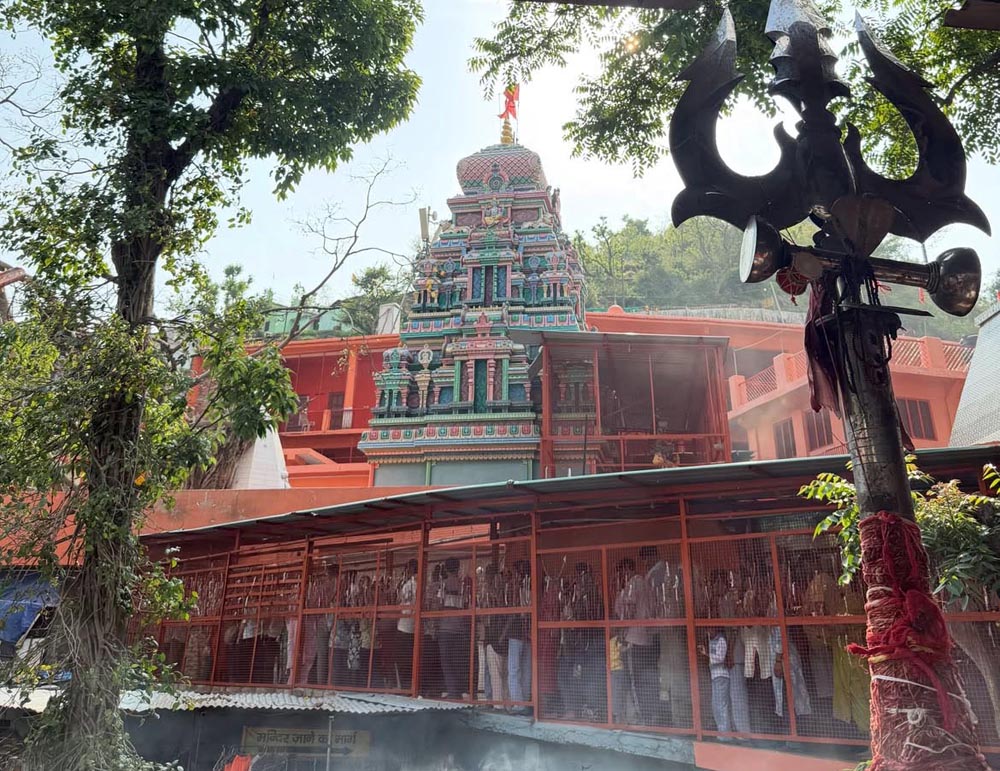
Nestled in the forested hills near Rishikesh, Neelkanth Mahadev Temple is one of the most revered Shiva temples in Uttarakhand. Surrounded by the peaceful landscapes of the Garhwal Himalayas, the temple combines mythology, spirituality, pilgrimage, nature and mountain travel in a way that makes the journey almost as meaningful as the destination. The shrine is located in Pauri Garhwal district, around 32 kilometres from Rishikesh by one of the main road routes. The Uttarakhand government describes the temple as being situated at about 926 metres and surrounded by the three valleys of Vishnukoot, Brahmakoot and Manikoot.
For devotees of Lord Shiva, Neelkanth Mahadev is particularly significant because Hindu tradition associates this sacred landscape with the Samudra Manthan, or the churning of the cosmic ocean. According to the legend, when the gods and demons churned the ocean in search of amrit, the nectar of immortality, a deadly poison known as halahal emerged first. The poison threatened creation, and Lord Shiva consumed it to protect the universe. He held the poison in his throat rather than allowing it to enter his body, turning his throat blue. This gave Shiva the name Neelkanth, meaning “the blue-throated one.”
A Sacred Temple in the Hills Above Rishikesh
Neelkanth Mahadev Temple occupies a remarkable setting in the hills above Rishikesh. The journey from the busy spiritual centre of Rishikesh gradually gives way to winding mountain roads, forested slopes and quieter surroundings. The temple is surrounded by the valleys traditionally identified as Manikoot, Brahmakoot and Vishnukoot, while the Pankaja and Madhumati rivers are associated with the landscape around the shrine.
This geographical setting contributes considerably to the atmosphere of the pilgrimage. Unlike temples situated in the middle of a city, Neelkanth Mahadev feels closely connected with the natural environment. The forest, mountain air and relative isolation create an atmosphere suited to prayer and contemplation.
The shrine is also associated with the Nar-Narayan mountain range. Its position amid the Himalayan foothills means that visitors experience both a religious destination and a scenic mountain journey. The surrounding forests are particularly attractive to travellers who enjoy combining pilgrimage with nature and trekking.
The Legend of Samudra Manthan and Neelkanth
The central story associated with the temple comes from one of the best-known episodes in Hindu mythology. The Samudra Manthan describes the churning of the cosmic ocean by the devas and asuras. Their objective was to obtain amrit, which could grant immortality. However, before the desired nectar appeared, the churning produced halahal, a terrible poison capable of destroying the universe.
Neither the gods nor the demons could safely contain it. According to the traditional account, they turned to Lord Shiva for help. Shiva took the poison and swallowed it, but held it in his throat. The poison consequently turned his throat blue, giving rise to the name Neelkanth.
The temple is traditionally regarded as the place connected with this episode of Shiva’s mythology. The Government of Uttarakhand specifically records the belief that Shiva consumed the poison at this location and consequently became known as Neelkanth.
The story gives the temple a deeper symbolic meaning. Shiva’s act is commonly understood as an act of sacrifice for the protection of creation. Rather than allowing the poison to spread, he contained it within himself. For devotees, this makes the Neelkanth form of Shiva a powerful representation of protection, endurance and self-sacrifice.
The temple’s visual decoration also reflects this mythology. Incredible India notes that the entrance and temple walls depict scenes associated with the Samudra Manthan, allowing visitors to encounter the story through the temple’s artistic features as well as through religious tradition.
Architecture of Neelkanth Mahadev Temple
Neelkanth Mahadev Temple is notable not only for its religious importance but also for its distinctive architectural character. Sources describing the shrine note strong influences of the Dravidian style, particularly in the temple’s tower and decorative elements. The colourful, multi-tiered appearance of the temple creates a striking contrast with the surrounding green forest and mountain landscape.
The entrance is particularly important because of its mythological decoration. Sculptural and painted representations connected with the Samudra Manthan help communicate the story of Shiva and the cosmic ocean. The imagery gives the temple a distinctive visual identity and makes the building itself part of the pilgrimage experience.
Inside the temple complex, devotees worship Lord Shiva in the form of a Shiva lingam. The atmosphere is generally centred on darshan, prayer and offerings. A natural spring within the temple premises is also mentioned by Incredible India, adding another element to the sacred character of the site.
The architecture should therefore be viewed in combination with its setting. The temple is not simply an isolated monument; its religious symbolism, surrounding valleys and forest environment collectively form the identity of Neelkanth Mahadev.
Spiritual Importance for Shiva Devotees
Neelkanth Mahadev holds a special place among Shiva pilgrimage destinations in Uttarakhand. Devotees visit the shrine to seek Lord Shiva’s blessings, offer prayers and perform traditional worship. The connection with the Samudra Manthan makes the temple especially significant for those who regard the Neelkanth form of Shiva as a symbol of divine protection.
For many pilgrims, visiting the temple is not merely about reaching a particular building. The journey through the hills forms part of the spiritual experience. The changing scenery, forest roads and gradual movement away from the urban environment can create a sense of separation from everyday life.
The temple also becomes particularly important during major Shiva festivals. Maha Shivratri attracts large numbers of devotees, while the month of Shravan, traditionally dedicated to Lord Shiva, is another major pilgrimage period. The temple can become exceptionally busy during these periods, particularly when Kanwar pilgrims travel through the region.
Because pilgrimage numbers can change significantly according to the festival calendar, visitors planning a quieter experience should check local conditions before travelling.
The Journey from Rishikesh
Rishikesh is the principal base for most visitors travelling to Neelkanth Mahadev Temple. The Uttarakhand government gives the distance as approximately 32 kilometres from Rishikesh via Barrage and about 22 kilometres via the Ram Jhula side.
Different travel sources quote slightly different distances because they refer to different starting points and routes. The important practical point is that the temple is close enough to Rishikesh to make it a popular day trip, while the mountainous road means that the journey takes considerably longer than the distance might suggest.
By road, visitors can travel by taxi, private vehicle or shared transport. The road winds through forested hill country and offers a very different landscape from central Rishikesh. Travellers should allow additional time rather than planning the journey solely according to the number of kilometres.
Another option is to approach the temple on foot. The government tourism information mentions a roughly 12-kilometre trekkable route through dense forest from the Rishikesh-Swargashram side.
Other travel sources describe the traditional forest approach as approximately 12–14 kilometres, with the exact distance depending on the starting point and route.
For experienced walkers, the trek provides a completely different way to experience the pilgrimage. Instead of simply travelling from Rishikesh to the temple by vehicle, visitors spend several hours walking through the forested landscape.
Trekking to Neelkanth Mahadev
The trek is particularly appealing to travellers who want to combine spirituality and outdoor adventure. The forest route provides shade in sections and allows visitors to observe the changing landscape as the trail climbs toward the temple.
However, the trek should not be treated as an effortless walk. Although descriptions vary regarding difficulty and duration, it is a sustained uphill journey and can take several hours. Travellers should begin early, carry sufficient drinking water and avoid undertaking the walk without considering weather and their own physical condition.
The forest environment is another reason to respect the route. The surrounding region forms part of the broader forest ecosystem around Rajaji and the Shivalik landscape. Visitors should avoid littering, disturbing animals or wandering away from established routes.
One interesting option for travellers who want both experiences is to travel one way by road and undertake the trek in the other direction, provided local trail and transport conditions permit it. This allows the visitor to experience both the scenic drive and the traditional forest approach.
Best Time to Visit Neelkanth Mahadev Temple
The temple can be visited throughout the year, but the experience varies considerably with the seasons.
The months outside the peak monsoon period generally provide easier conditions for travelling through the hills. Spring can be pleasant, while September to November often brings clearer post-monsoon landscapes. Winter provides cooler conditions, although mornings and evenings can be cold.
The monsoon season requires additional caution because mountain roads can become slippery and heavy rainfall can affect travel conditions. Anyone planning a trek should pay particular attention to weather forecasts and local advice.
For devotees specifically interested in experiencing the temple during Shravan or Maha Shivratri, the atmosphere is very different. These periods are associated with large pilgrim gatherings, religious ceremonies and increased activity. Those visiting primarily for photography, peaceful surroundings or an unhurried darshan may prefer dates outside the major festival periods.
Temple Timings and Darshan
Published timings for Neelkanth Mahadev vary between sources and can change according to seasons, festivals and temple management arrangements. One tourism source gives an approximate daily schedule beginning around 5:00 AM, while other sources provide different closing times and festival arrangements.
For this reason, visitors should confirm the current schedule locally before setting out, particularly if they intend to arrive very early or late in the day.
Early morning is generally a particularly atmospheric time for a temple visit. The cooler mountain air and quieter surroundings can make the experience more peaceful, although festival days can remain busy from the early hours.
Neelkanth Mahadev During Maha Shivratri and Shravan
Maha Shivratri is one of the most important occasions associated with Lord Shiva, and Neelkanth Mahadev becomes a major pilgrimage destination during the festival. Devotees may travel long distances to participate in prayers and seek darshan.
The Shravan period is equally significant. Kanwar pilgrims traditionally undertake journeys associated with collecting sacred water and offering it to Shiva temples. Neelkanth Mahadev is an important destination within this wider pilgrimage tradition.
The increase in pilgrims can transform the character of the entire route. Roads become busier, queues can become longer and transport arrangements may differ from ordinary days. Anyone visiting during a major religious period should therefore plan extra travel time and follow instructions issued by local authorities and temple personnel.
Nearby Attractions and Things to Combine with the Visit
A trip to Neelkanth Mahadev can easily be combined with a broader Rishikesh itinerary. Rishikesh itself offers numerous spiritual and cultural attractions, including temples, ashrams and the Ganges ghats.
Swargashram is particularly relevant because of its association with the traditional route toward Neelkanth. The area provides an opportunity to experience the spiritual character of Rishikesh before or after visiting the temple.
Travellers interested in nature can also explore waterfalls and forest landscapes in the wider Rishikesh region. Several routes and attractions around the Neelkanth road are popular with visitors, although access and conditions can vary seasonally.
Because Neelkanth is situated in a forested mountain environment, the journey itself should be regarded as part of the attraction rather than simply transportation between two points.
Accommodation and Food
Most visitors choose to stay in Rishikesh rather than directly around the temple. Rishikesh provides a much wider selection of hotels, guesthouses, ashrams and other accommodation options.
The Pauri Garhwal district administration notes that accommodation has also been available through irrigation and forest rest houses in the wider Neelkanth area.
However, availability and access can vary, so travellers should not depend on these facilities without prior confirmation.
Food options near the temple are generally more limited than those in Rishikesh. Pilgrims should therefore consider carrying drinking water and simple snacks, particularly if they intend to trek. During major pilgrimage periods, temporary food and refreshment stalls may become more common, but visitors should still plan responsibly.
Travel Tips for Visitors
A visit to Neelkanth Mahadev is most enjoyable when approached as both a pilgrimage and a mountain journey. Comfortable clothing and footwear are useful, particularly for visitors planning to walk around the temple or undertake the forest route.
Modest clothing is appropriate because this is an active Hindu place of worship. Visitors should also respect temple rules regarding photography, offerings and movement within the shrine.
During summer, an early start is preferable for anyone travelling by road or trekking. During monsoon, weather conditions should be checked before departure. In winter, warm clothing is useful during early morning and evening hours.
The road is mountainous and winding, so travellers prone to motion sickness may wish to take appropriate precautions. Drivers should also avoid rushing because mountain roads require careful driving.
Most importantly, visitors should maintain the cleanliness of the forest and temple surroundings. Plastic waste, food packaging and other rubbish should be carried back or disposed of only in designated places.
Why Neelkanth Mahadev Is an Important Part of Uttarakhand Tourism
Uttarakhand is famous for its combination of sacred geography and dramatic Himalayan landscapes, and Neelkanth Mahadev represents this relationship particularly well. The temple brings together an ancient religious tradition, a powerful Shiva legend, forested mountains and the spiritual environment of Rishikesh.
Unlike a destination that can be understood solely through its architecture, Neelkanth is experienced through the entire journey. The road from Rishikesh, the forest-covered hills, the valleys, the mythology surrounding Shiva and the devotional activity at the temple all contribute to its identity.
The temple also demonstrates why religious tourism is such an important part of Uttarakhand’s cultural landscape. Pilgrims, trekkers, photographers, nature lovers and travellers interested in Hindu mythology may all approach the destination for different reasons, yet the temple remains centred on its religious significance.
Final Thoughts
Neelkanth Mahadev Temple is much more than a temple near Rishikesh. It is a destination where mythology and landscape are closely intertwined. The belief that Lord Shiva consumed the deadly poison of the Samudra Manthan here gives the shrine its defining identity, while the surrounding Himalayan forests provide a setting that makes the pilgrimage memorable.
The temple’s distinctive architecture, Shiva worship, festival traditions, forest trekking route and proximity to Rishikesh make it one of the notable spiritual destinations of Uttarakhand. The journey can be completed by road for convenience or approached through the forest for a more physically demanding pilgrimage experience.
For travellers exploring Uttarakhand, Neelkanth Mahadev offers an opportunity to experience a quieter side of the Rishikesh region while connecting with one of Hinduism’s most enduring stories. Whether visited during an ordinary day or amid the immense devotional energy of Shravan and Maha Shivratri, the blue-throated form of Shiva remains at the heart of the experience.

