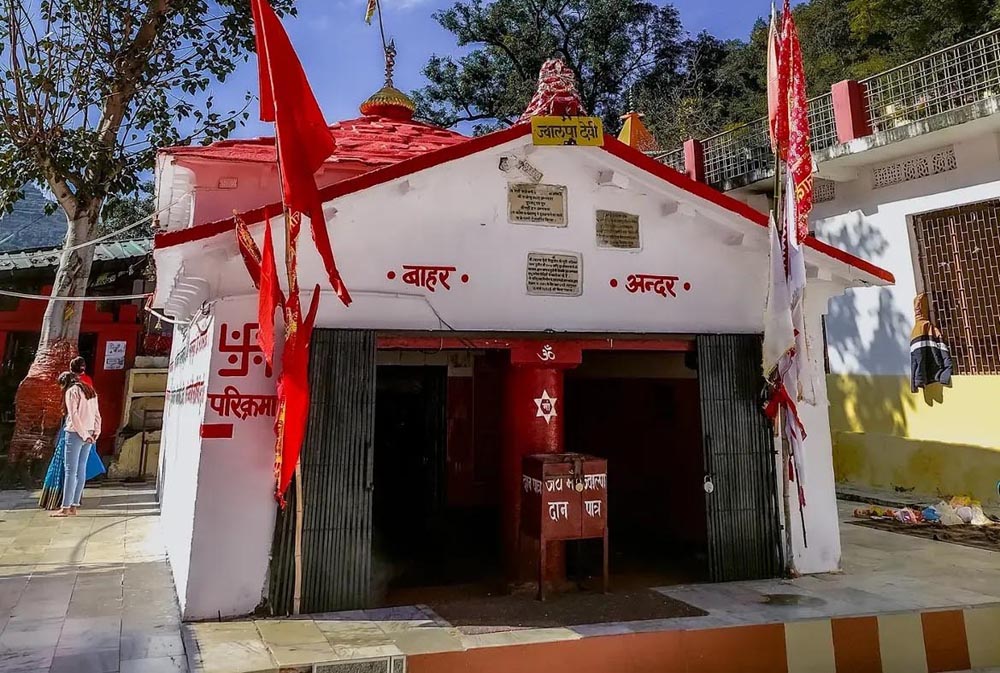
Nestled amid the green hills of Pauri Garhwal in Uttarakhand, Jwalpa Devi Temple is one of the region’s revered Shakti shrines and an important pilgrimage destination. Situated along the Pauri–Kotdwar road near the Nayar River, the temple combines mythology, devotion, local traditions and the natural beauty of the Garhwal Himalayas. The peaceful river valley and forest-covered hills surrounding the shrine give the temple an atmosphere that is distinctly different from the larger and more crowded pilgrimage centres of Uttarakhand.
The temple is dedicated to Goddess Jwalpa Devi, a form of Goddess Durga or Shakti. It is traditionally regarded as a Siddhpeeth and is particularly associated with prayers for the fulfilment of sincere wishes. During Navratri, the temple attracts devotees from different parts of Uttarakhand and beyond. The District Pauri Garhwal administration describes Jwalpa Devi as a famous Shakti Peeth of the area and notes that special worship is performed during Navratras
Where Is Jwalpa Devi Temple Located?
Jwalpa Devi Temple is located in Pauri Garhwal district of Uttarakhand, on the road connecting Pauri with Kotdwar through Satpuli. The shrine is approximately 33–34 kilometres from Pauri and lies close to the Nayar River. The district administration places it around 33 kilometres from Pauri on the Pauri–Kotdwar motor road and notes that the temple stands on the northern bank of the river Nayar. Satpuli is one of the nearest important settlements and is roughly 17 kilometres away according to the district’s tourism information.
The location itself is an important part of the temple experience. Instead of being surrounded by a densely developed urban environment, the shrine is set within a Himalayan landscape of hills, vegetation and a flowing river. Visitors travelling along the Pauri–Kotdwar route can combine their pilgrimage with an opportunity to experience the quieter side of Garhwal.
Pauri, the nearest major hill town, is itself an important destination in Uttarakhand. Located at approximately 1,814 metres above sea level, Pauri is known for Himalayan scenery, forests and opportunities for nature-based tourism.
Religious Significance of Maa Jwalpa Devi
Jwalpa Devi is worshipped as a manifestation of Goddess Shakti, the divine feminine power associated with Durga and Parvati. The name Jwalpa is traditionally connected with the concept of jwala, meaning flame or radiant fire. In the religious imagination of the temple, this symbolism represents the powerful and luminous nature of the Goddess.
The shrine is widely regarded locally as a Siddhpeeth, a sacred place associated with the presence and blessings of the Goddess. Devotees visit the temple with different prayers, including wishes relating to family welfare, prosperity, personal aspirations and marriage.
One particularly well-known tradition connects the temple with unmarried women praying for a suitable life partner. This belief is linked to the temple’s principal legend involving Shachi and Lord Indra. It is important to understand this as a religious tradition and devotional belief rather than as a claim that can be independently verified.
The District Pauri Garhwal website confirms the temple’s association with Goddess Durga and notes that devotees travel from different places during Navratri to offer special prayers and seek fulfilment of their wishes.
The Legend of Shachi and Lord Indra
The most famous story associated with Jwalpa Devi Temple comes from Hindu mythology and is traditionally connected with the Skanda Purana.
According to the legend, Shachi, the daughter of the Daitya king Puloma, wished to marry Devraj Indra. She undertook intense penance and worshipped the Supreme Mother Goddess at the sacred site beside the Nayar River. Pleased with her devotion, the Goddess is said to have appeared in a radiant form known as Deeptimaan Jwalehwari and granted Shachi’s wish.
Over time, the name Deeptimaan Jwalehwari is traditionally said to have become associated with the name Jwalpa Devi. The story has therefore become an important part of the temple’s religious identity and explains why the shrine is especially associated with prayers concerning marriage and fulfilment of heartfelt desires.
For devotees, the story represents more than a mythological episode. Shachi’s determination and devotion are understood as examples of faith and perseverance. Visitors who come to the temple with personal prayers often connect their own hopes with this ancient story.
Association with Adi Shankaracharya
Another tradition associated with Jwalpa Devi Temple concerns Adi Guru Shankaracharya, the influential Hindu philosopher traditionally associated with the revival and consolidation of several Hindu philosophical and pilgrimage traditions.
According to local tradition, Shankaracharya visited the shrine and offered prayers to the Goddess. The tradition further states that the Goddess appeared before him in response to his devotion. While this is part of the religious tradition surrounding the temple, detailed historical documentation of the episode should be distinguished from devotional accounts.
Such stories are common around ancient pilgrimage sites in the Himalayas and contribute to the spiritual importance attributed to them by generations of worshippers.
The Temple and Its Surroundings
One of the most appealing characteristics of Jwalpa Devi Temple is its natural setting. The shrine stands near the Nayar River, with the surrounding Garhwal hills creating a peaceful Himalayan backdrop. The combination of flowing water, mountain slopes, vegetation and temple bells gives visitors a distinctly tranquil experience.
The river is especially important to the identity of the temple because the traditional legend itself places Shachi’s penance at this sacred location. Thus, the landscape and mythology are closely connected.
For travellers who are interested in photography, nature or quiet spiritual experiences, the area around the temple can be as memorable as the shrine itself. The surrounding region represents the characteristic landscape of Pauri Garhwal, where mountain roads pass through forests, villages, agricultural terraces and river valleys.
Festivals at Jwalpa Devi Temple
Navratri is the most important period for worship at Jwalpa Devi Temple. The Uttarakhand Tourism website states that the temple remains open throughout the year and becomes particularly crowded during Navratri, when a major festival takes place.
Navratri is celebrated twice each year in the Hindu calendar: Chaitra Navratri during March–April and Sharad Navratri during September–October. During these periods, devotees undertake special prayers and visit Shakti temples across India.
At Jwalpa Devi, the festival atmosphere can be significantly more energetic than during ordinary days. Devotees arrive for darshan, prayers and religious ceremonies, while the surrounding area becomes busier with pilgrims and temporary stalls.
Basant Panchami is also associated with a fair at the temple according to accounts of the shrine’s traditions. Traditional descriptions also mention fairs connected with Navratri.
The festivals demonstrate that Jwalpa Devi is not simply a place of individual worship. It also functions as a community centre where religious traditions, local culture and pilgrimage come together.
Traditional Worship and Devotion
The central attraction for pilgrims is, naturally, the opportunity to have darshan of Maa Jwalpa Devi. Visitors generally approach the temple with offerings and prayers, following the customs followed at the shrine.
Devotees may offer flowers, incense and other traditional puja materials. During important festivals, special worship ceremonies are conducted and the temple surroundings become especially lively.
The exact rituals, offerings and arrangements may vary according to the festival, temple traditions and local practices. Visitors planning a pilgrimage during Navratri should therefore expect larger crowds than on ordinary days.
The Temple’s Cultural Importance
Jwalpa Devi Temple occupies an important position within the religious culture of Garhwal. Uttarakhand is often described as Devbhoomi, or the Land of the Gods, because of its extraordinary concentration of temples, sacred rivers and pilgrimage routes.
Jwalpa Devi contributes to this cultural landscape in a distinctive way. It is not located on the high-altitude pilgrimage routes associated with destinations such as Kedarnath or Badrinath. Instead, it is a relatively accessible riverside shrine situated along an important road through Pauri Garhwal.
This accessibility has helped the temple remain connected with local communities as well as pilgrims travelling from other parts of the state.
Traditional accounts identify the Anthwal family as hereditary priests and caretakers of the temple. Historical descriptions also associate the present temple structure with Pandit Dutta Ram Anthwal.
How to Reach Jwalpa Devi Temple
Road travel is the most convenient way to reach Jwalpa Devi Temple. The shrine is located on the Pauri–Kotdwar road, making it accessible from both directions.
From Pauri, travellers can follow the road towards Kotdwar through the Satpuli area. The temple is approximately 33–34 kilometres from Pauri.
From Satpuli, the temple is around 17 kilometres away according to the Pauri district administration.
Travellers coming from Kotdwar can travel towards Pauri via the same road. Buses and taxis connecting the towns along this route can make the temple accessible to pilgrims who do not have private vehicles.
For visitors travelling by train, Kotdwar is the principal railway connection commonly used for reaching the Pauri Garhwal region. Uttarakhand Tourism identifies Kotdwar as the reliable railway station for reaching Pauri and notes that buses and taxis are available onward.
By air, Jolly Grant Airport near Dehradun is the nearest major airport commonly used for travel towards Pauri. From the airport, visitors need to continue by road.
Best Time to Visit
Jwalpa Devi Temple can be visited throughout the year. Uttarakhand Tourism specifically states that the temple remains open year-round.
For devotees interested in experiencing the temple’s major religious celebrations, Chaitra Navratri and Sharad Navratri are particularly significant. However, festival periods also mean increased crowds, traffic and demand for accommodation.
For travellers more interested in peaceful surroundings, ordinary weekdays outside major festivals may provide a quieter experience. Morning visits can be particularly pleasant because mountain temperatures are generally comfortable and the surrounding landscape is often calm.
Winter travel requires more preparation because temperatures in the higher Garhwal region can fall considerably, while monsoon travel requires caution because mountainous roads can be affected by heavy rainfall and landslides.
Accommodation and Facilities
The Pauri Garhwal district administration states that accommodation facilities such as a tourist rest house and dharamshala are available near the temple.
Visitors can also consider staying in nearby towns such as Pauri or Satpuli, depending on their wider travel itinerary. Staying in Pauri may be particularly convenient for travellers who want to combine Jwalpa Devi Temple with other attractions in the district.
Basic shops and eateries can also be found around the temple area, particularly for pilgrims seeking prasad and refreshments. However, visitors should not expect the same range of commercial facilities available in larger cities.
Nearby Places to Explore
A trip to Jwalpa Devi Temple can easily become part of a broader Pauri Garhwal itinerary. Pauri town is one of the most natural additions to the journey, offering mountain scenery and views towards Himalayan peaks. Uttarakhand Tourism highlights Pauri as a destination for nature lovers, trekkers and visitors interested in the mountain environment.
Khirsu is another destination worth considering. Uttarakhand Tourism highlights attractions in the Khirsu area including temples and natural surroundings, and specifically lists Jwalpa Devi Temple among the attractions associated with the wider Pauri region.
Other religious destinations in the broader Pauri Garhwal region include Kandoliya Temple, Nagdev Temple, Kyunkaleshwar Mahadev Temple and Binsar Mahadev Temple. These sites offer an opportunity to experience the diversity of religious traditions found throughout Garhwal.
Travellers with additional time can also plan routes towards Devprayag and other important Himalayan destinations, depending on their starting point and itinerary.
Things to Keep in Mind Before Visiting
Although Jwalpa Devi Temple is accessible by road, it is still important to remember that this is a Himalayan destination. Travel times can be longer than the distance might suggest because mountain roads are winding and weather conditions can change rapidly.
During Navratri and other important religious occasions, visitors should expect larger crowds. It is advisable to begin the journey early and allow additional time for traffic and parking.
Visitors should dress respectfully because the temple is an active place of worship. Photography should also be undertaken sensitively, particularly around worshippers and ritual areas. Following instructions given by temple authorities is the best way to ensure a respectful pilgrimage.
Monsoon travellers should monitor local weather and road conditions before beginning their journey. Mountain roads can be affected by heavy rain, landslides and temporary closures.
Why Jwalpa Devi Temple Is Special
The significance of Jwalpa Devi Temple comes from the combination of mythology, devotion, landscape and local culture. Its association with Shachi and Indra gives the shrine a distinctive place in regional religious tradition, while its setting beside the Nayar River creates an atmosphere of natural serenity.
Unlike some Himalayan pilgrimage centres that are defined primarily by dramatic high-altitude landscapes, Jwalpa Devi offers a gentler experience. The temple can be reached by road, yet it retains the feeling of a sacred mountain shrine surrounded by forests, hills and flowing water.
For devotees, the principal attraction is the faith associated with Maa Jwalpa Devi. For cultural travellers, the temple provides an opportunity to understand the religious traditions of Garhwal. For nature lovers, the river valley and surrounding hills add another dimension to the journey.
Final Thoughts
Jwalpa Devi Temple is much more than a roadside shrine in Pauri Garhwal. It is a living centre of devotion whose identity has been shaped by centuries of mythology, local traditions and the continuing faith of pilgrims. The story of Shachi’s penance and the Goddess’s blessing remains central to the temple’s spiritual identity, particularly for devotees who come with prayers concerning marriage and personal wishes.
Its location beside the Nayar River gives the shrine a peaceful natural setting, while Navratri transforms the temple into a vibrant centre of religious activity. The availability of road access, nearby accommodation and connections with Pauri, Satpuli and Kotdwar also makes it relatively convenient to include in a Garhwal travel itinerary.
For anyone exploring the spiritual heritage of Uttarakhand, Jwalpa Devi Temple offers an intimate glimpse into the devotional traditions of the Himalayas. The combination of Maa Jwalpa’s sacred presence, the ancient legends surrounding the shrine, the Nayar River and the green mountains of Garhwal makes a visit here both a pilgrimage and a memorable journey through Uttarakhand’s cultural landscape.

