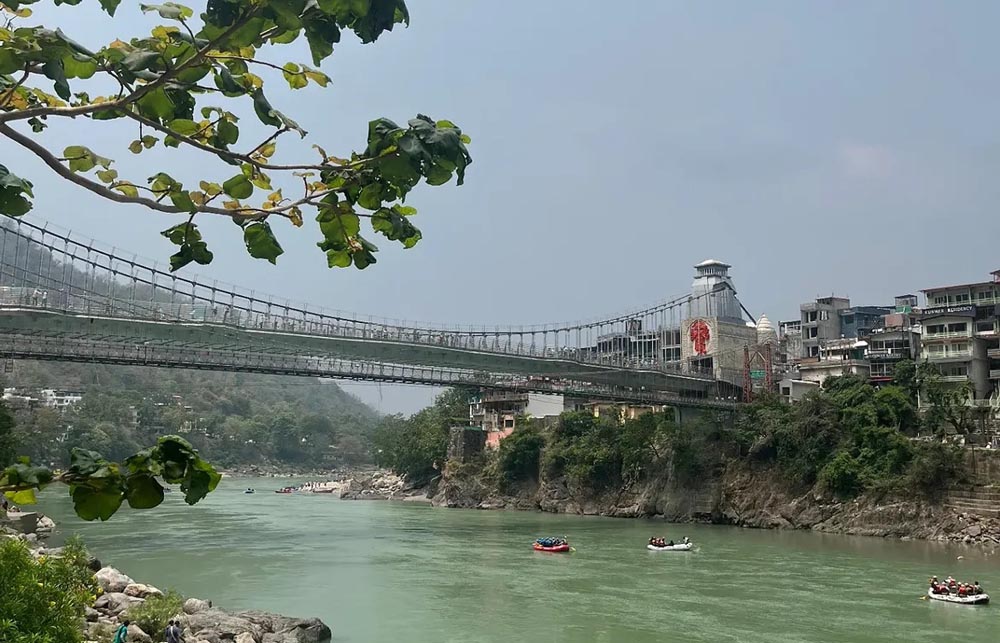
Laxman Jhula, also commonly written as Lakshman Jhula, has long been one of the defining landmarks of Rishikesh in Uttarakhand. Suspended above the sacred Ganga, the bridge became much more than a crossing point: it was a visual symbol of Rishikesh, a meeting place for pilgrims and travellers, and one of the most photographed sights in the Himalayan foothills. Even after the historic bridge was closed to pedestrian and vehicular movement in 2019 because of structural safety concerns, its cultural and tourism significance has remained strong.
Today, the area around Laxman Jhula continues to be one of the busiest tourism zones in Rishikesh. Visitors come for the river views, temples, ashrams, cafés, yoga centres, spiritual experiences and adventure activities. The newer Bajrang Setu, constructed near the historic bridge site, has also introduced a new chapter to this famous riverside landscape.
Where Is Laxman Jhula?
Laxman Jhula is located in Rishikesh, in Uttarakhand’s Garhwal region, across the Ganga between the areas traditionally associated with Tapovan and Jonk. The surrounding neighbourhood has developed into one of the most popular parts of Rishikesh for visitors looking for a combination of spirituality, nature, adventure and leisure.
The bridge historically connected areas on opposite sides of the river and provided an important pedestrian route. Uttarakhand Tourism identifies Laxman Jhula and Ram Jhula as central attractions in the riverside tourism zone of Rishikesh, alongside the city’s ashrams and spiritual institutions.
The location is particularly scenic because the Ganga passes through the Himalayan foothills here. Hills rise around the river, while temples, ashrams and buildings occupy the slopes and riverbanks. The combination of flowing water, forested hills and religious architecture gives this part of Rishikesh a distinctive atmosphere.
Laxman Jhula remains a recognizable landmark on local maps and in the tourism identity of Rishikesh, even though the original bridge is no longer used for normal crossing.
The History of Laxman Jhula
The modern Laxman Jhula was completed in 1929 and became an important suspension bridge across the Ganga. Historical accounts describe it as approximately 136 metres long. For decades, it served pedestrians crossing between the two sides of the river and became one of the most recognizable structures in Rishikesh.
The bridge’s importance was not merely practical. Its location connected areas associated with Rishikesh’s spiritual traditions, pilgrimage routes and growing ashram culture. As tourism expanded, the bridge became a natural focal point for visitors exploring the city.
Over the decades, Rishikesh itself transformed from an important pilgrimage and spiritual destination into a globally known centre for yoga, meditation, adventure tourism and wellness. Laxman Jhula was present throughout much of this transformation and became closely associated with the city’s identity.
The bridge also became popular among photographers, filmmakers and travellers. Its suspension structure, river setting and surrounding hills created a distinctive visual image that appeared in photographs and films. According to contemporary reporting, several Hindi films and television productions were shot at the bridge.
The Mythological Connection
The name Laxman Jhula is connected with Lakshmana, the younger brother of Lord Rama in the Ramayana. Local tradition holds that Lakshmana crossed the Ganga at this location using a simple rope or jute-rope bridge.
This traditional story is an important part of the cultural identity of the site. The modern steel suspension bridge obviously represents a very different engineering achievement from the rope crossing described in local tradition, but the association with Lakshmana gives the location its religious character.
It is worth understanding this as a local religious tradition and belief, rather than treating the legendary crossing as a historically documented event. For pilgrims and many visitors, however, the mythology forms an integral part of the experience.
The wider Rishikesh region has numerous places whose identities combine mythology, pilgrimage and geography. This is one reason the city occupies such an important place in Uttarakhand’s spiritual tourism landscape.
Why Laxman Jhula Became So Famous
The fame of Laxman Jhula came from several factors coming together. First was its dramatic location above the Ganga. A suspension bridge naturally provides an elevated perspective, and the surrounding Himalayan landscape made the experience particularly memorable.
Second was its connection with Rishikesh’s religious traditions. Pilgrims travelling through the city could encounter temples, ashrams, ghats and sacred riverfront areas within a relatively compact region.
Third was the growth of international tourism. Rishikesh became increasingly associated with yoga and meditation, particularly after the Beatles’ 1968 visit to the city and the subsequent international attention given to its ashrams. Government tourism documentation describes the riverside areas around Ram Jhula and Laxman Jhula as important centres for spiritual and tourism activity.
Finally, Laxman Jhula became part of the standard Rishikesh sightseeing experience. Visitors often combined a bridge walk with temple visits, riverside walks, shopping, cafés, yoga sessions and trips to nearby attractions.
Closure of the Historic Bridge
One of the most important facts travellers should know is that the original Laxman Jhula is closed to pedestrian and vehicular traffic.
In July 2019, the Uttarakhand government ordered the bridge’s immediate closure after a technical assessment raised serious structural concerns. Reports at the time said that many components were in poor condition and that increased traffic had placed additional pressure on the ageing structure.
The closure was significant because the bridge had been an everyday part of Rishikesh’s tourism experience for generations. It was particularly notable that a structure traditionally associated with pedestrian movement had also been used by motorcycles, increasing the load and congestion around it.
For visitors planning a trip today, this distinction is important. Photographs of people walking across the historic Laxman Jhula are common online, but they represent an earlier period. Travellers should not assume that the old bridge is currently available for walking.
Bajrang Setu: A New Chapter Near Laxman Jhula
The closure of the historic bridge created a need for another crossing in the area. This led to the development of Bajrang Setu, a new suspension bridge near Laxman Jhula.
According to reports published during the project’s development, the new bridge is around 132 metres long and about eight metres wide, with provision for vehicular movement and pedestrian walkways. Its pedestrian sections were designed with glass flooring, creating a skywalk-style experience above the Ganga.
By 2026, the new bridge had become an emerging attraction in its own right. A July 2026 report noted that the Uttarakhand government had approved a user-fee system for pedestrians using the glass walkways and that dedicated staff would be involved in monitoring the pedestrian areas.
The development illustrates how Rishikesh is attempting to balance heritage with modern infrastructure. The original bridge remains an important historical symbol, while Bajrang Setu is intended to provide modern crossing facilities and accommodate contemporary visitor demand.
What Makes the Laxman Jhula Area Special?
Although the original bridge itself can no longer be crossed, the surrounding area remains highly attractive. The first thing that catches the attention of many visitors is the Ganga. Depending on the season, sunlight and river conditions, the water can appear dramatically different throughout the day.
Early mornings tend to have a quieter and more spiritual atmosphere. The sound of temple bells, devotional music and the river creates a very different environment from the busy afternoon hours. At sunset, the surrounding hills and river become particularly photogenic.
The area also has numerous small lanes filled with cafés, shops, spiritual centres, guesthouses and restaurants. Walking through these streets provides an opportunity to experience another side of Rishikesh beyond its major attractions.
The riverside is also closely associated with yoga and meditation. Visitors can find institutions offering classes, retreats and longer spiritual programmes. Rishikesh’s reputation as a global yoga destination has made this area particularly popular with international travellers.
Nearby Temples and Spiritual Attractions
One of the easiest ways to explore the Laxman Jhula area is to combine the bridge area with nearby temples and spiritual sites.
Trayambakeshwar Temple, Rishikesh is one of the prominent temple landmarks close to Laxman Jhula. The multi-storey temple architecture and its location near the river make it a familiar feature of the local landscape.
The surrounding region also contains numerous smaller temples, shrines and ashrams. Rather than treating these simply as sightseeing attractions, visitors should remember that many remain active places of worship. Modest clothing, respectful behaviour and awareness of photography restrictions are appropriate.
Further along the river is the Swarg Ashram area, another major centre for spirituality and yoga.
Parmarth Niketan Ashram near Ram Jhula is particularly well known for its spiritual activities and riverside setting. The wider Rishikesh region is home to numerous ashrams where visitors can learn yoga, meditation and Indian philosophical traditions.
Ram Jhula and Other Attractions
A visit to the Laxman Jhula area can easily be extended to Ram Jhula. Ram Jhula is another famous suspension bridge over the Ganga and forms part of the broader riverside tourism circuit.
Another important destination is Triveni Ghat, one of Rishikesh’s best-known riverfront locations. The ghat is particularly associated with evening Ganga Aarti, when lamps, prayers and devotional rituals take place beside the river. Uttarakhand Tourism specifically includes Triveni Ghat, Laxman Jhula, Ram Jhula and Rishikesh’s ashrams among the city’s key experiences.
Adventure enthusiasts can also explore rafting on the Ganga, trekking routes, camping and other outdoor activities in and around Rishikesh. Uttarakhand Tourism describes Rishikesh as an important base for adventure tourism, including rafting and trekking.
The Best Time to Visit
Rishikesh can be visited throughout much of the year, but the experience changes considerably with the seasons. Uttarakhand Tourism lists Rishikesh as a destination that can be visited throughout the year.
The cooler months from roughly October to March are generally comfortable for sightseeing, walking and exploring temples and ashrams. Winter mornings can be chilly, particularly near the river, but daytime conditions are often pleasant.
Spring brings warmer temperatures and generally comfortable sightseeing conditions. This period can be especially appealing for travellers interested in yoga, outdoor activities and exploring the town on foot.
Summer can become hot in the lower parts of Rishikesh, although mornings and evenings near the river can still be enjoyable. Monsoon brings heavy rainfall to the region, and river conditions can change significantly. Travellers should take local safety advice seriously during periods of heavy rain, particularly around riverbanks and adventure activities.
How to Reach Laxman Jhula
Rishikesh is well connected by road and rail, while Jolly Grant Airport near Dehradun provides the nearest major air connection. Uttarakhand Tourism lists road, rail and air connections for Rishikesh, with regular road services linking the city with Delhi, Dehradun, Haridwar and other destinations.
From central Rishikesh, visitors can reach the Laxman Jhula area by taxi, auto-rickshaw or other local transport. Because the surrounding roads can become crowded, especially during weekends and major religious occasions, travel times can vary.
Travellers staying in Tapovan, Jonk or the nearby riverside areas may find many attractions accessible by walking, although the terrain includes slopes and steps in several places.
Food, Shopping and Local Atmosphere
The Laxman Jhula neighbourhood has developed a strong café and backpacker culture alongside its traditional religious character. Visitors can find Indian food, North Indian dishes, vegetarian meals, cafés, bakery items, international food and health-oriented menus.
The area is also known for shops selling spiritual books, yoga products, clothing, handicrafts, jewellery, incense and souvenirs. Bargaining may be possible in some small shops, although visitors should approach it respectfully.
The combination of pilgrimage culture and international tourism gives the neighbourhood an unusual atmosphere. A traveller can move from a traditional temple to a yoga studio, then to a riverside café or a small local market within a short distance.
Photography and Sunrise or Sunset Views
The Laxman Jhula area is especially appealing to photographers. The Ganga, suspension bridges, temples, hills and changing light create numerous compositions.
Morning photography can capture mist, soft sunlight and quieter riverfront scenes. Late afternoon provides stronger contrasts between the illuminated hills and the river. Sunset is particularly popular, although crowds can increase during this time.
A local viewpoint known as Laxman Jhula View Point provides another perspective of the surrounding landscape.
Visitors should avoid entering restricted areas of the historic bridge or construction zones associated with new infrastructure simply to obtain photographs. Safety barriers and official instructions should always be respected.
Responsible Tourism Around the Ganga
The beauty and spirituality of Rishikesh depend heavily on the health of the Ganga and the surrounding environment. Visitors can contribute to responsible tourism by avoiding plastic waste, using designated bins and not throwing food, packaging or other materials into the river.
It is also important to respect religious activities. The Ganga is not simply a scenic river for local communities and pilgrims; it has deep religious significance.
Visitors participating in rafting, trekking or other adventure activities should use registered operators where possible and follow safety instructions. River conditions can change quickly, particularly during monsoon periods.
Responsible tourism also means supporting local businesses, respecting residents and avoiding excessive noise around temples, ashrams and residential areas.
Laxman Jhula as a Symbol of Rishikesh
The story of Laxman Jhula is ultimately larger than the bridge itself. The structure represented a connection between two sides of the Ganga, but over time it also came to symbolize the connection between different aspects of Rishikesh: ancient mythology and modern tourism, pilgrimage and adventure, yoga and backpacking culture, local traditions and international visitors.
Its closure in 2019 changed the practical experience of visiting the area, but it did not erase the landmark’s cultural importance. The historic bridge remains part of Rishikesh’s visual and historical memory, while Bajrang Setu represents a modern response to the needs of a rapidly growing destination.
For travellers, the Laxman Jhula area is therefore best understood as an entire destination rather than simply a bridge. Its appeal lies in the Ganga, temples, ashrams, markets, cafés, mountain scenery and the spiritual atmosphere that has made Rishikesh famous.
Final Thoughts
Laxman Jhula occupies a special place in the tourism history of Uttarakhand. Built in 1929, the historic suspension bridge became one of Rishikesh’s most recognizable landmarks and remained closely connected with the city’s religious and tourism identity for generations. Its closure in 2019 because of structural safety concerns marked the end of an era, but the surrounding neighbourhood continues to be one of the most important places to visit in Rishikesh.
Today, visitors can explore the same broader landscape of the Ganga, temples, ashrams and Himalayan foothills while also seeing the transformation taking place through newer infrastructure such as Bajrang Setu. The Uttarakhand Tourism Department continues to feature Rishikesh prominently as a destination combining spirituality, wellness, adventure and leisure. For anyone travelling through Uttarakhand, the Laxman Jhula area offers an opportunity to experience many different dimensions of Rishikesh in one place. It is a destination shaped by mythology and history, but also by modern travellers and the continuing evolution of one of India’s most famous spiritual towns.

