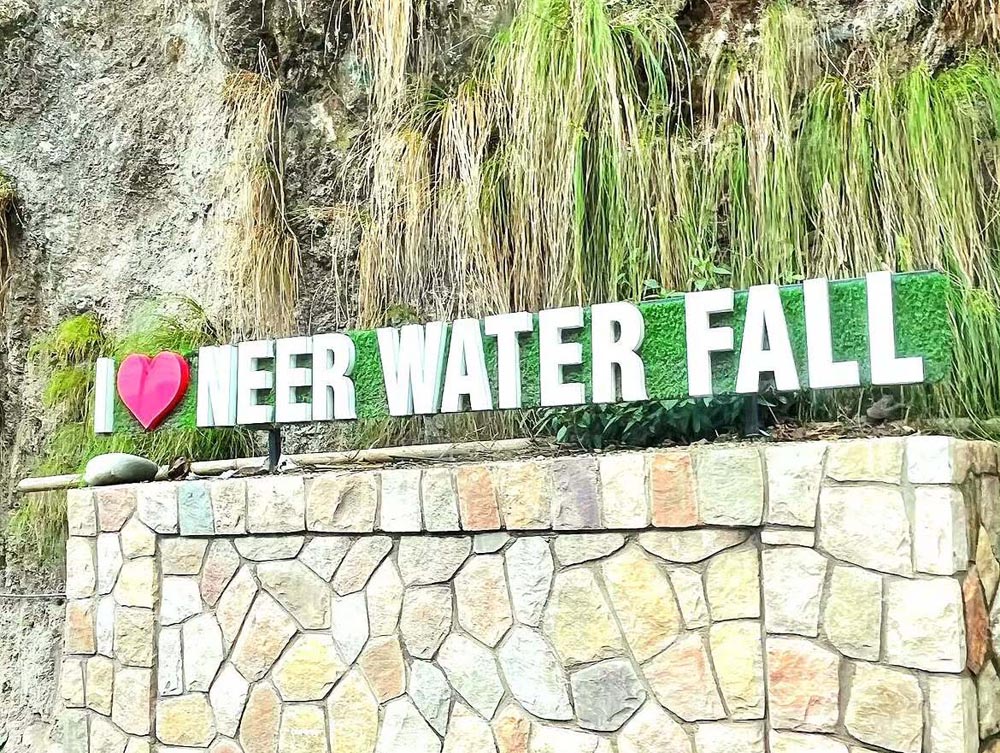
Nestled in the green Himalayan foothills near Rishikesh, Neer Garh Waterfall, also popularly known as Neer Gaddu Waterfall, is one of Uttarakhand’s most attractive short-trekking destinations. The waterfall combines the charm of a forest trail, cascading mountain water, rocky landscapes and natural pools, making it an appealing getaway for travelers who want to experience nature without undertaking a long or demanding Himalayan trek.
Located close to the Rishikesh–Badrinath highway and only a short distance from the popular areas around Lakshman Jhula, Neer Garh is particularly convenient for travelers staying in Rishikesh. The journey from the main town to the waterfall changes quickly from an urban and pilgrimage atmosphere to a quieter landscape of hills, trees, streams and rocky paths. The waterfall is described as a multi-tiered cascade, with lower and upper sections accessible by walking trails.
The destination is especially popular during and after the monsoon, when the surrounding vegetation becomes lush and the stream carries more water. At the same time, visitors should remember that a waterfall is a natural environment rather than a controlled swimming facility. Strong currents, slippery rocks and sudden increases in water flow can make conditions hazardous, particularly during heavy rain.
Where Is Neer Garh Waterfall Located?
Neer Garh Waterfall is situated near Rishikesh in Uttarakhand, along the route toward the Himalayan interior. It lies in the broader Tehri Garhwal/Rishikesh region and is reached from the Rishikesh–Badrinath highway. The commonly cited distance is approximately 5 kilometres from Lakshman Jhula, although the exact distance varies depending on the particular waterfall tier or starting point being described. Rishikesh railway station is roughly 9 kilometres away according to commonly published travel information.
Neergarh Waterfall Rd provides access toward the waterfall area.
Its proximity to Rishikesh is one of its greatest advantages. Travelers do not need to organize a multi-day expedition or travel deep into the mountains. Neer Garh can comfortably fit into a half-day Rishikesh itinerary, leaving enough time for other attractions such as the Ganga ghats, temples, ashrams and nearby viewpoints.
The Natural Beauty of Neer Garh
The appeal of Neer Garh is not limited to the waterfall itself. The entire approach forms part of the experience. The trail moves through a green mountain landscape where trees, shrubs, exposed rocks and small streams create a distinctly Himalayan atmosphere.
As the trail approaches the waterfall, the sound of flowing water becomes increasingly noticeable. The landscape then opens around rocky sections where the stream descends through natural formations. Several levels of the waterfall and associated pools give visitors different perspectives of the cascade.
The Government of India’s Incredible India tourism portal describes Neer Garh as a multi-tiered waterfall situated on the hills above the northern side of the Ganges and highlights its rocky falls, swimming holes and forest surroundings.
The combination of turquoise or greenish pools, grey rocks and dense vegetation can make the waterfall particularly photogenic. During the wetter months, the increased volume of water gives the cascade greater visual impact, while the surrounding vegetation becomes intensely green.
Neer Garh Waterfall Trek
One of the main reasons travelers visit Neer Garh is that reaching the waterfall involves a relatively short hike rather than a long Himalayan trek. The exact trekking distance depends on which level visitors intend to reach.
Travel information commonly describes a small lower waterfall relatively close to the road, followed by a longer trail toward the larger waterfall. One source describes approximately one kilometre of trekking toward the first major waterfall and around three kilometres toward another upper section, while other guides describe shorter distances depending on the starting point and tier.
This difference in published distances is worth keeping in mind. Travelers should not assume that every reference to “Neer Garh Waterfall” represents exactly the same endpoint.
The trail itself is part of the attraction. Rather than simply parking beside a waterfall, visitors walk through a natural landscape and gradually leave the highway environment behind. Some sections contain steps or constructed pathways, while other portions can be rocky and uneven.
The hike is generally considered suitable for people with basic fitness, although the trail can become considerably more difficult after rain. Wet rocks, mud and slippery surfaces require careful movement. Comfortable footwear with good grip is preferable to sandals or smooth-soled shoes.
The Different Waterfall Levels
Neer Garh is often described as a two-tier or multi-tier waterfall. The lower sections are easier to reach, while continuing farther along the trail takes visitors toward larger cascades and pools.
The lower portion can be suitable for visitors who have limited time or do not want to undertake the longer walk. Continuing upward provides a different experience, with quieter forest surroundings and additional views of the flowing stream.
The upper sections are particularly attractive to photographers and hikers because the surroundings become more natural and less dominated by the highway. The Government of India tourism portal also notes that visitors can continue hiking beyond the upper waterfall into the surrounding hills, offering opportunities for broader mountain views.
Because the waterfall has multiple sections, visitors should allow enough time rather than treating the destination as a quick roadside stop.
Natural Pools and Swimming
One of the most recognizable features of Neer Garh is its natural pools. The waterfall creates pools where visitors traditionally come to cool themselves and enjoy the mountain environment. Tourism descriptions of the site frequently mention these pools as one of its major attractions.
However, swimming in a natural waterfall requires much greater caution than swimming in a maintained pool. Rocks beneath the water may be uneven or slippery, and water depth can change. During or immediately after heavy rainfall, the stream can become stronger and more dangerous.
Visitors should never enter a pool simply because other people are doing so. They should assess the conditions, avoid areas immediately beneath strong cascades and follow any local warnings or restrictions. Children should be supervised closely, and inexperienced swimmers should avoid deep water.
The safest approach is to treat the water as part of a natural landscape rather than assuming that every pool is suitable for swimming.
Best Time to Visit Neer Garh Waterfall
The best time depends on whether the visitor prioritizes water flow, greenery or comfortable trekking.
The monsoon and post-monsoon periods are particularly attractive because rainfall increases the flow of the waterfall and refreshes the surrounding forests. Visit Rishikesh currently identifies July to October as the monsoon/post-monsoon window and notes that the waterfall is strongest during or just after the monsoon.
September and the weeks immediately following the strongest monsoon rains can provide a particularly beautiful combination of greenery and substantial water flow. However, heavy rainfall can also make the trail slippery and increase the risk of sudden water surges.
The cooler months can be more comfortable for hiking. Clearer weather may also make walking conditions easier, although the waterfall may not have the same dramatic volume seen during the rainy season.
Summer can be attractive for visitors looking for relief from the heat, especially because of the cool mountain water. Nevertheless, water flow can vary considerably from season to season.
In practical terms, travelers should balance scenery against safety: post-monsoon conditions can be beautiful, but immediately after heavy rainfall is not necessarily the safest time to enter the water or hike quickly along slippery sections.
How to Reach Neer Garh Waterfall
Rishikesh is the natural base for visiting Neer Garh. From the central areas of the city, travelers can travel toward the Rishikesh–Badrinath highway and the Lakshman Jhula side of town.
Private cars, taxis, motorcycles and scooters are commonly used to reach the general access point. The final portion requires walking because the waterfall itself is reached by a trail rather than by a road directly to the cascade. Published travel information identifies taxi, auto and two-wheeler travel combined with walking or trekking as practical options.
Travelers using their own vehicle should confirm the current parking arrangements locally because access conditions and roadside parking can change.
For visitors coming from outside Rishikesh, the city is well connected by road and rail. Uttarakhand Tourism describes Rishikesh as an important gateway for Himalayan travel and a major destination for pilgrimage, yoga, adventure activities and mountain excursions.
Entry Fee and Timings
Published information currently places the entry fee around ₹30 per person, although charges can change and different access points or facilities may have different arrangements. Visit Rishikesh currently lists ₹30 as the entry price and gives operating hours of approximately 7:00 AM to 6:00 PM. Other travel sources list slightly different timings.
Because local opening arrangements can change according to weather, maintenance and seasonal conditions, visitors should verify the current situation locally before beginning the trek.
An early start is generally useful. Morning visits can provide cooler trekking conditions and potentially fewer visitors than the busiest part of the day.
Things to Do at Neer Garh Waterfall
The most obvious activity is simply enjoying the waterfall. Visitors can walk along the trail, sit beside the stream, photograph the cascades and spend time appreciating the surrounding forest.
Short trekking is another major attraction. The route provides an easy introduction to Himalayan hiking for people who may not be prepared for a demanding mountain expedition.
Photography is also popular. The combination of flowing water, rocky formations, forest vegetation and natural pools provides numerous compositions. Photographers can capture both wide landscape images and detailed shots of water flowing over rocks.
Nature observation is another rewarding activity. The surrounding vegetation attracts butterflies and other small forms of wildlife, particularly during warmer and wetter periods. The forest landscape also makes the walk itself interesting rather than treating it simply as a route to the waterfall.
For families and groups, the destination can work as a picnic-style excursion, although visitors should avoid leaving food waste or plastic behind.
Neer Garh for Families
Neer Garh can be suitable for families because the destination is relatively close to Rishikesh and does not require a long expedition. However, suitability depends on the age and mobility of individual family members.
Young children should be watched carefully around rocks, streams and pools. Elderly travelers or people with mobility difficulties may find the uneven trail uncomfortable. During monsoon conditions, even apparently easy sections can become slippery.
Families who do not want to complete the entire route can enjoy the lower sections and return rather than treating reaching the highest waterfall tier as compulsory.
Neer Garh for Adventure Lovers
Although Neer Garh is not a high-altitude expedition, it provides a pleasant combination of hiking and natural exploration. Adventure travelers can extend their outing by exploring the surrounding Rishikesh region, which has numerous hiking, rafting and outdoor activities.
The waterfall is also significant from a regional tourism-development perspective. Uttarakhand Tourism’s planning documents have identified a proposed signature trekking project involving a route from Neergaddu toward Neer Waterfall, illustrating the area’s potential for nature-based tourism and walking trails.
Nearby Attractions
A visit to Neer Garh can easily be combined with other Rishikesh attractions. Lakshman Jhula and Ram Jhula are among the city’s best-known landmarks, while the Ganga ghats provide opportunities to experience Rishikesh’s spiritual side.
Travelers interested in yoga and meditation can explore the city’s many ashrams and retreat centres. Ganga Aarti is another major experience, particularly around the evening hours. Uttarakhand Tourism highlights Rishikesh’s combination of temples, ashrams, adventure activities and its position as a gateway toward the Himalayas.
For travelers with additional time, destinations around the Rishikesh–Tehri region provide opportunities for mountain views, temples, forests and other outdoor experiences.
Food and Facilities
Small refreshment points have traditionally operated around the waterfall approach, particularly during periods of strong tourist activity. Published travel information mentions tea, noodles, soft drinks and other basic refreshments near the site.
However, visitors should not depend entirely on local stalls being open. It is sensible to carry drinking water and a few light snacks, particularly if planning to continue to the upper sections.
There is no reason to expect the level of infrastructure found in a major urban tourist attraction. The appeal of Neer Garh comes partly from its natural setting, so visitors should prepare for basic conditions.
What to Carry
A small daypack is sufficient for most visitors. Drinking water, comfortable trekking shoes, sun protection and a light rain jacket are useful additions.
During the rainy season, a waterproof pouch or dry bag can protect mobile phones, cameras and other electronic equipment. A change of clothes can also be useful for visitors who intend to enter the water.
Visitors should avoid carrying unnecessary plastic packaging and should take all waste back with them if proper disposal facilities are unavailable.
Safety Tips
Safety deserves particular attention at Neer Garh because the waterfall combines flowing water with naturally polished rocks.
Avoid standing directly beneath the main cascade, especially after rainfall. Never jump from rocks into pools unless the area is specifically designated and local authorities or guides confirm that it is safe. Water depth can change, and submerged rocks may not be visible.
The trail should be approached carefully during rain. Good-grip footwear is much safer than ordinary slippers. Visitors should also avoid trekking alone in poor weather.
The most important rule is to respect changing mountain conditions. A stream that looks calm in one moment can become much stronger following rainfall higher in the hills.
Responsible Tourism at Neer Garh
Neer Garh’s popularity brings an important responsibility for visitors. Natural waterfalls and forest trails can be damaged surprisingly quickly by litter, excessive noise and careless behavior.
Visitors should avoid throwing plastic bottles, food wrappers or other waste into the forest or stream. They should not damage vegetation, carve names into rocks or disturb wildlife.
Keeping noise levels moderate also helps preserve the character of the destination. The waterfall is more enjoyable when visitors can hear the water and experience the forest rather than constant loud music.
Responsible tourism is particularly important as Rishikesh continues to attract increasing numbers of visitors interested in nature and adventure. Protecting the landscape ensures that the waterfall remains enjoyable for future travelers as well.
Why Neer Garh Waterfall Is Worth Visiting
Neer Garh Waterfall represents one of the easiest ways to experience the natural side of Rishikesh without committing to a long Himalayan journey. Its combination of a short forest trek, cascading water, rocky landscapes and natural pools creates an experience that is very different from the temples and busy streets of the main town.
Its accessibility is perhaps its greatest strength. A traveler can leave Rishikesh’s cafés, yoga centres and riverside attractions and, within a relatively short journey, find themselves walking through a forest toward the sound of falling mountain water.
The waterfall is also versatile. Adventure enthusiasts can approach it as a short trek, photographers can explore its different levels, families can enjoy the scenery, and nature lovers can spend time observing the forest and stream environment.
At the same time, its popularity should not lead visitors to underestimate the natural hazards. The best experience comes from combining exploration with caution, particularly during the monsoon.
Final Thoughts
Neer Garh Waterfall is a beautiful example of the natural attractions surrounding Rishikesh and one of Uttarakhand’s accessible waterfall experiences. Its multi-level cascades, forest trail, rocky pools and proximity to the city make it an excellent addition to a Rishikesh itinerary.
The destination is at its most spectacular when the surrounding hills are green and the waterfall has a healthy flow, but visitors should choose their timing carefully and avoid entering the water during dangerous conditions. With sensible footwear, drinking water, weather awareness and a commitment to keeping the forest clean, the journey to Neer Garh can become one of the most memorable short excursions around Rishikesh.
Rather than viewing the waterfall simply as another sightseeing stop, it is better experienced as a small Himalayan journey: a road leading away from the city, a trail entering the forest, the gradual sound of rushing water, and finally the sight of a mountain stream cascading over rock into a natural pool. That combination of accessibility and wilderness is what gives Neer Garh Waterfall its enduring appeal among places to visit in Uttarakhand.

