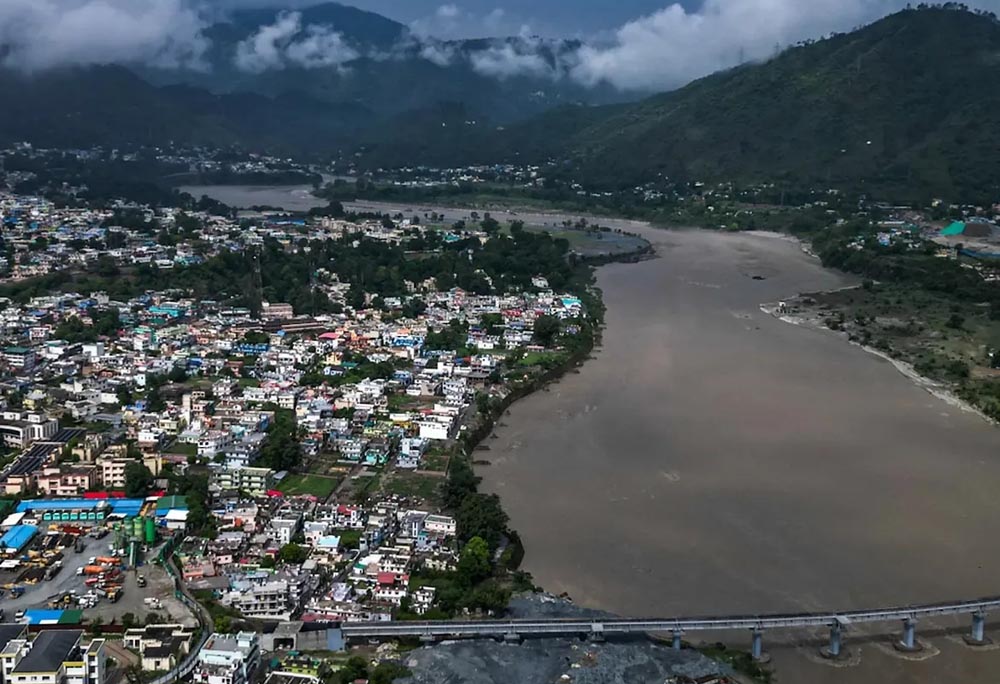
Srinagar, Uttarakhand, is one of those Himalayan towns that can easily be overlooked by travelers rushing toward famous destinations such as Badrinath, Kedarnath, Auli, or the Valley of Flowers. Yet this historic settlement in Pauri Garhwal offers something different: a combination of Garhwali history, religious traditions, education, river landscapes, local markets, mountain culture, and access to some of the most significant destinations of the central Himalaya. Situated along the Alaknanda River, Srinagar has long been an important urban and cultural center of Garhwal.
Unlike the Srinagar in Kashmir, Srinagar of Uttarakhand is located in the Garhwal Himalayas and has its own distinctive historical identity. The town became particularly important after the Garhwal Kingdom established its capital here in the early sixteenth century. Today, it functions as an important town of Pauri Garhwal and as a convenient base for exploring the surrounding mountains, temples, river valleys, and pilgrimage routes.
Where Is Srinagar, Uttarakhand?
Srinagar is located in Pauri Garhwal district of Uttarakhand, on the banks of the Alaknanda River. The town lies in the central Garhwal region and is positioned at a relatively moderate elevation compared with many Himalayan settlements. Its valley setting gives it a different atmosphere from the high-altitude destinations farther north.
The Alaknanda is one of the major rivers of Uttarakhand and an important component of the Ganga river system. The river landscape is one of Srinagar’s defining geographical features, while surrounding hills provide the town with a distinctly Himalayan setting.
The town’s location is also significant from a transportation perspective. Srinagar lies along routes leading toward important destinations in Garhwal, making it a practical stopping point for travelers heading toward places such as Rudraprayag, Badrinath and other Himalayan pilgrimage and tourist areas.
A Town With a Remarkable History
The history of Srinagar is closely connected with the development of the Garhwal Kingdom. According to the Pauri Garhwal district administration, King Ajaypal consolidated various Garhwal principalities and established a unified Garhwal kingdom. The capital was subsequently shifted to Srinagar during the period around 1506–1519.
For centuries, Srinagar therefore served as the political center of Garhwal. This royal association helped establish the town as a place of importance for administration, religion, art, architecture and regional culture.
The history of the town also reflects the turbulent political changes experienced by the Himalayan region. The Garhwal Kingdom faced attacks and conflicts involving neighboring powers, and the early nineteenth century brought the Gorkha invasion. The Gorkhas occupied Garhwal before British forces defeated them in 1815.
Srinagar’s historical importance did not end with the loss of its position as a royal capital. It continued to function as an important commercial and cultural settlement in the Garhwal hills. Its location beside the Alaknanda made it a natural center for movement and trade between different parts of the region.
The old town, however, experienced devastating natural disasters. Historical records describe floods that caused extensive destruction, contributing to the loss of portions of old Srinagar and many historical structures. This is an important part of understanding the town today: much of what visitors see is a modern settlement built in a landscape carrying centuries of history.
Religious Heritage of Srinagar
Religion is deeply woven into the identity of Srinagar. The surrounding area contains temples, sacred sites, caves and traditional pilgrimage locations associated with Hindu mythology and the spiritual traditions of the Himalayas. The district administration describes Srinagar as an area associated with the penance of sages and saints.
One of the important temples associated with the town is Kamleshwar Mahadev Temple. Dedicated to Lord Shiva, the temple is connected with a traditional legend involving Lord Rama and his worship of Shiva. The temple becomes especially significant during Baikunth Chaturdashi, when special worship and a fair are held. Another important site is Shankar Math, which has traditions connecting the location with Adi Shankaracharya and Shaivite worship. Local legends surrounding the site also connect it with a Sriyantra and ancient religious practices. Kesho Rai Math is another noteworthy religious and architectural site. According to the district administration, the temple is associated with a devotee named Kesho Rai who was traveling toward Badrinath. A traditional account says that Narayana appeared to him in a dream, leading to the discovery of an image and the eventual construction of a temple.
These sites illustrate why Srinagar is more than a convenient highway stop. Its religious character is connected to the broader sacred geography of Garhwal, where rivers, mountains, temples and pilgrimage routes form an interconnected cultural landscape.
Dhari Devi Temple: One of the Region’s Best-Known Sacred Sites
One of the most significant attractions near Srinagar is Dhari Devi Temple, situated along the Alaknanda River. The temple is dedicated to Goddess Kali and is visited by devotees from different parts of Uttarakhand and beyond.
According to the traditional account recorded by the Pauri Garhwal district administration, the deity’s idol became associated with a rock along the river after a flood, and local villagers eventually established the shrine at the location. Special worship takes place during Navratri. The temple is located approximately 15 kilometers from Srinagar along the route toward Badrinath.
The setting itself is part of the attraction. The combination of steep Himalayan slopes, the Alaknanda River and the temple creates a landscape in which spirituality and nature are closely connected.
Visitors should approach the temple primarily as a place of worship rather than simply as a sightseeing stop. Respecting local customs, maintaining appropriate behavior and following temple instructions are important.
Nature and the Alaknanda River
The natural environment surrounding Srinagar is one of its greatest attractions. The Alaknanda gives the town a strong geographical identity, while the surrounding hills create opportunities for scenic drives and viewpoints.
The river is especially impressive when viewed from elevated locations around the town. Depending on the season and weather, the landscape can shift dramatically—from lush green hills during the monsoon period to clearer mountain scenery during autumn and winter.
Travelers interested in photography can find plenty of opportunities around the river, surrounding slopes and nearby viewpoints. Early morning and late afternoon often provide softer natural light and more atmospheric scenery.
The town itself is not primarily a wilderness destination. Instead, its appeal lies in experiencing the transition between the more developed valley settlement and the surrounding Himalayan landscape.
Srinagar as an Educational Center
Modern Srinagar has developed beyond its historical and religious importance. Education plays a major role in the town’s contemporary identity.
The presence of Hemwati Nandan Bahuguna Garhwal University has contributed substantially to Srinagar’s role as an educational center. The university has helped bring students, teachers, researchers and academic activities into the region.
This gives the town a distinctive character. Traditional temples and old Garhwali culture exist alongside colleges, student communities, markets, modern businesses and transportation infrastructure.
For visitors, this means Srinagar can feel considerably more urban and active than smaller Himalayan villages. It is a functioning town rather than a destination designed exclusively around tourism.
Local Culture and Garhwali Life
A visit to Srinagar also provides an opportunity to experience aspects of Garhwali culture. The wider Garhwal region has its own language traditions, music, dances, food, festivals, religious customs and architectural heritage.
Traditional festivals remain particularly important. Religious celebrations at temples can bring together local communities, pilgrims and visitors. Such occasions can provide a more meaningful cultural experience than simply visiting a landmark and taking photographs.
Food is another way to explore local culture. Garhwali cuisine traditionally makes extensive use of grains, lentils, seasonal vegetables and locally available ingredients. Dishes such as kafuli, chainsoo, phaanu, aloo ke gutke and jhangora-based preparations are associated with Uttarakhand’s culinary traditions.
Travelers should remember that recipes and availability vary from restaurant to restaurant. In Srinagar’s more commercial areas, visitors can also find North Indian, Chinese, South Indian and other familiar options.
Markets and Everyday Life
One of Srinagar’s strengths is that it is a genuine working Himalayan town rather than an isolated tourist resort. Local markets provide an opportunity to observe everyday life in Garhwal.
Shops sell clothing, groceries, household products, religious items, medicines and travel necessities. Because Srinagar lies along routes used by pilgrims and travelers, the town also has numerous establishments catering to people traveling through the region.
The local market atmosphere is particularly useful for travelers who want practical supplies before continuing toward higher-altitude destinations.
Rather than expecting a large collection of luxury shopping centers or specialized tourist markets, visitors should approach Srinagar’s shopping experience as an opportunity to purchase everyday goods and locally relevant items.
Places to Stay and Eat
Accommodation in Srinagar ranges from simple hotels to more comfortable properties. Because the town serves both local residents and travelers, visitors can generally find lodging suited to different budgets.
Among the accommodation options currently listed in the area is jüSTa Riverside Resort, located along the Badrinath route near Maletha. Other hotels listed around Srinagar include Hotel Devlok, Hotel Love Kush and Hotel moonrise.
Food options include local eateries and multi-cuisine restaurants. Namaste Srinagar- A multi cuisine restaurant, Sariyal’s Brew & Bites and 9 Hills Restaurant and cafe are among the businesses currently listed in the town.
Because business hours and availability can change, travelers should confirm opening times and accommodation availability before relying on a particular establishment.
How to Reach Srinagar, Uttarakhand
Road travel is the most practical way to reach Srinagar. The town is connected by important roads through the Garhwal region, making it accessible from destinations such as Rishikesh, Devprayag, Rudraprayag and Pauri.
For travelers arriving from the plains, Rishikesh is an important starting point for journeys deeper into Garhwal. From there, the road gradually moves into the Himalayan landscape, passing through river valleys, mountain slopes and settlements.
Bus services, shared vehicles and taxis are commonly used for travel within the region. Private vehicles offer greater flexibility, particularly for travelers who want to stop at viewpoints, temples and smaller settlements along the route.
The nearest major airport for many travelers is Jolly Grant Airport near Dehradun, while rail travelers commonly use Rishikesh or Haridwar as gateways before continuing by road.
Mountain travel requires patience. Distances that look short on a map can take considerably longer because of winding roads, traffic, weather conditions and occasional road restrictions.
Best Time to Visit Srinagar
Srinagar can be visited throughout much of the year, but the ideal period depends on what a traveler wants to experience.
Spring brings pleasant temperatures and increasingly green landscapes. Summer can be warmer than visitors might expect because Srinagar sits at a relatively moderate elevation compared with higher Himalayan destinations. The town can therefore feel significantly warmer than places located several thousand meters above sea level.
The monsoon season brings lush greenery but can also bring heavy rainfall and difficult road conditions in parts of the Himalayan region. Travelers planning road journeys during this period should monitor weather and local travel advisories.
Autumn is particularly attractive for travelers interested in clearer mountain views. Winter can provide crisp weather, although temperatures fall considerably and conditions can change quickly.
For sightseeing, cultural exploration and road travel, the period outside the heaviest monsoon conditions is generally easier to manage.
Things to Do in and Around Srinagar
A good Srinagar visit does not need to be rushed. Travelers can begin with the town’s temples and historical sites, then spend time near the Alaknanda River and explore local markets.
Visiting Kamleshwar Mahadev, Shankar Math and Kesho Rai Math provides an introduction to the area’s religious heritage. A trip toward Dhari Devi adds another important spiritual destination to the itinerary.
The town can also serve as a base for exploring attractions farther into Garhwal. Its position along important routes makes it useful for travelers planning longer journeys toward the higher Himalayas.
Photography, scenic drives, local food exploration and cultural observation can be equally rewarding for visitors who are not primarily interested in pilgrimage.
Nearby Destinations
One of Srinagar’s major advantages is its location relative to other Garhwal destinations. Travelers can continue toward Rudraprayag, where important river valleys meet, or travel farther toward Badrinath and other Himalayan pilgrimage destinations.
Pauri is another nearby destination offering mountain scenery and a quieter hill-station atmosphere. Khirsu, with its forested surroundings and mountain views, is also suitable for travelers looking for a more peaceful experience.
For longer journeys, Srinagar can form part of itineraries covering the broader Garhwal region, although distances and road conditions should always be considered when planning day trips.
Responsible Tourism in Srinagar
Responsible travel is particularly important in Himalayan towns. The mountains are environmentally sensitive, and rapid tourism growth can place pressure on water, waste-management systems, roads and local ecosystems.
Visitors can help by avoiding single-use plastics, carrying reusable water bottles, disposing of waste properly and avoiding litter near rivers and temples. Religious sites should be treated respectfully, and visitors should follow local rules concerning photography, clothing and behavior.
Supporting local hotels, restaurants, guides, drivers and small businesses can also help ensure that tourism benefits the communities that live in the region.
Why Srinagar Deserves More Attention
Srinagar, Uttarakhand, does not rely on one spectacular attraction. Its appeal comes from the way several elements come together: the Alaknanda River, Garhwali history, temples, education, markets, mountain scenery and its position along important Himalayan travel routes.
Its historical connection with the Garhwal Kingdom gives the town an unusual depth. The fact that Srinagar served as the capital of Garhwal for centuries makes it an important place for understanding the political and cultural development of the region.
At the same time, modern Srinagar demonstrates how Himalayan towns continue to evolve. It is a center for education, commerce, transportation and local administration while retaining connections with ancient religious traditions.
For travelers who only pass through Srinagar on the way to another destination, the town may appear to be simply another stop along the mountain highway. Those who slow down, however, can discover a place where the history of Garhwal, the spirituality of the Himalayas and the everyday life of a modern mountain town meet.
Final Thoughts
Srinagar, Uttarakhand, is best understood as a gateway and a destination at the same time. Its position beside the Alaknanda River connects it naturally with the geography of Garhwal, while its temples and historical sites connect it with centuries of religious and cultural traditions.
The town’s story stretches from the era of the Garhwal Kingdom to its present-day role as an educational and commercial center. Its surrounding landscapes provide scenic beauty, while nearby sacred sites such as Dhari Devi and Kamleshwar Mahadev add spiritual significance.
For travelers interested in discovering a less-celebrated but historically significant part of Uttarakhand, Srinagar offers an opportunity to experience the Garhwal Himalayas beyond the most famous tourist destinations. It is a place where rivers, temples, history, education, local markets and mountain culture come together—and that combination makes Srinagar one of the more interesting towns to explore in the heart of Uttarakhand.

