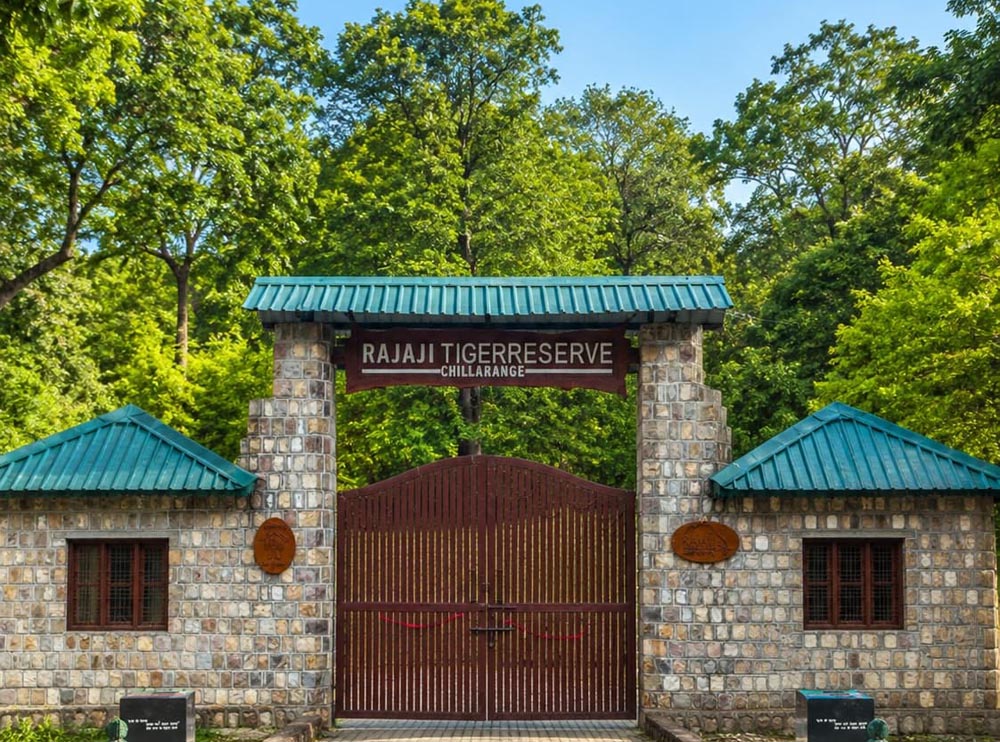
Rajaji National Park is one of Uttarakhand’s most fascinating wildlife destinations, where the Himalayan foothills meet the upper Gangetic plains and dense forests stretch across the Shivalik landscape. Known particularly for its large population of Asian elephants, the park also provides habitat for tigers, leopards, deer, Himalayan goral, wild boar, numerous reptiles and hundreds of bird species. Unlike some Himalayan destinations that are primarily associated with high mountains, Rajaji offers a very different experience: sal forests, grasslands, river valleys, rocky streams and gently rising Shivalik hills create a landscape that feels both wild and accessible.
Located across the districts of Haridwar, Dehradun and Pauri Garhwal, Rajaji National Park covers about 820.42 square kilometres. The Ganga River passes through the park and divides its landscape into distinct sections, including the Chilla range on the eastern side. The park was created in 1983 through the amalgamation of the Rajaji, Motichur and Chilla wildlife sanctuaries. It was named after C. Rajagopalachari, popularly known as Rajaji, a prominent freedom fighter and the first Indian Governor-General of independent India. In 2015, the National Tiger Conservation Authority approved its designation as a tiger reserve, creating the much larger Rajaji Tiger Reserve.
Where Is Rajaji National Park?
Rajaji National Park occupies a strategically important location in Uttarakhand. Its forests lie along the Shivalik foothills, between the Himalayan mountain system and the plains of northern India. The protected landscape extends across Haridwar, Dehradun and Pauri Garhwal districts, making it relatively easy to combine a wildlife excursion with visits to important destinations such as Haridwar, Rishikesh and Dehradun.
The elevation of the national park ranges approximately from 302 metres to 1,000 metres above sea level. This variation creates several habitats within a comparatively compact geographical region. Forest-covered hills, riverine areas, grasslands, ravines and open woodland all contribute to the park’s ecological diversity. The Ganga is particularly important to the landscape, flowing through the protected area and supporting the surrounding ecosystems.
The location also gives Rajaji considerable importance beyond tourism. The reserve forms part of a broader wildlife landscape in northern India, where forests and wildlife corridors connect protected areas and allow animals to move between habitats. The Wildlife Institute of India has identified Rajaji’s importance for maintaining wildlife connectivity within the Shivalik and Terai landscape.
History of Rajaji National Park
The history of Rajaji National Park is closely associated with the development of wildlife conservation in the Shivalik region. Before becoming a national park, the area consisted of separate wildlife sanctuaries. In 1983, the Rajaji, Chilla and Motichur sanctuaries were brought together to establish Rajaji National Park.
The name Rajaji honours Chakravarti Rajagopalachari, who was an important figure in India’s freedom movement and later became the first Indian Governor-General. The creation of the national park brought a large and ecologically significant section of the Shivalik landscape under unified protection.
Elephant conservation has always been particularly important here. Rajaji lies within the Shivalik Elephant Reserve landscape and represents an important stronghold for the Asian elephant. The protected forests provide feeding areas, water sources and movement corridors for elephant herds. The region is also significant for the conservation of tigers, which occupy the northwestern portion of their broader Terai Arc distribution.
A major milestone came in 2015 when Rajaji National Park became part of Rajaji Tiger Reserve. The notified tiger reserve covers approximately 1,075.17 square kilometres, consisting of about 819.54 square kilometres of core area and 255.63 square kilometres of buffer area.
Landscape and Natural Beauty
The beauty of Rajaji comes from its combination of forest, hills, rivers and grasslands. It does not resemble the evergreen mountain forests found at higher elevations in Uttarakhand. Instead, visitors encounter extensive sal forests, mixed deciduous vegetation, riverine woodland, grassland and dry forest communities.
The Shivalik hills are geologically young and are characterised by ridges, valleys and seasonal streams. During the monsoon, streams flowing through the ravines can become powerful torrents, while many of them remain comparatively dry during other periods of the year. This seasonal rhythm has shaped the vegetation and wildlife habitats of the region.
The Ganga adds another dimension to the scenery. Riverine vegetation and water bodies create important habitats for birds, mammals, reptiles and aquatic species. In some places, open grasslands provide excellent visibility and contrast beautifully with the surrounding forests.
For photographers, the combination of tall sal trees, golden grasslands, distant hills and open river valleys can be especially rewarding. Early morning often brings soft light, mist and active wildlife, while late afternoon creates warm tones across the forest.
Flora of Rajaji National Park
Rajaji’s vegetation reflects its position between the Himalayan foothills and the Gangetic plains. Sal is one of the dominant trees, while other important species include shisham, khair, rohini, amaltas, palash and various mixed deciduous species.
The park contains several forest communities, including moist Shivalik sal forests, moist mixed deciduous forests, northern dry mixed deciduous forests and khair-sissoo forests. Low alluvial savannah woodland occurs in some of the drier southern areas, while chir pine can be found in higher sections of the Shivalik hills.
The diversity of vegetation is important because different animals depend on different habitats. Elephants, for example, require extensive feeding areas and access to water, while deer often use grasslands and forest edges. Birds occupy everything from tall forest canopies to riverbanks and open areas.
During the flowering season, trees such as palash and amaltas can add striking colour to the landscape. The changing appearance of the vegetation throughout the year is one of the reasons repeat visits can provide very different visual experiences.
Wildlife in Rajaji National Park
Wildlife is the primary attraction of Rajaji National Park, with the Asian elephant arguably being its most iconic animal. The park supports one of the important elephant populations in northern India and is widely recognised for elephant conservation.
Tigers are also present, although seeing one during a safari is never guaranteed. Rajaji represents an important western and northwestern part of the tiger’s distribution in the Terai Arc landscape. Leopards are another major predator found here and can occupy habitats that overlap with those of several prey species.
The park contains numerous herbivores, including chital or spotted deer, sambar, barking deer, wild boar, nilgai and goral. These animals form an important part of the ecosystem and provide prey for carnivores. Other mammals reported from the reserve include jungle cats, jackals, hyenas, civets, Himalayan yellow-throated martens and sloth bears.
The presence of goral is particularly interesting because this mountain goat-like animal is associated with rocky slopes and lower Himalayan habitats. Visitors may also encounter langurs and other smaller mammals during forest drives.
Birdwatching in Rajaji
Rajaji is not only a destination for large mammals. It is also a significant birdwatching location, with more than 300 bird species reported from the reserve. The diversity of habitats, combined with rivers, wetlands, forests and grasslands, provides opportunities to observe both resident and migratory species.
Commonly encountered groups include kingfishers, woodpeckers, barbets, parakeets, peafowl, junglefowl, warblers, thrushes and finches. Hornbills are among the particularly attractive birds associated with the reserve.
During the migratory season, water bodies and wetlands can attract species such as pochards, gulls, mallards, teals and shelducks. Birdwatching can therefore be an excellent reason to spend additional time in the area rather than treating the park solely as a tiger-safari destination.
Early morning is usually especially rewarding for birdwatchers because birds are active, temperatures are pleasant and forest sounds are more noticeable before the heat of the day develops.
Safari Experience at Rajaji National Park
A wildlife safari is the principal way for visitors to explore the park’s designated tourism areas. Jeep safaris provide an opportunity to travel through forest tracks and open habitats while accompanied by authorised personnel.
The Chilla area is among the best-known safari sections. Its landscape includes dense sal forest as well as open areas, and safari routes can extend for several kilometres. Other tourism areas associated with Rajaji include Motichur and Jhilmil, while access and operational arrangements can vary according to the season and forest department regulations.
Safari schedules change seasonally. Current published information lists different entry windows between mid-November and mid-June, with earlier morning departures as summer temperatures increase. Visitors should confirm the exact timings and entry arrangements when making their booking because forest authorities can revise schedules.
A safari should be approached as a wildlife observation experience rather than a guaranteed animal-sighting trip. Even in areas known for elephants or tigers, wildlife moves freely through a large natural habitat. Some safaris may produce spectacular encounters, while others may mainly offer tracks, calls, birds, landscapes and smaller animals.
Chilla Range
Chilla is one of the most popular areas for wildlife tourism in Rajaji. It lies close to Haridwar and is particularly well known for elephant sightings. The combination of forest, grassland and water sources creates varied habitat along the safari route.
The Chilla landscape also provides opportunities to see deer, wild boar, langurs and numerous birds. Because the area is relatively accessible from Haridwar and Rishikesh, it is often chosen by travellers who want to experience a wildlife safari without making a lengthy journey into a remote forest destination.
Motichur and Other Areas
Motichur is another important part of the Rajaji landscape. Together with Rajaji, it forms a major western section of the protected ecosystem. The terrain here includes forests, hills, ravines and streams.
Jhilmil is also notable for its wetland and grassland habitats. Such habitats are particularly valuable for birds and grazing animals and demonstrate that Rajaji’s ecological importance extends beyond its famous elephants and tigers.
It is important to remember that tourism access is restricted to designated areas. Much of the reserve remains protected from regular tourist activity so that wildlife can have relatively undisturbed habitat.
Best Time to Visit Rajaji National Park
The principal safari season generally runs from around mid-November to mid-June, with the park closing during the monsoon period. The exact opening and closing dates can vary according to forest department decisions.
Winter, from November through February, offers comfortable daytime conditions and pleasant safari weather. Mornings can be quite cold, especially in open vehicles, so warm clothing is useful.
March and April can be particularly interesting because temperatures begin rising and wildlife may become more active around available water sources. The landscape also begins taking on a warmer, drier appearance.
May and early June can be hot, but early morning safaris can still be rewarding. Animals may concentrate around water sources, while the dry vegetation can make some wildlife easier to spot in open areas. However, summer heat should be taken seriously, especially during afternoon excursions.
The monsoon is generally unsuitable for regular tourism because heavy rainfall affects roads, streams and forest conditions. The seasonal closure also gives the ecosystem a period of reduced tourist pressure.
How to Reach Rajaji National Park
Rajaji National Park is conveniently positioned near several major towns. Haridwar and Rishikesh are among the most practical bases for visitors travelling to the Chilla side of the park, while Dehradun provides access to other parts of the protected landscape.
Haridwar is well connected by rail and road with major northern Indian cities. Rishikesh is also well connected by road and serves as a popular base for travellers combining wildlife tourism with river and spiritual tourism.
Dehradun has an airport and strong road and rail connections, making it another convenient starting point. From these cities, visitors can arrange local transport to their designated safari entry gate.
Because Rajaji covers a large area, travellers should choose accommodation according to the particular safari gate they intend to use. A hotel that appears close to one section of the reserve may be inconvenient for another.
Places to Visit Near Rajaji National Park
One of the advantages of visiting Rajaji is the large number of attractions nearby. Haridwar is particularly important for its religious and cultural heritage. Har Ki Pauri, the Ganga ghats and evening Ganga Aarti attract visitors throughout the year.
Rishikesh offers a combination of spirituality, yoga, river scenery and adventure tourism. Visitors can explore temples and ashrams, walk along the Ganga or participate in activities such as rafting where conditions and regulations permit.
Dehradun is another useful extension to a Rajaji trip. The city offers attractions including the Forest Research Institute, Robber’s Cave, Sahastradhara and several museums and cultural sites.
Travellers with additional time can continue towards Mussoorie and explore the hills, viewpoints and colonial-era character of the region. This makes Rajaji suitable for a broader Uttarakhand itinerary rather than only a dedicated wildlife holiday.
Accommodation Around Rajaji
Accommodation choices range from hotels and guesthouses in nearby towns to forest-oriented stays and wildlife lodges. Haridwar, Rishikesh and Dehradun provide the widest range of accommodation, while properties closer to individual park gates may offer a more immersive experience.
When selecting accommodation, location should be considered alongside facilities. An early-morning safari may require leaving the hotel before sunrise, so staying reasonably close to the selected gate can make the experience more comfortable.
Travellers should also check whether meals, transport to the safari gate and other services are included in their accommodation package. During peak wildlife seasons, advance booking is advisable.
Responsible Tourism in Rajaji
Responsible tourism is essential in a protected landscape such as Rajaji. Visitors should follow all instructions given by forest officials and safari guides. Wildlife should never be approached, fed or disturbed.
Noise should be kept to a minimum. Loud conversations, music and attempts to attract animals can disrupt natural behaviour. Visitors should also avoid littering and should take all non-biodegradable waste back with them.
Photography should be conducted responsibly. A good photograph should never come at the expense of an animal’s safety or comfort. Visitors should avoid demanding that drivers chase wildlife or position vehicles dangerously close to animals.
The importance of responsible tourism becomes especially clear in an elephant habitat. Elephants are powerful wild animals and require adequate space. Keeping a safe distance and allowing herds to cross roads naturally is essential.
Conservation Importance
Rajaji is important because it protects far more than individual animals. It conserves an interconnected ecosystem containing forests, grasslands, rivers, streams and wildlife corridors.
The reserve’s importance for elephants and tigers extends beyond its administrative boundaries. Wildlife populations need connected habitats to move, feed, reproduce and maintain genetic diversity. Rajaji’s position within the Shivalik and Terai landscape therefore gives it significance at a regional level.
The National Tiger Conservation Authority identifies Rajaji as a tiger reserve covering more than 1,075 square kilometres, while the underlying national park forms its approximately 819.54-square-kilometre core area.
Conservation challenges include habitat fragmentation, human-wildlife interactions, pressure from surrounding development and maintaining wildlife movement corridors. Effective management requires cooperation between forest authorities, local communities, researchers, tourism operators and visitors.
Tips for a Memorable Visit
A Rajaji safari is best approached with patience. Visitors should not judge the experience solely by whether they see a tiger. An elephant herd moving through the forest, a hornbill flying across the canopy, a sambar calling from dense vegetation or the sight of deer grazing in a grassland can all become memorable wildlife encounters.
Carry binoculars if birdwatching interests you, wear comfortable clothing suitable for changing temperatures and protect yourself from the sun. Early morning safaris can be chilly, while afternoons can become warm.
Always verify the latest safari dates, entry rules, permitted zones and timings before travelling. Published schedules can change, particularly because forest authorities may modify operations according to weather, conservation requirements or local conditions.
Rajaji National Park: A Different Side of Uttarakhand
Rajaji National Park offers an important reminder that Uttarakhand is not defined only by its snow-covered peaks and hill stations. At the foothills, an entirely different world unfolds: elephants move through sal forests, deer graze in open grasslands, birds fill the canopy with calls and the Ganga cuts through a landscape shaped by forests and Shivalik hills.
Its accessibility from Haridwar, Rishikesh and Dehradun makes Rajaji particularly attractive for travellers who want to include wildlife in a wider Uttarakhand journey. At the same time, its ecological importance makes it much more than a tourist attraction.
For anyone interested in wildlife, photography, birdwatching, forests or the natural heritage of Uttarakhand, Rajaji National Park offers an opportunity to experience one of northern India’s distinctive ecosystems. Its elephants may be its most recognisable residents, but the real attraction is the complete living landscape—the forests, rivers, grasslands, hills and countless species that depend on them.
A visit to Rajaji is therefore best remembered not simply as a safari, but as an encounter with the Shivalik wilderness and an opportunity to appreciate why protecting connected natural habitats remains essential for the future of Uttarakhand’s wildlife.
 Kalpita Ganguli