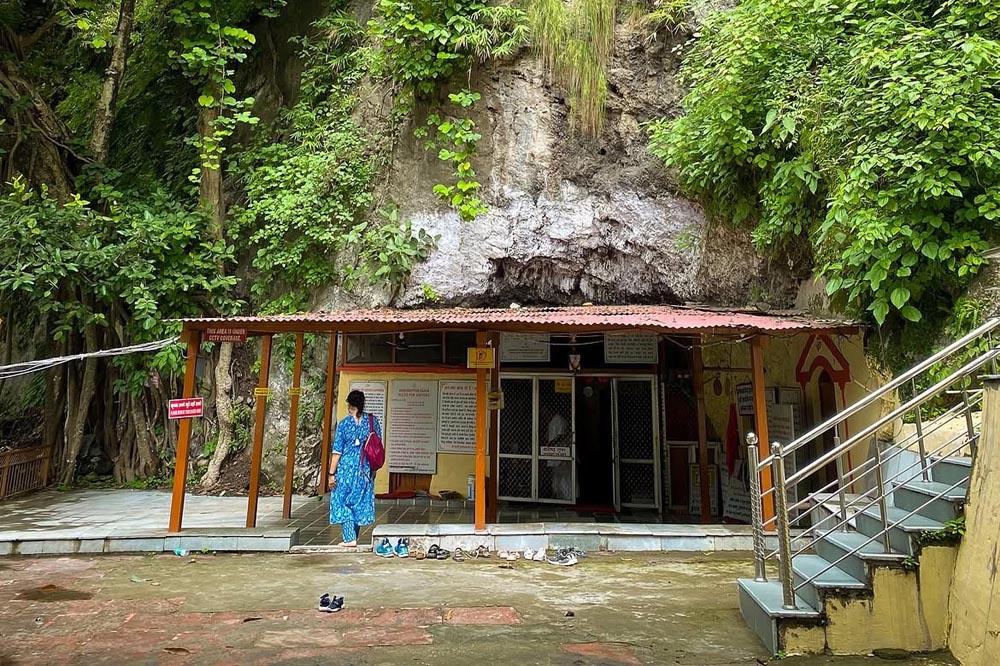
Hidden amid the forested hills beside the sacred Ganga, Vashishta Cave (Vashishta Gufa) is one of the quieter spiritual destinations around Rishikesh, Uttarakhand. Unlike the busy ghats, yoga centres and popular attractions of central Rishikesh, the cave offers a very different experience—one centred on silence, meditation, mythology and the natural beauty of the Himalayan foothills.
Located roughly 20–25 kilometres from Rishikesh along the Rishikesh–Badrinath road, the cave is traditionally associated with Sage Vashishta, one of the Saptarishis, or seven great sages of Hindu tradition, and the spiritual teacher of Lord Rama according to the Ramayana tradition. The cave is situated near the Ganga and forms part of a spiritual complex associated with the Swami Purushottamananda Ashram.
The Spiritual Identity of Vashishta Cave
Vashishta Cave is not primarily an architectural monument. Its importance comes from the combination of mythology, natural surroundings and its continuing association with meditation. The cave itself is a natural rock formation, and visitors enter a relatively dark and secluded interior where a Shiva lingam is traditionally worshipped. Sources describing the site place the cave on the Ganga-side slopes near Shivpuri, making its setting as important to the experience as the cave itself.
The atmosphere is markedly different from the commercial parts of Rishikesh. There are no large temple complexes or elaborate structures dominating the landscape. Instead, visitors encounter a forested hillside, steps leading down towards the river, the sound of the Ganga and a small cave designed by nature rather than human architecture.
For travellers interested in spirituality, this simplicity is perhaps the most distinctive feature of Vashishta Gufa. The cave is traditionally regarded as a place where meditation and tapasya were performed, and even today people visit specifically to sit quietly rather than simply photograph the attraction.
Who Was Sage Vashishta?
The story of Vashishta Cave is closely connected with the revered Sage Vashishta. In Hindu tradition, Vashishta is counted among the Saptarishis and is closely associated with the royal household of Ayodhya. He is traditionally described as the guru or spiritual teacher of Lord Rama and his brothers.
Vashishta’s importance extends beyond the Ramayana tradition. He is also associated with Vedic literature and a long tradition of philosophical and spiritual teachings. Consequently, places connected through tradition with his meditation naturally acquired an important position among pilgrims and spiritual seekers.
According to local tradition surrounding Vashishta Gufa, Sage Vashishta and his wife Arundhati spent time in this region. The cave became associated with his meditation and spiritual practices. A nearby cave is known as Arundhati Gufa, reinforcing the connection between the two figures in local religious tradition.
It is important to distinguish these traditional accounts from independently documented archaeological history. The association with Sage Vashishta belongs primarily to Hindu religious tradition and local belief rather than a modern archaeological dating of the cave to the period of the sage.
The Legend Behind the Cave
One of the most frequently repeated stories connected with Vashishta Gufa concerns a difficult period in Sage Vashishta’s life. According to the traditional account, after the death of his children, the sage became deeply distressed and attempted to end his life in the Ganga. The river, however, did not allow him to die. After this episode, Vashishta and his wife Arundhati are said to have remained in the area, where the sage eventually devoted himself to meditation.
The story is part of the sacred narrative surrounding the location and helps explain why the cave is viewed as a place of transformation and spiritual contemplation. Rather than being simply a geological formation, the cave therefore represents, in the religious imagination of devotees, a place where grief, contemplation and spiritual discipline were transformed into wisdom.
For visitors, the story adds another dimension to the experience. The cave’s darkness and quiet naturally encourage introspection, which perhaps explains why the location continues to attract meditation practitioners.
The Natural Setting beside the Ganga
One of the strongest reasons to visit Vashishta Cave is its setting. Rishikesh is already renowned for its relationship with the Ganga, but the landscape becomes increasingly quiet as one travels upstream from the central town.
The cave is located on the wooded slopes above the river. The Ganga flows nearby, while the surrounding hills provide a distinctly Himalayan atmosphere. Depending on the season, the landscape can appear dramatically different. Summer brings strong sunlight and greener vegetation, the monsoon transforms the surrounding hills into lush landscapes, while winter provides cooler temperatures and clearer mountain scenery.
The location also demonstrates why the Himalayan foothills have historically attracted ascetics and meditation practitioners. A combination of flowing water, forests, caves and relative isolation creates an environment naturally suited to retreat and contemplation.
Uttarakhand Tourism describes Rishikesh more broadly as a major pilgrimage and spiritual destination situated against the Himalayan backdrop and the Ganga, with yoga, meditation and traditional spiritual practices forming an important part of the region’s identity.
Inside Vashishta Gufa
The interior of Vashishta Gufa is intentionally simple. Unlike an elaborate temple with large halls, ornate pillars and extensive decoration, the cave consists primarily of a natural rock passage and chamber.
A Shiva lingam is associated with the interior, and an oil lamp may provide the principal illumination. The darkness is not an inconvenience but part of the character of the site. Visitors generally enter quietly and sit for meditation or prayer.
The cave’s restricted interior space means that it is not appropriate to treat it like an ordinary sightseeing attraction. Loud conversations, music, flash photography and disruptive behaviour can disturb people who have come specifically for meditation.
For someone visiting for the first time, even sitting silently for ten or fifteen minutes can provide a more meaningful experience than simply walking through the cave and immediately leaving.
Swami Purushottamananda and the Modern History of the Cave
The modern history of Vashishta Gufa is closely associated with Swami Purushottamananda. Accounts of the site describe his arrival in the area around the late 1920s or early 1930s and his subsequent association with the cave and ashram. The exact year varies among published accounts, with some sources mentioning 1928 and others 1930.
The ashram established around the cave helped preserve the site as a place for spiritual practice. Rather than turning the cave into a conventional tourist attraction, its religious character has remained central.
Today, the Vashishtha Gufa Ashram is located at the site and is associated with the maintenance and spiritual activities surrounding the cave. Vashishtha Gufa Ashram
This modern spiritual connection is significant because Vashishta Gufa is not merely a legendary location preserved in stories. It remains a functioning place of meditation and worship.
Arundhati Gufa
A visit to Vashishta Gufa can also be combined with a visit to nearby Arundhati Gufa. Arundhati Gufa The cave is traditionally associated with Arundhati, the wife of Sage Vashishta and another highly respected figure in Hindu tradition.
Arundhati is traditionally celebrated for her devotion, wisdom and spiritual strength. The presence of a cave associated with her close to Vashishta Gufa contributes to the broader sacred landscape.
Together, the caves create an interesting destination for travellers who want to explore the mythological traditions associated with the sages of ancient India.
How to Reach Vashishta Cave
Vashishta Gufa is accessible from Rishikesh by road. Most visitors travel along the Rishikesh–Badrinath road towards the Shivpuri and further upstream areas. Published travel sources place the cave at approximately 21–25 kilometres from Rishikesh, although the exact distance depends on the point in Rishikesh from which it is measured.
A taxi or private vehicle is the simplest option for travellers who want flexibility. Local buses and shared transport may also be possible along the highway, although visitors should confirm the current route and drop-off arrangements locally.
After reaching the roadside area near the ashram, visitors descend towards the cave using a flight of steps. Some travel sources describe approximately 200 steps.
The descent is manageable for many travellers, but it should not be underestimated by people with mobility difficulties. The return journey requires climbing back uphill, so comfortable footwear and adequate water are useful.
Distance from Rishikesh and Travel Time
The cave is close enough to Rishikesh to make it a convenient half-day excursion. Depending on traffic, road conditions and the exact starting point, the journey can take roughly 40–60 minutes.
The road itself is part of the experience because it gradually takes travellers away from the crowded urban environment of Rishikesh and deeper into the Himalayan foothills.
For people staying in central Rishikesh, Vashishta Gufa can be combined with other attractions along the same general direction. However, visitors should avoid rushing through the cave. Its main appeal is quiet contemplation rather than the number of attractions that can be covered in a single day.
Opening Hours and Entry
Current business listings for the Vashishtha Gufa Ashram show visitor hours of 8:00 AM to 1:00 PM and 3:00 PM to 6:00 PM, with a midday closure.
Because opening arrangements at religious sites can change due to ceremonies, maintenance or ashram activities, it is sensible to confirm the day’s schedule before travelling, particularly if the visit is being planned around a specific time.
Several travel sources describe the cave as having free entry.
Visitors should nevertheless respect the ashram’s rules and any arrangements in place on the day of their visit.
Best Time to Visit
Vashishta Cave can be visited during much of the year, but the ideal period depends on what kind of experience a traveller wants.
The cooler months from roughly October to March are comfortable for exploring Rishikesh and the surrounding hills. The weather is generally pleasant for walking and sightseeing, although mornings and evenings can become chilly.
April to June can be considerably warmer, especially around midday. An early-morning visit is therefore more comfortable for travellers who want to spend time outdoors.
The monsoon season brings lush greenery to the Himalayan foothills but also increases the possibility of slippery steps, heavy rainfall and changes in river conditions. Since the cave is close to the Ganga and access involves descending steps, extra caution is appropriate during periods of heavy rain.
For meditation, early morning can be particularly attractive because the surroundings are generally quieter. Regardless of the season, visitors should check local conditions before setting out.
Why Vashishta Cave Is Important for Meditation
The cave’s greatest attraction is its suitability for meditation. The enclosed rock chamber naturally reduces visual distractions, while the subdued light creates a very different sensory environment from ordinary tourist attractions.
Meditation does not require elaborate facilities. A person can simply sit comfortably, close their eyes and focus on breathing or prayer. The surrounding silence can make it easier to turn attention inward.
This also explains why the cave has attracted yoga practitioners and spiritual seekers visiting Rishikesh. Rishikesh itself is internationally known for yoga and meditation, with numerous ashrams and spiritual centres.
Vashishta Gufa offers a more secluded expression of the same tradition. It is particularly suited to travellers who prefer quiet spiritual experiences rather than organised sightseeing.
What to Expect During a Visit
Visitors should approach Vashishta Gufa with the understanding that it is a sacred place rather than simply a tourist landmark. The cave may be dark, cool and somewhat confined. People who are uncomfortable in enclosed spaces may prefer to remain outside.
Inside, visitors should keep their voices low and follow any instructions from the ashram. Footwear arrangements may apply around sacred areas, so it is best to observe local practice.
Photography should be undertaken respectfully. If people are meditating, photographing them without permission is inappropriate. Flash photography can also interfere with the atmosphere inside the cave.
The most rewarding way to experience Vashishta Gufa is to slow down. Rather than spending only a few minutes taking photographs, sit quietly, listen to the natural sounds around you and allow yourself time to appreciate the environment.
Things to Carry
A visit does not require elaborate equipment. Comfortable walking shoes are useful because of the steps leading towards the cave. Drinking water is recommended, especially during warmer months.
A light shawl or jacket can be useful during cooler weather, while sun protection is valuable for the outdoor sections of the journey. Travellers who intend to meditate for an extended period may also carry a small personal meditation cloth or shawl, provided it is appropriate for the religious environment.
It is better to travel light because the destination is primarily about experiencing the cave and its surroundings rather than spending time carrying large amounts of luggage.
Nearby Attractions
Vashishta Gufa can be incorporated into a wider Rishikesh itinerary. The central city contains numerous religious and cultural attractions, including Triveni Ghat, Bharat Mandir and the ashram areas around Swargashram. Uttarakhand Tourism identifies Rishikesh as an important pilgrimage and wellness destination with numerous ashrams and spiritual institutions.
The wider route also provides access to the Himalayan landscapes around Shivpuri and the Ganga corridor. Travellers interested in nature can combine the visit with riverside walks or other outdoor experiences, while those interested in spirituality can explore additional temples and ashrams in and around Rishikesh.
However, Vashishta Gufa is best treated as a destination in its own right rather than simply another checkbox on a sightseeing itinerary.
Vashishta Cave for Nature Lovers
Although the cave is primarily known for spirituality, nature lovers can also appreciate the setting. The wooded slopes, river views and mountain environment provide a welcome contrast to the busy streets of Rishikesh.
The journey itself offers opportunities to observe the changing Himalayan landscape. Depending on the season, visitors may see dense greenery, flowering vegetation, exposed rocks and the powerful flow of the Ganga.
The natural environment also reinforces the traditional connection between Himalayan landscapes and meditation. Many ancient spiritual sites in northern India were established in locations where natural isolation made prolonged contemplation possible.
Responsible Tourism at Vashishta Gufa
The peaceful character of Vashishta Cave depends partly on visitors respecting the location. Litter should never be left around the cave, steps or riverbank. Plastic waste should be minimised, and visitors should avoid damaging plants or natural rock formations.
The Ganga is considered sacred by millions of people, so maintaining the cleanliness of the river and its surroundings is especially important. Travellers should also avoid loud music and unnecessary noise.
Responsible tourism is particularly relevant here because the value of Vashishta Gufa lies in its quiet atmosphere. Excessive commercialisation or careless visitor behaviour could diminish precisely what makes the destination special.
A Different Side of Rishikesh
Rishikesh is often associated with rafting, yoga schools, cafés, temples and bustling riverside ghats. Vashishta Cave reveals another side of the destination.
Here, the emphasis is not on adventure or entertainment but on stillness. The journey from the city, the forested hillside, the steps leading towards the Ganga and the dark interior of the cave create a gradual transition from everyday activity to contemplation.
For travellers interested in India’s spiritual heritage, this transition is perhaps the most memorable part of the experience.
Final Thoughts
Vashishta Cave in Uttarakhand is a destination where mythology, meditation and Himalayan nature come together in a remarkably simple setting. Its association with Sage Vashishta gives it deep importance within Hindu tradition, while its connection with Swami Purushottamananda and the continuing presence of the ashram have helped maintain its role as a spiritual retreat.
The cave does not need elaborate architecture or dramatic attractions to make an impression. Its appeal comes from darkness, silence, the nearby Ganga and the sense of stepping temporarily away from the busy modern world.
For anyone travelling to Rishikesh who wants to experience something quieter than the city’s famous ghats and markets, Vashishta Gufa provides an opportunity to slow down and explore a more contemplative side of Uttarakhand. Whether approached as a pilgrimage destination, a meditation space, a cultural landmark or simply a peaceful Himalayan retreat, the cave remains one of the distinctive spiritual places to experience near Rishikesh.

