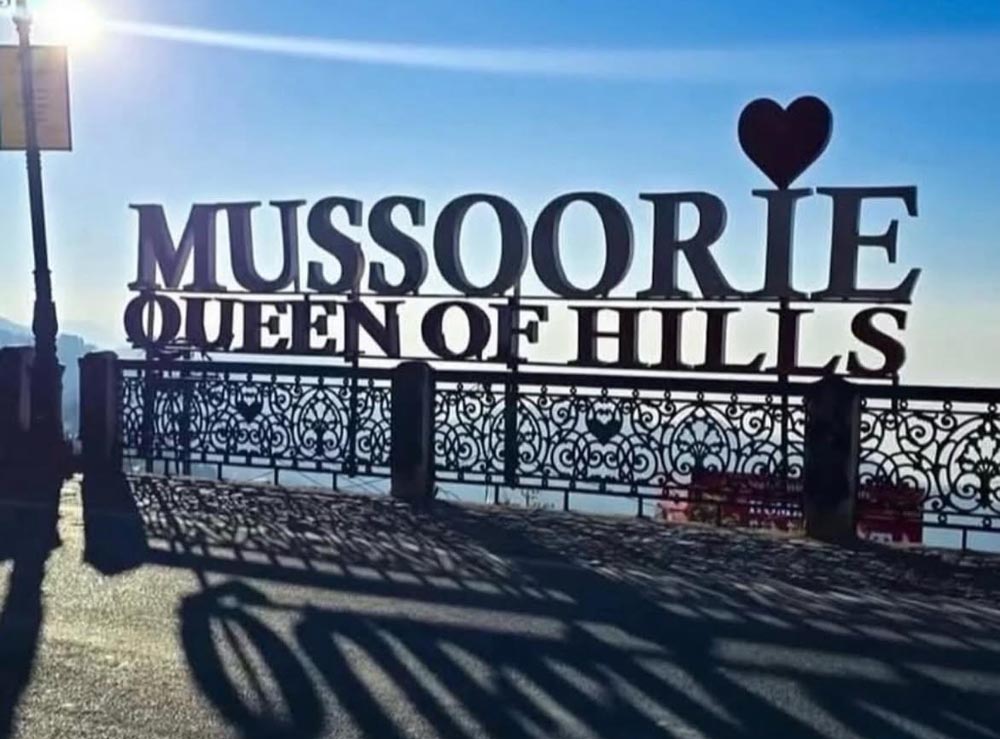
• High above the busy streets of Mussoorie, where winding mountain roads give way to quiet lanes, pine forests and old colonial buildings, lies a destination that captures the timeless charm of the Himalayas. Lal Tibba, meaning “Red Hill,” is one of the most celebrated viewpoints in Uttarakhand and the highest point of Mussoorie. Situated in the peaceful Landour area, Lal Tibba is known for its spectacular Himalayan panoramas, crisp mountain air, colonial heritage and relaxed atmosphere. On a clear day, the distant snow-covered peaks appear almost close enough to touch, while the valleys below unfold in layers of green and blue.

    Unlike some of Mussoorie’s busier attractions, Lal Tibba offers an experience that is as much about the journey and atmosphere as it is about the viewpoint itself. Visitors come here to look at the mountains through telescopes, walk along picturesque roads, enjoy a cup of coffee in a hillside café, explore nearby colonial landmarks and simply spend time surrounded by nature. Its location in Landour also gives Lal Tibba a distinctive character, combining Himalayan scenery with the quiet charm of an old cantonment settlement.

    Where Is Lal Tibba?

    Lal Tibba is located on Depot Hill in Landour, an area adjoining Mussoorie in Dehradun district of Uttarakhand. It stands at roughly 2,275–2,290 metres above sea level, or around 7,500 feet, making it the highest point of the Mussoorie area. Government and tourism sources identify Lal Tibba as Mussoorie’s highest point and highlight its extensive views of the Himalayan ranges.

    The viewpoint is approximately 6–7 kilometres from central Mussoorie, depending on the starting point and route. The drive from the main town gradually takes visitors away from the more crowded sections of Mussoorie and into the quieter surroundings of Landour. The road itself becomes part of the experience, with tall deodar and pine trees, old houses, mountain slopes and occasional glimpses of distant valleys.

    Landour is particularly famous for its peaceful atmosphere. The settlement developed as a British cantonment and retains much of its historic architectural character. The name “Landour” is associated with Llanddowror, a village in Wales, reflecting the British practice of giving familiar names to places during the colonial era. The cantonment developed in the nineteenth century and became associated with military establishments, churches, cottages and sanatoriums.

    The Story Behind the Name Lal Tibba

    The name Lal Tibba literally translates into “Red Hill,” with “Lal” meaning red and “Tibba” referring to a hill or elevated mound. The name has been associated with the distinctive appearance of the hill and its surroundings. One official tourism account also connects the name with the reddish hues produced by rhododendron blooms on the slopes during their flowering season.

    The hill has been part of the wider history of Landour and Mussoorie since the colonial period. The high altitude and comparatively cool climate made the region attractive to British officials and military personnel seeking relief from the heat of the plains. Landour subsequently developed as a cantonment and retreat, leaving behind an architectural and cultural legacy that can still be experienced today.

    This history is one reason Lal Tibba feels different from a conventional tourist viewpoint. The destination is not simply a platform overlooking mountains. It forms part of a much older hill settlement where forests, churches, military history, cottages and winding roads coexist.

    The Himalayan Views from Lal Tibba

    The biggest attraction of Lal Tibba is undoubtedly its panoramic view of the Himalayas. When the weather is clear, visitors can see several impressive Himalayan peaks and ranges stretching across the horizon. The Dehradun district’s official tourism information mentions views of Badrinath, Kedarnath, Bandar-poonch, Sri Kantha and Nanda Devi from the Lal Tibba area.

    The scenery changes dramatically according to the weather and season. On exceptionally clear mornings, the snow-covered mountains stand sharply against the blue sky. During the monsoon, clouds can surround the hills and create an entirely different atmosphere. In winter, the landscape may become cold and misty, while occasional snowfall adds another layer of beauty.

    The best views generally depend more on atmospheric clarity than on a particular month. A sunny day does not always guarantee distant mountain visibility because haze can obscure the Himalayan peaks. Early mornings are often preferred by photographers and sightseers because the air may be clearer and the sunlight creates beautiful contrasts on the mountains.

    The experience becomes particularly memorable around sunrise and sunset. At dawn, the first rays of sunlight gradually illuminate the distant peaks. At sunset, the mountains and surrounding clouds can turn shades of orange, pink and gold. Lal Tibba therefore appeals not only to travelers looking for a sightseeing stop but also to photographers and anyone interested in Himalayan landscapes.

    The Famous Telescope Experience

    One of Lal Tibba’s most recognizable attractions is its telescope viewpoint. Powerful telescopes allow visitors to examine distant Himalayan peaks and surrounding landscapes that would otherwise appear as tiny shapes on the horizon. Tourism sources specifically mention telescopic views of peaks such as Badrinath, Kedarnath and Bandarpoonch.

    The telescope adds another dimension to the visit. Rather than simply looking at a distant mountain range, visitors can identify individual peaks and observe ridgelines, valleys and settlements in greater detail. For first-time visitors, this can make the Himalayan landscape easier to understand and appreciate.

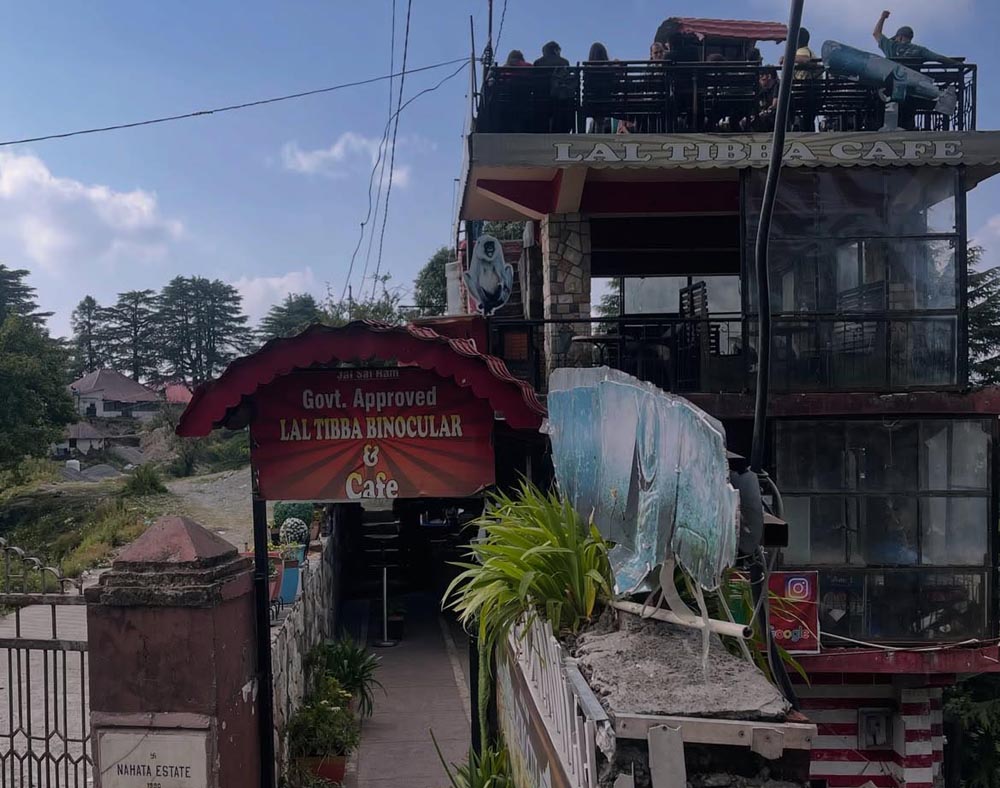
    A binocular viewpoint is also associated with the area, providing another way to observe the mountains. However, visitors should remember that visibility is highly weather-dependent. Fog, clouds and atmospheric haze can significantly reduce the range of the view.

    Lal Tibba and the Colonial Heritage of Landour

    A visit to Lal Tibba is incomplete without exploring the wider Landour area. Landour is one of the most atmospheric parts of the Mussoorie region, with old churches, colonial-era buildings, narrow roads and tall forests.

    The area was developed in connection with the British Indian Army, and its military history remains visible in the character of the settlement. According to Incredible India, the first sanatorium in Landour was established in 1827, while Mullingar, associated with Captain Frederick Young, is regarded as the first house built in the area.

    Walking through Landour provides a different experience from exploring Mussoorie Mall Road. Instead of shops and heavy tourist activity, travelers encounter quiet lanes, old stone structures, forested slopes and traditional mountain homes. The combination of history and landscape gives the area an almost storybook quality.

    The nearby St. Paul’s Church is another significant landmark. Its historic setting and architecture complement the colonial character of Landour. The area around Char Dukan, meanwhile, has become a popular stop for visitors looking for snacks, tea, coffee and casual mountain dining. What began as a small group of shops has developed into one of Landour’s best-known visitor areas.

    Char Dukan and the Café Culture of Landour

    One of the pleasures of visiting Lal Tibba is combining sightseeing with a leisurely food stop. Char Dukan has become synonymous with Landour’s relaxed café culture. The name literally means “four shops,” reflecting its historical origins when a small number of shops served visitors and residents.

    Today, the area is popular for simple mountain snacks, tea, coffee, pancakes, Maggi and other casual foods. The attraction is not necessarily fine dining; instead, it is the combination of food, cool weather, old-world surroundings and a slow-paced mountain atmosphere.

    For many travelers, sitting at a café after exploring Lal Tibba becomes one of the most enjoyable parts of the trip. The experience encourages visitors to slow down rather than rush from one attraction to another.

    Nature Around Lal Tibba

    The natural surroundings are another major reason to visit. Lal Tibba and Landour are surrounded by forested hills, with deodar, pine and other Himalayan vegetation contributing to the area’s cool and peaceful environment.

    Walking through the surrounding roads can be rewarding even when the Himalayan peaks are hidden by clouds. The forest itself becomes the attraction. Birds, mountain flowers, mist and the scent of trees create a sensory experience that is quite different from the crowded center of Mussoorie.

    Nature lovers and photographers can find plenty to explore without undertaking a demanding expedition. The surrounding trails and roads provide opportunities for leisurely walks, landscape photography and quiet observation.

    Visitors should nevertheless remember that the forests and hills are fragile ecosystems. Littering, loud music, damaging plants and disturbing wildlife can negatively affect the environment. Responsible tourism is especially important in mountain destinations where waste management and natural resources are more limited than in urban areas.

    Best Time to Visit Lal Tibba

    Lal Tibba can be visited throughout much of the year, but the ideal period depends on what travelers want to experience.

    March to June is popular for pleasant weather and relatively comfortable sightseeing conditions. Spring brings greenery and flowers, while summer offers an escape from the intense heat of the plains. This is also one of the busier tourism periods in Mussoorie.

    September to November can be particularly attractive for travelers interested in mountain views. After the monsoon, the landscape may appear fresh and green, while clearer atmospheric conditions can provide excellent Himalayan visibility.

    December to February offers a colder and more atmospheric experience. Winter can bring frost, mist and, during suitable weather, snowfall in the Mussoorie-Landour region. Travelers visiting in winter should be prepared for very cold conditions and should check local weather and road conditions before traveling.

    The monsoon season, generally associated with July and August, brings lush landscapes but also frequent cloud cover and rain. Mountain roads can become slippery, and landslides may occasionally affect travel routes. For travelers whose primary purpose is seeing distant Himalayan peaks, the rainy season is usually less predictable.

    Lal Tibba Timings and Entry Information

    Published visitor information is not completely consistent regarding Lal Tibba’s opening hours and fees. Incredible India currently lists opening hours of 6:00 AM to 6:00 PM, while other travel sources give different hours and report varying entry or telescope charges.

    Because local operating arrangements can change, travelers should verify the current timing and any applicable viewpoint or telescope fee shortly before visiting rather than relying on an old travel guide. The telescope experience may involve a separate charge even when access to the general area is not heavily restricted.

    A visit typically takes around one to two hours, although travelers who want to explore Landour, Char Dukan and nearby heritage sites should allow considerably more time.

    How to Reach Lal Tibba

    The most convenient way to reach Lal Tibba is by road from Mussoorie. Travelers arriving by air can generally use Jolly Grant Airport near Dehradun, while Dehradun Railway Station is the nearest major railway connection mentioned by Incredible India.

    From Dehradun, travelers can reach Mussoorie by road and then continue toward Landour. Taxis and local transport are commonly used for the final journey. Visitors staying in Mussoorie may also hire a local taxi for a sightseeing trip covering Lal Tibba and other Landour attractions.

    The road into Landour can be narrow and winding. During busy tourist periods, traffic and parking can become challenging. Travelers should therefore avoid treating Lal Tibba as a quick stop that can always be reached without delays.

    For those who enjoy walking, exploring parts of Landour on foot can be particularly rewarding. The combination of slopes, forests and historic buildings makes walking an important part of the experience.

    Places to Visit Near Lal Tibba

    Lal Tibba works particularly well as part of a larger Mussoorie itinerary. Char Dukan and St. Paul’s Church are nearby and can easily be combined with a visit to the viewpoint. Landour’s quiet roads are themselves worth exploring.

    Visitors can then return toward central Mussoorie to explore attractions such as Gun Hill, Camel’s Back Road, the Mall Road and other viewpoints. The official Mussoorie tourism information also highlights attractions including Kempty Falls, Bhatta Falls and Camel’s Back Road.

    For travelers interested in colonial history and literature, Landour has an additional connection with author Ruskin Bond, whose long association with the area has contributed to its literary identity. Incredible India also highlights Bond’s longstanding connection with Mussoorie and Landour.

    This makes the Lal Tibba trip particularly suitable for travelers who enjoy combining natural scenery with history, architecture, food and literature.

    Photography at Lal Tibba

    Lal Tibba is a dream destination for landscape photography. The wide Himalayan horizon provides an opportunity for panoramic photographs, while the forests and colonial buildings offer contrasting subjects.

    Early morning is particularly suitable for mountain photography. Soft sunlight can illuminate the peaks without creating the harsh contrasts associated with midday. Sunset offers a different mood, with warm light and dramatic skies.

    A telephoto lens or good-quality smartphone zoom can be useful for photographing distant mountain peaks. However, travelers should not become so focused on taking photographs that they overlook the atmosphere of the place itself. Some of Lal Tibba’s most memorable moments are simply watching clouds move through the valleys or listening to the wind in the trees.

    Why Lal Tibba Is Different from Other Mussoorie Attractions

    Mussoorie has numerous popular tourist attractions, but Lal Tibba has a distinct personality. Mall Road is energetic and commercial, Gun Hill is a famous urban viewpoint, and Kempty Falls is known for its dramatic waterfall scenery. Lal Tibba, by contrast, combines a high-altitude viewpoint with the quieter character of Landour.

    Its appeal lies in the balance between scenery and atmosphere. The mountains are obviously the main attraction, but the old roads, forests, cafés and heritage buildings create an experience that continues even when clouds obscure the view.

    Lal Tibba is also a reminder that mountain tourism does not always require an extreme trek. A traveler can enjoy extraordinary Himalayan scenery while staying relatively close to Mussoorie and using a road-accessible viewpoint.

    Responsible Tourism at Lal Tibba

    The growing popularity of Lal Tibba brings an important responsibility for visitors. Mountain destinations are particularly vulnerable to litter, traffic congestion, water shortages and unplanned development.

    Travelers can help by carrying reusable water bottles, avoiding single-use plastic, disposing of waste properly and respecting local residents. Visitors should also avoid making excessive noise, particularly around residential and cantonment areas.

    Supporting local cafés, shops and small businesses can help ensure that tourism benefits the local economy. At the same time, travelers should remember that Landour is not simply a tourist attraction but a living community with residents who value its peaceful character.

    Final Thoughts

    Lal Tibba is much more than a viewpoint on a hill. It is a meeting point of Himalayan scenery, colonial history, forests, literature and mountain culture. From its elevated position above Mussoorie, it provides some of the most memorable views of the distant Himalayas, while the surrounding Landour area offers an entirely different pace of travel.

    The telescopes, panoramic viewpoints and snow-covered peaks may be what initially attract visitors, but the quiet roads, old churches, deodar forests, Char Dukan cafés and historic atmosphere are what make the destination memorable. On a clear morning, the Himalayan panorama can be breathtaking; on a cloudy afternoon, the misty forests can be equally beautiful.

    For anyone planning a trip to Mussoorie, Lal Tibba deserves more than a hurried stop for photographs. Give yourself enough time to explore the viewpoint, walk through Landour, enjoy a warm drink at a local café and simply absorb the mountain atmosphere. The result is not just a sightseeing experience but a glimpse into the quieter, more timeless side of Uttarakhand.
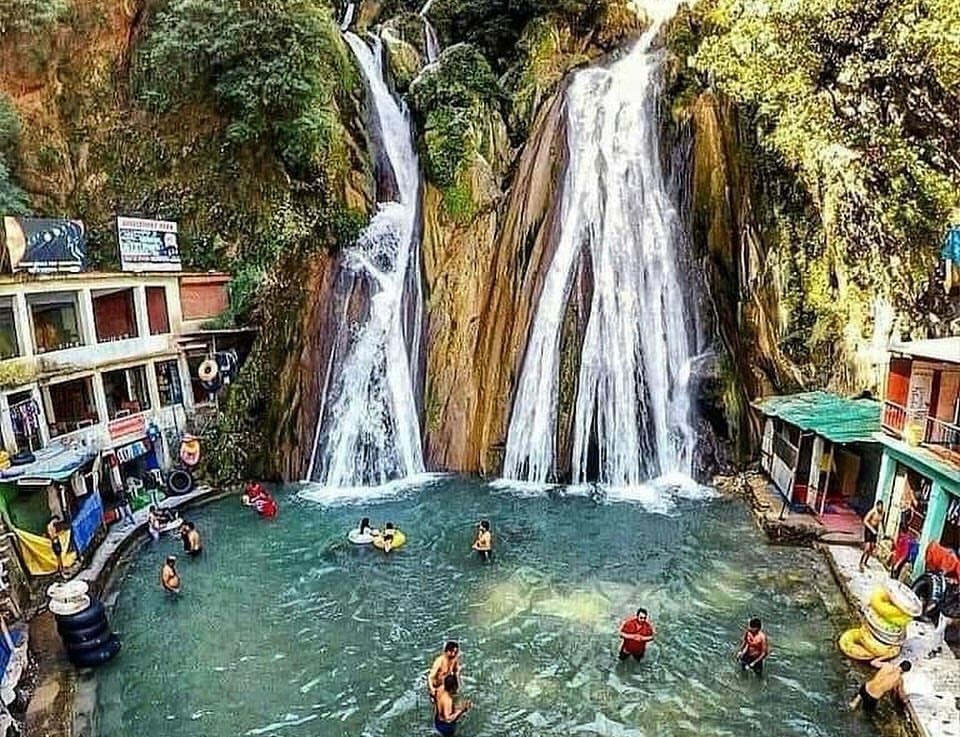
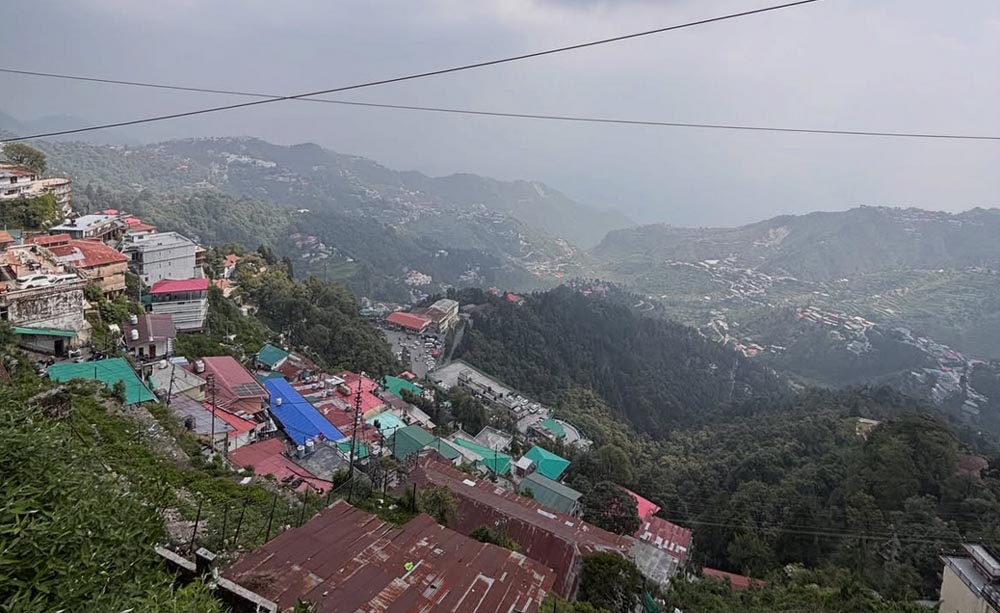
  • Nestled amid the green mountains of Uttarakhand, Kempty Falls is one of the most celebrated natural attractions near Mussoorie. The sight of water rushing down rocky cliffs, surrounded by forested Himalayan slopes, has made this waterfall a favourite destination for families, nature lovers, photographers, honeymooners and anyone looking for a refreshing escape from the heat of the plains. Located roughly 13–15 kilometres from Mussoorie, Kempty Falls is not merely a waterfall but an experience that combines mountain scenery, adventure, local food, photography and the simple pleasure of sitting beside cascading water.

    The waterfall lies at an elevation of around 1,364 metres, or approximately 4,500 feet, and its main cascade drops about 40 feet through the rocky landscape before reaching pools below. The Government of India’s tourism information describes Kempty Falls as a perennial waterfall near Kempty village, with the water cascading into a series of pools on the valley floor.

    For travellers visiting Mussoorie for the first time, Kempty Falls is often one of the first excursions added to the itinerary. Its relatively easy road access, dramatic landscape and opportunity to get close to the falling water make it particularly appealing. However, Kempty Falls is much more enjoyable when visitors understand its history, seasonal changes, access arrangements and the best way to plan their visit.

    The Story and History Behind Kempty Falls

    Kempty Falls has a fascinating connection with the colonial history of the Mussoorie region. The waterfall was developed as a tourist attraction during the British period, with sources commonly associating its development around 1835 with British officer John Mekinan. The name “Kempty” is widely believed to have originated from the expression “camp tea,” referring to tea parties and gatherings that were reportedly organised in the area during the colonial era.

    Although the modern visitor experiences Kempty Falls primarily as a recreational destination, its surroundings once formed part of a much quieter Himalayan landscape. Over the decades, improved roads and the growth of Mussoorie as a hill station brought increasing numbers of visitors to the waterfall. What was once a secluded mountain attraction gradually became one of Uttarakhand’s best-known tourist sites.

    Today, the history of Kempty Falls exists alongside a completely different tourist culture. Instead of colonial-era picnics, visitors arrive in taxis, buses and private cars, spend time around the pools, enjoy local snacks and tea, take photographs and explore the surrounding market area. Despite this transformation, the waterfall itself remains essentially what it has always been: a striking natural feature shaped by mountain terrain and flowing water.

    The Natural Beauty of Kempty Falls

    The biggest attraction of Kempty Falls is, of course, the waterfall itself. Water descends dramatically over the rocky mountainside, creating white ribbons of foam that contrast beautifully with the green vegetation surrounding it. Depending on the season and rainfall, the volume and character of the waterfall can change considerably.

    During the rainy season, the waterfall can become particularly powerful. The surrounding hills become intensely green, the air feels cooler and the sound of rushing water dominates the landscape. After rainfall, mist and spray around the falls can create excellent conditions for photography. However, the same increase in water flow that makes the waterfall spectacular can also make the area around the pools slippery and potentially unsafe.

    The landscape around Kempty Falls adds another layer to its appeal. Forested mountain slopes, rocky surfaces and vegetation create a typical Himalayan setting, while the winding road approaching the waterfall offers attractive views of the surrounding valleys. The area is associated with deodar, rhododendron and other Himalayan vegetation, giving the waterfall a distinctly mountain character.

    For photographers, Kempty Falls offers several different perspectives. The waterfall can be photographed from viewpoints above the main area, from the paths leading toward the lower pools and from closer positions where the spray and movement of the water become part of the composition. Early morning light is particularly pleasant for photography because it can provide softer illumination and fewer people.

    Where Is Kempty Falls Located?

    Kempty Falls is located near Kempty village in the Tehri Garhwal region of Uttarakhand. It is generally described as being around 13–15 kilometres from Mussoorie, depending on the starting point and route used. The waterfall lies along the road connecting Mussoorie with the Yamunotri direction and is a relatively straightforward excursion from the hill station.

    Mussoorie is the most convenient base for travellers visiting Kempty Falls. From the town, visitors can hire taxis or use local/shared transportation where available. The drive itself is part of the experience because the road passes through attractive mountain scenery.

    Travellers coming from outside Uttarakhand will usually first reach Dehradun. Dehradun Railway Station is the nearest major railway connection, while Jolly Grant Airport serves as the nearest major airport. From Dehradun, visitors can travel toward Mussoorie and then continue to Kempty Falls. The Government of India’s Incredible India tourism portal also identifies Dehradun Railway Station and Jolly Grant Airport as the nearest major transport points for visitors.

    How to Reach Kempty Falls

    The easiest way to visit Kempty Falls is by road. From Mussoorie, travellers can hire a private taxi, take a shared taxi or use local transport depending on availability. The distance is short enough to make the waterfall a convenient half-day excursion.

    Visitors travelling by private vehicle should remember that Kempty Falls becomes extremely busy during peak tourist periods. Summer weekends and public holidays can bring heavy traffic, crowded parking areas and long queues around popular access points. Arriving early in the morning can make a significant difference to the overall experience.

    Travellers coming from Delhi or other cities in northern India generally reach Dehradun first and then travel onward toward Mussoorie. Since mountain roads can be slower than their distance suggests, it is sensible to allow extra travel time rather than planning the journey according to ordinary plains-road driving times.

    The final approach to the waterfall involves walking and descending toward the lower areas. Depending on the route and facilities operating during a particular visit, visitors may have the option of using a ropeway or taking the staircase route. The staircase can be physically demanding on the return journey, particularly for elderly visitors or anyone travelling with small children.

    Ropeway and Walking Experience

    One of the distinctive features of the modern Kempty Falls experience is the short ropeway connection to the lower waterfall area. The ropeway can be convenient for visitors who would prefer to avoid a long descent and climb back up.

    However, travellers should understand that prices and operating arrangements can change. Recent travel sources report ropeway charges in the approximate range of ₹120–₹200 for a return journey, while other visitor information lists different amounts. Therefore, it is best to confirm the current fare at the site before purchasing a ticket.

    Walking down the steps provides a different experience. It allows visitors to move more slowly through the tourist area, stop for photographs and enjoy different views of the waterfall. The return climb, however, can be tiring. Comfortable footwear is therefore much more important than fashionable footwear when visiting Kempty Falls.

    What Can You Do at Kempty Falls?

    Kempty Falls offers more than simply looking at a waterfall. One of the most popular activities is getting into the water around the designated bathing areas. On suitable days, visitors can enjoy the cool mountain water and spend time around the pools beneath the cascade.

    Swimming or bathing should always depend on current water conditions and local safety instructions. Water levels can rise rapidly after heavy rain, and rocks near waterfalls can be extremely slippery. Visitors should never enter restricted areas simply to obtain a photograph.

    Photography is another major activity. The combination of cascading white water, green mountains and rocky cliffs creates an excellent backdrop for travel photography. Couples frequently visit for photographs, while families often capture group pictures beside the falls.

    The area also contains shops and food stalls where visitors can find snacks, tea and simple local-style refreshments. A hot cup of chai after spending time around cold mountain water is one of the small pleasures that makes the visit memorable.

    Official tourism information also mentions adventure activities such as rock climbing, rappelling and river crossing under appropriate guidance. Availability may vary by season and operator, so visitors interested in adventure activities should check current local arrangements and safety standards before participating.

    Best Time to Visit Kempty Falls

    The best time to visit Kempty Falls depends on what kind of experience you want. If your main goal is pleasant weather, sightseeing and enjoying the pools, the spring and summer period can be attractive. March through June generally brings comfortable mountain weather compared with the hot plains, although this is also one of the busiest tourist periods.

    The monsoon season brings another side of Kempty Falls. From July through September, rainfall can dramatically increase the volume of water, making the waterfall more powerful and visually impressive. The surrounding vegetation also becomes lush and vibrant. However, heavy rainfall can make paths slippery and increase water-related risks. Visitors should follow local instructions and avoid entering the pools when conditions are unsafe.

    The post-monsoon months can be especially rewarding for photographers. The landscape remains green, the atmosphere can be clearer and the weather is often pleasant. October and November are good choices for travellers who want to enjoy the scenery without the extreme summer crowds.

    Winter brings cooler temperatures and a quieter atmosphere. The waterfall continues to be attractive, although the water can be extremely cold. Winter is therefore more suitable for sightseeing and photography than for bathing.

    Kempty Falls Timings and Entry Fee

    Visitors should be aware that published timings for Kempty Falls vary between tourism and travel sources. The Incredible India tourism portal currently lists opening hours of 6:00 AM to 6:00 PM, while other travel sources list shorter daytime schedules such as approximately 8:00 AM to 5:00 PM or 10:00 AM to 6:00 PM.

    Similarly, access to the waterfall itself is commonly described as free, although visitors may need to pay separately for services such as the ropeway, parking, changing facilities or other activities.

    Because local operating arrangements can change with season, weather and maintenance, visitors should confirm current timings and charges locally before planning around a specific opening or closing time.

    How Long Should You Spend at Kempty Falls?

    Kempty Falls can be visited in approximately two to three hours, although the ideal duration depends on your interests. Travellers who simply want to see the waterfall, take photographs and leave may need considerably less time.

    Families who want to spend time around the pools, enjoy food and explore the surrounding market may prefer a longer visit. Photography enthusiasts may also want additional time because different viewpoints produce dramatically different images.

    For most visitors, Kempty Falls works particularly well as a half-day excursion from Mussoorie. It can easily be combined with other attractions on the same day, provided sufficient travel time is allowed for mountain traffic.

    Places to Visit Near Kempty Falls

    A trip to Kempty Falls can be combined with several attractions in and around Mussoorie. Benog Wildlife Sanctuary is an appealing option for travellers interested in forests, wildlife and mountain landscapes. Other popular attractions around Mussoorie include Gun Hill, Camel’s Back Road, Lal Tibba, Mussoorie Lake and the colonial-era attractions around the hill station. Incredible India also lists several of these destinations among attractions that visitors can explore around the Mussoorie region.

    Travellers who prefer a relaxed itinerary should avoid attempting to visit too many attractions in one day. Mountain roads, traffic and walking time can make a seemingly short itinerary surprisingly tiring. A better approach is to combine Kempty Falls with one or two nearby attractions and leave enough time to enjoy each place.

    Food and Shopping Around Kempty Falls

    The approach to Kempty Falls has developed into a lively tourist zone, with shops selling snacks, beverages, souvenirs and tourist essentials. Visitors can find simple foods and refreshments, including tea and popular hill-station snacks.

    The food experience here is more casual than fine dining. The attraction lies in enjoying a warm snack or cup of tea after walking through the mountain environment rather than searching for elaborate cuisine.

    Visitors should nevertheless be careful about waste. Plastic bottles, food wrappers and disposable packaging can quickly damage the appearance of a natural attraction when thousands of people visit the same location. Carrying reusable bottles and disposing of waste responsibly are simple ways to help protect Kempty Falls.

    Important Safety Tips for Visitors

    Kempty Falls is a family-friendly destination, but the presence of water, steep steps and slippery rocks means that visitors should not treat the area casually. The rocks around waterfalls can become extremely slippery, particularly during and immediately after rainfall.

    Proper footwear is essential. Shoes with good grip are considerably safer than sandals or smooth-soled footwear. Visitors should also avoid climbing onto unstable rocks or standing directly beneath powerful sections of falling water.

    During monsoon periods, extra caution is necessary because water flow can change quickly. Heavy rain upstream may cause the waterfall and pools to become significantly more dangerous. When local authorities, operators or signs advise visitors to stay away from the water, those instructions should be followed.

    Families travelling with children should keep them within sight, particularly around pools, steps and crowded areas. Elderly travellers may find the staircase route tiring and should consider the easiest available access option.

    Responsible Tourism at Kempty Falls

    Kempty Falls attracts large numbers of tourists, and that popularity brings environmental pressure. Responsible tourism is therefore important if the destination is to remain beautiful for future generations.

    Visitors should avoid throwing plastic or food waste into the water or surrounding forest. They should not damage vegetation, carve names into rocks or disturb wildlife. Loud music should also be avoided in natural areas, especially where it can affect other visitors and local wildlife.

    Supporting local vendors responsibly can also contribute to the area’s economy. Buying refreshments and locally made products from legitimate businesses allows tourism to benefit people living in the region.

    Most importantly, travellers should remember that Kempty Falls is a natural environment rather than simply an entertainment zone. Enjoying it responsibly makes the experience better for everyone.

    Is Kempty Falls Worth Visiting?

    Despite being one of the busiest attractions around Mussoorie, Kempty Falls remains worth visiting. Its popularity is understandable: the waterfall is easily accessible, visually impressive and offers an opportunity to experience flowing mountain water at close range.

    It may not provide the solitude that some travellers expect from a Himalayan waterfall, particularly during summer weekends and holidays. Those seeking peace should arrive early, choose an off-season weekday or visit during quieter hours.

    For first-time visitors to Mussoorie, however, Kempty Falls offers a classic Uttarakhand experience. The combination of mountain roads, green valleys, cascading water, local food and outdoor activities makes it a memorable stop.

    Final Thoughts

    Kempty Falls represents one of the most accessible ways to experience the natural beauty of Uttarakhand. From its colonial-era history and mysterious “camp tea” name to its dramatic cascade and green mountain surroundings, the destination combines nature and history in an unusually attractive package.

    The waterfall changes character with the seasons. Summer brings crowds and pleasant weather, monsoon creates powerful flows and intense greenery, autumn offers beautiful photography conditions, while winter provides a quieter and cooler atmosphere. Choosing the right season and arriving early can make the difference between a rushed tourist stop and an enjoyable mountain experience.

    Whether you are travelling with family, planning a romantic trip to Mussoorie, photographing Himalayan landscapes or simply looking for a refreshing break from city life, Kempty Falls deserves a place on your Uttarakhand itinerary. The roar of the water, the cool mountain air and the sight of the cascade tumbling through the forest create an experience that is easy to remember long after the journey home.

    Kempty Falls may be one of Uttarakhand’s most visited waterfalls, but its enduring appeal comes from something very simple: the opportunity to stand beside a powerful stream of Himalayan water and experience, even briefly, the raw beauty of the mountains.

  • High above the charming hill station of Mussoorie in Uttarakhand stands Gun Hill, one of the most recognizable viewpoints in the region. Rising to roughly 2,024–2,122 metres above sea level depending on the reference used, Gun Hill is regarded as the second-highest peak in Mussoorie and is famous for its sweeping views of the Himalayan ranges, the Doon Valley and the surrounding mountain landscape.

    What makes Gun Hill particularly fascinating is that it is more than simply a viewpoint. Its identity is closely connected with Mussoorie’s colonial past and the story of a cannon that was once fired from the hill. Today, visitors arrive by ropeway or on foot, take photographs against the mountain panorama, look through telescopes toward distant peaks, and enjoy snacks while experiencing one of Mussoorie’s classic tourist attractions.

    Located above the famous Mall Road, Gun Hill can easily be incorporated into a Mussoorie sightseeing itinerary. The short journey from the busy streets of the hill station to the open mountain views at the summit provides an experience that combines history, nature and recreation in a remarkably compact visit.

    Where Is Gun Hill Located?

    Gun Hill is situated in Mussoorie, in Uttarakhand’s Dehradun district. The hill rises above The Mall, one of the most popular areas in Mussoorie, making it particularly convenient for tourists staying in or around the central part of the town.

    The viewpoint is approximately 400 feet above Mall Road, and visitors can reach it either by taking the famous ropeway or by walking uphill. Some travel references describe the walking route as taking roughly 20–30 minutes, although the actual time can vary depending on the starting point, pace and crowd conditions.

    Its location is one of its biggest advantages. Unlike some mountain viewpoints that require a long drive or a demanding trek, Gun Hill can be visited during an ordinary day of sightseeing in Mussoorie. Visitors can explore Mall Road, walk toward the ropeway station, travel upward by cable car and spend time at the summit before returning to the town.

    Why Is Gun Hill Called Gun Hill?

    The unusual name is perhaps the first thing that attracts people’s curiosity. Why would a peaceful mountain viewpoint be called Gun Hill?

    The answer is associated with the British period. According to historical accounts and local tradition, a cannon was positioned on the hill and was fired around midday. The sound could be heard across parts of Mussoorie and the surrounding valleys, providing residents with a convenient time signal in an era when accurate personal timepieces were not as commonplace as they are today.

    There are different versions of the story surrounding the cannon. Some accounts associate its installation with the events of 1857, while historical material about the hill records a cannon connected with the colonial administration. The precise details vary among sources, but the association between the cannon and the name Gun Hill is firmly embedded in the area’s tourism history.

    The cannon itself is no longer part of the active landscape. The gunfire that once marked the time has disappeared, but the name has survived. In this way, Gun Hill offers an interesting reminder of Mussoorie’s transformation from a colonial-era hill retreat into one of India’s best-known mountain destinations.

    The Historical Character of Gun Hill

    Gun Hill’s history is inseparable from the development of Mussoorie as a hill station. During British rule, Mussoorie developed as a summer retreat where colonial officials and residents sought relief from the heat of the plains. Its cool climate, mountainous setting and scenic surroundings contributed to its popularity.

    The hill itself became a useful location because of its commanding position above the town. The cannon tradition gave it an additional role in everyday life. Historical accounts also mention that the cannon’s powerful report could cause considerable disturbance in nearby buildings, illustrating just how loud the traditional time signal must have been.

    Today, visitors will not find the hill functioning as a military installation. Instead, its historical significance forms part of the wider heritage character of Mussoorie. The attraction demonstrates how places can acquire new identities over time: what was once connected with colonial administration and military equipment is now primarily associated with tourism, photography, leisure and Himalayan views.

    The Famous Gun Hill Ropeway

    For many tourists, the journey to Gun Hill is almost as enjoyable as the destination itself. The Gun Hill ropeway provides a quick aerial connection between the Mall Road area and the hilltop.

    The cable car rises above the town, offering passengers an elevated perspective of Mussoorie’s rooftops, slopes and surrounding greenery. The ride itself is short, generally taking only a few minutes each way according to current travel information.

    For first-time visitors, the ropeway can be an especially memorable part of the experience. As the cabin moves upward, the busy streets below gradually appear smaller and the mountain landscape becomes more prominent. The ride also makes Gun Hill accessible to travellers who would prefer not to make the uphill walk.

    Because the ropeway is one of Mussoorie’s popular tourist experiences, queues can become longer during busy weekends, holidays and peak travel seasons. Travelling earlier in the day can therefore be useful for visitors who want a relatively relaxed experience.

    Walking to Gun Hill

    The ropeway is not the only way to reach the summit. Travellers who enjoy walking can make their way uphill from the Mall Road area.

    The walk is relatively short compared with a serious Himalayan trek, but it should not be confused with a completely flat stroll. Mussoorie is a mountainous town, and even short uphill routes can feel demanding for people who are not accustomed to walking on slopes.

    Walking offers a different experience from the cable car. Instead of reaching the summit within minutes, visitors gradually experience the changing atmosphere of the hillside. It can be a good choice for travellers who enjoy exploring Mussoorie on foot and want to combine Gun Hill with a leisurely walk through the town.

    Comfortable footwear is recommended, particularly during wet weather when paths can become slippery.

    The Spectacular Views from Gun Hill

    The biggest attraction at Gun Hill is undoubtedly the view.

    From the summit, visitors can look across the mountainous landscape toward the Himalayan ranges and down toward the Doon Valley. On clear days, the distant snow-covered peaks create a dramatic backdrop, making Gun Hill one of Mussoorie’s most popular photography locations.

    The panorama can change dramatically according to weather conditions. On a crystal-clear morning, distant Himalayan peaks may appear sharply defined. During monsoon weather, clouds and mist can roll across the slopes, creating a completely different atmosphere. Winter days may offer crisp visibility, while summer mornings can provide pleasant mountain scenery before haze develops.

    Some visitor information identifies ranges and peaks including Banderpunch, Srikantha, Pithwara and the Gangotri group among the mountain views associated with Gun Hill.

    The viewpoint is therefore worth experiencing even if the distant snow peaks are not visible. The surrounding valleys, forests, rooftops and ridges create an attractive landscape in their own right.

    Photography at Gun Hill

    Gun Hill is particularly appealing to photographers because it offers several different perspectives within a relatively small area. The Himalayan skyline provides a natural background, while the town below creates opportunities for wider landscape compositions.

    Early morning is generally a good time for photography because visibility can be better before the atmosphere becomes hazier. Sunset can also be attractive, especially when clouds catch the changing light. However, sunset visits should be planned around the operating hours of the ropeway and the conditions on the day.

    Travellers interested in photography should also be prepared for rapidly changing mountain weather. Mist can arrive unexpectedly, and the same viewpoint can look completely different within minutes.

    What Can You Do at Gun Hill?

    Gun Hill is primarily a viewpoint, but the experience extends beyond simply looking at the scenery. Visitors can explore the summit area, photograph the landscape, use available telescopes to observe distant mountain scenery and enjoy refreshments from local stalls.

    Tourism information also mentions recreational and adventure-oriented activities around the attraction, although the exact availability of activities can change over time.

    Families often find Gun Hill enjoyable because the ropeway adds an element of excitement to a sightseeing trip. Couples appreciate the scenic surroundings, while photographers and nature lovers are naturally drawn to the panoramic landscape.

    The attraction can also be a pleasant stop for travellers who simply want to sit for a while, enjoy the mountain air and take a break from exploring the busier parts of Mussoorie.

    Best Time to Visit Gun Hill

    Gun Hill can be visited during much of the year, but the ideal time depends on what a traveller wants to experience.

    For clear mountain views, mornings are generally a sensible choice. The atmosphere may become hazier later in the day, reducing visibility of distant peaks. Autumn and winter can provide particularly crisp mountain scenery when weather conditions are favourable.

    Summer is popular because Mussoorie provides a pleasant escape from the heat of the plains. This also means that popular attractions can become crowded, particularly during school holidays and weekends.

    The monsoon season creates a different kind of beauty. Clouds, mist and lush green hills can make the landscape atmospheric and dramatic. However, rain can interfere with Himalayan visibility and may make walking routes slippery.

    Winter can be cold at the summit, so visitors should carry warm clothing even if the weather feels comfortable at lower elevations.

    Gun Hill Timings and Practical Information

    Current tourism information from India’s official tourism portal lists Gun Hill Point’s opening hours as approximately 9:00 AM to 6:00 PM, while several other travel sources list 10:00 AM to 6:00 PM for the attraction or ropeway. Because operating schedules can vary according to season and local conditions, visitors should confirm the day’s timings before setting out.

    Ropeway fares have also changed over time, and different travel sources currently report different prices. For this reason, it is better not to rely on an old online fare when planning a budget. The attraction itself may have different charges from the ropeway ride and any optional activities.

    A visit usually does not require an entire day. Many travellers can comfortably spend around one to two hours exploring Gun Hill, although photographers, families and people who prefer a relaxed pace may stay longer.

    How to Reach Gun Hill

    Reaching Gun Hill is relatively straightforward because of its central position in Mussoorie. Travellers first need to reach Mussoorie and then make their way toward the Mall Road area.

    For visitors arriving from outside Uttarakhand, Dehradun is an important gateway. The nearest major railway station is Dehradun Railway Station, while Jolly Grant Airport near Dehradun serves as the nearest airport listed by the official tourism portal.

    From Mussoorie’s central areas, travellers can walk toward the ropeway station and take the cable car to the summit. Alternatively, they can choose the uphill walking route.

    Because traffic and parking can be challenging in central Mussoorie during busy periods, visitors staying nearby may find walking more convenient than trying to drive directly to the attraction.

    Nearby Attractions

    One of the advantages of visiting Gun Hill is its proximity to several other Mussoorie attractions. A sightseeing itinerary can easily combine the viewpoint with a walk along Mall Road and visits to other landmarks.

    Camel’s Back Road is another well-known attraction associated with scenic mountain views and leisurely walks. Kempty Falls, one of the most recognizable tourist spots around Mussoorie, can also be included in a broader sightseeing itinerary. Jharipani Falls provides another opportunity to experience the area’s natural landscape.

    Travellers interested in history and heritage can explore sites such as Sir George Everest’s House and colonial-era landmarks around Mussoorie and Landour. The official tourism portal also highlights attractions including Lal Tibba and Benog Wildlife Sanctuary in the wider Mussoorie area.

    This makes Gun Hill particularly suitable as part of a full-day Mussoorie sightseeing plan rather than as an isolated destination.

    Food and Shopping at Gun Hill

    The summit area has a distinctly tourist-oriented atmosphere, with small stalls and shops where visitors can purchase snacks, drinks and souvenirs. The availability and selection can vary according to the season.

    For many travellers, having a hot snack while looking over the mountains is part of the Gun Hill experience. However, visitors should remember that mountain tourist areas can become crowded and prices may differ from those found elsewhere in Mussoorie.

    A practical approach is to carry drinking water and avoid leaving plastic waste behind. The natural beauty of the hill depends heavily on responsible visitor behaviour.

    Is Gun Hill Suitable for Families?

    Yes. Gun Hill is one of the easier mountain attractions to include in a family holiday because the ropeway substantially reduces the physical effort required to reach the viewpoint.

    Children often enjoy the cable-car ride and the elevated views, while adults can appreciate the historical background and scenery. Older travellers who may not be comfortable with a steep uphill walk can also benefit from the ropeway.

    Parents should nevertheless keep an eye on children around viewpoints, steps and crowded areas. Mountain weather can also change quickly, so light rain protection and appropriate clothing are sensible.

    Tips for a Better Gun Hill Experience

    A morning visit is a good option if your main objective is to see distant Himalayan peaks. Arriving early can also help avoid some of the crowds that develop during busy periods.

    If you plan to take the ropeway, check its operating status and current ticket price before travelling. Online information about fares and timings is not always consistent, and seasonal schedules can change.

    Wear comfortable shoes if you intend to walk uphill. Carry water, protect yourself from strong sunlight at higher elevations and bring an extra layer because the temperature can feel cooler at the summit.

    Most importantly, do not judge the attraction solely by whether snow-covered Himalayan peaks are visible. Mountain weather is unpredictable. Even when distant peaks are hidden by clouds, Gun Hill can still offer beautiful views of Mussoorie, the Doon Valley and the surrounding forested slopes.

    Gun Hill: A Small Journey with a Big View

    Gun Hill represents many of the things that make Mussoorie such an enduring destination. It combines a fascinating colonial-era story with an accessible mountain experience, spectacular scenery and the simple pleasure of being above the town and surrounded by Himalayan landscapes.

    Its most memorable feature may be the view, but its story gives that view greater character. The hill that once echoed with the sound of a cannon is now filled with the voices of travellers, the movement of cable cars and the clicking of cameras. The cannon has disappeared, yet its name remains a reminder of another chapter in Mussoorie’s history.

    For travellers visiting Uttarakhand, Gun Hill is therefore more than just another viewpoint to tick off a sightseeing list. It is a place where history, nature and tourism meet. Whether reached by ropeway for the thrill of the journey, by foot for a leisurely mountain walk, or simply visited for its panoramic views, Gun Hill offers a compact but memorable introduction to the landscape and heritage of Mussoorie.

    If you are exploring Mussoorie for the first time, a visit to Gun Hill can easily become one of the highlights of the trip. Stand at the summit on a clear day, look toward the distant Himalayan ranges, and then turn around to see Mussoorie spread across the hills below. That combination of mountain scenery and historic atmosphere explains why Gun Hill has remained one of the town’s most recognizable attractions for generations.

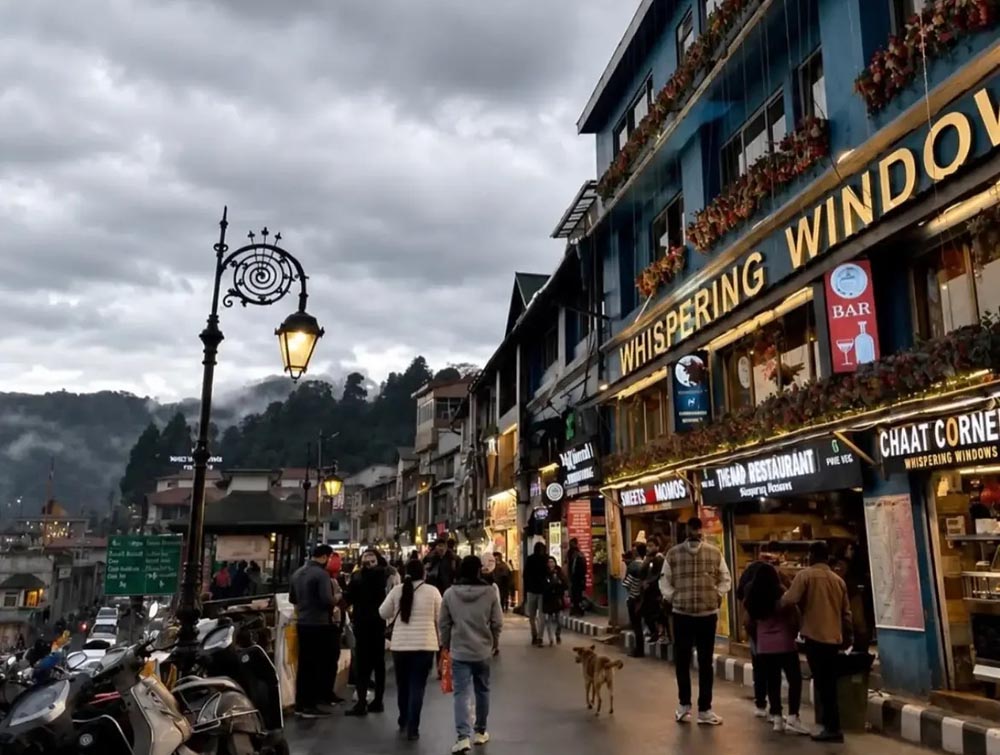
  • When people imagine Mussoorie, one of the first pictures that comes to mind is a lively hill road filled with cafés, old colonial buildings, colorful shops, woollen garments, steaming cups of tea and visitors enjoying the cool mountain air. That picture is, in many ways, Mall Road, Mussoorie. More than simply a shopping street, Mall Road is the social and cultural heart of the hill station, connecting some of its best-known markets, viewpoints, restaurants and attractions.

    Situated in Uttarakhand’s Garhwal Himalayas, Mussoorie stands at roughly 2,000 metres above sea level and has long attracted travellers looking for pleasant weather, mountain scenery and the atmosphere of a classic Himalayan hill station. Mall Road captures much of that character in a relatively compact stretch, making it one of the first places most visitors explore after arriving in town.

    The Charm and History of Mall Road

    Mall Road is closely connected with Mussoorie’s colonial history. The town developed as a British-era hill station, and the Mall became an important promenade and social space. Historical accounts commonly associate its development with Captain Frederick Young and the early growth of Mussoorie in the 19th century. It was designed as a place where residents could walk, meet one another and enjoy the cooler mountain environment away from the heat of the plains.

    Although today’s Mall Road is considerably busier and more commercial than its colonial predecessor, traces of the old hill-station character remain. Buildings, balconies, shopfronts and old-fashioned streetscapes contribute to a sense that the road belongs to several different eras at once. Colonial influences sit alongside Tibetan-inspired shops, modern cafés, Indian restaurants and souvenir stores.

    This combination is perhaps what makes Mall Road particularly interesting. It is neither a preserved heritage street nor simply a modern marketplace. Instead, it is a living part of Mussoorie where history and contemporary tourism operate side by side.

    Where Exactly Is Mall Road?

    Mall Road forms one of the principal commercial and pedestrian corridors of Mussoorie. The commonly described promenade stretches between the Library end, around Gandhi Chowk/Library Bazaar, and the Picture Palace end around Kulri Bazaar. Travel guides generally put the walking stretch at around two kilometres, although the precise experience varies depending on which adjoining lanes and markets are included.

    The road’s position along the ridge is one of its greatest attractions. On one side, visitors can often look toward the Doon Valley, while the opposite side is lined with shops, cafés, hotels and narrow streets leading farther into Mussoorie.

    Because the road is situated on a hill, visitors should not expect a completely level urban shopping street. There are slopes, steps and adjoining lanes, and comfortable footwear can make a substantial difference, especially if you intend to spend several hours walking around.

    Why Mall Road Is So Popular

    Mall Road is popular because it combines several experiences in one place. A visitor can start with breakfast, spend the afternoon shopping, stop for coffee, explore local markets, enjoy snacks, photograph the surrounding hills and return in the evening for a leisurely walk.

    It is also a natural meeting point for tourists. Families, couples, groups of friends, photographers and solo travellers all find something to enjoy here. During holidays and weekends, the promenade can become particularly crowded, giving it a lively atmosphere that is very different from the quiet forest roads and residential areas elsewhere in Mussoorie.

    For many travellers, however, the crowds are actually part of the experience. The sound of conversations, shopkeepers inviting customers inside, restaurant aromas and the movement of people along the road create the distinctive urban energy of this mountain town.

    The Evening Experience on Mall Road

    If there is one time when Mall Road truly comes alive, it is evening.

    As daylight begins to fade, shopfronts illuminate, restaurants become busier and visitors gather for the classic Mussoorie evening walk. Vehicle restrictions during evening hours can make portions of the promenade considerably more comfortable for pedestrians, although travellers should always check current local arrangements because traffic regulations can change according to season, weather and local administration.

    An evening stroll is best enjoyed slowly rather than treated as a race from one attraction to another. Walk along the road, stop at a viewpoint, browse the shops, have a cup of tea and watch the town gradually transition from daylight into its illuminated evening personality.

    The cooler air can make the experience especially pleasant during summer. In winter, however, temperatures can fall sharply after sunset, so warm clothing is advisable.

    Shopping on Mall Road

    Shopping is one of Mall Road’s major attractions. The stores sell everything from everyday travel necessities to souvenirs and traditional hill-station products. Visitors will encounter shops offering woollens, scarves, caps, shawls, handicrafts, decorative objects, wooden items, souvenirs and locally inspired products.

    Woollen clothing is particularly popular because Mussoorie’s climate makes sweaters, jackets, caps and mufflers practical as well as attractive souvenirs. Travellers visiting from warmer parts of India often enjoy buying these items as reminders of their mountain holiday.

    The nearby Tibetan Market adds another dimension to the shopping experience. It is known for colourful merchandise and small shops where visitors can browse clothing, accessories, handicrafts and other inexpensive souvenirs. The market atmosphere is informal and lively, making browsing almost as enjoyable as purchasing something.

    As with most tourist markets, prices can vary considerably from one shop to another. Comparing prices before buying expensive souvenirs is sensible, and visitors should distinguish between genuinely locally made products and mass-produced goods marketed as regional handicrafts.

    Food and Cafés Around Mall Road

    Food is an essential part of the Mall Road experience. The area offers everything from simple snack stalls and bakeries to cafés and full-service restaurants. Visitors can easily spend an entire afternoon moving between sightseeing and eating.

    One of the most famous food stops is Lovely Omelette Centre, located around Kulri Market. The establishment has become particularly well known among visitors for its omelettes and has developed an iconic reputation among people exploring Mussoorie.

    For Tibetan and Asian flavours, Kalsang Restaurant Mussoorie is another well-known option on Mall Road. Its menu makes it appealing to travellers looking for something different from conventional North Indian tourist fare.

    Visitors interested in cafés can also consider Cafe Tea Totaler around Tibetan Market, while those exploring the Picture Palace end may come across Little Llama Cafe. These places add to the café culture that has become an important part of modern Mussoorie.

    For a more traditional restaurant experience, Maharaja Restaurant and Urban Turban Bistro are among the restaurants around the Mall Road area.

    The food scene isn’t limited to formal restaurants. Tea, coffee, momos, sandwiches, noodles, baked goods, pakoras and other quick snacks are widely associated with the casual eating experience of Mussoorie. On a cold evening, few things feel more appropriate than something hot to eat while watching people walk along the illuminated road.

    What to See Near Mall Road

    One of Mall Road’s biggest advantages is its proximity to several other attractions. You do not have to travel far to combine the promenade with additional sightseeing.

    Gun Hill is one of the most popular attractions associated with the central Mussoorie area. The viewpoint provides elevated views over the surrounding landscape, and the ropeway experience itself is part of the attraction. Depending on weather and operating conditions, visitors can enjoy panoramic views of the town and surrounding mountains.

    The Library Bazaar area at one end of Mall Road provides another interesting place to explore. It is connected with the historic character of Mussoorie and serves as an important landmark for understanding the geography of the town.

    At the opposite end, Kulri Bazaar and Picture Palace offer another concentration of shops, restaurants and entertainment. This makes it easy to combine shopping, eating and walking into a single excursion.

    Travellers with more time can also continue beyond central Mall Road toward Landour, a quieter area known for its old-world atmosphere, forested roads and colonial heritage. Landour feels noticeably different from the busy commercial environment around Mall Road and is ideal for visitors who want to experience a calmer side of Mussoorie.

    Mall Road for Photography

    Mall Road offers plenty of opportunities for casual photography. The best photographs are not necessarily the obvious tourist shots. Look for details: old façades, colourful shop signs, balconies, steaming cups of tea, umbrellas in the mist, mountain views between buildings and evening lights reflecting on wet roads.

    Weather can dramatically change the appearance of the area. On a clear day, the distant valley and mountain scenery provide a dramatic backdrop. During misty weather, Mall Road takes on a completely different personality, with clouds moving through the town and buildings gradually disappearing into the haze.

    Sunset and blue-hour photography can be particularly attractive, although the exact visibility of the sunset depends on the weather and the direction from which you are viewing the valley.

    Best Time to Visit Mall Road

    Mall Road can be visited throughout much of the year, but the experience changes significantly with the seasons.

    March to June is generally popular because Mussoorie provides relief from the heat of the plains. This is also one of the busiest periods, particularly around school holidays and weekends. Expect more visitors and potentially higher accommodation prices.

    July to September brings the monsoon. Mussoorie can become exceptionally green and atmospheric during this period, but heavy rainfall can create slippery roads, poor visibility, landslides and travel disruptions. Recent weather-related incidents in the wider Mussoorie area illustrate why monsoon travellers should check local road conditions before setting out.

    October and November can be excellent for travellers who prefer clearer skies and cooler weather. The post-monsoon landscape can look beautiful, and visibility is often better than during rainy periods.

    December to February brings winter conditions. Mall Road can be cold, especially after sunset. Snowfall is possible in and around Mussoorie during suitable weather systems, but visitors should never assume that snow will be present on a particular date.

    How to Reach Mall Road

    For most travellers, the easiest way to reach Mussoorie is through Dehradun, which has both a railway station and an airport serving the wider region. From Dehradun, the mountain road climbs gradually toward Mussoorie. The journey usually takes around one to one-and-a-half hours by road depending on traffic and weather conditions.

    Travellers arriving from Delhi can drive directly toward Mussoorie or take a train or flight to Dehradun and continue by road. Because weekend and holiday traffic can become heavy, journey times can vary considerably.

    Once in Mussoorie, reaching Mall Road depends on where you are staying. Hotels around the central area may be within walking distance, while visitors staying farther away can use local taxis or other available transport. Parking immediately along the busiest sections can be difficult, so it is often more convenient to park in an appropriate designated area and continue on foot.

    Hotels and Accommodation Around Mall Road

    Staying near Mall Road is convenient for travellers who want restaurants, shops and evening entertainment close to their accommodation. Hotels range from budget guesthouses and small family-run properties to heritage-style hotels and upscale establishments.

    The main advantage of staying near the Mall is convenience. You can leave your hotel after dinner and immediately join the evening promenade without arranging another taxi.

    The disadvantage is noise and crowds. During peak season, central Mall Road can remain lively well into the evening. Travellers looking for peace and quiet may prefer accommodation slightly away from the commercial centre or in areas such as Landour.

    The choice therefore depends on the type of holiday you want. If shopping, dining and nightlife are priorities, central Mussoorie is practical. If your priority is tranquillity, mountain views and leisurely mornings, a quieter location may be more appropriate.

    How Much Time Should You Spend on Mall Road?

    A quick visit can be completed in an hour or two, but rushing through Mall Road misses much of its appeal.

    A relaxed half-day is ideal for first-time visitors. You can begin at one end, walk at an easy pace, browse shops, stop for food or coffee and spend time at viewpoints along the way. If you return in the evening, the same street can feel completely different.

    Travellers who enjoy photography, shopping or cafés may comfortably spend several hours in the area. In fact, Mall Road is one of those destinations where having no strict schedule can make the experience better.

    Practical Tips for Visitors

    Comfortable shoes are essential because exploring Mall Road usually involves considerable walking. Even if the main stretch appears manageable, side streets and nearby attractions involve slopes and stairs.

    Carry a light jacket even during warmer months. Mountain weather can change quickly, and evenings are noticeably cooler than afternoons.

    During monsoon season, carry rain protection and check weather and road conditions before travelling. Wet surfaces can become slippery, and mountain roads are more vulnerable to disruption after heavy rain.

    Be prepared for crowds during weekends, festivals and school holidays. If you want a quieter experience, early morning is usually a better time for photography and peaceful exploration than the evening rush.

    Visitors should also keep an eye on their belongings in crowded areas and avoid blocking pedestrian routes while taking photographs.

    Most importantly, treat the mountain environment responsibly. Avoid littering, use designated waste bins and reduce unnecessary plastic use. Mussoorie’s beauty depends heavily on its fragile Himalayan environment, and responsible tourism becomes increasingly important as visitor numbers grow.

    A Perfect Mall Road Experience

    A memorable Mall Road visit does not require an elaborate itinerary. Start around the Library end, explore the surrounding shops and historic streets, and gradually make your way toward Kulri Bazaar and Picture Palace. Stop for tea or coffee, try a local snack, browse the Tibetan Market and take photographs whenever the landscape opens up.

    As evening arrives, return to the promenade and experience the livelier side of Mussoorie. The lights come on, restaurants fill with diners and the cool mountain air creates the atmosphere for which the town is famous.

    If you still have energy, continue your exploration toward nearby attractions or plan a separate visit to Landour the following day.

    Mall Road: More Than a Tourist Market

    Mall Road is sometimes described simply as Mussoorie’s shopping street, but that description doesn’t capture its importance. It is a place where Mussoorie’s history, food, commerce, architecture and tourism intersect.

    The road preserves the basic idea of the traditional hill-station promenade while adapting continuously to modern travellers. Old buildings coexist with contemporary cafés. Local products share shop windows with mass-market souvenirs. Traditional Indian food sits alongside Tibetan, Asian and international cuisine.

    Most importantly, Mall Road gives visitors an opportunity to experience Mussoorie rather than merely see it. Walking slowly through the town, breathing in the mountain air, watching clouds gather over the valley and stopping spontaneously for food or coffee is part of what makes a hill-station holiday memorable.

    For a first-time visitor, Mall Road is therefore not simply another attraction to tick off a sightseeing list. It is the living centre of Mussoorie—the place where the town’s past meets its present, and where a simple mountain walk can become one of the most memorable parts of a Uttarakhand journey.

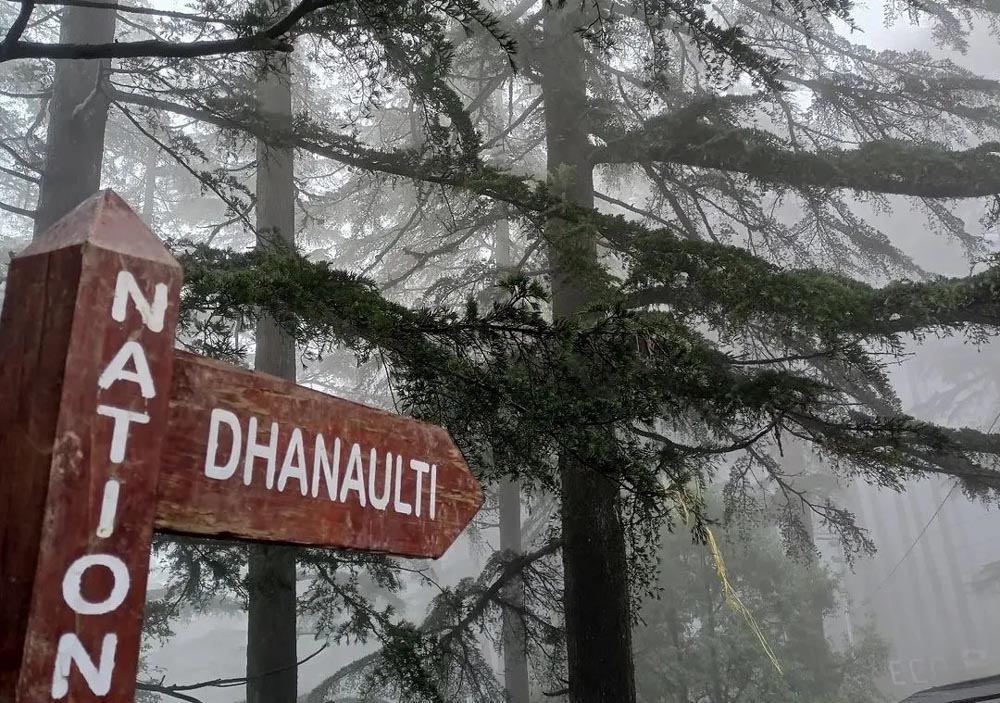
  • There are hill stations in Uttarakhand that are famous for bustling markets, crowded viewpoints and busy tourist streets, and then there is Dhanaulti. Tucked away in the Tehri Garhwal district, Dhanaulti offers a completely different Himalayan experience. Here, dense deodar, oak and rhododendron forests replace busy shopping streets, mountain winds carry the scent of pine and cedar, and mist frequently drifts across the hills like a soft curtain. It is a destination where the journey itself becomes part of the holiday.

    Located on the Mussoorie–Chamba road, Dhanaulti is approximately 24 kilometres from Mussoorie and around 29 kilometres from Chamba. The Uttarakhand government describes it as a peaceful retreat surrounded by forests and mountain scenery, with views of snow-covered peaks on clear days. Its elevated location, cool climate and relatively relaxed atmosphere make it especially attractive to travellers looking for a quieter alternative to some of Uttarakhand’s more crowded hill stations.

    Dhanaulti is not necessarily a destination for travellers who want a packed itinerary. Its greatest attraction is its atmosphere. A morning walk through a forest, an afternoon spent looking across distant Himalayan ridges, a cup of hot tea while clouds roll over the mountains and an evening beside a campfire can be more memorable here than checking off a long list of attractions.

    Where Is Dhanaulti?

    Dhanaulti is situated in Tehri Garhwal district of Uttarakhand and lies along the road connecting Mussoorie with Chamba and the wider Tehri region. The town stands at an elevation of roughly 2,286 metres above sea level, giving it a noticeably cooler mountain climate than the plains. Its surrounding landscape consists largely of forested slopes, mountain ridges and open viewpoints.

    Its location is one of its biggest advantages. Dhanaulti can be combined with a trip to Mussoorie, Kanatal, Chamba, New Tehri or other destinations in Tehri Garhwal. Travellers coming from Delhi and the National Capital Region can also consider it for a longer weekend escape, although actual journey times depend considerably on traffic and road conditions.

    Unlike a conventional commercial hill station, Dhanaulti has retained much of its natural character. The District Tehri Garhwal administration specifically highlights its thick forests of deodar, rhododendron and oak, along with its peaceful surroundings and mountain views.

    What Makes Dhanaulti Special?

    The first thing visitors notice about Dhanaulti is not a monument or a particular viewpoint. It is the forest.

    Tall trees dominate much of the landscape, creating a sense of privacy and tranquillity. During misty weather, the forest can look almost mysterious, while sunny days bring out the different shades of green across the slopes. In spring and early summer, rhododendrons add colour to the landscape, while autumn brings clearer skies and excellent opportunities for mountain photography.

    Dhanaulti is particularly appealing to people who enjoy slow travel. Instead of rushing between attractions, visitors can spend time exploring forest trails, enjoying a resort with mountain views, photographing the changing sky or simply sitting outdoors with a warm drink.

    The town also offers a useful balance between nature and accessibility. It is remote enough to feel peaceful but close enough to Mussoorie and other popular destinations to be incorporated into a wider Uttarakhand itinerary.

    Eco Park: One of Dhanaulti’s Main Attractions

    Eco Park is among the most popular attractions in Dhanaulti. The park is surrounded by tall forest and provides visitors with an easy way to experience the area’s natural environment without undertaking a demanding trek.

    The Eco Park is associated with the conservation of the local forest environment and has been developed with the participation of the forest department and local communities. It is divided into areas commonly known as Amber and Dhara, located close to each other. The setting makes it particularly suitable for families, couples and travellers who want a leisurely nature experience.

    Walking beneath deodar trees is one of the simplest and most enjoyable things to do here. Depending on the season, visitors may also encounter flowers, birds and changing vegetation. The park’s forest setting makes it a popular place for photography, especially when morning mist or soft afternoon light filters through the trees.

    Rather than treating Eco Park as a quick photo stop, it is worth taking time to walk slowly and appreciate the surroundings. The appeal of Dhanaulti is often found in these small experiences.

    Surkanda Devi Temple: A Spiritual and Scenic Journey

    For travellers who want to combine nature with spirituality, the Surkanda Devi Temple is an important addition to the itinerary.

    Surkanda Peak rises to about 2,750 metres and is located roughly 8 kilometres from Dhanaulti. The temple is one of the region’s important religious sites and is traditionally associated with the Shakti Peetha tradition. According to Hindu mythology, the head of Goddess Sati is believed to have fallen at this location.

    The journey to the temple has traditionally involved an uphill walk from Kaddukhal. The climb is surrounded by forest and rewards visitors with impressive views once they reach the higher slopes. The district administration notes that the final ascent is approximately 2.5 kilometres on foot.

    The experience is about more than reaching the shrine. The combination of mountain air, forest, religious significance and expansive views gives the journey a special character.

    Visitors planning the trek should wear comfortable shoes, carry drinking water and allow enough time rather than trying to complete the visit in a hurry. Weather can change rapidly at higher elevations, so carrying an extra warm layer is sensible even when the lower valley feels comfortable.

    Camping and Outdoor Experiences

    Dhanaulti has become increasingly popular with travellers interested in camping and outdoor experiences. The surrounding forests, cool climate and mountain scenery create an attractive setting for spending a night away from conventional hotels.

    Camping can be particularly enjoyable during clear evenings when the sky becomes visible above the forest. A campfire, warm food and the quiet mountain environment create an atmosphere very different from a city holiday.

    The area is also suitable for nature walks, photography and leisurely exploration. More adventurous travellers can look for activities such as mountain biking, trekking and other outdoor experiences offered by local operators. Seasonal accessibility is important, however, and travellers should confirm the current operating conditions before booking adventure activities.

    Dhanaulti in Winter: A Snowy Himalayan Escape

    Winter is one of the most appealing seasons in Dhanaulti. When snowfall occurs, the forest and surrounding hills can take on an entirely different appearance. Deodar branches covered with snow, misty roads and white slopes create a postcard-like Himalayan landscape.

    The possibility of snowfall is also one reason Dhanaulti attracts winter visitors. However, snow is weather-dependent and should never be treated as guaranteed on a particular date.

    Winter temperatures can become very cold, particularly during mornings and nights. Travellers visiting between December and February should pack proper woollens, insulated jackets, socks, gloves and comfortable shoes with good grip. Road conditions can also change during periods of snow or heavy weather, so checking local conditions before travelling is important.

    For photographers, winter offers some of the most dramatic scenery. For families and couples, meanwhile, a snow-covered forest can make the destination feel almost magical.

    The Best Time to Visit Dhanaulti

    The best time to visit depends on the experience you want.

    March to June is generally comfortable for sightseeing, nature walks and escaping the heat of the plains. Spring brings fresh vegetation and pleasant daytime temperatures, while the forests become particularly attractive as the landscape comes alive.

    The monsoon months can bring heavy rain to the hills. Rain transforms the landscape into brilliant shades of green, but travellers should be prepared for slippery roads, fog and possible travel delays. Those who enjoy dramatic clouds and lush scenery may still appreciate Dhanaulti during this season, but it requires greater flexibility.

    September to November is one of the most rewarding periods for clear mountain views. After the monsoon, the atmosphere can feel fresh and the skies may become clearer. Autumn is particularly good for travellers interested in photography, peaceful walks and Himalayan panoramas.

    December to February is ideal for those specifically hoping to experience winter and possible snowfall. Temperatures can fall considerably, so warm clothing is essential.

    Things to Do in Dhanaulti

    A Dhanaulti holiday can be as active or relaxed as you want. Walking through the deodar and oak forests is perhaps the simplest activity and often the most rewarding. The forest environment gives visitors an opportunity to slow down and enjoy the natural surroundings.

    A visit to Eco Park can be combined with photography and a relaxed picnic-style outing. Travellers interested in spirituality can dedicate several hours to the Surkanda Devi Temple excursion. Adventure lovers can explore trekking, camping and cycling opportunities depending on the season and local availability.

    One of the most underrated activities is simply enjoying the views. On clear days, the Himalayan landscape can stretch dramatically across the horizon. Sunrise and sunset are particularly beautiful moments, although cloud cover can change the experience from one day to another.

    Dhanaulti is also a good destination for reading, writing, photography or simply disconnecting from a busy routine. The quieter environment is precisely what makes it different from more commercialised hill stations.

    Nearby Places to Explore

    Dhanaulti works particularly well as part of a broader Tehri Garhwal itinerary.

    Mussoorie is the most obvious addition. Located around 24 kilometres away, it offers a much livelier hill-station experience, with markets, viewpoints, cafés and tourist attractions. A traveller can stay in the quieter surroundings of Dhanaulti while visiting Mussoorie during the day.

    Chamba lies in the opposite direction and offers another peaceful mountain experience. The road connecting Dhanaulti and Chamba is scenic, making the journey itself worthwhile.

    Kanatal is another nearby destination known for forest landscapes, mountain views, resorts and outdoor experiences. Travellers interested in a longer nature-focused holiday can combine Dhanaulti and Kanatal rather than treating them as competing destinations.

    New Tehri and Tehri Lake can also be included in a wider trip. Tehri Garhwal has several religious and adventure destinations, including Surkanda Devi, Kunjapuri and Chandrabadni, while Tehri Lake is known for water-based activities and its striking mountain setting.

    Where to Stay in Dhanaulti

    Accommodation in Dhanaulti ranges from simple guesthouses and cottages to resorts, camps and more comfortable mountain properties. The best choice depends on whether you are travelling on a budget, looking for a romantic getaway or planning a family holiday.

    Many visitors prefer accommodation surrounded by trees or positioned where mountain views are available. Before booking, it is worth checking whether the property has heating during winter, parking, reliable hot water, food facilities and suitable road access.

    Travellers who want a peaceful experience should not automatically choose accommodation in the busiest part of the settlement. A property slightly away from the main road can provide a quieter atmosphere, although accessibility becomes more important during winter or rainy weather.

    For families, facilities and road access may matter more than an isolated location. Couples may prefer forest-facing cottages or resorts with balconies and mountain views. Budget travellers can consider guesthouses and simpler stays, especially if most of their time will be spent exploring outdoors.

    Food in Dhanaulti

    Food is an important part of any mountain holiday, and Dhanaulti offers the kind of simple, comforting meals that suit its cool climate. Visitors can generally find North Indian favourites, snacks, tea, coffee and basic vegetarian and non-vegetarian meals at local restaurants and accommodation properties.

    Travellers should also try local-style Garhwali food when available. Traditional dishes from Uttarakhand tend to make good use of lentils, grains, leafy vegetables and locally available ingredients. Regional dishes can provide a more authentic connection with the culture of the hills.

    Because Dhanaulti is a relatively small destination, restaurant choices may not be as extensive as in Mussoorie. Travellers with specific dietary requirements should plan accordingly and confirm food availability with their accommodation in advance.

    How to Reach Dhanaulti

    Dhanaulti is primarily a road-accessible destination.

    The nearest major airport is Jolly Grant Airport near Dehradun. From the airport, travellers can hire a taxi or continue by road toward Mussoorie and Dhanaulti. The district administration lists Jolly Grant Airport as the nearest airport for the wider Surkanda area.

    For railway travellers, Dehradun is the most useful major railhead. From Dehradun, taxis and buses can be used to continue toward Mussoorie and Dhanaulti.

    Road travel is generally the most convenient option for visitors coming from Delhi, Dehradun, Haridwar, Rishikesh or other parts of Uttarakhand. A private car or taxi also provides greater flexibility because it allows travellers to stop at viewpoints and nearby attractions along the route.

    Mountain journeys should always include some flexibility. Traffic, landslides, rain, fog, snow and road maintenance can affect travel times.

    A Suggested Dhanaulti Itinerary

    A two-day trip is enough to experience the main highlights without making the holiday feel rushed.

    On the first day, arrive in Dhanaulti and settle into your accommodation. Spend the afternoon exploring Eco Park and walking through the surrounding forests. Later, find a peaceful viewpoint to enjoy the changing colours of the mountains before returning for dinner.

    On the second morning, leave early for Kaddukhal and visit Surkanda Devi Temple. Allow sufficient time for the uphill journey and the temple visit. After returning to Dhanaulti, have lunch and spend the afternoon relaxing or exploring nearby forest areas.

    Travellers with an additional day can extend the trip toward Kanatal, Chamba or Tehri Lake. This creates a more complete introduction to the landscapes of Tehri Garhwal.

    Travel Tips for Dhanaulti

    The mountain environment deserves respect. Carry reusable water bottles, avoid littering and do not disturb wildlife or vegetation. Forests are not simply tourist scenery; they are an important part of the local ecosystem and community environment.

    Always carry a light jacket because temperatures can change quickly. During winter, take heavier woollens and shoes suitable for cold or slippery conditions. Comfortable walking shoes are particularly useful for Eco Park and the Surkanda Devi route.

    Mobile connectivity and other services can vary depending on location, so do not rely entirely on digital payments or constant internet access. Carry some cash for smaller establishments.

    If travelling during monsoon or winter, check road conditions before starting the journey. It is also sensible to keep your itinerary flexible rather than scheduling several attractions at exact times.

    Most importantly, do not visit Dhanaulti expecting the same experience as Mussoorie. Dhanaulti’s charm comes from being quieter, greener and slower.

    Why Dhanaulti Deserves a Place on Your Uttarakhand Itinerary

    Dhanaulti may not have the celebrity status of Mussoorie or the religious importance of some of Uttarakhand’s major pilgrimage destinations, but that is precisely what makes it appealing. It offers an opportunity to experience the Himalayas without constantly moving through crowds.

    Its deodar and oak forests, cool climate, mountain views, Eco Park, nearby Surkanda Devi Temple and opportunities for camping make it suitable for a wide range of travellers. The official Tehri Garhwal tourism information itself describes Dhanaulti as a peaceful retreat surrounded by forests and mountain scenery.

    For couples, it can provide a romantic mountain escape. For families, it offers accessible nature experiences. For photographers, the forests, clouds and Himalayan horizons create countless opportunities. For adventure seekers, the surrounding region provides trekking and outdoor activities. And for anyone simply tired of crowded city life, Dhanaulti offers something increasingly valuable: silence.

    Ultimately, the best way to experience Dhanaulti is not to rush through it. Wake up to cool mountain air, walk beneath ancient-looking trees, watch clouds move across the valleys, visit a sacred Himalayan temple and spend an evening listening to the quiet sounds of the forest.

    Dhanaulti is not a destination that demands your attention with grand attractions. Instead, it quietly earns it through its landscape. And once the crowds disappear behind you and the forest road opens toward the mountains, it becomes easy to understand why this little corner of Uttarakhand has become such a beloved retreat for travellers seeking peace, nature and a slower Himalayan experience.

  • Nestled in the Garhwal Himalayas of Uttarakhand, Mussoorie is one of northern India’s most beloved hill stations. Often called the “Queen of the Hills,” this picturesque destination combines mountain scenery, pleasant weather, colonial-era architecture, lively markets, forested slopes, waterfalls, and panoramic Himalayan views. Located at an elevation of roughly 2,000 metres above sea level, Mussoorie has long attracted travellers looking for a refreshing escape from the heat and bustle of the plains.

    What makes Mussoorie particularly appealing is its ability to offer different experiences to different kinds of travellers. Families can enjoy its scenic viewpoints and easy attractions, couples can explore mist-covered roads and quiet corners, adventure seekers can go trekking and hiking, while history and architecture enthusiasts can discover remnants of its British-era past. The town is also an excellent base for exploring nearby destinations such as Landour, Dhanaulti, Kanatal and Nag Tibba.

    Whether visited during the colourful monsoon, the crisp autumn months, snowy winter, or the pleasant summer season, Mussoorie has a distinctive character that makes every trip memorable.

    Where Is Mussoorie Located?

    Mussoorie is situated in Dehradun district in the Indian state of Uttarakhand. It lies in the lower Himalayan ranges, overlooking the Doon Valley and offering distant views towards the higher Himalayan mountains on clear days. The hill station is approximately 35 kilometres from Dehradun, making it relatively accessible from one of Uttarakhand’s major cities.

    The geographical setting is one of Mussoorie’s greatest attractions. The town stretches along a mountain ridge, with steep slopes, winding roads and densely forested areas surrounding it. Deodar, oak, pine and other Himalayan vegetation contribute to the region’s green appearance. During the monsoon, the landscape becomes especially lush, while winter can occasionally bring snowfall to the higher parts of the area.

    A Glimpse into Mussoorie’s History

    Mussoorie’s history is closely connected with the British period in India. The town developed as a British hill station during the early nineteenth century when British officers began exploring the Himalayan foothills as retreats from the intense summer heat of the plains.

    Captain Frederick Young of the East India Company is often associated with the early development of Mussoorie. Over time, the settlement grew into a fashionable summer retreat for British officials, military personnel and other residents. Hotels, churches, schools, cottages and administrative buildings gradually appeared across the hills.

    The colonial influence remains visible in parts of Mussoorie today. Old buildings, traditional cottages, churches and winding streets provide glimpses into the town’s past. At the same time, Mussoorie has evolved into a modern tourist destination with hotels, restaurants, cafés, shops and recreational attractions.

    The nearby area of Landour preserves an especially distinctive old-world atmosphere. Its quiet lanes, historic buildings and forested surroundings contrast with the busier sections of central Mussoorie.

    The Natural Beauty of Mussoorie

    The landscape is perhaps the biggest reason travellers continue returning to Mussoorie. Mountains appear around almost every bend, while clouds frequently drift across the hills, creating an atmosphere that can feel almost dreamlike.

    One of the most enjoyable experiences is simply walking through the quieter roads and observing the changing scenery. On clear mornings, the Doon Valley spreads out below the town, while distant mountain ranges can sometimes be seen on the horizon. During cloudy weather, the scenery changes dramatically as mist moves through the pine and deodar forests.

    The region is also rich in birdlife and Himalayan flora. Early-morning walks can be particularly rewarding for nature lovers, as the forests are quieter and the air is cool and fresh.

    Mall Road: The Heart of Mussoorie

    No visit to Mussoorie feels complete without spending time on Mall Road. Located in the central part of town, this lively street is lined with shops, cafés, restaurants, hotels and stalls selling souvenirs and local products.

    Mall Road is more than simply a shopping area. It is a place where visitors can experience the social atmosphere of the hill station. Families stroll along the road, tourists stop for photographs, and visitors browse shops selling woollens, handicrafts, chocolates and other items.

    A walk along Mall Road becomes especially enjoyable in the evening when the area becomes lively. However, during peak holiday periods it can become crowded, so travellers looking for a quieter experience may prefer early morning or later evening walks.

    Gun Hill: One of Mussoorie’s Famous Viewpoints

    Gun Hill is one of Mussoorie’s most recognisable attractions. Situated at a significant elevation above the town, it provides expansive views of the surrounding mountains and the Doon Valley.

    The hill can be reached by a short cable-car ride or by walking up from the Mall Road area. The ropeway itself is part of the attraction because it provides an aerial perspective of the surrounding landscape.

    At the top, visitors can enjoy panoramic views and spend time taking photographs. Weather conditions greatly influence the experience; on clear days the vistas can be spectacular, while clouds and mist can create an entirely different, atmospheric setting.

    Kempty Falls and the Waterfall Experience

    Kempty Falls is one of the most popular attractions around Mussoorie. Located outside the main town, the waterfall drops through a rocky landscape and has traditionally been a favourite stop for families and tourists.

    The falls can become crowded during the busy tourist season, but the surrounding scenery remains attractive. Visitors can enjoy the sound of flowing water, explore the surrounding area and take photographs.

    Because the area can become busy, travellers interested in enjoying nature more peacefully may prefer visiting earlier in the day. Care should also be taken around wet rocks and steep sections.

    Lal Tibba and the Charm of Landour

    Lal Tibba, located in the Landour area, is among the most famous viewpoints near Mussoorie. It is known for its elevated position and views toward the Himalayan ranges.

    Landour itself deserves more attention than simply being treated as a viewpoint. Its quiet roads, old colonial architecture, forests and relaxed atmosphere make it one of the most charming parts of the Mussoorie region.

    Walking around Landour allows visitors to experience a slower side of the hill station. The area is also associated with writer Ruskin Bond, whose connection with the region has added to its literary appeal.

    The combination of literature, colonial architecture, mountain scenery and peaceful lanes gives Landour a personality quite different from the crowded central market areas.

    Camel’s Back Road

    Camel’s Back Road is another popular place for walking and enjoying Mussoorie’s mountain scenery. The road takes its name from a naturally shaped rock formation resembling the hump of a camel.

    The area is particularly appealing to travellers who enjoy leisurely walks rather than busy tourist attractions. The surrounding mountains and valley views make it a good location for photographs and quiet moments.

    Sunrise and sunset can be especially beautiful here, although visibility depends heavily on weather conditions.

    Company Garden and Family Attractions

    The Company Garden, also known as Municipal Garden, is a popular attraction for families. It features landscaped gardens, colourful flowers and recreational facilities.

    Compared with Mussoorie’s natural viewpoints and forest trails, the garden has a more developed and recreational character. It can be a convenient stop for families travelling with children.

    Mussoorie also has several smaller attractions and recreational activities, including boating facilities, amusement areas and local sightseeing spots. These attractions make the destination suitable for travellers of different age groups.

    Adventure Activities Around Mussoorie

    Although Mussoorie is primarily known as a scenic hill station, it also provides opportunities for adventure.

    Trekking is one of the most rewarding activities in the region. Trails around Nag Tibba, George Everest, Benog Hill and nearby forest areas offer varying levels of difficulty. Some routes are suitable for relatively casual hikers, while others require greater preparation and physical fitness.

    Nag Tibba, located within the broader Mussoorie region, is particularly popular among trekking enthusiasts. The trek leads through mountain villages and forests before reaching elevated viewpoints.

    Camping is another popular activity around Mussoorie and the neighbouring mountain areas. Spending a night away from the town lights allows travellers to experience the quietness of the Himalayan landscape and, when skies are clear, enjoy impressive views of the stars.

    Travellers should always consider weather conditions, trail conditions and local guidance before undertaking mountain activities.

    The Food of Mussoorie

    Food is an important part of the Mussoorie experience. The town has everything from traditional North Indian meals to Tibetan dishes, café food and international cuisine.

    Tibetan and Himalayan influences can be seen in popular dishes such as momos and thukpa. Warm soups and noodle-based dishes are especially enjoyable during the colder months.

    Visitors can also sample North Indian favourites, snacks, bakery products and sweets. Cafés in Landour and central Mussoorie have become attractions in their own right, offering coffee, tea, sandwiches, baked goods and relaxed mountain views.

    A leisurely café visit while watching clouds move across the hills is one of the simplest pleasures of a Mussoorie holiday.

    Shopping in Mussoorie

    Shopping in Mussoorie is generally focused on souvenirs, local products, woollens, handicrafts and food items. Mall Road and nearby markets are popular places to browse.

    Woollen clothing is particularly useful for visitors travelling during winter. Local shops also sell wooden handicrafts, decorative items, handmade products and regional foods.

    Travellers should remember that prices can vary considerably between shops. Comparing prices and checking product quality before purchasing is advisable, particularly in busy tourist markets.

    Best Time to Visit Mussoorie

    Mussoorie can be visited throughout much of the year, but the best season depends on what kind of experience a traveller wants.

    Summer, generally from March to June, is one of the busiest periods. The weather is comparatively pleasant and Mussoorie becomes a popular escape from the heat of the plains. This period is ideal for sightseeing and outdoor activities, although accommodation and transportation can be more expensive during holidays.

    The monsoon arrives around July and continues into September. Rain transforms the surrounding landscape into vibrant green scenery and gives the hills a misty, romantic appearance. However, heavy rainfall can sometimes cause road disruptions, landslides and delays, so travellers should check conditions before travelling.

    Autumn, particularly October and November, is among the most attractive periods for visitors seeking clearer skies and comfortable temperatures. The scenery is often excellent for photography.

    Winter, from December to February, brings cold weather and the possibility of snowfall, especially during favourable weather conditions. Those hoping to experience a snowy Mussoorie should remember that snowfall is not guaranteed every winter and conditions can vary.

    How to Reach Mussoorie

    The nearest major railway station is Dehradun, which is well connected with several Indian cities. From Dehradun, travellers can continue to Mussoorie by taxi or bus.

    For air travellers, Jolly Grant Airport near Dehradun is the closest major airport. From the airport, the journey continues by road.

    Road travel is one of the most common ways to reach Mussoorie. The drive from Dehradun involves winding mountain roads and offers increasingly scenic views as the elevation rises.

    Travellers coming from Delhi and surrounding parts of North India often travel by road to Dehradun and then continue towards Mussoorie. Travel time can vary considerably depending on traffic, weather and road conditions.

    Where to Stay in Mussoorie

    Mussoorie offers accommodation across a wide range of budgets. Visitors can choose from luxury hotels, heritage properties, boutique hotels, resorts, guesthouses and budget accommodations.

    Those who want convenient access to shopping and restaurants may prefer staying near Mall Road or the central town area. Travellers looking for peace and scenic surroundings may find Landour or quieter areas outside the main centre more appealing.

    Families may prioritise larger rooms, parking and easy access to attractions, while couples may prefer boutique properties with mountain views. During peak summer holidays and long weekends, advance reservations are advisable.

    Mussoorie Beyond the Main Tourist Spots

    One of the best ways to experience Mussoorie is to move beyond its famous attractions. The town has a quieter personality that becomes visible when travellers explore its lesser-known lanes and forested roads.

    George Everest’s area is particularly interesting for those who enjoy history, landscape and photography. The location offers impressive views and a more open mountain environment.

    Benog Wildlife Sanctuary is another option for nature lovers. The surrounding region provides opportunities to experience Himalayan forests and observe local birdlife.

    Dhanaulti, located farther from Mussoorie, offers another peaceful mountain experience with forests and scenic surroundings. Kanatal and nearby mountain villages can also be incorporated into longer itineraries.

    A Destination for Every Type of Traveller

    Mussoorie’s enduring popularity comes from its versatility. It can be a romantic getaway, a family holiday, a solo travel destination, a weekend escape or the starting point for a Himalayan adventure.

    For couples, misty roads, cafés, viewpoints and peaceful walks create a romantic atmosphere. Families can combine sightseeing with recreational attractions. Solo travellers can spend days exploring markets, cafés, trails and quiet mountain roads.

    For photographers, changing weather provides endless opportunities. A sunny Himalayan panorama, a fog-covered forest, a colourful sunset or rain falling across an old mountain cottage can each create a completely different visual experience.

    Responsible Tourism in Mussoorie

    The popularity of Mussoorie also brings environmental challenges. Increased tourism places pressure on roads, water resources, waste-management systems and fragile mountain ecosystems.

    Visitors can contribute to responsible tourism by avoiding single-use plastic, disposing of waste properly, respecting local communities and avoiding damage to vegetation. Travellers should also avoid littering around waterfalls, hiking trails and viewpoints.

    Using local businesses, eating at local establishments and purchasing genuine regional products can help tourism contribute more directly to the local economy.

    Mountain destinations are particularly sensitive to environmental changes, so responsible travel is not merely an ethical choice; it is important for preserving Mussoorie for future generations.

    Why Mussoorie Continues to Attract Travellers

    Many hill stations have developed rapidly over the decades, but Mussoorie retains a distinctive combination of history, scenery and accessibility. It is close enough to major northern Indian cities for a relatively convenient getaway while still providing the feeling of being surrounded by mountains.

    Its appeal lies not in a single attraction but in the overall experience: walking along a misty road, drinking hot tea while looking over the valley, exploring an old church, browsing Mall Road, watching clouds gather around the hills, or taking a quiet walk through Landour.

    Mussoorie can certainly become crowded during peak seasons, and traffic and construction can sometimes diminish the tranquillity visitors expect from a mountain destination. Yet away from the busiest areas, the character that made the town famous remains remarkably easy to discover.

    Final Thoughts

    Mussoorie is much more than a conventional hill station. It is a destination where Himalayan landscapes meet colonial history, modern cafés coexist with old mountain cottages, and busy tourist streets give way to peaceful forest paths.

    From the lively atmosphere of Mall Road and the panoramic views of Gun Hill and Lal Tibba to the waterfalls, trekking trails, cafés and quiet lanes of Landour, the destination offers a broad range of experiences. Its changing seasons provide another reason to return: summer brings cool mountain air, monsoon creates a world of mist and greenery, autumn often delivers clearer views, and winter introduces a distinctly chilly Himalayan atmosphere with the possibility of snow.

    For anyone seeking a combination of natural beauty, history, food, adventure and relaxation, Mussoorie remains one of Uttarakhand’s most rewarding destinations. The real magic of the town is often found not in rushing from one attraction to another, but in slowing down and allowing the mountains, clouds and forests to become part of the journey.

  • Nestled amid the quiet hills of Mussoorie in Uttarakhand, George Everest House is a destination where colonial history, scientific achievement and Himalayan scenery come together in a remarkable way. Located at Hathipaon, a short distance from the main tourist centre of Mussoorie, the historic property is associated with Sir George Everest, the British surveyor and geographer whose name eventually became attached to the world’s highest mountain. Far removed from the crowded streets and commercial atmosphere of central Mussoorie, the estate offers visitors an opportunity to experience a quieter side of the hill station.

    Today, George Everest House is much more than an old colonial building. It is a heritage site, a reminder of the enormous surveying and mapping efforts undertaken in the Indian subcontinent during the nineteenth century, and a spectacular viewpoint overlooking the surrounding valleys and Himalayan ranges. The property has also become increasingly popular among travellers looking for photography, short hikes, picnics, sunsets and panoramic mountain views. The Government of India’s Incredible India tourism portal describes the house as a heritage attraction with views towards the Doon Valley, Aglar River valley and the Himalayan mountains.

    The Historical Story Behind George Everest House

    The story of George Everest House begins in the nineteenth century, when Mussoorie was developing into an important British hill station. The property, commonly known as Park Estate or Park House, dates to the early 1830s. Incredible India records the house as having been built in 1832, while historical accounts place George Everest’s association with the estate shortly afterward.

    Sir George Everest was born in 1790 and eventually became one of the most important figures associated with surveying in British India. He served as Surveyor General of India from 1830 to 1843 and was closely involved with the Great Trigonometrical Survey of India, an enormous scientific undertaking intended to establish accurate geographical measurements across the subcontinent.

    For Everest, surveying was not simply a matter of drawing lines on maps. The work involved mathematics, astronomy, geography, engineering and painstaking field measurements. Survey teams had to work across difficult terrain, often carrying sophisticated instruments over enormous distances. Mountains, forests, heat, disease and logistical difficulties made the task extraordinarily demanding.

    George Everest House became closely connected with this scientific world. During the years he lived at the estate, the property functioned not only as a residence but also as a workplace associated with observation, calculations and surveying. Incredible India describes the house as having served as Everest’s home, observatory and laboratory during his residence there.

    Who Was Sir George Everest?

    Sir George Everest was a Welsh surveyor and geographer who spent a significant part of his professional life in India. His career coincided with a period when accurate geographical knowledge was becoming increasingly important to the British administration.

    He became Surveyor General of India in 1830, succeeding William Lambton, who had initiated the Great Trigonometrical Survey. Everest continued the ambitious project and played a major role in improving the precision of India’s geographical measurements.

    His work was technically demanding. Surveyors used triangulation, in which carefully measured baseline distances and angles between observation points were used to calculate the positions and distances of locations that could not easily be measured directly. Mountain peaks were observed from multiple locations, allowing their positions and elevations to be calculated.

    The work associated with Everest eventually contributed to the measurements that identified the extraordinary height of Peak XV, the mountain that later became known throughout the world as Mount Everest. It is worth noting, however, that the naming and measurement story is more complicated than the popular version sometimes suggests. Everest himself had retired from the Surveyor General’s position before the final identification and naming of Peak XV. His successor, Andrew Scott Waugh, was Surveyor General when the peak was proposed to be named Mount Everest.

    In 1865, the Royal Geographical Society officially adopted the name Mount Everest. The mountain had previously been known to the British survey as Peak XV. Thus, although George Everest did not personally stand on the summit or carry out a modern-style measurement of the mountain himself, his contribution to India’s surveying system and the Great Trigonometrical Survey was important enough that the world’s highest mountain eventually carried his name.

    The Location and Natural Setting

    One of the biggest attractions of George Everest House is its setting. The estate is situated at Hathipaon, several kilometres from the centre of Mussoorie, in an elevated area surrounded by forests and open mountain landscapes. Sources place it roughly 6–8 kilometres from central Mussoorie, depending on the starting point used.

    The location provides a dramatically different atmosphere from busy Mall Road. Instead of shops, restaurants and crowds, visitors encounter open hills, mountain air and broad views.

    From the estate, the landscape extends toward the Doon Valley on one side, while the Aglar River valley and Himalayan ranges can be seen from other directions. On clear days, the distant mountain scenery becomes particularly impressive. The combination of the historic building and the natural setting is one reason the site appeals to both history enthusiasts and nature lovers.

    The views also change dramatically according to weather and season. During clear winter days, distant Himalayan peaks may appear sharply against the sky. During the monsoon, clouds and mist frequently transform the landscape into a much more atmospheric scene. Spring and autumn can offer pleasant conditions for walking and photography, while summer generally provides relief from the heat of the plains.

    Architecture and Heritage Character

    George Everest House is valuable not only because of its famous former resident but also because it represents the architectural character of an early colonial hill estate.

    The building and surrounding structures were designed for practical living and scientific work rather than mass tourism. Its isolated position was particularly useful for observation and surveying. The estate included the main residence as well as associated structures connected with the work carried out there.

    For many years, however, the property suffered from neglect. Sections of the old buildings deteriorated, and the estate lost much of its original appearance. Reports from before the restoration described the property as being in a seriously dilapidated condition.

    The deterioration was particularly unfortunate because the site represented a rare combination of architectural, scientific and historical heritage. Eventually, efforts by heritage enthusiasts, officials and tourism authorities helped bring greater attention to the property.

    Restoration of George Everest House

    A major restoration project transformed the future of the estate. The Uttarakhand tourism department undertook a large-scale development project with Asian Development Bank assistance. Contemporary reports put the project cost at approximately ₹23.7 crore. The restoration began in 2019 and the renovated property was opened to the public in December 2021.

    The project was intended to go beyond simply repairing the old house. Plans included improvements to the surrounding estate, pathways, tourism infrastructure and interpretation facilities. A heritage-style pathway was developed, while proposals also included a cartographic museum and facilities connected with astronomy and stargazing.

    An especially interesting aspect of the restoration was the effort to preserve the character of the original structure. Reports stated that traditional materials and techniques were considered rather than simply treating the historic building like a modern concrete structure. One account noted the use of a traditional lime-based mixture incorporating materials such as fenugreek and urad dal instead of ordinary cement for parts of the restoration.

    The restoration is significant because heritage conservation is not merely about making an old building look attractive. The objective is to preserve the relationship between the building, its history and its surroundings. At George Everest House, that relationship is particularly important because the landscape itself formed part of the scientific story.

    George Everest House as a Scientific Heritage Site

    Perhaps the most fascinating aspect of the destination is its connection with the history of science.

    Modern travellers often associate Everest primarily with mountaineering. Images of climbers, icefalls and snow-covered Himalayan slopes dominate popular representations of Mount Everest. George Everest House presents a completely different story. It reminds visitors that before modern satellite mapping, digital elevation models and GPS, determining the shape and dimensions of the landscape required extraordinary patience and mathematical skill.

    Surveyors depended on instruments, astronomical observations, carefully established reference points and complex calculations. The Great Trigonometrical Survey was one of the great scientific projects of nineteenth-century India.

    The estate therefore provides an opportunity to understand the less familiar scientific history behind the famous name. Plans for a cartographic museum were part of the restoration vision, with the intention of displaying surveying equipment and explaining historical cartographic methods.

    For students, researchers and anyone interested in geography, cartography or the history of science, this dimension makes the property particularly meaningful. It is a place where visitors can connect a famous geographical name with the actual human and technological work that stood behind it.

    George Everest House as a Tourist Attraction

    Today, the destination attracts a wide variety of visitors. Some come because of the historical connection with Mount Everest, while others are primarily interested in the scenery.

    Photography is one of the most popular activities. The old house, mountain backdrop, open landscape and changing clouds create numerous opportunities for landscape and architectural photography. The site is also popular for short walks and relaxed outings.

    The surrounding area has become associated with hiking, picnicking, camping and other outdoor activities. Incredible India describes George Everest House and the nearby peak as popular locations for camping, picnics and adventure outings.

    The nearby George Everest Peak is particularly appealing to visitors who want to extend their outing beyond the heritage building. The ascent and surrounding terrain provide a more active experience, while the house itself offers the historical component of the trip.

    The View from George Everest

    The views are arguably the destination’s strongest natural attraction.

    Looking across the landscape, visitors can appreciate the dramatic geography of the Mussoorie region. The Doon Valley stretches into the distance, while the Aglar side of the landscape and Himalayan ranges create a contrasting mountain panorama. On clear days, the distant peaks can become the centrepiece of the view.

    Sunrise and sunset are especially attractive times for photographers. Early morning can bring soft light and clear atmospheric conditions, while evening often produces changing colours across the valleys. Clouds can add another dimension to the scenery, particularly during the monsoon.

    However, mountain visibility is never guaranteed. Weather conditions, haze and seasonal cloud cover can dramatically affect what visitors see. Travellers should therefore visit for the overall experience rather than expecting a guaranteed panoramic view of snow-covered peaks.

    Best Time to Visit

    George Everest House can be visited throughout much of the year, but the ideal season depends on what kind of experience a traveller wants.

    Spring is pleasant, with comparatively comfortable temperatures and greenery returning to the surrounding hills. Summer is also popular because Mussoorie provides a cooler escape from the plains, although weekends can become busy.

    The post-monsoon period is particularly attractive because the landscape is often lush and fresh. October and November can bring clearer skies, making them good months for mountain views and photography.

    Winter has its own charm. Temperatures can fall considerably, and cold mornings may produce a distinctly Himalayan atmosphere. On suitable days, visibility can be excellent. Travellers should carry warm clothing, especially if they plan to remain at the viewpoint around sunrise or sunset.

    The monsoon can be beautiful but requires greater caution. Wet paths, slippery surfaces, fog and sudden rain can make walking more difficult. Anyone planning a hike should check local weather conditions before setting out.

    How to Reach George Everest House

    George Everest House is reached from Mussoorie by road toward the Hathipaon area. It is not located in the centre of the town, so visitors generally need a private vehicle, taxi or other local transport to reach the vicinity.

    For travellers arriving from outside Uttarakhand, Dehradun is an important gateway. Incredible India lists Jolly Grant Airport as the nearest airport and Dehradun Railway Station as the nearest major railway connection. From Dehradun, travellers can continue by road toward Mussoorie and then proceed to Hathipaon.

    The road journey itself is part of the experience. As the route moves away from central Mussoorie, the environment gradually becomes quieter and more rural. Visitors should allow enough time rather than treating George Everest House as a very quick stop.

    Things to Do Around George Everest House

    A visit does not have to be limited to looking at the historic building. Travellers can spend time exploring the surrounding landscape, photographing the old architecture, enjoying the mountain views and walking around the estate.

    Those interested in adventure can explore the nearby George Everest Peak and surrounding trails. The area has also become associated with camping and outdoor recreation. Visitors who prefer a relaxed outing can simply enjoy the viewpoint and the atmosphere.

    George Everest House can also be combined with other Mussoorie attractions during a longer day trip. Depending on the route and available time, travellers can explore places such as Kempty Falls, Bhatta Falls, Gun Hill Point, Mussoorie Lake, Lal Tibba and Landour. Incredible India lists several of these among the attractions around Mussoorie.

    Practical Tips for Visitors

    Visitors should wear comfortable shoes because the area involves walking on uneven surfaces. Anyone planning to explore the nearby trails should choose proper footwear rather than ordinary sandals.

    Carrying drinking water is advisable, particularly during warmer months or when walking beyond the main visitor areas. Weather in the hills can change quickly, so a light jacket or rain protection can be useful even when the day begins with clear skies.

    Photography enthusiasts should consider visiting early in the morning or later in the afternoon when the light is softer. Those interested in sunset photography should remember that mountain roads can become darker quickly after sunset.

    The official Incredible India listing currently gives visiting hours of 9:00 AM to 6:00 PM, although local operating arrangements can change. It is sensible to verify opening conditions locally before making a dedicated trip.

    Visitors should also treat the heritage structures respectfully. Historic buildings cannot easily be replaced, and avoiding littering, graffiti and damage is essential to preserving the site for future generations.

    Why George Everest House Deserves a Place on Your Mussoorie Itinerary

    Mussoorie has no shortage of scenic viewpoints, colonial buildings and popular tourist attractions, but George Everest House offers something different. Its appeal comes from the combination of history, science, architecture and landscape.

    Standing near the old estate, it is fascinating to think about the scientific work that took place here more than a century ago. The mountains visible from the property are not simply a beautiful backdrop; they are connected to the very subject of the surveying work that made George Everest famous.

    The destination also provides a valuable perspective on the history behind the name “Everest.” The world’s highest mountain is now an icon of adventure and mountaineering, but the story associated with its name is rooted partly in nineteenth-century surveying and cartography.

    At the same time, the restored estate demonstrates how historical places can be brought back into public life. After years of deterioration, the restoration project helped turn George Everest House into a heritage and tourism destination while drawing attention to its scientific significance.

    Final Thoughts

    George Everest House is one of those places where the journey is about much more than reaching a viewpoint. It is a meeting point between the past and present, where an old colonial-era estate tells the story of surveying, geography and scientific exploration against the extraordinary backdrop of the Himalayas.

    For history lovers, it offers a connection with Sir George Everest and the Great Trigonometrical Survey. For photography enthusiasts, it provides dramatic Himalayan and valley landscapes. For nature lovers, it offers quiet mountain surroundings away from the busiest parts of Mussoorie. For trekkers and adventure seekers, the nearby peak and trails add an outdoor dimension to the visit.

    Most importantly, George Everest House encourages visitors to look beyond the famous name of Mount Everest and discover the complex history behind it. The property stands as a reminder that some of the world’s greatest geographical discoveries were achieved not with modern technology, but through years of observation, calculation, perseverance and painstaking fieldwork.

    A trip to this historic estate therefore offers two experiences at once: the simple pleasure of standing on a beautiful Himalayan hillside and the deeper experience of stepping into a chapter of India’s scientific and colonial history. That combination makes George Everest House one of the most distinctive places to explore around Mussoorie, Uttarakhand.

  • Uttarakhand is widely known as Devbhoomi, the “Land of the Gods,” and its spiritual character can be experienced not only at famous pilgrimage centres but also at small, secluded temples hidden among forests and hills. One such sacred destination is Laxman Siddh Temple, located near Dehradun along the Haridwar–Rishikesh road. Surrounded by dense greenery and a peaceful forest landscape, the temple offers an experience that is very different from the busy pilgrimage centres of Uttarakhand. It combines mythology, local traditions, asceticism, nature and faith in a setting where visitors can spend time in quiet prayer and contemplation.

    Located roughly 12 kilometres from Dehradun, the temple is considered one of the important Siddh Peeths associated with the Dehradun region. It attracts devotees throughout the year, with Sundays traditionally being particularly busy. The temple also becomes an important cultural gathering place during the annual Laxman Siddh Fair, generally held on the last Sunday of April.

    What makes Laxman Siddh especially interesting is the combination of stories associated with its name. Local tradition connects the sacred location with Lord Lakshman, the younger brother of Lord Rama, while another important aspect of the temple’s identity is its association with the saint Swami Laxman Siddh, who is believed to have performed spiritual practices here and whose cremation site is associated with the temple. Because these traditions have developed over generations, visitors may encounter slightly different versions of the temple’s origin and mythology.

    Where Is Laxman Siddh Temple Located?

    Laxman Siddh Temple is situated in the Lachhiwala area of Dehradun district, Uttarakhand, along the Dehradun–Haridwar/Rishikesh road. It is approximately 12 kilometres from central Dehradun, making it considerably easier to visit than many remote Himalayan temples. The temple is surrounded by forest, giving the site a secluded atmosphere despite its proximity to major roads and the city.

    The surrounding landscape is one of the temple’s greatest attractions. Instead of being enclosed by a large urban settlement, the shrine lies amid greenery, trees and the natural landscape of the Dehradun region. The peaceful surroundings make it particularly appealing to visitors who want to combine religious worship with a short nature-oriented excursion.

    For travellers approaching from Dehradun, the route towards Haridwar and Rishikesh makes the temple relatively convenient to include in a wider Uttarakhand itinerary. The location also makes it possible to combine a visit with destinations such as Lachhiwala, Dehradun, Haridwar or Rishikesh.

    The Meaning Behind the Name Laxman Siddh

    The word “Siddh” has a strong spiritual meaning in Indian religious traditions. It is generally associated with a person who has attained spiritual accomplishment or a place connected with intense meditation, penance and spiritual practice. The name Laxman Siddh therefore reflects the shrine’s association with spiritual accomplishment and the revered figure of Laxman Siddh.

    The temple is also counted among the four important Siddh temples around Dehradun, a group traditionally associated with spiritually accomplished saints and sacred places. The other traditionally recognised Siddh shrines include Kalu Siddh, Maanak Siddh and Mandu Siddh. This gives Laxman Siddh a wider religious context within the spiritual geography of the Dehradun region.

    Rather than being simply a conventional temple visited for a quick darshan, Laxman Siddh has traditionally been regarded as a place connected with tapasya, meditation and spiritual discipline.

    The Legend of Lord Lakshman

    One of the most widely repeated legends associated with the temple connects it to Lord Lakshman from the Ramayana. According to local belief, after the great battle in Lanka, Lakshman came to this area to perform penance.

    Different versions of the story describe the reason for his penance somewhat differently. Some traditions say that Lakshman sought purification after participating in the killing of Ravana or after killing Meghnada, Ravana’s son. The belief is that he wanted to atone for the spiritual consequences of taking a life and therefore undertook penance at this sacred location.

    This story gives the temple a powerful symbolic meaning. Lakshman is traditionally remembered as an embodiment of loyalty, courage, discipline and devotion to Lord Rama. His association with penance at Laxman Siddh therefore adds another dimension to his character: even a heroic figure may seek spiritual purification after a difficult act.

    However, it is important to understand that this is a religious and local tradition rather than an independently established historical event. Sources describing the temple do not all present the mythology in exactly the same way. Some local accounts strongly associate the shrine with Lord Lakshman, while other accounts emphasise that Laxman Siddh was a saint whose name became associated with the site.

    Swami Laxman Siddh and the Temple’s Spiritual Identity

    Another central part of the temple’s history concerns Swami Laxman Siddh. The temple is described in several travel and local sources as being associated with the saint’s spiritual practices and cremation site. This connection is particularly important because it helps explain why the shrine is regarded as a Siddh Peeth.

    The idea of a saint attaining spiritual accomplishment through prolonged meditation is deeply embedded in the religious traditions of Uttarakhand. The state’s forests, caves, rivers and mountains have historically attracted ascetics seeking solitude for meditation and tapasya.

    Laxman Siddh fits naturally into this larger spiritual landscape. The forest surrounding the temple contributes to the sense of isolation that is traditionally considered favourable for contemplation. Even today, visitors often appreciate the quietness of the area as much as the religious significance of the shrine.

    A Temple Surrounded by Forest

    Perhaps the most memorable feature of Laxman Siddh Temple is its natural setting. The temple is situated amid forested surroundings, creating a striking contrast with the traffic and activity of the nearby highway.

    For many visitors, the journey is part of the experience. As one moves away from the busier parts of Dehradun and approaches the forested area, the atmosphere becomes quieter and more natural. The sound of trees, birds and the surrounding landscape creates an environment suitable for prayer and reflection.

    This natural setting is also one reason the temple appeals to people who are not visiting solely for religious purposes. Photographers, nature lovers and travellers interested in lesser-known destinations around Dehradun can find the location attractive.

    Visitors should nevertheless remember that the forest environment is part of the temple’s character and should be treated respectfully. Littering, loud music and unnecessary disturbance can undermine the peaceful atmosphere of the shrine.

    Architecture and Atmosphere

    Laxman Siddh Temple does not have the monumental scale of some of Uttarakhand’s better-known pilgrimage temples. Its appeal comes largely from its simplicity and spiritual atmosphere.

    Available descriptions characterise the temple as relatively simple in architectural expression, with the sacred space and devotional activities taking precedence over elaborate ornamentation. The forest setting becomes almost an extension of the temple itself.

    Inside the shrine, devotees offer prayers and traditional offerings. The atmosphere can be particularly peaceful outside the busiest visiting periods. The combination of incense, bells, devotional activity and surrounding greenery gives the temple a distinctive character.

    For someone visiting for the first time, it is worth spending a few quiet minutes inside or around the temple rather than treating it simply as another sightseeing stop.

    Traditional Offerings at Laxman Siddh

    One of the interesting traditions associated with Laxman Siddh Temple is the offering of jaggery, or gur. Local tradition explains that jaggery was historically used as a form of sweetness and offering among ordinary people, and the practice continued over generations.

    Ghee and other traditional food offerings are also associated with the temple. The continued practice of offering simple foods illustrates how religious traditions can preserve elements of local history and community life.

    For devotees, these offerings are not merely food items. They represent devotion, gratitude and participation in a tradition that has been passed down through generations.

    Visitors should follow the temple’s current instructions regarding what can be offered, particularly because practices and arrangements can change.

    The Sacred Dhuni

    Another tradition associated with Laxman Siddh is the Akhand Dhuni, or continuously maintained sacred fire. Local accounts describe a fire connected with the place of penance and explain that its sacred ash, known as vibhuti, may be distributed to devotees as prasad.

    The dhuni is particularly significant in traditions associated with ascetics and yogis. Fire has long represented purification, spiritual discipline and transformation in Hindu religious thought. The presence of a sacred fire therefore complements the temple’s association with penance and spiritual practice.

    For visitors interested in the deeper traditions of the temple, learning about the dhuni can make the visit more meaningful than simply photographing the shrine.

    Sundays at Laxman Siddh Temple

    Sundays are traditionally an important visiting day at Laxman Siddh Temple. Large numbers of devotees are known to visit on Sundays, making the atmosphere livelier than it may be on quieter weekdays.

    Community participation is an important aspect of the temple’s identity. Devotees come for darshan, prayer and offerings, while the temple environment becomes a place for social interaction as well as worship.

    Travellers looking for solitude may therefore prefer to visit outside peak Sunday periods. Those interested in experiencing the temple as a living community institution, however, may find a Sunday visit more rewarding.

    The Annual Laxman Siddh Fair

    The annual Laxman Siddh Fair is one of the temple’s most significant cultural events. It is traditionally organised on the last Sunday of April, attracting large numbers of devotees and visitors.

    The fair is more than a religious gathering. It provides an opportunity to experience local customs, food, community interaction and cultural traditions. Such temple fairs have historically served as meeting points for rural communities and religious groups, allowing traditions to continue beyond formal worship.

    The atmosphere during the fair is naturally much busier than during ordinary visits. Visitors should expect crowds and should plan transportation accordingly. Anyone interested in photography or experiencing local culture should also be sensitive to the fact that the event is primarily a religious occasion rather than a tourist attraction.

    How to Reach Laxman Siddh Temple

    Reaching Laxman Siddh Temple is relatively straightforward because of its location near the Dehradun–Haridwar/Rishikesh road.

    From Dehradun, travellers can use a taxi, private vehicle or local transportation towards Harrawala and the Haridwar/Rishikesh side. Travel sources place the temple approximately 12 kilometres from Dehradun, although the exact distance can vary depending on the starting point.

    One commonly described route involves reaching the Harrawala area and then continuing approximately one kilometre on foot toward the temple. The precise walking and road conditions may vary, so visitors should check current local directions before travelling.

    The nearest major railway connection is Dehradun Railway Station, while Jolly Grant Airport near Dehradun is the nearest airport commonly used by air travellers. Travel sources place the airport at roughly 16 kilometres from the temple, although actual road distance and travel time can vary.

    Best Time to Visit

    Laxman Siddh Temple can be visited throughout much of the year, but the experience changes with the seasons.

    Spring is particularly attractive because the surrounding landscape becomes fresh and green, and the annual fair in April provides an opportunity to experience the temple during one of its most important cultural occasions.

    The monsoon season can make the surrounding vegetation especially lush, but travellers should be cautious about slippery paths and changing road conditions.

    Winter offers a cooler and generally quieter atmosphere. Early mornings and evenings can be chilly, so visitors should carry appropriate clothing.

    Those seeking a peaceful experience may prefer a weekday morning. People interested in experiencing the annual religious and cultural gathering should consider visiting around the Laxman Siddh Fair, while keeping in mind that crowds can be substantial.

    Nearby Attractions

    A visit to Laxman Siddh Temple can easily be incorporated into a broader Dehradun or Uttarakhand itinerary. Dehradun itself offers several attractions, while the road toward Rishikesh and Haridwar provides access to numerous natural and spiritual destinations.

    Lachhiwala is particularly relevant because of the temple’s location in the wider Lachhiwala area. Travellers can also plan visits to other religious sites around Dehradun, including Tapkeshwar Temple and the other traditional Siddh temples.

    For travellers continuing toward Rishikesh, the city offers a much larger collection of ashrams, temples and riverside spiritual sites. The well-known Lakshman Temple in Rishikesh is a separate shrine associated with Lord Lakshman and should not be confused with Laxman Siddh Temple near Dehradun.

    Why Laxman Siddh Temple Is Worth Visiting

    Laxman Siddh Temple may not be as internationally famous as some of Uttarakhand’s major pilgrimage destinations, but that is precisely what makes it appealing. Its importance comes from the combination of mythology, local faith, saint traditions and natural surroundings.

    The temple provides an opportunity to see a different side of Uttarakhand’s religious culture. Here, spirituality is not separated from the forest landscape. The trees, quiet paths and secluded setting contribute to the experience just as much as the shrine itself.

    For devotees, the temple is a place of prayer and spiritual connection. For history and culture enthusiasts, it provides an insight into the traditions surrounding Siddh Peeths and ascetic practices. For travellers, it is a peaceful stop near Dehradun that can be combined with other destinations.

    Most importantly, Laxman Siddh demonstrates how sacred geography in Uttarakhand is created not only through monumental temples but also through stories, saints, local traditions and generations of devotion.

    Important Things to Keep in Mind

    Visitors should dress modestly and maintain the sanctity of the temple premises. Footwear should be removed wherever required, and photography inside restricted areas should be avoided.

    Because the temple is surrounded by forest, visitors should avoid littering and should not disturb animals or vegetation. Monkeys and other wildlife may occasionally be encountered in forested areas, so food should be handled carefully and visitors should avoid attempting to feed wild animals.

    It is also wise to verify current temple timings and local road conditions before travelling. Different travel sources currently list different visiting schedules, while online map information can also change.

    Visitors attending the annual fair should plan for heavier crowds and potentially slower traffic.

    A Quiet Spiritual Experience Near Dehradun

    Laxman Siddh Temple occupies a special place in the religious landscape of Uttarakhand. Its story brings together the legendary world of Lord Rama and Lakshman, the spiritual traditions of saints and Siddh Peeths, and the natural beauty of the forests surrounding Dehradun.

    Whether one visits because of faith, curiosity, an interest in Hindu mythology or simply a desire to discover a peaceful place away from the city’s noise, the temple offers something distinctive. Its relatively modest appearance does not diminish its importance. Instead, the simplicity of the shrine and the surrounding forest create an atmosphere in which spirituality feels closely connected to nature.

    The different traditions surrounding the temple also remind us that sacred places often develop through layers of belief and community memory. Some stories are mythological, some are connected with revered saints, and others have been preserved through oral traditions. Rather than diminishing the temple’s significance, these layers make its cultural identity richer.

    For anyone exploring Dehradun and the spiritual destinations of Uttarakhand, Laxman Siddh Temple deserves a place on the itinerary. It is a destination where the journey is not simply about reaching a temple; it is about entering a quieter environment, observing a living tradition and experiencing one of the lesser-known sacred corners of Devbhoomi.

  • Nestled in the western part of Dehradun district, Kalsi is one of Uttarakhand’s lesser-known destinations, yet it possesses an extraordinary combination of history, rivers, forests, mountain landscapes and local culture. Located along the Yamuna and close to the confluence region of the Yamuna and Tons rivers, Kalsi is particularly famous for the Ashokan Rock Edict, an ancient monument that gives the town enormous historical significance. The settlement lies on the route toward Chakrata and can serve as an interesting stop for travelers exploring the quieter side of the Dehradun and Jaunsar-Bawar region.

    Unlike crowded hill stations where tourism is largely centered on viewpoints, markets and hotels, Kalsi offers a different experience. Here, the landscape and history are closely connected. A traveler can spend part of the day examining a Mauryan-era inscription and then continue toward rivers, forests and scenic countryside. This combination makes Kalsi particularly appealing to travelers interested in heritage, archaeology, nature and relatively peaceful road trips.

    Where Is Kalsi Located?

    Kalsi is a town in Dehradun district of Uttarakhand, situated on the Dehradun–Chakrata route. It is approximately 43–44 kilometers from Dehradun, depending on the route and starting point, and lies near Dakpatthar. The town occupies an important geographical position between the plains around Dehradun and the higher landscapes toward Chakrata.

    The surrounding region is characterized by forested hills, agricultural land, river valleys and winding roads. The Yamuna is an important geographical feature of the area, while the Tons River and its valley contribute to the distinctive landscape around Kalsi. The setting becomes increasingly scenic as travelers move away from the busier urban areas toward the hills.

    Because of its location, Kalsi can be incorporated into a longer trip covering Chakrata, Dakpatthar, Lakhamandal and other attractions of western Uttarakhand. It is also suitable for travelers who want to experience a quieter destination without going deep into the higher Himalayas.

    The Historical Importance of Kalsi

    The greatest attraction of Kalsi is undoubtedly its connection with Emperor Ashoka and the Mauryan Empire. The Ashokan Rock Edict at Kalsi is one of the most important archaeological monuments in Uttarakhand and is protected by the Archaeological Survey of India.

    The Archaeological Survey of India describes Kalsi as the only place in North India where the great Mauryan emperor’s complete set of fourteen Major Rock Edicts was inscribed. The inscriptions are written in Prakrit using the Brahmi script and communicate Ashoka’s ideas about ethical conduct, compassion, social responsibility and restraint from violence.

    The inscriptions date to the 3rd century BCE, making the monument more than two thousand years old. The Kalsi inscription is especially significant because it preserves the complete sequence of Ashoka’s fourteen Major Rock Edicts. The site therefore provides an exceptional opportunity to see an original example of Mauryan imperial communication in its geographical setting.

    For anyone familiar with Indian history, Ashoka is particularly important because his reign represents a major transformation in the political and moral history of ancient India. Following the Kalinga War, Ashoka became associated with a policy emphasizing Dhamma, compassion, responsible governance and non-violence. The Kalsi inscription reflects these principles and discusses appropriate conduct toward people and living beings.

    Ashoka Rock Edict: The Main Attraction

    The Ashoka Rock Edict at Kalsi is the centerpiece of any visit. Ashoka Rock Edict The inscription is carved onto a natural quartz rock and contains Ashoka’s Major Rock Edicts. According to the ASI, the monument’s inscriptions reflect his concern for the moral and spiritual welfare of his subjects, his emphasis on non-violence and his approach toward ethical administration.

    One of the fascinating aspects of visiting the monument is realizing that the writing is not a reproduction or a modern memorial. The visitor is looking at an ancient inscription carved into stone more than two millennia ago. Although the Brahmi characters cannot be easily understood by the average visitor today, their presence gives the site an extraordinary sense of connection with India’s distant past.

    The monument also contains an important representation of an elephant on the rock. The Kalsi site has attracted archaeological and historical attention partly because of this distinctive feature. The inscription’s content and location provide valuable evidence about the political and cultural environment of the Mauryan period.

    The monument was formally protected by the archaeological authorities, and the ASI Dehradun Circle continues to have responsibility for its conservation. The site was notified as a protected monument in 1909.

    Why the Kalsi Edict Is So Significant

    The importance of Kalsi goes beyond the age of the stone. The inscriptions offer insight into how a powerful ancient ruler attempted to communicate a moral and administrative philosophy across a large empire.

    The edicts discuss ideas such as compassion, self-control, respect for parents and elders, generosity, appropriate treatment of servants and other people, and religious tolerance. They also discourage unnecessary killing of animals and excessive attachment to practices that could lead to social conflict.

    Another fascinating aspect is the geographical information contained in the famous 13th Rock Edict. It refers to several Hellenistic rulers, demonstrating that Ashoka’s political and diplomatic awareness extended beyond the Indian subcontinent. This makes Kalsi relevant not only to Indian history but also to the study of ancient international relations.

    For students of history, archaeology, Buddhism, ancient languages and political thought, Kalsi therefore represents considerably more than a sightseeing stop.

    Kalsi and the Spread of Buddhism

    Kalsi also has an association with the historical spread of Buddhist ideas. Ashoka’s transformation and his promotion of Dhamma are central themes in understanding the Mauryan period. The Kalsi edicts provide direct evidence of this ideological transformation.

    Historical accounts have suggested that the wider Kalsi region had strategic importance because of its location along routes connecting different parts of the Himalayan foothills. Older trade and movement routes helped connect communities across the region, making such locations important for the circulation of people, goods and ideas. Historical discussions have also associated Kalsi with the wider transmission of Buddhist thought.

    This historical dimension gives the destination a distinctive character. A trip to Kalsi can be approached not simply as sightseeing but as an opportunity to explore how political ideas, religion and trade interacted in ancient India.

    Natural Beauty Around Kalsi

    Although the Ashokan inscription is the main historical attraction, Kalsi’s natural surroundings provide another reason to visit. The region sits amid the lower Himalayan landscape, where rivers, forests and hills create a peaceful environment.

    The Yamuna valley is particularly important to the character of the area. The nearby Tons River adds another dimension to the landscape, and the surrounding countryside changes considerably with the seasons. During periods when the vegetation is lush, the hills and river valleys become particularly attractive for photography and leisurely drives.

    Kalsi does not have the commercial atmosphere associated with popular hill stations. Instead, visitors encounter village landscapes, roadside settlements, agricultural areas and stretches of forest. This makes the destination appealing to people who prefer slow travel and scenic exploration.

    Dakpatthar and the River Landscape

    One of the attractions that can easily be combined with a Kalsi visit is Dakpatthar, a scenic area associated with the Yamuna and the surrounding river landscape. The region is popular for its open views, greenery and peaceful atmosphere.

    Travelers often combine Kalsi with Dakpatthar because the two destinations complement each other. Kalsi provides history and archaeology, while Dakpatthar provides an opportunity to enjoy the natural surroundings.

    For photographers, the changing light over the river valley can be particularly attractive. Early morning and late afternoon generally provide softer light and more comfortable conditions for outdoor exploration.

    Places to Visit Around Kalsi

    Kalsi can also be used as a starting point for exploring several destinations in the broader western Dehradun and Chakrata region. Chakrata is one of the best-known nearby hill destinations and is surrounded by forests, mountain viewpoints and waterfalls.

    Tiger Falls is another popular attraction associated with the Chakrata area. Visitors looking for a combination of a Kalsi heritage visit and a longer nature excursion can include the waterfall in their itinerary.

    Lakhamandal is another culturally and historically interesting destination in the broader region. It is associated with ancient temples and local traditions and can add a spiritual and archaeological dimension to a road trip.

    Other attractions in and around the Chakrata region include Kanasar, Deoban, Chilmiri Neck, Ram Tal Horticulture Garden, Moigad Fall, Kimona Fall and Budher Caves.

    This makes Kalsi particularly useful for travelers planning a multi-day western Uttarakhand itinerary rather than a destination visited in isolation.

    Local Culture and the Jaunsar-Bawar Region

    Kalsi is also close to the culturally distinctive Jaunsar-Bawar region. The cultural landscape here differs from that of the major cities of Uttarakhand. Traditional architecture, local customs, food, clothing and village life reflect the area’s distinctive mountain heritage.

    Travelers should approach local communities respectfully. Photography of people, homes and religious ceremonies is best done after asking permission. Visitors should also avoid treating local traditions simply as tourist spectacles. Taking time to understand the cultural background makes the experience considerably more meaningful.

    The region’s food is another interesting part of the journey. Local Himalayan cooking tends to emphasize seasonal ingredients, grains, pulses and simple preparations. Travelers staying in local accommodations may have opportunities to sample regional dishes alongside familiar North Indian meals.

    Accommodation in and Around Kalsi

    Kalsi itself is relatively small, so accommodation choices are more limited than those available in Dehradun or major tourist centers. However, visitors can find hotels, resorts and guesthouse-style accommodation in the wider Kalsi, Dakpatthar and Vikasnagar area.

    For example, Shri Bhagrith Resort pool and restaurant is located on the Chakrata Road in Kalsi. Travelers can also find accommodation options toward Katapathar and Dakpatthar, depending on whether they prefer a riverside setting, a resort environment or a convenient base for exploring the surrounding region.

    Because facilities can vary considerably between properties, it is sensible to check current availability, road access, meals and amenities before traveling, particularly during quieter seasons.

    Food and Dining

    Kalsi is not primarily a culinary destination, but travelers can find simple local eateries and restaurants along the main roads. Rawat Hotel / Neeraj Sweets is one of the food stops listed in the Kalsi area, while other dining choices become more numerous around Vikasnagar and Dakpatthar.

    Visitors should not expect the variety of restaurants available in central Dehradun. Instead, the appeal is in having simple food during a road journey through the hills. Travelers interested in regional cuisine can also look for local preparations at smaller eateries or accommodations.

    It is advisable to carry drinking water and a few snacks when visiting the surrounding attractions, particularly if planning to continue toward Chakrata or more remote areas.

    How to Reach Kalsi

    Kalsi is relatively accessible by road from Dehradun. The distance from Dehradun is approximately 44 kilometers, and the journey generally takes around one and a half to two hours depending on traffic, road conditions and the exact starting point.

    The easiest option for most visitors is to travel by private car or taxi. Buses and shared transport can also be available toward the Kalsi–Chakrata route, although schedules may be less convenient for tourists planning multiple sightseeing stops.

    The nearest major railway station is Dehradun Railway Station, while Jolly Grant Airport serves as the nearest major airport. The airport is considerably farther away than the railway station, so travelers arriving by air generally need to continue by road.

    A road journey is arguably the best way to experience Kalsi because it allows travelers to stop at viewpoints, villages and river areas along the way.

    Best Time to Visit Kalsi

    Kalsi can be visited throughout much of the year, but the best season depends on the type of experience a traveler wants.

    Spring and early summer are pleasant for sightseeing and road trips, while the monsoon brings greener landscapes. However, heavy rainfall can sometimes affect road conditions in Uttarakhand, so travelers should check local weather and road updates before setting out.

    Autumn is particularly attractive because the weather tends to be clearer and the surrounding landscape can offer excellent visibility. Winter can also be enjoyable during sunny days, although temperatures become cooler, particularly when traveling toward higher areas such as Chakrata.

    For the Ashokan Rock Edict, comfortable daylight hours are preferable because the site is primarily a heritage attraction rather than an evening destination.

    Things to Keep in Mind

    Kalsi is best experienced at a relaxed pace. Visitors should avoid touching or climbing on protected archaeological structures. Since the Ashokan inscription is an irreplaceable historical monument, responsible behavior is essential.

    Travelers should also avoid littering, especially around rivers, forests and rural areas. The relatively peaceful character of Kalsi is one of its greatest attractions, and preserving that environment benefits both residents and future visitors.

    Mobile connectivity, transport availability and commercial facilities may be less predictable outside the main settlements. Anyone planning to explore remote attractions should therefore carry essentials and plan transportation in advance.

    Why Kalsi Deserves More Attention

    One of the most interesting things about Kalsi is the contrast between its historical importance and its relatively modest tourism profile. The town possesses a monument of national archaeological importance, yet it remains considerably quieter than Uttarakhand’s famous tourist destinations.

    This can actually be an advantage. Instead of competing with crowds for photographs or spending an entire day moving through busy tourist markets, visitors can spend time appreciating the landscape and understanding the history of the place.

    The Archaeological Survey of India has identified the Kalsi Ashokan Rock Edict as one of the most important monuments under its Dehradun Circle.

    Earlier studies of Kalsi’s tourism potential have also noted that the site historically received relatively limited tourist attention despite its exceptional heritage value.

    That combination of historical importance and relative tranquility makes Kalsi particularly attractive for travelers who want something different from conventional Uttarakhand tourism.

    A Perfect Stop on a Dehradun–Chakrata Road Trip

    Kalsi works particularly well as part of a road trip rather than as a destination requiring a long standalone holiday. A traveler can leave Dehradun in the morning, visit the Ashokan Rock Edict, explore the surrounding countryside and continue toward Dakpatthar or Chakrata.

    Those with more time can extend the journey toward Tiger Falls, Kanasar, Deoban or Lakhamandal. This creates a balanced itinerary combining history, nature, photography and mountain culture.

    The real charm of the journey lies in the transition. Dehradun’s urban environment gradually gives way to open countryside, river valleys and forested hills. By the time travelers reach the higher areas beyond Kalsi, the landscape feels distinctly more mountainous.

    Final Thoughts

    Kalsi is a destination that rewards curiosity. At first glance, it may appear to be simply a small town on the way to Chakrata, but its ancient stone inscription gives it a remarkable place in India’s historical landscape.

    The Ashokan Rock Edict provides the strongest reason to visit, offering a rare opportunity to stand before an original Mauryan inscription associated with one of ancient India’s most influential rulers. Around it, the Yamuna valley, forests, villages and nearby attractions create a scenic setting that makes the journey worthwhile.

    For history enthusiasts, Kalsi offers archaeology and the legacy of Ashoka. For nature lovers, it provides river valleys, greenery and access to the landscapes around Dakpatthar and Chakrata. For road-trip travelers, it is a convenient and fascinating stop between Dehradun and the western Himalayan foothills.

    Ultimately, Kalsi’s appeal lies in its ability to connect India’s ancient past with the natural beauty of Uttarakhand. It may not have the fame of Mussoorie, Nainital or Rishikesh, but that relative quietness is precisely what makes it special. A visit here is less about ticking off a famous tourist attraction and more about discovering a place where history, landscape and local culture come together in an unusually intimate way.

  • Nestled in the western part of Dehradun district, Dakpatthar is one of those destinations in Uttarakhand that often remains overshadowed by more famous hill stations such as Mussoorie, Dhanaulti and Chakrata. Yet, for travellers who prefer peaceful landscapes, riverside views, greenery and relatively relaxed surroundings, Dakpatthar can be an excellent place to explore. Located close to the Yamuna River and the Uttarakhand-Himachal Pradesh border, this scenic destination combines natural beauty with an interesting story of water management and hydroelectric development.

    Dakpatthar is also spelled Dakpathar or Dak Pather. The town lies roughly 40–45 kilometres from Dehradun and is situated near the foothills of the Shivalik range. The Dakpatthar Barrage is its most recognizable landmark, while the surrounding river, forests, gardens and nearby historical and religious attractions make the area suitable for a short getaway. Official documentation from Uttarakhand’s power utility places the Dakpatthar Barrage on the Yamuna downstream of the confluence of the Tons and Yamuna rivers and about 45 kilometres from Dehradun.

    Unlike a conventional hill station, Dakpatthar does not depend on high-altitude landscapes or crowded shopping streets for its appeal. Its attraction lies in the combination of water, open spaces, greenery and the slower rhythm of life. It is particularly appealing to families looking for a picnic destination, couples seeking a quiet outing, photographers interested in riverside scenery and travellers who want to include a less commercial destination in a Dehradun itinerary.

    Where Is Dakpatthar Located?

    Dakpatthar is located in Dehradun district in northwestern Uttarakhand, relatively close to the state’s border with Himachal Pradesh. The destination is situated near Vikasnagar and lies on the Yamuna River. Its location makes it an interesting stop for travellers exploring western Dehradun, Kalsi, Paonta Sahib and the route towards Chakrata.

    From central Dehradun, the journey generally takes around one to one-and-a-half hours depending on the starting point, road conditions and traffic. Several tourism sources place Dakpatthar at approximately 45 kilometres from Dehradun, although the actual driving distance can vary according to the route.

    The journey itself is part of the experience. As you move away from the busy urban areas of Dehradun towards Vikasnagar and the western Doon Valley, the landscape gradually becomes more open and rural. The road passes through settlements, agricultural areas and greener stretches before reaching the Yamuna-side landscape around Dakpatthar.

    The Dakpatthar Barrage: The Heart of the Destination

    The main attraction of Dakpatthar is undoubtedly the Dakpatthar Barrage. Constructed across the Yamuna, the barrage is not simply a tourist attraction; it is an important component of the region’s hydroelectric infrastructure.

    According to the operation and maintenance documentation of Uttarakhand Jal Vidyut Nigam Limited, the Dakpatthar Barrage diverts water for the Dhakrani and Dhalipur power houses. The two power houses have a combined installed capacity of 84.75 MW, illustrating the considerable engineering importance of the project.

    The barrage stretches for more than half a kilometre. It was developed as part of the Yamuna hydroelectric system, with construction beginning in the middle of the 20th century. Historical information about the project records that its foundation stone was laid in 1949 and that the project became operational in the 1960s.

    For visitors, however, the technical importance of the barrage is only one part of its appeal. The combination of flowing water, the broad river landscape and surrounding greenery creates a relaxing atmosphere. The sight of water moving through the barrage is especially attractive to photographers, while the surrounding open areas provide opportunities to sit, walk and enjoy the scenery.

    It is worth remembering that a barrage is an operational water-management structure rather than an ordinary recreational park. Visitors should respect restricted areas, warning signs and instructions from authorities and should avoid entering dangerous sections of the river or barrage.

    Natural Beauty Around Dakpatthar

    The biggest reason to visit Dakpatthar is its natural setting. Unlike some heavily commercialized tourist destinations, the area retains a comparatively peaceful character. The Yamuna provides a strong visual focus, while the surrounding landscape includes forests, agricultural areas, hills and open spaces.

    The Shivalik foothills contribute to the area’s distinctive scenery. Instead of dramatic snow-covered peaks, visitors encounter lower hills, wooded landscapes and broad views characteristic of the western Doon Valley. During the greener months, vegetation adds colour to the surroundings, while winter can bring crisp weather and clearer views.

    The riverside environment also creates opportunities for birdwatching. Dakpatthar and the wider western Doon Valley are connected to several important wetland and riverine habitats. The nearby Asan Barrage is particularly significant for birdwatchers and has been recognized as an important wetland destination. Uttarakhand Tourism’s travel material highlights Asan Barrage for its birdlife and scenic river landscape.

    For someone who enjoys slow travel, Dakpatthar can therefore be more rewarding than an itinerary packed with attractions. Sitting beside the water, taking photographs, enjoying the breeze or simply observing the changing landscape can become the main experience.

    A Good Destination for a Picnic

    Dakpatthar has long been associated with picnics and short family outings. Its relatively easy accessibility from Dehradun makes it possible to leave the city in the morning, spend several hours in the area and return by evening.

    The surroundings are particularly pleasant for visitors who want a break from urban noise. Families can spend time outdoors, while groups of friends may enjoy photography, conversations and casual walks. The destination can also appeal to couples who prefer scenic surroundings without the crowds commonly found at major tourist centres.

    However, visitors should avoid treating the riverbank as an unrestricted recreation zone. Water levels and currents can change, and areas around a barrage may contain hidden hazards. Swimming or entering the water without official permission and suitable safety arrangements should be avoided.

    Birdwatching and Wildlife Experiences

    Dakpatthar’s proximity to river and wetland habitats makes the broader region interesting for bird enthusiasts. One of the best-known nearby destinations is Asan Barrage, situated near the Uttarakhand-Himachal Pradesh border. The Asan wetland is known for migratory birds and attracts birdwatchers during the winter season.

    The Asan Barrage is also recognized as a Ramsar wetland site, giving the region an importance that extends beyond tourism. The wetland attracts a variety of resident and migratory birds, making it a worthwhile addition to a Dakpatthar trip for nature lovers.

    Travellers interested in birds should carry binoculars and a camera with an appropriate lens rather than expecting close encounters. Early morning is generally a better time for observing birds because wildlife activity is often higher and the surroundings are quieter.

    The wider region can also be interesting for nature photography. River landscapes, trees, reflections, birds and distant hills provide plenty of subjects without requiring a demanding trek.

    Kalsi and the Ashokan Rock Edict

    One of the most interesting historical attractions near Dakpatthar is Kalsi. Located in the western Dehradun region, Kalsi is famous for the Ashokan Rock Edict, an important archaeological reminder of the Mauryan period.

    The rock edict is associated with Emperor Ashoka and dates to the 3rd century BCE. It makes the Dakpatthar-Kalsi area particularly appealing for travellers who want something more than scenic views. A trip can combine nature, engineering, archaeology and local history in a single day.

    The proximity of Kalsi also demonstrates why Dakpatthar can work well as part of a larger western Dehradun itinerary rather than being treated only as a standalone destination. Travellers can explore Dakpatthar in the morning, visit historical sites around Kalsi and continue towards other attractions depending on available time.

    Asan Barrage and the Wetland Landscape

    Another excellent addition to a Dakpatthar trip is Asan Barrage. Located in the same broad region, Asan is particularly famous for birdwatching. It is situated at the confluence of the Asan River and the Eastern Yamuna Canal and is approximately 11 kilometres from Dakpatthar according to commonly cited local tourism information.

    Asan is especially attractive during the migratory bird season. Winter visitors may encounter species that travel long distances to reach the wetland. The destination has therefore become important not only for tourists but also for birders, naturalists and photographers.

    The combination of Dakpatthar and Asan makes for an interesting nature-focused excursion. Dakpatthar offers the Yamuna, barrage and open landscapes, while Asan provides a more specialized wetland and birdwatching experience.

    Paonta Sahib: A Spiritual Extension to the Journey

    Travellers with additional time can extend their trip towards Paonta Sahib in Himachal Pradesh. The famous Sikh pilgrimage centre is associated with Guru Gobind Singh and attracts visitors throughout the year.

    Because Dakpatthar lies relatively close to the Uttarakhand-Himachal Pradesh border, combining these destinations can create a culturally diverse road trip. A visitor can experience the river landscapes of Dakpatthar, the historical heritage of Kalsi, the wetland environment around Asan and the spiritual atmosphere of Paonta Sahib.

    This makes the western Dehradun region especially interesting for travellers who prefer multi-theme journeys rather than visiting only one type of attraction.

    Best Time to Visit Dakpatthar

    Dakpatthar can be visited during much of the year, but the experience changes with the seasons.

    Spring and early summer can be pleasant for sightseeing, although afternoons may become warm. The monsoon brings greener landscapes and a fresh appearance to the surrounding vegetation, but heavy rain can affect road conditions and make rivers and water channels more dangerous. Visitors should therefore exercise additional caution during periods of heavy rainfall.

    Autumn is one of the most attractive periods for road trips because the weather generally becomes more comfortable and the landscape retains considerable greenery. Winter is also appealing, particularly for people interested in birdwatching in the wider Asan wetland region. Migratory birds make the colder months especially interesting for nature enthusiasts.

    For a comfortable sightseeing experience, mornings and late afternoons are usually preferable to the hottest part of the day.

    How to Reach Dakpatthar

    Road travel is the most convenient way to reach Dakpatthar. From Dehradun, travellers generally head towards Vikasnagar and then continue towards Dakpatthar. The destination is connected by road with the surrounding towns and is accessible by private vehicle, taxi and local transport options.

    For travellers arriving from outside Dehradun, the city functions as the principal gateway. Dehradun Railway Station provides rail connectivity, while Jolly Grant Airport serves the wider Dehradun area. From either location, a taxi or road journey can be used to continue towards Dakpatthar.

    The exact journey time depends heavily on traffic, weather and the starting point. It is therefore better to plan according to road conditions rather than relying solely on a fixed travel-time estimate.

    Places to Stay and Food Options

    Dakpatthar is better suited to a short getaway than a luxury-resort holiday. Accommodation options in and around the area are more limited than those available in central Dehradun. Travellers may find guesthouses, smaller stays and accommodation in nearby towns, while Dehradun and Vikasnagar provide a broader range of hotels.

    Historically, government and tourism-related accommodation has also been associated with Dakpatthar as the area developed as a recreational destination. Older tourism references describe a government guesthouse and recreational facilities in the area.

    Food choices around a relatively quiet destination such as Dakpatthar are naturally more limited than in Dehradun. Travellers should not expect a large selection of cafés and restaurants. It is sensible to carry drinking water and some snacks, particularly when travelling with children or spending several hours outdoors.

    For a fuller meal, visitors can use restaurants and eateries in nearby towns or return towards Vikasnagar and Dehradun.

    Is Dakpatthar Suitable for Families?

    Yes, Dakpatthar can be a good family destination, especially for families looking for a simple outdoor outing rather than an adventure-heavy holiday. The relatively accessible location, open scenery and riverside environment provide children and adults with an opportunity to spend time outdoors.

    Parents should nevertheless supervise children carefully near the water. A barrage and river environment can be hazardous, even when the surface appears calm. Children should not be allowed to approach restricted sections or climb on structures.

    The destination is also suitable for older visitors who enjoy scenery and relaxed sightseeing because it does not require a strenuous trek to appreciate the main attractions.

    Dakpatthar as a Photography Destination

    Photography is another reason to visit Dakpatthar. The barrage provides strong geometric lines and architectural subjects, while the Yamuna adds reflections, movement and natural texture. During pleasant weather, the surrounding hills and greenery provide an attractive background.

    Early morning can produce softer light and a quieter atmosphere, while late afternoon can be particularly beautiful for landscape photography. Photographers should, however, remain within safe and permitted areas rather than trying to reach dangerous viewpoints for a better photograph.

    The nearby Kalsi and Asan regions further expand the possibilities, offering archaeological subjects, wetlands, birds and rural landscapes.

    Tourism Development and the Future of Dakpatthar

    Dakpatthar’s tourism potential is increasingly being recognized. Uttarakhand’s investment and tourism planning documents have identified opportunities for hospitality development near the barrage, including a proposed luxury hospitality establishment. The state’s investment material specifically highlights the area’s natural views, Yamuna River and Dakpatthar Barrage as potential tourism assets.

    Such development could bring better accommodation, improved visitor facilities and greater recognition to the destination. At the same time, careful planning will be important. Dakpatthar’s charm comes largely from its relatively peaceful environment and natural landscape. Excessive commercialization could reduce the very qualities that make it attractive.

    Responsible tourism should therefore remain central to the area’s development. Waste management, protection of river habitats, controlled construction and respect for local communities can help ensure that tourism contributes to Dakpatthar without damaging its character.

    Travel Tips for Visiting Dakpatthar

    A trip to Dakpatthar is best approached as a relaxed nature outing rather than a conventional sightseeing tour. Comfortable footwear, drinking water, sun protection and a camera are useful additions. During the monsoon, travellers should check weather and road conditions before starting the journey.

    Visitors should keep the surroundings clean and avoid leaving plastic or food waste behind. The river should be treated with respect, and swimming or entering unfamiliar water should be avoided. It is also wise to carry sufficient cash because smaller destinations may not have the same digital-payment and ATM convenience found in larger cities.

    If birdwatching is part of the plan, binoculars can greatly improve the experience. Travellers visiting Asan Barrage should also maintain a respectful distance from birds and avoid disturbing them.

    Why Dakpatthar Deserves a Place on Your Dehradun Itinerary

    Dakpatthar may not have the celebrity status of Mussoorie, but that is precisely what makes it appealing. It offers a different side of Dehradun district—one shaped by the Yamuna, Shivalik foothills, wetlands, forests and the engineering legacy of Uttarakhand’s hydroelectric projects.

    A visit can be as simple as spending a few peaceful hours near the barrage, enjoying a picnic and photographing the landscape. Alternatively, it can become part of a larger western Uttarakhand road trip covering Kalsi, Asan Barrage, Paonta Sahib and other attractions.

    The official Uttarakhand Tourism itinerary for the wider Dehradun–Lakhamandal region also incorporates Asan Barrage and destinations farther into the western part of the state, demonstrating the potential of this region as a broader sightseeing circuit.

    Ultimately, Dakpatthar is best appreciated slowly. Listen to the water, watch the changing light over the landscape, explore the nearby historical sites and take time to enjoy the quieter side of Uttarakhand. For travellers seeking a refreshing escape from the busy streets of Dehradun without committing to a long mountain journey, Dakpatthar offers a simple but memorable answer.

    In short, Dakpatthar is where the river, hills and human engineering come together to create one of western Dehradun’s most underrated escapes.

Design a site like this with WordPress.com
Get started