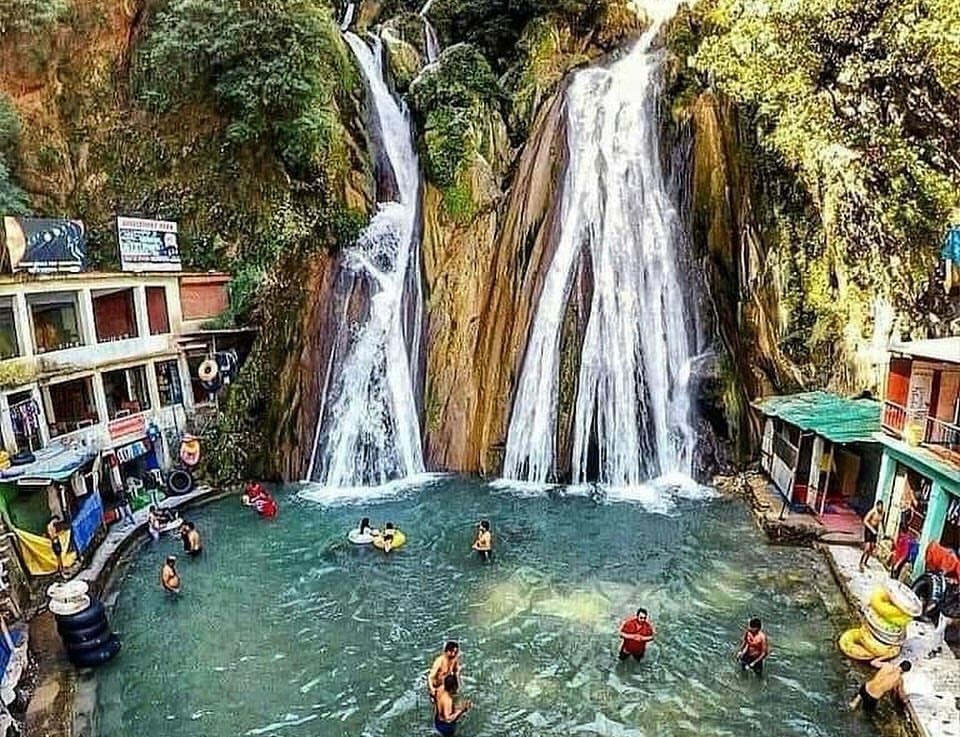
Nestled amid the green mountains of Uttarakhand, Kempty Falls is one of the most celebrated natural attractions near Mussoorie. The sight of water rushing down rocky cliffs, surrounded by forested Himalayan slopes, has made this waterfall a favourite destination for families, nature lovers, photographers, honeymooners and anyone looking for a refreshing escape from the heat of the plains. Located roughly 13–15 kilometres from Mussoorie, Kempty Falls is not merely a waterfall but an experience that combines mountain scenery, adventure, local food, photography and the simple pleasure of sitting beside cascading water.
The waterfall lies at an elevation of around 1,364 metres, or approximately 4,500 feet, and its main cascade drops about 40 feet through the rocky landscape before reaching pools below. The Government of India’s tourism information describes Kempty Falls as a perennial waterfall near Kempty village, with the water cascading into a series of pools on the valley floor.
For travellers visiting Mussoorie for the first time, Kempty Falls is often one of the first excursions added to the itinerary. Its relatively easy road access, dramatic landscape and opportunity to get close to the falling water make it particularly appealing. However, Kempty Falls is much more enjoyable when visitors understand its history, seasonal changes, access arrangements and the best way to plan their visit.
The Story and History Behind Kempty Falls
Kempty Falls has a fascinating connection with the colonial history of the Mussoorie region. The waterfall was developed as a tourist attraction during the British period, with sources commonly associating its development around 1835 with British officer John Mekinan. The name “Kempty” is widely believed to have originated from the expression “camp tea,” referring to tea parties and gatherings that were reportedly organised in the area during the colonial era.
Although the modern visitor experiences Kempty Falls primarily as a recreational destination, its surroundings once formed part of a much quieter Himalayan landscape. Over the decades, improved roads and the growth of Mussoorie as a hill station brought increasing numbers of visitors to the waterfall. What was once a secluded mountain attraction gradually became one of Uttarakhand’s best-known tourist sites.
Today, the history of Kempty Falls exists alongside a completely different tourist culture. Instead of colonial-era picnics, visitors arrive in taxis, buses and private cars, spend time around the pools, enjoy local snacks and tea, take photographs and explore the surrounding market area. Despite this transformation, the waterfall itself remains essentially what it has always been: a striking natural feature shaped by mountain terrain and flowing water.
The Natural Beauty of Kempty Falls
The biggest attraction of Kempty Falls is, of course, the waterfall itself. Water descends dramatically over the rocky mountainside, creating white ribbons of foam that contrast beautifully with the green vegetation surrounding it. Depending on the season and rainfall, the volume and character of the waterfall can change considerably.
During the rainy season, the waterfall can become particularly powerful. The surrounding hills become intensely green, the air feels cooler and the sound of rushing water dominates the landscape. After rainfall, mist and spray around the falls can create excellent conditions for photography. However, the same increase in water flow that makes the waterfall spectacular can also make the area around the pools slippery and potentially unsafe.
The landscape around Kempty Falls adds another layer to its appeal. Forested mountain slopes, rocky surfaces and vegetation create a typical Himalayan setting, while the winding road approaching the waterfall offers attractive views of the surrounding valleys. The area is associated with deodar, rhododendron and other Himalayan vegetation, giving the waterfall a distinctly mountain character.
For photographers, Kempty Falls offers several different perspectives. The waterfall can be photographed from viewpoints above the main area, from the paths leading toward the lower pools and from closer positions where the spray and movement of the water become part of the composition. Early morning light is particularly pleasant for photography because it can provide softer illumination and fewer people.
Where Is Kempty Falls Located?
Kempty Falls is located near Kempty village in the Tehri Garhwal region of Uttarakhand. It is generally described as being around 13–15 kilometres from Mussoorie, depending on the starting point and route used. The waterfall lies along the road connecting Mussoorie with the Yamunotri direction and is a relatively straightforward excursion from the hill station.
Mussoorie is the most convenient base for travellers visiting Kempty Falls. From the town, visitors can hire taxis or use local/shared transportation where available. The drive itself is part of the experience because the road passes through attractive mountain scenery.
Travellers coming from outside Uttarakhand will usually first reach Dehradun. Dehradun Railway Station is the nearest major railway connection, while Jolly Grant Airport serves as the nearest major airport. From Dehradun, visitors can travel toward Mussoorie and then continue to Kempty Falls. The Government of India’s Incredible India tourism portal also identifies Dehradun Railway Station and Jolly Grant Airport as the nearest major transport points for visitors.
How to Reach Kempty Falls
The easiest way to visit Kempty Falls is by road. From Mussoorie, travellers can hire a private taxi, take a shared taxi or use local transport depending on availability. The distance is short enough to make the waterfall a convenient half-day excursion.
Visitors travelling by private vehicle should remember that Kempty Falls becomes extremely busy during peak tourist periods. Summer weekends and public holidays can bring heavy traffic, crowded parking areas and long queues around popular access points. Arriving early in the morning can make a significant difference to the overall experience.
Travellers coming from Delhi or other cities in northern India generally reach Dehradun first and then travel onward toward Mussoorie. Since mountain roads can be slower than their distance suggests, it is sensible to allow extra travel time rather than planning the journey according to ordinary plains-road driving times.
The final approach to the waterfall involves walking and descending toward the lower areas. Depending on the route and facilities operating during a particular visit, visitors may have the option of using a ropeway or taking the staircase route. The staircase can be physically demanding on the return journey, particularly for elderly visitors or anyone travelling with small children.
Ropeway and Walking Experience
One of the distinctive features of the modern Kempty Falls experience is the short ropeway connection to the lower waterfall area. The ropeway can be convenient for visitors who would prefer to avoid a long descent and climb back up.
However, travellers should understand that prices and operating arrangements can change. Recent travel sources report ropeway charges in the approximate range of ₹120–₹200 for a return journey, while other visitor information lists different amounts. Therefore, it is best to confirm the current fare at the site before purchasing a ticket.
Walking down the steps provides a different experience. It allows visitors to move more slowly through the tourist area, stop for photographs and enjoy different views of the waterfall. The return climb, however, can be tiring. Comfortable footwear is therefore much more important than fashionable footwear when visiting Kempty Falls.
What Can You Do at Kempty Falls?
Kempty Falls offers more than simply looking at a waterfall. One of the most popular activities is getting into the water around the designated bathing areas. On suitable days, visitors can enjoy the cool mountain water and spend time around the pools beneath the cascade.
Swimming or bathing should always depend on current water conditions and local safety instructions. Water levels can rise rapidly after heavy rain, and rocks near waterfalls can be extremely slippery. Visitors should never enter restricted areas simply to obtain a photograph.
Photography is another major activity. The combination of cascading white water, green mountains and rocky cliffs creates an excellent backdrop for travel photography. Couples frequently visit for photographs, while families often capture group pictures beside the falls.
The area also contains shops and food stalls where visitors can find snacks, tea and simple local-style refreshments. A hot cup of chai after spending time around cold mountain water is one of the small pleasures that makes the visit memorable.
Official tourism information also mentions adventure activities such as rock climbing, rappelling and river crossing under appropriate guidance. Availability may vary by season and operator, so visitors interested in adventure activities should check current local arrangements and safety standards before participating.
Best Time to Visit Kempty Falls
The best time to visit Kempty Falls depends on what kind of experience you want. If your main goal is pleasant weather, sightseeing and enjoying the pools, the spring and summer period can be attractive. March through June generally brings comfortable mountain weather compared with the hot plains, although this is also one of the busiest tourist periods.
The monsoon season brings another side of Kempty Falls. From July through September, rainfall can dramatically increase the volume of water, making the waterfall more powerful and visually impressive. The surrounding vegetation also becomes lush and vibrant. However, heavy rainfall can make paths slippery and increase water-related risks. Visitors should follow local instructions and avoid entering the pools when conditions are unsafe.
The post-monsoon months can be especially rewarding for photographers. The landscape remains green, the atmosphere can be clearer and the weather is often pleasant. October and November are good choices for travellers who want to enjoy the scenery without the extreme summer crowds.
Winter brings cooler temperatures and a quieter atmosphere. The waterfall continues to be attractive, although the water can be extremely cold. Winter is therefore more suitable for sightseeing and photography than for bathing.
Kempty Falls Timings and Entry Fee
Visitors should be aware that published timings for Kempty Falls vary between tourism and travel sources. The Incredible India tourism portal currently lists opening hours of 6:00 AM to 6:00 PM, while other travel sources list shorter daytime schedules such as approximately 8:00 AM to 5:00 PM or 10:00 AM to 6:00 PM.
Similarly, access to the waterfall itself is commonly described as free, although visitors may need to pay separately for services such as the ropeway, parking, changing facilities or other activities.
Because local operating arrangements can change with season, weather and maintenance, visitors should confirm current timings and charges locally before planning around a specific opening or closing time.
How Long Should You Spend at Kempty Falls?
Kempty Falls can be visited in approximately two to three hours, although the ideal duration depends on your interests. Travellers who simply want to see the waterfall, take photographs and leave may need considerably less time.
Families who want to spend time around the pools, enjoy food and explore the surrounding market may prefer a longer visit. Photography enthusiasts may also want additional time because different viewpoints produce dramatically different images.
For most visitors, Kempty Falls works particularly well as a half-day excursion from Mussoorie. It can easily be combined with other attractions on the same day, provided sufficient travel time is allowed for mountain traffic.
Places to Visit Near Kempty Falls
A trip to Kempty Falls can be combined with several attractions in and around Mussoorie. Benog Wildlife Sanctuary is an appealing option for travellers interested in forests, wildlife and mountain landscapes. Other popular attractions around Mussoorie include Gun Hill, Camel’s Back Road, Lal Tibba, Mussoorie Lake and the colonial-era attractions around the hill station. Incredible India also lists several of these destinations among attractions that visitors can explore around the Mussoorie region.
Travellers who prefer a relaxed itinerary should avoid attempting to visit too many attractions in one day. Mountain roads, traffic and walking time can make a seemingly short itinerary surprisingly tiring. A better approach is to combine Kempty Falls with one or two nearby attractions and leave enough time to enjoy each place.
Food and Shopping Around Kempty Falls
The approach to Kempty Falls has developed into a lively tourist zone, with shops selling snacks, beverages, souvenirs and tourist essentials. Visitors can find simple foods and refreshments, including tea and popular hill-station snacks.
The food experience here is more casual than fine dining. The attraction lies in enjoying a warm snack or cup of tea after walking through the mountain environment rather than searching for elaborate cuisine.
Visitors should nevertheless be careful about waste. Plastic bottles, food wrappers and disposable packaging can quickly damage the appearance of a natural attraction when thousands of people visit the same location. Carrying reusable bottles and disposing of waste responsibly are simple ways to help protect Kempty Falls.
Important Safety Tips for Visitors
Kempty Falls is a family-friendly destination, but the presence of water, steep steps and slippery rocks means that visitors should not treat the area casually. The rocks around waterfalls can become extremely slippery, particularly during and immediately after rainfall.
Proper footwear is essential. Shoes with good grip are considerably safer than sandals or smooth-soled footwear. Visitors should also avoid climbing onto unstable rocks or standing directly beneath powerful sections of falling water.
During monsoon periods, extra caution is necessary because water flow can change quickly. Heavy rain upstream may cause the waterfall and pools to become significantly more dangerous. When local authorities, operators or signs advise visitors to stay away from the water, those instructions should be followed.
Families travelling with children should keep them within sight, particularly around pools, steps and crowded areas. Elderly travellers may find the staircase route tiring and should consider the easiest available access option.
Responsible Tourism at Kempty Falls
Kempty Falls attracts large numbers of tourists, and that popularity brings environmental pressure. Responsible tourism is therefore important if the destination is to remain beautiful for future generations.
Visitors should avoid throwing plastic or food waste into the water or surrounding forest. They should not damage vegetation, carve names into rocks or disturb wildlife. Loud music should also be avoided in natural areas, especially where it can affect other visitors and local wildlife.
Supporting local vendors responsibly can also contribute to the area’s economy. Buying refreshments and locally made products from legitimate businesses allows tourism to benefit people living in the region.
Most importantly, travellers should remember that Kempty Falls is a natural environment rather than simply an entertainment zone. Enjoying it responsibly makes the experience better for everyone.
Is Kempty Falls Worth Visiting?
Despite being one of the busiest attractions around Mussoorie, Kempty Falls remains worth visiting. Its popularity is understandable: the waterfall is easily accessible, visually impressive and offers an opportunity to experience flowing mountain water at close range.
It may not provide the solitude that some travellers expect from a Himalayan waterfall, particularly during summer weekends and holidays. Those seeking peace should arrive early, choose an off-season weekday or visit during quieter hours.
For first-time visitors to Mussoorie, however, Kempty Falls offers a classic Uttarakhand experience. The combination of mountain roads, green valleys, cascading water, local food and outdoor activities makes it a memorable stop.
Final Thoughts
Kempty Falls represents one of the most accessible ways to experience the natural beauty of Uttarakhand. From its colonial-era history and mysterious “camp tea” name to its dramatic cascade and green mountain surroundings, the destination combines nature and history in an unusually attractive package.
The waterfall changes character with the seasons. Summer brings crowds and pleasant weather, monsoon creates powerful flows and intense greenery, autumn offers beautiful photography conditions, while winter provides a quieter and cooler atmosphere. Choosing the right season and arriving early can make the difference between a rushed tourist stop and an enjoyable mountain experience.
Whether you are travelling with family, planning a romantic trip to Mussoorie, photographing Himalayan landscapes or simply looking for a refreshing break from city life, Kempty Falls deserves a place on your Uttarakhand itinerary. The roar of the water, the cool mountain air and the sight of the cascade tumbling through the forest create an experience that is easy to remember long after the journey home.
Kempty Falls may be one of Uttarakhand’s most visited waterfalls, but its enduring appeal comes from something very simple: the opportunity to stand beside a powerful stream of Himalayan water and experience, even briefly, the raw beauty of the mountains.
 Kalpita Ganguli