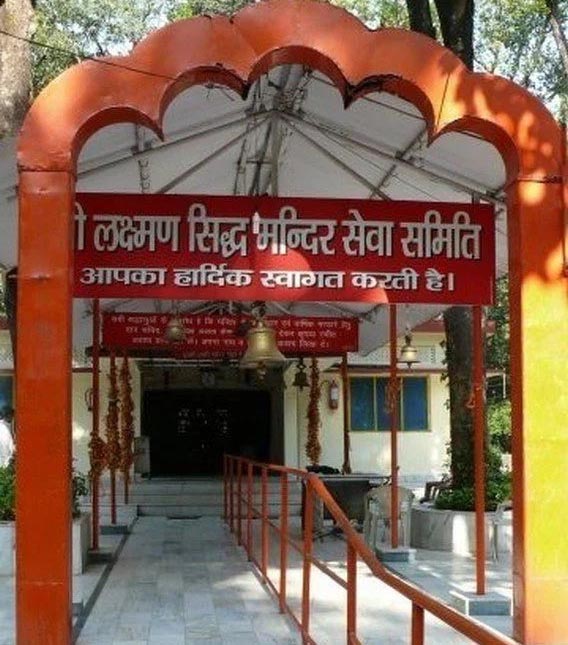
Uttarakhand is widely known as Devbhoomi, the “Land of the Gods,” and its spiritual character can be experienced not only at famous pilgrimage centres but also at small, secluded temples hidden among forests and hills. One such sacred destination is Laxman Siddh Temple, located near Dehradun along the Haridwar–Rishikesh road. Surrounded by dense greenery and a peaceful forest landscape, the temple offers an experience that is very different from the busy pilgrimage centres of Uttarakhand. It combines mythology, local traditions, asceticism, nature and faith in a setting where visitors can spend time in quiet prayer and contemplation.
Located roughly 12 kilometres from Dehradun, the temple is considered one of the important Siddh Peeths associated with the Dehradun region. It attracts devotees throughout the year, with Sundays traditionally being particularly busy. The temple also becomes an important cultural gathering place during the annual Laxman Siddh Fair, generally held on the last Sunday of April.
What makes Laxman Siddh especially interesting is the combination of stories associated with its name. Local tradition connects the sacred location with Lord Lakshman, the younger brother of Lord Rama, while another important aspect of the temple’s identity is its association with the saint Swami Laxman Siddh, who is believed to have performed spiritual practices here and whose cremation site is associated with the temple. Because these traditions have developed over generations, visitors may encounter slightly different versions of the temple’s origin and mythology.
Where Is Laxman Siddh Temple Located?
Laxman Siddh Temple is situated in the Lachhiwala area of Dehradun district, Uttarakhand, along the Dehradun–Haridwar/Rishikesh road. It is approximately 12 kilometres from central Dehradun, making it considerably easier to visit than many remote Himalayan temples. The temple is surrounded by forest, giving the site a secluded atmosphere despite its proximity to major roads and the city.
The surrounding landscape is one of the temple’s greatest attractions. Instead of being enclosed by a large urban settlement, the shrine lies amid greenery, trees and the natural landscape of the Dehradun region. The peaceful surroundings make it particularly appealing to visitors who want to combine religious worship with a short nature-oriented excursion.
For travellers approaching from Dehradun, the route towards Haridwar and Rishikesh makes the temple relatively convenient to include in a wider Uttarakhand itinerary. The location also makes it possible to combine a visit with destinations such as Lachhiwala, Dehradun, Haridwar or Rishikesh.
The Meaning Behind the Name Laxman Siddh
The word “Siddh” has a strong spiritual meaning in Indian religious traditions. It is generally associated with a person who has attained spiritual accomplishment or a place connected with intense meditation, penance and spiritual practice. The name Laxman Siddh therefore reflects the shrine’s association with spiritual accomplishment and the revered figure of Laxman Siddh.
The temple is also counted among the four important Siddh temples around Dehradun, a group traditionally associated with spiritually accomplished saints and sacred places. The other traditionally recognised Siddh shrines include Kalu Siddh, Maanak Siddh and Mandu Siddh. This gives Laxman Siddh a wider religious context within the spiritual geography of the Dehradun region.
Rather than being simply a conventional temple visited for a quick darshan, Laxman Siddh has traditionally been regarded as a place connected with tapasya, meditation and spiritual discipline.
The Legend of Lord Lakshman
One of the most widely repeated legends associated with the temple connects it to Lord Lakshman from the Ramayana. According to local belief, after the great battle in Lanka, Lakshman came to this area to perform penance.
Different versions of the story describe the reason for his penance somewhat differently. Some traditions say that Lakshman sought purification after participating in the killing of Ravana or after killing Meghnada, Ravana’s son. The belief is that he wanted to atone for the spiritual consequences of taking a life and therefore undertook penance at this sacred location.
This story gives the temple a powerful symbolic meaning. Lakshman is traditionally remembered as an embodiment of loyalty, courage, discipline and devotion to Lord Rama. His association with penance at Laxman Siddh therefore adds another dimension to his character: even a heroic figure may seek spiritual purification after a difficult act.
However, it is important to understand that this is a religious and local tradition rather than an independently established historical event. Sources describing the temple do not all present the mythology in exactly the same way. Some local accounts strongly associate the shrine with Lord Lakshman, while other accounts emphasise that Laxman Siddh was a saint whose name became associated with the site.
Swami Laxman Siddh and the Temple’s Spiritual Identity
Another central part of the temple’s history concerns Swami Laxman Siddh. The temple is described in several travel and local sources as being associated with the saint’s spiritual practices and cremation site. This connection is particularly important because it helps explain why the shrine is regarded as a Siddh Peeth.
The idea of a saint attaining spiritual accomplishment through prolonged meditation is deeply embedded in the religious traditions of Uttarakhand. The state’s forests, caves, rivers and mountains have historically attracted ascetics seeking solitude for meditation and tapasya.
Laxman Siddh fits naturally into this larger spiritual landscape. The forest surrounding the temple contributes to the sense of isolation that is traditionally considered favourable for contemplation. Even today, visitors often appreciate the quietness of the area as much as the religious significance of the shrine.
A Temple Surrounded by Forest
Perhaps the most memorable feature of Laxman Siddh Temple is its natural setting. The temple is situated amid forested surroundings, creating a striking contrast with the traffic and activity of the nearby highway.
For many visitors, the journey is part of the experience. As one moves away from the busier parts of Dehradun and approaches the forested area, the atmosphere becomes quieter and more natural. The sound of trees, birds and the surrounding landscape creates an environment suitable for prayer and reflection.
This natural setting is also one reason the temple appeals to people who are not visiting solely for religious purposes. Photographers, nature lovers and travellers interested in lesser-known destinations around Dehradun can find the location attractive.
Visitors should nevertheless remember that the forest environment is part of the temple’s character and should be treated respectfully. Littering, loud music and unnecessary disturbance can undermine the peaceful atmosphere of the shrine.
Architecture and Atmosphere
Laxman Siddh Temple does not have the monumental scale of some of Uttarakhand’s better-known pilgrimage temples. Its appeal comes largely from its simplicity and spiritual atmosphere.
Available descriptions characterise the temple as relatively simple in architectural expression, with the sacred space and devotional activities taking precedence over elaborate ornamentation. The forest setting becomes almost an extension of the temple itself.
Inside the shrine, devotees offer prayers and traditional offerings. The atmosphere can be particularly peaceful outside the busiest visiting periods. The combination of incense, bells, devotional activity and surrounding greenery gives the temple a distinctive character.
For someone visiting for the first time, it is worth spending a few quiet minutes inside or around the temple rather than treating it simply as another sightseeing stop.
Traditional Offerings at Laxman Siddh
One of the interesting traditions associated with Laxman Siddh Temple is the offering of jaggery, or gur. Local tradition explains that jaggery was historically used as a form of sweetness and offering among ordinary people, and the practice continued over generations.
Ghee and other traditional food offerings are also associated with the temple. The continued practice of offering simple foods illustrates how religious traditions can preserve elements of local history and community life.
For devotees, these offerings are not merely food items. They represent devotion, gratitude and participation in a tradition that has been passed down through generations.
Visitors should follow the temple’s current instructions regarding what can be offered, particularly because practices and arrangements can change.
The Sacred Dhuni
Another tradition associated with Laxman Siddh is the Akhand Dhuni, or continuously maintained sacred fire. Local accounts describe a fire connected with the place of penance and explain that its sacred ash, known as vibhuti, may be distributed to devotees as prasad.
The dhuni is particularly significant in traditions associated with ascetics and yogis. Fire has long represented purification, spiritual discipline and transformation in Hindu religious thought. The presence of a sacred fire therefore complements the temple’s association with penance and spiritual practice.
For visitors interested in the deeper traditions of the temple, learning about the dhuni can make the visit more meaningful than simply photographing the shrine.
Sundays at Laxman Siddh Temple
Sundays are traditionally an important visiting day at Laxman Siddh Temple. Large numbers of devotees are known to visit on Sundays, making the atmosphere livelier than it may be on quieter weekdays.
Community participation is an important aspect of the temple’s identity. Devotees come for darshan, prayer and offerings, while the temple environment becomes a place for social interaction as well as worship.
Travellers looking for solitude may therefore prefer to visit outside peak Sunday periods. Those interested in experiencing the temple as a living community institution, however, may find a Sunday visit more rewarding.
The Annual Laxman Siddh Fair
The annual Laxman Siddh Fair is one of the temple’s most significant cultural events. It is traditionally organised on the last Sunday of April, attracting large numbers of devotees and visitors.
The fair is more than a religious gathering. It provides an opportunity to experience local customs, food, community interaction and cultural traditions. Such temple fairs have historically served as meeting points for rural communities and religious groups, allowing traditions to continue beyond formal worship.
The atmosphere during the fair is naturally much busier than during ordinary visits. Visitors should expect crowds and should plan transportation accordingly. Anyone interested in photography or experiencing local culture should also be sensitive to the fact that the event is primarily a religious occasion rather than a tourist attraction.
How to Reach Laxman Siddh Temple
Reaching Laxman Siddh Temple is relatively straightforward because of its location near the Dehradun–Haridwar/Rishikesh road.
From Dehradun, travellers can use a taxi, private vehicle or local transportation towards Harrawala and the Haridwar/Rishikesh side. Travel sources place the temple approximately 12 kilometres from Dehradun, although the exact distance can vary depending on the starting point.
One commonly described route involves reaching the Harrawala area and then continuing approximately one kilometre on foot toward the temple. The precise walking and road conditions may vary, so visitors should check current local directions before travelling.
The nearest major railway connection is Dehradun Railway Station, while Jolly Grant Airport near Dehradun is the nearest airport commonly used by air travellers. Travel sources place the airport at roughly 16 kilometres from the temple, although actual road distance and travel time can vary.
Best Time to Visit
Laxman Siddh Temple can be visited throughout much of the year, but the experience changes with the seasons.
Spring is particularly attractive because the surrounding landscape becomes fresh and green, and the annual fair in April provides an opportunity to experience the temple during one of its most important cultural occasions.
The monsoon season can make the surrounding vegetation especially lush, but travellers should be cautious about slippery paths and changing road conditions.
Winter offers a cooler and generally quieter atmosphere. Early mornings and evenings can be chilly, so visitors should carry appropriate clothing.
Those seeking a peaceful experience may prefer a weekday morning. People interested in experiencing the annual religious and cultural gathering should consider visiting around the Laxman Siddh Fair, while keeping in mind that crowds can be substantial.
Nearby Attractions
A visit to Laxman Siddh Temple can easily be incorporated into a broader Dehradun or Uttarakhand itinerary. Dehradun itself offers several attractions, while the road toward Rishikesh and Haridwar provides access to numerous natural and spiritual destinations.
Lachhiwala is particularly relevant because of the temple’s location in the wider Lachhiwala area. Travellers can also plan visits to other religious sites around Dehradun, including Tapkeshwar Temple and the other traditional Siddh temples.
For travellers continuing toward Rishikesh, the city offers a much larger collection of ashrams, temples and riverside spiritual sites. The well-known Lakshman Temple in Rishikesh is a separate shrine associated with Lord Lakshman and should not be confused with Laxman Siddh Temple near Dehradun.
Why Laxman Siddh Temple Is Worth Visiting
Laxman Siddh Temple may not be as internationally famous as some of Uttarakhand’s major pilgrimage destinations, but that is precisely what makes it appealing. Its importance comes from the combination of mythology, local faith, saint traditions and natural surroundings.
The temple provides an opportunity to see a different side of Uttarakhand’s religious culture. Here, spirituality is not separated from the forest landscape. The trees, quiet paths and secluded setting contribute to the experience just as much as the shrine itself.
For devotees, the temple is a place of prayer and spiritual connection. For history and culture enthusiasts, it provides an insight into the traditions surrounding Siddh Peeths and ascetic practices. For travellers, it is a peaceful stop near Dehradun that can be combined with other destinations.
Most importantly, Laxman Siddh demonstrates how sacred geography in Uttarakhand is created not only through monumental temples but also through stories, saints, local traditions and generations of devotion.
Important Things to Keep in Mind
Visitors should dress modestly and maintain the sanctity of the temple premises. Footwear should be removed wherever required, and photography inside restricted areas should be avoided.
Because the temple is surrounded by forest, visitors should avoid littering and should not disturb animals or vegetation. Monkeys and other wildlife may occasionally be encountered in forested areas, so food should be handled carefully and visitors should avoid attempting to feed wild animals.
It is also wise to verify current temple timings and local road conditions before travelling. Different travel sources currently list different visiting schedules, while online map information can also change.
Visitors attending the annual fair should plan for heavier crowds and potentially slower traffic.
A Quiet Spiritual Experience Near Dehradun
Laxman Siddh Temple occupies a special place in the religious landscape of Uttarakhand. Its story brings together the legendary world of Lord Rama and Lakshman, the spiritual traditions of saints and Siddh Peeths, and the natural beauty of the forests surrounding Dehradun.
Whether one visits because of faith, curiosity, an interest in Hindu mythology or simply a desire to discover a peaceful place away from the city’s noise, the temple offers something distinctive. Its relatively modest appearance does not diminish its importance. Instead, the simplicity of the shrine and the surrounding forest create an atmosphere in which spirituality feels closely connected to nature.
The different traditions surrounding the temple also remind us that sacred places often develop through layers of belief and community memory. Some stories are mythological, some are connected with revered saints, and others have been preserved through oral traditions. Rather than diminishing the temple’s significance, these layers make its cultural identity richer.
For anyone exploring Dehradun and the spiritual destinations of Uttarakhand, Laxman Siddh Temple deserves a place on the itinerary. It is a destination where the journey is not simply about reaching a temple; it is about entering a quieter environment, observing a living tradition and experiencing one of the lesser-known sacred corners of Devbhoomi.

