• Nestled in the forested hills near Rishikesh, Neelkanth Mahadev Temple is one of the most revered Shiva temples in Uttarakhand. Surrounded by the peaceful landscapes of the Garhwal Himalayas, the temple combines mythology, spirituality, pilgrimage, nature and mountain travel in a way that makes the journey almost as meaningful as the destination. The shrine is located in Pauri Garhwal district, around 32 kilometres from Rishikesh by one of the main road routes. The Uttarakhand government describes the temple as being situated at about 926 metres and surrounded by the three valleys of Vishnukoot, Brahmakoot and Manikoot.

    For devotees of Lord Shiva, Neelkanth Mahadev is particularly significant because Hindu tradition associates this sacred landscape with the Samudra Manthan, or the churning of the cosmic ocean. According to the legend, when the gods and demons churned the ocean in search of amrit, the nectar of immortality, a deadly poison known as halahal emerged first. The poison threatened creation, and Lord Shiva consumed it to protect the universe. He held the poison in his throat rather than allowing it to enter his body, turning his throat blue. This gave Shiva the name Neelkanth, meaning “the blue-throated one.”

    A Sacred Temple in the Hills Above Rishikesh

    Neelkanth Mahadev Temple occupies a remarkable setting in the hills above Rishikesh. The journey from the busy spiritual centre of Rishikesh gradually gives way to winding mountain roads, forested slopes and quieter surroundings. The temple is surrounded by the valleys traditionally identified as Manikoot, Brahmakoot and Vishnukoot, while the Pankaja and Madhumati rivers are associated with the landscape around the shrine.

    This geographical setting contributes considerably to the atmosphere of the pilgrimage. Unlike temples situated in the middle of a city, Neelkanth Mahadev feels closely connected with the natural environment. The forest, mountain air and relative isolation create an atmosphere suited to prayer and contemplation.

    The shrine is also associated with the Nar-Narayan mountain range. Its position amid the Himalayan foothills means that visitors experience both a religious destination and a scenic mountain journey. The surrounding forests are particularly attractive to travellers who enjoy combining pilgrimage with nature and trekking.

    The Legend of Samudra Manthan and Neelkanth

    The central story associated with the temple comes from one of the best-known episodes in Hindu mythology. The Samudra Manthan describes the churning of the cosmic ocean by the devas and asuras. Their objective was to obtain amrit, which could grant immortality. However, before the desired nectar appeared, the churning produced halahal, a terrible poison capable of destroying the universe.

    Neither the gods nor the demons could safely contain it. According to the traditional account, they turned to Lord Shiva for help. Shiva took the poison and swallowed it, but held it in his throat. The poison consequently turned his throat blue, giving rise to the name Neelkanth.

    The temple is traditionally regarded as the place connected with this episode of Shiva’s mythology. The Government of Uttarakhand specifically records the belief that Shiva consumed the poison at this location and consequently became known as Neelkanth.

    The story gives the temple a deeper symbolic meaning. Shiva’s act is commonly understood as an act of sacrifice for the protection of creation. Rather than allowing the poison to spread, he contained it within himself. For devotees, this makes the Neelkanth form of Shiva a powerful representation of protection, endurance and self-sacrifice.

    The temple’s visual decoration also reflects this mythology. Incredible India notes that the entrance and temple walls depict scenes associated with the Samudra Manthan, allowing visitors to encounter the story through the temple’s artistic features as well as through religious tradition.

    Architecture of Neelkanth Mahadev Temple

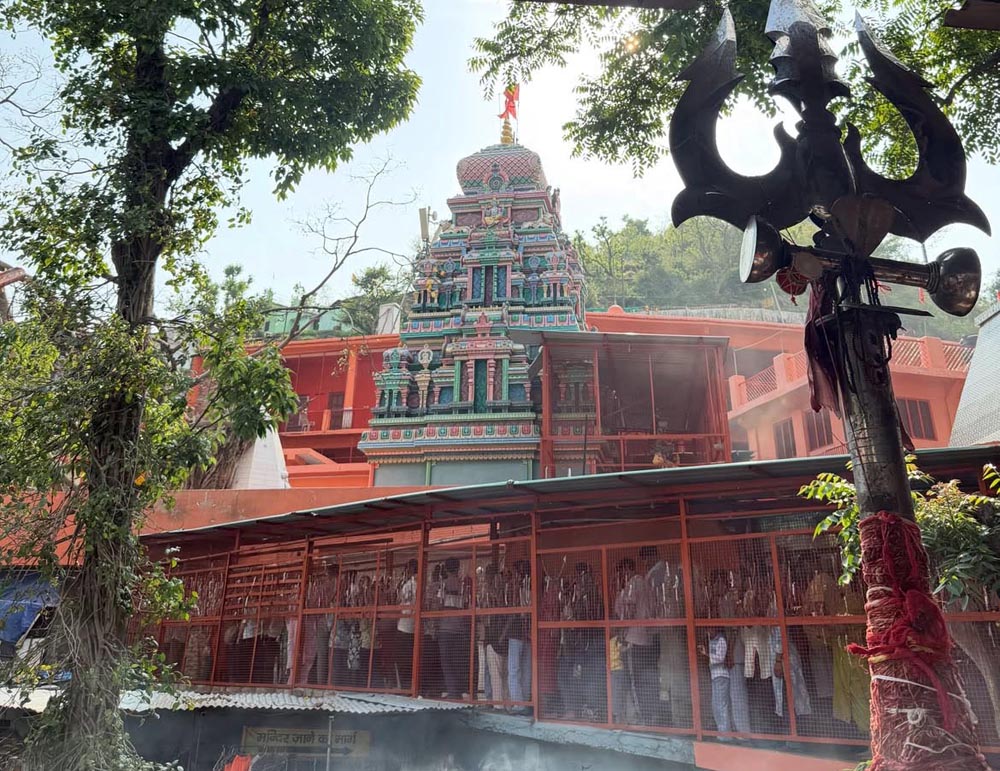
    Neelkanth Mahadev Temple is notable not only for its religious importance but also for its distinctive architectural character. Sources describing the shrine note strong influences of the Dravidian style, particularly in the temple’s tower and decorative elements. The colourful, multi-tiered appearance of the temple creates a striking contrast with the surrounding green forest and mountain landscape.

    The entrance is particularly important because of its mythological decoration. Sculptural and painted representations connected with the Samudra Manthan help communicate the story of Shiva and the cosmic ocean. The imagery gives the temple a distinctive visual identity and makes the building itself part of the pilgrimage experience.

    Inside the temple complex, devotees worship Lord Shiva in the form of a Shiva lingam. The atmosphere is generally centred on darshan, prayer and offerings. A natural spring within the temple premises is also mentioned by Incredible India, adding another element to the sacred character of the site.

    The architecture should therefore be viewed in combination with its setting. The temple is not simply an isolated monument; its religious symbolism, surrounding valleys and forest environment collectively form the identity of Neelkanth Mahadev.

    Spiritual Importance for Shiva Devotees

    Neelkanth Mahadev holds a special place among Shiva pilgrimage destinations in Uttarakhand. Devotees visit the shrine to seek Lord Shiva’s blessings, offer prayers and perform traditional worship. The connection with the Samudra Manthan makes the temple especially significant for those who regard the Neelkanth form of Shiva as a symbol of divine protection.

    For many pilgrims, visiting the temple is not merely about reaching a particular building. The journey through the hills forms part of the spiritual experience. The changing scenery, forest roads and gradual movement away from the urban environment can create a sense of separation from everyday life.

    The temple also becomes particularly important during major Shiva festivals. Maha Shivratri attracts large numbers of devotees, while the month of Shravan, traditionally dedicated to Lord Shiva, is another major pilgrimage period. The temple can become exceptionally busy during these periods, particularly when Kanwar pilgrims travel through the region.

    Because pilgrimage numbers can change significantly according to the festival calendar, visitors planning a quieter experience should check local conditions before travelling.

    The Journey from Rishikesh

    Rishikesh is the principal base for most visitors travelling to Neelkanth Mahadev Temple. The Uttarakhand government gives the distance as approximately 32 kilometres from Rishikesh via Barrage and about 22 kilometres via the Ram Jhula side.

    Different travel sources quote slightly different distances because they refer to different starting points and routes. The important practical point is that the temple is close enough to Rishikesh to make it a popular day trip, while the mountainous road means that the journey takes considerably longer than the distance might suggest.

    By road, visitors can travel by taxi, private vehicle or shared transport. The road winds through forested hill country and offers a very different landscape from central Rishikesh. Travellers should allow additional time rather than planning the journey solely according to the number of kilometres.

    Another option is to approach the temple on foot. The government tourism information mentions a roughly 12-kilometre trekkable route through dense forest from the Rishikesh-Swargashram side.

    Other travel sources describe the traditional forest approach as approximately 12–14 kilometres, with the exact distance depending on the starting point and route.

    For experienced walkers, the trek provides a completely different way to experience the pilgrimage. Instead of simply travelling from Rishikesh to the temple by vehicle, visitors spend several hours walking through the forested landscape.

    Trekking to Neelkanth Mahadev

    The trek is particularly appealing to travellers who want to combine spirituality and outdoor adventure. The forest route provides shade in sections and allows visitors to observe the changing landscape as the trail climbs toward the temple.

    However, the trek should not be treated as an effortless walk. Although descriptions vary regarding difficulty and duration, it is a sustained uphill journey and can take several hours. Travellers should begin early, carry sufficient drinking water and avoid undertaking the walk without considering weather and their own physical condition.

    The forest environment is another reason to respect the route. The surrounding region forms part of the broader forest ecosystem around Rajaji and the Shivalik landscape. Visitors should avoid littering, disturbing animals or wandering away from established routes.

    One interesting option for travellers who want both experiences is to travel one way by road and undertake the trek in the other direction, provided local trail and transport conditions permit it. This allows the visitor to experience both the scenic drive and the traditional forest approach.

    Best Time to Visit Neelkanth Mahadev Temple

    The temple can be visited throughout the year, but the experience varies considerably with the seasons.

    The months outside the peak monsoon period generally provide easier conditions for travelling through the hills. Spring can be pleasant, while September to November often brings clearer post-monsoon landscapes. Winter provides cooler conditions, although mornings and evenings can be cold.

    The monsoon season requires additional caution because mountain roads can become slippery and heavy rainfall can affect travel conditions. Anyone planning a trek should pay particular attention to weather forecasts and local advice.

    For devotees specifically interested in experiencing the temple during Shravan or Maha Shivratri, the atmosphere is very different. These periods are associated with large pilgrim gatherings, religious ceremonies and increased activity. Those visiting primarily for photography, peaceful surroundings or an unhurried darshan may prefer dates outside the major festival periods.

    Temple Timings and Darshan

    Published timings for Neelkanth Mahadev vary between sources and can change according to seasons, festivals and temple management arrangements. One tourism source gives an approximate daily schedule beginning around 5:00 AM, while other sources provide different closing times and festival arrangements.

    For this reason, visitors should confirm the current schedule locally before setting out, particularly if they intend to arrive very early or late in the day.

    Early morning is generally a particularly atmospheric time for a temple visit. The cooler mountain air and quieter surroundings can make the experience more peaceful, although festival days can remain busy from the early hours.

    Neelkanth Mahadev During Maha Shivratri and Shravan

    Maha Shivratri is one of the most important occasions associated with Lord Shiva, and Neelkanth Mahadev becomes a major pilgrimage destination during the festival. Devotees may travel long distances to participate in prayers and seek darshan.

    The Shravan period is equally significant. Kanwar pilgrims traditionally undertake journeys associated with collecting sacred water and offering it to Shiva temples. Neelkanth Mahadev is an important destination within this wider pilgrimage tradition.

    The increase in pilgrims can transform the character of the entire route. Roads become busier, queues can become longer and transport arrangements may differ from ordinary days. Anyone visiting during a major religious period should therefore plan extra travel time and follow instructions issued by local authorities and temple personnel.

    Nearby Attractions and Things to Combine with the Visit

    A trip to Neelkanth Mahadev can easily be combined with a broader Rishikesh itinerary. Rishikesh itself offers numerous spiritual and cultural attractions, including temples, ashrams and the Ganges ghats.

    Swargashram is particularly relevant because of its association with the traditional route toward Neelkanth. The area provides an opportunity to experience the spiritual character of Rishikesh before or after visiting the temple.

    Travellers interested in nature can also explore waterfalls and forest landscapes in the wider Rishikesh region. Several routes and attractions around the Neelkanth road are popular with visitors, although access and conditions can vary seasonally.

    Because Neelkanth is situated in a forested mountain environment, the journey itself should be regarded as part of the attraction rather than simply transportation between two points.

    Accommodation and Food

    Most visitors choose to stay in Rishikesh rather than directly around the temple. Rishikesh provides a much wider selection of hotels, guesthouses, ashrams and other accommodation options.

    The Pauri Garhwal district administration notes that accommodation has also been available through irrigation and forest rest houses in the wider Neelkanth area.

    However, availability and access can vary, so travellers should not depend on these facilities without prior confirmation.

    Food options near the temple are generally more limited than those in Rishikesh. Pilgrims should therefore consider carrying drinking water and simple snacks, particularly if they intend to trek. During major pilgrimage periods, temporary food and refreshment stalls may become more common, but visitors should still plan responsibly.

    Travel Tips for Visitors

    A visit to Neelkanth Mahadev is most enjoyable when approached as both a pilgrimage and a mountain journey. Comfortable clothing and footwear are useful, particularly for visitors planning to walk around the temple or undertake the forest route.

    Modest clothing is appropriate because this is an active Hindu place of worship. Visitors should also respect temple rules regarding photography, offerings and movement within the shrine.

    During summer, an early start is preferable for anyone travelling by road or trekking. During monsoon, weather conditions should be checked before departure. In winter, warm clothing is useful during early morning and evening hours.

    The road is mountainous and winding, so travellers prone to motion sickness may wish to take appropriate precautions. Drivers should also avoid rushing because mountain roads require careful driving.

    Most importantly, visitors should maintain the cleanliness of the forest and temple surroundings. Plastic waste, food packaging and other rubbish should be carried back or disposed of only in designated places.

    Why Neelkanth Mahadev Is an Important Part of Uttarakhand Tourism

    Uttarakhand is famous for its combination of sacred geography and dramatic Himalayan landscapes, and Neelkanth Mahadev represents this relationship particularly well. The temple brings together an ancient religious tradition, a powerful Shiva legend, forested mountains and the spiritual environment of Rishikesh.

    Unlike a destination that can be understood solely through its architecture, Neelkanth is experienced through the entire journey. The road from Rishikesh, the forest-covered hills, the valleys, the mythology surrounding Shiva and the devotional activity at the temple all contribute to its identity.

    The temple also demonstrates why religious tourism is such an important part of Uttarakhand’s cultural landscape. Pilgrims, trekkers, photographers, nature lovers and travellers interested in Hindu mythology may all approach the destination for different reasons, yet the temple remains centred on its religious significance.

    Final Thoughts

    Neelkanth Mahadev Temple is much more than a temple near Rishikesh. It is a destination where mythology and landscape are closely intertwined. The belief that Lord Shiva consumed the deadly poison of the Samudra Manthan here gives the shrine its defining identity, while the surrounding Himalayan forests provide a setting that makes the pilgrimage memorable.

    The temple’s distinctive architecture, Shiva worship, festival traditions, forest trekking route and proximity to Rishikesh make it one of the notable spiritual destinations of Uttarakhand. The journey can be completed by road for convenience or approached through the forest for a more physically demanding pilgrimage experience.

    For travellers exploring Uttarakhand, Neelkanth Mahadev offers an opportunity to experience a quieter side of the Rishikesh region while connecting with one of Hinduism’s most enduring stories. Whether visited during an ordinary day or amid the immense devotional energy of Shravan and Maha Shivratri, the blue-throated form of Shiva remains at the heart of the experience.

  • Nestled in the green Himalayan foothills near Rishikesh, Neer Garh Waterfall, also popularly known as Neer Gaddu Waterfall, is one of Uttarakhand’s most attractive short-trekking destinations. The waterfall combines the charm of a forest trail, cascading mountain water, rocky landscapes and natural pools, making it an appealing getaway for travelers who want to experience nature without undertaking a long or demanding Himalayan trek.

    Located close to the Rishikesh–Badrinath highway and only a short distance from the popular areas around Lakshman Jhula, Neer Garh is particularly convenient for travelers staying in Rishikesh. The journey from the main town to the waterfall changes quickly from an urban and pilgrimage atmosphere to a quieter landscape of hills, trees, streams and rocky paths. The waterfall is described as a multi-tiered cascade, with lower and upper sections accessible by walking trails.

    The destination is especially popular during and after the monsoon, when the surrounding vegetation becomes lush and the stream carries more water. At the same time, visitors should remember that a waterfall is a natural environment rather than a controlled swimming facility. Strong currents, slippery rocks and sudden increases in water flow can make conditions hazardous, particularly during heavy rain.

    Where Is Neer Garh Waterfall Located?

    Neer Garh Waterfall is situated near Rishikesh in Uttarakhand, along the route toward the Himalayan interior. It lies in the broader Tehri Garhwal/Rishikesh region and is reached from the Rishikesh–Badrinath highway. The commonly cited distance is approximately 5 kilometres from Lakshman Jhula, although the exact distance varies depending on the particular waterfall tier or starting point being described. Rishikesh railway station is roughly 9 kilometres away according to commonly published travel information.

    Neergarh Waterfall Rd provides access toward the waterfall area.

    Its proximity to Rishikesh is one of its greatest advantages. Travelers do not need to organize a multi-day expedition or travel deep into the mountains. Neer Garh can comfortably fit into a half-day Rishikesh itinerary, leaving enough time for other attractions such as the Ganga ghats, temples, ashrams and nearby viewpoints.

    The Natural Beauty of Neer Garh

    The appeal of Neer Garh is not limited to the waterfall itself. The entire approach forms part of the experience. The trail moves through a green mountain landscape where trees, shrubs, exposed rocks and small streams create a distinctly Himalayan atmosphere.

    As the trail approaches the waterfall, the sound of flowing water becomes increasingly noticeable. The landscape then opens around rocky sections where the stream descends through natural formations. Several levels of the waterfall and associated pools give visitors different perspectives of the cascade.

    The Government of India’s Incredible India tourism portal describes Neer Garh as a multi-tiered waterfall situated on the hills above the northern side of the Ganges and highlights its rocky falls, swimming holes and forest surroundings.

    The combination of turquoise or greenish pools, grey rocks and dense vegetation can make the waterfall particularly photogenic. During the wetter months, the increased volume of water gives the cascade greater visual impact, while the surrounding vegetation becomes intensely green.

    Neer Garh Waterfall Trek

    One of the main reasons travelers visit Neer Garh is that reaching the waterfall involves a relatively short hike rather than a long Himalayan trek. The exact trekking distance depends on which level visitors intend to reach.

    Travel information commonly describes a small lower waterfall relatively close to the road, followed by a longer trail toward the larger waterfall. One source describes approximately one kilometre of trekking toward the first major waterfall and around three kilometres toward another upper section, while other guides describe shorter distances depending on the starting point and tier.

    This difference in published distances is worth keeping in mind. Travelers should not assume that every reference to “Neer Garh Waterfall” represents exactly the same endpoint.

    The trail itself is part of the attraction. Rather than simply parking beside a waterfall, visitors walk through a natural landscape and gradually leave the highway environment behind. Some sections contain steps or constructed pathways, while other portions can be rocky and uneven.

    The hike is generally considered suitable for people with basic fitness, although the trail can become considerably more difficult after rain. Wet rocks, mud and slippery surfaces require careful movement. Comfortable footwear with good grip is preferable to sandals or smooth-soled shoes.

    The Different Waterfall Levels

    Neer Garh is often described as a two-tier or multi-tier waterfall. The lower sections are easier to reach, while continuing farther along the trail takes visitors toward larger cascades and pools.

    The lower portion can be suitable for visitors who have limited time or do not want to undertake the longer walk. Continuing upward provides a different experience, with quieter forest surroundings and additional views of the flowing stream.

    The upper sections are particularly attractive to photographers and hikers because the surroundings become more natural and less dominated by the highway. The Government of India tourism portal also notes that visitors can continue hiking beyond the upper waterfall into the surrounding hills, offering opportunities for broader mountain views.

    Because the waterfall has multiple sections, visitors should allow enough time rather than treating the destination as a quick roadside stop.

    Natural Pools and Swimming

    One of the most recognizable features of Neer Garh is its natural pools. The waterfall creates pools where visitors traditionally come to cool themselves and enjoy the mountain environment. Tourism descriptions of the site frequently mention these pools as one of its major attractions.

    However, swimming in a natural waterfall requires much greater caution than swimming in a maintained pool. Rocks beneath the water may be uneven or slippery, and water depth can change. During or immediately after heavy rainfall, the stream can become stronger and more dangerous.

    Visitors should never enter a pool simply because other people are doing so. They should assess the conditions, avoid areas immediately beneath strong cascades and follow any local warnings or restrictions. Children should be supervised closely, and inexperienced swimmers should avoid deep water.

    The safest approach is to treat the water as part of a natural landscape rather than assuming that every pool is suitable for swimming.

    Best Time to Visit Neer Garh Waterfall

    The best time depends on whether the visitor prioritizes water flow, greenery or comfortable trekking.

    The monsoon and post-monsoon periods are particularly attractive because rainfall increases the flow of the waterfall and refreshes the surrounding forests. Visit Rishikesh currently identifies July to October as the monsoon/post-monsoon window and notes that the waterfall is strongest during or just after the monsoon.

    September and the weeks immediately following the strongest monsoon rains can provide a particularly beautiful combination of greenery and substantial water flow. However, heavy rainfall can also make the trail slippery and increase the risk of sudden water surges.

    The cooler months can be more comfortable for hiking. Clearer weather may also make walking conditions easier, although the waterfall may not have the same dramatic volume seen during the rainy season.

    Summer can be attractive for visitors looking for relief from the heat, especially because of the cool mountain water. Nevertheless, water flow can vary considerably from season to season.

    In practical terms, travelers should balance scenery against safety: post-monsoon conditions can be beautiful, but immediately after heavy rainfall is not necessarily the safest time to enter the water or hike quickly along slippery sections.

    How to Reach Neer Garh Waterfall

    Rishikesh is the natural base for visiting Neer Garh. From the central areas of the city, travelers can travel toward the Rishikesh–Badrinath highway and the Lakshman Jhula side of town.

    Private cars, taxis, motorcycles and scooters are commonly used to reach the general access point. The final portion requires walking because the waterfall itself is reached by a trail rather than by a road directly to the cascade. Published travel information identifies taxi, auto and two-wheeler travel combined with walking or trekking as practical options.

    Travelers using their own vehicle should confirm the current parking arrangements locally because access conditions and roadside parking can change.

    For visitors coming from outside Rishikesh, the city is well connected by road and rail. Uttarakhand Tourism describes Rishikesh as an important gateway for Himalayan travel and a major destination for pilgrimage, yoga, adventure activities and mountain excursions.

    Entry Fee and Timings

    Published information currently places the entry fee around ₹30 per person, although charges can change and different access points or facilities may have different arrangements. Visit Rishikesh currently lists ₹30 as the entry price and gives operating hours of approximately 7:00 AM to 6:00 PM. Other travel sources list slightly different timings.

    Because local opening arrangements can change according to weather, maintenance and seasonal conditions, visitors should verify the current situation locally before beginning the trek.

    An early start is generally useful. Morning visits can provide cooler trekking conditions and potentially fewer visitors than the busiest part of the day.

    Things to Do at Neer Garh Waterfall

    The most obvious activity is simply enjoying the waterfall. Visitors can walk along the trail, sit beside the stream, photograph the cascades and spend time appreciating the surrounding forest.

    Short trekking is another major attraction. The route provides an easy introduction to Himalayan hiking for people who may not be prepared for a demanding mountain expedition.

    Photography is also popular. The combination of flowing water, rocky formations, forest vegetation and natural pools provides numerous compositions. Photographers can capture both wide landscape images and detailed shots of water flowing over rocks.

    Nature observation is another rewarding activity. The surrounding vegetation attracts butterflies and other small forms of wildlife, particularly during warmer and wetter periods. The forest landscape also makes the walk itself interesting rather than treating it simply as a route to the waterfall.

    For families and groups, the destination can work as a picnic-style excursion, although visitors should avoid leaving food waste or plastic behind.

    Neer Garh for Families

    Neer Garh can be suitable for families because the destination is relatively close to Rishikesh and does not require a long expedition. However, suitability depends on the age and mobility of individual family members.

    Young children should be watched carefully around rocks, streams and pools. Elderly travelers or people with mobility difficulties may find the uneven trail uncomfortable. During monsoon conditions, even apparently easy sections can become slippery.

    Families who do not want to complete the entire route can enjoy the lower sections and return rather than treating reaching the highest waterfall tier as compulsory.

    Neer Garh for Adventure Lovers

    Although Neer Garh is not a high-altitude expedition, it provides a pleasant combination of hiking and natural exploration. Adventure travelers can extend their outing by exploring the surrounding Rishikesh region, which has numerous hiking, rafting and outdoor activities.

    The waterfall is also significant from a regional tourism-development perspective. Uttarakhand Tourism’s planning documents have identified a proposed signature trekking project involving a route from Neergaddu toward Neer Waterfall, illustrating the area’s potential for nature-based tourism and walking trails.

    Nearby Attractions

    A visit to Neer Garh can easily be combined with other Rishikesh attractions. Lakshman Jhula and Ram Jhula are among the city’s best-known landmarks, while the Ganga ghats provide opportunities to experience Rishikesh’s spiritual side.

    Travelers interested in yoga and meditation can explore the city’s many ashrams and retreat centres. Ganga Aarti is another major experience, particularly around the evening hours. Uttarakhand Tourism highlights Rishikesh’s combination of temples, ashrams, adventure activities and its position as a gateway toward the Himalayas.

    For travelers with additional time, destinations around the Rishikesh–Tehri region provide opportunities for mountain views, temples, forests and other outdoor experiences.

    Food and Facilities

    Small refreshment points have traditionally operated around the waterfall approach, particularly during periods of strong tourist activity. Published travel information mentions tea, noodles, soft drinks and other basic refreshments near the site.

    However, visitors should not depend entirely on local stalls being open. It is sensible to carry drinking water and a few light snacks, particularly if planning to continue to the upper sections.

    There is no reason to expect the level of infrastructure found in a major urban tourist attraction. The appeal of Neer Garh comes partly from its natural setting, so visitors should prepare for basic conditions.

    What to Carry

    A small daypack is sufficient for most visitors. Drinking water, comfortable trekking shoes, sun protection and a light rain jacket are useful additions.

    During the rainy season, a waterproof pouch or dry bag can protect mobile phones, cameras and other electronic equipment. A change of clothes can also be useful for visitors who intend to enter the water.

    Visitors should avoid carrying unnecessary plastic packaging and should take all waste back with them if proper disposal facilities are unavailable.

    Safety Tips

    Safety deserves particular attention at Neer Garh because the waterfall combines flowing water with naturally polished rocks.

    Avoid standing directly beneath the main cascade, especially after rainfall. Never jump from rocks into pools unless the area is specifically designated and local authorities or guides confirm that it is safe. Water depth can change, and submerged rocks may not be visible.

    The trail should be approached carefully during rain. Good-grip footwear is much safer than ordinary slippers. Visitors should also avoid trekking alone in poor weather.

    The most important rule is to respect changing mountain conditions. A stream that looks calm in one moment can become much stronger following rainfall higher in the hills.

    Responsible Tourism at Neer Garh

    Neer Garh’s popularity brings an important responsibility for visitors. Natural waterfalls and forest trails can be damaged surprisingly quickly by litter, excessive noise and careless behavior.

    Visitors should avoid throwing plastic bottles, food wrappers or other waste into the forest or stream. They should not damage vegetation, carve names into rocks or disturb wildlife.

    Keeping noise levels moderate also helps preserve the character of the destination. The waterfall is more enjoyable when visitors can hear the water and experience the forest rather than constant loud music.

    Responsible tourism is particularly important as Rishikesh continues to attract increasing numbers of visitors interested in nature and adventure. Protecting the landscape ensures that the waterfall remains enjoyable for future travelers as well.

    Why Neer Garh Waterfall Is Worth Visiting

    Neer Garh Waterfall represents one of the easiest ways to experience the natural side of Rishikesh without committing to a long Himalayan journey. Its combination of a short forest trek, cascading water, rocky landscapes and natural pools creates an experience that is very different from the temples and busy streets of the main town.

    Its accessibility is perhaps its greatest strength. A traveler can leave Rishikesh’s cafés, yoga centres and riverside attractions and, within a relatively short journey, find themselves walking through a forest toward the sound of falling mountain water.

    The waterfall is also versatile. Adventure enthusiasts can approach it as a short trek, photographers can explore its different levels, families can enjoy the scenery, and nature lovers can spend time observing the forest and stream environment.

    At the same time, its popularity should not lead visitors to underestimate the natural hazards. The best experience comes from combining exploration with caution, particularly during the monsoon.

    Final Thoughts

    Neer Garh Waterfall is a beautiful example of the natural attractions surrounding Rishikesh and one of Uttarakhand’s accessible waterfall experiences. Its multi-level cascades, forest trail, rocky pools and proximity to the city make it an excellent addition to a Rishikesh itinerary.

    The destination is at its most spectacular when the surrounding hills are green and the waterfall has a healthy flow, but visitors should choose their timing carefully and avoid entering the water during dangerous conditions. With sensible footwear, drinking water, weather awareness and a commitment to keeping the forest clean, the journey to Neer Garh can become one of the most memorable short excursions around Rishikesh.

    Rather than viewing the waterfall simply as another sightseeing stop, it is better experienced as a small Himalayan journey: a road leading away from the city, a trail entering the forest, the gradual sound of rushing water, and finally the sight of a mountain stream cascading over rock into a natural pool. That combination of accessibility and wilderness is what gives Neer Garh Waterfall its enduring appeal among places to visit in Uttarakhand.

  • Hidden amid the greenery of Rishikesh in Uttarakhand, on the eastern bank of the Ganga, lies a place where Indian spirituality and global popular culture became unexpectedly intertwined. Known today as the Beatles Ashram, this fascinating destination was originally called Chaurasi Kutia, or the “Ashram of 84 Cottages.” It was established as a meditation centre associated with Maharishi Mahesh Yogi and became internationally famous when The Beatles travelled to Rishikesh in 1968 to study Transcendental Meditation.

    Today, the site is very different from a conventional functioning ashram. Weathered meditation structures, abandoned buildings, forest paths, murals, graffiti and colourful artwork coexist with the peaceful atmosphere of the surrounding landscape. This unusual combination gives the Beatles Ashram an identity of its own. For music enthusiasts, it represents an important chapter in the history of The Beatles. For travellers interested in spirituality, it offers an insight into the meditation movement that attracted international attention during the 1960s. For photographers and art lovers, its walls and domes have become an open-air gallery.

    The Beatles Ashram is therefore much more than a place associated with a famous band. It is a destination where the cultural history of the 1960s, Indian spiritual traditions, architecture, art and the natural environment of Rishikesh come together.

    The Origins of Chaurasi Kutia

    Before it became known worldwide as the Beatles Ashram, the property was associated with Maharishi Mahesh Yogi and his International Academy of Meditation. Maharishi Mahesh Yogi became internationally known for promoting Transcendental Meditation, a technique that attracted followers in India as well as Europe, North America and elsewhere.

    The Rishikesh centre was intended to provide students with a secluded environment where they could concentrate on meditation and spiritual study. Its location was particularly suited to that purpose. Surrounded by forest and positioned near the Ganga, the property was separated from the busy parts of Rishikesh while still being accessible to visitors and students.

    The name Chaurasi Kutia refers to the 84 meditation cottages or kutiyas associated with the complex. These small structures were designed to provide individual spaces for meditation and retreat. The unusual architecture of the meditation cells, particularly their rounded or dome-like forms, is one of the features that continues to distinguish the site today.

    The ashram was established on forest land leased to Maharishi Mahesh Yogi’s organisation. Historical accounts differ somewhat on the exact acreage and administrative details, but sources agree that the property was situated within the forest area and that the lease eventually expired. The ashram subsequently declined and was eventually vacated, leaving the complex largely abandoned for years.

    The Beatles Arrive in Rishikesh

    The event that transformed Chaurasi Kutia into an international cultural landmark occurred in 1968.

    The Beatles had already become one of the world’s most influential musical groups when their interest in Indian philosophy and meditation developed. Their association with Maharishi Mahesh Yogi began before their Rishikesh visit, following encounters with him in 1967. Their growing interest in meditation eventually led the band members to travel to India.

    In February 1968, John Lennon, Paul McCartney, George Harrison and Ringo Starr arrived in Rishikesh to participate in a Transcendental Meditation course at Maharishi’s ashram. Their visit attracted enormous international attention. Other Western celebrities, including Mia Farrow, Donovan and Mike Love, were also associated with the retreat around this period.

    The four Beatles did not remain for exactly the same length of time. Ringo Starr’s stay was relatively short, while Paul McCartney stayed for several weeks. John Lennon and George Harrison remained longer. Their individual experiences of the ashram were therefore not identical.

    Nevertheless, the visit became one of the most memorable episodes in the band’s history. It also helped establish Rishikesh as a destination of international interest for people seeking yoga, meditation and Indian spiritual traditions.

    A Remarkably Creative Period

    One of the most fascinating aspects of the Beatles’ stay is the amount of music associated with their time in Rishikesh.

    The period has often been described as one of the band’s most productive songwriting phases. During their retreat, members of the group wrote or developed numerous songs, many of which later appeared on their 1968 self-titled double album, popularly known as the White Album. India’s influence can be detected in different ways across the Beatles’ work, although the songs cannot all be understood simply as products of the ashram experience.

    Songs such as “Dear Prudence” and other compositions from this period are frequently connected with the Rishikesh experience. The surroundings provided a dramatic contrast to the band’s life of international fame. Instead of recording studios, concert halls and constant media attention, the musicians found themselves in a secluded environment focused on meditation and spiritual study.

    George Harrison’s interest in Indian music was particularly significant. His earlier association with the sitar and Indian classical music had already influenced his artistic development, and his relationship with Indian culture continued to be an important part of his musical journey.

    The significance of Rishikesh in Beatles history is consequently not limited to the physical place. The ashram became part of a much broader story involving music, spirituality, creativity and the growing Western fascination with India during the 1960s.

    The Ashram After the Beatles

    The international attention generated by the Beatles did not prevent the ashram from eventually declining.

    After the Beatles and other visitors departed, the site continued to exist as a spiritual centre for some time. However, the lease arrangements eventually came to an end, and the property was ultimately vacated. Accounts place the abandonment process in the 1990s and early 2000s, with the Forest Department eventually taking control of the site.

    For years, Chaurasi Kutia remained largely neglected. Buildings deteriorated, vegetation grew around the structures and nature gradually reclaimed parts of the compound.

    Ironically, this period of abandonment contributed to the site’s present character. Instead of becoming a heavily restored heritage complex, the property retained much of its weathered appearance. Visitors today can see old structures surrounded by vegetation, creating an atmosphere that is quite different from conventional museums and tourist attractions.

    The ruins became particularly attractive to Beatles fans, photographers and artists. People continued to visit because of the site’s connection with the band even when it lacked the facilities of a conventional tourist destination.

    Opening the Beatles Ashram to Visitors

    A new chapter began when the site was opened to tourists as a heritage and eco-tourism destination. The Uttarakhand Forest Department developed the abandoned complex as a visitor attraction, and it was formally reopened to the public in December 2015.

    This transformation gave the location a new identity. Rather than attempting to erase the evidence of abandonment, the destination retained many of its old structures and incorporated art into the experience.

    The name “Beatles Ashram” became widely used, although Chaurasi Kutia and Maharishi Mahesh Yogi Ashram remain important names for the location.

    The reopening also reflected Rishikesh’s growing reputation as an international tourism destination. The city already attracted visitors for yoga, meditation, rafting, temples, ashrams and the Ganga. The Beatles connection added another dimension to its appeal.

    Architecture and the Famous Meditation Caves

    One of the most memorable features of the Beatles Ashram is its architecture.

    The small meditation huts are scattered across the grounds, often appearing almost like futuristic concrete or stone structures emerging from the vegetation. Their unusual forms create a visual contrast with the surrounding forest.

    These spaces were designed for meditation rather than sightseeing. Their simplicity reflects the original purpose of the ashram: providing secluded environments for spiritual practice.

    Another important building is the former lecture or meditation hall, which has become closely associated with the artistic identity of the site. The building and surrounding structures now contain murals, paintings and graffiti created during the site’s transformation into a cultural attraction.

    The so-called meditation caves are particularly popular with photographers. Their compact interiors, curved walls and limited natural light create dramatic photographic opportunities. They also provide a tangible sense of how the ashram’s original residents may have experienced the secluded environment.

    The Beatles Cathedral and Street Art

    Perhaps the most visually striking aspect of the modern Beatles Ashram is its artwork.

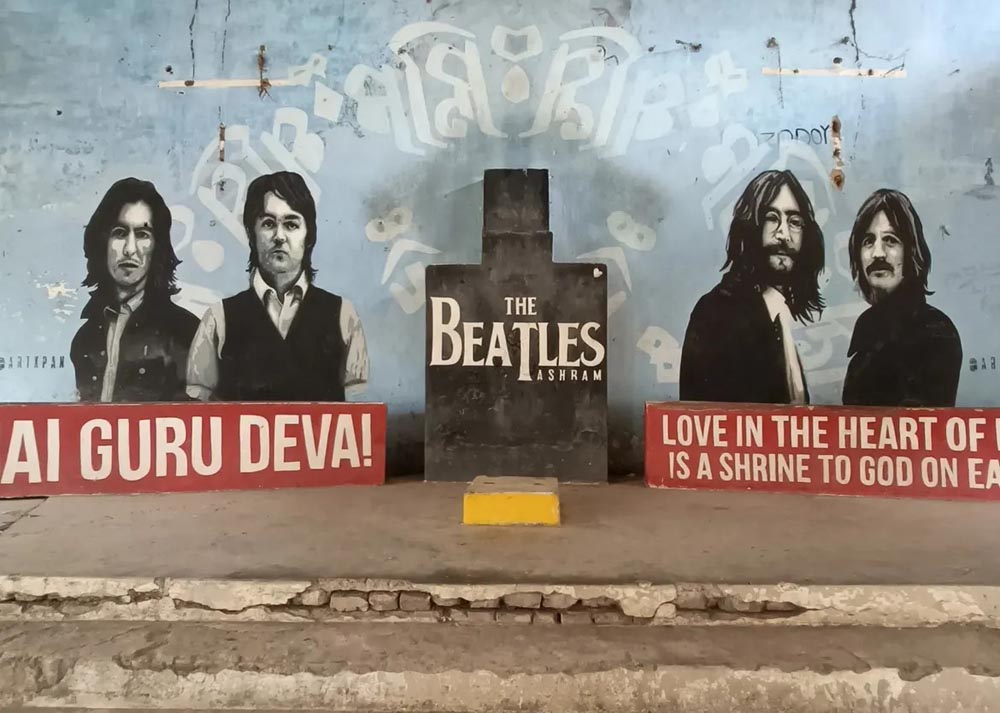
    The walls of several structures have become canvases for colourful murals, paintings and graffiti. Some artworks refer directly to The Beatles, while others depict spiritual themes, nature, abstract designs and contemporary interpretations of the ashram’s history.

    The large former lecture hall is popularly known as the Beatles Cathedral. It has become one of the major attractions within the complex because of its large-scale artistic treatment.

    This combination of ruins and street art gives the Beatles Ashram a distinctive atmosphere. A visitor might walk past a weathered meditation structure covered with vines and then encounter a brightly painted mural nearby. The contrast between decay and creativity is one of the reasons the site has become popular among photographers.

    The artwork also illustrates how heritage can evolve. The original ashram was created for meditation, but its abandoned buildings have acquired a second life as spaces for contemporary artistic expression.

    Spirituality and the Beatles Connection

    It is important to remember that the Beatles connection is only one part of the site’s history.

    The ashram was originally established around meditation and spiritual practice. Its association with Transcendental Meditation and Maharishi Mahesh Yogi existed independently of the band’s visit.

    The Beatles’ presence, however, helped introduce millions of people around the world to the idea of travelling to India for spiritual exploration. Their visit became part of the broader cultural movement of the 1960s, when Western artists and young travellers increasingly explored Indian philosophy, yoga, meditation and music.

    Rishikesh already had a long spiritual tradition before 1968. The Beatles did not create the city’s religious importance, but their presence significantly expanded its international cultural visibility. The Government of India’s tourism platform similarly describes the 1968 visit as an important moment in Rishikesh’s international reputation for yoga and meditation.

    Nature Around the Ashram

    The setting of the Beatles Ashram is almost as important as its history.

    The property is located in the Rishikesh area amid forested surroundings and close to the Ganga. Its association with the forest landscape is particularly noticeable when walking between the meditation huts.

    Bird calls, trees, natural vegetation and occasional wildlife encounters can make the site feel far removed from the urban environment. The combination of nature and abandoned architecture creates a distinctive atmosphere that appeals even to visitors who have little interest in The Beatles.

    The location’s relationship with the forest also means that visitors should treat the environment respectfully. The ashram should not be viewed simply as an abandoned building complex; it forms part of a wider natural landscape associated with the Rajaji region.

    Why Photographers Love Beatles Ashram

    Photography is one of the most popular activities at the site.

    The architecture offers unusual geometric shapes, while the graffiti introduces bright colours and dramatic compositions. The forest provides natural framing, shadows and changing light conditions.

    Morning can be particularly attractive for photography because the light is generally softer, while different areas of the complex create opportunities throughout a visit. The contrast between old concrete surfaces and colourful murals is ideal for architectural, travel and street-art photography.

    The meditation domes are especially distinctive subjects. Their unusual shapes can be photographed individually or framed against trees and the surrounding landscape.

    However, visitors should avoid damaging walls, entering restricted areas or interfering with artworks. Preserving the site’s fragile structures is important if future generations are to experience its distinctive character.

    How to Reach Beatles Ashram

    The Beatles Ashram is located in the Swargashram area of Rishikesh, on the eastern side of the Ganga. It is relatively close to major attractions around Ram Jhula and the wider Swargashram area.

    For travellers arriving by train, Rishikesh railway station is the main rail connection for the city. Visitors arriving by air generally use Jolly Grant Airport near Dehradun, while Delhi’s Indira Gandhi International Airport provides another major gateway for travellers coming from outside the region. Incredible India lists both Jolly Grant and Delhi airports among the nearest major airport options for Rishikesh.

    Once in Rishikesh, local taxis, auto-rickshaws and other local transport options can be used to reach the surrounding Swargashram area. Depending on the exact route and the current access arrangements, visitors may need to walk part of the way.

    Because access arrangements can change, checking current visitor information before travelling is sensible.

    Visiting Hours and Entry Information

    Published visitor information currently lists the site as generally open during daytime hours, with sources giving slightly different schedules. Incredible India’s listing gives opening hours of 10:00 AM to 4:00 PM, while another current Rishikesh tourism source lists 9:00 AM to 4:00 PM and Monday closure.

    Similarly, published entry-fee information should be checked before visiting because charges can change. One current tourism listing gives ₹150 for Indian visitors and ₹600 for foreign visitors.

    This is particularly important for travellers planning a fixed itinerary. Checking the latest local or official information before leaving for the attraction can help avoid inconvenience.

    Best Time to Visit

    Rishikesh can be visited in different seasons, but the experience at the Beatles Ashram varies with weather.

    The cooler months are generally comfortable for walking around the open grounds. Winter mornings can be pleasant and offer good conditions for exploring the ruins. Spring can also be attractive because temperatures are usually manageable and the landscape can be especially pleasant.

    Summer afternoons can become hot, making early visits preferable. The monsoon brings substantial rainfall to the region, and wet paths may make walking around the complex less comfortable.

    For photography, morning is particularly useful because of the softer light and relatively comfortable temperatures. A visitor interested in exploring the entire complex should allow roughly one to two hours rather than rushing through the site.

    Places to Visit Near Beatles Ashram

    A visit to the Beatles Ashram can easily be combined with other attractions in Rishikesh.

    Ram Jhula is one of the city’s well-known suspension bridges and provides access to areas on both sides of the Ganga. Nearby Swargashram contains numerous spiritual centres, temples and ashrams.

    Parmarth Niketan is another important destination in the area and is associated with yoga, spirituality and the evening Ganga Aarti. Triveni Ghat, farther into Rishikesh, is another major place for experiencing the city’s spiritual atmosphere, particularly during the evening ceremony.

    Travellers interested in adventure can also combine their visit with river rafting and other outdoor activities for which Rishikesh is famous.

    Beatles Ashram as a Heritage Destination

    The enduring appeal of the Beatles Ashram comes from its unusual combination of histories.

    It is simultaneously a former meditation centre, a site connected with Maharishi Mahesh Yogi, a Beatles landmark, an architectural ruin, an art space and a nature-oriented tourist attraction.

    Few destinations combine these themes so naturally. A Beatles fan may arrive primarily because of the band’s history but discover an interest in meditation and architecture. A traveller interested in spirituality may come for the ashram’s original purpose and discover its musical history. A photographer may be attracted by the murals and end up exploring the story behind the buildings.

    This diversity is what makes the site particularly significant within Rishikesh’s tourism landscape.

    Responsible Tourism at Beatles Ashram

    Because the site combines historical structures with a natural setting, responsible tourism is especially important.

    Visitors should avoid climbing fragile structures, carving names into walls, littering or disturbing wildlife. Graffiti that forms part of the site’s contemporary artistic identity should not be confused with permission for visitors to add their own marks.

    Photography should also be undertaken respectfully. The atmosphere of the site remains relatively peaceful, and visitors interested in meditation or reflection should be given space.

    Respecting the original character of the buildings and the surrounding environment ensures that the Beatles Ashram remains meaningful beyond its popularity as a photo destination.

    The Lasting Legacy of Beatles Ashram

    More than half a century after The Beatles travelled to Rishikesh, the connection between the band and the city remains remarkably strong.

    The Beatles spent only a limited period at the ashram, but their visit became an important chapter in the cultural history of both the band and Rishikesh. Their interest in meditation contributed to a wider Western fascination with Indian spiritual traditions, while their songwriting during the period became part of the mythology surrounding one of the most influential bands in popular music.

    Today, visitors encounter something very different from the functioning meditation centre that existed in 1968. The old buildings have weathered, the forest has reclaimed parts of the property, and colourful murals have transformed many walls. Yet that mixture of history, decay, creativity and spirituality is precisely what gives the Beatles Ashram its special atmosphere.

    For anyone travelling through Uttarakhand, the site offers more than a celebrity-related attraction. It provides an opportunity to explore an unusual meeting point between Indian spirituality and Western popular culture, while also experiencing one of the more atmospheric heritage sites in Rishikesh.

    Ultimately, the Beatles Ashram is best understood not merely as the place where a famous band once stayed, but as a living piece of cultural history. Its meditation huts recall its spiritual beginnings, its murals represent its modern artistic identity, and its connection with The Beatles preserves the memory of a remarkable moment when music, meditation and India captured the imagination of the world.

  • Perched on the sacred banks of the Ganga in Swargashram, Rishikesh, Parmarth Niketan is one of the best-known spiritual destinations in Uttarakhand. Surrounded by the Himalayan foothills, the ashram brings together yoga, meditation, prayer, spirituality, environmental awareness, education and charitable service in one setting. Its riverside location, daily Ganga Aarti and international yoga programmes have made it an important destination not only for Indian pilgrims but also for visitors from around the world.

    Parmarth Niketan Ashram is located in Swargashram, near Ram Jhula, across the Ganga from the more urban parts of Rishikesh. The combination of the flowing river, forested Himalayan landscape, temples, ashrams and spiritual activities gives the area a distinctive atmosphere. For travellers interested in experiencing a quieter and more contemplative side of Rishikesh, Parmarth Niketan offers much more than a conventional sightseeing attraction.

    The Meaning and History of Parmarth Niketan

    The name Parmarth Niketan is generally translated as “an abode dedicated to the welfare of all.” This idea is central to the institution’s philosophy. Rather than focusing exclusively on individual spiritual practice, the ashram has historically combined spiritual development with service to society.

    The story of Parmarth Niketan goes back to the early 1940s, when revered saint Swami Shukdevanandji began coming to the banks of the Ganga for meditation. What initially developed as a modest place for spiritual practice gradually expanded as devotees and seekers began gathering around the saint. Accommodation, a satsang hall and a dining facility were subsequently developed, and the institution came to be known as Parmarth Niketan. Over the decades, the small spiritual centre grew into a major ashram complex. Today, it welcomes pilgrims, yoga practitioners, spiritual seekers and travellers from India and abroad. The institution describes itself as an inclusive spiritual centre open to people regardless of nationality, gender, religion, caste or creed.

    This development also reflects the broader transformation of Rishikesh itself. Once primarily associated with sages, temples and traditional pilgrimage, the city has become internationally recognised as a centre for yoga, meditation and spiritual tourism while retaining its religious importance.

    Location and Natural Setting

    One of the greatest attractions of Parmarth Niketan is its location. The ashram stands beside the Ganga in Swargashram, an area whose name itself means “heavenly abode.” The Himalayan environment provides an important part of the experience, with the river forming the spiritual and visual centre of the landscape.

    The surroundings are particularly appealing in the early morning and evening. At sunrise, the river and surrounding hills create a peaceful setting for yoga and meditation. At sunset, the atmosphere changes as visitors gather beside the Ganga for the evening ceremony.

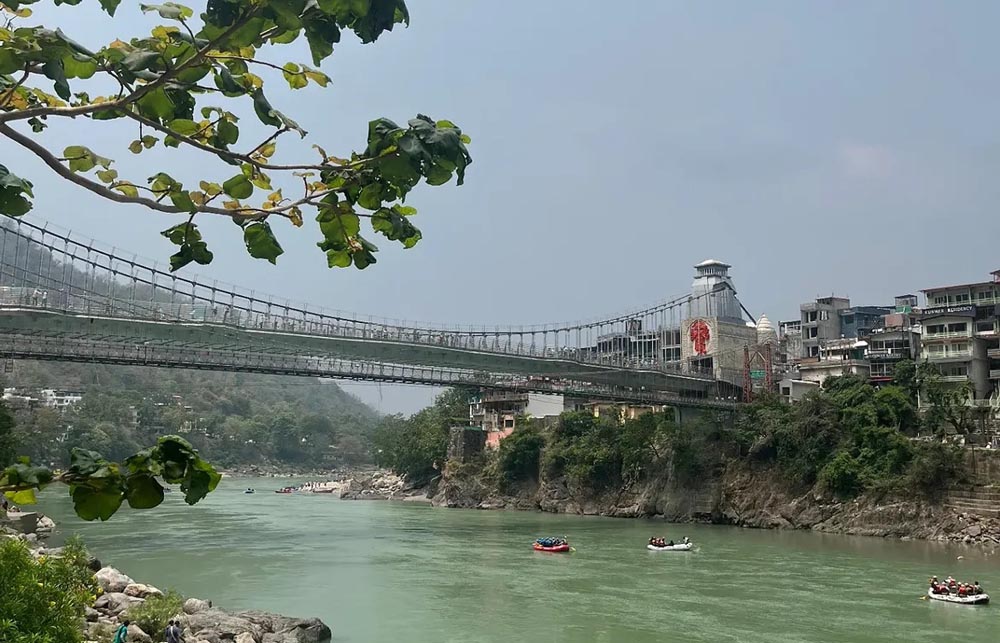
    The location also places Parmarth Niketan close to several other important Rishikesh attractions. Ram Jhula, one of the city’s well-known suspension bridges, is nearby, while the wider Swargashram area contains temples, smaller ashrams, spiritual centres, shops and riverside ghats.

    Because of this location, visitors can combine a stay at Parmarth Niketan with exploration of Rishikesh’s religious, cultural and natural attractions.

    The Famous Ganga Aarti

    For many visitors, the most memorable experience at Parmarth Niketan is the Ganga Aarti held at sunset. The ceremony takes place at the ashram’s riverside ghat and combines devotional singing, prayers, sacred fire rituals and lamps offered in reverence to the Ganga.

    Parmarth Niketan states that the Aarti attracts visitors from different cultures, languages, religions and backgrounds. The ceremony is held daily, although the exact timing changes according to the season.

    The experience begins to build before sunset as people gather along the river. The changing colours of the sky, sound of devotional music and chanting, movement of the flames and sight of the Ganga create an atmosphere quite different from ordinary sightseeing.

    Visitors who are unfamiliar with Hindu rituals can still appreciate the ceremony as a cultural and spiritual experience. Participation does not necessarily require an extensive knowledge of Sanskrit or Hindu philosophy. Observing respectfully is enough for most visitors.

    The Ganga Aarti also demonstrates how the river functions simultaneously as a geographical feature, sacred symbol and cultural institution in Rishikesh. It is therefore more than a visual spectacle; it represents an important element of the religious identity of the city.

    Yoga at Parmarth Niketan

    Yoga is another major part of life at Parmarth Niketan. The ashram conducts yoga and meditation activities throughout the year and describes its approach as rooted in traditional yogic disciplines.

    A typical day may include morning prayer followed by an asana session, meditation, spiritual talks and evening activities. The precise schedule can change, so visitors staying at the ashram are advised to confirm the current timetable with reception. The ashram’s published schedule, for example, includes morning prayer, morning yoga, meditation, afternoon yoga and meditation, followed by Ganga Yagya and Aarti and an evening satsang.

    The yoga environment at Parmarth Niketan differs from a conventional commercial fitness studio. Yoga is presented as part of a broader spiritual discipline involving meditation, self-reflection, prayer and service. Consequently, visitors looking only for physical exercise may experience the setting differently from those interested in traditional or spiritually oriented yoga.

    The ashram also hosts specialised programmes and courses involving yoga, meditation, pranayama and related Indian traditions.

    International Yoga Festival

    Parmarth Niketan is particularly significant in the international yoga community because it hosts the International Yoga Festival, one of its most prominent annual events.

    The festival has a history stretching back to 1989, while Parmarth Niketan has hosted it annually since 1999. The event brings together yoga practitioners, teachers, spiritual leaders and visitors from numerous countries.

    The 2026 festival illustrates the international scale of the event. Parmarth Niketan reported participants and yoga enthusiasts from nearly 80 countries, along with a large programme of yoga practices, meditation, spiritual discussions, cultural performances and traditional practices.

    The festival is not limited to physical yoga postures. Its programmes can encompass meditation, pranayama, philosophy, Ayurveda, spiritual teachings, music, chanting, cultural traditions and discussions about conscious living.

    For Rishikesh, such events have reinforced the city’s reputation as an international destination for yoga. For Parmarth Niketan, the festival represents an extension of its long-standing emphasis on yoga as a holistic way of life.

    Daily Spiritual Life

    A significant feature of Parmarth Niketan is the structured daily routine. Visitors can participate in prayers, yoga, meditation, satsang, kirtan and other spiritual activities.

    The published daily schedule includes morning prayer, yoga, a sacred yagya, meditation, afternoon yoga, Ganga Yagya and Aarti, followed by an evening satsang and meditation programme. The ashram also notes that schedules may change and recommends checking with reception.

    This routine gives visitors an opportunity to experience ashram life rather than simply visit the site for an hour or two. Early mornings are particularly important because traditional Indian spiritual practices often place emphasis on beginning the day with prayer, meditation and disciplined activity.

    Satsang is another important component. The word broadly refers to gathering for spiritual discourse and association with spiritual teachings. Depending on the programme, visitors may encounter lectures, devotional music, stories from Hindu traditions or discussions about yoga and spiritual philosophy.

    Accommodation and Ashram Experience

    Parmarth Niketan has extensive accommodation facilities and describes its rooms and facilities as a combination of modern amenities and traditional simplicity.

    However, an ashram stay should not necessarily be approached in exactly the same way as staying at a conventional hotel or resort. The primary purpose is spiritual practice, reflection, participation in activities and a disciplined environment.

    The ashram’s own guidelines indicate that accommodation is intended for pilgrims who come with an interest in sadhana, meditation, seva and satsang.

    This makes it particularly suitable for people who want to experience a spiritual retreat. Travellers seeking nightlife, luxury resort facilities or a purely recreational holiday may find the atmosphere quite different from what they expect.

    Those planning to stay should check current accommodation rules, availability, meal arrangements, identification requirements, programme schedules and seasonal conditions directly with the ashram before travelling.

    Food and Ashram Lifestyle

    Food is an important part of traditional ashram life, where meals are generally approached as part of a disciplined daily routine rather than simply as restaurant dining.

    Parmarth Niketan also maintains bhandara activities through which large numbers of people, including rishikumars, brahmacharis, sadhus and others in need, are fed.

    The broader atmosphere encourages simplicity and mindful living. Visitors can use their time for prayer, meditation, reading, yoga, walking beside the Ganga and participating in community activities.

    This slower rhythm can be particularly valuable for travellers who normally spend their holidays moving rapidly from one attraction to another.

    Education and Social Service

    Parmarth Niketan’s activities extend beyond spirituality. The institution describes several charitable and humanitarian initiatives covering education, healthcare, environmental protection and community welfare.

    One of these initiatives is Parmarth Gurukul, which provides academic education along with Sanskrit and study of ancient Vedic texts to disadvantaged boys. The ashram also describes a free children’s school associated with Prakash Bharti.

    Healthcare is another area of service. Parmarth Niketan reports that the Swami Shukdevanand Charitable Hospital provides free healthcare and that medical camps are organised for Himalayan communities.

    These initiatives help explain the broader meaning behind the word “Parmarth.” The institution presents spiritual practice and social responsibility as interconnected rather than separate activities.

    Environmental Awareness and the Ganga

    Because Parmarth Niketan is situated directly beside the Ganga, environmental awareness is naturally an important part of its public activities.

    The institution’s programmes include initiatives described as Clean, Green & Serene, aimed at encouraging environmental awareness and supporting the restoration of natural balance. Its stated mission also includes efforts related to restoring and protecting the Ganga.

    For visitors, this environmental dimension adds another layer to the experience. The Ganga is simultaneously a sacred river and an ecosystem facing the pressures associated with urbanisation, tourism and pollution. Spiritual reverence for the river can therefore be accompanied by practical questions about cleanliness, conservation and responsible tourism.

    Travellers can contribute by avoiding litter, using designated waste facilities, reducing unnecessary plastic use and treating the river and surrounding areas respectfully.

    Ayurvedic and Wellness Activities

    Parmarth Niketan also provides opportunities connected with Ayurveda and natural wellness. The ashram states that Nature Cure and Ayurvedic treatment facilities are available on its premises, along with a charitable clinic or dispensary.

    These facilities complement the yoga and meditation programmes and reflect the traditional Indian concept of approaching wellbeing through multiple dimensions.

    Visitors interested in treatments or health services should obtain current information directly from the institution about available practitioners, services, fees, schedules and suitability.

    Best Time to Visit Parmarth Niketan

    Rishikesh can be visited throughout much of the year, but the experience changes considerably with the seasons.

    The cooler months from approximately October to March are generally comfortable for walking, sightseeing and participating in outdoor spiritual activities. Winter mornings can be chilly, particularly beside the river, so warm clothing is useful.

    Spring can be particularly pleasant for yoga and outdoor activities, while the annual International Yoga Festival makes March an especially significant period for yoga enthusiasts.

    The summer months can become hot, although mornings and evenings can still be enjoyable. The monsoon season brings heavier rainfall and increased river-related caution, and weather conditions can affect travel plans and outdoor activities.

    Anyone planning a pilgrimage or retreat should check current weather and local travel conditions before departure.

    How to Reach Parmarth Niketan

    Rishikesh is well connected with major cities of northern India. The nearest major airport is Jolly Grant Airport near Dehradun, while Haridwar is an important railway connection for travellers arriving by train.

    From central Rishikesh, visitors can travel towards the Swargashram area. Parmarth Niketan is situated near Ram Jhula, making the location relatively easy to identify once visitors reach the riverside area.

    Because traffic, bridge access and local transportation arrangements can vary, travellers should check current local conditions, particularly during major religious festivals and peak tourist periods.

    Places to Visit Around Parmarth Niketan

    A visit to Parmarth Niketan can easily be combined with other attractions in Rishikesh. Ram Jhula is one of the most recognisable nearby landmarks and provides views of the Ganga and surrounding landscape.

    The wider Swargashram area contains numerous temples and spiritual institutions. Visitors can also explore the riverside ghats, local markets and other ashrams.

    Rishikesh is also associated with adventure activities such as rafting, trekking and nature excursions. However, visitors staying at an ashram should balance these recreational activities with the institution’s spiritual schedule and guidelines.

    For travellers interested primarily in spirituality, spending time simply walking along the river, attending Aarti and joining meditation sessions can be more meaningful than attempting to cover a large number of attractions in a single day.

    What Makes Parmarth Niketan Different?

    The distinctive character of Parmarth Niketan comes from the way several aspects of Indian spiritual culture are brought together. It is simultaneously an ashram, yoga centre, pilgrimage destination, educational institution, charitable organisation and venue for international spiritual and cultural events.

    Its location beside the Ganga is fundamental to this identity. The river is not simply scenery outside the buildings; it forms the setting for prayer, meditation, ritual and reflection.

    At the same time, the international character of modern Rishikesh is clearly visible here. Visitors from different countries participate in yoga programmes, meditation courses and spiritual events, creating an environment where traditional Indian practices interact with contemporary global interest in wellbeing and conscious living.

    Responsible Visiting and Practical Tips

    Visitors should approach Parmarth Niketan with respect for its religious and spiritual character. Modest clothing is appropriate, especially when attending prayers, ceremonies or visiting temple areas.

    Silence or a relatively quiet manner is preferable during meditation and prayer sessions. Photography should be undertaken sensitively, particularly during religious ceremonies and when photographing individuals.

    The Ganga should be treated respectfully. Visitors should avoid throwing plastic, food packaging or other waste into the river. During periods of strong current or high water, people should also follow local safety instructions and avoid entering the river in unsafe locations.

    It is also worth remembering that an ashram is not simply another tourist attraction. Participation in its activities and observance of its guidelines can make the experience considerably more rewarding.

    Final Summary

    Parmarth Niketan is one of Rishikesh’s most important places for experiencing the spiritual, cultural and environmental traditions associated with the Ganga and the Himalayas. From its origins as a modest spiritual centre established around the meditation practice of Swami Shukdevanandji to its present role as a major international destination for yoga and spirituality, the institution has developed while retaining its emphasis on service and spiritual practice.

    Its daily yoga and meditation sessions, satsangs, prayers and evening Ganga Aarti provide visitors with opportunities to participate rather than simply observe. Its educational, healthcare, charitable and environmental initiatives extend the institution’s activities beyond the boundaries of a conventional pilgrimage centre.

    For travellers exploring Uttarakhand, Parmarth Niketan offers a different kind of experience from mountain viewpoints, waterfalls and adventure destinations. Here, the attraction is the atmosphere itself: the sound of the Ganga, the Himalayan surroundings, the rhythm of prayer and yoga, and the opportunity to slow down and spend time in contemplation.

    Whether visited for a few hours to attend the Ganga Aarti or as part of a longer spiritual retreat, Parmarth Niketan provides an important window into the living spiritual culture of Rishikesh and the wider Uttarakhand Himalayas.

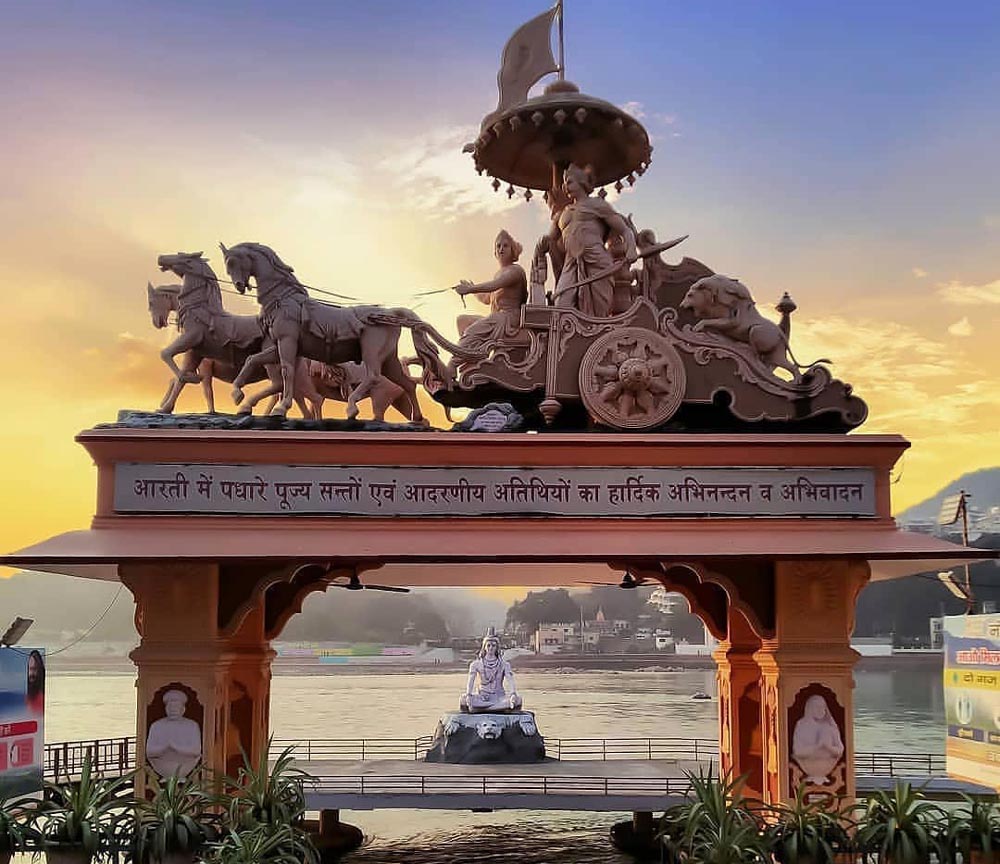
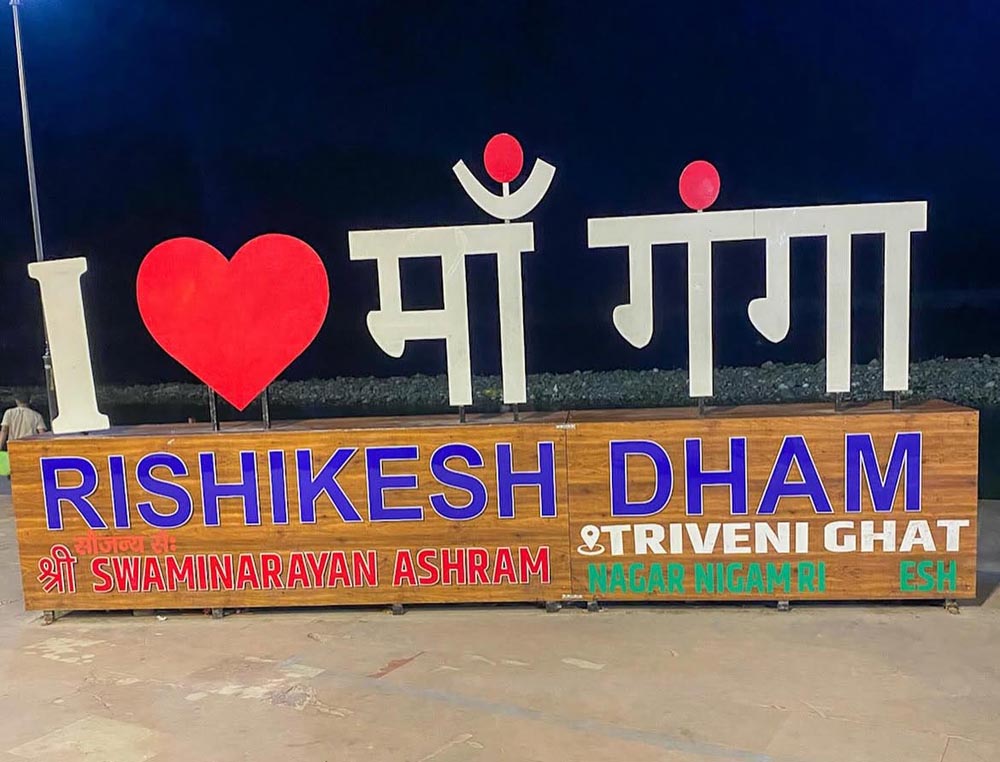
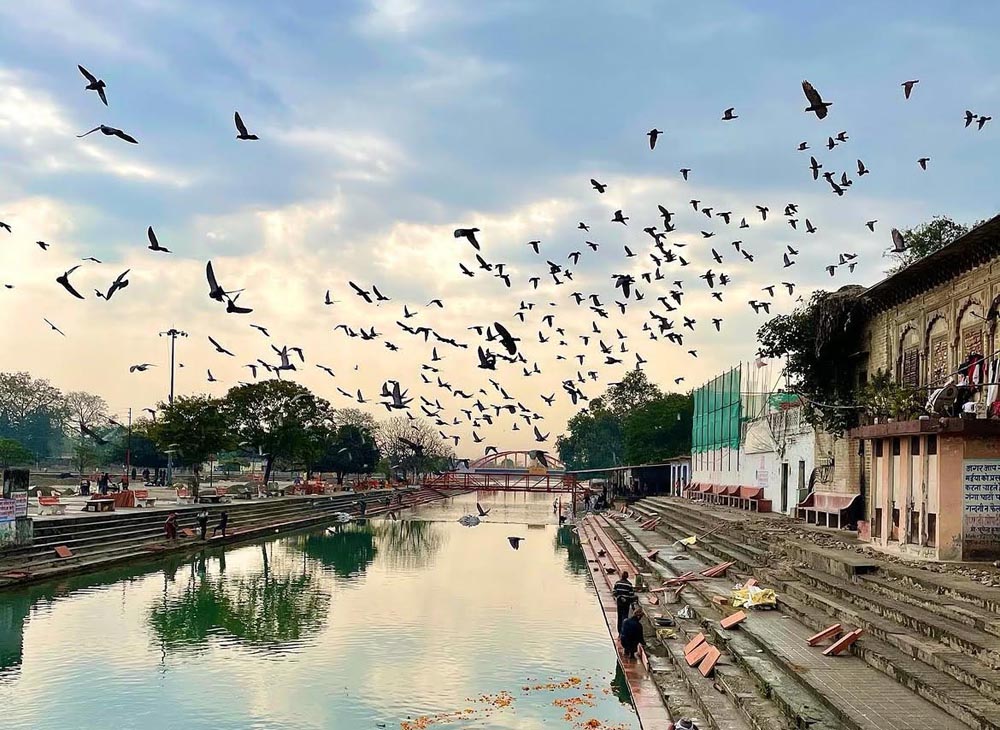
  • On the banks of the holy Ganga, in the heart of Rishikesh, lies Triveni Ghat, one of the most spiritually significant and culturally vibrant places in Uttarakhand. More than a riverside promenade or a bathing ghat, Triveni Ghat is a place where pilgrimage, mythology, ritual, nature and everyday life come together. The sound of temple bells, the fragrance of incense, the sight of devotees offering prayers and the continuous movement of the Ganga create an atmosphere that is distinctly associated with Rishikesh.

    Triveni Ghat is situated in Mayakund in Rishikesh and is regarded as one of the city’s principal bathing and pilgrimage sites. Uttarakhand Tourism describes it as the best-known bathing ghat in Rishikesh, where pilgrims traditionally take a holy dip before visiting temples. The ghat is particularly famous for its evening Ganga Aarti, when lamps, chanting and devotional music transform the riverfront into a spectacular spiritual setting.

    The Spiritual Significance of Triveni Ghat

    The name “Triveni” refers to a confluence of three sacred rivers: the Ganga, Yamuna and the mythical Saraswati. In Hindu religious tradition, their symbolic meeting gives the site exceptional spiritual importance. Although the visible river at Rishikesh is the Ganga, the association with the three sacred rivers is an important part of the religious identity of the ghat.

    For generations, pilgrims have visited Triveni Ghat to perform religious rituals, offer prayers and bathe in the Ganga. The traditional belief is that bathing in the sacred river helps purify the individual spiritually. Devotees also come here to make offerings for their ancestors and perform other ceremonies connected with Hindu religious traditions.

    The ghat therefore serves several purposes at once. For a pilgrim, it can be a place of prayer and purification. For someone interested in Hindu culture, it offers an opportunity to observe traditional rituals. For travellers, it provides a peaceful location beside the Ganga where they can experience an important aspect of Rishikesh beyond yoga, meditation and adventure tourism.

    Legends and Mythological Associations

    Like many ancient pilgrimage locations in Uttarakhand, Triveni Ghat is surrounded by stories from Hindu mythology. Local traditions associate the area with episodes connected with Lord Rama and Lord Krishna. According to one popular legend, Lord Rama came to this region seeking redemption after his victory over Ravana. Another tradition says that Lord Krishna visited the sacred area after being wounded by a hunter’s arrow. These stories form part of the religious folklore associated with the ghat rather than historical records.

    The wider Rishikesh area is also deeply associated with sages, meditation and penance. The presence of ancient temples and sacred water bodies around the town reinforces its identity as a pilgrimage centre. Rishikesh itself has long attracted people seeking spiritual learning, meditation and religious knowledge, and Triveni Ghat occupies an important place within this landscape.

    Nearby Rishikund, associated with Raghunath Temple, has its own mythology. According to local tradition, the sacred pond is connected with Lord Rama and is also associated with the meeting of the three holy rivers.

    The Famous Ganga Aarti at Triveni Ghat

    For many visitors, the defining experience of Triveni Ghat is the evening Ganga Aarti. As daylight begins to disappear, devotees gather along the steps facing the river. Priests conduct the ceremony with lamps and devotional offerings while bells, chants and other sounds of worship fill the air.

    The illuminated lamps create a remarkable sight as their reflections shimmer on the flowing Ganga. Devotees may also place small floating diyas on the river as an offering. The combination of firelight, water, chanting and the evening sky gives the ceremony an atmosphere that is both visually striking and deeply religious.

    Incredible India describes the Triveni Ghat ceremony as an important daily Ganga Aarti lasting roughly 45 minutes, while other local tourism sources describe the evening ceremony as generally taking place around the sunset period. Timings can vary seasonally and with local arrangements, so visitors should confirm the day’s timing locally rather than relying on a fixed clock time.

    The ceremony should be approached as a religious observance rather than simply a tourist performance. Visitors are expected to behave respectfully, avoid disturbing worshippers and follow local instructions around the ritual area.

    What Happens During the Aarti?

    The precise sequence can vary, but the ceremony generally involves prayers, chanting, devotional music and the offering of lamps to the Ganga. Priests use large illuminated aarti lamps during the worship, creating a moving pattern of light against the evening darkness.

    The participation of the crowd is an important part of the atmosphere. People sing devotional songs, recite prayers and observe the ceremony from the steps. Some visitors sit quietly and absorb the experience, while devotees actively participate in the prayers.

    The Ganga itself remains the centre of attention. The river is not merely a backdrop to the ceremony; within Hindu tradition, the Ganga is revered as a sacred mother figure. Consequently, the act of offering light to the river has religious meaning connected with gratitude, devotion and reverence.

    Taking a Holy Dip in the Ganga

    Triveni Ghat is traditionally a bathing ghat, and taking a dip in the Ganga is one of the principal activities associated with the site. Pilgrims often bathe before visiting temples or performing religious rituals.

    Visitors who choose to enter the river should exercise considerable caution. The Ganga has a strong current, and water conditions can change depending on the season, rainfall and upstream conditions. One should use designated areas and follow local safety instructions rather than entering the river at an unsuitable location.

    The religious significance of bathing should also be understood within its cultural context. For devotees, the ritual is an expression of faith and purification. For travellers who do not share that belief, simply sitting beside the river and observing the rituals can be equally meaningful as a cultural experience.

    Morning at Triveni Ghat

    Although the evening Aarti attracts the largest crowds, Triveni Ghat has a very different character in the early morning. The riverfront is generally calmer, and the soft morning light creates beautiful views across the Ganga.

    Early morning is particularly suitable for visitors who want to experience the ghat without the intensity of the evening crowds. Devotees may be seen bathing, praying and performing rituals, while the river flows steadily through the city.

    Photography enthusiasts can also find interesting opportunities during the morning. The combination of the river, temple architecture, boats, hills and human activity provides a rich visual setting. However, photography should always remain respectful, particularly when people are performing private religious ceremonies.

    Temples Around Triveni Ghat

    The area surrounding Triveni Ghat contains several temples and religious sites. The ghat itself is part of a larger sacred landscape rather than an isolated attraction.

    Bharat Mandir is one of the oldest and most important temples in Rishikesh and is located close to Triveni Ghat. Uttarakhand Tourism notes its traditional association with Adi Shankaracharya and identifies it as a shrine dedicated to Lord Vishnu. The temple’s history and religious traditions make it an important addition to a Triveni Ghat visit.

    Raghunath Temple and Rishikund are also nearby. Rishikund is a sacred water tank associated with local traditions concerning Lord Rama, and the temple’s reflection in its waters creates one of the area’s characteristic sights.

    Other smaller temples and shrines around the ghat contribute to the spiritual character of the neighbourhood. Exploring these places on foot allows visitors to understand how closely religious life and ordinary urban life are connected in Rishikesh.

    Triveni Ghat as a Cultural Experience

    One of the most interesting things about Triveni Ghat is that it is not exclusively a tourist attraction. It continues to function as a living religious space. Local residents, pilgrims, priests, sadhus and travellers all share the riverfront.

    This creates an experience different from visiting a monument where the original religious function has disappeared. At Triveni Ghat, rituals continue as part of everyday life. Morning bathing, temple visits, offerings and evening prayers are not performances arranged solely for visitors.

    The surrounding streets also reveal another side of Rishikesh. Small shops, religious stalls, flower sellers and local businesses cater to pilgrims and travellers. Visitors can purchase flowers, diyas, devotional items and other traditional products before making an offering at the river.

    The Ganga and the Landscape

    The natural setting is an essential part of Triveni Ghat’s appeal. Rishikesh lies where the Ganga emerges from the Himalayan region into the plains, giving the city a distinctive geographical and spiritual identity.

    The river dominates the visual landscape around the ghat. During different times of day, its appearance changes dramatically. Morning light can give the water a peaceful quality, while sunset creates warm colours around the riverfront. During the evening Aarti, the illuminated lamps provide an entirely different atmosphere.

    The relationship between the river and the surrounding hills is one of the reasons Rishikesh has become such a popular destination for both spiritual travellers and nature lovers.

    Boat Rides and Riverside Views

    A boat ride on the Ganga can provide another perspective of Triveni Ghat and the surrounding riverfront. From the water, visitors can appreciate the stepped structure of the ghats, temples and activity along the riverbanks. Incredible India specifically recommends experiencing the ghat from the river as a way of appreciating the surrounding scenery and devotional activity.

    Boat services and conditions can vary according to season, river conditions and local regulations. Visitors should use authorised operators and follow safety instructions.

    Nearby Attractions

    Triveni Ghat can easily be incorporated into a wider Rishikesh sightseeing itinerary. Bharat Mandir is nearby, while Raghunath Temple and Rishikund can be visited as part of a religious walking route.

    Ram Jhula is another important attraction associated with the spiritual identity of Rishikesh. The suspension bridge provides views of the Ganga and connects important areas containing ashrams and temples.

    Visitors interested in the modern cultural history of Rishikesh can continue towards the Beatles Ashram, officially known as Chaurasi Kutia. The site became internationally famous after the Beatles visited Rishikesh in 1968 to study Transcendental Meditation. Today, its meditation structures and artwork have become a distinctive part of the city’s cultural landscape.

    Parmarth Niketan is another major spiritual destination. It is particularly famous for its own evening Ganga Aarti, making it possible for visitors to experience two different interpretations of the same broader tradition during a longer Rishikesh stay.

    Best Time to Visit Triveni Ghat

    Triveni Ghat can be visited throughout the year, but the experience changes significantly with the seasons. The cooler months from roughly October to March are generally comfortable for sightseeing and spending time outdoors. The mornings and evenings can be particularly pleasant during this period.

    Spring and early summer can also be enjoyable, although daytime temperatures become increasingly warm. The monsoon season brings heavier rainfall to Uttarakhand and can affect river conditions, roads and outdoor activities. Visitors travelling during the rainy season should check local conditions and exercise extra caution around the river.

    The best time of day depends on the experience desired. Early morning is appropriate for those seeking a quieter atmosphere, while evening is the obvious choice for visitors whose primary purpose is to witness the Ganga Aarti.

    How to Reach Triveni Ghat

    Rishikesh is well connected to other parts of Uttarakhand and northern India. The nearest major airport is Jolly Grant Airport near Dehradun, while Rishikesh has its own railway station. Incredible India lists Rishikesh Railway Station as the nearest railway station and Jolly Grant Airport as the closest airport.

    Once in Rishikesh, Triveni Ghat can be reached by local transport, auto-rickshaw, taxi or private vehicle. Its central location makes it relatively accessible from other parts of the town.

    For travellers arriving from Delhi, Rishikesh is commonly reached by road, while rail and air connections provide alternatives. Travel time varies considerably depending on traffic, season and the chosen mode of transport.

    What to Keep in Mind During a Visit

    Because Triveni Ghat is an active place of worship, visitors should dress and behave respectfully. Modest clothing is appropriate, particularly around temples and during religious ceremonies.

    Footwear should be removed where required. Visitors should also avoid shouting, playing loud music or interfering with ceremonies. Photography is generally possible, but taking close-up photographs of people during personal rituals without permission is best avoided.

    Environmental responsibility is particularly important at a riverside pilgrimage site. Flowers, plastic, food packaging and other waste should not be thrown into the Ganga. If you use a diya or make an offering, follow local arrangements for responsible disposal or use.

    The river is sacred to millions of people, but it is also an important natural ecosystem. Respect for the Ganga therefore means respecting both its religious importance and its environmental value.

    Accommodation and Food Around Triveni Ghat

    Rishikesh offers accommodation across a wide range of budgets. Visitors can choose from hotels, guesthouses, hostels, ashrams and yoga centres. Staying near the central part of Rishikesh can make it convenient to visit Triveni Ghat early in the morning and return for the evening Aarti.

    The town also has an extensive vegetarian food culture. Restaurants and small eateries serve North Indian dishes, snacks, sweets and a variety of vegetarian meals. Because Rishikesh is an international yoga destination, visitors can also find cafes offering international and health-oriented food.

    Travellers staying in ashrams should remember that accommodation there may operate according to particular schedules and rules. Those seeking a more conventional holiday experience may prefer hotels or guesthouses.

    Triveni Ghat for Photographers and First-Time Visitors

    Triveni Ghat provides numerous opportunities for photography, particularly around sunrise and sunset. The river, temple structures, lamps, boats and crowds create constantly changing compositions.

    The Ganga Aarti is especially visually dramatic, but visitors should remember that the ceremony is primarily a religious event. A camera should not become a distraction for worshippers. A respectful approach generally produces better photographs anyway because it allows the photographer to observe the atmosphere rather than merely documenting isolated objects.

    For first-time visitors, spending at least a few hours around the ghat can be more rewarding than simply arriving immediately before the Aarti and leaving afterward. Watching the river, exploring nearby temples and observing the changing atmosphere provides a deeper understanding of the place.

    Why Triveni Ghat Matters to Rishikesh

    Rishikesh is known internationally for yoga, meditation, adventure sports and its Himalayan setting. Yet Triveni Ghat represents an older and more traditional dimension of the city. It connects contemporary tourism with centuries of religious practices centred around the Ganga.

    The ghat demonstrates why Rishikesh cannot be understood only as an adventure destination or yoga centre. Its identity is also rooted in pilgrimage, mythology, temples, river worship and the continuing traditions of Hindu spiritual life. Uttarakhand Tourism itself presents Rishikesh as a major pilgrimage and tourism hub as well as a centre of yoga and meditation.

    Final Thoughts

    Triveni Ghat is one of those places where the significance of a destination extends beyond its physical appearance. Its stone steps, riverbank and surrounding temples are relatively simple, but the traditions carried out there give the place extraordinary cultural depth.

    A visit can begin with a quiet walk beside the Ganga, continue with a temple visit or a moment of reflection by the river, and culminate in the evening Ganga Aarti. As lamps illuminate the water and devotional chants rise from the riverbank, visitors get a glimpse of the spiritual traditions that have shaped Rishikesh for generations.

    Whether approached as a pilgrimage destination, a cultural landmark, a photographic location or simply a peaceful riverside escape, Triveni Ghat remains an essential part of the Rishikesh experience. It is not merely a place to see; it is a place to pause, observe and experience the continuing relationship between the people of Rishikesh and the sacred Ganga.

  • Few places in Uttarakhand capture the character of Rishikesh as beautifully as Ram Jhula. Suspended above the sacred Ganga, this well-known pedestrian bridge connects important spiritual and tourist areas on opposite banks of the river. More than a structure used to cross the water, Ram Jhula has become an integral part of the Rishikesh experience, linking temples, ashrams, markets, cafés, ghats and riverside landscapes.

    Rishikesh itself occupies a special place in Uttarakhand’s tourism landscape. The state tourism department describes the city as a destination where spirituality, yoga, adventure and Himalayan scenery come together. Its tourism material specifically lists Ram Jhula among the major places to see in Rishikesh.

    For visitors, walking across Ram Jhula is therefore not simply a means of getting from one side of the Ganga to another. It is an opportunity to experience the river, observe the surrounding temples and ashrams, watch boats moving below, and become part of the distinctive rhythm of Rishikesh.

    Where Is Ram Jhula?

    Ram Jhula is located in Rishikesh in the Tehri Garhwal region of Uttarakhand, spanning the River Ganga near the areas of Swarg Ashram and Muni Ki Reti. It lies within one of the most important tourism zones of Rishikesh, where religious institutions, ashrams and riverside attractions are concentrated.

    The bridge is closely associated with the spiritual landscape on both sides of the Ganga. Swarg Ashram, Parmarth Niketan and other religious and wellness establishments are located around the bridge, while the broader Rishikesh area contains temples, ghats, yoga centres and meditation facilities.

    The Uttarakhand Tourism Department identifies the areas on both sides of the Ganga connected by Ram Jhula and Lakshman Jhula as a core tourism zone of Rishikesh, particularly because of their concentration of spiritual and cultural activities.

    The Historical and Cultural Importance of Ram Jhula

    Ram Jhula is part of a long tradition of bridges and crossings that have connected communities and pilgrimage centres along the Ganga in Rishikesh. Its importance is closely related to the development of Rishikesh as a centre of pilgrimage, yoga, meditation and spiritual learning.

    Rishikesh has historically served as a gateway toward the Himalayan pilgrimage routes. Before modern roads and extensive bridge infrastructure developed, pilgrims travelling toward the higher Himalayan shrines passed through this region. Uttarakhand Tourism’s planning documents describe Muni Ki Reti as historically important to the Char Dham pilgrimage tradition and identify the areas around Ram Jhula and Lakshman Jhula as central to Rishikesh’s spiritual tourism.

    The name “Ram Jhula” connects the bridge with Lord Rama, one of the most revered figures in Hindu tradition. Rishikesh as a whole contains numerous places whose names and traditions are associated with Hindu mythology, saints and religious practices. The bridge consequently carries significance beyond its engineering function.

    It is worth distinguishing between the religious tradition associated with the name and modern historical documentation of the bridge itself. Visitors will encounter many stories and local traditions connected with Rama and the surrounding region, but these should be understood as part of the area’s religious and cultural heritage rather than as modern engineering history.

    Ram Jhula and the Sacred Ganga

    The defining feature of Ram Jhula is, naturally, the Ganga flowing beneath it. The river gives the bridge much of its visual and spiritual character.

    Standing on the bridge, visitors can look along the river toward the surrounding hills, observe the changing colours of the water and watch boats travelling through the channel. Depending on the season, weather and time of day, the landscape can look dramatically different.

    Early mornings are particularly atmospheric. The surrounding ghats and ashrams begin to come alive, pilgrims and visitors move through the area, and the mountains and river can be illuminated by soft morning light. In the evening, the atmosphere becomes more active as people gather around temples, ghats and ashrams.

    The relationship between the river and the spiritual life of Rishikesh is central to the identity of the city. Uttarakhand Tourism describes the Ganga as one of India’s most sacred rivers and places Rishikesh within the state’s wider landscape of pilgrimage and spiritual tourism.

    Architecture and Experience of the Bridge

    Ram Jhula is a suspension bridge designed primarily to provide a crossing over the Ganga while allowing people to move between the two sides of Rishikesh. Its elevated position provides visitors with an unusual viewpoint of the river and surrounding settlement.

    One of the most memorable aspects of crossing it is the changing perspective. From the approach, the bridge appears as a practical crossing, but once visitors reach the central section, the river opens out beneath them. Looking down reveals the movement of the Ganga, while looking outward provides views toward the hills, temples and riverside buildings.

    The experience can become particularly lively during busy tourist and pilgrimage periods. Pedestrians, pilgrims and local residents share the crossing, creating an energetic atmosphere that contrasts with the peaceful river landscape.

    Because it is a bridge in an active tourist and pilgrimage zone, visitors should be considerate of other people, avoid obstructing the walking path for photographs and follow any current local instructions concerning access.

    Spiritual Attractions Around Ram Jhula

    The biggest attraction of Ram Jhula is arguably not the bridge itself but everything surrounding it. The area provides access to several institutions and places associated with spirituality, yoga and Hindu religious traditions.

    Swarg Ashram is one of the best-known areas close to Ram Jhula. It is traditionally associated with ashrams, temples, meditation and spiritual retreats. The atmosphere here can be very different from the busier commercial parts of Rishikesh.

    Parmarth Niketan is another major spiritual institution in the vicinity. Its riverside location makes it an important part of the Rishikesh experience, particularly for visitors interested in yoga, meditation and religious ceremonies.

    Geeta Bhawan and other ashram complexes contribute to the area’s religious character. Visitors can encounter discourses, devotional activities, meditation programmes and other spiritual practices, depending on the institution and the time of year.

    The area therefore works particularly well for travellers who want to combine sightseeing with cultural and spiritual exploration rather than simply visiting a landmark and leaving.

    Ram Jhula and Yoga in Rishikesh

    Rishikesh is internationally associated with yoga, meditation and spiritual wellness. The region’s ashrams and yoga centres have attracted visitors from India and abroad for decades.

    The wider cultural significance of Rishikesh grew considerably during the twentieth century, including after international interest in Indian spiritual traditions increased. Uttarakhand Tourism’s historical planning documentation notes the importance of the city’s ashrams and describes how international visitors came to Rishikesh in search of spiritual experiences.

    Ram Jhula sits directly within this environment. A walk across the bridge can easily become part of a broader day spent visiting an ashram, attending a yoga session, exploring a temple or sitting beside the Ganga.

    For travellers interested in wellness tourism, the bridge is therefore a useful landmark from which to explore the surrounding spiritual neighbourhood.

    Nearby Places to Visit

    A visit to Ram Jhula can easily be combined with several other attractions in Rishikesh. The most obvious companion landmark is Lakshman Jhula, another famous bridge associated with the city. Together, the two bridges help visitors understand the geography of the northern Rishikesh area.

    Triveni Ghat is another important destination. It is one of the city’s best-known riverfront locations and is associated with evening Ganga Aarti. Uttarakhand Tourism specifically recommends visiting Triveni Ghat for the evening ceremony during its Rishikesh itinerary.

    Visitors can also explore Bharat Mandir, Rishikund, temples, ashrams and riverside ghats. The official Uttarakhand tourism map lists these among Rishikesh’s principal attractions.

    Neelkanth Mahadev Temple is another popular excursion from Rishikesh. Those staying for several days may also combine their visit with rafting excursions, trekking and other outdoor activities.

    Adventure Tourism Near Ram Jhula

    Although Ram Jhula is primarily associated with spirituality and sightseeing, Rishikesh is equally famous for adventure tourism. The Ganga and surrounding Himalayan foothills provide opportunities for river rafting, trekking and other outdoor experiences.

    River rafting is one of the most prominent activities. Uttarakhand Tourism describes rafting routes around Rishikesh, Shivpuri and Kaudiyala, with stretches containing rapids of different grades. The department also emphasizes that challenging rafting stretches should be attempted with appropriate expert guidance.

    This combination of spirituality and adventure is one of the reasons Rishikesh attracts such a diverse range of visitors. A traveller can spend the morning exploring temples and ashrams, walk across Ram Jhula in the afternoon and participate in an adventure activity on another part of the river.

    Best Time to Visit Ram Jhula

    Ram Jhula can be visited throughout much of the year, but the experience varies considerably according to season.

    The cooler months from roughly October to March are generally comfortable for sightseeing and walking. Days are often pleasant, making it easier to explore the bridge, ghats, temples and surrounding areas.

    Spring can also be attractive, particularly for travellers who want a balance between comfortable temperatures and active tourism. Summer becomes warmer, although mornings and evenings can still be enjoyable. The surrounding Himalayan foothills help give the region a different atmosphere from India’s hotter plains.

    The monsoon period requires greater care. Heavy rainfall can affect river conditions, roads and outdoor activities. The Ganga can become much stronger during periods of significant rainfall, and visitors should pay attention to local warnings and restrictions.

    The official Uttarakhand tourism map lists Rishikesh as a destination that can be visited throughout the year, while conditions for individual adventure activities can vary by season and official regulations.

    How to Reach Ram Jhula

    Rishikesh is well connected by road with major cities in northern India. It is accessible from Haridwar, Dehradun and Delhi, making it a popular destination for both short trips and longer Uttarakhand journeys.

    Uttarakhand Tourism notes that Rishikesh is approximately 250 kilometres from Delhi by road and has road connections with destinations including Delhi, Dehradun and Haridwar. The nearest major airport is Jolly Grant Airport near Dehradun.

    Travellers arriving by train can use Rishikesh railway connections and then continue locally toward the Ram Jhula area. Taxis, local transport and other road-based options are available within the broader Rishikesh area.

    Because Ram Jhula is located in a busy pedestrian and tourist zone, it is generally more practical to reach the surrounding neighbourhood and continue on foot rather than expecting to drive directly onto the bridge.

    Where to Stay

    Rishikesh offers a wide range of accommodation, from budget guesthouses and hostels to hotels, resorts, yoga retreats and ashram-based accommodation.

    Staying near Ram Jhula or Swarg Ashram can be particularly convenient for visitors who want to explore the spiritual side of the city. The area makes it possible to walk to several ashrams, temples, cafés, shops and riverfront locations.

    Travellers seeking a quieter experience may prefer accommodation farther from the busiest streets. Those interested in yoga or meditation may choose an ashram or dedicated wellness retreat instead of a conventional hotel.

    The best choice depends largely on the purpose of the trip. A spiritual retreat, family holiday, backpacking trip and adventure-focused visit can all require very different types of accommodation.

    Food and Local Shopping

    The neighbourhood around Ram Jhula contains numerous small eateries, cafés and shops serving visitors. Food choices range from traditional Indian meals to cafés catering to the large domestic and international traveller population.

    The area is particularly well known for its combination of spiritual institutions and modern traveller culture. Visitors can find vegetarian food, snacks, beverages and café-style meals while moving between temples and ashrams.

    Local markets also provide opportunities to purchase religious souvenirs, books, clothing, handicrafts, spiritual products and other items associated with Rishikesh’s tourism culture.

    Travellers should nevertheless respect the religious character of the area. Dress and behaviour should be appropriate when entering temples or ashrams, and visitors should follow the rules of individual institutions.

    Photography and Scenic Views

    Ram Jhula is one of the most naturally photogenic places in Rishikesh. The bridge itself creates strong perspectives, while the Ganga and surrounding hills provide a dramatic background.

    Photography is particularly attractive around sunrise and sunset when the changing light creates different moods over the river. Views from the bridge can include boats, ghats, temples, ashrams and forested hills.

    However, photography should be done thoughtfully. Crowding the bridge to take photographs can inconvenience other pedestrians, and visitors should be especially respectful around religious ceremonies and private spaces.

    Responsible Tourism at Ram Jhula

    The environmental and cultural importance of the area means that responsible tourism is essential. The Ganga is not simply a scenic attraction; it is a sacred river and an important natural ecosystem.

    Visitors should avoid throwing plastic, food waste or other rubbish into the river. They should use designated waste facilities and avoid damaging vegetation or disturbing wildlife.

    The wider Rishikesh region is also dealing with the challenges created by growing tourism. Uttarakhand’s current tourism planning documents include measures relating to parking, waste management and sustainable tourist infrastructure in Rishikesh, reflecting the need to manage visitor growth while protecting the destination.

    Responsible behaviour is therefore particularly important around popular attractions such as Ram Jhula.

    Tips for Visitors

    A visit to Ram Jhula is best approached as part of a wider Rishikesh walking and sightseeing experience. Comfortable footwear is useful because exploring the surrounding temples, ghats and ashrams involves considerable walking.

    It is also advisable to carry drinking water, protect yourself from strong sunlight and keep personal belongings secure in crowded areas. Visitors should check current local instructions before planning river-based activities, particularly during periods of changing weather.

    Those visiting temples or ashrams should dress respectfully and observe the individual rules of each institution. Photography may be restricted in certain religious spaces.

    Travellers should also avoid treating the Ganga simply as an adventure setting. Religious rituals and local customs deserve respect, particularly around bathing areas and ceremonies.

    Ram Jhula as a Symbol of Rishikesh

    What makes Ram Jhula distinctive is the way it brings together several aspects of Rishikesh in one location. The bridge represents connectivity, but the landscape around it represents something much broader: pilgrimage, yoga, meditation, river culture, adventure tourism and Himalayan scenery.

    A visitor standing on Ram Jhula can see how closely these elements coexist. The Ganga flows beneath the bridge, temples and ashrams occupy the riverbanks, travellers move through the streets, and the hills rise beyond the city.

    This mixture is central to Rishikesh’s identity. Uttarakhand Tourism itself presents the destination through a combination of spirituality, wellness, adventure and leisure rather than as a single-purpose pilgrimage centre.

    Final Summary

    Ram Jhula is much more than a suspension bridge across the Ganga. It is one of the defining landmarks of Rishikesh and an important gateway into the city’s spiritual, cultural and natural landscape.

    For pilgrims, it offers access to temples, ashrams and sacred riverfront spaces. For photographers, it provides expansive views of the Ganga and surrounding hills. For wellness travellers, it places them close to some of Rishikesh’s best-known yoga and meditation centres. For adventure seekers, it serves as a landmark within a city famous for rafting and outdoor activities.

    Most importantly, Ram Jhula allows visitors to experience the distinctive character of Rishikesh on foot. Crossing the bridge, watching the Ganga move beneath it, exploring Swarg Ashram, visiting nearby spiritual institutions and eventually witnessing the changing light over the river can turn a simple sightseeing stop into a memorable Uttarakhand experience.

    For anyone exploring Rishikesh, Ram Jhula deserves to be more than a quick photograph on an itinerary. It is a place where the sacred river, Himalayan landscape, living religious traditions and modern tourism culture meet—and that combination is what gives this famous landmark its enduring appeal.

  • Laxman Jhula, also commonly written as Lakshman Jhula, has long been one of the defining landmarks of Rishikesh in Uttarakhand. Suspended above the sacred Ganga, the bridge became much more than a crossing point: it was a visual symbol of Rishikesh, a meeting place for pilgrims and travellers, and one of the most photographed sights in the Himalayan foothills. Even after the historic bridge was closed to pedestrian and vehicular movement in 2019 because of structural safety concerns, its cultural and tourism significance has remained strong.

    Today, the area around Laxman Jhula continues to be one of the busiest tourism zones in Rishikesh. Visitors come for the river views, temples, ashrams, cafés, yoga centres, spiritual experiences and adventure activities. The newer Bajrang Setu, constructed near the historic bridge site, has also introduced a new chapter to this famous riverside landscape.

    Where Is Laxman Jhula?

    Laxman Jhula is located in Rishikesh, in Uttarakhand’s Garhwal region, across the Ganga between the areas traditionally associated with Tapovan and Jonk. The surrounding neighbourhood has developed into one of the most popular parts of Rishikesh for visitors looking for a combination of spirituality, nature, adventure and leisure.

    The bridge historically connected areas on opposite sides of the river and provided an important pedestrian route. Uttarakhand Tourism identifies Laxman Jhula and Ram Jhula as central attractions in the riverside tourism zone of Rishikesh, alongside the city’s ashrams and spiritual institutions.

    The location is particularly scenic because the Ganga passes through the Himalayan foothills here. Hills rise around the river, while temples, ashrams and buildings occupy the slopes and riverbanks. The combination of flowing water, forested hills and religious architecture gives this part of Rishikesh a distinctive atmosphere.

    Laxman Jhula remains a recognizable landmark on local maps and in the tourism identity of Rishikesh, even though the original bridge is no longer used for normal crossing.

    The History of Laxman Jhula

    The modern Laxman Jhula was completed in 1929 and became an important suspension bridge across the Ganga. Historical accounts describe it as approximately 136 metres long. For decades, it served pedestrians crossing between the two sides of the river and became one of the most recognizable structures in Rishikesh.

    The bridge’s importance was not merely practical. Its location connected areas associated with Rishikesh’s spiritual traditions, pilgrimage routes and growing ashram culture. As tourism expanded, the bridge became a natural focal point for visitors exploring the city.

    Over the decades, Rishikesh itself transformed from an important pilgrimage and spiritual destination into a globally known centre for yoga, meditation, adventure tourism and wellness. Laxman Jhula was present throughout much of this transformation and became closely associated with the city’s identity.

    The bridge also became popular among photographers, filmmakers and travellers. Its suspension structure, river setting and surrounding hills created a distinctive visual image that appeared in photographs and films. According to contemporary reporting, several Hindi films and television productions were shot at the bridge.

    The Mythological Connection

    The name Laxman Jhula is connected with Lakshmana, the younger brother of Lord Rama in the Ramayana. Local tradition holds that Lakshmana crossed the Ganga at this location using a simple rope or jute-rope bridge.

    This traditional story is an important part of the cultural identity of the site. The modern steel suspension bridge obviously represents a very different engineering achievement from the rope crossing described in local tradition, but the association with Lakshmana gives the location its religious character.

    It is worth understanding this as a local religious tradition and belief, rather than treating the legendary crossing as a historically documented event. For pilgrims and many visitors, however, the mythology forms an integral part of the experience.

    The wider Rishikesh region has numerous places whose identities combine mythology, pilgrimage and geography. This is one reason the city occupies such an important place in Uttarakhand’s spiritual tourism landscape.

    Why Laxman Jhula Became So Famous

    The fame of Laxman Jhula came from several factors coming together. First was its dramatic location above the Ganga. A suspension bridge naturally provides an elevated perspective, and the surrounding Himalayan landscape made the experience particularly memorable.

    Second was its connection with Rishikesh’s religious traditions. Pilgrims travelling through the city could encounter temples, ashrams, ghats and sacred riverfront areas within a relatively compact region.

    Third was the growth of international tourism. Rishikesh became increasingly associated with yoga and meditation, particularly after the Beatles’ 1968 visit to the city and the subsequent international attention given to its ashrams. Government tourism documentation describes the riverside areas around Ram Jhula and Laxman Jhula as important centres for spiritual and tourism activity.

    Finally, Laxman Jhula became part of the standard Rishikesh sightseeing experience. Visitors often combined a bridge walk with temple visits, riverside walks, shopping, cafés, yoga sessions and trips to nearby attractions.

    Closure of the Historic Bridge

    One of the most important facts travellers should know is that the original Laxman Jhula is closed to pedestrian and vehicular traffic.

    In July 2019, the Uttarakhand government ordered the bridge’s immediate closure after a technical assessment raised serious structural concerns. Reports at the time said that many components were in poor condition and that increased traffic had placed additional pressure on the ageing structure.

    The closure was significant because the bridge had been an everyday part of Rishikesh’s tourism experience for generations. It was particularly notable that a structure traditionally associated with pedestrian movement had also been used by motorcycles, increasing the load and congestion around it.

    For visitors planning a trip today, this distinction is important. Photographs of people walking across the historic Laxman Jhula are common online, but they represent an earlier period. Travellers should not assume that the old bridge is currently available for walking.

    Bajrang Setu: A New Chapter Near Laxman Jhula

    The closure of the historic bridge created a need for another crossing in the area. This led to the development of Bajrang Setu, a new suspension bridge near Laxman Jhula.

    According to reports published during the project’s development, the new bridge is around 132 metres long and about eight metres wide, with provision for vehicular movement and pedestrian walkways. Its pedestrian sections were designed with glass flooring, creating a skywalk-style experience above the Ganga.

    By 2026, the new bridge had become an emerging attraction in its own right. A July 2026 report noted that the Uttarakhand government had approved a user-fee system for pedestrians using the glass walkways and that dedicated staff would be involved in monitoring the pedestrian areas.

    The development illustrates how Rishikesh is attempting to balance heritage with modern infrastructure. The original bridge remains an important historical symbol, while Bajrang Setu is intended to provide modern crossing facilities and accommodate contemporary visitor demand.

    What Makes the Laxman Jhula Area Special?

    Although the original bridge itself can no longer be crossed, the surrounding area remains highly attractive. The first thing that catches the attention of many visitors is the Ganga. Depending on the season, sunlight and river conditions, the water can appear dramatically different throughout the day.

    Early mornings tend to have a quieter and more spiritual atmosphere. The sound of temple bells, devotional music and the river creates a very different environment from the busy afternoon hours. At sunset, the surrounding hills and river become particularly photogenic.

    The area also has numerous small lanes filled with cafés, shops, spiritual centres, guesthouses and restaurants. Walking through these streets provides an opportunity to experience another side of Rishikesh beyond its major attractions.

    The riverside is also closely associated with yoga and meditation. Visitors can find institutions offering classes, retreats and longer spiritual programmes. Rishikesh’s reputation as a global yoga destination has made this area particularly popular with international travellers.

    Nearby Temples and Spiritual Attractions

    One of the easiest ways to explore the Laxman Jhula area is to combine the bridge area with nearby temples and spiritual sites.

    Trayambakeshwar Temple, Rishikesh is one of the prominent temple landmarks close to Laxman Jhula. The multi-storey temple architecture and its location near the river make it a familiar feature of the local landscape.

    The surrounding region also contains numerous smaller temples, shrines and ashrams. Rather than treating these simply as sightseeing attractions, visitors should remember that many remain active places of worship. Modest clothing, respectful behaviour and awareness of photography restrictions are appropriate.

    Further along the river is the Swarg Ashram area, another major centre for spirituality and yoga.

    Parmarth Niketan Ashram near Ram Jhula is particularly well known for its spiritual activities and riverside setting. The wider Rishikesh region is home to numerous ashrams where visitors can learn yoga, meditation and Indian philosophical traditions.

    Ram Jhula and Other Attractions

    A visit to the Laxman Jhula area can easily be extended to Ram Jhula. Ram Jhula is another famous suspension bridge over the Ganga and forms part of the broader riverside tourism circuit.

    Another important destination is Triveni Ghat, one of Rishikesh’s best-known riverfront locations. The ghat is particularly associated with evening Ganga Aarti, when lamps, prayers and devotional rituals take place beside the river. Uttarakhand Tourism specifically includes Triveni Ghat, Laxman Jhula, Ram Jhula and Rishikesh’s ashrams among the city’s key experiences.

    Adventure enthusiasts can also explore rafting on the Ganga, trekking routes, camping and other outdoor activities in and around Rishikesh. Uttarakhand Tourism describes Rishikesh as an important base for adventure tourism, including rafting and trekking.

    The Best Time to Visit

    Rishikesh can be visited throughout much of the year, but the experience changes considerably with the seasons. Uttarakhand Tourism lists Rishikesh as a destination that can be visited throughout the year.

    The cooler months from roughly October to March are generally comfortable for sightseeing, walking and exploring temples and ashrams. Winter mornings can be chilly, particularly near the river, but daytime conditions are often pleasant.

    Spring brings warmer temperatures and generally comfortable sightseeing conditions. This period can be especially appealing for travellers interested in yoga, outdoor activities and exploring the town on foot.

    Summer can become hot in the lower parts of Rishikesh, although mornings and evenings near the river can still be enjoyable. Monsoon brings heavy rainfall to the region, and river conditions can change significantly. Travellers should take local safety advice seriously during periods of heavy rain, particularly around riverbanks and adventure activities.

    How to Reach Laxman Jhula

    Rishikesh is well connected by road and rail, while Jolly Grant Airport near Dehradun provides the nearest major air connection. Uttarakhand Tourism lists road, rail and air connections for Rishikesh, with regular road services linking the city with Delhi, Dehradun, Haridwar and other destinations.

    From central Rishikesh, visitors can reach the Laxman Jhula area by taxi, auto-rickshaw or other local transport. Because the surrounding roads can become crowded, especially during weekends and major religious occasions, travel times can vary.

    Travellers staying in Tapovan, Jonk or the nearby riverside areas may find many attractions accessible by walking, although the terrain includes slopes and steps in several places.

    Food, Shopping and Local Atmosphere

    The Laxman Jhula neighbourhood has developed a strong café and backpacker culture alongside its traditional religious character. Visitors can find Indian food, North Indian dishes, vegetarian meals, cafés, bakery items, international food and health-oriented menus.

    The area is also known for shops selling spiritual books, yoga products, clothing, handicrafts, jewellery, incense and souvenirs. Bargaining may be possible in some small shops, although visitors should approach it respectfully.

    The combination of pilgrimage culture and international tourism gives the neighbourhood an unusual atmosphere. A traveller can move from a traditional temple to a yoga studio, then to a riverside café or a small local market within a short distance.

    Photography and Sunrise or Sunset Views

    The Laxman Jhula area is especially appealing to photographers. The Ganga, suspension bridges, temples, hills and changing light create numerous compositions.

    Morning photography can capture mist, soft sunlight and quieter riverfront scenes. Late afternoon provides stronger contrasts between the illuminated hills and the river. Sunset is particularly popular, although crowds can increase during this time.

    A local viewpoint known as Laxman Jhula View Point provides another perspective of the surrounding landscape.

    Visitors should avoid entering restricted areas of the historic bridge or construction zones associated with new infrastructure simply to obtain photographs. Safety barriers and official instructions should always be respected.

    Responsible Tourism Around the Ganga

    The beauty and spirituality of Rishikesh depend heavily on the health of the Ganga and the surrounding environment. Visitors can contribute to responsible tourism by avoiding plastic waste, using designated bins and not throwing food, packaging or other materials into the river.

    It is also important to respect religious activities. The Ganga is not simply a scenic river for local communities and pilgrims; it has deep religious significance.

    Visitors participating in rafting, trekking or other adventure activities should use registered operators where possible and follow safety instructions. River conditions can change quickly, particularly during monsoon periods.

    Responsible tourism also means supporting local businesses, respecting residents and avoiding excessive noise around temples, ashrams and residential areas.

    Laxman Jhula as a Symbol of Rishikesh

    The story of Laxman Jhula is ultimately larger than the bridge itself. The structure represented a connection between two sides of the Ganga, but over time it also came to symbolize the connection between different aspects of Rishikesh: ancient mythology and modern tourism, pilgrimage and adventure, yoga and backpacking culture, local traditions and international visitors.

    Its closure in 2019 changed the practical experience of visiting the area, but it did not erase the landmark’s cultural importance. The historic bridge remains part of Rishikesh’s visual and historical memory, while Bajrang Setu represents a modern response to the needs of a rapidly growing destination.

    For travellers, the Laxman Jhula area is therefore best understood as an entire destination rather than simply a bridge. Its appeal lies in the Ganga, temples, ashrams, markets, cafés, mountain scenery and the spiritual atmosphere that has made Rishikesh famous.

    Final Thoughts

    Laxman Jhula occupies a special place in the tourism history of Uttarakhand. Built in 1929, the historic suspension bridge became one of Rishikesh’s most recognizable landmarks and remained closely connected with the city’s religious and tourism identity for generations. Its closure in 2019 because of structural safety concerns marked the end of an era, but the surrounding neighbourhood continues to be one of the most important places to visit in Rishikesh.

    Today, visitors can explore the same broader landscape of the Ganga, temples, ashrams and Himalayan foothills while also seeing the transformation taking place through newer infrastructure such as Bajrang Setu. The Uttarakhand Tourism Department continues to feature Rishikesh prominently as a destination combining spirituality, wellness, adventure and leisure. For anyone travelling through Uttarakhand, the Laxman Jhula area offers an opportunity to experience many different dimensions of Rishikesh in one place. It is a destination shaped by mythology and history, but also by modern travellers and the continuing evolution of one of India’s most famous spiritual towns.

  • Rishikesh is one of those destinations that can feel completely different depending on why you visit. For a pilgrim, it is a sacred town on the banks of the Ganga. For a yoga practitioner, it is an international centre for meditation, wellness and spiritual learning. For an adventure lover, it is a gateway to white-water rafting, trekking, camping and other outdoor experiences. For a traveller interested in culture, it offers temples, ashrams, ghats, suspension bridges and centuries-old traditions. And for someone simply looking for a peaceful Himalayan escape, the combination of river, forest and mountains provides a remarkably relaxing setting.

    Located in Uttarakhand, Rishikesh is widely promoted as the “Yoga Capital of the World” and is also regarded as a gateway to the Garhwal Himalayas and the Char Dham pilgrimage circuit. The Ganga flowing through the town is central to its identity, while the surrounding hills provide opportunities for nature and adventure activities.

    The Character and History of Rishikesh

    Rishikesh has developed at the meeting point of religion, nature and travel. Its spiritual importance is deeply connected with the Ganga and with Hindu traditions surrounding sages, meditation and pilgrimage. Ancient religious literature and local traditions associate the area with sages and episodes from the Ramayana. These stories remain an important part of the cultural character of the town today.

    The town’s modern international identity developed particularly through yoga and meditation. Over the decades, teachers and spiritual institutions attracted visitors from across India and abroad. Rishikesh consequently became a place where traditional Indian spiritual practices coexist with modern wellness tourism.

    The international profile of Rishikesh received an additional boost in 1968, when members of The Beatles visited the ashram of Maharishi Mahesh Yogi to study Transcendental Meditation. The former ashram, now popularly known as the Beatles Ashram or Chaurasi Kutia, has become one of the city’s most recognisable attractions.

    Today, the town combines pilgrimage, yoga retreats, backpacker culture, cafés, adventure tourism and traditional ashram life in a way that is relatively unusual among Indian destinations.

    The Ganga: The Heart of Rishikesh

    It is difficult to understand Rishikesh without understanding its relationship with the Ganga. The river is not simply a scenic feature; it is a sacred presence around which much of the city’s religious and cultural life revolves.

    The riverbanks are lined with ghats, temples, ashrams and walking areas. Visitors can sit beside the water early in the morning, watch pilgrims perform rituals, participate in meditation sessions or simply enjoy the changing colours of the river as the day progresses.

    One of the most significant places along the river is Triveni Ghat. It is particularly famous for its evening Ganga Aarti, when lamps, chanting, bells and devotional music create a memorable atmosphere. Uttarakhand Tourism identifies Triveni Ghat as the city’s best-known bathing ghat and highlights its evening aarti as a major experience.

    The experience is especially atmospheric around sunset. Even travellers who are not visiting Rishikesh primarily for religious reasons can appreciate the cultural significance of the ceremony.

    Temples and Spiritual Places

    Rishikesh has a large number of temples and spiritual institutions, making it an important destination for pilgrims as well as people interested in Indian philosophy.

    Bharat Mandir is among the historic temples in the town. It is associated with Adi Shankaracharya and is dedicated to Lord Vishnu. The temple’s religious importance has made it an important part of Rishikesh’s pilgrimage landscape.

    The area around Swargashram is another major spiritual centre. Numerous ashrams are located here, many of which focus on yoga, meditation, Vedanta, spiritual studies and traditional wellness practices. Visitors may also explore the temples and viewpoints in the hills surrounding Rishikesh. Kunjapuri Temple, for example, is known for its elevated location and panoramic views, while Neelkanth Mahadev Temple is an important Shiva pilgrimage site in the surrounding Garhwal landscape.

    A visit to an ashram should ideally be approached differently from a conventional sightseeing excursion. Many institutions have schedules, codes of conduct, meditation periods and rules regarding photography or participation. Travellers interested in staying at an ashram should therefore check its current requirements before arriving.

    Yoga and Meditation in Rishikesh

    Yoga is arguably the aspect of Rishikesh that has given the town its strongest international identity. Visitors arrive from many parts of the world to study yoga, meditation, breathing practices, philosophy and related traditions.

    The city has everything from short introductory classes to longer residential programmes. Some institutions are traditional and highly disciplined, while others cater to travellers seeking a more relaxed wellness experience. The choice of programme therefore matters considerably.

    One should also distinguish between a holiday yoga class and a serious teacher-training or spiritual programme. A traveller interested only in relaxation might prefer morning yoga and meditation sessions, while someone pursuing formal study may want a residential programme lasting several weeks.

    Among the recognised spiritual institutions is The Divine Life Society (Sivananda Ashram), while The Art Of Living–Rishikesh Ashram (AOL–Rishikesh Ashram) is another established ashram presence in the city. Visitors should check current schedules and access arrangements directly because programmes and visiting rules can change.

    Rishikesh also hosts the International Yoga Festival, organised with the involvement of the Uttarakhand Tourism Development Board, further reinforcing the city’s role in international yoga tourism.

    The Beatles Ashram and Rishikesh’s Global Cultural Connection

    The Beatles Ashram offers a completely different perspective on the city’s history. Officially associated with the former Maharishi Mahesh Yogi Ashram, the site became famous after The Beatles stayed there in 1968.

    Today, visitors can explore the former meditation complex, including its distinctive structures and artistic graffiti. The atmosphere is different from that of the active religious institutions around Rishikesh. The combination of abandoned buildings, greenery and artwork has made it particularly attractive to photographers and visitors interested in music history.

    The Beatles connection also illustrates how Rishikesh evolved from an important Indian spiritual destination into a place with global cultural recognition.

    Lakshman Jhula and Ram Jhula

    The suspension bridges are among Rishikesh’s most recognisable landmarks. Lakshman Jhula has historically been associated with the town’s imagery and mythology. Uttarakhand Tourism describes the bridge as a 137-metre suspension bridge built in 1939, traditionally linked with the story of Lakshmana crossing the Ganga.

    Nearby, Ram Jhula provides another pedestrian crossing over the Ganga. The surrounding areas are filled with ashrams, small shops, cafés and religious establishments.

    The walk between the bridge areas is itself part of the Rishikesh experience. Instead of treating the bridges simply as photographic landmarks, travellers can spend time exploring the streets, riverside paths and small establishments around them.

    Because bridge access and traffic arrangements can change, visitors should check current local conditions before planning a route specifically around Lakshman Jhula.

    Adventure Tourism and White-Water Rafting

    Rishikesh is not only a spiritual destination. It is also one of India’s best-known adventure-tourism centres.

    White-water rafting on the Ganga is particularly popular. Shivpuri and Byasi are important rafting areas, with different stretches offering different levels of challenge. Uttarakhand Tourism identifies Shivpuri as a major rafting destination and notes that rafting is generally best experienced from September to June, subject to river and weather conditions.

    For first-time rafters, choosing an authorised operator and following the guide’s safety instructions is essential. River conditions can change rapidly, and rafting should never be treated as an activity where experience can substitute for safety procedures.

    Beyond rafting, Rishikesh and the surrounding region offer kayaking, trekking, camping, flying fox experiences, mountain swings and bungee jumping. Mohanchatti is particularly associated with bungee jumping and other adventure activities.

    Adventure operators such as Rishikesh Adventures hub and Central Himalayan Adventure are among the businesses currently listed locally for adventure activities. Travellers should independently verify operator credentials, equipment, age restrictions, weather cancellations and insurance or liability conditions before booking.

    Nature, Waterfalls and Hiking

    The landscape around Rishikesh provides plenty of opportunities to escape the busier parts of town. Forested hills, river valleys and smaller streams create a variety of short excursions.

    Neer Garh Waterfall is one popular nature attraction near the city. The surrounding trails offer an opportunity to combine a relatively easy outing with time in a natural setting.

    Kunjapuri is particularly appealing for travellers interested in sunrise and mountain scenery. On clear days, elevated viewpoints can provide extensive views across the Himalayan landscape and surrounding valleys.

    For more adventurous travellers, trekking routes in the surrounding hills can range from short hikes to longer excursions. Conditions vary significantly with season, so appropriate footwear, water and weather awareness are important.

    Rajaji National Park and Wildlife

    Rishikesh also provides access to the wider Himalayan foothill ecosystem. Rajaji National Park is particularly significant for wildlife enthusiasts and is associated with elephants, tigers and other species.

    A wildlife excursion offers a contrast to the spiritual and urban experiences of central Rishikesh. Rather than spending an entire trip around the riverfront, visitors with additional time can explore the area’s forests and wildlife landscapes.

    Wildlife sightings are never guaranteed, however, and the experience is primarily about observing the natural environment responsibly rather than expecting a particular animal encounter.

    Food and Café Culture

    Rishikesh’s food scene has developed alongside its international visitor population. Traditional Indian vegetarian food remains central to the town’s culinary identity, while cafés and restaurants cater to visitors from India and overseas.

    The areas around Tapovan, Swargashram and the bridges have numerous cafés serving Indian meals alongside international and health-oriented dishes. Because of Rishikesh’s spiritual character, vegetarian food is particularly prominent.

    For a more conventional dining experience, The Sitting Elephant – A Rooftop Restaurant Overlooking River Ganga offers views toward the Ganga, while Barasinghaa Cafe is another locally listed vegetarian option. Local establishments and their operating hours can change, so it is sensible to check current information before visiting.

    Where to Stay in Rishikesh

    Accommodation in Rishikesh ranges from inexpensive hostels and guesthouses to yoga retreats, ashrams, boutique hotels and luxury resorts.

    Travellers primarily interested in spirituality may prefer accommodation around Swargashram or areas near major ashrams. Those seeking cafés, social spaces and easier access to adventure operators may prefer Tapovan. Visitors looking for a quieter, more conventional hotel environment can explore other parts of the city.

    An ashram stay can be particularly meaningful for people who want to experience structured yoga or meditation. However, it is usually less suitable for travellers expecting the flexibility and amenities of a conventional hotel.

    Best Time to Visit Rishikesh

    Rishikesh experiences seasonal variation, and the ideal period depends on the purpose of the trip.

    The cooler months are comfortable for sightseeing, walking, temple visits and outdoor exploration. Spring can bring pleasant conditions before temperatures rise toward summer. The monsoon transforms the surrounding landscape into a greener environment but can also bring heavy rain, increased river levels and disruption to outdoor activities.

    For rafting, Uttarakhand Tourism identifies September through June as the general season, although actual activity depends on river conditions and operator schedules.

    Summer can be warm, particularly during the afternoon, but early mornings and evenings can still be enjoyable. Travellers should consider their planned activities rather than choosing a season solely based on general weather descriptions.

    How to Reach Rishikesh

    Rishikesh is well connected to other parts of northern India. The town has its own railway station, while Jolly Grant Airport near Dehradun is the nearest major airport commonly used by air travellers. Delhi is also an important access point for visitors travelling by air and road. Incredible India lists Rishikesh Railway Station and Jolly Grant Airport among the principal transport options for the destination.

    Road travel is particularly popular because Rishikesh is connected by highways to major cities in northern India. Buses, taxis and private vehicles provide convenient options depending on the traveller’s starting point.

    Once in town, many central attractions can be explored on foot, although local taxis, auto-rickshaws and other transport options are useful for attractions farther away.

    A Suggested Rishikesh Experience

    A first visit can begin quietly with an early-morning walk beside the Ganga. The cooler hours provide a pleasant opportunity to observe the river, temples and ghats before the town becomes busy.

    The day could continue with a yoga or meditation session, followed by breakfast at a local café. Later, travellers can explore Bharat Mandir, the bridge areas and the ashrams around Swargashram.

    An afternoon visit to the Beatles Ashram can provide a completely different experience, combining history, architecture, art and music culture. The evening can then be reserved for the Ganga Aarti at Triveni Ghat.

    Visitors staying for several days can dedicate another day to rafting or another adventure activity and a further day to exploring waterfalls, temples or mountain viewpoints around Rishikesh.

    Responsible Travel in Rishikesh

    Rishikesh rewards travellers who respect its character. The Ganga and its surroundings are sacred to many people, so modest behaviour around temples, ghats and ashrams is appropriate. Photography should be undertaken sensitively, particularly during religious ceremonies or inside spiritual institutions.

    Environmental responsibility is equally important. Avoiding single-use plastic, carrying reusable water bottles where appropriate, not littering near the river and following instructions in forest and wildlife areas can help protect the destination.

    Adventure tourism also requires responsibility. Travellers should use established operators, wear the required safety equipment and avoid activities when weather or river conditions are unsuitable.

    Rishikesh as a Gateway to the Himalayas

    One of Rishikesh’s greatest strengths is its location. It can be visited as a destination in itself, but it also serves as a starting point for journeys deeper into Uttarakhand.

    The town is described by Uttarakhand Tourism as a gateway to the Garhwal Himalayas, while Incredible India highlights its role as a gateway for pilgrims travelling toward the Char Dham sites of Yamunotri, Gangotri, Kedarnath and Badrinath.

    This makes Rishikesh particularly useful as part of a larger Uttarakhand itinerary. A traveller might combine it with Haridwar, Dehradun, Mussoorie, Tehri, Narendra Nagar or destinations farther into the Himalayan region.

    Final Thoughts

    Rishikesh is more than a conventional tourist town. Its appeal comes from the way several very different experiences exist together. The Ganga provides the spiritual and natural centre, temples and ghats preserve religious traditions, ashrams sustain yoga and meditation practices, the Beatles connection adds an unusual chapter of international cultural history, and the surrounding mountains provide opportunities for adventure and exploration.

    For some visitors, the most memorable moment may be an evening Ganga Aarti. For others, it may be navigating a river rapid, attending an early-morning yoga class, walking through the atmospheric ruins of the Beatles Ashram or simply sitting quietly beside the Ganga.

    That combination of spirituality, nature, adventure, wellness and culture is what gives Rishikesh its distinctive identity within Uttarakhand. It is a destination that can be approached as a pilgrimage, an adventure holiday, a wellness retreat, a cultural journey or simply a Himalayan escape—and each approach reveals a different side of the city.

  • Just a few kilometres from the busy pilgrimage centre of Haridwar lies Kankhal, a place that feels quieter, older and deeply connected with the spiritual traditions of Uttarakhand. While Haridwar is famous for the spectacular Ganga Aarti at Har Ki Pauri, crowded ghats and enormous religious gatherings, Kankhal offers a different experience. Its narrow streets, ancient temples, ashrams, old residential neighbourhoods and sacred sites are closely associated with one of Hinduism’s best-known stories involving Lord Shiva, Goddess Sati and King Daksha Prajapati.

    Kankhal is particularly important because tradition identifies it with the legendary Daksha Yajna, the sacrificial ceremony associated with Sati’s self-immolation and Shiva’s subsequent fury. The principal shrine connected with this story is the Daksheshwar Mahadev Temple, located in southern Kankhal. The present temple structure is generally dated to 1810, when Queen Dhankaur commissioned it, and it was subsequently renovated in 1962.

    For travellers interested in Hindu mythology, pilgrimage, history and the quieter side of Haridwar, Kankhal deserves much more than a hurried visit. It can be explored as a destination in its own right or included in a broader Haridwar pilgrimage itinerary.

    The Historical and Spiritual Identity of Kankhal

    Kankhal is considered one of the ancient settlements associated with the religious landscape of Haridwar. Over centuries, the area developed as a centre of temples, monasteries, ashrams and spiritual institutions. Its proximity to the Ganga helped establish its importance as a pilgrimage destination, while its association with the Daksha Yajna gave it an especially strong place in Shaiva and Shakta traditions.

    The character of Kankhal is noticeably different from the busiest parts of Haridwar. Instead of being dominated entirely by large commercial streets, sections of the town retain an intimate pilgrimage-town atmosphere. Small shrines appear along roads and residential lanes, religious establishments coexist with everyday neighbourhood life, and visitors may encounter pilgrims performing rituals alongside local residents going about their daily routines.

    Kankhal’s importance is therefore not based on a single monument. Its significance comes from the combination of mythology, sacred geography, temples, ghats, religious institutions and living traditions that have developed around the area.

    The Legend of Daksha Yajna

    The central story associated with Kankhal concerns Daksha Prajapati, Goddess Sati and Lord Shiva. According to Hindu tradition, Sati was the daughter of Daksha and the consort of Shiva. Daksha is described as having organised a great yajna, or sacred ritual, but Shiva was not invited.

    Sati nevertheless went to the ceremony. According to the traditional account, Daksha insulted Shiva, deeply humiliating Sati. Unable to accept the disrespect shown towards her husband, Sati entered the sacrificial fire and gave up her life.

    When Shiva learned what had happened, his grief and anger became overwhelming. Tradition says that he sent the fierce warrior Virabhadra to destroy Daksha’s sacrifice. Daksha was killed during the destruction of the yajna, although Shiva later restored his life, giving him the head of a goat according to the traditional narrative.

    The story is not simply a tale of destruction. It contains themes of devotion, pride, sacrifice, grief, reconciliation and the relationship between Shiva and Shakti. The location associated with this story is consequently regarded as extremely sacred by devotees. The Daksheshwar Mahadev Temple and Sati Kund preserve the memory of this mythology in the religious landscape of Kankhal.

    For visitors, understanding this story makes a journey through Kankhal considerably more meaningful. The temples are not isolated architectural attractions; they are places embedded in a larger religious narrative.

    Daksheshwar Mahadev Temple

    The most important attraction in Kankhal is undoubtedly Shree Daksheshwar Mahadev – Daksh Prajapati Temple, also known as Daksha Mahadev or Daksheshwar Mahadev Temple. Dedicated to Lord Shiva, the temple stands at the heart of Kankhal’s religious identity.

    The present temple dates to the early nineteenth century. According to the Ministry of Tourism’s Incredible India portal, Queen Dhankaur constructed the current structure in 1810, while renovation work was carried out in 1962. The temple complex includes the sacred Sati Kund associated with the traditional account of Sati’s self-immolation.

    The temple is especially significant during the month of Sawan, when Shiva devotees undertake pilgrimages and perform abhishekam and other rituals. Maha Shivaratri is another major occasion when the shrine becomes particularly active, with devotional ceremonies and large numbers of worshippers. Navratri also has significance because of the temple’s association with Sati.

    The temple’s relatively accessible location makes it easy to combine with other Haridwar attractions. Visitors should nevertheless remember that this is an active place of worship rather than simply a sightseeing monument. Modest clothing, respectful behaviour and sensitivity towards worshippers are appropriate.

    Sati Kund and the Sacred Landscape

    Close to Daksheshwar Mahadev Temple is Sati Kund, another site associated with the Daksha Yajna tradition. According to Hindu belief, this is connected with the place where Sati entered the sacrificial fire.

    The importance of Sati Kund comes primarily from its religious and mythological association. The site helps visitors understand why Kankhal occupies such a prominent position in the stories surrounding Shiva and Sati. Rather than viewing the kund merely as an architectural structure, travellers can consider it part of a wider sacred landscape that includes the temple, nearby ghats and other Shiva shrines.

    The present-day Sati Kund Mandir is among the local religious sites visitors may encounter while exploring Kankhal.

    Daksha Ghat and the Ganga

    Kankhal’s relationship with the Ganga is another important part of its spiritual character. Ghats around the area provide spaces for bathing, prayer and religious ceremonies. Daksha Ghat, associated with the Daksheshwar Mahadev area, is particularly relevant to pilgrims visiting the temple.

    The experience here can be very different from the large and highly developed ghats of central Haridwar. Depending on the time of day and season, visitors may find a quieter environment in which the sound of the river, temple bells and devotional activity becomes more noticeable.

    The Ganga is central to the religious identity of the entire Haridwar region. For many pilgrims, a visit to Kankhal is therefore combined with bathing, prayer or other rituals connected with the sacred river.

    Other Temples and Religious Places

    Kankhal contains several smaller temples and shrines beyond Daksheshwar Mahadev. Nileshwar Mahadev is traditionally associated with the sacred landscape surrounding Daksha Temple and is another Shiva shrine that can be incorporated into a temple walk. The concentration of religious sites means that visitors who enjoy exploring smaller temples may find Kankhal more rewarding than simply visiting one famous shrine.

    The town also has numerous ashrams and religious establishments. These institutions reflect the long tradition of spiritual study, meditation, service and pilgrimage associated with Haridwar and its surrounding settlements.

    One of the notable institutions in the area is the Ramakrishna Mission Sevashrama. The institution has a long history of charitable medical service in Kankhal, adding another dimension to the town’s religious and social identity. Historical accounts describe the Sevashrama as a major healthcare institution serving the region for more than a century.

    Kankhal’s Ashrams and Spiritual Atmosphere

    One of the most appealing aspects of Kankhal is its ashram culture. The town has historically attracted monks, spiritual seekers, pilgrims and religious organisations. Some establishments focus on meditation and spiritual study, while others are connected with charitable activities, education or healthcare.

    The presence of ashrams contributes to the quieter atmosphere found in parts of Kankhal. Travellers interested in spirituality may find it worthwhile to spend time walking rather than moving immediately from one major attraction to another.

    However, ashrams are functioning religious institutions, so visitors should always check whether photography, entry or participation in activities is permitted. Some places welcome visitors, while others are primarily intended for residents, students or devotees.

    Festivals in Kankhal

    Festivals are among the most significant times to experience Kankhal’s religious character. Maha Shivaratri is particularly important because Daksheshwar Mahadev is a Shiva temple. Devotees gather for prayers, offerings and special ceremonies, and the surrounding area becomes considerably more active.

    Sawan is another important period. The month is traditionally dedicated to Lord Shiva, and devotees undertake various forms of worship and pilgrimage. The Incredible India tourism portal specifically identifies Sawan as an auspicious period for visiting Daksha Mahadev Temple.

    Navratri is significant as well because of the site’s connection with Sati. During major religious festivals, visitors should expect larger crowds, traffic restrictions in some areas and longer waiting times at popular temples.

    Kumbh and related major pilgrimage gatherings also transform the wider Haridwar region. Kankhal has historically been connected with the broader religious culture of Haridwar, and the town can become considerably busier during major pilgrimage periods.

    The Cultural Side of Kankhal

    Kankhal is not only a pilgrimage destination. It is also a living neighbourhood where religious traditions and ordinary life exist side by side. Walking through the streets provides glimpses of local shops, flower sellers, religious-item vendors, small eateries, homes and temples.

    The architecture in older parts of Kankhal can also be interesting. Some traditional buildings and old residences reflect the history of the settlement and its connection with wealthy pilgrims and religious communities. Kankhal was historically an important residential and religious centre, and parts of this heritage can still be sensed while walking through the older neighbourhoods.

    This everyday atmosphere is one of the reasons to avoid treating Kankhal as merely a quick temple stop. A slow walk can reveal details that are easily missed from a vehicle.

    Food and Local Eating

    Food in Kankhal generally reflects the vegetarian culinary culture of Haridwar. Pilgrims can find simple North Indian meals, snacks, sweets, tea and other vegetarian preparations. Because Haridwar is a major pilgrimage destination, vegetarian food is widely available.

    Visitors looking for a contemporary casual meal can also find restaurants around Kankhal and nearby Haridwar. For example, Station 58 | Family Restaurant in Haridwar is located in Kankhal, while Chaap is another local restaurant option. Travellers should check current opening hours before visiting because local business hours can change.

    Street food is also part of the broader Haridwar experience, although visitors should choose busy, hygienic establishments, particularly during hot weather.

    Where to Stay

    Kankhal and neighbouring parts of Haridwar offer a wide range of accommodation, from simple guesthouses and pilgrim-oriented lodging to hotels and more comfortable properties.

    Travellers who want to remain close to Kankhal can consider hotels in the wider Mayapur and Kankhal area. Hotel Park Grand is situated on the Haridwar–Delhi road near Shankracharya Chowk in Kankhal. There are also more upscale options in nearby Haridwar, such as Devnadi- The Heritage Hotel.

    For pilgrims, location may be more important than luxury. Staying close to the temples can make early-morning visits easier and reduce the need for repeated local travel. Visitors seeking quieter surroundings may prefer accommodation away from the busiest central Haridwar streets.

    Best Time to Visit Kankhal

    The best time depends largely on what kind of experience a traveller wants. October through March generally offers more comfortable weather for walking and sightseeing, particularly for visitors who want to explore Kankhal and nearby Haridwar attractions at a relaxed pace.

    The summer months can become hot, especially during the daytime, so early morning and evening are preferable for walking. The monsoon brings rain and increased humidity, but Sawan also brings special religious significance and activity to Shiva temples.

    Visitors who specifically want to experience Maha Shivaratri or Sawan should be prepared for crowds. Those looking for a quieter exploration may prefer visiting outside major festival periods.

    How to Reach Kankhal

    Kankhal is located very close to Haridwar and can easily be included in a Haridwar itinerary. Road transport is the most convenient way to reach the area. Auto-rickshaws, taxis and local transport connect Kankhal with central Haridwar.

    Haridwar railway station is the principal rail gateway for travellers arriving by train. From the station, Kankhal can be reached by local transport. Travel guides generally place Daksha Mahadev Temple roughly four kilometres from Haridwar, although the exact distance and travel time depend on the starting point and route.

    For air travellers, Jolly Grant Airport near Dehradun is the nearest major airport serving the Haridwar region. From the airport, travellers can continue by taxi or other road transport towards Haridwar and Kankhal.

    Because Kankhal is integrated into the wider Haridwar urban area, visitors do not need to plan a complicated journey specifically for the town.

    How Long Should You Spend in Kankhal?

    A half-day is sufficient to see the principal religious sites at a relaxed pace, particularly if Kankhal is part of a larger Haridwar trip. However, travellers interested in temples, mythology, architecture, ashrams and local culture can easily spend a full day.

    An ideal visit might begin early in the morning at Daksheshwar Mahadev Temple and Sati Kund, followed by a walk through nearby religious streets and shrines. Time can then be spent around the Ganga before returning towards central Haridwar.

    Those staying overnight can explore Kankhal during the quieter morning and evening hours, when the atmosphere often feels more peaceful than during the middle of the day.

    Places to Visit Near Kankhal

    Kankhal’s location makes it convenient to explore several of Haridwar’s major attractions. Har Ki Pauri is one of the most famous places nearby and is associated with the Ganga Aarti and sacred bathing ghats. Visitors can combine the spiritual atmosphere of Kankhal with the energetic environment of central Haridwar.

    Mansa Devi Temple and Chandi Devi Temple are also major pilgrimage destinations in Haridwar. Other temples and religious landmarks in the city can easily be added to a day-long itinerary.

    Travellers interested in nature can extend their journey towards Rishikesh and the surrounding Himalayan foothills. Depending on available time, Haridwar can serve as a base for exploring a much larger portion of Uttarakhand.

    Photography and Responsible Tourism

    Kankhal offers plenty of opportunities for photography, particularly around its old streets, temple architecture, religious details and riverfront areas. However, visitors should remember that religious ceremonies are personal and sacred occasions. It is better to ask permission before photographing worshippers, priests or private rituals.

    Plastic waste is another concern in pilgrimage destinations. Carrying reusable water bottles, avoiding unnecessary plastic and disposing of waste responsibly are simple ways travellers can help protect the environment.

    Visitors should also avoid entering restricted temple areas, touching religious objects without permission or treating sacred spaces purely as photographic backgrounds.

    A Different Side of Haridwar

    Perhaps the greatest appeal of Kankhal is that it reveals another side of Haridwar. The famous city is often associated with crowds, Ganga Aarti, bustling markets and large-scale pilgrimage. Kankhal, by comparison, invites visitors to slow down and pay attention to mythology, temples and the layers of history that surround them.

    Its importance comes from the extraordinary story associated with Daksha and Sati, but its identity today is much broader. It is a living pilgrimage town with temples, ghats, ashrams, charitable institutions, local markets and residential neighbourhoods.

    The visit becomes particularly rewarding when travellers move beyond the headline attraction of Daksheshwar Mahadev and spend time understanding the wider sacred geography of the area.

    Final Thoughts

    Kankhal is one of those destinations where mythology and everyday life are inseparable. The streets may appear ordinary at first, but beneath them lies a religious history that has made this small part of Haridwar significant for generations.

    Daksheshwar Mahadev Temple remains the heart of the experience, with its connection to the legendary Daksha Yajna, Sati Kund and Lord Shiva. The surrounding temples, ghats, ashrams and neighbourhoods add further depth to the visit. The present Daksha Mahadev temple dates from 1810 and was renovated in the twentieth century, but the story connected with the site belongs to the much older religious traditions of Hinduism.

    For travellers exploring Uttarakhand, Kankhal is therefore much more than an extension of Haridwar. It is a destination for understanding mythology, experiencing living pilgrimage traditions and discovering a quieter cultural landscape alongside one of India’s most important sacred rivers. Whether visited during the energy of Sawan and Maha Shivaratri or on a peaceful winter morning, Kankhal offers an opportunity to experience the spiritual heritage of Haridwar at a slower and more intimate pace.

  • Nestled in the holy city of Haridwar, Uttarakhand, Pawan Dham is a distinctive temple complex that combines Hindu spirituality with extraordinary glass and mirror craftsmanship. Situated in the Bhupatwala area along the Sapt Sarovar Road, the temple is particularly known for its colorful interiors, intricate glasswork, elaborately decorated idols, and artistic representations of episodes from Hindu mythology. Unlike many of Haridwar’s traditional stone and marble temples, Pawan Dham creates a completely different visual experience, earning attention as one of the city’s distinctive modern religious attractions.

    Pawan Dham is located at Bhagirathi Nagar, Bhupatwala, Haridwar, and is approximately 3 km from the famous Har Ki Pauri area according to travel sources. Its location also places it conveniently close to several other important spiritual and tourist attractions in northern Haridwar.

    Introduction to Pawan Dham

    Haridwar is one of India’s most important pilgrimage destinations, attracting visitors because of the sacred Ganga, ancient temples, ashrams, ghats and religious traditions that have developed around the city over centuries. Within this spiritually rich environment, Pawan Dham offers a somewhat different architectural experience.

    Pawan Dham is associated with the Geeta Bhawan Trust Society of Moga, Punjab, and its Haridwar establishment functions as a religious and charitable institution. The temple is also described as a social and non-profit organization. Sources identify Swami Vedantanand Ji Maharaj with the establishment of the temple.

    The name “Pawan Dham” itself conveys the idea of a sacred or pure spiritual place. For pilgrims, however, the attraction is not limited to religious worship. The temple has become notable for its artistic interiors, where mirrors, colored glass, sculptures and decorative elements work together to create an elaborate visual environment.

    The temple is especially interesting for travelers who want to experience a side of Haridwar beyond the city’s famous riverfront and traditional pilgrimage landmarks.

    The Famous Glass and Mirror Work

    The defining feature of Pawan Dham is its spectacular glass and mirror decoration. The interiors feature extensive use of colorful glass pieces and reflective surfaces, creating an atmosphere in which light and imagery appear to merge together. Travel descriptions frequently highlight the intricate glasswork as the principal reason for visiting the temple.

    The decorative approach gives Pawan Dham an appearance that is considerably different from conventional temple architecture. Walls and ceilings contain detailed decorative work, while religious figures are displayed amid colorful glass and mirror arrangements. As visitors move through the interior, reflections can multiply the appearance of the decorative elements, producing a striking visual effect.

    The craftsmanship is particularly impressive because glass and mirrors are not merely used as occasional decorative additions. They form an important part of the overall visual identity of the temple. The result resembles a traditional “sheesh mahal” or palace of mirrors, although its purpose and atmosphere remain firmly connected with religious devotion.

    For photographers and architecture enthusiasts, this makes the temple an interesting stop. Even visitors who have already explored many temples in Haridwar can encounter something visually different here.

    Hindu Deities and Mythological Scenes

    Another major attraction of Pawan Dham is its collection of elaborately decorated idols and religious tableaux. Various Hindu deities are represented within the temple, and descriptions of the site mention figures associated with traditions surrounding Lord Krishna, Lord Rama, Lord Shiva, Goddess Durga, Lord Ganesha and other revered deities.

    One of the most notable scenes depicts Lord Krishna delivering the Bhagavad Gita to Arjuna. Krishna and Arjuna are shown in the famous chariot setting associated with the Kurukshetra battlefield and the teachings of the Gita. This scene is particularly meaningful because the Bhagavad Gita is one of the most influential texts within Hindu philosophical and spiritual traditions.

    Other representations include Krishna and Radha, Rama, Sita, Lakshmana and Hanuman, Shiva and Shakti, Vishnu and Lakshmi, Goddess Durga and several forms of Ganesha. Some displays depict recognizable episodes or characters from the Ramayana and Mahabharata.

    These displays make the temple more than a conventional shrine containing a single principal image. Instead, visitors encounter a visual presentation of several elements of Hindu mythology.

    Architecture and Artistic Character

    Pawan Dham’s architectural character is best understood through its combination of devotional sculpture and decorative glass craftsmanship. The temple’s exterior may appear comparatively restrained, but the interior reveals a much more elaborate environment. Visitor accounts frequently describe the contrast between the building’s outside appearance and its highly decorated interior.

    The use of mirrors has a practical visual consequence: even relatively small decorative spaces can appear much larger because reflections repeat architectural and artistic details. Colored glass adds another dimension by introducing different shades and patterns into the interior.

    This style also allows traditional religious imagery to be presented in a highly ornamental form. Rather than relying exclusively on painted murals or carved stone, Pawan Dham uses glass, mirrors and sculptural figures to tell religious stories.

    For visitors interested in Indian decorative arts, this is one of the most compelling aspects of the temple.

    Spiritual Significance

    Pawan Dham functions primarily as a religious institution, and visitors should approach it as a place of worship rather than simply as a tourist attraction. Devotees come to pray, view the sacred images and spend time in a peaceful spiritual environment.

    The temple’s location in Haridwar adds to this experience. Haridwar is closely associated with the River Ganga and with pilgrimage traditions that attract people from across India. A visit to Pawan Dham can therefore form part of a broader pilgrimage itinerary.

    The religious displays also provide an accessible way for visitors to encounter stories and figures from Hindu traditions. Someone unfamiliar with the detailed architecture of India’s ancient temples may find the visual storytelling at Pawan Dham particularly approachable.

    Pawan Dham as a Charitable and Pilgrim-Oriented Institution

    Pawan Dham is not simply a temple building. Information from its official website identifies it as a branch of the Geeta Bhawan Trust Society of Moga, Punjab.

    The broader institution is connected with pilgrim accommodation and charitable activities. Sources describing the facility mention accommodation and services associated with pilgrims and visitors. Current accommodation listings also describe rooms, food facilities, parking, drinking water and other basic amenities at the Pawan Dham property.

    This is important because religious destinations in Haridwar have traditionally served not only as places of worship but also as places where pilgrims can stay during their journeys.

    For travelers planning a longer pilgrimage, checking the current accommodation arrangements before arrival is advisable, because room availability, tariffs, check-in policies and facilities can change.

    Location of Pawan Dham

    Pawan Dham is situated in Bhupatwala, Haridwar, near Sapt Sarovar Road. Its address is listed as 03, Bhagirathi Nagar, Bhoopatwala, Haridwar, Uttarakhand 249410.

    The temple is around 3 km from Har Ki Pauri according to travel information, making it relatively convenient to include during a Haridwar sightseeing itinerary. The surrounding Bhupatwala and Sapt Sarovar area is well known for religious institutions, ashrams and accommodation facilities. The Uttarakhand Urban Development Department’s documentation also lists Pawan Dham among the significant ashrams of Haridwar.

    Its position away from the immediate Har Ki Pauri riverfront means visitors can combine a visit to Pawan Dham with other attractions rather than treating it as an isolated destination.

    How to Reach Pawan Dham

    Reaching Pawan Dham is relatively straightforward because Haridwar is well connected with major cities in northern India.

    By Road

    Haridwar has extensive road connections with Delhi, Dehradun, Rishikesh, Meerut, Chandigarh and other cities. Visitors arriving by bus or private vehicle can travel toward Bhupatwala and Sapt Sarovar Road. Local taxis, auto-rickshaws and other forms of local transport can generally be used for the final part of the journey.

    For travelers coming from Delhi, Haridwar is a popular road-trip and bus destination. Once in Haridwar, Pawan Dham can be incorporated into a local sightseeing circuit.

    By Train

    Haridwar Junction is the principal railway station serving the city. Travel sources place the railway station approximately 5 km from Pawan Dham.

    Because Haridwar has frequent rail connections with Delhi and other major Indian cities, traveling by train is convenient for many pilgrims.

    From the railway station, visitors can hire a taxi or use local transport to reach Bhupatwala.

    By Air

    The nearest major airport is Jolly Grant Airport near Dehradun. Travel information places it roughly 35 km from Pawan Dham, although actual road distance and travel time can vary depending on the route and traffic.

    Visitors arriving by air can continue toward Haridwar by taxi or other road transportation.

    Best Time to Visit

    Pawan Dham can be visited throughout the year, but the overall experience depends partly on Haridwar’s seasonal conditions.

    The cooler months from roughly October through March are generally comfortable for exploring Haridwar because daytime temperatures are more pleasant for sightseeing. Winter mornings and evenings can be chilly, so warm clothing may be useful.

    Spring can also be pleasant, while the summer months can become hot, particularly around midday. Visitors traveling during summer may prefer visiting religious attractions during morning or evening hours.

    The monsoon season brings rainfall to the region. While the rain can make the surrounding landscape greener, travelers should consider weather and road conditions when planning a wider Uttarakhand itinerary.

    Festival periods can make Haridwar especially lively, but they can also bring larger crowds and heavier traffic. Travelers who prefer a quieter temple visit may want to avoid the busiest pilgrimage periods.

    Timings and Entry

    Current online listings indicate that Pawan Dham is generally open from around 6:00 AM to 8:00 PM, although visitors should verify the schedule before making a special trip because temple timings can change.

    Travel accounts have described entry as free, but visitors should always follow any current instructions displayed at the temple.

    As with any Hindu place of worship, visitors should dress respectfully and behave appropriately within the temple premises.

    Photography policies can also change, so it is sensible to check local instructions before photographing the interior or religious displays.

    How Much Time Is Needed?

    Pawan Dham does not generally require an entire day. Travel information estimates approximately one hour for exploring the attraction, while visitor accounts have described shorter visits of around 30 minutes depending on interest and crowd levels.

    However, visitors interested in architecture, sculpture and photography may naturally spend more time examining the details.

    A relaxed visit allows travelers to appreciate the different deity displays, mirror work, glass decorations and mythological scenes rather than simply entering and leaving after offering prayers.

    Nearby Places to Visit

    One of the advantages of visiting Pawan Dham is its location within Haridwar’s larger network of religious attractions.

    Har Ki Pauri is perhaps the most famous landmark in Haridwar. Located several kilometers from Pawan Dham, it is associated with the Ganga and the renowned evening Ganga Aarti. Combining Pawan Dham with Har Ki Pauri creates a useful contrast between the colorful interior of the temple and the open riverfront atmosphere of Haridwar.

    Shantikunj is another important destination in the wider area. It is associated with the All World Gayatri Pariwar and attracts visitors interested in spirituality, meditation and religious activities.

    Bharat Mata Mandir is also located in Haridwar and is known for its distinctive multi-level temple concept.

    The Sapt Rishi Ashram area is another nearby spiritual destination. Haridwar’s wider religious landscape contains numerous ashrams, temples and meditation centers, making it easy to create a full-day spiritual itinerary around Pawan Dham.

    For visitors interested in wildlife and nature, Rajaji National Park is another major attraction in the broader Haridwar region.

    Pawan Dham for Photography and Art Lovers

    Although Pawan Dham is first and foremost a religious destination, its artistic character makes it appealing to people interested in photography and visual culture.

    The mirrors create repeated reflections, while colored glass produces variations in light and color. Sculptural figures provide additional focal points. Together, these elements make the interior visually different from the stone, wood or painted surfaces commonly encountered in Indian religious architecture.

    Photography should always be conducted respectfully. Visitors should avoid obstructing worshippers, disturbing religious activities or ignoring any restrictions established by temple authorities.

    Things to Keep in Mind

    A visit to Pawan Dham is generally simple, but a few practical considerations can make the experience more comfortable.

    Wear comfortable clothing suitable for a religious setting. Footwear may need to be removed before entering the temple, so easily removable footwear is useful.

    The reflective interiors can be visually intense, particularly when there are many visitors. Taking time to observe the details rather than rushing through the temple can make the visit more rewarding.

    During major festivals and pilgrimage seasons, expect larger crowds around Haridwar. Traffic can also increase significantly, so travelers should leave additional time when moving between different attractions.

    If staying at Pawan Dham or another pilgrim accommodation, confirm the current booking conditions, check-in and check-out times, room availability and applicable policies in advance. Current accommodation information lists check-in at 11:00 AM and check-out at 10:00 AM, but such policies are subject to change.

    Why Pawan Dham Is Worth Including in a Haridwar Trip

    Pawan Dham occupies an interesting position within Haridwar’s tourism landscape. The city is famous for ancient religious traditions, the Ganga, ghats and spiritual institutions, whereas Pawan Dham offers a more visually elaborate temple experience built around glass, mirrors and colorful religious sculptures.

    Its greatest appeal lies in this combination. A visitor can encounter familiar Hindu deities and stories while simultaneously experiencing an unusual form of decorative craftsmanship.

    The temple also demonstrates how contemporary religious spaces can use artistic techniques to communicate traditional stories. The Bhagavad Gita scene involving Krishna and Arjuna, representations from the Ramayana and Mahabharata, and numerous deity sculptures turn the temple into a visual narrative as well as a place of worship.

    For travelers exploring Haridwar, therefore, Pawan Dham can provide a pleasant change of pace from the city’s major riverfront attractions.

    Final Thoughts

    Pawan Dham is one of those destinations that illustrates the diversity of Haridwar’s religious architecture. Its importance comes not from monumental size or ancient stone construction but from the unusual combination of spirituality, sculpture, mirrors and colored glass.

    Located in Bhupatwala near Sapt Sarovar Road, the temple is conveniently accessible from the central parts of Haridwar and can be incorporated into a wider sightseeing or pilgrimage itinerary. Its elaborate interiors, decorated idols and representations of Hindu mythology provide visitors with both a religious and artistic experience.

    For anyone visiting Haridwar, Pawan Dham offers an opportunity to see a different side of the city’s temple culture. The reflective glass interiors, colorful decorations and devotional atmosphere create an environment that is distinctly different from the traditional ghats and temples for which Haridwar is internationally known.

    Whether the purpose of the journey is pilgrimage, cultural exploration, architecture, photography or simply discovering lesser-known attractions around Haridwar, Pawan Dham makes an interesting addition to the itinerary. A visit does not require an entire day, yet the artistic details can leave a lasting impression, particularly for travelers willing to slow down and appreciate the craftsmanship behind this distinctive glass temple.

Design a site like this with WordPress.com
Get started