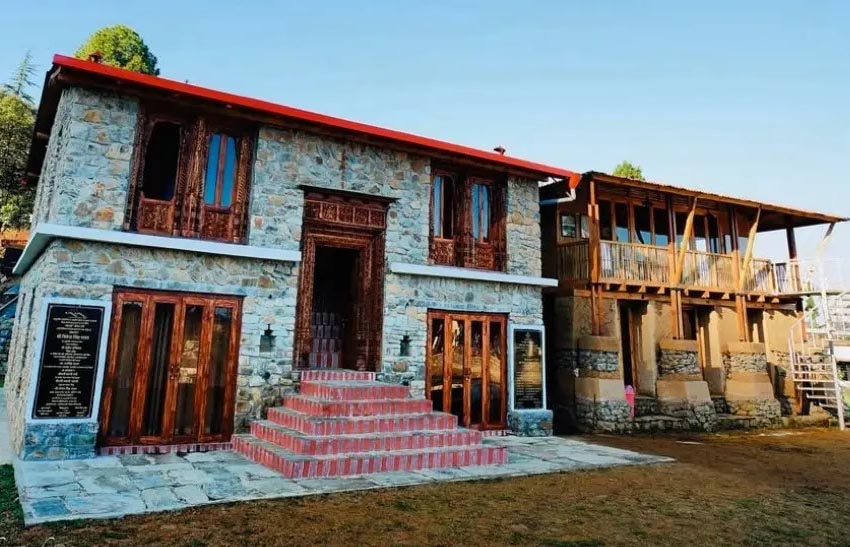
Tucked away in the peaceful mountains of Pauri Garhwal, Khirsu is one of Uttarakhand’s lesser-known hill destinations and an appealing choice for travellers who prefer quiet landscapes, mountain villages, forest walks and panoramic Himalayan views over crowded tourist centres. Situated at around 1,700 metres above sea level, Khirsu is surrounded by forests of oak, pine and deodar, along with apple orchards, terraced agricultural fields and small mountain settlements. On clear days, the landscape opens towards impressive Himalayan peaks, including Nanda Devi, Nanda Kot, Trishul and Panchachuli.
Unlike destinations such as Mussoorie or Nainital, Khirsu does not revolve around bustling markets, large commercial complexes or an extensive entertainment industry. Its appeal lies largely in its natural setting and slower pace of life. The sound of birds, mountain winds moving through the forests, distant Himalayan views and traditional village surroundings create an atmosphere particularly suited to travellers looking for relaxation and a closer connection with the landscape.
Where Is Khirsu?
Khirsu is located in Pauri Garhwal district of Uttarakhand. It lies roughly 19–20 kilometres from Pauri, making Pauri the principal nearby town and an important base for travellers exploring the area. The road journey between Pauri and Khirsu takes visitors through forested mountain scenery and provides an introduction to the landscape for which this part of Garhwal is known. Uttarakhand Tourism describes Khirsu as an offbeat hill destination surrounded by forests and orchards.
The geographical setting is one of the main reasons to visit. Khirsu sits within the middle Himalayan landscape, where cultivated slopes, wooded ridges and high mountain horizons come together. The settlement and surrounding villages retain a distinctly rural character, while the proximity to Pauri and Srinagar makes it possible to combine a Khirsu visit with a wider Garhwal itinerary.
The Natural Beauty of Khirsu
The most memorable aspect of Khirsu is its scenery. The destination is surrounded by dense forests containing oak, pine and deodar trees, while orchards and terraced fields add colour and texture to the hillsides. During spring and summer, greenery dominates the landscape, while winter can transform the area with snowfall and a distinctly alpine appearance. The Pauri Garhwal district administration notes Khirsu’s panoramic views of the Central Himalayas and its peaceful surroundings, including oak and deodar forests and apple orchards.
The Himalayan panorama is particularly attractive when the atmosphere is clear. From suitable viewpoints, travellers may see prominent peaks such as Nanda Devi, Trishul, Nanda Kot and Panchachuli. The exact visibility naturally depends on weather, season and atmospheric conditions, so visitors should not assume that every peak will be visible on every day. Uttarakhand Tourism specifically highlights these mountain views as one of Khirsu’s major attractions.
For photographers, the combination of foreground forests, village houses, agricultural terraces and distant snow-covered peaks offers considerable variety. Sunrise and early morning are particularly rewarding because the mountain air is generally clearer and the changing light can illuminate the Himalayan ridges.
Khirsu Park and Nature Experiences
The Khirsu Park is one of the accessible recreational spaces in the destination. It provides walking areas and a play zone and can be incorporated into a relaxed day of sightseeing. More broadly, the surrounding landscape is suitable for nature walks, photography and leisurely exploration. Uttarakhand Tourism also identifies camping and walking through the surrounding forests as activities associated with Khirsu.
Khirsu is not necessarily a destination where travellers need to fill every hour with scheduled activities. Walking slowly through the village, observing traditional agricultural practices, photographing flowers and forests, or simply sitting somewhere with a Himalayan view can be part of the experience. This makes the destination particularly attractive for people who find value in peaceful travel rather than conventional sightseeing.
The forests and orchards also provide opportunities for observing local birdlife. Travellers interested in nature photography should carry binoculars or a suitable camera lens and maintain a respectful distance from wildlife.
Ghandiyal Devta Temple
The Ghandiyal Devta Temple is one of the important religious attractions associated with Khirsu. Dedicated to Ghandiyal Devta, the temple is situated amid the mountain landscape and is also valued for its surrounding views. The temple represents the connection between religion, local traditions and the natural environment that is characteristic of Garhwal’s rural communities.
A visit here is not only about architecture. Like many smaller Himalayan shrines, the temple is part of the cultural landscape of the surrounding villages. Travellers should behave respectfully, particularly during religious ceremonies and festivals, and should follow local customs regarding photography and entry into sacred areas.
Devalgarh: History and Temple Heritage
Devalgarh is another worthwhile destination to include in a Khirsu-area itinerary. Located approximately 16 kilometres from Khirsu towards Srinagar, the ancient settlement is associated with an erstwhile ruler named Deval. Its temples, including the Lakshmi Narayan Temple, Gauri Devi Temple and Rajeshwari Temple, contribute to its historical and archaeological importance. Inscriptions associated with the temples are among the features that make Devalgarh significant from a heritage perspective.
Devalgarh is especially interesting for travellers who want their mountain holiday to include cultural exploration. Rather than treating Khirsu simply as a viewpoint destination, visitors can use the area as a gateway to the religious and historical heritage of Garhwal.
Jwalpa Devi Temple
The Jwalpa Devi Temple is another important religious site that can be incorporated into a broader Khirsu and Pauri Garhwal journey. The temple is situated on the Pauri–Kotdwar road and remains an active pilgrimage destination throughout the year. Navratri is an especially significant period, when religious activity and visitor numbers increase.
The temple provides an opportunity to understand the living religious traditions of the region. Travellers visiting during festival periods should expect larger crowds and should plan road travel and accommodation accordingly.
Exploring Pauri from Khirsu
Pauri is the natural companion destination for a trip to Khirsu. Located around 19–20 kilometres away, Pauri offers additional viewpoints, temples and opportunities for experiencing the Garhwal Himalayan landscape. The town itself stands at about 1,814 metres and is known for views towards Himalayan peaks including Nanda Devi and Trishul.
The Pauri area includes attractions such as Kandoliya Temple and Kyunkaleshwar Mahadev Temple, while viewpoints around the town provide opportunities for Himalayan photography. Uttarakhand Tourism has also promoted itineraries combining Pauri and Khirsu, describing the route as suitable for travellers interested in nature and religious experiences.
Combining the two destinations makes sense because Khirsu is better suited to a quiet nature-oriented stay, while Pauri provides a somewhat broader range of town-based facilities and sightseeing.
Things to Do in Khirsu
Nature walks are among the simplest and most rewarding activities in Khirsu. Trails through forests and around village areas allow visitors to appreciate the vegetation, mountain air and changing views. Uttarakhand Tourism also identifies cycling as an activity in the wider area, with a trail towards Ghurdauri offering forest scenery and Himalayan views.
Photography is another natural choice. Landscapes, village life, orchards, forests, temples and changing mountain light all provide subjects. Early morning is generally useful for mountain photography, while late afternoon can offer softer light over the hills.
Camping is possible around Khirsu, although visitors should use responsible, permitted camping arrangements rather than setting up wherever they choose. The Uttarakhand tourism planning documents have identified nature trails and basic tourism infrastructure as areas for development around Khirsu, reflecting the destination’s potential for low-impact nature tourism.
Cycling can appeal to experienced riders because of the combination of altitude, forest roads and mountain gradients. However, road conditions and weather should be considered carefully, and travellers should avoid treating mountain roads like flat-country cycling routes.
Local Culture and Village Life
One of Khirsu’s greatest attractions is its relatively peaceful village environment. The surrounding communities retain connections with traditional agriculture, orchards and mountain-based livelihoods. Terraced fields are an important visual element of the landscape, while locally grown produce contributes to the character of Garhwali cuisine.
Visitors staying in a homestay may have more opportunities to experience this aspect of Khirsu than travellers staying only in conventional accommodation. Uttarakhand’s Deen Dayal Upadhyaya Homestay scheme is intended to expand accommodation in less-developed tourist destinations while creating local employment and giving visitors opportunities to experience local culture and cuisine.
A respectful approach is important. Travellers should ask before photographing residents or entering private agricultural land and should avoid disturbing village activities.
Food in Khirsu
Food in Khirsu is generally more closely connected with traditional Garhwali cooking than with the extensive restaurant culture found in larger tourist towns. Depending on the accommodation, visitors may encounter locally prepared dishes using grains, vegetables, pulses and regional ingredients.
Garhwali cuisine commonly features ingredients such as mandua, or finger millet, and traditional preparations may include locally available seasonal vegetables and pulses. Uttarakhand Tourism’s Pauri–Khirsu itinerary specifically highlights a breakfast featuring hand-rolled mandua rotis and a yoghurt-based pumpkin preparation tempered with jhakia.
Travellers interested in regional food should consider staying at a local homestay and asking hosts about traditional meals. Availability can vary, so it is useful to communicate dietary preferences in advance.
Best Time to Visit Khirsu
Khirsu can be visited throughout much of the year, but the ideal season depends on the experience a traveller wants. Spring and summer are appealing for greenery, pleasant daytime temperatures, flowers and outdoor exploration. The forests and orchards become particularly attractive during the warmer months.
The monsoon season brings substantial greenery but can also bring rain, slippery roads, cloud cover and travel disruptions in Himalayan areas. Visitors travelling during the rainy period should monitor local weather and road conditions rather than relying solely on a fixed itinerary.
Autumn is often attractive for travellers hoping for clearer mountain views. After the monsoon, visibility can improve, making the Himalayan panorama especially impressive.
Winter offers a completely different experience. Khirsu can receive snowfall, and Uttarakhand Tourism notes that the destination becomes enveloped in snow during winter. Those visiting during this period should prepare for cold conditions and possible road-related delays.
How to Reach Khirsu
Khirsu is primarily a road destination. It is connected by motorable roads with Pauri and other major towns in Uttarakhand. From Pauri, the journey is relatively short, making it convenient to include Khirsu in a wider Pauri itinerary.
For air travellers, Jolly Grant Airport near Dehradun is the nearest major airport. Uttarakhand Tourism currently gives a distance of approximately 174 kilometres from Khirsu to the airport. Because Himalayan road distances and journey times depend heavily on the chosen route and road conditions, travellers should check current navigation and transport information before departure.
By rail, Kotdwar is the nearest railway station listed by Uttarakhand Tourism, at roughly 127 kilometres from Khirsu. From Kotdwar, the remaining journey is generally completed by road.
For visitors travelling from Delhi, a road journey is possible, although the route through the Himalayan foothills and mountains can take considerably longer than the distance might suggest. Travellers should avoid planning mountain journeys too tightly and should allow additional time for traffic, weather and road conditions.
Where to Stay
Accommodation in Khirsu is more modest and intimate than in major Uttarakhand resort destinations. Visitors can find hotels, guesthouses, tourist accommodation and homestays in and around the settlement. The Pauri Garhwal district administration has also noted the availability of tourist and forest rest-house accommodation in the area.
For travellers seeking a more immersive experience, a homestay can be particularly suitable. It may provide opportunities to interact with local hosts and sample regional food while supporting local tourism.
It is advisable to confirm facilities before travelling, particularly during winter or quieter periods. Travellers should check whether the property has heating, hot water, reliable electricity, parking and suitable road access. Mobile connectivity and internet availability can also vary in mountain areas.
How Many Days Are Enough for Khirsu?
A short overnight stay can provide a good introduction to Khirsu, especially when combined with Pauri. However, travellers who genuinely want to experience its peaceful character may prefer two nights. This allows enough time for forest walks, photography, village exploration and nearby temples without turning the visit into a rushed sightseeing schedule.
A two-day itinerary could begin with arrival from Pauri, followed by a relaxed exploration of Khirsu, the park and nearby forest areas. The following day could include Ghandiyal Devta Temple and a trip towards Devalgarh or another nearby attraction before returning towards Pauri or continuing to the next destination.
Travellers with more time can use Khirsu as part of a larger Garhwal circuit incorporating Pauri, Srinagar, Devprayag and other destinations according to their interests.
Responsible Tourism in Khirsu
Because Khirsu’s appeal depends heavily on its relatively peaceful natural environment, responsible tourism is particularly important. Visitors should avoid littering, minimise plastic waste, respect wildlife, avoid loud music in forests and rural areas, and use designated camping or accommodation facilities.
Water is a valuable resource in mountain communities, so travellers should avoid unnecessary consumption. Local businesses and homestays can also benefit when visitors purchase locally produced food, use local guides and choose locally operated accommodation.
Most importantly, travellers should remember that Khirsu is a living mountain community rather than simply a scenic backdrop. Respect for local customs, religious spaces, private property and village life helps preserve the character that makes the destination attractive.
Khirsu for Different Types of Travellers
Khirsu can appeal to families looking for a quieter mountain holiday, particularly because the destination offers open spaces, nature walks and a slower pace. Couples may appreciate its peaceful atmosphere and scenic surroundings, while photographers can spend considerable time capturing forests, villages and Himalayan horizons.
For solo travellers, Khirsu can provide an opportunity to disconnect from busy urban environments. Nature enthusiasts can explore forest trails, while cultural travellers can combine temples and historic sites with village experiences.
Adventure seekers should approach Khirsu differently from destinations known primarily for intense adventure sports. Its strengths are nature walks, cycling, camping and exploration rather than a large commercial adventure-sports industry.
Why Khirsu Deserves a Place on the Uttarakhand Travel Map
Khirsu represents a different side of Uttarakhand tourism. It is not primarily about crowded shopping streets, large resorts or a long list of commercial attractions. Instead, it offers a combination of forests, orchards, terraced fields, temples, village life and Himalayan views.
Its location near Pauri makes it relatively easy to incorporate into a wider Garhwal itinerary, while its quiet character gives travellers a reason to stay rather than simply pass through. Official tourism sources describe it as an offbeat destination with panoramic Himalayan views, forests and orchards, while the state’s tourism planning documents have identified opportunities for nature trails and improved basic infrastructure.
For travellers who want to wake up to mountain scenery, walk beneath oak and deodar trees, explore traditional temples, taste regional food and spend time away from the crowds, Khirsu offers a compelling Himalayan escape. Its greatest attraction is perhaps its simplicity: the mountains do not need elaborate entertainment to make an impression. In Khirsu, the forest, the village, the temples and the distant snow-covered peaks are themselves the experience.

