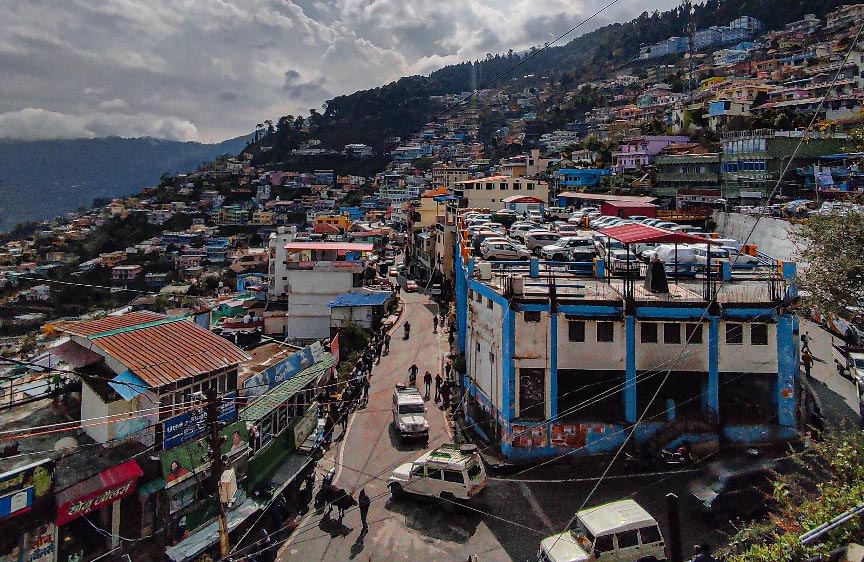
Pauri Garhwal is one of the most fascinating destinations in Uttarakhand for travellers who want to experience the Himalayas beyond the better-known tourist centres. Spread across forested mountains, deep valleys, river landscapes and traditional villages, the district combines Himalayan scenery with centuries of Garhwali history, religious traditions and rural culture. The headquarters at Pauri town provides an excellent introduction to this landscape, while destinations such as Khirsu, Kandoliya, Jwalpa Devi, Tarkeshwar Mahadev, Binsar Mahadev and numerous other locations reveal the district’s diverse character.
Unlike destinations that are primarily associated with a single attraction, Pauri Garhwal is better understood as a region to explore gradually. Its appeal lies in the combination of mountain views, quiet forests, temples, village life, walking trails, local food and cultural experiences. The official Uttarakhand tourism master plan also identifies a Kotdwar–Lansdowne–Pauri–Khirsu leisure circuit, reflecting the area’s potential for nature, spiritual and leisure tourism.
Where Is Pauri Garhwal?
Pauri Garhwal is a district in the Garhwal division of Uttarakhand. Pauri town, situated on a mountain ridge, serves as the district headquarters. The district encompasses a large and varied Himalayan landscape, with elevations changing considerably between valleys and higher mountain areas.
The geographical character of Pauri is one of its greatest attractions. Roads wind through forests of oak, pine, deodar and rhododendron, while mountain settlements appear on slopes surrounded by terraced agricultural fields. On clear days, several locations offer impressive views towards the snow-covered Himalayan ranges.
The region’s position also makes it useful as part of a larger Uttarakhand itinerary. Travellers can connect Pauri with Lansdowne, Kotdwar, Khirsu, Srinagar, Devprayag and other destinations depending on their route.
The Historical Story of Pauri Garhwal
Pauri’s history is closely connected with the broader history of the Garhwal Himalayas. According to the district administration, the Katyuri dynasty was an important early historical power in the region. Later, Garhwal was divided into numerous smaller principalities before the emergence of a more unified Garhwal kingdom.
In the late fifteenth century, Ajaypal consolidated several principalities and established the Garhwal kingdom. The capital subsequently shifted from Chandpur to Devalgarh and later to Srinagar. This historical legacy is still visible in the region through old temples, settlements and religious sites.
The area also experienced the Gorkha invasion in the early nineteenth century. Gorkha forces conquered Garhwal in 1804, and their control ended in 1815 when British forces defeated them. British administration subsequently developed in the eastern part of Garhwal, and Pauri eventually became the headquarters of a separate district administration. Modern administrative changes shaped the district further. Chamoli was separated from the former Garhwal district in 1960, while Garhwal division was established in 1969 with its headquarters at Pauri. Further changes occurred when parts of the district were transferred during the creation of Rudraprayag district.
This layered history gives Pauri a character that extends well beyond its scenery.
Pauri Town: The Heart of the District
Pauri town is a pleasant mountain settlement surrounded by forests and Himalayan landscapes. It is particularly appealing to travellers who prefer a quieter hill-town atmosphere rather than crowded commercial centres.
One of the defining features of Pauri is its panoramic setting. The town’s elevated position allows visitors to enjoy mountain and valley views, especially around sunrise and sunset. The surrounding forests also create opportunities for short walks and peaceful exploration.
Kandoliya sunset point is among the local places associated with enjoying the mountain scenery. Kandoliya itself is particularly significant because of its temple, forested surroundings and recreational spaces.
The town can serve as a base for exploring nearby temples, viewpoints and villages, while longer excursions can be made towards Khirsu, Jwalpa Devi and other parts of the district.
Kandoliya Temple and the Forests Around Pauri
Kandoliya Temple is dedicated to Kandolia Devta and is situated among oak and pine forests on Kandoliya Hill. The district administration describes the surrounding area as including a park and sports facilities, with views towards Pauri town and the Gangwarsyun valley.
The location is suitable for travellers who want to combine spirituality and nature. Rather than being simply a temple visit, the surrounding forest landscape makes Kandoliya a pleasant place for walking and spending time outdoors.
The area’s elevated position also makes it attractive to photographers. Mountain landscapes change dramatically with the season, weather and time of day, so the same viewpoint can look entirely different during a clear morning, cloudy afternoon or sunset.
Kyunkaleshwar Temple: Spirituality with Himalayan Views
Kyunkaleshwar Temple is another important religious landmark near Pauri. The district administration describes it as an ancient Shiva temple associated with the religious traditions of the region and attributes its establishment to the period of Adi Shankaracharya’s travels. The temple complex includes shrines associated with Shiva, Parvati, Ganesha and Kartikeya, along with other deities.
Its setting is particularly memorable. Visitors can look across the surrounding Himalayan landscape and the Alaknanda Valley from the temple area. The combination of architecture, worship and mountain scenery makes the site representative of Pauri’s broader tourism character.
Nag Dev Temple and Forest Walks
Nag Dev Temple is situated amid pine and rhododendron forests. The temple is dedicated to the serpent deity Nag Dev, an important figure in the religious traditions of the Himalayan region.
The approach involves walking through forested surroundings, making the journey part of the experience. The district administration notes that a viewpoint or observatory along the route provides extensive Himalayan views, while the temple itself is reached by a short trek from the road.
Nag Dev Temple, Pauri is one of the identifiable local attractions for visitors exploring this part of the town.
Khirsu: A Quiet Himalayan Retreat
Khirsu is one of the most attractive destinations in the wider Pauri Garhwal region for travellers searching for tranquillity. Uttarakhand Tourism describes Khirsu as an offbeat hill station surrounded by dense forests, orchards and mountain landscapes. It stands at approximately 1,700 metres and offers views towards major Himalayan peaks on clear days.
Khirsu is particularly suited to slow travel. Instead of filling a day with numerous attractions, visitors can walk through forests, explore orchards, observe traditional agricultural landscapes and simply enjoy the mountain environment.
The area also has opportunities for cycling, hiking and camping. The combination of pine, deodar, oak and rhododendron forests gives the surrounding landscape considerable ecological and visual diversity.
For accommodation, travellers can find smaller hotels, guesthouses and homestays in and around Pauri and Khirsu. One example in the wider Pauri area is HOTEL MOUNT PLEASANT, located near the Khirsu road.
Devalgarh and the Medieval Heritage
Devalgarh is another historically significant destination associated with the Pauri region. According to Uttarakhand Tourism, it was established by a ruler named Deval and later became an important historical settlement. The Lakshmi Narayan, Gauri Devi and Rajeshwari temples are among its notable attractions. Inscriptions associated with the temples contribute to its archaeological importance.
Devalgarh demonstrates how religious architecture and political history are intertwined throughout Garhwal. Travellers interested in heritage should therefore look beyond scenic viewpoints and explore these older settlements.
Jwalpa Devi Temple
Jwalpa Devi Temple is one of the important religious destinations in Pauri Garhwal. Situated on the Pauri–Kotdwar road beside the Nayar River, the temple is dedicated to Goddess Durga and attracts devotees throughout the year. It is particularly significant during Navratri.
The temple’s riverside setting adds to its appeal. Pilgrimage here is not only about visiting the shrine but also experiencing a traditional religious landscape shaped by river, mountains and local customs.
Basic accommodation facilities, including a tourist rest house and dharamshala, have been noted by the district administration.
Binsar Mahadev and Dudhatoli
For travellers interested in combining pilgrimage with mountain exploration, Binsar Mahadev is another fascinating destination. The temple is surrounded by birch, rhododendron and deodar forests and lies at a considerably higher elevation than Pauri town.
The area also provides access towards Dudhatoli, a high-altitude landscape associated with forests, meadows, flowers and mountain views. The district administration notes a trekking route from Binsar towards Dudhatoli and identifies the area with the legacy of freedom fighter Veer Chandra Singh Garhwali.
This makes the region especially interesting for people who want a combination of history, spirituality and trekking.
Tarkeshwar Mahadev
Tarkeshwar Mahadev is another prominent Shiva temple in the broader Pauri Garhwal landscape. It is surrounded by thick forests and is particularly appealing to travellers who enjoy religious sites located in secluded natural settings.
Such destinations illustrate an important characteristic of Garhwal’s tourism: temples are frequently integrated into forests and mountains rather than isolated from nature. Visiting them therefore becomes an opportunity to experience both the spiritual and ecological character of the region.
Nature, Wildlife and Outdoor Experiences
Pauri Garhwal is well suited to travellers who prefer outdoor activities that do not necessarily require extreme adventure. Forest walks, village walks, short hikes, cycling, photography, birdwatching and camping can all be incorporated into a trip.
The forests are especially beautiful during periods when rhododendrons bloom. Different elevations also produce noticeable changes in vegetation, scenery and climate. Oak and rhododendron forests, pine-covered slopes, deodar groves and agricultural terraces create a constantly changing landscape.
Khirsu is particularly suited to nature walks and cycling, with Uttarakhand Tourism highlighting trails through forests and countryside.
For visitors who want more demanding trekking experiences, the higher areas around Dudhatoli provide opportunities to explore more remote mountain terrain. However, trekking routes should be approached with appropriate preparation, local information and weather awareness.
Garhwali Culture and Village Life
A journey through Pauri Garhwal is incomplete without experiencing Garhwali culture. Traditional villages, terraced fields, local temples, seasonal festivals, folk music and regional cuisine all contribute to the identity of the region.
The mountainous geography has historically shaped everyday life. Terraced agriculture allows cultivation on steep slopes, while forests have traditionally provided resources for local communities. Village architecture, religious practices and seasonal celebrations reflect this close relationship with the Himalayan environment.
Visitors should approach village tourism respectfully. Photography, particularly of people and religious ceremonies, is best done after asking permission. Staying in locally operated homestays can also provide a more meaningful cultural experience while supporting rural livelihoods.
Local Food of Pauri Garhwal
Garhwali cuisine is generally simple, nutritious and strongly connected to locally available grains, pulses, vegetables and herbs. Traditional dishes may include preparations such as chainsoo, kafuli, jhangora ki kheer, aloo ke gutke, phaanu and mandua-based foods.
Food availability varies between villages, hotels and restaurants, so travellers should not expect every traditional dish everywhere. In Pauri town, visitors can find ordinary North Indian meals alongside snacks and café-style food.
For a locally grounded trip, however, trying regional dishes through a homestay or traditional eatery can be more rewarding than relying exclusively on standard restaurant menus.
Accommodation in Pauri
Accommodation ranges from conventional hotels and resorts to guesthouses, homestays and smaller properties. The choice largely depends on whether the visitor wants to stay in Pauri town, closer to Khirsu or in a quieter rural setting.
Hotel Shail Shikhar is one hotel option in Pauri, while Adara Farmstay represents the type of smaller homestay experience available in the area. Another option is Mumukshu Resort.
Travellers should check current availability, road conditions and facilities before finalising accommodation, particularly during winter or periods of heavy rainfall.
How to Reach Pauri Garhwal
Road travel is the most practical way to explore Pauri Garhwal because many attractions are scattered across mountainous terrain. Pauri is connected by road with important towns in Uttarakhand, while local roads connect it with destinations such as Khirsu and surrounding villages.
For travellers arriving by train, Kotdwar is an important rail connection for parts of the region. For air travellers, Jolly Grant Airport near Dehradun is the principal airport serving the wider Uttarakhand region. Uttarakhand Tourism lists Jolly Grant as the nearest airport to Khirsu, at approximately 174 km, and Kotdwar as the nearest railhead at approximately 127 km.
Because road distances in the mountains can take considerably longer than equivalent distances on plains, travel plans should be based on driving time rather than kilometres alone.
Best Time to Visit Pauri Garhwal
Pauri can be visited during much of the year, but the ideal season depends on the type of experience a traveller wants.
Spring is attractive for pleasant weather, flowering vegetation and fresh mountain landscapes. Summer provides relief from the heat of the plains and is suitable for sightseeing and walking. Monsoon transforms the mountains into an exceptionally green landscape, but rain can also create road disruptions and slippery trails.
Autumn is particularly appealing for clear Himalayan views. Winter brings cold weather and, at higher elevations, the possibility of snowfall. Khirsu, for example, can experience snow during winter according to Uttarakhand Tourism.
A Suggested Pauri Garhwal Travel Experience
A short trip can begin in Pauri town, with visits to Kandoliya Temple, Kyunkaleshwar Temple and Nag Dev Temple. A second day can be devoted to Khirsu and its surrounding forests, orchards and temples. Travellers with additional time can continue towards Devalgarh or Jwalpa Devi.
A longer itinerary can include Binsar Mahadev, Dudhatoli, Tarkeshwar Mahadev and other less-visited destinations. Pauri can also be incorporated into a broader Garhwal journey involving Lansdowne, Kotdwar, Devprayag, Srinagar and nearby Himalayan destinations.
The Uttarakhand tourism master plan specifically identifies a Kotdwar–Lansdowne–Pauri–Khirsu circuit, covering a mixture of leisure, nature, spiritual and cultural attractions.
Responsible Tourism in Pauri Garhwal
The relatively peaceful character of Pauri Garhwal is one of its greatest assets, and responsible tourism is important for preserving it. Visitors should avoid littering, minimise plastic use, respect temples and local customs, and avoid disturbing wildlife.
Mountain ecosystems can be fragile, particularly around forests, springs and high-altitude areas. Travellers should remain on established trails where possible and carry waste back rather than leaving it along roadsides or viewpoints.
Supporting locally owned accommodation, guides, restaurants and handicraft producers can also help tourism benefits reach mountain communities.
Final Thoughts
Pauri Garhwal is a destination for travellers who want to slow down and experience the Himalayas through many different dimensions. Its appeal does not depend on one spectacular landmark. Instead, it emerges from the cumulative experience of forest roads, distant snow peaks, ancient temples, quiet villages, terraced fields, local food and Garhwali traditions.
From the forested slopes of Khirsu to the religious atmosphere of Jwalpa Devi, from the panoramic surroundings of Kandoliya to the heritage of Devalgarh and the high mountain landscapes around Dudhatoli, Pauri offers a remarkably varied journey.
For those willing to explore beyond the conventional Uttarakhand tourist circuit, Pauri Garhwal provides an opportunity to experience a quieter side of the Himalayas—one where nature, history, spirituality and everyday mountain life remain closely connected.

