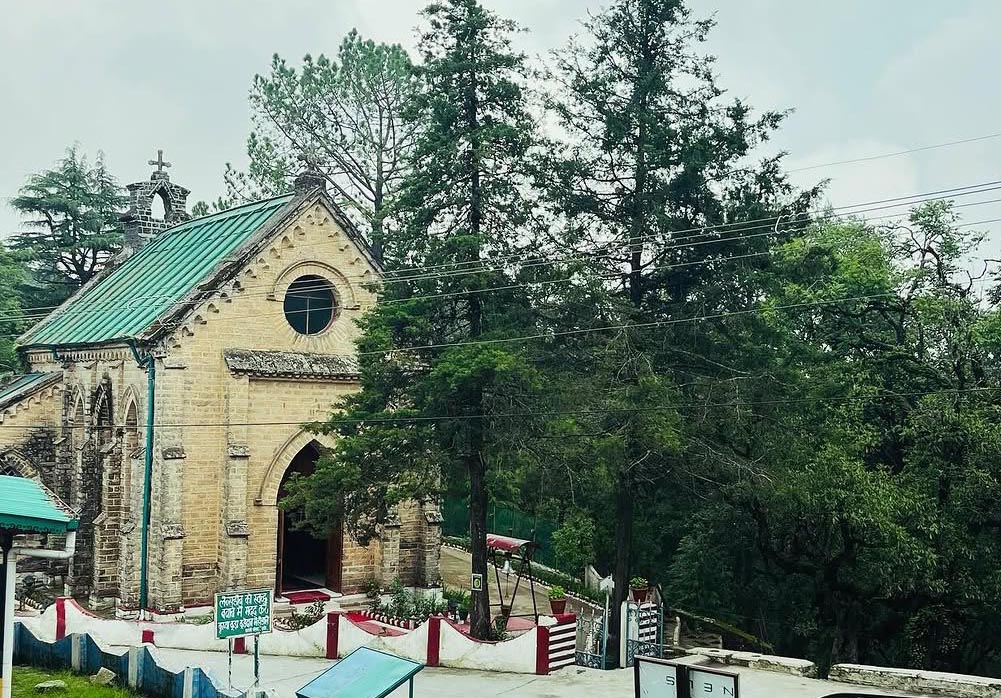
Nestled amid the peaceful pine-covered hills of Lansdowne, Uttarakhand, St. Mary’s Church is one of the most distinctive reminders of the region’s colonial-era history. Surrounded by green mountains, quiet roads and the fresh atmosphere of the Garhwal Himalayas, this historic church combines architecture, spirituality, military heritage and tourism in a remarkably compact setting. Located close to the famous Tip N Top viewpoint, St. Mary’s Church attracts visitors not only because of its religious associations but also because of its historical importance and picturesque surroundings.
Lansdowne itself is a hill station with a strong connection to the British Indian Army and the Garhwal Rifles. The town was established as a cantonment in 1887 and was originally known as Kaludanda, a name associated with the surrounding dark-coloured hills. The establishment of the military cantonment transformed the area into an important centre for troops stationed in the Garhwal region. St. Mary’s Church subsequently became part of this colonial and military landscape.
Today, the church has a somewhat different role from the one it originally served. Rather than functioning primarily as an active place of worship, the historic building has been preserved as a heritage attraction and museum associated with the Garhwal Rifles Regimental Centre. Its displays and audio-visual material help visitors understand the history of Lansdowne and the military traditions connected with the region.
A Glimpse into the History of St. Mary’s Church
St. Mary’s Church was constructed during the British period when Lansdowne was developing as an important military cantonment. Construction began in 1895, with Colonel A. H. B. Hume of the Royal Engineers associated with its design and construction. Sources differ slightly in describing the precise architectural terminology used for the building, but it is generally presented as a Gothic or Victorian-era church reflecting the architectural traditions of British India.
The church was created at a time when British military cantonments commonly included religious buildings to serve the spiritual needs of personnel and their families. In Lansdowne, where the military presence shaped much of the town’s development, a church became an important part of the cantonment environment. St. Mary’s therefore represents more than a religious building; it is also a physical record of the social and institutional structure of the colonial period.
For decades, the church provided a place where members of the military community could gather for worship and religious occasions. The building would have witnessed ordinary services as well as important Christian celebrations such as Christmas and Easter. Its location in the hills also gave worshippers an environment dramatically different from the crowded urban centres of the plains.
The history of the church changed after Indian independence in 1947. According to tourism and heritage sources, regular preaching at the church eventually stopped, partly because of deterioration of the structure and changing circumstances. The building was subsequently taken under the care of the Garhwal Rifles Regimental Centre and transformed into a museum and heritage space.
This transition is significant because it allowed the historic structure to remain connected with Lansdowne’s military past rather than simply disappearing through neglect or redevelopment.
Colonial Architecture in a Himalayan Setting
One of the most appealing aspects of St. Mary’s Church is the contrast between its European-inspired architectural character and its Himalayan setting. Visitors approaching the building encounter a historic structure surrounded by hills and vegetation, creating a striking combination of architecture and natural scenery.
The church is associated with Gothic and Victorian architectural influences. Its exterior features characteristic arched openings and a prominent vertical form, while the overall design reflects the architectural vocabulary commonly used for churches constructed during the British period. The structure was built using stone, a practical material in the mountainous environment.
The building’s appearance becomes particularly atmospheric because of its location. Rather than standing in a densely populated urban neighbourhood, St. Mary’s sits amid the comparatively quiet landscape of Lansdowne. The surrounding mountains and forests provide a natural backdrop that enhances the old-world appearance of the church.
Inside, the church is noted for its stained-glass windows and religious architectural details. Coloured light entering through the windows contributes to the distinctive atmosphere of the interior. Historical descriptions also mention vaulted spaces, arches, decorative elements and carefully crafted religious features.
For visitors interested in architecture, the building provides an opportunity to observe how European ecclesiastical design was adapted to a Himalayan cantonment environment. It is especially interesting when considered alongside other colonial-era structures in Lansdowne.
St. Mary’s Church and the Garhwal Rifles
The history of St. Mary’s Church cannot easily be separated from the history of Lansdowne’s military establishment. The town has long been associated with the Garhwal Rifles, and military heritage remains one of the defining characteristics of the destination.
After the church ceased functioning as a regular place of worship, its association with the Garhwal Rifles helped ensure its continued preservation. The building eventually became a museum containing historical photographs, stories and audio-visual material relating to Lansdowne and the Garhwal Regiment.
This makes a visit to the church particularly valuable for travellers who want to understand the town beyond its reputation as a quiet hill station. Lansdowne is not simply a destination for mountain scenery. Its roads, cantonment buildings, churches, memorials and museums together form a historical landscape shaped by military activity.
The church therefore works as a bridge between several layers of history. It reflects the British colonial period, the development of Lansdowne as a military cantonment, the religious life of the troops stationed there, and the post-independence effort to preserve elements of that heritage.
The Museum and Audio-Visual Experience
One of the most interesting features of present-day St. Mary’s Church is its transformation into a heritage and museum space. Visitors can see historical photographs and material associated with the pre-independence period. An audio-visual presentation also introduces aspects of Lansdowne’s history and the story of the Garhwal Rifles.
The museum aspect gives the building a second life. Although visitors may initially approach the church expecting a traditional functioning church, the experience is more closely connected with heritage interpretation.
The photographs are particularly valuable because they provide visual connections to earlier generations of Lansdowne. Old military and town images can help visitors imagine how different the hill station looked during the colonial period.
For people interested in military history, the church can also complement visits to other military-related attractions in Lansdowne. Rather than viewing the church as an isolated monument, it is useful to consider it as one component of the town’s broader historical narrative.
Religious and Cultural Significance
Despite its transformation into a museum, St. Mary’s Church retains the character of a sacred building. Its original purpose as a place of Christian worship is evident in its architecture and religious details.
The name St. Mary refers to Mary, the mother of Jesus Christ, a figure of major importance in Christian tradition. The dedication gives the church its religious identity, while its surviving architectural elements preserve something of the spiritual atmosphere for which the building was originally intended.
At the same time, the church forms part of the wider multicultural and historical character of Uttarakhand. Lansdowne contains Hindu temples, Christian churches, military memorials and colonial-era structures within the same hill environment. The coexistence of these different forms of heritage illustrates the layered cultural history of the region.
A visit therefore does not need to be limited to religious interest. Architecture enthusiasts, photographers, history students, military-history enthusiasts and general tourists can all find different reasons to appreciate the site.
Location and Surroundings
St. Mary’s Church is situated near Tip N Top, one of Lansdowne’s best-known viewpoints. It is located on the Kotdwar–Pauri Road and is relatively close to Lansdowne’s central areas. Sources place it roughly 1.5 to 2.5 kilometres from different reference points in the town, depending on whether the distance is measured from the city centre, market or bus stand.
Its location makes it convenient to combine with other sightseeing activities. A visit to the church can easily be included in a Lansdowne itinerary involving Tip N Top, Bhulla Lake, St. John’s Church, military museums and other heritage attractions.
The surrounding landscape is one of the major reasons visitors remember the site. Lansdowne is known for its pine forests, mountain air and relatively peaceful atmosphere. Unlike heavily commercialised hill destinations, it retains much of the quiet character associated with a cantonment town. The relatively controlled development of the area has helped preserve its distinctive environment.
Tip N Top and Other Nearby Attractions
Tip N Top is one of the most natural places to combine with a visit to St. Mary’s Church. The viewpoint provides broad views across the surrounding Himalayan landscape and is known as a popular place for experiencing the scenery of Lansdowne. Its proximity to the church makes it particularly convenient for tourists.
St. John’s Church is another historical church in Lansdowne. Visiting both churches provides an interesting opportunity to compare different examples of colonial-era religious architecture in the same hill station.
Bhulla Lake is another popular attraction. The lake and surrounding landscaped area provide a more recreational experience, making it suitable for visitors travelling with families. The destination also contains other historical and military attractions, including museums associated with the Garhwal Rifles.
Tarkeshwar Mahadev Temple offers a completely different cultural experience. The ancient temple is associated with Lord Shiva and provides an example of the region’s Hindu religious heritage. Together, the churches, temple, viewpoints, lake and military landmarks demonstrate the variety of experiences available within and around Lansdowne.
How to Reach St. Mary’s Church
Lansdowne is primarily accessed by road. The nearest major railway connection is generally identified as Kotdwar, from where travellers can continue by road into the hills. Tourism sources place Kotdwar railway station at approximately 40–45 kilometres from Lansdowne, although the exact road distance can vary according to the route used. Jolly Grant Airport near Dehradun is the nearest major airport commonly cited for air travellers.
Once in Lansdowne, St. Mary’s Church can be reached by local road transport or by walking from nearby areas. Its proximity to Tip N Top makes it relatively easy to include in a sightseeing route.
Because Lansdowne is a hill destination, travellers should allow additional time for winding mountain roads. Weather can also affect travel conditions, particularly during the monsoon and winter seasons.
Best Time to Visit
St. Mary’s Church can be included in a Lansdowne visit throughout much of the year, but the broader experience depends heavily on weather. Spring and summer can provide pleasant conditions for sightseeing, while autumn is often attractive because of clearer mountain views.
The monsoon season brings greenery but can also bring heavy rainfall and slippery roads. Winter can be cold, and occasional fog or poor visibility may affect mountain views.
Travellers should also verify opening arrangements before visiting because access to historical attractions can vary. Published tourism sources have reported different opening schedules, including specific weekend timings and other daily schedules, so checking current local information is advisable before making a dedicated trip.
Photography and Visitor Experience
St. Mary’s Church is an appealing location for photography because of the combination of historic architecture and mountain scenery. The exterior offers opportunities to photograph stonework, arches, the church profile and surrounding vegetation.
Visitors should remember that this is a heritage and religious site rather than simply a photographic backdrop. Respectful behaviour is appropriate, particularly when entering the historic interior.
The quiet environment is another part of the attraction. The experience is generally less about spending several hours at one monument and more about appreciating the architecture, learning about the history and then continuing to other Lansdowne attractions.
A visit of around half an hour to an hour can be sufficient for many travellers, particularly when the church is incorporated into a wider sightseeing itinerary.
Why St. Mary’s Church Matters Today
The importance of St. Mary’s Church lies in its ability to preserve several aspects of Lansdowne’s past within one structure. Its stone walls represent the colonial period, its original religious purpose reflects the social life of the military cantonment, and its present museum function demonstrates how historic buildings can acquire new roles after their original functions change.
The church also contributes to the architectural identity of Lansdowne. In a region where natural scenery is often the principal attraction, historic buildings provide a different way to understand the landscape. They show how the town developed and why it looks different from many other Himalayan settlements.
Its preservation also demonstrates the value of adaptive heritage use. Instead of allowing an old building to disappear from public life, the transformation into a museum has enabled visitors to encounter the structure while learning about the history surrounding it.
Final Summary
St. Mary’s Church in Lansdowne is much more than an old church standing in the hills of Uttarakhand. Built in 1895 during the British period and associated with Colonel A. H. B. Hume of the Royal Engineers, it forms an important part of Lansdowne’s colonial and military heritage. Its Gothic or Victorian architectural character, stained-glass windows, historic interiors and mountain setting make it an unusual landmark in the Garhwal Himalayas.
Its transformation into a museum after the decline of regular church services gave the building a new historical purpose. Today, visitors can explore its connection with Lansdowne and the Garhwal Rifles through photographs and audio-visual material while appreciating the surviving architecture.
For travellers exploring Uttarakhand, the church offers a different perspective on the state’s heritage. It brings together religion, architecture, colonial history, military tradition and Himalayan scenery in one peaceful location. Combined with Tip N Top, St. John’s Church, Bhulla Lake, military museums and other attractions, St. Mary’s Church can become an important part of a broader Lansdowne heritage itinerary.
Ultimately, its greatest appeal lies in the way the past remains visible within the present. More than a century after its construction, St. Mary’s Church continues to stand among the forests and mountains of Lansdowne as a reminder of the many historical chapters that have shaped this quiet Uttarakhand hill station.
For a current visit, it is worth checking the latest local opening arrangements before travelling, since published sources currently show differing schedules.

