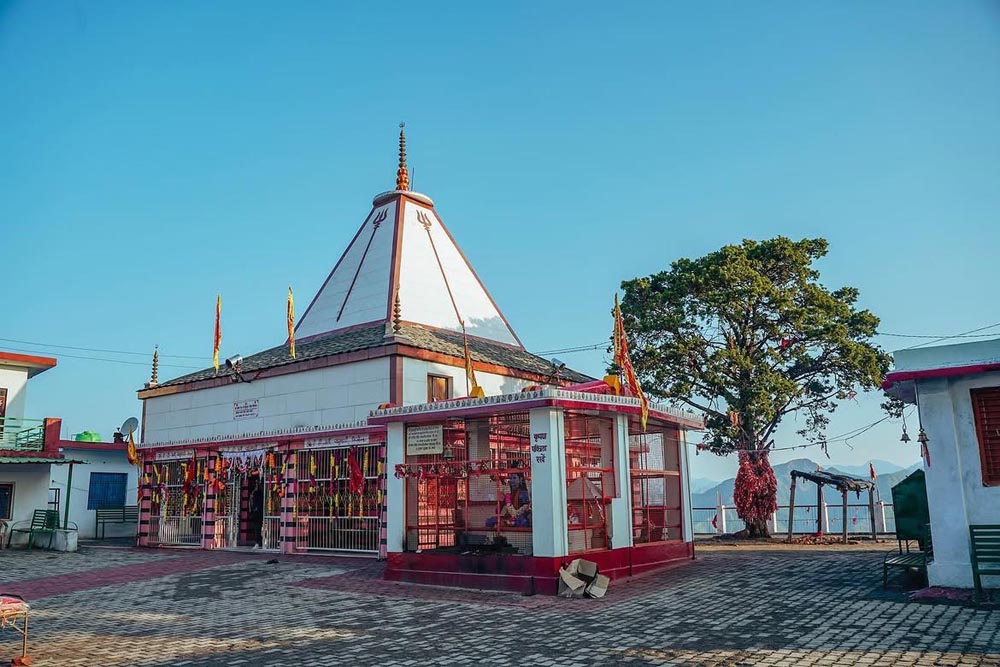
• High in the Garhwal Himalayas, overlooking the valleys around Rishikesh, Narendra Nagar and Tehri, stands the revered Kunjapuri Devi Temple, one of the important Shakti shrines of Uttarakhand. Perched on Kunjapuri Peak, the temple is not only a destination for devotees but also a remarkable viewpoint from which the Himalayan landscape unfolds in every direction. The combination of mythology, mountain scenery, pilgrimage, trekking and sunrise experiences makes Kunjapuri an especially distinctive destination in the Uttarakhand tourism circuit.

    The temple is dedicated to Goddess Durga and is traditionally associated with the Shakti tradition. Uttarakhand Tourism describes Kunjapuri as one of the 52 Shakti Peethas in the state and highlights its location on the Kunjapuri peak and its extensive Himalayan views.

    Where Is Kunjapuri Devi Temple?

    Kunjapuri Devi Temple is situated near Narendra Nagar in Tehri Garhwal district of Uttarakhand. The shrine occupies the summit of Kunjapuri Peak, placing it in a spectacular mountain environment between the Rishikesh area and the Tehri region.

    Its location is one of the temple’s greatest attractions. Rather than being enclosed within a crowded urban settlement, the shrine stands above the surrounding valleys, giving visitors an expansive Himalayan panorama. Uttarakhand Tourism specifically notes that the temple can be visited while travelling from Rishikesh towards Tehri and places it around 25 kilometres from Rishikesh on this route.

    The exact distance can vary depending on the starting point and route, so travellers should consider Kunjapuri as part of the broader Rishikesh–Narendra Nagar–Tehri landscape rather than relying on a single distance figure.

    The temple is represented in local business listings as Kunjapuri Shakti Peeth, with the shrine located in the Narendra Nagar area.

    Religious Significance of Kunjapuri Devi Temple

    Kunjapuri is fundamentally a pilgrimage destination. The temple is dedicated to Goddess Durga, who is worshipped here as a powerful manifestation of the Divine Mother. For devotees, the journey to the summit is itself an important part of the pilgrimage experience.

    The temple is traditionally connected with the Shakti Peetha tradition. Shakti Peethas are sacred places associated with Goddess Shakti and stories surrounding Sati and Lord Shiva. Different regional traditions and sources vary in how individual sites are classified and described. Uttarakhand Tourism identifies Kunjapuri among the state’s 52 Shakti Peethas, while the state’s tourism master plan also describes Kunjapuri as a Siddhapeeth associated with Jagadguru Shankaracharya.

    This combination of Shakta devotion and Himalayan spirituality gives the temple an important place in the religious geography of Garhwal.

    For many visitors, the appeal is not limited to receiving blessings at the shrine. The climb, the mountain air, the bells around the temple, the surrounding forests and the view from the summit together create a pilgrimage experience that feels closely connected to nature.

    The Legend Behind Kunjapuri

    Like many ancient Himalayan temples, Kunjapuri is surrounded by mythology and oral traditions. Its religious importance is commonly explained through the story of Sati, Shiva and the Shakti Peethas.

    According to the well-known Hindu tradition, Sati, the daughter of King Daksha, married Lord Shiva despite her father’s disapproval. When Daksha organised a great yajna and did not invite Shiva, Sati nevertheless attended. After being insulted in the gathering, she gave up her life. Shiva was devastated and carried Sati’s body while wandering across the universe.

    To restore cosmic balance, Lord Vishnu is traditionally said to have used his Sudarshan Chakra to divide Sati’s body. Various parts are believed to have fallen at different locations, creating sacred Shakti Peethas.

    Kunjapuri’s association with this tradition is one reason devotees regard the mountain as spiritually significant. However, accounts differ concerning precisely how the local shrine fits into the larger Shakti Peetha tradition. This variation is common in sacred geography, where mythology, regional traditions and temple histories have developed over centuries.

    The important point for visitors is that Kunjapuri’s identity is inseparable from the worship of the Divine Mother and the broader Shakti tradition of the Himalayas.

    Kunjapuri Peak and Its Himalayan Panorama

    One of the most extraordinary features of Kunjapuri Devi Temple is its elevated position. The temple sits on a mountain summit from which visitors can look across a vast section of the Garhwal landscape.

    Uttarakhand Tourism highlights views toward Himalayan ranges and peaks including Swargarohini, Gangotri, Bandarpunch and Chaukhamba, as well as views toward the Bhagirathi valley.

    The experience changes dramatically according to the weather and season. On a clear morning, distant snow-covered mountains may appear sharply defined against the sky. During the monsoon, clouds often move through the valleys and create an entirely different atmosphere. In autumn and winter, clearer skies can provide particularly impressive long-distance views.

    The surrounding landscape also includes layers of lower hills, forests and valleys. This makes Kunjapuri valuable not simply as a religious destination but as a mountain viewpoint in its own right.

    Sunrise at Kunjapuri Temple

    Sunrise is perhaps the most memorable experience associated with Kunjapuri.

    Many visitors deliberately begin their journey during the early hours so that they can reach the summit before dawn. As darkness gradually gives way to the first light, the silhouettes of the mountains become visible. The sky changes colour, and the valleys slowly emerge from the darkness.

    Watching sunrise from a sacred Himalayan summit adds another dimension to the experience. The temple bells, morning prayers and cool mountain air create an atmosphere that is very different from visiting a conventional tourist viewpoint.

    Photography enthusiasts are also attracted by this period of the day. The combination of mountain silhouettes, changing sky colours, temple architecture and distant Himalayan peaks can produce striking photographs.

    However, sunrise visits require planning. Travellers should allow sufficient time for the road journey and climb, carry warm clothing according to the season, and avoid rushing on unfamiliar mountain paths in darkness.

    The Trek to Kunjapuri Temple

    The journey to Kunjapuri can involve a climb of several hundred steps to reach the temple complex, making it accessible to many travellers while still providing a modest physical challenge.

    The route is particularly popular with people staying in Rishikesh and surrounding areas. It offers an opportunity to combine spiritual tourism with a short Himalayan hiking experience.

    The wider Uttarakhand tourism master plan has also recognised the potential of trekking infrastructure around Kunjapuri. It lists development of the pedestrian path to Ma Kunjapuri Temple among proposed tourism improvements and identifies Kunjapuri in the state’s broader trekking and adventure-development planning.

    The climb should nevertheless be approached at a comfortable pace. The altitude itself is not extreme compared with many Himalayan treks, but visitors unused to uphill walking may find the steps tiring.

    Kunjapuri as a Trekking and Adventure Destination

    Kunjapuri has gradually developed an identity beyond conventional temple tourism. Its proximity to Rishikesh makes it particularly convenient for travellers interested in combining spirituality, hiking and outdoor experiences.

    The Uttarakhand Tourism master plan has identified a trekking connection from Tapovan towards Kunjapuri among its proposed signature trekking projects.

    This is significant because the Rishikesh region is already a major base for adventure tourism. Visitors can combine a visit to Kunjapuri with activities such as hiking, rafting, yoga, meditation and exploration of the surrounding Himalayan foothills.

    For travellers who want a quieter alternative to a full-day high-altitude trek, Kunjapuri provides a relatively manageable introduction to mountain walking.

    Best Time to Visit Kunjapuri Devi Temple

    Kunjapuri can be visited throughout much of the year, but the ideal period depends on the visitor’s purpose.

    Spring is attractive because the surrounding hills become greener and the weather is generally pleasant. This can be a good period for walking and enjoying the landscape.

    Summer provides comparatively comfortable conditions in the mountains while the plains may be considerably warmer. Visitors from Rishikesh, Haridwar and Delhi often appreciate the cooler mountain environment.

    The monsoon brings lush vegetation and dramatic clouds, but mountain roads can become slippery and visibility may decrease. Heavy rainfall can also affect travel conditions, so visitors should check local weather and road conditions before setting out.

    Autumn is often particularly appealing for mountain views because the atmosphere can become clearer after the monsoon. Winter offers crisp weather and impressive views when skies are clear, although early mornings can be very cold.

    For a sunrise visit, warm clothing is advisable even during seasons when daytime temperatures are comfortable.

    How to Reach Kunjapuri Devi Temple

    By Road

    Road travel is the most practical way to reach the Kunjapuri area. Rishikesh serves as one of the principal gateways for travellers visiting the temple. Uttarakhand Tourism incorporates Kunjapuri into a Rishikesh-to-Tehri itinerary and places the temple approximately 25 kilometres from Rishikesh along the route towards Narendra Nagar and Tehri.

    Visitors can travel by private vehicle, taxi or other local transport depending on availability. Because this is a Himalayan road journey, travel times can vary considerably with traffic, weather and road conditions.

    By Rail

    Rishikesh is the principal nearby railway gateway commonly used by travellers. From Rishikesh, visitors can continue by road towards Narendra Nagar and Kunjapuri.

    The railway journey can therefore be combined with a road trip through the foothills of the Garhwal Himalayas.

    By Air

    The nearest major airport serving the Rishikesh–Dehradun region is Jolly Grant Airport near Dehradun. From the airport, visitors need to continue by road.

    Travellers arriving by air should allow additional time for the mountain journey rather than treating the temple as a quick airport-side excursion.

    Temple Visit and Spiritual Experience

    Kunjapuri is a functioning place of worship rather than simply a sightseeing attraction. Visitors should therefore approach the temple with appropriate respect for local religious customs.

    The central shrine is the focus of worship, while the open surroundings allow visitors to pause and observe the landscape. Devotees may participate in prayers and offerings according to the temple’s prevailing customs.

    The atmosphere can be particularly peaceful outside busy periods. Early morning is often quieter, although sunrise is also a popular time, so visitors should not necessarily expect complete solitude.

    Photography may be enjoyable around the surrounding viewpoint, but visitors should be considerate inside sacred areas and follow any instructions issued by temple authorities.

    Kunjapuri Navratri and Religious Festivals

    Festivals associated with Goddess Durga and the Shakti tradition bring special significance to the temple. Navratri is particularly important, as devotees across northern India worship different manifestations of the Divine Mother during these days.

    During major religious occasions, the temple atmosphere can become much more vibrant, with increased numbers of pilgrims, devotional activity and offerings.

    Anyone specifically interested in attending a festival should check the current local calendar before travelling because dates for Hindu festivals change annually according to the lunar calendar.

    Festival visits can offer a deeper cultural experience, but they may also mean larger crowds and more limited parking or accommodation availability.

    Nearby Attractions

    One of the major advantages of visiting Kunjapuri is its proximity to several important destinations in the Rishikesh and Tehri regions.

    Rishikesh can easily be incorporated into the same journey. The city is known for its temples, ashrams, yoga traditions and the Ganga. Uttarakhand Tourism also identifies Rishikesh as an important gateway to Himalayan trekking and adventure activities.

    Narendra Nagar is another important stop in the region and provides a useful connection between the plains and the higher Garhwal landscape.

    Tehri and New Tehri can also be included in a longer itinerary. Tehri Lake, in particular, has become an important destination for water-based adventure activities. Uttarakhand Tourism’s Rishikesh–Tehri itinerary combines Kunjapuri with Tehri Lake, demonstrating how naturally the destinations fit into a multi-day trip.

    Visitors can also explore other spiritual and natural attractions around Rishikesh, making Kunjapuri suitable as either a half-day excursion or part of a longer Uttarakhand journey.

    Accommodation Around Kunjapuri

    There are accommodation options in and around Rishikesh, Narendra Nagar and the wider Tehri region. Rishikesh provides the greatest variety, ranging from budget guesthouses and hostels to resorts, ashrams and higher-end properties.

    Travellers who want to visit Kunjapuri for sunrise may find it more convenient to stay closer to Rishikesh or Narendra Nagar rather than travelling from a much farther destination in the early morning.

    Those planning a longer trip towards Tehri can instead incorporate the temple into a multi-day itinerary.

    Because accommodation availability changes seasonally, especially during holidays and festival periods, advance planning is sensible.

    Food and Local Travel Considerations

    Kunjapuri itself is primarily a pilgrimage destination, so travellers should not approach it expecting the extensive restaurant infrastructure found in Rishikesh.

    It is sensible to carry drinking water and some basic refreshments, particularly when visiting early in the morning or undertaking the climb. Rishikesh and Narendra Nagar are better places to arrange a full meal before or after the visit.

    Visitors should also remember that mountain environments require responsible waste management. Plastic bottles, food packaging and other waste should never be left along the steps, paths or forested areas.

    What Makes Kunjapuri Different?

    Kunjapuri’s greatest strength is the way several aspects of Uttarakhand come together in one location. It is simultaneously a Hindu pilgrimage centre, a mountain temple, a viewpoint, a sunrise destination and a trekking location.

    Many Himalayan temples require long and demanding journeys into remote valleys. Kunjapuri, by contrast, can be incorporated relatively easily into a Rishikesh or Tehri itinerary. This accessibility makes it suitable for travellers who have limited time but still want a meaningful mountain experience.

    The view is equally important. The temple does not merely sit beside the mountains; it occupies a position from which the surrounding landscape becomes part of the experience.

    Responsible Tourism at Kunjapuri

    As visitor numbers increase across Uttarakhand, responsible tourism is increasingly important. The state’s tourism planning documents themselves discuss improvements to trekking infrastructure, signage, facilities and visitor management in trekking areas.

    Visitors can contribute by avoiding litter, carrying reusable water bottles, respecting temple customs, staying on established paths and avoiding unnecessary disturbance of vegetation and wildlife.

    The religious character of the destination should also be respected. Loud behaviour, inappropriate clothing inside the shrine, photography where prohibited and careless disposal of offerings can negatively affect both worshippers and the environment.

    Supporting local drivers, guides, small businesses and accommodation providers can also help distribute tourism benefits within the region.

    A Complete Kunjapuri Travel Experience

    A thoughtfully planned Kunjapuri visit can begin before sunrise in Rishikesh. Travellers can leave early, reach the mountain area and make their way towards the temple before dawn. After the climb, the first light gradually reveals the surrounding hills and distant Himalayan ranges.

    Following prayers and time at the shrine, visitors can explore the viewpoint and enjoy breakfast or refreshments after descending. The journey can then continue towards Narendra Nagar or Tehri, or travellers can return to Rishikesh for an afternoon exploring the Ganga, temples and ashrams.

    For those with more time, Kunjapuri can become one part of a larger Garhwal itinerary that includes Rishikesh, Tehri Lake and other destinations in the region.

    Final Thoughts

    Kunjapuri Devi Temple represents one of the distinctive ways in which spirituality and landscape are intertwined in Uttarakhand. Its significance comes from its association with Goddess Durga and the Shakti tradition, while its mountain setting gives the pilgrimage an unforgettable natural dimension.

    The temple’s position above the valleys, the distant Himalayan views, the sunrise experience and the opportunity for a short mountain climb make it appealing to both pilgrims and travellers. Official Uttarakhand tourism material specifically highlights Kunjapuri’s religious importance and its panoramic views towards major Himalayan ranges, while tourism planning documents recognise its potential as a trekking and pilgrimage destination.

    For anyone exploring the Rishikesh–Narendra Nagar–Tehri region, Kunjapuri offers more than a temple visit. It is an opportunity to experience a quieter side of the Garhwal Himalayas, where prayer, mountain scenery, physical effort and the changing colours of the Himalayan sky come together at a sacred summit.
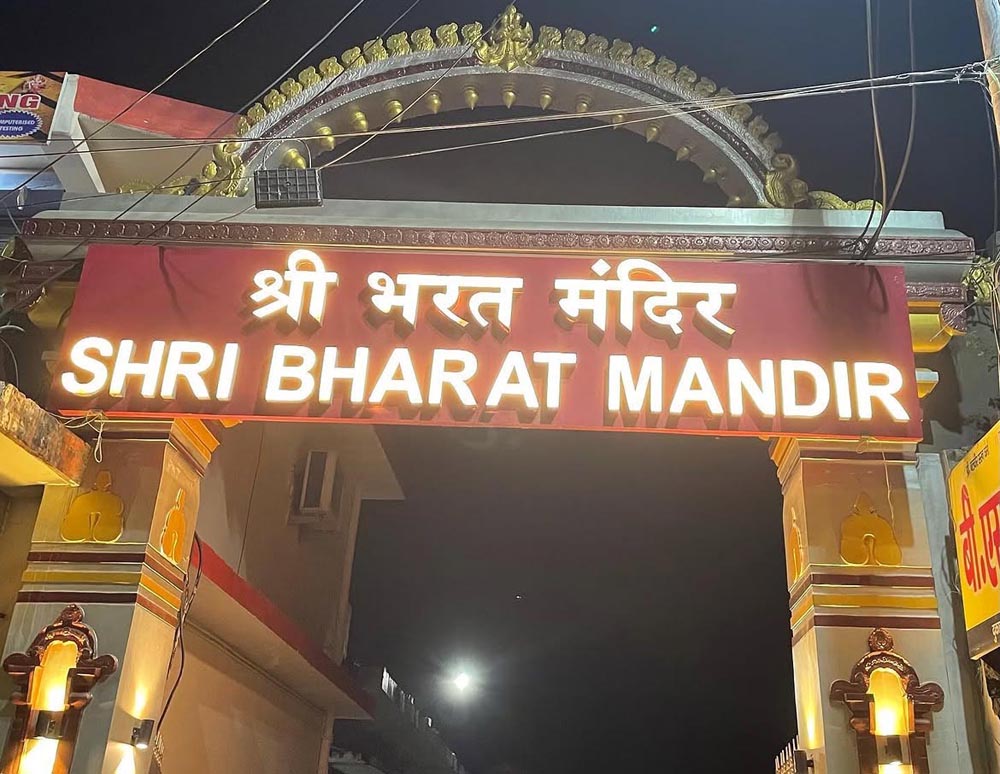
  • Nestled in the heart of Rishikesh in Uttarakhand, Bharat Mandir is one of the city’s most revered and historically significant temples. While Rishikesh is internationally known for yoga, meditation, ashrams and the sacred Ganga, Bharat Mandir represents another important dimension of the town’s identity: its ancient Vaishnavite and pilgrimage traditions. Located near Triveni Ghat and surrounded by the busy streets of central Rishikesh, the temple offers a remarkable contrast between the activity of the modern city and the atmosphere of an old Hindu shrine.

    Dedicated to Lord Vishnu in the form of Hrishikesh Narayan, Bharat Mandir is traditionally associated with the penance of the sage Raibhya Rishi. The temple’s own historical and religious tradition connects the site with the Skanda Purana’s Kedarkhand, while Uttarakhand Tourism describes Bharat Mandir as one of the oldest shrines of Rishikesh.

    For pilgrims, the temple is a place of worship and devotion. For history enthusiasts, it provides an opportunity to explore the religious heritage of one of Uttarakhand’s oldest pilgrimage centres. Its architecture, ancient sculptures, archaeological museum, festivals and legends make it an important destination for anyone interested in understanding the deeper cultural character of Rishikesh.

    The Historical Importance of Bharat Mandir

    Bharat Mandir is commonly described as one of the oldest temples in Rishikesh. Its history is closely connected with the traditional religious identity of the town itself. According to the temple’s official account, the glory of the shrine is described in the Kedarkhand section of the Skanda Purana, particularly chapters 115 to 120. The temple tradition identifies Lord Vishnu at this sacred location as Hrishikesh Narayan.

    The temple’s history also has an important association with Adi Shankaracharya. According to the temple’s tradition, the idol of Hrishikesh Narayan was reinstalled by Adi Shankaracharya around 789 AD on the auspicious occasion of Basant Panchami. The annual Basant Panchami celebrations continue to commemorate this association. It is important to distinguish between traditional religious accounts and archaeological or historical evidence when discussing such an old shrine. The temple’s religious traditions extend far into antiquity, while archaeological material discovered at the site provides evidence of activity spanning several centuries. The temple museum preserves objects that the temple identifies as dating from approximately the third to the fourteenth centuries AD. The structure visible today has also undergone reconstruction and renovation over time. According to the temple’s official history, Maharaja Yashwant Singh Malvendra Bahadur of Nabha rebuilt the outer structure in 1832 AD. This combination of ancient religious traditions and later architectural reconstruction explains why Bharat Mandir should be viewed not simply as a single-period monument, but as a living site whose history developed over many centuries.

    The Legend of Raibhya Rishi and Hrishikesh Narayan

    The spiritual significance of Bharat Mandir is deeply connected with the story of Raibhya Rishi. According to temple tradition, the sage performed intense penance at this location. Pleased by his devotion, Lord Vishnu appeared before him and promised to remain at the site as Hrishikesh Narayan. The tradition further associates the name “Hrishikesh” with this divine presence.

    This legend gives the temple a special place within the religious geography of Rishikesh. Rather than being regarded merely as a historical building, Bharat Mandir is understood by devotees as a sacred location where divine presence was revealed through the austerities of a great sage.

    The temple’s own account also connects the site with Pundit Som Sharma and describes the sacred importance of bathing in the Ganga at Mayakund before seeking the darshan of Hrishikesh Narayan. These traditions help explain the close relationship between the temple, the Ganga and the wider pilgrimage culture of Rishikesh.

    The Main Deity: Lord Hrishikesh Narayan

    The principal deity of Bharat Mandir is Lord Vishnu, worshipped here as Hrishikesh Narayan or Bharat Bhagwan. One of the temple’s most distinctive features is the idol itself. It is carved from a single piece of black Shaligram stone and represents the four-armed form of Lord Vishnu. The temple states that the approximately five-foot-high idol is made from one piece of black Shaligram stone.

    Shaligram stones have a particularly important place in Vaishnavite worship. The black stone gives the principal image a distinctive appearance and reinforces the temple’s association with Vishnu worship.

    The temple’s official account also notes a traditional connection between the Shaligram stone used for the Hrishikesh Narayan image and the stone associated with the idols of Lord Tirupati and Lord Badrinath. Such traditions further strengthen the temple’s connection with the broader network of important Vishnu pilgrimage sites in northern India.

    Alongside the principal deity is an image of Lord Varaha, another manifestation of Lord Vishnu. Visitors therefore encounter several layers of Vaishnavite symbolism within the relatively compact temple complex.

    Architecture and Unique Features

    Although Bharat Mandir has a relatively modest appearance compared with some of India’s enormous temple complexes, its architectural details are fascinating. The temple was built using large stones, and according to the temple’s official information, some of its walls are approximately seven to eight feet thick.

    One of the most remarkable structural claims concerns the top of the temple’s dome. The temple states that a single piece of rock weighing approximately 125 tonnes forms the top of the dome. The main temple has sixteen corners, while the outer structure incorporates nine domes arranged in groups of three.

    The architecture therefore reflects not only religious symbolism but also the engineering traditions of temple construction. The use of enormous stone elements demonstrates the scale and durability of traditional building techniques.

    The present exterior also reflects its later reconstruction. The rebuilding attributed to Maharaja Yashwant Singh Malvendra Bahadur in 1832 means that visitors should not expect every visible component of the temple to date from the earliest period associated with the shrine. Instead, the complex represents layers of construction, preservation and renovation.

    Archaeological Heritage and the Temple Museum

    One of the most interesting aspects of Bharat Mandir is its archaeological dimension. Excavations around the temple have produced pottery, ornamental bricks, sculptures and other objects. These materials are preserved in the temple museum. According to the temple’s museum information, the objects were registered and certified by the Department of Archaeology and are broadly dated from the third to the fourteenth century AD.

    The museum includes sculptures of Yakshas, Yakshinis and a four-armed Vishnu, among other artefacts. These objects provide a valuable window into the changing artistic and religious environment of the region over many centuries.

    For visitors interested in history, the museum adds an important dimension to the temple experience. Bharat Mandir is therefore not only a place where religious traditions are preserved through rituals; it is also a site where physical archaeological remains help illuminate the area’s past.

    The Buddha Connection

    Another intriguing feature associated with Bharat Mandir is the presence of a Buddha image discovered during excavation. Incredible India reports that archaeological excavations uncovered a Buddha statue and other artefacts, with the Buddha image now kept beneath an old tree near the temple.

    The discovery has contributed to discussions about the area’s complex religious history. Some accounts associate the site with a Buddhist period during the reign of Emperor Ashoka, although such historical interpretations should be distinguished from the temple’s traditional narratives.

    The coexistence of Hindu religious traditions, archaeological Buddhist material and other ancient sculptures illustrates the long cultural history of the wider Rishikesh region. It also makes Bharat Mandir particularly interesting for visitors who want to explore India’s layered religious heritage rather than viewing the site only through one historical period.

    The Sacred Tree and Local Traditions

    Near the temple is another distinctive feature: an old tree traditionally described as a combination of banyan, peepal and bel trees whose roots have become intertwined. According to Incredible India, devotees associate these three trees with the Hindu Trinity of Brahma, Vishnu and Shiva.

    Trees have traditionally held an important place in Indian sacred landscapes, and this particular tree adds another symbolic element to the Bharat Mandir complex. Its presence demonstrates how worship at an ancient temple can extend beyond the principal shrine to include natural elements, legends and spaces of contemplation.

    Basant Panchami at Bharat Mandir

    Basant Panchami is one of the most important annual occasions at Bharat Mandir. The festival marks the arrival of spring and has a special connection with the temple because tradition associates the reinstallation of the deity by Adi Shankaracharya with Basant Panchami.

    During the festival, the Shaligram image of Lord Hrishikesh Narayan is taken from the temple for a ceremonial bath at Mayakund. It is subsequently carried in a procession through Rishikesh before being brought back to the temple. This creates a vibrant combination of religious ceremony, procession and community participation.

    For travellers interested in experiencing Rishikesh’s living traditions rather than simply visiting monuments, festival periods can provide a particularly memorable insight into the temple’s cultural importance. Visitors should nevertheless expect larger crowds and should follow local instructions regarding access and photography.

    Akshaya Tritiya and the 108 Parikramas

    Another significant observance associated with Bharat Mandir is Akshaya Tritiya. According to the temple’s tradition, devotees who complete 108 circumambulations, or parikramas, of the temple on this auspicious day are believed to receive spiritual merit and fulfillment of their wishes. The tradition also associates this practice with the spiritual merit of visiting Badrinarayan.

    The practice demonstrates how pilgrimage at Bharat Mandir involves more than simply entering the shrine and offering prayers. Circumambulation, bathing, processions and darshan form part of a larger ritual culture in which physical movement through sacred space is itself considered spiritually meaningful.

    Bharat Mandir and the Cultural Life of Rishikesh

    Bharat Mandir occupies an important position in the cultural geography of Rishikesh. The town is widely known for yoga and meditation and attracts pilgrims, spiritual seekers and international visitors throughout the year. Uttarakhand Tourism describes Rishikesh as a major pilgrimage and spiritual destination situated along the Ganga and identifies Bharat Mandir as one of its oldest shrines.

    The temple is located in the central part of the city, near the main market and Triveni Ghat. This means that visiting Bharat Mandir can easily become part of a broader Rishikesh heritage walk.

    A visitor can combine a temple visit with time at Triveni Ghat, where pilgrims traditionally bathe in the Ganga and attend the famous evening Ganga Aarti. Other attractions around Rishikesh include ashrams, yoga centres and historic spiritual institutions.

    Bharat Mandir Sanskrit and Educational Institutions

    The cultural contribution of the Bharat Mandir complex extends beyond worship. The temple’s official website records the establishment of Shri Bharat Sanskrit Mahavidyalaya in 1921, with the objective of promoting Vedic culture and Sanskrit education. The complex has also been associated with educational institutions serving the local community.

    This educational role is significant because it shows how the temple has functioned as more than a place of pilgrimage. Traditional Indian temples historically often served as centres of learning, cultural transmission and community activity, and Bharat Mandir continues to reflect aspects of this wider role.

    Location of Bharat Mandir

    Bharat Mandir is situated at Jhanda Chowk, Main Bazaar, Rishikesh, Uttarakhand – 249201, in the centre of the city. The temple’s official website provides this address and contact information.

    Its central location makes it relatively convenient for visitors staying in Rishikesh. It is also close to Triveni Ghat, making it practical to combine the temple with other major attractions in the city centre.

    The temple is approximately a short local journey from Rishikesh Railway Station and the bus stand, although actual travel time can vary depending on traffic and local road conditions.

    Temple Timings

    The Government of India’s Incredible India tourism portal currently lists Bharat Mandir’s visiting hours as 5:00 AM to 12:00 PM and 4:00 PM to 9:00 PM.

    Because temple schedules can change during festivals, special ceremonies and religious occasions, travellers should verify the current timings before making a dedicated visit. The official temple website is the most appropriate source for checking current information.

    Visitors should also remember that Bharat Mandir is an active place of worship rather than simply a tourist monument. Modest clothing, respectful behaviour and adherence to temple instructions are appropriate.

    Best Time to Visit Bharat Mandir

    Rishikesh can be visited throughout much of the year, but the most comfortable period for exploring temples and outdoor attractions is generally during the cooler months. October through March is particularly suitable for travellers who want to combine Bharat Mandir with walking tours, riverside visits and other attractions.

    The monsoon months bring heavier rainfall to Uttarakhand, which can affect outdoor sightseeing and travel conditions. Summer can be warmer, although mornings and evenings can still be suitable for temple visits.

    Those specifically interested in religious celebrations may wish to plan around Basant Panchami or Akshaya Tritiya. However, festival visits require greater flexibility because crowds, processions and ceremonial activities can alter normal access arrangements.

    Places to Visit Near Bharat Mandir

    Bharat Mandir’s central location allows travellers to explore several important Rishikesh attractions in the same outing. Triveni Ghat is one of the closest major landmarks and is particularly well known for its evening Ganga Aarti.

    Visitors can also explore the city’s markets and traditional neighbourhoods around the temple. Those with more time can travel toward the ashram areas of Rishikesh, including the famous spiritual centres along the Ganga.

    For adventure-oriented travellers, Shivpuri is associated with white-water rafting, while Rajaji National Park provides opportunities to experience the region’s Himalayan foothill environment. Incredible India highlights both as attractions that can complement a visit to Bharat Mandir and Rishikesh.

    Why Bharat Mandir Matters to Rishikesh

    The importance of Bharat Mandir lies in the way several dimensions of Rishikesh come together within one complex. It is simultaneously an ancient Hindu shrine, a centre of Vaishnavite worship, a site associated with the traditions of Adi Shankaracharya, an archaeological location, a place connected with Sanskrit education and a continuing centre of community religious life.

    Its significance cannot be understood only by looking at the temple’s architecture. The legends of Raibhya Rishi, the worship of Hrishikesh Narayan, the Shaligram idol, the Basant Panchami procession, the Akshaya Tritiya traditions and the archaeological discoveries collectively create the identity of the shrine.

    For travellers, Bharat Mandir also provides a different perspective on Rishikesh. While the city’s modern international reputation is strongly connected with yoga, meditation and adventure tourism, Bharat Mandir points towards a much older pilgrimage tradition rooted in Hindu sacred literature and the spiritual geography of the Ganga.

    Final Summary

    Bharat Mandir is one of the most important heritage and pilgrimage sites to explore in Rishikesh, Uttarakhand. Its ancient religious traditions, association with Lord Hrishikesh Narayan, distinctive Shaligram idol, impressive stone construction, archaeological museum and annual festivals make it considerably more than an ordinary temple visit.

    The temple’s story stretches between mythology, religious tradition, archaeology and living culture. Traditional accounts connect the sacred site with Raibhya Rishi and Lord Vishnu, while historical traditions associate the shrine with Adi Shankaracharya. Later reconstruction and centuries of continued worship have helped preserve the temple as part of Rishikesh’s evolving cultural landscape.

    A visit to Bharat Mandir is therefore an opportunity to look beyond the contemporary image of Rishikesh and discover one of the ancient foundations of its identity. For pilgrims, it is a place of devotion and darshan; for history lovers, it offers archaeological and architectural interest; and for travellers exploring Uttarakhand’s cultural heritage, it provides an intimate connection with the spiritual traditions that have shaped Rishikesh for centuries.

  • Nestled in the forested hills near Rishikesh, Garud Chatti Waterfall is one of the scenic natural attractions of Uttarakhand that combines a short adventure with the peaceful atmosphere of the Himalayan foothills. Located along the Neelkanth Road, the waterfall is surrounded by greenery and rocky terrain, making it a refreshing escape from the busy streets of Rishikesh. Its relatively short approach trek also makes it accessible to visitors who want to experience a little hiking without committing to a demanding Himalayan expedition.

    Garud Chatti is particularly attractive during and after the monsoon, when the seasonal water flow gives the cascade a more dramatic appearance and the surrounding vegetation becomes intensely green. The waterfall is reached by a forest trail beginning near the Garud Temple, and the walk itself forms an important part of the experience. Depending on the route and starting point, published travel guides describe the approach as roughly 1–1.5 km from the temple area, while some visitors begin walking from farther away near Lakshman Jhula.

    Where Is Garud Chatti Waterfall?

    Garud Chatti Waterfall is situated near Rishikesh on the road toward Neelkanth Mahadev Temple. It is generally described as being around 4 km from Lakshman Jhula and approximately 9 km from Rishikesh’s main railway-station/central-town area, although the exact distance varies according to the point from which the journey is measured.

    The waterfall lies in a forested landscape characteristic of the lower Himalayan foothills. The surroundings are considerably quieter than central Rishikesh, with rocky slopes, trees, streams and mountain vegetation creating a natural setting. The waterfall’s proximity to the Neelkanth Road also makes it possible to combine a visit with other attractions in the area.

    Garud Chatti Waterfall is currently listed as a tourist attraction and nature preserve in the Patna area of Uttarakhand. Its location is particularly convenient for travelers staying in Rishikesh, Tapovan or nearby parts of the Garhwal region.

    The Story Behind the Name

    The name Garud Chatti is associated with the Garud Temple located near the waterfall and the surrounding route. Garuda, traditionally depicted as the divine eagle and vehicle (*vahana*) of Lord Vishnu, has an important place in Hindu mythology. The presence of a temple dedicated to Garuda gives the natural landscape a spiritual dimension in addition to its recreational appeal. Travel sources identify the temple as the starting point or landmark for the waterfall trail.

    The word chatti is also associated with traditional resting places along Himalayan pilgrimage routes. The wider Rishikesh–Neelkanth route has long had a strong connection with pilgrimage and religious travel, and visitors heading toward Neelkanth Mahadev Temple pass through a landscape where religious sites and natural attractions frequently occur alongside one another.

    Consequently, a visit to Garud Chatti can be more than a simple waterfall excursion. The combination of temple surroundings, forest trail, mountain stream and waterfall provides an experience characteristic of Uttarakhand, where spirituality and nature are often closely intertwined.

    What Makes Garud Chatti Waterfall Special?

    One of the most appealing characteristics of Garud Chatti is its relatively compact, multi-level appearance. Sources describing the waterfall note that water moves through several levels or points before collecting in natural pools and rocky sections below. During stronger flows, particularly around the monsoon period, these different cascades become more visible and create a lively landscape.

    Unlike some of Uttarakhand’s enormous waterfalls, Garud Chatti is not primarily about spectacular height. Its attraction comes from the combination of cascading water, forest surroundings and accessibility. The short trek means visitors can enjoy a natural environment without spending an entire day on a difficult mountain trail.

    The forest setting is another major attraction. As the trail moves away from the main road, the sound of traffic gradually gives way to birds, flowing water and the natural sounds of the hillside. This makes the waterfall especially appealing to travelers who want a short break from the more crowded parts of Rishikesh.

    The Trek to Garud Chatti Waterfall

    The walk to Garud Chatti is an important part of the attraction. A commonly cited route begins around the Garud Temple on the Neelkanth Road and continues for approximately 1.5 km toward the waterfall. One travel guide describes the complete hike, including time at the waterfall, as roughly a two-hour experience, while another describes the trail as relatively easy.

    The exact walking distance experienced by visitors can differ because some people travel farther along the road before beginning the hike, while others start closer to the temple. From the Lakshman Jhula side, guides also describe a longer walking approach of several kilometres before reaching the trailhead.

    The trail itself has a distinctly Himalayan character. Visitors should expect uneven ground, rocks, roots, occasional muddy patches and sections that can become slippery after rain. Although the trek is generally regarded as easy to moderate rather than technically difficult, basic physical fitness and sensible footwear are important.

    Walking slowly is also worthwhile because the surrounding forest is part of the attraction. Rather than treating the trail simply as a route to the waterfall, travelers can enjoy the changing vegetation, mountain air and occasional views through the trees.

    Best Time to Visit Garud Chatti Waterfall

    The waterfall can be visited during different seasons, but its character changes significantly throughout the year. The monsoon and post-monsoon periods are particularly attractive because increased rainfall generally produces stronger water flow and makes the surrounding forest much greener. Travel sources specifically identify the monsoon as a period when the waterfall becomes especially attractive.

    However, monsoon travel also requires greater caution. Heavy rain can make rocks and trail sections slippery, and water levels in streams and pools can change quickly. Visitors should avoid standing directly beneath strong cascades or entering water when the current appears powerful.

    The period immediately after the main rains can offer a useful balance between scenery and accessibility. The forest remains lush, streams continue to flow, and the trail may be more manageable than during periods of heavy rainfall. Winter and spring can also be pleasant for walking, although the waterfall may not have the same volume of water seen during the rainy season.

    Summer can be attractive for visitors looking for cooler surroundings and a refreshing break from the heat of the plains. Nevertheless, water flow is naturally dependent on recent rainfall, so the waterfall may look quite different from photographs taken during the monsoon.

    How to Reach Garud Chatti Waterfall

    Rishikesh is the principal base for visiting Garud Chatti. Travelers can first reach Rishikesh by road or rail and then continue toward the Neelkanth Road. The waterfall is located along the route leading toward Neelkanth Mahadev Temple.

    From the Rishikesh side, visitors can use taxis, local transport or rented two-wheelers where permitted and appropriate. The road journey takes travelers through the forested hills toward the waterfall area. The final section is completed on foot.

    The Garud Temple serves as a useful landmark because the waterfall trail begins in this vicinity. Travel guides describe the temple as the starting point for the approximately 1.5-km walk.

    Visitors unfamiliar with the area should avoid relying exclusively on an old map or a single online distance estimate. Roads, trail access and local conditions can change, particularly after heavy rainfall. Asking locally for the current trail entrance is sensible.

    Things to Do at Garud Chatti Waterfall

    The main activity is simply enjoying the waterfall and surrounding forest. Photography is particularly popular because the combination of rocks, flowing water and greenery creates numerous natural compositions. During the monsoon and immediately afterward, the contrast between the white water and green forest can be especially striking.

    The short hike also makes Garud Chatti suitable for casual nature walks. Instead of rushing directly to the waterfall, visitors can spend time observing the forest landscape and enjoying the quieter atmosphere away from central Rishikesh.

    Some travel guides describe swimming or bathing in the pools around the waterfall.  However, this should never be treated as automatically safe. Natural pools have uneven bottoms, hidden rocks and changing currents, and conditions can become dangerous after rainfall. Visitors should assess conditions locally and avoid entering the water during strong flow or immediately after heavy rain.

    Garud Chatti can also be incorporated into a broader day of sightseeing around the Neelkanth Road. Nearby waterfall destinations include Phool Chatti and other natural attractions, while Neelkanth Mahadev Temple provides a major cultural and religious destination farther along the route.

    Garud Chatti and Phool Chatti Waterfalls

    Travelers often encounter Garud Chatti and Phool Chatti in the same travel itinerary because both are located around the Neelkanth Road. Phool Chatti is farther along the route and requires a longer trek according to published guides.

    Garud Chatti is therefore convenient for visitors who want a shorter excursion, while travelers with more time and energy can explore additional waterfalls and natural attractions in the region.

    This makes the Neelkanth Road particularly interesting for nature-oriented travelers. Instead of being simply a route to a temple, it can function as a scenic excursion through the foothills, with waterfalls, forest trails, streams and religious landmarks appearing along the journey.

    Safety Precautions

    The beauty of Garud Chatti should not obscure the risks associated with mountain streams. The rocks around waterfalls can become extremely slippery, particularly during and immediately after rainfall. Ordinary sandals or smooth-soled footwear can make walking difficult.

    Good trekking shoes with reliable grip are preferable. Visitors should also keep their hands free where possible, especially while climbing over rocks.

    Swimming requires particular caution. A pool that looks shallow from the edge can contain sudden drops or slippery surfaces. Strong currents can also develop after rainfall. Children should be supervised closely, and visitors should avoid attempting jumps from rocks into pools.

    Monsoon visitors should pay attention to weather conditions before starting the trek. If heavy rain is forecast, postponing the excursion is often more sensible than trying to reach the waterfall at peak flow.

    Another important consideration is cleanliness. Garud Chatti’s natural beauty depends on its forest and stream environment, so visitors should carry waste back with them rather than leaving plastic bottles, food packaging or other rubbish along the trail.

    What to Carry

    Because the trek is relatively short, visitors do not need heavy equipment. Comfortable trekking shoes, drinking water, a small backpack, sunscreen, basic first-aid supplies and a rain jacket are useful.

    During the rainy season, a waterproof phone pouch can be particularly helpful. A light change of clothes is also sensible for travelers who intend to get close to the water.

    Food should be packed responsibly, and visitors should avoid carrying disposable plastic unnecessarily. The goal should be to leave the waterfall area as clean as it was found.

    Nearby Attractions

    Garud Chatti is particularly convenient because several attractions can be combined with a visit. Rishikesh itself offers a large number of cultural, spiritual and adventure activities. Lakshman Jhula and the surrounding riverfront areas are among the best-known landmarks in the region.

    Neelkanth Mahadev Temple is another major destination along the wider route. It is a revered Shiva temple situated in the forested hills above Rishikesh, and many visitors combine a temple visit with sightseeing around the waterfalls.

    Phool Chatti Waterfall is another natural attraction in the same general area. Neer Garh Waterfall is also a well-known waterfall destination around Rishikesh, although it lies on a different route. Visitors planning several attractions should allow sufficient time rather than trying to rush through all of them in one day.

    Photography at Garud Chatti

    Garud Chatti is well suited to nature photography because it offers multiple subjects within a small area. Water flowing over rocks, close-up textures of wet stones, forest vegetation and wider landscape compositions can all produce interesting photographs.

    Early morning can provide softer light and a quieter atmosphere. After rainfall, photographers can capture the strongest relationship between the waterfall and the surrounding greenery. A tripod can be useful for long-exposure photographs, although it should be used only where it does not obstruct the trail.

    Visitors should prioritize safety over photography. Standing on wet rocks simply to obtain a particular camera angle can be dangerous, especially when water levels are high.

    Why Garud Chatti Is Worth Including in a Rishikesh Trip

    Rishikesh is widely associated with yoga, spirituality, the Ganga, rafting and adventure tourism, but the surrounding hills offer a quieter side of the destination. Garud Chatti represents this lesser-known natural dimension.

    Its biggest attraction is the combination of accessibility and atmosphere. The waterfall does not require a long expedition, yet reaching it involves enough walking to provide a sense of adventure. The surrounding forest creates a noticeable contrast with the busy tourist areas of Rishikesh.

    For travelers who enjoy nature, short hikes and waterfalls, Garud Chatti can fit naturally into a day trip. It is particularly appealing to visitors who do not want a highly commercialized attraction and would rather spend a couple of hours walking through a forest and relaxing beside a mountain stream.

    Responsible Tourism at Garud Chatti

    As visitor numbers increase, responsible tourism becomes increasingly important. Natural waterfalls are fragile environments. Plastic waste, loud music, careless bathing and damage to vegetation can gradually change the character of such places.

    Visitors can help preserve Garud Chatti by carrying reusable water bottles, avoiding single-use plastics, using designated paths where available and taking all waste back to Rishikesh or another appropriate disposal point.

    Respect for the religious surroundings is equally important. The nearby Garud Temple gives the area cultural significance, so visitors should behave respectfully around the temple and avoid treating religious spaces simply as photographic backdrops.

    The best experience is one that allows the waterfall, forest and local surroundings to remain peaceful for both residents and future travelers.

    Final Thoughts

    Garud Chatti Waterfall is a compact but rewarding natural destination in the hills around Rishikesh. Its multi-level cascade, forest surroundings and short approach trek make it particularly suitable for travelers looking for a simple Himalayan nature experience without undertaking a demanding trek. The waterfall is especially attractive during the monsoon and post-monsoon period, when increased water flow transforms the surrounding landscape into a lush green setting.

    Its proximity to the Neelkanth Road also adds to its appeal. A visit can be combined with nearby waterfalls, forest scenery and the pilgrimage landscape associated with Neelkanth Mahadev. At the same time, travelers should remember that natural waterfalls are not controlled recreational pools. Slippery rocks, sudden changes in water flow and monsoon conditions require caution.

    For anyone exploring Uttarakhand through Rishikesh, Garud Chatti offers an opportunity to experience a quieter side of the region—one where a short forest walk leads to flowing mountain water, rocky terrain and the peaceful atmosphere of the Himalayan foothills.

  • Nestled amid the peaceful landscapes of Dehradun, Uttarakhand, Tapovan is a destination where spirituality, mythology, nature and local culture come together. Far removed from the image of a conventional tourist attraction, Tapovan offers a quieter experience for visitors who want to explore the religious heritage of the Doon Valley and spend time in an atmosphere of meditation and tranquillity. The name itself reflects the spiritual character of the place. Derived from Sanskrit, “Tapovan” combines tapas, meaning penance or spiritual discipline, and vana, meaning forest. The term therefore evokes the idea of a forest devoted to meditation, austerity and spiritual practice.

    Tapovan is associated with an important Hindu tradition concerning Guru Dronacharya, the legendary teacher of the Kauravas and Pandavas in the Mahabharata. Local belief holds that Dronacharya performed penance here, giving the area a strong connection with the epic and making it a place of religious interest for devotees. Uttarakhand’s official urban-development documentation also identifies Tapovan as the place traditionally believed to have been associated with Dronacharya’s ashram.

    Although Dehradun has developed into a modern city with educational institutions, residential neighbourhoods, shopping areas and busy roads, places such as Tapovan preserve another side of the city. Here, the atmosphere is more closely associated with temples, prayer, meditation and greenery. For travellers interested in spiritual tourism, mythology and less-commercialised cultural experiences, Tapovan can be an intriguing stop during a Dehradun journey.

    Where Is Tapovan in Dehradun?

    Tapovan is situated in the Dehradun region of Uttarakhand and is associated with the Raipur side of the city. One of the commonly referenced Tapovan temple locations is around 7 kilometres from Dehradun Railway Station, although the exact distance depends on the point from which the journey is measured. The area is accessible by road, with taxis and auto-rickshaws being practical options for visitors.

    Travellers should be aware of an important geographical detail: there is another very well-known Tapovan in Uttarakhand near Rishikesh, close to the Lakshman Jhula area. That Tapovan is in the Tehri Garhwal region and has become particularly famous for yoga schools, cafés, hotels, ashrams and adventure tourism. It should not be confused with Tapovan in Dehradun.

    The Dehradun Tapovan is more closely associated with the city’s religious and mythological landscape. When searching for directions, hotels or attractions, it is therefore advisable to specify “Tapovan Dehradun” rather than simply entering “Tapovan,” especially when using online maps or travel websites.

    The Spiritual Meaning Behind Tapovan

    The significance of Tapovan goes beyond its physical location. In Indian spiritual traditions, a tapovan represents a natural setting where an individual can withdraw from worldly distractions and devote time to meditation, prayer and self-discipline. Forests, caves, riverbanks and mountain retreats have traditionally been associated with sages and ascetics.

    This idea fits naturally into the broader cultural identity of Uttarakhand. The state is famous for pilgrimage destinations, temples, Himalayan retreats, yoga centres and locations associated with ancient religious traditions. Dehradun itself has numerous places connected with Hindu mythology and spirituality. The Dehradun municipal authority notes that the region has references in ancient Hindu traditions and has long been associated with stories concerning Shiva, Rama, Lakshmana and the Pandavas.

    Tapovan adds another layer to this spiritual landscape through its traditional association with Dronacharya. According to local belief, the revered teacher of the Pandavas and Kauravas undertook penance in this area. Whether approached as mythology, religious tradition or cultural heritage, this association is one of the main reasons devotees and culturally curious travellers visit the site.

    Tapovan Temple and Religious Importance

    The temple associated with Tapovan is one of the principal reasons to visit the area. It is traditionally connected with Lord Shiva and is regarded as a place of worship and meditation. Sources describing the temple note that the site has a peaceful setting and that religious rituals and Vedic chanting contribute to its spiritual atmosphere.

    The temple environment is relatively different from the atmosphere of large, highly commercialised pilgrimage centres. Visitors may encounter devotees offering prayers, people performing religious rituals and individuals spending quiet moments in contemplation. For many travellers, this simplicity is part of Tapovan’s appeal.

    The association with Dronacharya is especially important to devotees interested in the Mahabharata. Dronacharya is remembered not only as the teacher of the Pandavas and Kauravas but also as one of the most complex figures in the epic. His association with Tapovan gives the site an additional dimension for visitors interested in Indian mythology and the historical-cultural traditions surrounding the Mahabharata.

    Tapovan and the Natural Beauty of Dehradun

    One of the defining features of Tapovan is the combination of spirituality and natural surroundings. Dehradun lies in the picturesque Doon Valley, bordered by the Himalayan foothills and surrounded by forests, hills and streams. The city’s geographical setting gives many of its quieter neighbourhoods a distinctly green character.

    Tapovan’s appeal therefore does not depend entirely on its temple. The surrounding environment encourages visitors to slow down and appreciate the quieter side of Dehradun. The sounds of birds, trees and the general absence of the intense commercial activity found in central tourist areas can make a short visit feel restorative.

    This natural setting is particularly attractive to travellers who enjoy photography, peaceful walks and cultural exploration. Rather than treating Tapovan simply as another sightseeing point to be checked off a list, visitors can spend some time observing the architecture of the temple, surrounding vegetation and local religious practices.

    Meditation and Spiritual Retreats

    Tapovan’s traditional identity as a place of penance makes it naturally suited to meditation and spiritual reflection. The broader Dehradun area has numerous ashrams and spiritual institutions where visitors can encounter yoga, meditation and traditional Indian practices.

    One such establishment is Vedic Sadhna Ashram, Tapovan, located in the Raipur area of Dehradun. Such institutions reflect the continuing spiritual character of the region and its connection with practices centred on contemplation and self-discipline.

    Visitors interested in meditation should remember that spiritual centres can have their own rules regarding dress, photography, silence, timings and participation in activities. It is respectful to follow the instructions provided by the institution rather than assuming that every facility operates like a conventional tourist attraction.

    Places to Visit Around Tapovan

    A visit to Tapovan can easily be combined with several other attractions in and around Dehradun. The city is known for its temples, natural attractions, museums, educational institutions and scenic locations.

    Tapkeshwar Temple is one of the best-known religious attractions in Dehradun. Dedicated to Lord Shiva, the temple is situated near a seasonal river and is famous for its cave-like setting. The Dehradun municipal authority lists Tapkeshwar among the city’s important places to visit.

    Robber’s Cave, locally known as Guchhupani, is another popular excursion. The natural cave and stream environment makes it particularly interesting for travellers who want to combine cultural sightseeing with a nature experience.

    Sahastradhara, whose name means “thousand-fold spring,” is another well-known attraction in the Dehradun region. Its natural surroundings, water features and scenic landscape have made it a popular destination for visitors.

    For travellers interested in history and institutions, the Forest Research Institute is another major Dehradun attraction. The city also provides access to the Himalayan hill station of Mussoorie, which is situated at a relatively short driving distance from Dehradun. The city’s official tourism information highlights Mussoorie, Sahastradhara, Guchhupani and other attractions as important places to explore around Dehradun.

    Tapovan and Dehradun’s Mythological Heritage

    One of the most fascinating aspects of visiting Tapovan is the opportunity to see how mythology remains connected with the landscape of Uttarakhand. Dehradun is not simply a modern administrative centre; its surrounding region contains numerous locations associated with Hindu traditions and legends.

    The story of Dronacharya is particularly significant because the Mahabharata remains deeply embedded in Indian cultural consciousness. Dronacharya’s role as a teacher gives Tapovan a special appeal to people interested in the epic.

    It is important, however, to distinguish between traditional belief and archaeologically established history. The association of Tapovan with Dronacharya is a religious and cultural tradition. Visitors can appreciate the importance of the story without assuming that every element of the traditional account has been historically verified.

    This distinction makes Tapovan interesting from a cultural-tourism perspective. The destination demonstrates how mythology, religious belief, landscape and local traditions can remain interconnected over generations.

    What Can Visitors Do in Tapovan?

    The most rewarding activity in Tapovan is simply experiencing the atmosphere. Visitors can begin with a temple visit and spend some time observing the religious environment. Those interested in spirituality can use the surroundings for quiet reflection or meditation, provided they do so respectfully.

    Photography can also be enjoyable, particularly for people interested in temple architecture, religious details and the natural landscape. However, photography should always be avoided or limited where temple authorities or devotees request privacy.

    Tapovan is not primarily an adventure-tourism destination, so travellers should not arrive expecting the same range of activities available in Rishikesh. Instead, it is better suited to travellers seeking cultural exploration, religious tourism, peaceful surroundings and a break from the busier parts of Dehradun.

    Best Time to Visit Tapovan

    Tapovan can generally be visited throughout the year, but the experience changes with the seasons. The months from March to June are generally pleasant for sightseeing before the peak summer heat becomes uncomfortable in the lower Himalayan foothills. The monsoon months bring greenery and a fresh appearance to the landscape, although heavy rainfall can sometimes make road travel less convenient.

    September to November is another attractive period because the monsoon landscape is often lush while the weather becomes more comfortable. Winter months can be cool, particularly in the mornings and evenings, but they can provide clear and pleasant conditions for sightseeing.

    If the purpose of the trip is spiritual rather than purely touristic, visitors may also wish to plan around important Hindu festivals or temple occasions. However, festival periods can bring larger crowds, so travellers seeking solitude may prefer ordinary weekdays.

    How to Reach Tapovan Dehradun

    Tapovan is connected to the wider Dehradun road network, making it relatively accessible for visitors staying in the city. Local taxis and auto-rickshaws are among the simplest options for reaching the temple area.

    Dehradun itself has strong transportation connections. The city is served by a railway station and by Jolly Grant Airport, which provides air connectivity to the region. Once in Dehradun, visitors can use local transport or app-based and private taxis to reach Tapovan.

    Because there are multiple places called Tapovan in Uttarakhand, travellers should confirm the destination carefully before starting their journey. This is especially important for visitors arriving from Rishikesh or planning a combined Dehradun-Rishikesh itinerary.

    Where to Stay

    Travellers visiting Tapovan Dehradun will generally find it more convenient to stay in Dehradun rather than searching specifically for accommodation inside Tapovan. The city offers hotels across different price ranges, from budget accommodation and guesthouses to business hotels and more upscale properties.

    For visitors primarily interested in temples and spirituality, staying closer to the Raipur side of the city can reduce local travel time. Those planning to visit multiple attractions may prefer a centrally located hotel so that they can easily reach Rajpur Road, Clock Tower, railway station and other parts of Dehradun.

    Visitors who specifically want an ashram experience should research the individual institution in advance. Ashrams may have different accommodation policies, meal arrangements, schedules and participation requirements compared with ordinary hotels.

    Food and Local Experiences

    A trip to Tapovan can also be combined with an exploration of Dehradun’s food culture. The city has a diverse culinary scene influenced by Garhwali traditions, North Indian cuisine and the city’s cosmopolitan population.

    Travellers interested in authentic regional food can look for local dishes and traditional preparations rather than limiting themselves to familiar restaurant chains. Dehradun is also known for its bakery culture, and exploring local cafés and bakeries can make a pleasant addition to a sightseeing itinerary.

    When visiting a religious location, however, travellers should be mindful of where they eat and avoid creating litter. Carrying reusable water bottles and disposing of waste responsibly is especially important in environmentally sensitive areas.

    A Peaceful Alternative to Busy Tourist Destinations

    One of Tapovan’s greatest strengths is that it does not necessarily demand a full-day commitment. It can work well as a short cultural stop during a larger Dehradun itinerary.

    For travellers who have already visited the city’s major attractions, Tapovan provides an opportunity to experience a more contemplative side of Uttarakhand. Instead of spectacular viewpoints or large entertainment facilities, the attraction lies in its spiritual associations, temple traditions and peaceful environment.

    This makes Tapovan particularly appealing to photographers, spiritual seekers, mythology enthusiasts, families interested in religious tourism and travellers who prefer meaningful local experiences over heavily commercialised attractions.

    Tapovan Dehradun vs. Tapovan Rishikesh

    The name “Tapovan” can cause considerable confusion because Uttarakhand has more than one destination known by this name.

    The Tapovan near Rishikesh is a lively tourist and hospitality area close to the Ganga and the Lakshman Jhula region. It is associated with yoga schools, cafés, hotels, ashrams, backpackers and adventure tourism. Tourist listings place attractions such as Lakshman Jhula, Ram Jhula, Parmarth Niketan and Neer Garh Waterfall around this Tapovan.

    Tapovan in Dehradun, on the other hand, is better understood as a religious and culturally significant locality associated with Tapovan Temple and the traditional story of Dronacharya’s penance.

    Understanding this distinction can prevent one of the most common travel-planning mistakes when searching for directions or accommodation.

    Responsible Tourism in Tapovan

    Because Tapovan has religious and environmental significance, responsible tourism is especially important. Visitors should dress modestly when entering temples, maintain appropriate behaviour during prayers and avoid loud conversations around worshippers.

    Plastic waste should be minimised, and visitors should never damage vegetation or leave rubbish behind. Photography should be undertaken sensitively, especially when people are praying or participating in religious ceremonies.

    The best way to experience a spiritual destination is not simply to photograph it but to respect the reason the place matters to the local community.

    Why Tapovan Deserves a Place on a Dehradun Itinerary

    Tapovan may not compete with Mussoorie in terms of dramatic mountain views or with Rishikesh in terms of adventure activities. Its attraction is different. It offers a window into the spiritual traditions that have shaped Uttarakhand for centuries.

    Its connection with Dronacharya and the Mahabharata gives the destination a strong mythological identity, while its temple and natural surroundings provide an atmosphere of quiet reflection. The meaning of the word Tapovan itself captures this character: a forest or natural retreat associated with spiritual discipline.

    For travellers willing to look beyond Dehradun’s most famous attractions, Tapovan offers a chance to discover a quieter and more contemplative side of the city. A visit can be brief, but the combination of mythology, worship, greenery and local tradition gives the experience a distinctive character.

    Whether you arrive as a pilgrim, a history enthusiast, a mythology lover, a photographer or simply someone searching for a peaceful corner of Dehradun, Tapovan provides a different perspective on Uttarakhand. It reminds visitors that the region’s appeal is not limited to mountains and adventure. Its deepest charm also lies in the stories, beliefs, forests and spiritual traditions that continue to shape the identity of the Himalayan foothills.

  • Tucked away in the Himalayan foothills near Rishikesh, Phool Chatti is one of those destinations in Uttarakhand where nature, spirituality and quiet adventure come together. Situated along the Neelkanth Temple Road in the Pauri Garhwal region, this peaceful area lies close to the sacred Ganga and is surrounded by forested hills, mountain streams and the tranquil landscapes of the Garhwal Himalayas. Although it is relatively close to the busy tourist centre of Rishikesh, Phool Chatti has a distinctly quieter character.

    The name Phool Chatti is commonly associated with the meaning “land of flowers,” an appropriate description for a location surrounded by greenery and seasonal Himalayan vegetation. The area is particularly known for the historic Phool Chatti Yoga Ashram, a destination for yoga, meditation and traditional ashram living. There is also a Phool Chatti waterfall in the broader area, reached by a hiking trail from the Neelkanth Road side. These two attractions make Phool Chatti interesting to both spiritual travellers and visitors looking for a peaceful nature experience.

    Where Is Phool Chatti?

    Phool Chatti is located near Rishikesh in Uttarakhand, on the route leading towards Neelkanth Mahadev Temple. The Phool Chatti Yoga Ashram is approximately 5 kilometres from the Laxman Jhula area according to the ashram’s own travel information. It is situated in the Pauri Garhwal district and can be reached from Rishikesh by road.

    The setting is one of the main attractions. Instead of the busy streets, cafés and commercial areas associated with central Rishikesh, visitors approaching Phool Chatti encounter a more natural landscape. The road follows the mountainous terrain, with the Ganga and forested slopes contributing to the scenery.

    Its proximity to Rishikesh makes Phool Chatti particularly convenient for travellers who want to combine a conventional Rishikesh holiday with a quieter stay in the Himalayan foothills. Rishikesh itself is officially promoted by Uttarakhand Tourism as an important pilgrimage, yoga and adventure destination and as a gateway to the Garhwal Himalayas.

    The Natural Beauty of Phool Chatti

    The landscape around Phool Chatti is defined by the characteristic scenery of the lower Himalayas. Green hills rise around the road, while the presence of the Ganga adds an important spiritual and visual element to the area. Depending on the season, the surroundings can appear dramatically different. Summer brings greenery and relatively accessible trails, while the post-monsoon period can make the landscape especially lush.

    The natural environment is one reason visitors often choose Phool Chatti when they want a break from conventional sightseeing. The sound of flowing water, mountain air, forest vegetation and relatively limited urban development create an atmosphere suited to walking, meditation and quiet observation.

    For photographers, the combination of river scenery, hills, vegetation, traditional buildings and changing Himalayan light provides numerous opportunities. Early morning and late afternoon are particularly attractive times for landscape photography, when the hills and river can take on softer colours.

    Visitors should nevertheless remember that this is a mountain environment. Paths can become slippery, especially after rain, and conditions can change quickly. A peaceful landscape should not be confused with an entirely risk-free one.

    Phool Chatti Yoga Ashram

    The most prominent attraction associated with the destination is Phool Chatti Yoga Ashram. The ashram describes itself as having been established in 1885 and as one of India’s longstanding centres for yoga and spiritual retreat. Its present tradition is particularly connected with yoga, meditation, devotional practices and simple ashram living.

    The ashram occupies a beautiful setting near the Ganga and the Himalayan foothills. Its official website highlights yoga and meditation retreats, traditional yogic practices, nature walks, meditation, Ganga rituals, daily kirtan and other activities. It also offers accommodation for people who want to experience the environment beyond a short sightseeing visit.

    Phool Chatti is therefore different from a conventional tourist attraction. Travellers coming primarily for sightseeing may spend only a short period in the area, whereas people joining a retreat may stay for several days and follow a structured programme.

    The ashram’s retreats are aimed at beginners and intermediate participants, with programmes incorporating practices such as Hatha, Ashtanga, Bhakti and Karma Yoga. The organisation also describes its retreat experience as an opportunity to live in a traditional yogic environment while being surrounded by nature.

    Yoga, Meditation and Spiritual Experience

    Yoga is one of the central reasons travellers visit Phool Chatti. Rishikesh has developed an international reputation for yoga and meditation, and the quieter surroundings around Phool Chatti offer a setting that is particularly suitable for contemplative practices.

    A stay at the ashram is generally more immersive than attending a casual yoga class. Visitors can experience scheduled practices, meditation, devotional activities and time spent in a natural environment. For someone accustomed to fast-paced urban travel, the slower rhythm can itself become an important part of the experience.

    The spiritual atmosphere also reflects the wider culture of Rishikesh. Uttarakhand Tourism describes Rishikesh as a major centre for yoga and meditation, with numerous ashrams associated with philosophical studies, yoga and traditional Indian wellness practices.

    Travellers should approach an ashram stay with an open mind and respect for its traditions. It is not simply another hotel with yoga classes. Depending on the programme, visitors may be expected to follow a particular daily routine and participate respectfully in communal or spiritual activities.

    Phool Chatti Waterfall

    Another attraction carrying the Phool Chatti name is Phool Chatti Waterfall, a natural waterfall located in the wider Neelkanth Road area. It is associated with a trekking route and is located near other small waterfalls, including Neer Gaddu and Garud Chatti.

    The waterfall is reached through a hiking route rather than by simply driving directly to the cascade. Travel information for the area describes a trek of roughly 4.5 kilometres from the Garud temple side. The trail can be slippery, making suitable footwear particularly important.

    This distinction is important for visitors planning a trip. Phool Chatti Ashram and Phool Chatti Waterfall are related geographically but are not the same attraction. Someone searching specifically for the waterfall should check the route carefully before starting the hike.

    The waterfall is particularly appealing to travellers interested in nature photography, short hikes and secluded water landscapes. During the greener months, the surrounding vegetation can make the route especially scenic.

    Trekking and Nature Walks

    Phool Chatti provides opportunities for visitors to explore the Himalayan foothills on foot. The waterfall trek is one of the more obvious hiking experiences, while the broader Neelkanth Road area offers opportunities for walking and exploring the countryside.

    Trekking here should be approached as a nature experience rather than a highly developed adventure-sports activity. Trails may include uneven ground, rocks, mud and slippery sections. Comfortable trekking shoes with good grip are preferable to ordinary sandals.

    The monsoon period deserves additional caution. Heavy rain can increase water flow in streams and make mountain trails unstable or slippery. Visitors should avoid entering fast-flowing water or attempting difficult trails during poor weather.

    For casual visitors staying at the ashram or nearby accommodation, shorter nature walks can be a rewarding alternative to a demanding trek. Walking slowly through the landscape allows travellers to experience the sounds of birds, flowing water and forest vegetation that can easily be missed when travelling by vehicle.

    Ganga and the Riverside Environment

    The proximity of the Ganga gives Phool Chatti much of its character. The river is not only a scenic feature but also a deeply significant element of the cultural and spiritual identity of the Rishikesh region.

    The Phool Chatti Ashram’s official material specifically highlights its riverside Himalayan setting and activities connected with the Ganga. Its accommodation information also describes views towards the river and the presence of the river near the ashram.

    Visitors should treat the river with respect. Mountain rivers can have strong currents and rapidly changing water levels. Swimming or entering the river should only be considered where it is specifically regarded as safe and permitted. During or after heavy rainfall, extra caution is essential.

    Accommodation at Phool Chatti

    Accommodation around Phool Chatti ranges from ashram rooms to resorts and other nature-oriented stays along the Neelkanth Road. The ashram itself offers simple accommodation associated with its retreat and stay programmes. Its information describes private guest rooms, yoga facilities and communal spaces, while its accommodation pages show different room arrangements.

    For travellers seeking a spiritual retreat, staying at the ashram can be more meaningful than simply visiting for a few hours. For travellers who prefer conventional hospitality, several resorts are located in the surrounding Rattapani, Gattu Ghat and Neelkanth Road areas.

    Him River Resort is located in the Phool Chatti area and provides a conventional resort-style alternative near the river. Other accommodation options can be found farther along the Neelkanth Temple Road, including Wooden River Resort and Riviera Resort.

    Because accommodation availability and prices can change considerably by season, visitors should confirm current rates, facilities, road access and cancellation policies before booking.

    How to Reach Phool Chatti

    The easiest way to reach Phool Chatti is generally through Rishikesh. From central Rishikesh, travellers proceed towards Laxman Jhula and then continue along the road towards Neelkanth.

    The official ashram directions explain that visitors arriving from New Delhi should first travel to Rishikesh and then proceed towards Laxman Jhula. From the Laxman Jhula side, a taxi can be taken towards Phool Chatti, while the ashram also describes a walking option along the Neelkanth Motor Road.

    Private taxis are the most convenient option for visitors carrying luggage or travelling with family. Local transport options may also be available, but their frequency and exact operating patterns can vary.

    Rishikesh is connected to major northern Indian cities by road and rail, while Dehradun’s Jolly Grant Airport is the closest major airport serving the wider region. Travellers arriving by air generally continue by road towards Rishikesh and then Phool Chatti.

    Since mountain roads can be affected by weather, visitors should check road conditions before travelling, particularly during the monsoon and winter months.

    Best Time to Visit Phool Chatti

    The ideal time depends on the purpose of the trip. For hiking and exploring the waterfall, the greener months and the period following the monsoon can provide beautiful scenery, although trail conditions need to be considered carefully. Local travel information identifies summer and the post-monsoon period as favourable for visiting the waterfall.

    For yoga and meditation, the experience can be enjoyable during several seasons because the main attraction is the ashram environment rather than a particular outdoor activity.

    Winter generally provides pleasant daytime conditions but cooler mornings and evenings. Summer can be warm in the lower areas, although the surrounding hills and river environment can make the experience more comfortable than in heavily urbanised locations.

    The monsoon brings abundant greenery but also introduces heavier rainfall, slippery trails and possible disruptions to outdoor activities. Travellers whose primary objective is trekking should plan accordingly.

    Nearby Attractions

    Phool Chatti works particularly well as part of a broader Rishikesh itinerary. Laxman Jhula and the surrounding areas are among the best-known parts of the city, although visitors should check the current access arrangements for bridges and roads because infrastructure and traffic patterns can change.

    Neelkanth Mahadev Temple is another major destination along the same general route. The temple has considerable religious importance and attracts pilgrims travelling through the forested Himalayan landscape.

    Rishikesh itself offers a wide range of attractions, including Triveni Ghat, Ram Jhula, Parmarth Niketan and the former ashram complex popularly known as the Beatles Ashram. The city also provides opportunities for rafting, trekking and other adventure activities.

    This combination makes Phool Chatti suitable for travellers who want to balance spiritual activities with sightseeing and outdoor experiences.

    Food and Daily Life

    Visitors staying at an ashram should not expect the same dining experience offered by a luxury resort. Ashram food is generally connected with the simple lifestyle promoted by the retreat. Meal arrangements, timings and dietary practices should therefore be checked directly with the ashram before arrival.

    Restaurants and cafés are more readily available around Rishikesh, while smaller eateries and accommodation properties can provide food closer to Phool Chatti. Travellers going on a trek should carry drinking water and a few appropriate snacks rather than assuming that refreshments will always be available along the trail.

    The peaceful character of the area is partly due to its distance from dense commercial development, so visitors should plan their basic requirements in advance.

    Who Should Visit Phool Chatti?

    Phool Chatti is particularly suitable for people interested in yoga, meditation, spirituality, nature walks and peaceful mountain surroundings. It can also appeal to photographers, couples seeking a quieter Himalayan setting, solo travellers and visitors who want to experience a different side of Rishikesh.

    It may be less suitable for travellers whose primary interest is nightlife, shopping or highly developed entertainment infrastructure. The appeal of Phool Chatti lies precisely in its slower pace and natural surroundings.

    Families can also visit the region, although those planning the waterfall trek should consider the physical condition of all members of the group. The trail can become slippery and therefore may not be appropriate for young children, elderly visitors or anyone uncomfortable with uneven mountain paths. ([eUttaranchal][5])

    Responsible Tourism in Phool Chatti

    The natural environment around Phool Chatti deserves careful protection. Visitors should avoid littering, disturbing wildlife, damaging vegetation or leaving plastic waste near streams and trails. The quieter nature of the destination means that even small amounts of waste can have a visible impact.

    Respect for the spiritual environment is equally important. Travellers visiting the ashram or nearby religious sites should dress appropriately, maintain reasonable noise levels and follow local rules regarding photography and participation in religious activities.

    Water conservation and responsible use of resources are also important in mountain destinations. Travellers can contribute by carrying reusable bottles, reducing unnecessary plastic consumption and taking all non-biodegradable waste back with them when appropriate.

    Tips for Planning a Phool Chatti Trip

    A trip to Phool Chatti is easier when planned around the experience rather than a long checklist of attractions. Those visiting the ashram should first decide whether they want a short visit or a multi-day retreat. The official Phool Chatti website provides information about retreat dates, accommodation and booking arrangements, and its current programme includes seasonal retreat schedules.

    Comfortable walking shoes are useful even if trekking is not the primary objective. A light jacket can be helpful during cooler periods, while rain protection is important during the wetter months. Visitors heading towards the waterfall should carry only essential belongings and should avoid attempting the trail during unsafe weather.

    It is also sensible to keep some cash available because smaller establishments and local services may not always provide the same payment options as businesses in central Rishikesh.

    Most importantly, travellers should allow enough time to appreciate the destination. Phool Chatti is not necessarily a place that needs to be rushed through in an hour. Its greatest attraction is the combination of river, forest, mountain landscape and spiritual atmosphere.

    Phool Chatti as a Quiet Side of Rishikesh

    Rishikesh is famous throughout the world for yoga, spirituality, adventure sports and the Ganga. Yet the busiest parts of the town can sometimes make it difficult to experience the silence associated with Himalayan travel. Phool Chatti provides an opportunity to move slightly away from that activity without travelling deep into the mountains.

    The historic yoga tradition of Phool Chatti Ashram, the surrounding forests, the nearby river and the waterfall trails give the destination several distinct identities. A visitor can approach it as a yoga retreat, a nature escape, a hiking destination or simply a peaceful extension of a Rishikesh trip.

    Its accessibility is another important advantage. The ashram is only around five kilometres from the Laxman Jhula area according to its official information, yet the surrounding landscape feels considerably removed from the urban environment.

    Final Thoughts

    Phool Chatti represents a quieter and more contemplative side of Uttarakhand. Rather than relying on grand monuments or heavily commercialised attractions, its appeal comes from a combination of natural surroundings, the sacred Ganga, Himalayan foothills, traditional yoga culture and simple living.

    For spiritual travellers, the Phool Chatti Yoga Ashram offers an opportunity to experience yoga and meditation in a long-established ashram environment. For outdoor enthusiasts, the surrounding trails and Phool Chatti Waterfall provide opportunities for hiking and nature exploration. For ordinary visitors to Rishikesh, the area offers a peaceful escape from the busier tourist zones.

    Whether approached as a retreat, a short excursion or part of a larger Uttarakhand journey, Phool Chatti demonstrates why the Rishikesh region continues to attract people seeking both adventure and inner quiet. Its landscape encourages a slower style of travel—one in which the river, forest, mountains and silence become as important as the destination itself.

  • When people hear the name Marine Drive, Mumbai’s famous coastal boulevard may immediately come to mind. But in Rishikesh, Uttarakhand, the name has a very different setting. Here, Marine Drive refers to a scenic riverside stretch associated with the Ganga, where mountain landscapes, flowing water, forested slopes and the road to the upper Himalayan region come together. At the same time, the name is also commonly used for Aastha Path, the developed riverside promenade within Rishikesh, creating some confusion for visitors. The Aastha Path is a pedestrian-friendly Ganga-side walkway near Barrage Colony and Triveni Ghat, while the upstream Marine Drive stretch is associated with the Rishikesh–Badrinath highway and adventure activities such as rafting and camping.

    Aastha Path Rishikesh is particularly popular for leisurely walks, cycling, photography and enjoying the Ganga away from the busiest parts of the city. Meanwhile, the upstream stretch offers a more rugged Himalayan experience, with riverside beaches, forest scenery and access to some of Rishikesh’s better-known rafting routes. Understanding this distinction is important when planning a visit.

    Understanding Marine Drive in Rishikesh

    Marine Drive in Rishikesh is not a traditional seafront promenade. There is no sea here; the landscape is entirely Himalayan. The nickname comes from the visual character of the road and river, with stretches of roadway running beside the Ganga and offering expansive water and mountain views.

    The term is used in two related but geographically different contexts. The first is Aastha Path, the developed riverside walkway within Rishikesh. This paved path provides an easy environment for walking and cycling, with the Ganga on one side and the surrounding urban and rocky landscape on the other. It has been described as Rishikesh’s own version of a riverside “Marine Drive.”

    The second refers to the upstream section of the Rishikesh–Badrinath highway, particularly the area around Shivpuri, Marine Drive and Byasi. This is a very different experience. Rather than a landscaped urban promenade, it is a mountainous highway overlooking the Ganga, surrounded by forests and rocky hills. The stretch is strongly connected with white-water rafting and riverside camping. Recent travel sources describe Marine Drive village as a major put-in area for longer rafting routes.

    For a traveller, therefore, it is useful to confirm whether a hotel, taxi driver or tour operator means Aastha Path inside Rishikesh or the upstream Marine Drive rafting/camping area.

    Aastha Path: The Urban Riverside Marine Drive

    Aastha Path is perhaps the easiest version of Marine Drive to experience. The promenade runs along the Ganga and is designed for pedestrians rather than vehicles. Its broad paved surface, railings, seating areas and river views make it suitable for people who simply want to spend time beside the river without undertaking an adventure activity.

    The atmosphere changes considerably throughout the day. Early morning is generally quiet, with walkers, joggers, yoga practitioners and visitors enjoying the cooler air. As the sun rises, the mountains and river gradually become brighter, producing attractive conditions for photography.

    Evening is another popular period. The changing light creates reflections across the Ganga, while the promenade becomes a pleasant place for a relaxed walk. Local and visitor accounts frequently highlight sunset as one of the most attractive times to experience the walkway.

    One of the greatest advantages of Aastha Path is that visitors do not need to participate in rafting, trekking or camping to enjoy it. It can be included in a conventional Rishikesh sightseeing itinerary and works particularly well for families, older travellers, couples, photographers and people looking for a peaceful break between visits to temples and markets.

    The Ganga and the Landscape

    The defining feature of Marine Drive is, naturally, the Ganga. Rishikesh is located where the river emerges from the Himalayan foothills toward the plains, and the surrounding terrain gives the city an unmistakable combination of river, forest and mountain scenery.

    At Aastha Path, the river is experienced from a carefully constructed promenade. The upstream Marine Drive area presents a more natural landscape. The highway follows the river through the hills, and travellers encounter rocky slopes, forested areas, beaches and stretches where the Ganga appears dramatically below the road.

    The visual character can also change with the season. During the monsoon, the Ganga becomes considerably more powerful and conditions around riverside beaches and adventure activities can change quickly. In drier periods, sections of sandy riverbank become more visible, creating the landscapes associated with riverside camping and photography.

    The contrast between the developed promenade and the wild upstream river corridor is one of the most interesting aspects of the Marine Drive experience.

    Marine Drive and White-Water Rafting

    For adventure travellers, the upstream Marine Drive area is particularly significant because it is associated with longer white-water rafting routes. The rafting stretches around Shivpuri, Marine Drive, Byasi and Kaudiyala provide progressively different river experiences.

    Recent information for 2026 identifies Marine Drive as a put-in for a roughly 26-kilometre commercial rafting route, while longer and shorter routes operate from other points along the river. The exact route, difficulty and permitted operations can change according to water levels and government regulations, so travellers should confirm the day’s route with a licensed operator before booking.

    Rafting from this section is substantially different from simply sitting beside the Ganga. The river contains rapids and requires participants to follow the instructions of trained guides. The longer routes are intended for people who meet the operator’s age and safety requirements and are comfortable with an active outdoor experience.

    A rafting excursion usually includes transport from Rishikesh to the put-in point, safety instructions and equipment. Because river conditions can vary, visitors should not assume that a route advertised online will necessarily operate in exactly the same form on their travel date.

    Camping Near Marine Drive

    Riverside camping is another major attraction associated with the upstream Marine Drive area. The combination of sandy riverbanks, forests and the Himalayan landscape makes this section particularly appealing for travellers who want to spend a night away from the more urban parts of Rishikesh.

    Camping can provide a very different experience from staying in a hotel in Tapovan or central Rishikesh. During the day, guests can enjoy the river scenery and outdoor activities, while evenings can be spent around the campsite and under the open sky.

    However, camping beside a major Himalayan river requires awareness of environmental and safety conditions. River levels can rise rapidly, particularly during heavy rainfall. Visitors should choose established operators, follow instructions about where they may approach the river and avoid entering the water without appropriate supervision.

    The camping environment also changes considerably according to the season. Areas that appear to be broad sandy beaches during dry conditions may not remain the same throughout the year.

    Walking and Cycling

    Walking is one of the simplest ways to experience Marine Drive, particularly the Aastha Path section. Unlike an adventure activity, a riverside walk requires no special preparation beyond comfortable footwear and adequate drinking water.

    The promenade is suitable for a slow morning walk, evening stroll or light exercise. Its position beside the Ganga means that the scenery remains the principal attraction rather than shops or entertainment facilities. Recent visitor-oriented sources describe it as a place for walking, cycling, sitting beside the river and watching the sunset.

    Cycling can also be enjoyable, although visitors should distinguish between the paved Aastha Path and the highway-based upstream Marine Drive. Cycling along a busy mountain highway requires considerably more caution than cycling on a pedestrian promenade.

    For photography enthusiasts, walking provides opportunities to capture the river from different perspectives. Rather than taking a single photograph from a viewpoint, visitors can move along the path and find changing combinations of water, mountains, trees, bridges and sky.

    Sunrise and Sunset at Marine Drive

    The soft light of early morning is particularly attractive along the Ganga. At sunrise, the surrounding hills can appear layered and atmospheric, while the river reflects changing shades of the sky.

    Morning is also useful for travellers who prefer a quieter environment. A walk before the city becomes busy can make Marine Drive feel considerably more peaceful.

    Sunset is perhaps the more popular photography period. As the sun drops, the light becomes warmer and the surface of the river can take on golden and silver reflections. Aastha Path is especially convenient for sunset because visitors can combine the walk with other sightseeing around Rishikesh.

    Photography at Marine Drive

    Marine Drive offers several different types of photographic opportunities. Landscape photographers can focus on the relationship between the Ganga and the Himalayan foothills, while casual visitors can capture reflections, boats, bridges and changing skies.

    The upstream stretch provides a more dramatic landscape, especially where the highway curves above the river. White-sand riverbanks, forested slopes and rocky cliffs can create strong compositions.

    Aastha Path, meanwhile, is more suitable for urban-river photography. Its railings, lamps, seating areas and pathway can be used as leading lines toward the river and mountains.

    The best results usually come from photographing during the softer hours of morning and evening rather than under harsh midday sunlight.

    Spiritual Side of Marine Drive

    Rishikesh is not only an adventure destination. It is one of India’s important spiritual centres, and the Ganga is central to its religious identity.

    The riverside environment around Aastha Path can therefore be experienced as both a recreational space and a spiritual landscape. Visitors may see people sitting quietly beside the river, meditating, practicing yoga or simply observing the water.

    The proximity to important religious places also makes Marine Drive easy to combine with a spiritual itinerary. A visitor can spend the morning walking beside the Ganga, visit temples during the day and attend an evening Ganga Aarti ceremony at one of the city’s major ghats.

    The contrast is particularly appealing: Rishikesh can move from a quiet riverside morning to an energetic adventure afternoon and then return to a deeply spiritual atmosphere in the evening.

    Best Time to Visit Marine Drive

    The ideal time depends on which Marine Drive experience you want.

    For Aastha Path, the attraction can generally be visited throughout the year, but early morning and evening are more comfortable than the hottest part of the afternoon. Recent travel information lists the promenade as an all-year attraction, with evening particularly popular for sunset.

    For upstream Marine Drive, seasonality is more important. Rafting operations are affected by monsoon conditions, and recent 2026 sources describe the principal rafting season as extending roughly from mid-September through June, with operations paused during the peak monsoon period.

    September and October can provide attractive post-monsoon scenery, while October and November are often associated with pleasant weather and clearer mountain views. March and April are also popular for outdoor activities.

    July and August require particular caution. Heavy monsoon rainfall can produce dangerous river conditions and increase the possibility of landslides along Himalayan roads. Travellers should always check current road and weather conditions before heading into the hills.

    How to Reach Marine Drive

    Getting to Aastha Path is relatively straightforward because it lies within Rishikesh. Visitors staying around central Rishikesh, Barrage Colony or nearby neighbourhoods can reach the riverside promenade by local transport, taxi, auto-rickshaw or private vehicle, depending on their starting point.

    The upstream Marine Drive area requires more planning. It lies along the Rishikesh–Badrinath highway, and the journey follows the Ganga upstream through the foothills. Recent travel information places the principal Marine Drive/rafting area several kilometres upstream of Rishikesh, with distances varying according to which section is being called Marine Drive.

    For rafting trips, transport is commonly arranged by the operator. This is often more convenient than independently finding the put-in point, particularly for first-time visitors.

    Travellers coming from Delhi generally reach Rishikesh first and then continue toward the upstream rafting and camping areas. Dehradun’s Jolly Grant Airport is another useful gateway, while Haridwar provides important rail and road connections.

    Because road conditions in the Himalayan foothills can change, travel times should be treated as approximate rather than fixed.

    Places to Combine With Marine Drive

    One of the advantages of visiting Marine Drive is its location within the wider Rishikesh tourism circuit. A trip can easily be combined with Triveni Ghat, Ram Jhula, the city’s temples, yoga centres and other riverside attractions.

    For visitors interested in adventure tourism, Shivpuri and Byasi can be incorporated into the same general excursion because they lie along the same upstream corridor. For spiritual tourism, Triveni Ghat and nearby temples provide a natural continuation of the river experience.

    A visitor interested in nature can also combine the trip with forest and mountain excursions around the Rishikesh region. This makes Marine Drive more suitable as part of a broader itinerary rather than an isolated attraction.

    Food and Facilities

    Aastha Path’s urban location means visitors can easily return to the main city for food, cafés and other facilities. It is therefore convenient for travellers who do not want to carry extensive supplies.

    The upstream Marine Drive area is more dependent on camps, rafting operators and roadside facilities. Visitors heading into the more remote sections should carry drinking water, sun protection and any personal necessities they may require.

    If staying at a riverside camp, meals may be included in the package. However, travellers should confirm inclusions, meal timings and other facilities before booking rather than assuming that every camp provides identical services.

    Safety and Responsible Tourism

    The most important rule around Marine Drive is to respect the river. The Ganga may look calm from the bank while strong currents exist beneath the surface. Swimming in unfamiliar sections is therefore unsafe.

    During the monsoon, additional caution is essential. River levels can change quickly, and areas that appear safe during dry weather may become hazardous.

    For rafting, visitors should use reputable, properly licensed operators and listen carefully to the safety briefing. Personal choices such as alcohol consumption before water activities should be avoided, as they can significantly increase risk.

    Environmental responsibility is equally important. Visitors should not leave plastic, food packaging or other waste on the riverbank. The beauty of Marine Drive depends heavily on its natural setting, and responsible tourism helps preserve that setting for future visitors.

    Why Marine Drive Is Worth Visiting

    Marine Drive represents several different sides of Rishikesh at once. Aastha Path offers an accessible riverside promenade where visitors can walk, cycle, meditate and watch the sunset. The upstream Marine Drive corridor provides something more adventurous: mountain roads, forests, sandy riverbanks, camps and white-water rafting.

    The attraction’s greatest strength is therefore not a single monument or structure. It is the landscape itself. The Ganga remains the central character, while the mountains, forests and changing light provide a constantly shifting backdrop.

    For first-time visitors, an evening walk along Aastha Path can be an easy introduction. Those seeking adventure can travel farther upstream for rafting and camping. Photography enthusiasts can explore both settings, while spiritual travellers can combine the riverside experience with Rishikesh’s temples and Ganga Aarti traditions.

    Ultimately, Marine Drive in Rishikesh is best understood not as one conventional tourist attraction but as a collection of riverside experiences connected by the Ganga. Whether experienced through a peaceful sunset walk or an exhilarating rafting journey through the Himalayan foothills, it provides another perspective on why Rishikesh remains one of Uttarakhand’s most distinctive destinations.

  • Tucked into the Himalayan foothills along the Ganga, Shivpuri is one of the most exciting destinations around Rishikesh in Uttarakhand. While Rishikesh is internationally recognised for yoga, spirituality, temples and meditation, Shivpuri offers a distinctly different experience. Here, the emphasis is on rushing river water, forested hills, sandy riverbanks, outdoor adventure, riverside camping and the spectacular natural landscape of the Garhwal Himalayas. Located in Tehri Garhwal district and approximately 19 kilometres from Rishikesh according to the district administration, Shivpuri has developed into one of the region’s best-known bases for white-water rafting and adventure tourism.

    The destination is particularly attractive because it combines adventure with the tranquillity of the mountains. A typical day in Shivpuri might begin with a view of the Ganga flowing between green hills, continue with a thrilling rafting expedition through rapids and end beside a campfire under a clear Himalayan sky. For travellers who want to experience Uttarakhand beyond traditional pilgrimage and sightseeing, Shivpuri provides an excellent introduction to the outdoor side of the state.

    Where Is Shivpuri in Uttarakhand?

    Shivpuri is situated on the road between Rishikesh and the upper Ganga valley, along the route towards places such as Kaudiyala and Devprayag. It is commonly associated with Rishikesh because of its proximity to the city and its role in the Rishikesh adventure-tourism circuit. Uttarakhand Tourism places Shivpuri about 19 kilometres from Rishikesh and identifies it particularly with white-water rafting.

    The landscape changes noticeably as travellers leave the urban areas of Rishikesh and drive towards Shivpuri. The road follows the Ganga through a mountainous environment where forested slopes, rocky cliffs and river beaches create an impressive natural setting. The Ganga is the defining geographical feature of the area, and almost every aspect of tourism in Shivpuri is connected in some way to the river.

    Unlike a conventional hill station with a concentrated town centre and a large number of traditional tourist attractions, Shivpuri is better understood as a riverside adventure destination spread along the highway and surrounding settlements. Camps, rafting operators, resorts, restaurants and small local establishments are interspersed throughout the area.

    Why Is Shivpuri Famous?

    Shivpuri is primarily famous for white-water rafting and riverside camping. The Uttarakhand Tourism Development Board specifically describes the Shivpuri-to-Rishikesh stretch as a popular rafting route of approximately 16 kilometres. This section includes several well-known rapids, including Initiation, Roller Coaster, Return to the Sender, Double Trouble, Golf Course and Club House.

    The destination has also become popular for camping, jungle walks, trekking, kayaking and other outdoor experiences. The Tehri district administration lists activities including river rafting, beach camping, jungle walks, mountaineering and jungle trekking among the experiences available around Shivpuri.

    For many visitors, however, the greatest attraction is simply the atmosphere. The combination of the Ganga, Himalayan foothills and open river beaches creates an environment that feels considerably more remote than the busy streets of central Rishikesh. This makes Shivpuri appealing to adventure travellers, couples, families, groups of friends, photographers and anyone looking for a short escape into nature.

    The Ganga and Shivpuri’s Riverside Landscape

    The Ganga is not merely a backdrop to Shivpuri; it is the heart of the destination. The river passes through a dramatic Himalayan landscape, with forest-covered hills rising around it and stretches of rocky or sandy shoreline appearing between sections of rapids.

    The silver-coloured sandy beaches around the river are particularly attractive when viewed against the surrounding hills. Uttarakhand Tourism specifically highlights the sandy beaches around Shivpuri as part of the rafting experience.

    These riverbanks can be beautiful places to pause during an adventure trip, but visitors should remember that the Ganga is a powerful mountain river. Water levels and currents can change significantly, particularly during periods of rainfall. Swimming should therefore never be treated casually, and visitors should follow local instructions and the directions of trained adventure operators.

    White-Water Rafting in Shivpuri

    White-water rafting is the activity that has put Shivpuri firmly on the tourist map. The Shivpuri-to-Rishikesh route is approximately 16 kilometres long and provides a combination of rapids and calmer sections.

    One of the attractions of this stretch is that rafting is not simply a continuous battle against rapids. The experience alternates between energetic sections of white water and comparatively calm stretches where participants can appreciate the surrounding scenery. The famous rapids along the route add excitement while the quieter parts allow visitors to take in the forested mountains and Ganga valley.

    Rafting difficulty varies according to the chosen route and current river conditions. Uttarakhand Tourism’s broader Rishikesh rafting itinerary includes routes with rapids ranging from Grade I to Grade IV, while particularly challenging sections such as the Kaudiyala route require experienced guidance.

    First-time rafters should select an appropriate route rather than assuming that every rafting stretch is suitable for beginners. A reputable operator should provide safety equipment, a trained guide and a safety briefing before the trip begins. Visitors should also disclose relevant swimming or medical limitations to the operator before entering the river.

    Camping in Shivpuri

    Camping is the second major attraction after rafting. The riverside setting makes Shivpuri particularly appealing for travellers who want to spend a night away from the city.

    Depending on the property, camping experiences can range from relatively simple tents aimed at budget travellers to more comfortable camps and resorts offering private accommodation, meals, recreational facilities and organised adventure activities. Some properties operate as conventional resorts rather than traditional tents, giving visitors several levels of accommodation to choose from.

    For an easily accessible camping experience, Shivpuri Ganga Camping and Rafting is one of the local options around the rafting area. Visitors looking for a more conventional resort environment can also find properties such as Summit by the Ganges Beach Resort & Spa and Namami Ganges Beach Resort & SPA along the Shivpuri-Rishikesh corridor.

    The best camping experience is not necessarily the most luxurious one. Many travellers come to Shivpuri specifically to disconnect from urban routines. Sitting outdoors after sunset, listening to the river and looking towards the dark outlines of the hills can be one of the most memorable parts of the trip.

    Beaches and Riverside Relaxation

    Shivpuri is also known for its river beaches. Shivpuri Beach is one of the recognised local attractions and offers a chance to experience the riverside environment outside a rafting boat.

    These beaches should not be confused with conventional recreational beaches. The Ganga is a mountain river, and conditions can be unpredictable. Visitors should stay within areas considered safe by local authorities or experienced operators and should not enter deeper or faster sections of the river simply because the water appears calm.

    The attraction of Shivpuri’s beaches lies as much in their scenery as in recreation. The contrast between pale river sand, green hills and the blue-green river creates excellent conditions for landscape photography.

    Adventure Beyond Rafting

    Although rafting dominates Shivpuri’s tourism identity, the surrounding region offers several other outdoor experiences. Jungle walks and trekking allow visitors to explore the Himalayan foothill landscape at a slower pace. The surrounding hills contain forested areas, village paths and viewpoints where travellers can appreciate the region’s natural environment.

    Kayaking is another water-based activity available in the broader Rishikesh adventure circuit. Visitors interested in more technical adventure sports should use trained instructors rather than attempting activities independently.

    The nearby landscape also provides opportunities for waterfall excursions. Local attractions such as Laddu fall are examples of the smaller natural features that can complement a Shivpuri itinerary.

    Spiritual Side of Shivpuri

    Despite its strong adventure-tourism identity, Shivpuri exists within a deeply spiritual region. Its name itself is associated with Lord Shiva, and the area is connected culturally and geographically with the broader sacred landscape of Rishikesh and the Ganga.

    Rishikesh has been an important centre of pilgrimage, yoga and spiritual practice for centuries. Uttarakhand Tourism describes Rishikesh as a major pilgrimage and spiritual destination as well as a base for adventure activities.

    This creates an interesting contrast. A traveller can spend the morning rafting through rapids around Shivpuri and later travel into Rishikesh to attend the evening Ganga Aarti or visit one of the area’s temples and ashrams. The combination of adventure and spirituality is one of the defining characteristics of this part of Uttarakhand.

    Places to Visit Near Shivpuri

    One of Shivpuri’s greatest advantages is its location. It can easily be incorporated into a broader Rishikesh itinerary.

    Rishikesh itself should be the first addition. The city offers Triveni Ghat, temples, ashrams, yoga centres, the Ganga waterfront and famous suspension bridges. Uttarakhand Tourism identifies attractions such as Triveni Ghat, Bharat Mandir, Parmarth Niketan, Lakshman Jhula and the former Beatles Ashram among the area’s major attractions.

    Byasi is another interesting destination further along the Ganga. Uttarakhand Tourism describes it as a rafting and water-sports hub approximately 30 kilometres from Rishikesh.

    Kaudiyala is particularly relevant to adventure travellers. It forms part of the more challenging rafting circuit and is situated farther upstream from Rishikesh. Uttarakhand Tourism’s itinerary describes a rafting section from Kaudiyala to Shivpuri that includes rapids such as Three Blind Mice, The Wall and Crossfire.

    Travellers with more time can continue towards Devprayag, where the Alaknanda and Bhagirathi rivers meet to form the Ganga. The journey also provides increasingly dramatic Himalayan scenery.

    Accommodation in Shivpuri

    Accommodation in Shivpuri ranges from camps and budget properties to comfortable resorts. The right choice depends largely on whether the purpose of the trip is adventure, relaxation or a combination of both.

    Adventure travellers may prefer a camping property that organises rafting and other activities. Couples or families wanting greater comfort may choose a riverside resort with private rooms, dining facilities and recreational amenities.

    Among the established accommodation options in the area are The Roseate Ganges Rishikesh, The Grand Shiva Resort and Spa and Tiaraa Lite – A Ganges Retreat.

    Because accommodation demand can rise considerably during weekends and holiday periods, advance booking is sensible, particularly if a traveller has specific requirements such as riverside views, family rooms or organised rafting packages.

    Food and Dining

    Food in Shivpuri generally reflects the needs of travellers rather than functioning as a major culinary destination in its own right. Resorts, camps, dhabas and restaurants provide Indian meals, vegetarian dishes, snacks, tea and other refreshments.

    Visitors staying at camps will often find meals included in their accommodation packages. Those travelling along the highway can also stop at local restaurants. Mount Bistro and Garhwal Vikas restaurant are among the local dining options listed around Shivpuri.

    Travellers should remember that restaurant timings and menus can change seasonally, so it is useful to confirm availability when planning an early-morning rafting departure or a late return to the accommodation.

    Best Time to Visit Shivpuri

    The ideal time to visit depends on the activities planned. For rafting, the recognised season generally extends from autumn through spring and into the warmer months. The Tehri district administration identifies October to June as the peak rafting period, with October to mid-November and March to June described as high-season periods.

    The monsoon is a different matter. Heavy rainfall can increase river levels and affect adventure activities, road conditions and access to certain outdoor areas. Travellers should therefore check current local conditions before planning a monsoon adventure trip.

    October and November are particularly attractive for travellers who want pleasant weather, clearer mountain scenery and rafting conditions. March to May brings warmer weather and is popular with travellers looking for outdoor activities during the spring and early summer.

    Winter can provide a quieter atmosphere. Temperatures may be cool, particularly after sunset, so anyone camping overnight should bring appropriate warm clothing.

    How to Reach Shivpuri

    The easiest way to reach Shivpuri is by road from Rishikesh. The journey follows the Ganga through the Himalayan foothills and is itself part of the experience.

    Rishikesh is the principal transport gateway. Visitors arriving by train can travel to Rishikesh and then continue by taxi, shared vehicle or other local transport. For air travellers, Jolly Grant Airport near Dehradun is the nearest major airport serving the Rishikesh region.

    Uttarakhand Tourism’s rafting itinerary gives Jolly Grant Airport and Rishikesh railway station as the relevant transport points for the wider Shivpuri-Kaudiyala rafting circuit.

    Many rafting and camping packages include transportation from Rishikesh to the rafting starting point. This can be convenient because participants often raft downstream and finish closer to Rishikesh.

    Safety Tips for Shivpuri

    Safety deserves special attention in Shivpuri because many of the destination’s main attractions involve water and mountainous terrain. Visitors should use authorised or professionally operated adventure services, wear the provided safety equipment correctly and follow the guide’s instructions.

    Rafting should never be undertaken without appropriate supervision. Visitors should also avoid entering the Ganga independently in unfamiliar locations. River currents can be deceptive, and apparently calm sections may contain strong underwater movement.

    During trekking or waterfall excursions, suitable footwear is important because rocks and trails can become slippery. Weather should also be monitored, particularly during the monsoon.

    Environmental responsibility is equally important. Shivpuri’s appeal depends on its river, forests and mountains, so visitors should avoid littering, minimise plastic use and refrain from disturbing wildlife or damaging vegetation.

    How Many Days Are Enough for Shivpuri?

    One full day can be enough for travellers who simply want to experience rafting. A typical itinerary might involve travelling from Rishikesh to Shivpuri in the morning, completing the rafting stretch towards Rishikesh and spending the remainder of the day exploring the city.

    However, staying one or two nights allows visitors to experience Shivpuri more completely. An overnight camping trip gives travellers time to enjoy the river landscape, relax after rafting and experience the destination after sunset.

    A two- or three-day itinerary can combine Shivpuri with Rishikesh, nearby rafting areas and other attractions along the Ganga. Uttarakhand Tourism itself presents a multi-day rafting itinerary involving Rishikesh, Kaudiyala and Shivpuri.

    Shivpuri for Families, Couples and Groups

    Shivpuri appeals to different types of travellers for different reasons. Families can enjoy the natural landscape, camping and appropriately selected adventure activities. Couples may prefer a quieter riverside resort or an overnight camp surrounded by hills. Groups of friends often choose Shivpuri for rafting, camping and outdoor activities.

    The destination is particularly well suited to travellers who prefer experiences over conventional sightseeing. Rather than moving from monument to monument, a Shivpuri trip revolves around the river, mountains, adventure and time spent outdoors.

    Photography and Nature Experiences

    Photographers will find plenty of subjects in and around Shivpuri. The Ganga provides changing reflections throughout the day, while the surrounding mountains offer dramatic backgrounds for landscape photography. Rafting boats moving through rapids, riverside camps, forested slopes and sandy beaches add variety.

    Early mornings can be especially peaceful, when the river and surrounding hills are often quieter than during the busy afternoon adventure period. Sunset also creates attractive views over the valley.

    Visitors should photograph local people respectfully and avoid taking pictures of individuals without permission.

    A Destination That Combines Adventure and Serenity

    Shivpuri represents one of the most distinctive sides of Uttarakhand tourism. The destination demonstrates how the Himalayan landscape can support both recreation and relaxation. Its Ganga rapids provide adrenaline, its beaches offer moments of calm, and its surrounding forests and hills create the feeling of being immersed in nature.

    The importance of Shivpuri to the region’s adventure economy is also reflected in Uttarakhand Tourism’s own tourism planning, which identifies rafting between Shivpuri and Rishikesh as a major adventure-tourism product.

    At the same time, Shivpuri remains connected to the spiritual character of the Ganga valley. The proximity of Rishikesh means that visitors do not have to choose between adventure and spirituality. A single journey can include rafting in the morning, a peaceful riverside meal in the afternoon and a visit to a temple or Ganga Aarti in the evening.

    Final Thoughts

    Shivpuri is more than simply a rafting starting point near Rishikesh. It is a destination where the Ganga, Himalayan foothills and adventure tourism come together to create a memorable travel experience. Its white-water rapids provide excitement, its riverside camps offer an opportunity to slow down, and its surrounding landscapes showcase the natural beauty for which Uttarakhand is famous.

    For first-time visitors, rafting is the obvious introduction to Shivpuri, but staying overnight reveals another side of the destination. The sound of the river, cool mountain air, forested hills and star-filled evenings can be just as memorable as the excitement of navigating rapids.

    Whether visited as a day trip from Rishikesh or as part of a longer Himalayan itinerary, Shivpuri offers an appealing combination of adventure, nature and tranquillity. It is particularly rewarding for travellers who want to experience Uttarakhand actively rather than simply observe it from a viewpoint. With responsible tourism, respect for the river and careful attention to adventure safety, Shivpuri can become one of the most enjoyable stops on a journey through the Garhwal Himalayas.

  • Rajaji National Park is one of Uttarakhand’s most fascinating wildlife destinations, where the Himalayan foothills meet the upper Gangetic plains and dense forests stretch across the Shivalik landscape. Known particularly for its large population of Asian elephants, the park also provides habitat for tigers, leopards, deer, Himalayan goral, wild boar, numerous reptiles and hundreds of bird species. Unlike some Himalayan destinations that are primarily associated with high mountains, Rajaji offers a very different experience: sal forests, grasslands, river valleys, rocky streams and gently rising Shivalik hills create a landscape that feels both wild and accessible.

    Located across the districts of Haridwar, Dehradun and Pauri Garhwal, Rajaji National Park covers about 820.42 square kilometres. The Ganga River passes through the park and divides its landscape into distinct sections, including the Chilla range on the eastern side. The park was created in 1983 through the amalgamation of the Rajaji, Motichur and Chilla wildlife sanctuaries. It was named after C. Rajagopalachari, popularly known as Rajaji, a prominent freedom fighter and the first Indian Governor-General of independent India. In 2015, the National Tiger Conservation Authority approved its designation as a tiger reserve, creating the much larger Rajaji Tiger Reserve.

    Where Is Rajaji National Park?

    Rajaji National Park occupies a strategically important location in Uttarakhand. Its forests lie along the Shivalik foothills, between the Himalayan mountain system and the plains of northern India. The protected landscape extends across Haridwar, Dehradun and Pauri Garhwal districts, making it relatively easy to combine a wildlife excursion with visits to important destinations such as Haridwar, Rishikesh and Dehradun.

    The elevation of the national park ranges approximately from 302 metres to 1,000 metres above sea level. This variation creates several habitats within a comparatively compact geographical region. Forest-covered hills, riverine areas, grasslands, ravines and open woodland all contribute to the park’s ecological diversity. The Ganga is particularly important to the landscape, flowing through the protected area and supporting the surrounding ecosystems.

    The location also gives Rajaji considerable importance beyond tourism. The reserve forms part of a broader wildlife landscape in northern India, where forests and wildlife corridors connect protected areas and allow animals to move between habitats. The Wildlife Institute of India has identified Rajaji’s importance for maintaining wildlife connectivity within the Shivalik and Terai landscape.

    History of Rajaji National Park

    The history of Rajaji National Park is closely associated with the development of wildlife conservation in the Shivalik region. Before becoming a national park, the area consisted of separate wildlife sanctuaries. In 1983, the Rajaji, Chilla and Motichur sanctuaries were brought together to establish Rajaji National Park.

    The name Rajaji honours Chakravarti Rajagopalachari, who was an important figure in India’s freedom movement and later became the first Indian Governor-General. The creation of the national park brought a large and ecologically significant section of the Shivalik landscape under unified protection.

    Elephant conservation has always been particularly important here. Rajaji lies within the Shivalik Elephant Reserve landscape and represents an important stronghold for the Asian elephant. The protected forests provide feeding areas, water sources and movement corridors for elephant herds. The region is also significant for the conservation of tigers, which occupy the northwestern portion of their broader Terai Arc distribution.

    A major milestone came in 2015 when Rajaji National Park became part of Rajaji Tiger Reserve. The notified tiger reserve covers approximately 1,075.17 square kilometres, consisting of about 819.54 square kilometres of core area and 255.63 square kilometres of buffer area.

    Landscape and Natural Beauty

    The beauty of Rajaji comes from its combination of forest, hills, rivers and grasslands. It does not resemble the evergreen mountain forests found at higher elevations in Uttarakhand. Instead, visitors encounter extensive sal forests, mixed deciduous vegetation, riverine woodland, grassland and dry forest communities.

    The Shivalik hills are geologically young and are characterised by ridges, valleys and seasonal streams. During the monsoon, streams flowing through the ravines can become powerful torrents, while many of them remain comparatively dry during other periods of the year. This seasonal rhythm has shaped the vegetation and wildlife habitats of the region.

    The Ganga adds another dimension to the scenery. Riverine vegetation and water bodies create important habitats for birds, mammals, reptiles and aquatic species. In some places, open grasslands provide excellent visibility and contrast beautifully with the surrounding forests.

    For photographers, the combination of tall sal trees, golden grasslands, distant hills and open river valleys can be especially rewarding. Early morning often brings soft light, mist and active wildlife, while late afternoon creates warm tones across the forest.

    Flora of Rajaji National Park

    Rajaji’s vegetation reflects its position between the Himalayan foothills and the Gangetic plains. Sal is one of the dominant trees, while other important species include shisham, khair, rohini, amaltas, palash and various mixed deciduous species.

    The park contains several forest communities, including moist Shivalik sal forests, moist mixed deciduous forests, northern dry mixed deciduous forests and khair-sissoo forests. Low alluvial savannah woodland occurs in some of the drier southern areas, while chir pine can be found in higher sections of the Shivalik hills.

    The diversity of vegetation is important because different animals depend on different habitats. Elephants, for example, require extensive feeding areas and access to water, while deer often use grasslands and forest edges. Birds occupy everything from tall forest canopies to riverbanks and open areas.

    During the flowering season, trees such as palash and amaltas can add striking colour to the landscape. The changing appearance of the vegetation throughout the year is one of the reasons repeat visits can provide very different visual experiences.

    Wildlife in Rajaji National Park

    Wildlife is the primary attraction of Rajaji National Park, with the Asian elephant arguably being its most iconic animal. The park supports one of the important elephant populations in northern India and is widely recognised for elephant conservation.

    Tigers are also present, although seeing one during a safari is never guaranteed. Rajaji represents an important western and northwestern part of the tiger’s distribution in the Terai Arc landscape. Leopards are another major predator found here and can occupy habitats that overlap with those of several prey species.

    The park contains numerous herbivores, including chital or spotted deer, sambar, barking deer, wild boar, nilgai and goral. These animals form an important part of the ecosystem and provide prey for carnivores. Other mammals reported from the reserve include jungle cats, jackals, hyenas, civets, Himalayan yellow-throated martens and sloth bears.

    The presence of goral is particularly interesting because this mountain goat-like animal is associated with rocky slopes and lower Himalayan habitats. Visitors may also encounter langurs and other smaller mammals during forest drives.

    Birdwatching in Rajaji

    Rajaji is not only a destination for large mammals. It is also a significant birdwatching location, with more than 300 bird species reported from the reserve. The diversity of habitats, combined with rivers, wetlands, forests and grasslands, provides opportunities to observe both resident and migratory species.

    Commonly encountered groups include kingfishers, woodpeckers, barbets, parakeets, peafowl, junglefowl, warblers, thrushes and finches. Hornbills are among the particularly attractive birds associated with the reserve.

    During the migratory season, water bodies and wetlands can attract species such as pochards, gulls, mallards, teals and shelducks. Birdwatching can therefore be an excellent reason to spend additional time in the area rather than treating the park solely as a tiger-safari destination.

    Early morning is usually especially rewarding for birdwatchers because birds are active, temperatures are pleasant and forest sounds are more noticeable before the heat of the day develops.

    Safari Experience at Rajaji National Park

    A wildlife safari is the principal way for visitors to explore the park’s designated tourism areas. Jeep safaris provide an opportunity to travel through forest tracks and open habitats while accompanied by authorised personnel.

    The Chilla area is among the best-known safari sections. Its landscape includes dense sal forest as well as open areas, and safari routes can extend for several kilometres. Other tourism areas associated with Rajaji include Motichur and Jhilmil, while access and operational arrangements can vary according to the season and forest department regulations.

    Safari schedules change seasonally. Current published information lists different entry windows between mid-November and mid-June, with earlier morning departures as summer temperatures increase. Visitors should confirm the exact timings and entry arrangements when making their booking because forest authorities can revise schedules.

    A safari should be approached as a wildlife observation experience rather than a guaranteed animal-sighting trip. Even in areas known for elephants or tigers, wildlife moves freely through a large natural habitat. Some safaris may produce spectacular encounters, while others may mainly offer tracks, calls, birds, landscapes and smaller animals.

    Chilla Range

    Chilla is one of the most popular areas for wildlife tourism in Rajaji. It lies close to Haridwar and is particularly well known for elephant sightings. The combination of forest, grassland and water sources creates varied habitat along the safari route.

    The Chilla landscape also provides opportunities to see deer, wild boar, langurs and numerous birds. Because the area is relatively accessible from Haridwar and Rishikesh, it is often chosen by travellers who want to experience a wildlife safari without making a lengthy journey into a remote forest destination.

    Motichur and Other Areas

    Motichur is another important part of the Rajaji landscape. Together with Rajaji, it forms a major western section of the protected ecosystem. The terrain here includes forests, hills, ravines and streams.

    Jhilmil is also notable for its wetland and grassland habitats. Such habitats are particularly valuable for birds and grazing animals and demonstrate that Rajaji’s ecological importance extends beyond its famous elephants and tigers.

    It is important to remember that tourism access is restricted to designated areas. Much of the reserve remains protected from regular tourist activity so that wildlife can have relatively undisturbed habitat.

    Best Time to Visit Rajaji National Park

    The principal safari season generally runs from around mid-November to mid-June, with the park closing during the monsoon period. The exact opening and closing dates can vary according to forest department decisions.

    Winter, from November through February, offers comfortable daytime conditions and pleasant safari weather. Mornings can be quite cold, especially in open vehicles, so warm clothing is useful.

    March and April can be particularly interesting because temperatures begin rising and wildlife may become more active around available water sources. The landscape also begins taking on a warmer, drier appearance.

    May and early June can be hot, but early morning safaris can still be rewarding. Animals may concentrate around water sources, while the dry vegetation can make some wildlife easier to spot in open areas. However, summer heat should be taken seriously, especially during afternoon excursions.

    The monsoon is generally unsuitable for regular tourism because heavy rainfall affects roads, streams and forest conditions. The seasonal closure also gives the ecosystem a period of reduced tourist pressure.

    How to Reach Rajaji National Park

    Rajaji National Park is conveniently positioned near several major towns. Haridwar and Rishikesh are among the most practical bases for visitors travelling to the Chilla side of the park, while Dehradun provides access to other parts of the protected landscape.

    Haridwar is well connected by rail and road with major northern Indian cities. Rishikesh is also well connected by road and serves as a popular base for travellers combining wildlife tourism with river and spiritual tourism.

    Dehradun has an airport and strong road and rail connections, making it another convenient starting point. From these cities, visitors can arrange local transport to their designated safari entry gate.

    Because Rajaji covers a large area, travellers should choose accommodation according to the particular safari gate they intend to use. A hotel that appears close to one section of the reserve may be inconvenient for another.

    Places to Visit Near Rajaji National Park

    One of the advantages of visiting Rajaji is the large number of attractions nearby. Haridwar is particularly important for its religious and cultural heritage. Har Ki Pauri, the Ganga ghats and evening Ganga Aarti attract visitors throughout the year.

    Rishikesh offers a combination of spirituality, yoga, river scenery and adventure tourism. Visitors can explore temples and ashrams, walk along the Ganga or participate in activities such as rafting where conditions and regulations permit.

    Dehradun is another useful extension to a Rajaji trip. The city offers attractions including the Forest Research Institute, Robber’s Cave, Sahastradhara and several museums and cultural sites.

    Travellers with additional time can continue towards Mussoorie and explore the hills, viewpoints and colonial-era character of the region. This makes Rajaji suitable for a broader Uttarakhand itinerary rather than only a dedicated wildlife holiday.

    Accommodation Around Rajaji

    Accommodation choices range from hotels and guesthouses in nearby towns to forest-oriented stays and wildlife lodges. Haridwar, Rishikesh and Dehradun provide the widest range of accommodation, while properties closer to individual park gates may offer a more immersive experience.

    When selecting accommodation, location should be considered alongside facilities. An early-morning safari may require leaving the hotel before sunrise, so staying reasonably close to the selected gate can make the experience more comfortable.

    Travellers should also check whether meals, transport to the safari gate and other services are included in their accommodation package. During peak wildlife seasons, advance booking is advisable.

    Responsible Tourism in Rajaji

    Responsible tourism is essential in a protected landscape such as Rajaji. Visitors should follow all instructions given by forest officials and safari guides. Wildlife should never be approached, fed or disturbed.

    Noise should be kept to a minimum. Loud conversations, music and attempts to attract animals can disrupt natural behaviour. Visitors should also avoid littering and should take all non-biodegradable waste back with them.

    Photography should be conducted responsibly. A good photograph should never come at the expense of an animal’s safety or comfort. Visitors should avoid demanding that drivers chase wildlife or position vehicles dangerously close to animals.

    The importance of responsible tourism becomes especially clear in an elephant habitat. Elephants are powerful wild animals and require adequate space. Keeping a safe distance and allowing herds to cross roads naturally is essential.

    Conservation Importance

    Rajaji is important because it protects far more than individual animals. It conserves an interconnected ecosystem containing forests, grasslands, rivers, streams and wildlife corridors.

    The reserve’s importance for elephants and tigers extends beyond its administrative boundaries. Wildlife populations need connected habitats to move, feed, reproduce and maintain genetic diversity. Rajaji’s position within the Shivalik and Terai landscape therefore gives it significance at a regional level.

    The National Tiger Conservation Authority identifies Rajaji as a tiger reserve covering more than 1,075 square kilometres, while the underlying national park forms its approximately 819.54-square-kilometre core area.

    Conservation challenges include habitat fragmentation, human-wildlife interactions, pressure from surrounding development and maintaining wildlife movement corridors. Effective management requires cooperation between forest authorities, local communities, researchers, tourism operators and visitors.

    Tips for a Memorable Visit

    A Rajaji safari is best approached with patience. Visitors should not judge the experience solely by whether they see a tiger. An elephant herd moving through the forest, a hornbill flying across the canopy, a sambar calling from dense vegetation or the sight of deer grazing in a grassland can all become memorable wildlife encounters.

    Carry binoculars if birdwatching interests you, wear comfortable clothing suitable for changing temperatures and protect yourself from the sun. Early morning safaris can be chilly, while afternoons can become warm.

    Always verify the latest safari dates, entry rules, permitted zones and timings before travelling. Published schedules can change, particularly because forest authorities may modify operations according to weather, conservation requirements or local conditions.

    Rajaji National Park: A Different Side of Uttarakhand

    Rajaji National Park offers an important reminder that Uttarakhand is not defined only by its snow-covered peaks and hill stations. At the foothills, an entirely different world unfolds: elephants move through sal forests, deer graze in open grasslands, birds fill the canopy with calls and the Ganga cuts through a landscape shaped by forests and Shivalik hills.

    Its accessibility from Haridwar, Rishikesh and Dehradun makes Rajaji particularly attractive for travellers who want to include wildlife in a wider Uttarakhand journey. At the same time, its ecological importance makes it much more than a tourist attraction.

    For anyone interested in wildlife, photography, birdwatching, forests or the natural heritage of Uttarakhand, Rajaji National Park offers an opportunity to experience one of northern India’s distinctive ecosystems. Its elephants may be its most recognisable residents, but the real attraction is the complete living landscape—the forests, rivers, grasslands, hills and countless species that depend on them.

    A visit to Rajaji is therefore best remembered not simply as a safari, but as an encounter with the Shivalik wilderness and an opportunity to appreciate why protecting connected natural habitats remains essential for the future of Uttarakhand’s wildlife.

  • Hidden amid the forested hills beside the sacred Ganga, Vashishta Cave (Vashishta Gufa) is one of the quieter spiritual destinations around Rishikesh, Uttarakhand. Unlike the busy ghats, yoga centres and popular attractions of central Rishikesh, the cave offers a very different experience—one centred on silence, meditation, mythology and the natural beauty of the Himalayan foothills.

    Located roughly 20–25 kilometres from Rishikesh along the Rishikesh–Badrinath road, the cave is traditionally associated with Sage Vashishta, one of the Saptarishis, or seven great sages of Hindu tradition, and the spiritual teacher of Lord Rama according to the Ramayana tradition. The cave is situated near the Ganga and forms part of a spiritual complex associated with the Swami Purushottamananda Ashram.

    The Spiritual Identity of Vashishta Cave

    Vashishta Cave is not primarily an architectural monument. Its importance comes from the combination of mythology, natural surroundings and its continuing association with meditation. The cave itself is a natural rock formation, and visitors enter a relatively dark and secluded interior where a Shiva lingam is traditionally worshipped. Sources describing the site place the cave on the Ganga-side slopes near Shivpuri, making its setting as important to the experience as the cave itself.

    The atmosphere is markedly different from the commercial parts of Rishikesh. There are no large temple complexes or elaborate structures dominating the landscape. Instead, visitors encounter a forested hillside, steps leading down towards the river, the sound of the Ganga and a small cave designed by nature rather than human architecture.

    For travellers interested in spirituality, this simplicity is perhaps the most distinctive feature of Vashishta Gufa. The cave is traditionally regarded as a place where meditation and tapasya were performed, and even today people visit specifically to sit quietly rather than simply photograph the attraction.

    Who Was Sage Vashishta?

    The story of Vashishta Cave is closely connected with the revered Sage Vashishta. In Hindu tradition, Vashishta is counted among the Saptarishis and is closely associated with the royal household of Ayodhya. He is traditionally described as the guru or spiritual teacher of Lord Rama and his brothers.

    Vashishta’s importance extends beyond the Ramayana tradition. He is also associated with Vedic literature and a long tradition of philosophical and spiritual teachings. Consequently, places connected through tradition with his meditation naturally acquired an important position among pilgrims and spiritual seekers.

    According to local tradition surrounding Vashishta Gufa, Sage Vashishta and his wife Arundhati spent time in this region. The cave became associated with his meditation and spiritual practices. A nearby cave is known as Arundhati Gufa, reinforcing the connection between the two figures in local religious tradition.

    It is important to distinguish these traditional accounts from independently documented archaeological history. The association with Sage Vashishta belongs primarily to Hindu religious tradition and local belief rather than a modern archaeological dating of the cave to the period of the sage.

    The Legend Behind the Cave

    One of the most frequently repeated stories connected with Vashishta Gufa concerns a difficult period in Sage Vashishta’s life. According to the traditional account, after the death of his children, the sage became deeply distressed and attempted to end his life in the Ganga. The river, however, did not allow him to die. After this episode, Vashishta and his wife Arundhati are said to have remained in the area, where the sage eventually devoted himself to meditation.

    The story is part of the sacred narrative surrounding the location and helps explain why the cave is viewed as a place of transformation and spiritual contemplation. Rather than being simply a geological formation, the cave therefore represents, in the religious imagination of devotees, a place where grief, contemplation and spiritual discipline were transformed into wisdom.

    For visitors, the story adds another dimension to the experience. The cave’s darkness and quiet naturally encourage introspection, which perhaps explains why the location continues to attract meditation practitioners.

    The Natural Setting beside the Ganga

    One of the strongest reasons to visit Vashishta Cave is its setting. Rishikesh is already renowned for its relationship with the Ganga, but the landscape becomes increasingly quiet as one travels upstream from the central town.

    The cave is located on the wooded slopes above the river. The Ganga flows nearby, while the surrounding hills provide a distinctly Himalayan atmosphere. Depending on the season, the landscape can appear dramatically different. Summer brings strong sunlight and greener vegetation, the monsoon transforms the surrounding hills into lush landscapes, while winter provides cooler temperatures and clearer mountain scenery.

    The location also demonstrates why the Himalayan foothills have historically attracted ascetics and meditation practitioners. A combination of flowing water, forests, caves and relative isolation creates an environment naturally suited to retreat and contemplation.

    Uttarakhand Tourism describes Rishikesh more broadly as a major pilgrimage and spiritual destination situated against the Himalayan backdrop and the Ganga, with yoga, meditation and traditional spiritual practices forming an important part of the region’s identity.

    Inside Vashishta Gufa

    The interior of Vashishta Gufa is intentionally simple. Unlike an elaborate temple with large halls, ornate pillars and extensive decoration, the cave consists primarily of a natural rock passage and chamber.

    A Shiva lingam is associated with the interior, and an oil lamp may provide the principal illumination. The darkness is not an inconvenience but part of the character of the site. Visitors generally enter quietly and sit for meditation or prayer.

    The cave’s restricted interior space means that it is not appropriate to treat it like an ordinary sightseeing attraction. Loud conversations, music, flash photography and disruptive behaviour can disturb people who have come specifically for meditation.

    For someone visiting for the first time, even sitting silently for ten or fifteen minutes can provide a more meaningful experience than simply walking through the cave and immediately leaving.

    Swami Purushottamananda and the Modern History of the Cave

    The modern history of Vashishta Gufa is closely associated with Swami Purushottamananda. Accounts of the site describe his arrival in the area around the late 1920s or early 1930s and his subsequent association with the cave and ashram. The exact year varies among published accounts, with some sources mentioning 1928 and others 1930.

    The ashram established around the cave helped preserve the site as a place for spiritual practice. Rather than turning the cave into a conventional tourist attraction, its religious character has remained central.

    Today, the Vashishtha Gufa Ashram is located at the site and is associated with the maintenance and spiritual activities surrounding the cave. Vashishtha Gufa Ashram

    This modern spiritual connection is significant because Vashishta Gufa is not merely a legendary location preserved in stories. It remains a functioning place of meditation and worship.

    Arundhati Gufa

    A visit to Vashishta Gufa can also be combined with a visit to nearby Arundhati Gufa. Arundhati Gufa The cave is traditionally associated with Arundhati, the wife of Sage Vashishta and another highly respected figure in Hindu tradition.

    Arundhati is traditionally celebrated for her devotion, wisdom and spiritual strength. The presence of a cave associated with her close to Vashishta Gufa contributes to the broader sacred landscape.

    Together, the caves create an interesting destination for travellers who want to explore the mythological traditions associated with the sages of ancient India.

    How to Reach Vashishta Cave

    Vashishta Gufa is accessible from Rishikesh by road. Most visitors travel along the Rishikesh–Badrinath road towards the Shivpuri and further upstream areas. Published travel sources place the cave at approximately 21–25 kilometres from Rishikesh, although the exact distance depends on the point in Rishikesh from which it is measured.

    A taxi or private vehicle is the simplest option for travellers who want flexibility. Local buses and shared transport may also be possible along the highway, although visitors should confirm the current route and drop-off arrangements locally.

    After reaching the roadside area near the ashram, visitors descend towards the cave using a flight of steps. Some travel sources describe approximately 200 steps.

    The descent is manageable for many travellers, but it should not be underestimated by people with mobility difficulties. The return journey requires climbing back uphill, so comfortable footwear and adequate water are useful.

    Distance from Rishikesh and Travel Time

    The cave is close enough to Rishikesh to make it a convenient half-day excursion. Depending on traffic, road conditions and the exact starting point, the journey can take roughly 40–60 minutes.

    The road itself is part of the experience because it gradually takes travellers away from the crowded urban environment of Rishikesh and deeper into the Himalayan foothills.

    For people staying in central Rishikesh, Vashishta Gufa can be combined with other attractions along the same general direction. However, visitors should avoid rushing through the cave. Its main appeal is quiet contemplation rather than the number of attractions that can be covered in a single day.

    Opening Hours and Entry

    Current business listings for the Vashishtha Gufa Ashram show visitor hours of 8:00 AM to 1:00 PM and 3:00 PM to 6:00 PM, with a midday closure.

    Because opening arrangements at religious sites can change due to ceremonies, maintenance or ashram activities, it is sensible to confirm the day’s schedule before travelling, particularly if the visit is being planned around a specific time.

    Several travel sources describe the cave as having free entry.

    Visitors should nevertheless respect the ashram’s rules and any arrangements in place on the day of their visit.

    Best Time to Visit

    Vashishta Cave can be visited during much of the year, but the ideal period depends on what kind of experience a traveller wants.

    The cooler months from roughly October to March are comfortable for exploring Rishikesh and the surrounding hills. The weather is generally pleasant for walking and sightseeing, although mornings and evenings can become chilly.

    April to June can be considerably warmer, especially around midday. An early-morning visit is therefore more comfortable for travellers who want to spend time outdoors.

    The monsoon season brings lush greenery to the Himalayan foothills but also increases the possibility of slippery steps, heavy rainfall and changes in river conditions. Since the cave is close to the Ganga and access involves descending steps, extra caution is appropriate during periods of heavy rain.

    For meditation, early morning can be particularly attractive because the surroundings are generally quieter. Regardless of the season, visitors should check local conditions before setting out.

    Why Vashishta Cave Is Important for Meditation

    The cave’s greatest attraction is its suitability for meditation. The enclosed rock chamber naturally reduces visual distractions, while the subdued light creates a very different sensory environment from ordinary tourist attractions.

    Meditation does not require elaborate facilities. A person can simply sit comfortably, close their eyes and focus on breathing or prayer. The surrounding silence can make it easier to turn attention inward.

    This also explains why the cave has attracted yoga practitioners and spiritual seekers visiting Rishikesh. Rishikesh itself is internationally known for yoga and meditation, with numerous ashrams and spiritual centres.

    Vashishta Gufa offers a more secluded expression of the same tradition. It is particularly suited to travellers who prefer quiet spiritual experiences rather than organised sightseeing.

    What to Expect During a Visit

    Visitors should approach Vashishta Gufa with the understanding that it is a sacred place rather than simply a tourist landmark. The cave may be dark, cool and somewhat confined. People who are uncomfortable in enclosed spaces may prefer to remain outside.

    Inside, visitors should keep their voices low and follow any instructions from the ashram. Footwear arrangements may apply around sacred areas, so it is best to observe local practice.

    Photography should be undertaken respectfully. If people are meditating, photographing them without permission is inappropriate. Flash photography can also interfere with the atmosphere inside the cave.

    The most rewarding way to experience Vashishta Gufa is to slow down. Rather than spending only a few minutes taking photographs, sit quietly, listen to the natural sounds around you and allow yourself time to appreciate the environment.

    Things to Carry

    A visit does not require elaborate equipment. Comfortable walking shoes are useful because of the steps leading towards the cave. Drinking water is recommended, especially during warmer months.

    A light shawl or jacket can be useful during cooler weather, while sun protection is valuable for the outdoor sections of the journey. Travellers who intend to meditate for an extended period may also carry a small personal meditation cloth or shawl, provided it is appropriate for the religious environment.

    It is better to travel light because the destination is primarily about experiencing the cave and its surroundings rather than spending time carrying large amounts of luggage.

    Nearby Attractions

    Vashishta Gufa can be incorporated into a wider Rishikesh itinerary. The central city contains numerous religious and cultural attractions, including Triveni Ghat, Bharat Mandir and the ashram areas around Swargashram. Uttarakhand Tourism identifies Rishikesh as an important pilgrimage and wellness destination with numerous ashrams and spiritual institutions.

    The wider route also provides access to the Himalayan landscapes around Shivpuri and the Ganga corridor. Travellers interested in nature can combine the visit with riverside walks or other outdoor experiences, while those interested in spirituality can explore additional temples and ashrams in and around Rishikesh.

    However, Vashishta Gufa is best treated as a destination in its own right rather than simply another checkbox on a sightseeing itinerary.

    Vashishta Cave for Nature Lovers

    Although the cave is primarily known for spirituality, nature lovers can also appreciate the setting. The wooded slopes, river views and mountain environment provide a welcome contrast to the busy streets of Rishikesh.

    The journey itself offers opportunities to observe the changing Himalayan landscape. Depending on the season, visitors may see dense greenery, flowering vegetation, exposed rocks and the powerful flow of the Ganga.

    The natural environment also reinforces the traditional connection between Himalayan landscapes and meditation. Many ancient spiritual sites in northern India were established in locations where natural isolation made prolonged contemplation possible.

    Responsible Tourism at Vashishta Gufa

    The peaceful character of Vashishta Cave depends partly on visitors respecting the location. Litter should never be left around the cave, steps or riverbank. Plastic waste should be minimised, and visitors should avoid damaging plants or natural rock formations.

    The Ganga is considered sacred by millions of people, so maintaining the cleanliness of the river and its surroundings is especially important. Travellers should also avoid loud music and unnecessary noise.

    Responsible tourism is particularly relevant here because the value of Vashishta Gufa lies in its quiet atmosphere. Excessive commercialisation or careless visitor behaviour could diminish precisely what makes the destination special.

    A Different Side of Rishikesh

    Rishikesh is often associated with rafting, yoga schools, cafés, temples and bustling riverside ghats. Vashishta Cave reveals another side of the destination.

    Here, the emphasis is not on adventure or entertainment but on stillness. The journey from the city, the forested hillside, the steps leading towards the Ganga and the dark interior of the cave create a gradual transition from everyday activity to contemplation.

    For travellers interested in India’s spiritual heritage, this transition is perhaps the most memorable part of the experience.

    Final Thoughts

    Vashishta Cave in Uttarakhand is a destination where mythology, meditation and Himalayan nature come together in a remarkably simple setting. Its association with Sage Vashishta gives it deep importance within Hindu tradition, while its connection with Swami Purushottamananda and the continuing presence of the ashram have helped maintain its role as a spiritual retreat.

    The cave does not need elaborate architecture or dramatic attractions to make an impression. Its appeal comes from darkness, silence, the nearby Ganga and the sense of stepping temporarily away from the busy modern world.

    For anyone travelling to Rishikesh who wants to experience something quieter than the city’s famous ghats and markets, Vashishta Gufa provides an opportunity to slow down and explore a more contemplative side of Uttarakhand. Whether approached as a pilgrimage destination, a meditation space, a cultural landmark or simply a peaceful Himalayan retreat, the cave remains one of the distinctive spiritual places to experience near Rishikesh.

  • Nestled in the forested hills near Rishikesh, Neelkanth Mahadev Temple is one of the most revered Shiva temples in Uttarakhand. Surrounded by the peaceful landscapes of the Garhwal Himalayas, the temple combines mythology, spirituality, pilgrimage, nature and mountain travel in a way that makes the journey almost as meaningful as the destination. The shrine is located in Pauri Garhwal district, around 32 kilometres from Rishikesh by one of the main road routes. The Uttarakhand government describes the temple as being situated at about 926 metres and surrounded by the three valleys of Vishnukoot, Brahmakoot and Manikoot.

    For devotees of Lord Shiva, Neelkanth Mahadev is particularly significant because Hindu tradition associates this sacred landscape with the Samudra Manthan, or the churning of the cosmic ocean. According to the legend, when the gods and demons churned the ocean in search of amrit, the nectar of immortality, a deadly poison known as halahal emerged first. The poison threatened creation, and Lord Shiva consumed it to protect the universe. He held the poison in his throat rather than allowing it to enter his body, turning his throat blue. This gave Shiva the name Neelkanth, meaning “the blue-throated one.”

    A Sacred Temple in the Hills Above Rishikesh

    Neelkanth Mahadev Temple occupies a remarkable setting in the hills above Rishikesh. The journey from the busy spiritual centre of Rishikesh gradually gives way to winding mountain roads, forested slopes and quieter surroundings. The temple is surrounded by the valleys traditionally identified as Manikoot, Brahmakoot and Vishnukoot, while the Pankaja and Madhumati rivers are associated with the landscape around the shrine.

    This geographical setting contributes considerably to the atmosphere of the pilgrimage. Unlike temples situated in the middle of a city, Neelkanth Mahadev feels closely connected with the natural environment. The forest, mountain air and relative isolation create an atmosphere suited to prayer and contemplation.

    The shrine is also associated with the Nar-Narayan mountain range. Its position amid the Himalayan foothills means that visitors experience both a religious destination and a scenic mountain journey. The surrounding forests are particularly attractive to travellers who enjoy combining pilgrimage with nature and trekking.

    The Legend of Samudra Manthan and Neelkanth

    The central story associated with the temple comes from one of the best-known episodes in Hindu mythology. The Samudra Manthan describes the churning of the cosmic ocean by the devas and asuras. Their objective was to obtain amrit, which could grant immortality. However, before the desired nectar appeared, the churning produced halahal, a terrible poison capable of destroying the universe.

    Neither the gods nor the demons could safely contain it. According to the traditional account, they turned to Lord Shiva for help. Shiva took the poison and swallowed it, but held it in his throat. The poison consequently turned his throat blue, giving rise to the name Neelkanth.

    The temple is traditionally regarded as the place connected with this episode of Shiva’s mythology. The Government of Uttarakhand specifically records the belief that Shiva consumed the poison at this location and consequently became known as Neelkanth.

    The story gives the temple a deeper symbolic meaning. Shiva’s act is commonly understood as an act of sacrifice for the protection of creation. Rather than allowing the poison to spread, he contained it within himself. For devotees, this makes the Neelkanth form of Shiva a powerful representation of protection, endurance and self-sacrifice.

    The temple’s visual decoration also reflects this mythology. Incredible India notes that the entrance and temple walls depict scenes associated with the Samudra Manthan, allowing visitors to encounter the story through the temple’s artistic features as well as through religious tradition.

    Architecture of Neelkanth Mahadev Temple

    Neelkanth Mahadev Temple is notable not only for its religious importance but also for its distinctive architectural character. Sources describing the shrine note strong influences of the Dravidian style, particularly in the temple’s tower and decorative elements. The colourful, multi-tiered appearance of the temple creates a striking contrast with the surrounding green forest and mountain landscape.

    The entrance is particularly important because of its mythological decoration. Sculptural and painted representations connected with the Samudra Manthan help communicate the story of Shiva and the cosmic ocean. The imagery gives the temple a distinctive visual identity and makes the building itself part of the pilgrimage experience.

    Inside the temple complex, devotees worship Lord Shiva in the form of a Shiva lingam. The atmosphere is generally centred on darshan, prayer and offerings. A natural spring within the temple premises is also mentioned by Incredible India, adding another element to the sacred character of the site.

    The architecture should therefore be viewed in combination with its setting. The temple is not simply an isolated monument; its religious symbolism, surrounding valleys and forest environment collectively form the identity of Neelkanth Mahadev.

    Spiritual Importance for Shiva Devotees

    Neelkanth Mahadev holds a special place among Shiva pilgrimage destinations in Uttarakhand. Devotees visit the shrine to seek Lord Shiva’s blessings, offer prayers and perform traditional worship. The connection with the Samudra Manthan makes the temple especially significant for those who regard the Neelkanth form of Shiva as a symbol of divine protection.

    For many pilgrims, visiting the temple is not merely about reaching a particular building. The journey through the hills forms part of the spiritual experience. The changing scenery, forest roads and gradual movement away from the urban environment can create a sense of separation from everyday life.

    The temple also becomes particularly important during major Shiva festivals. Maha Shivratri attracts large numbers of devotees, while the month of Shravan, traditionally dedicated to Lord Shiva, is another major pilgrimage period. The temple can become exceptionally busy during these periods, particularly when Kanwar pilgrims travel through the region.

    Because pilgrimage numbers can change significantly according to the festival calendar, visitors planning a quieter experience should check local conditions before travelling.

    The Journey from Rishikesh

    Rishikesh is the principal base for most visitors travelling to Neelkanth Mahadev Temple. The Uttarakhand government gives the distance as approximately 32 kilometres from Rishikesh via Barrage and about 22 kilometres via the Ram Jhula side.

    Different travel sources quote slightly different distances because they refer to different starting points and routes. The important practical point is that the temple is close enough to Rishikesh to make it a popular day trip, while the mountainous road means that the journey takes considerably longer than the distance might suggest.

    By road, visitors can travel by taxi, private vehicle or shared transport. The road winds through forested hill country and offers a very different landscape from central Rishikesh. Travellers should allow additional time rather than planning the journey solely according to the number of kilometres.

    Another option is to approach the temple on foot. The government tourism information mentions a roughly 12-kilometre trekkable route through dense forest from the Rishikesh-Swargashram side.

    Other travel sources describe the traditional forest approach as approximately 12–14 kilometres, with the exact distance depending on the starting point and route.

    For experienced walkers, the trek provides a completely different way to experience the pilgrimage. Instead of simply travelling from Rishikesh to the temple by vehicle, visitors spend several hours walking through the forested landscape.

    Trekking to Neelkanth Mahadev

    The trek is particularly appealing to travellers who want to combine spirituality and outdoor adventure. The forest route provides shade in sections and allows visitors to observe the changing landscape as the trail climbs toward the temple.

    However, the trek should not be treated as an effortless walk. Although descriptions vary regarding difficulty and duration, it is a sustained uphill journey and can take several hours. Travellers should begin early, carry sufficient drinking water and avoid undertaking the walk without considering weather and their own physical condition.

    The forest environment is another reason to respect the route. The surrounding region forms part of the broader forest ecosystem around Rajaji and the Shivalik landscape. Visitors should avoid littering, disturbing animals or wandering away from established routes.

    One interesting option for travellers who want both experiences is to travel one way by road and undertake the trek in the other direction, provided local trail and transport conditions permit it. This allows the visitor to experience both the scenic drive and the traditional forest approach.

    Best Time to Visit Neelkanth Mahadev Temple

    The temple can be visited throughout the year, but the experience varies considerably with the seasons.

    The months outside the peak monsoon period generally provide easier conditions for travelling through the hills. Spring can be pleasant, while September to November often brings clearer post-monsoon landscapes. Winter provides cooler conditions, although mornings and evenings can be cold.

    The monsoon season requires additional caution because mountain roads can become slippery and heavy rainfall can affect travel conditions. Anyone planning a trek should pay particular attention to weather forecasts and local advice.

    For devotees specifically interested in experiencing the temple during Shravan or Maha Shivratri, the atmosphere is very different. These periods are associated with large pilgrim gatherings, religious ceremonies and increased activity. Those visiting primarily for photography, peaceful surroundings or an unhurried darshan may prefer dates outside the major festival periods.

    Temple Timings and Darshan

    Published timings for Neelkanth Mahadev vary between sources and can change according to seasons, festivals and temple management arrangements. One tourism source gives an approximate daily schedule beginning around 5:00 AM, while other sources provide different closing times and festival arrangements.

    For this reason, visitors should confirm the current schedule locally before setting out, particularly if they intend to arrive very early or late in the day.

    Early morning is generally a particularly atmospheric time for a temple visit. The cooler mountain air and quieter surroundings can make the experience more peaceful, although festival days can remain busy from the early hours.

    Neelkanth Mahadev During Maha Shivratri and Shravan

    Maha Shivratri is one of the most important occasions associated with Lord Shiva, and Neelkanth Mahadev becomes a major pilgrimage destination during the festival. Devotees may travel long distances to participate in prayers and seek darshan.

    The Shravan period is equally significant. Kanwar pilgrims traditionally undertake journeys associated with collecting sacred water and offering it to Shiva temples. Neelkanth Mahadev is an important destination within this wider pilgrimage tradition.

    The increase in pilgrims can transform the character of the entire route. Roads become busier, queues can become longer and transport arrangements may differ from ordinary days. Anyone visiting during a major religious period should therefore plan extra travel time and follow instructions issued by local authorities and temple personnel.

    Nearby Attractions and Things to Combine with the Visit

    A trip to Neelkanth Mahadev can easily be combined with a broader Rishikesh itinerary. Rishikesh itself offers numerous spiritual and cultural attractions, including temples, ashrams and the Ganges ghats.

    Swargashram is particularly relevant because of its association with the traditional route toward Neelkanth. The area provides an opportunity to experience the spiritual character of Rishikesh before or after visiting the temple.

    Travellers interested in nature can also explore waterfalls and forest landscapes in the wider Rishikesh region. Several routes and attractions around the Neelkanth road are popular with visitors, although access and conditions can vary seasonally.

    Because Neelkanth is situated in a forested mountain environment, the journey itself should be regarded as part of the attraction rather than simply transportation between two points.

    Accommodation and Food

    Most visitors choose to stay in Rishikesh rather than directly around the temple. Rishikesh provides a much wider selection of hotels, guesthouses, ashrams and other accommodation options.

    The Pauri Garhwal district administration notes that accommodation has also been available through irrigation and forest rest houses in the wider Neelkanth area.

    However, availability and access can vary, so travellers should not depend on these facilities without prior confirmation.

    Food options near the temple are generally more limited than those in Rishikesh. Pilgrims should therefore consider carrying drinking water and simple snacks, particularly if they intend to trek. During major pilgrimage periods, temporary food and refreshment stalls may become more common, but visitors should still plan responsibly.

    Travel Tips for Visitors

    A visit to Neelkanth Mahadev is most enjoyable when approached as both a pilgrimage and a mountain journey. Comfortable clothing and footwear are useful, particularly for visitors planning to walk around the temple or undertake the forest route.

    Modest clothing is appropriate because this is an active Hindu place of worship. Visitors should also respect temple rules regarding photography, offerings and movement within the shrine.

    During summer, an early start is preferable for anyone travelling by road or trekking. During monsoon, weather conditions should be checked before departure. In winter, warm clothing is useful during early morning and evening hours.

    The road is mountainous and winding, so travellers prone to motion sickness may wish to take appropriate precautions. Drivers should also avoid rushing because mountain roads require careful driving.

    Most importantly, visitors should maintain the cleanliness of the forest and temple surroundings. Plastic waste, food packaging and other rubbish should be carried back or disposed of only in designated places.

    Why Neelkanth Mahadev Is an Important Part of Uttarakhand Tourism

    Uttarakhand is famous for its combination of sacred geography and dramatic Himalayan landscapes, and Neelkanth Mahadev represents this relationship particularly well. The temple brings together an ancient religious tradition, a powerful Shiva legend, forested mountains and the spiritual environment of Rishikesh.

    Unlike a destination that can be understood solely through its architecture, Neelkanth is experienced through the entire journey. The road from Rishikesh, the forest-covered hills, the valleys, the mythology surrounding Shiva and the devotional activity at the temple all contribute to its identity.

    The temple also demonstrates why religious tourism is such an important part of Uttarakhand’s cultural landscape. Pilgrims, trekkers, photographers, nature lovers and travellers interested in Hindu mythology may all approach the destination for different reasons, yet the temple remains centred on its religious significance.

    Final Thoughts

    Neelkanth Mahadev Temple is much more than a temple near Rishikesh. It is a destination where mythology and landscape are closely intertwined. The belief that Lord Shiva consumed the deadly poison of the Samudra Manthan here gives the shrine its defining identity, while the surrounding Himalayan forests provide a setting that makes the pilgrimage memorable.

    The temple’s distinctive architecture, Shiva worship, festival traditions, forest trekking route and proximity to Rishikesh make it one of the notable spiritual destinations of Uttarakhand. The journey can be completed by road for convenience or approached through the forest for a more physically demanding pilgrimage experience.

    For travellers exploring Uttarakhand, Neelkanth Mahadev offers an opportunity to experience a quieter side of the Rishikesh region while connecting with one of Hinduism’s most enduring stories. Whether visited during an ordinary day or amid the immense devotional energy of Shravan and Maha Shivratri, the blue-throated form of Shiva remains at the heart of the experience.

Design a site like this with WordPress.com
Get started