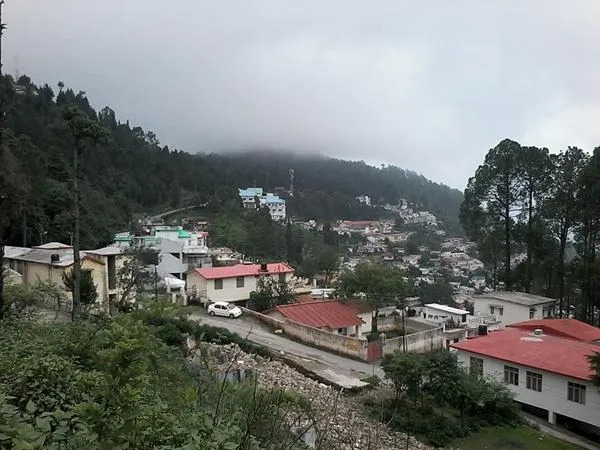
Tucked away in the beautiful Garhwal Himalayas of Uttarakhand, Adwani in Pauri Garhwal is the kind of destination that appeals to travelers looking for something quieter than the state’s better-known hill stations. Surrounded by forested slopes, mountain landscapes and traditional Himalayan settlements, Adwani offers an opportunity to experience the slower rhythm of rural Garhwal. It is associated both with the Adwani village area and with a scenic stopping point in the wider Pauri region, so descriptions of its location can vary between sources. The village itself is recorded in the Nainidanda block of Dhoomakot tehsil, while tourism sources also describe Adwani as a forested destination near Pauri.
Unlike crowded tourist centers where sightseeing often means moving from one commercial attraction to another, Adwani’s appeal lies primarily in its surroundings. Forests, mountain air, rural landscapes, quiet roads and views toward the Himalayan terrain create an atmosphere suited to nature lovers, photographers, birdwatchers and travelers who simply want to slow down.
Where Is Adwani?
Adwani is located in Pauri Garhwal district of Uttarakhand, within the broader Garhwal Himalayan region. Administrative sources and village directories identify an Adwani village in Dhoomakot tehsil and Nainidanda block. Census-based information records its geographical area at approximately 51 hectares. The 2011 Census data cited by village directories recorded only 79 residents living in 19 households, illustrating how small the settlement is.
There is another important aspect to understanding Adwani: the name is also used in tourism descriptions for a scenic forest destination associated with the Pauri area. Older tourism material describes Adwani as approximately 17 kilometres from Pauri and as a picnic location surrounded by thick forest.
This distinction is useful for travelers because online descriptions can sometimes appear contradictory regarding distances and administrative locations. Anyone planning an actual journey should therefore verify the exact Adwani location with current local directions before departure.
The Natural Setting of Adwani
The strongest attraction of Adwani is its natural environment. Garhwal is famous for dramatic variations in elevation, deep valleys, forest-covered ridges and distant Himalayan peaks, and Adwani reflects many of these characteristics on a smaller and more peaceful scale.
Tourism descriptions traditionally associate Adwani with dense oak and deodar forests. These forests contribute greatly to the area’s character. Instead of the constant movement and commercial activity found in larger hill stations, visitors encounter a landscape dominated by trees, mountain slopes and open spaces.
The forests are also important from an ecological perspective. Local tourism sources mention seasonal and migratory birds in the area, making the region interesting for birdwatchers. Other descriptions refer to the presence of medicinal and Ayurvedic plants, reflecting the long-standing relationship between Himalayan communities and surrounding forests.
For photographers, early morning can be particularly rewarding. Mist may settle around forested slopes, sunlight gradually reaches the hills and village landscapes become visible as the day develops. Late afternoon and evening can provide a different atmosphere, with changing light over the ridges.
Adwani and the Heritage of Pauri Garhwal
To understand Adwani properly, it is useful to understand the history of the wider Pauri Garhwal region. The Garhwal Himalaya has a long history involving local kingdoms, principalities, temples and changing political boundaries. According to the Pauri Garhwal district administration, the region was historically divided into numerous principalities before Ajaypal consolidated many of them into the Garhwal kingdom around the late 15th century and early 16th century.
The region subsequently experienced Gorkha rule. The Gorkhas controlled Garhwal beginning in 1804, while British control expanded into eastern Garhwal after the Gorkhas were defeated in 1815. Pauri eventually became the headquarters of a separate Garhwal district administration in the 19th century.
Adwani’s landscape therefore exists within a region where villages, mountain passes, forests and traditional routes have long been connected to the broader history of Garhwal. The area’s historic character is not necessarily represented through large monuments in Adwani itself; rather, it is experienced through the surrounding landscape, settlements, temples and traditional culture.
Ranigarh and the Historical Landscape
One of the interesting places associated with Adwani is Ranigarh, located nearby according to tourism sources. The area is described as having historical significance, with the remains of an old fort associated with the mountain landscape. A historical gazetteer from the British period also described Ranigarh above Adwani and noted the extensive views from the area toward the surrounding hills and plains.
Modern tourism information places Ranigarh close to Adwani and describes it as a scenic location from which visitors can see forests, agricultural terraces, Pauri and distant snow-covered Himalayan peaks under suitable conditions.
The combination of natural scenery and remnants of the region’s older history makes the area particularly interesting for travelers who enjoy destinations that have more to offer than conventional sightseeing.
Temples and Local Spiritual Culture
Religion is deeply intertwined with everyday life throughout the Garhwal Himalayas. Villages frequently have local temples associated with Shiva, Devi, village deities and other Hindu traditions. These places can be both religious centers and important parts of community life.
Near Adwani, Ranigarh is associated with Adeshwar Mahadev, a Shiva temple. Tourism sources state that a fair is held there annually, attracting devotees from surrounding areas.
The wider Pauri Garhwal district contains numerous temples and sacred locations, including Kandoliya Temple, Kyunkaleshwar Mahadev Temple, Danda Nagraja Temple and Jwalpa Devi Temple. These can be incorporated into a wider itinerary when visiting the district rather than treating Adwani as an isolated destination.
The religious traditions of Garhwal are particularly interesting because many local festivals combine devotion with community gathering. Visitors should be respectful when entering temples, especially during ceremonies and festivals.
Village Life and Local Culture
The small scale of Adwani provides an opportunity to see a more traditional side of Uttarakhand. Census-based records indicate that the village had just 79 residents in 2011, distributed among 19 households. Such a small population naturally creates a very different environment from towns such as Pauri or Kotdwar.
Traditional Himalayan villages commonly depend on a mixture of agriculture, livestock, forest resources and employment outside the village. Terraced fields are a characteristic feature of Garhwal, created to make productive use of steep mountain slopes.
Agriculture in the hills is more than an economic activity. It is closely connected with food traditions, seasonal rhythms and local culture. Visitors may encounter traditional crops, livestock and agricultural practices that have evolved to suit the mountainous environment.
At the same time, like many Himalayan villages, settlements in the region face challenges related to population movement, employment opportunities and access to services. Rural tourism can provide additional economic opportunities, but sustainable development is important so that increased tourism does not damage the very environment and culture that attract visitors.
What Can Visitors Do in Adwani?
Adwani is better suited to slow travel and nature-based experiences than to a packed sightseeing schedule.
A nature walk through the surrounding forest is one of the simplest ways to experience the area. Walking allows visitors to notice birds, vegetation, village architecture and changing mountain views that can easily be missed while traveling by vehicle.
Photography is another major attraction. Forest trails, terraced fields, mountain ridges, traditional houses and changing skies provide numerous subjects. During clear weather, distant Himalayan peaks can become visible from elevated locations around the region.
Birdwatching is also worth considering. Tourism sources specifically mention seasonal and migratory birds around Adwani and Ranigarh. Visitors interested in birds should carry binoculars and avoid disturbing nesting areas. Cycling and outdoor exploration are additional possibilities in the broader Pauri area. The district administration lists Adwani among destinations connected with cycling activities and also promotes nature walks, camping, jungle activities and other outdoor pursuits.
For many visitors, however, the best activity may simply be sitting quietly and observing the landscape.
Forests, Wildlife and Responsible Travel
The forests around Adwani form part of the larger Himalayan ecological landscape. Even when visitors do not encounter large animals, forests support birds, insects, small mammals and an enormous diversity of plant life.
Travelers should remember that a quiet forest destination is not the same as an urban park. Loud music, littering, feeding wildlife and damaging vegetation can disturb the ecosystem and local residents.
Responsible travel is particularly important in small villages. Visitors should avoid entering private fields without permission, photographing people without consent and treating religious sites as ordinary tourist attractions. Carrying reusable water bottles, minimizing plastic waste and taking all rubbish back are simple practices that can make a significant difference.
Food and Garhwali Flavours
A visit to rural Uttarakhand is incomplete without experiencing local food. Garhwali cuisine traditionally emphasizes simple ingredients that can be cultivated or obtained locally.
Depending on availability, travelers may encounter dishes such as mandua roti, jhangora ki kheer, kafuli, chainsoo, aloo ke gutke and preparations made from local pulses and seasonal vegetables. Recipes vary considerably from household to household, so there is no single version of Garhwali cuisine.
Food in a village setting can also provide an insight into local agricultural traditions. Millets and pulses, for example, have historically been important in mountain diets because they are well suited to Himalayan agricultural conditions.
Visitors should not expect a large restaurant infrastructure in a small settlement like Adwani. It is sensible to carry basic provisions and arrange meals or accommodation in advance if staying overnight.
Accommodation Around Adwani
Accommodation options directly within a small village may be limited. Older tourism references have described a Forest Rest House at Adwani, but travelers should verify current availability and booking arrangements before relying on it.
For more extensive accommodation choices, visitors can base themselves in Pauri or other nearby towns and travel to Adwani during the day. Pauri itself has a larger tourism infrastructure and is officially promoted as a destination for nature lovers, trekkers and adventure travelers.
Staying in or near a village, when suitable accommodation is available, can provide a more immersive experience than staying in a conventional hotel. Homestays can also contribute directly to the local economy.
How to Reach Adwani
Road travel is the principal way to explore this part of Uttarakhand. Pauri is connected by road with other parts of the state, while Kotdwar provides an important rail connection for travelers approaching the Pauri Garhwal region. Uttarakhand Tourism identifies Jolly Grant Airport near Dehradun as the nearest airport for Pauri and Kotdwar railway station as the most reliable railhead for reaching Pauri.
Because there are different references to Adwani locations within Pauri Garhwal, travelers should confirm their intended destination before starting the final road journey. This is especially important when using map applications, booking transport or asking for local directions.
Mountain roads can take considerably longer than the distance on a map suggests. Weather, road conditions, traffic and seasonal disruptions can all affect travel times.
Best Time to Visit
The ideal season depends on what a traveler wants to experience.
Spring and early summer, particularly around March to June, can bring pleasant temperatures, greenery and flowering vegetation. This period is attractive for nature walks and photography.
The monsoon months bring intense greenery but can also bring heavy rainfall, slippery trails and potential road disruptions. Travelers planning to visit during this period should check local weather and road conditions.
Autumn, especially after the monsoon, can offer clearer skies and excellent mountain visibility. September and October are therefore attractive months for landscape photography and outdoor exploration.
Winter can be cold, especially at higher elevations. Clear days may offer beautiful views, while colder conditions require appropriate clothing and careful planning.
For general exploration of Pauri Garhwal, tourism sources commonly identify spring, summer and post-monsoon periods as favorable travel seasons, although conditions can vary considerably by elevation.
Places to Explore Around Adwani
One of the advantages of visiting Adwani is that it can be incorporated into a larger Pauri Garhwal journey.
Pauri is an obvious addition. Located at about 1,814 metres, the town is known for Himalayan views, forests and outdoor activities. Uttarakhand Tourism highlights its views toward peaks including Nanda Devi and Trisul.
Khirsu is another attractive destination, known for its forested mountain setting and views. It can complement an Adwani trip for travelers interested in quiet hill landscapes.
Kandoliya and Kandoliya Temple are among Pauri’s notable local attractions, while Kyunkaleshwar Mahadev Temple provides another opportunity to experience the area’s religious heritage.
Travelers interested in historic and religious sites can also consider Devalgarh, while those interested in the broader cultural landscape can explore other villages and temples throughout the district.
For more adventurous itineraries, Pauri Garhwal offers trekking, camping and outdoor activities. The district administration specifically lists cycling routes involving Adwani and other destinations and promotes activities such as nature walks and camping.
Why Adwani Is Worth Exploring
Adwani is not a destination that needs a long list of commercial attractions to justify a visit. Its appeal lies in something increasingly difficult to find: quiet.
The combination of forest, mountain scenery, village life, agricultural landscapes and nearby historical and religious sites creates an experience that is very different from the crowded image sometimes associated with Himalayan tourism.
For photographers, Adwani offers natural compositions almost everywhere. For birdwatchers, its forest environment provides opportunities to observe Himalayan birdlife. For hikers and outdoor enthusiasts, the surrounding terrain offers possibilities for walking and exploration. For cultural travelers, the villages, temples and agricultural landscape provide a window into Garhwali life.
Most importantly, Adwani demonstrates that some of Uttarakhand’s memorable destinations are not necessarily the famous hill stations. Sometimes the most rewarding experience comes from visiting a small place, walking slowly through its surroundings, speaking respectfully with local residents and allowing the landscape to become the main attraction.
Final Thoughts
Adwani in Pauri Garhwal is a peaceful Himalayan destination where forests, mountain landscapes and rural culture come together. Its small-scale character makes it particularly appealing to travelers seeking an escape from crowded tourist centers.
Its proximity to the wider attractions of Pauri Garhwal also makes it useful as part of a larger itinerary. Visitors can combine quiet time in Adwani with temple visits, mountain viewpoints, village exploration, trekking, photography and cultural experiences elsewhere in the district.
The real charm of Adwani is therefore not found in a single monument or attraction. It is found in the collective experience of the landscape: the sound of the forest, the changing mountain light, terraced slopes, distant peaks, traditional settlements and the slower pace of Himalayan life.
For anyone interested in discovering a less commercial side of Uttarakhand, Adwani offers an appealing reminder that the beauty of Garhwal is often greatest in the places where the mountains are allowed to speak for themselves.

