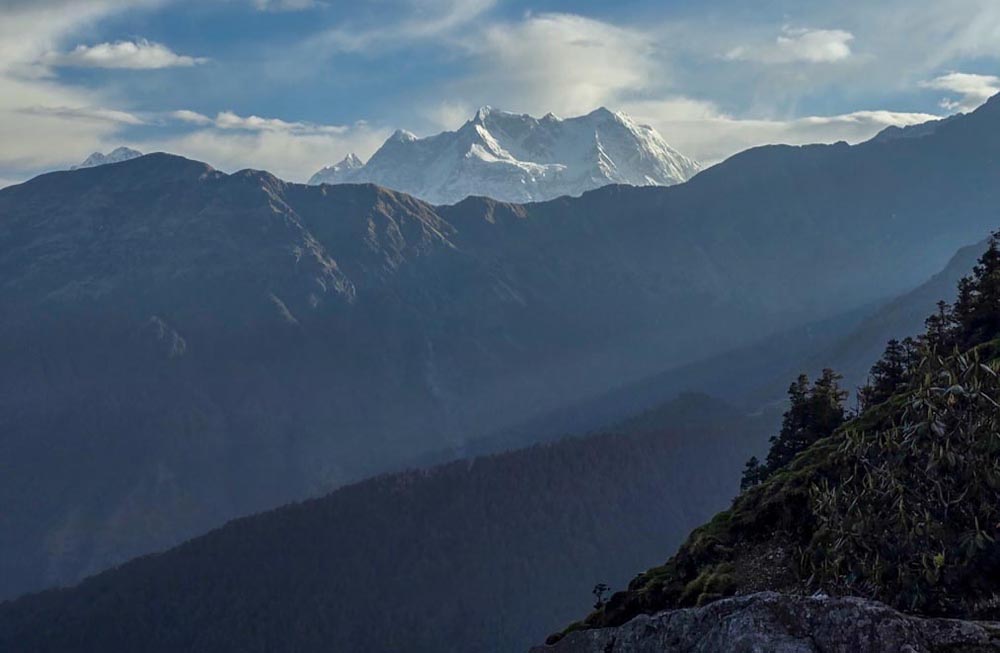
Nestled in the beautiful hills of Pauri Garhwal, Uttarakhand, Chaukhamba Viewpoint is a peaceful Himalayan destination where travellers can experience magnificent mountain scenery without undertaking a demanding trek. Located only around 4 kilometres from Pauri town, the viewpoint is particularly known for its striking views of the Chaukhamba massif, a spectacular group of Himalayan peaks associated with the Garhwal region. Surrounded by forests and mountain landscapes, it is an appealing destination for photographers, nature lovers, couples, families and travellers looking for a quiet escape.
Unlike some of Uttarakhand’s famous destinations that require long journeys or strenuous hikes, Chaukhamba Viewpoint can be incorporated easily into a Pauri sightseeing itinerary. Its relatively easy accessibility is one of its greatest attractions. Visitors can drive close to the viewpoint, while those who enjoy walking can explore the surrounding mountain roads and forested landscape at a relaxed pace. The combination of accessibility, Himalayan scenery and tranquillity makes it an interesting stop for anyone exploring Pauri and the surrounding Garhwal hills.
Where Is Chaukhamba Viewpoint Located?
Chaukhamba Viewpoint is situated near Pauri in Pauri Garhwal district of Uttarakhand. It is approximately 4 kilometres from the Pauri bus stand according to local tourism information, making it one of the more accessible scenic spots around the town.
The viewpoint lies within a mountainous landscape characterized by forests, ridges and deep valleys. Depending on weather and visibility, the surrounding panorama can reveal a dramatic succession of Himalayan peaks. The area around the viewpoint is particularly attractive because the forested foreground creates a natural frame for the distant snow-covered mountains.
Some newer travel listings place the viewpoint around the Kandoliya ridge and the Pauri–Khirsu road, although exact descriptions of the immediate location vary between sources. Travellers should therefore use current local directions once they reach Pauri rather than relying exclusively on older online descriptions.
Why Is It Called Chaukhamba Viewpoint?
The name comes from Chaukhamba, one of the most recognizable mountain massifs of the Garhwal Himalayas. The word “Chaukhamba” is generally understood as meaning “four pillars”, referring to the massif’s four prominent summits. The highest summit, Chaukhamba I, rises to approximately 7,138 metres.
The mountain itself is considerably more remote and demanding than the viewpoint from which it can be admired. The Chaukhamba massif forms an impressive part of the high Himalayan landscape, and seeing it from a comfortable viewpoint provides a fascinating contrast between accessible Himalayan tourism and serious mountaineering.
For ordinary travellers, the significance of Chaukhamba is primarily visual. The massive snow-covered peaks appear across the distant horizon, particularly when the atmosphere is clear. Early morning can be especially rewarding because the first sunlight gradually illuminates the Himalayan summits.
The Himalayan Panorama
The central attraction of Chaukhamba Viewpoint is, naturally, its panoramic mountain scenery. On a clear day, visitors can enjoy expansive views toward the high Himalayan ranges, with Chaukhamba forming the principal visual attraction. Depending on atmospheric conditions and the exact viewing direction, other Himalayan peaks may also be visible.
Several travel sources mention views toward peaks and mountain groups including Bandarpunch, Gangotri, Trishul, Nanda Devi and other prominent Himalayan summits, although visibility varies substantially with season, clouds, haze and atmospheric conditions.
This variability is important. A traveller should not expect a guaranteed panorama every time. The Himalayas create their own weather patterns, and clouds can obscure even enormous peaks. This is one reason early morning visits are frequently recommended. Mountain visibility tends to be better before haze and clouds develop later in the day.
For photographers, this changing scenery is part of the attraction. The same landscape can appear completely different under clear blue skies, morning mist, winter light or sunset colours.
Natural Beauty Around the Viewpoint
Chaukhamba Viewpoint is not simply a place to stand and look at a distant mountain. Its surrounding environment contributes considerably to the overall experience. The area around Pauri contains forested hills, with oak, pine and rhododendron vegetation commonly associated with the landscape.
During spring, flowering rhododendrons can add vibrant colour to the otherwise green forest. Oak-covered slopes provide shade and create a cool atmosphere, while the elevation gives the area a distinctly different climate from the plains.
The forest environment also makes the viewpoint appealing to people interested in birds and Himalayan wildlife. Visitors should remember, however, that this is a natural environment rather than a controlled wildlife attraction. Animals may be difficult to spot, and the responsible approach is to observe quietly without disturbing birds or other wildlife.
Sunrise at Chaukhamba Viewpoint
For many visitors, sunrise is likely to be the most memorable time at Chaukhamba Viewpoint. Early in the morning, the Himalayan horizon can gradually change from dark silhouettes into illuminated snow-covered peaks.
The first sunlight can produce subtle shades of pink, orange and gold across the mountains. As the sun rises higher, the details of the surrounding valleys and ridges become more visible. Travel sources consistently identify early morning as an excellent period for mountain viewing and photography.
A sunrise visit does require some preparation. Temperatures can feel considerably colder before dawn, particularly during winter. Travellers should carry warm layers, even if the weather in Pauri during the previous afternoon felt comfortable.
Sunset and Evening Views
Sunset offers a completely different experience. Instead of the gentle illumination of sunrise, evening light can create dramatic shadows across the mountains and valleys. The changing colours can be particularly attractive for landscape photography.
However, visitors planning to stay until sunset should remember that mountain roads become darker quickly after the sun disappears. It is sensible to arrange transportation beforehand and avoid wandering onto unfamiliar forest paths after dark.
The viewpoint is best enjoyed as a scenic destination rather than as a place requiring a long list of activities. Sitting quietly, watching the changing sky and enjoying the mountain air can be more rewarding than trying to rush through the experience.
Things to Do at Chaukhamba Viewpoint
The principal activity is Himalayan sightseeing. Visitors can spend time identifying distant peaks, photographing the landscape or simply enjoying the peaceful surroundings. Because the viewpoint is close to Pauri, it works particularly well as a short morning or evening excursion.
Photography is another major attraction. Wide-angle landscape photographs can capture the relationship between the foreground forests, valleys and distant peaks. Sunrise and sunset provide the most dramatic lighting, while winter can produce particularly striking photographs when snow is present on the surrounding mountains.
Nature walks are another possibility. The forested surroundings provide opportunities for short walks, although visitors should remain on known routes and avoid entering isolated areas without local guidance. Sources describing the area highlight oak and rhododendron forests and the possibility of enjoying nature walks around the viewpoint.
A small picnic can also be enjoyable, provided visitors carry their rubbish back with them. Because food services immediately at the viewpoint may be limited or unavailable, it is better to arrange snacks and drinking water in Pauri before heading out.
Best Time to Visit Chaukhamba Viewpoint
The ideal season depends on what kind of experience a traveller wants. October to November can provide excellent post-monsoon visibility, when the air is often clearer and the Himalayan peaks may appear particularly sharp. Several travel sources recommend the post-monsoon period for mountain views.
March to June is generally comfortable for exploring the surrounding hills. Spring can be especially attractive because vegetation begins to brighten and rhododendron flowers may appear. Travel information for the region also commonly identifies spring and early summer as suitable periods for sightseeing.
Winter, particularly December through February, brings much colder conditions. Snow can sometimes be seen in and around the higher hills, and the snow-covered Himalayan panorama can be spectacular on clear days. At the same time, fog and cold weather can occasionally reduce visibility.
The monsoon season from July to September is generally less dependable for panoramic sightseeing. Heavy rain, clouds, fog and slippery conditions can interfere with mountain views and travel. Anyone visiting Uttarakhand during monsoon should check current road and weather conditions before travelling.
How to Reach Chaukhamba Viewpoint
The most convenient starting point is Pauri town. From Pauri, Chaukhamba Viewpoint is only a few kilometres away. Local taxis provide an easy option, while travellers staying nearby may choose to walk part of the route if weather and road conditions are suitable.
Pauri itself is connected by road with other parts of Uttarakhand. Travellers arriving from Delhi or other northern Indian cities commonly travel by road through the Garhwal region. The route is scenic but mountainous, so journey times can vary significantly depending on traffic, road conditions, weather and seasonal disruptions.
The nearest major airport is Jolly Grant Airport near Dehradun, while Kotdwar is commonly identified as the nearest railway station serving Pauri, although travellers may also consider rail connections through Rishikesh depending on their itinerary.
Once in Pauri, local taxis are generally the most practical way to reach nearby viewpoints and attractions.
Nearby Places to Explore
One advantage of visiting Chaukhamba Viewpoint is that it can easily be combined with other attractions around Pauri. Kandoliya Temple and the surrounding Kandoliya area are nearby, making them natural additions to a sightseeing itinerary. Other local attractions include Kyunkaleshwar Mahadev Temple, Nagdev Temple and Khirsu.
Pauri itself deserves some time rather than being treated merely as a transit point. Its mountain roads, temples, forests and viewpoints provide opportunities to experience a quieter side of Uttarakhand.
Travellers interested in a longer Himalayan itinerary can also use Pauri as part of a broader Garhwal journey. However, distances in the mountains should never be judged purely by kilometres. A relatively short road distance can take considerably longer than expected because of winding roads and changing conditions.
Food and Local Experience
The best place to arrange food before visiting the viewpoint is generally Pauri town. Visitors can find simple local eateries and roadside establishments serving familiar North Indian dishes as well as regional Garhwali food.
Travellers interested in experiencing local cuisine can look for dishes such as aloo ke gutke, mandua roti, dal and rice, while regional sweets and preparations vary according to the establishment and season.
At the viewpoint itself, visitors should not depend on finding a full meal or regular food service, particularly if arriving very early for sunrise. Carrying drinking water and a light breakfast is therefore practical.
Beyond food, the local experience is about slowing down. Pauri’s quieter atmosphere, mountain architecture, forest roads and views provide an opportunity to experience Uttarakhand away from some of the busier tourist centres.
Travel Tips for First-Time Visitors
A visit to Chaukhamba Viewpoint is relatively simple, but a few precautions can make the experience more comfortable. Carry warm clothing because mountain temperatures can change quickly. Comfortable shoes are useful if you plan to walk around the viewpoint or explore nearby forest paths.
For photography, a tripod can be useful for sunrise and sunset, while a telephoto lens can help capture distant peaks. Even smartphone photographers can obtain excellent results when the air is clear.
Visitors should also avoid littering. Mountain ecosystems are fragile, and even a small scenic viewpoint can suffer when large numbers of visitors leave plastic bottles, wrappers or food waste behind. Carrying a small waste bag is an easy way to leave the place as clean as it was found.
Families travelling with children should supervise them around viewpoints, slopes and railings. Mountain edges can become dangerous when people move too close to obtain photographs.
Weather deserves particular attention. Clouds can develop rapidly in the Himalayas, while monsoon conditions can affect roads. Checking local conditions before setting out is especially important during rainy or winter periods.
Is Chaukhamba Viewpoint Worth Visiting?
Chaukhamba Viewpoint is particularly suited to travellers who value scenery, tranquillity and easy access rather than adventure tourism. Its greatest strength is that visitors can experience an impressive Himalayan panorama without committing to a difficult trek.
The viewpoint is also an excellent choice for photographers. Sunrise, sunset, winter landscapes, forest scenery and changing mountain weather offer numerous opportunities for photography. Nature lovers can enjoy the surrounding forest, while travellers simply looking for somewhere peaceful can spend an hour sitting quietly and watching the mountains.
Its proximity to Pauri makes the viewpoint especially convenient. Instead of requiring a separate multi-day journey, it can be incorporated into a wider Pauri itinerary.
Final Thoughts
Chaukhamba Viewpoint represents one of those Himalayan destinations where the appeal comes from simplicity. There is no need for a complicated schedule. A quiet road, a forested ridge, crisp mountain air and a distant wall of snow-covered peaks can be enough to create a memorable Uttarakhand experience.
The great attraction is, of course, the Chaukhamba massif, whose four-pillared form gives the viewpoint its identity. At approximately 7,138 metres, the highest summit is a reminder of the enormous scale of the Himalayas.
For the clearest mountain views, an early morning visit during a relatively dry and clear season is a sensible choice. Autumn and spring offer comfortable conditions, while winter can provide an especially dramatic snowy landscape. Monsoon visits require greater flexibility because clouds and rain may completely hide the mountains.
Ultimately, Chaukhamba Viewpoint is best experienced slowly. Rather than treating it as another item to tick off a sightseeing list, visitors can use the opportunity to pause, breathe the cool mountain air and watch sunlight move across the Garhwal Himalayas. For anyone exploring Pauri and searching for a peaceful Himalayan panorama close to town, Chaukhamba Viewpoint offers a memorable window into the grandeur of Uttarakhand.

