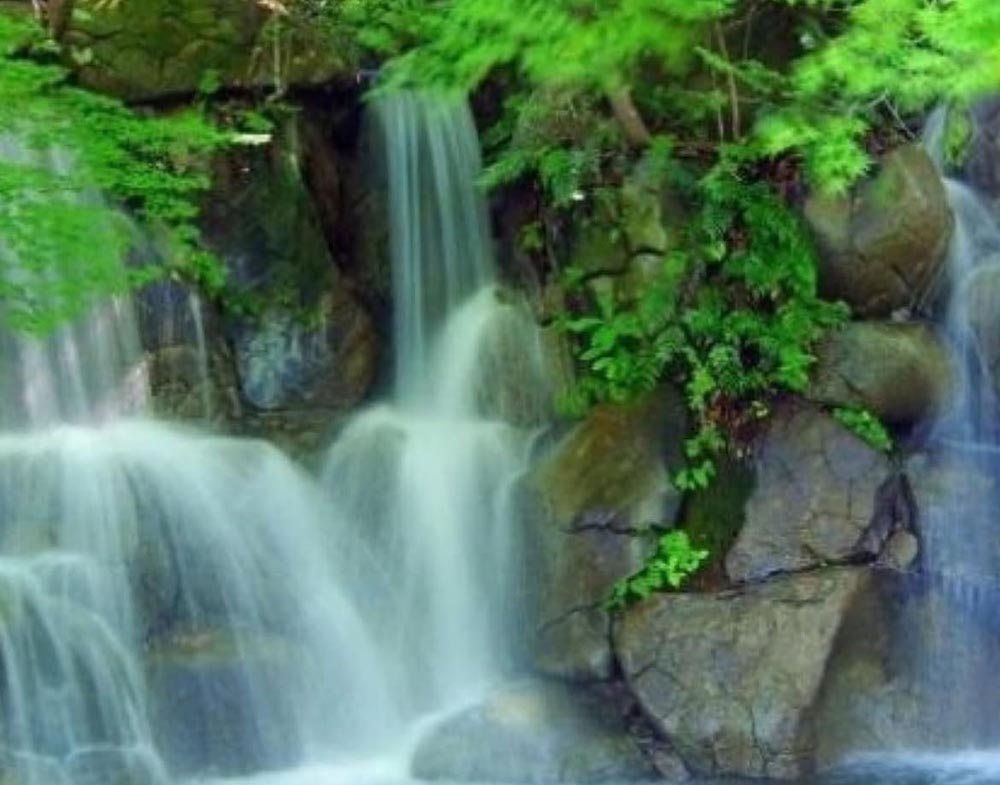
Nestled in the forested hills near Rishikesh, Garud Chatti Waterfall is one of the scenic natural attractions of Uttarakhand that combines a short adventure with the peaceful atmosphere of the Himalayan foothills. Located along the Neelkanth Road, the waterfall is surrounded by greenery and rocky terrain, making it a refreshing escape from the busy streets of Rishikesh. Its relatively short approach trek also makes it accessible to visitors who want to experience a little hiking without committing to a demanding Himalayan expedition.
Garud Chatti is particularly attractive during and after the monsoon, when the seasonal water flow gives the cascade a more dramatic appearance and the surrounding vegetation becomes intensely green. The waterfall is reached by a forest trail beginning near the Garud Temple, and the walk itself forms an important part of the experience. Depending on the route and starting point, published travel guides describe the approach as roughly 1–1.5 km from the temple area, while some visitors begin walking from farther away near Lakshman Jhula.
Where Is Garud Chatti Waterfall?
Garud Chatti Waterfall is situated near Rishikesh on the road toward Neelkanth Mahadev Temple. It is generally described as being around 4 km from Lakshman Jhula and approximately 9 km from Rishikesh’s main railway-station/central-town area, although the exact distance varies according to the point from which the journey is measured.
The waterfall lies in a forested landscape characteristic of the lower Himalayan foothills. The surroundings are considerably quieter than central Rishikesh, with rocky slopes, trees, streams and mountain vegetation creating a natural setting. The waterfall’s proximity to the Neelkanth Road also makes it possible to combine a visit with other attractions in the area.
Garud Chatti Waterfall is currently listed as a tourist attraction and nature preserve in the Patna area of Uttarakhand. Its location is particularly convenient for travelers staying in Rishikesh, Tapovan or nearby parts of the Garhwal region.
The Story Behind the Name
The name Garud Chatti is associated with the Garud Temple located near the waterfall and the surrounding route. Garuda, traditionally depicted as the divine eagle and vehicle (*vahana*) of Lord Vishnu, has an important place in Hindu mythology. The presence of a temple dedicated to Garuda gives the natural landscape a spiritual dimension in addition to its recreational appeal. Travel sources identify the temple as the starting point or landmark for the waterfall trail.
The word chatti is also associated with traditional resting places along Himalayan pilgrimage routes. The wider Rishikesh–Neelkanth route has long had a strong connection with pilgrimage and religious travel, and visitors heading toward Neelkanth Mahadev Temple pass through a landscape where religious sites and natural attractions frequently occur alongside one another.
Consequently, a visit to Garud Chatti can be more than a simple waterfall excursion. The combination of temple surroundings, forest trail, mountain stream and waterfall provides an experience characteristic of Uttarakhand, where spirituality and nature are often closely intertwined.
What Makes Garud Chatti Waterfall Special?
One of the most appealing characteristics of Garud Chatti is its relatively compact, multi-level appearance. Sources describing the waterfall note that water moves through several levels or points before collecting in natural pools and rocky sections below. During stronger flows, particularly around the monsoon period, these different cascades become more visible and create a lively landscape.
Unlike some of Uttarakhand’s enormous waterfalls, Garud Chatti is not primarily about spectacular height. Its attraction comes from the combination of cascading water, forest surroundings and accessibility. The short trek means visitors can enjoy a natural environment without spending an entire day on a difficult mountain trail.
The forest setting is another major attraction. As the trail moves away from the main road, the sound of traffic gradually gives way to birds, flowing water and the natural sounds of the hillside. This makes the waterfall especially appealing to travelers who want a short break from the more crowded parts of Rishikesh.
The Trek to Garud Chatti Waterfall
The walk to Garud Chatti is an important part of the attraction. A commonly cited route begins around the Garud Temple on the Neelkanth Road and continues for approximately 1.5 km toward the waterfall. One travel guide describes the complete hike, including time at the waterfall, as roughly a two-hour experience, while another describes the trail as relatively easy.
The exact walking distance experienced by visitors can differ because some people travel farther along the road before beginning the hike, while others start closer to the temple. From the Lakshman Jhula side, guides also describe a longer walking approach of several kilometres before reaching the trailhead.
The trail itself has a distinctly Himalayan character. Visitors should expect uneven ground, rocks, roots, occasional muddy patches and sections that can become slippery after rain. Although the trek is generally regarded as easy to moderate rather than technically difficult, basic physical fitness and sensible footwear are important.
Walking slowly is also worthwhile because the surrounding forest is part of the attraction. Rather than treating the trail simply as a route to the waterfall, travelers can enjoy the changing vegetation, mountain air and occasional views through the trees.
Best Time to Visit Garud Chatti Waterfall
The waterfall can be visited during different seasons, but its character changes significantly throughout the year. The monsoon and post-monsoon periods are particularly attractive because increased rainfall generally produces stronger water flow and makes the surrounding forest much greener. Travel sources specifically identify the monsoon as a period when the waterfall becomes especially attractive.
However, monsoon travel also requires greater caution. Heavy rain can make rocks and trail sections slippery, and water levels in streams and pools can change quickly. Visitors should avoid standing directly beneath strong cascades or entering water when the current appears powerful.
The period immediately after the main rains can offer a useful balance between scenery and accessibility. The forest remains lush, streams continue to flow, and the trail may be more manageable than during periods of heavy rainfall. Winter and spring can also be pleasant for walking, although the waterfall may not have the same volume of water seen during the rainy season.
Summer can be attractive for visitors looking for cooler surroundings and a refreshing break from the heat of the plains. Nevertheless, water flow is naturally dependent on recent rainfall, so the waterfall may look quite different from photographs taken during the monsoon.
How to Reach Garud Chatti Waterfall
Rishikesh is the principal base for visiting Garud Chatti. Travelers can first reach Rishikesh by road or rail and then continue toward the Neelkanth Road. The waterfall is located along the route leading toward Neelkanth Mahadev Temple.
From the Rishikesh side, visitors can use taxis, local transport or rented two-wheelers where permitted and appropriate. The road journey takes travelers through the forested hills toward the waterfall area. The final section is completed on foot.
The Garud Temple serves as a useful landmark because the waterfall trail begins in this vicinity. Travel guides describe the temple as the starting point for the approximately 1.5-km walk.
Visitors unfamiliar with the area should avoid relying exclusively on an old map or a single online distance estimate. Roads, trail access and local conditions can change, particularly after heavy rainfall. Asking locally for the current trail entrance is sensible.
Things to Do at Garud Chatti Waterfall
The main activity is simply enjoying the waterfall and surrounding forest. Photography is particularly popular because the combination of rocks, flowing water and greenery creates numerous natural compositions. During the monsoon and immediately afterward, the contrast between the white water and green forest can be especially striking.
The short hike also makes Garud Chatti suitable for casual nature walks. Instead of rushing directly to the waterfall, visitors can spend time observing the forest landscape and enjoying the quieter atmosphere away from central Rishikesh.
Some travel guides describe swimming or bathing in the pools around the waterfall. However, this should never be treated as automatically safe. Natural pools have uneven bottoms, hidden rocks and changing currents, and conditions can become dangerous after rainfall. Visitors should assess conditions locally and avoid entering the water during strong flow or immediately after heavy rain.
Garud Chatti can also be incorporated into a broader day of sightseeing around the Neelkanth Road. Nearby waterfall destinations include Phool Chatti and other natural attractions, while Neelkanth Mahadev Temple provides a major cultural and religious destination farther along the route.
Garud Chatti and Phool Chatti Waterfalls
Travelers often encounter Garud Chatti and Phool Chatti in the same travel itinerary because both are located around the Neelkanth Road. Phool Chatti is farther along the route and requires a longer trek according to published guides.
Garud Chatti is therefore convenient for visitors who want a shorter excursion, while travelers with more time and energy can explore additional waterfalls and natural attractions in the region.
This makes the Neelkanth Road particularly interesting for nature-oriented travelers. Instead of being simply a route to a temple, it can function as a scenic excursion through the foothills, with waterfalls, forest trails, streams and religious landmarks appearing along the journey.
Safety Precautions
The beauty of Garud Chatti should not obscure the risks associated with mountain streams. The rocks around waterfalls can become extremely slippery, particularly during and immediately after rainfall. Ordinary sandals or smooth-soled footwear can make walking difficult.
Good trekking shoes with reliable grip are preferable. Visitors should also keep their hands free where possible, especially while climbing over rocks.
Swimming requires particular caution. A pool that looks shallow from the edge can contain sudden drops or slippery surfaces. Strong currents can also develop after rainfall. Children should be supervised closely, and visitors should avoid attempting jumps from rocks into pools.
Monsoon visitors should pay attention to weather conditions before starting the trek. If heavy rain is forecast, postponing the excursion is often more sensible than trying to reach the waterfall at peak flow.
Another important consideration is cleanliness. Garud Chatti’s natural beauty depends on its forest and stream environment, so visitors should carry waste back with them rather than leaving plastic bottles, food packaging or other rubbish along the trail.
What to Carry
Because the trek is relatively short, visitors do not need heavy equipment. Comfortable trekking shoes, drinking water, a small backpack, sunscreen, basic first-aid supplies and a rain jacket are useful.
During the rainy season, a waterproof phone pouch can be particularly helpful. A light change of clothes is also sensible for travelers who intend to get close to the water.
Food should be packed responsibly, and visitors should avoid carrying disposable plastic unnecessarily. The goal should be to leave the waterfall area as clean as it was found.
Nearby Attractions
Garud Chatti is particularly convenient because several attractions can be combined with a visit. Rishikesh itself offers a large number of cultural, spiritual and adventure activities. Lakshman Jhula and the surrounding riverfront areas are among the best-known landmarks in the region.
Neelkanth Mahadev Temple is another major destination along the wider route. It is a revered Shiva temple situated in the forested hills above Rishikesh, and many visitors combine a temple visit with sightseeing around the waterfalls.
Phool Chatti Waterfall is another natural attraction in the same general area. Neer Garh Waterfall is also a well-known waterfall destination around Rishikesh, although it lies on a different route. Visitors planning several attractions should allow sufficient time rather than trying to rush through all of them in one day.
Photography at Garud Chatti
Garud Chatti is well suited to nature photography because it offers multiple subjects within a small area. Water flowing over rocks, close-up textures of wet stones, forest vegetation and wider landscape compositions can all produce interesting photographs.
Early morning can provide softer light and a quieter atmosphere. After rainfall, photographers can capture the strongest relationship between the waterfall and the surrounding greenery. A tripod can be useful for long-exposure photographs, although it should be used only where it does not obstruct the trail.
Visitors should prioritize safety over photography. Standing on wet rocks simply to obtain a particular camera angle can be dangerous, especially when water levels are high.
Why Garud Chatti Is Worth Including in a Rishikesh Trip
Rishikesh is widely associated with yoga, spirituality, the Ganga, rafting and adventure tourism, but the surrounding hills offer a quieter side of the destination. Garud Chatti represents this lesser-known natural dimension.
Its biggest attraction is the combination of accessibility and atmosphere. The waterfall does not require a long expedition, yet reaching it involves enough walking to provide a sense of adventure. The surrounding forest creates a noticeable contrast with the busy tourist areas of Rishikesh.
For travelers who enjoy nature, short hikes and waterfalls, Garud Chatti can fit naturally into a day trip. It is particularly appealing to visitors who do not want a highly commercialized attraction and would rather spend a couple of hours walking through a forest and relaxing beside a mountain stream.
Responsible Tourism at Garud Chatti
As visitor numbers increase, responsible tourism becomes increasingly important. Natural waterfalls are fragile environments. Plastic waste, loud music, careless bathing and damage to vegetation can gradually change the character of such places.
Visitors can help preserve Garud Chatti by carrying reusable water bottles, avoiding single-use plastics, using designated paths where available and taking all waste back to Rishikesh or another appropriate disposal point.
Respect for the religious surroundings is equally important. The nearby Garud Temple gives the area cultural significance, so visitors should behave respectfully around the temple and avoid treating religious spaces simply as photographic backdrops.
The best experience is one that allows the waterfall, forest and local surroundings to remain peaceful for both residents and future travelers.
Final Thoughts
Garud Chatti Waterfall is a compact but rewarding natural destination in the hills around Rishikesh. Its multi-level cascade, forest surroundings and short approach trek make it particularly suitable for travelers looking for a simple Himalayan nature experience without undertaking a demanding trek. The waterfall is especially attractive during the monsoon and post-monsoon period, when increased water flow transforms the surrounding landscape into a lush green setting.
Its proximity to the Neelkanth Road also adds to its appeal. A visit can be combined with nearby waterfalls, forest scenery and the pilgrimage landscape associated with Neelkanth Mahadev. At the same time, travelers should remember that natural waterfalls are not controlled recreational pools. Slippery rocks, sudden changes in water flow and monsoon conditions require caution.
For anyone exploring Uttarakhand through Rishikesh, Garud Chatti offers an opportunity to experience a quieter side of the region—one where a short forest walk leads to flowing mountain water, rocky terrain and the peaceful atmosphere of the Himalayan foothills.

