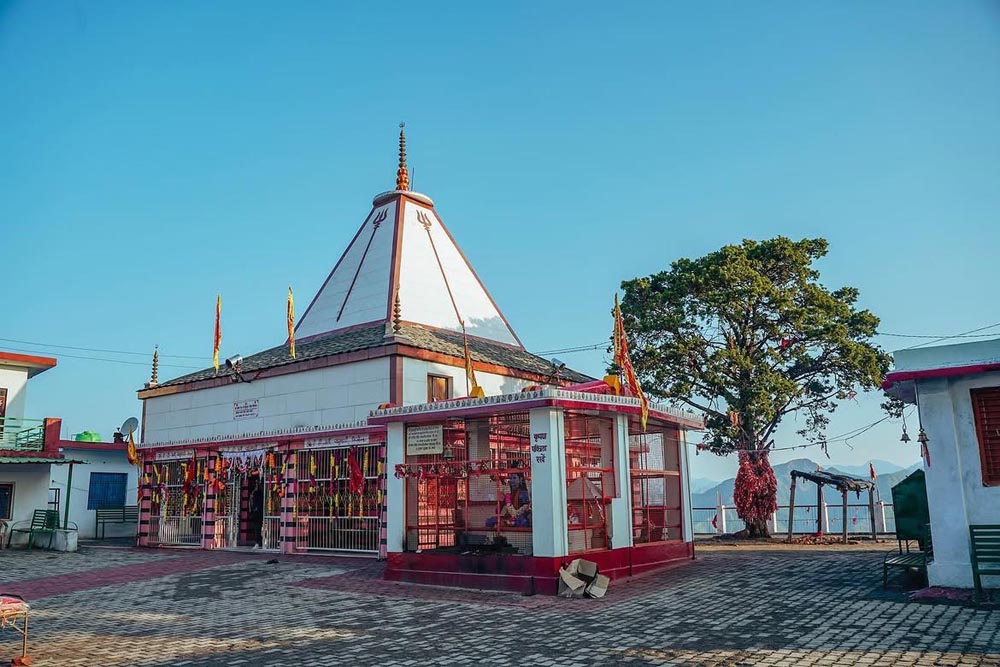
High in the Garhwal Himalayas, overlooking the valleys around Rishikesh, Narendra Nagar and Tehri, stands the revered Kunjapuri Devi Temple, one of the important Shakti shrines of Uttarakhand. Perched on Kunjapuri Peak, the temple is not only a destination for devotees but also a remarkable viewpoint from which the Himalayan landscape unfolds in every direction. The combination of mythology, mountain scenery, pilgrimage, trekking and sunrise experiences makes Kunjapuri an especially distinctive destination in the Uttarakhand tourism circuit.
The temple is dedicated to Goddess Durga and is traditionally associated with the Shakti tradition. Uttarakhand Tourism describes Kunjapuri as one of the 52 Shakti Peethas in the state and highlights its location on the Kunjapuri peak and its extensive Himalayan views.
Where Is Kunjapuri Devi Temple?
Kunjapuri Devi Temple is situated near Narendra Nagar in Tehri Garhwal district of Uttarakhand. The shrine occupies the summit of Kunjapuri Peak, placing it in a spectacular mountain environment between the Rishikesh area and the Tehri region.
Its location is one of the temple’s greatest attractions. Rather than being enclosed within a crowded urban settlement, the shrine stands above the surrounding valleys, giving visitors an expansive Himalayan panorama. Uttarakhand Tourism specifically notes that the temple can be visited while travelling from Rishikesh towards Tehri and places it around 25 kilometres from Rishikesh on this route.
The exact distance can vary depending on the starting point and route, so travellers should consider Kunjapuri as part of the broader Rishikesh–Narendra Nagar–Tehri landscape rather than relying on a single distance figure.
The temple is represented in local business listings as Kunjapuri Shakti Peeth, with the shrine located in the Narendra Nagar area.
Religious Significance of Kunjapuri Devi Temple
Kunjapuri is fundamentally a pilgrimage destination. The temple is dedicated to Goddess Durga, who is worshipped here as a powerful manifestation of the Divine Mother. For devotees, the journey to the summit is itself an important part of the pilgrimage experience.
The temple is traditionally connected with the Shakti Peetha tradition. Shakti Peethas are sacred places associated with Goddess Shakti and stories surrounding Sati and Lord Shiva. Different regional traditions and sources vary in how individual sites are classified and described. Uttarakhand Tourism identifies Kunjapuri among the state’s 52 Shakti Peethas, while the state’s tourism master plan also describes Kunjapuri as a Siddhapeeth associated with Jagadguru Shankaracharya.
This combination of Shakta devotion and Himalayan spirituality gives the temple an important place in the religious geography of Garhwal.
For many visitors, the appeal is not limited to receiving blessings at the shrine. The climb, the mountain air, the bells around the temple, the surrounding forests and the view from the summit together create a pilgrimage experience that feels closely connected to nature.
The Legend Behind Kunjapuri
Like many ancient Himalayan temples, Kunjapuri is surrounded by mythology and oral traditions. Its religious importance is commonly explained through the story of Sati, Shiva and the Shakti Peethas.
According to the well-known Hindu tradition, Sati, the daughter of King Daksha, married Lord Shiva despite her father’s disapproval. When Daksha organised a great yajna and did not invite Shiva, Sati nevertheless attended. After being insulted in the gathering, she gave up her life. Shiva was devastated and carried Sati’s body while wandering across the universe.
To restore cosmic balance, Lord Vishnu is traditionally said to have used his Sudarshan Chakra to divide Sati’s body. Various parts are believed to have fallen at different locations, creating sacred Shakti Peethas.
Kunjapuri’s association with this tradition is one reason devotees regard the mountain as spiritually significant. However, accounts differ concerning precisely how the local shrine fits into the larger Shakti Peetha tradition. This variation is common in sacred geography, where mythology, regional traditions and temple histories have developed over centuries.
The important point for visitors is that Kunjapuri’s identity is inseparable from the worship of the Divine Mother and the broader Shakti tradition of the Himalayas.
Kunjapuri Peak and Its Himalayan Panorama
One of the most extraordinary features of Kunjapuri Devi Temple is its elevated position. The temple sits on a mountain summit from which visitors can look across a vast section of the Garhwal landscape.
Uttarakhand Tourism highlights views toward Himalayan ranges and peaks including Swargarohini, Gangotri, Bandarpunch and Chaukhamba, as well as views toward the Bhagirathi valley.
The experience changes dramatically according to the weather and season. On a clear morning, distant snow-covered mountains may appear sharply defined against the sky. During the monsoon, clouds often move through the valleys and create an entirely different atmosphere. In autumn and winter, clearer skies can provide particularly impressive long-distance views.
The surrounding landscape also includes layers of lower hills, forests and valleys. This makes Kunjapuri valuable not simply as a religious destination but as a mountain viewpoint in its own right.
Sunrise at Kunjapuri Temple
Sunrise is perhaps the most memorable experience associated with Kunjapuri.
Many visitors deliberately begin their journey during the early hours so that they can reach the summit before dawn. As darkness gradually gives way to the first light, the silhouettes of the mountains become visible. The sky changes colour, and the valleys slowly emerge from the darkness.
Watching sunrise from a sacred Himalayan summit adds another dimension to the experience. The temple bells, morning prayers and cool mountain air create an atmosphere that is very different from visiting a conventional tourist viewpoint.
Photography enthusiasts are also attracted by this period of the day. The combination of mountain silhouettes, changing sky colours, temple architecture and distant Himalayan peaks can produce striking photographs.
However, sunrise visits require planning. Travellers should allow sufficient time for the road journey and climb, carry warm clothing according to the season, and avoid rushing on unfamiliar mountain paths in darkness.
The Trek to Kunjapuri Temple
The journey to Kunjapuri can involve a climb of several hundred steps to reach the temple complex, making it accessible to many travellers while still providing a modest physical challenge.
The route is particularly popular with people staying in Rishikesh and surrounding areas. It offers an opportunity to combine spiritual tourism with a short Himalayan hiking experience.
The wider Uttarakhand tourism master plan has also recognised the potential of trekking infrastructure around Kunjapuri. It lists development of the pedestrian path to Ma Kunjapuri Temple among proposed tourism improvements and identifies Kunjapuri in the state’s broader trekking and adventure-development planning.
The climb should nevertheless be approached at a comfortable pace. The altitude itself is not extreme compared with many Himalayan treks, but visitors unused to uphill walking may find the steps tiring.
Kunjapuri as a Trekking and Adventure Destination
Kunjapuri has gradually developed an identity beyond conventional temple tourism. Its proximity to Rishikesh makes it particularly convenient for travellers interested in combining spirituality, hiking and outdoor experiences.
The Uttarakhand Tourism master plan has identified a trekking connection from Tapovan towards Kunjapuri among its proposed signature trekking projects.
This is significant because the Rishikesh region is already a major base for adventure tourism. Visitors can combine a visit to Kunjapuri with activities such as hiking, rafting, yoga, meditation and exploration of the surrounding Himalayan foothills.
For travellers who want a quieter alternative to a full-day high-altitude trek, Kunjapuri provides a relatively manageable introduction to mountain walking.
Best Time to Visit Kunjapuri Devi Temple
Kunjapuri can be visited throughout much of the year, but the ideal period depends on the visitor’s purpose.
Spring is attractive because the surrounding hills become greener and the weather is generally pleasant. This can be a good period for walking and enjoying the landscape.
Summer provides comparatively comfortable conditions in the mountains while the plains may be considerably warmer. Visitors from Rishikesh, Haridwar and Delhi often appreciate the cooler mountain environment.
The monsoon brings lush vegetation and dramatic clouds, but mountain roads can become slippery and visibility may decrease. Heavy rainfall can also affect travel conditions, so visitors should check local weather and road conditions before setting out.
Autumn is often particularly appealing for mountain views because the atmosphere can become clearer after the monsoon. Winter offers crisp weather and impressive views when skies are clear, although early mornings can be very cold.
For a sunrise visit, warm clothing is advisable even during seasons when daytime temperatures are comfortable.
How to Reach Kunjapuri Devi Temple
By Road
Road travel is the most practical way to reach the Kunjapuri area. Rishikesh serves as one of the principal gateways for travellers visiting the temple. Uttarakhand Tourism incorporates Kunjapuri into a Rishikesh-to-Tehri itinerary and places the temple approximately 25 kilometres from Rishikesh along the route towards Narendra Nagar and Tehri.
Visitors can travel by private vehicle, taxi or other local transport depending on availability. Because this is a Himalayan road journey, travel times can vary considerably with traffic, weather and road conditions.
By Rail
Rishikesh is the principal nearby railway gateway commonly used by travellers. From Rishikesh, visitors can continue by road towards Narendra Nagar and Kunjapuri.
The railway journey can therefore be combined with a road trip through the foothills of the Garhwal Himalayas.
By Air
The nearest major airport serving the Rishikesh–Dehradun region is Jolly Grant Airport near Dehradun. From the airport, visitors need to continue by road.
Travellers arriving by air should allow additional time for the mountain journey rather than treating the temple as a quick airport-side excursion.
Temple Visit and Spiritual Experience
Kunjapuri is a functioning place of worship rather than simply a sightseeing attraction. Visitors should therefore approach the temple with appropriate respect for local religious customs.
The central shrine is the focus of worship, while the open surroundings allow visitors to pause and observe the landscape. Devotees may participate in prayers and offerings according to the temple’s prevailing customs.
The atmosphere can be particularly peaceful outside busy periods. Early morning is often quieter, although sunrise is also a popular time, so visitors should not necessarily expect complete solitude.
Photography may be enjoyable around the surrounding viewpoint, but visitors should be considerate inside sacred areas and follow any instructions issued by temple authorities.
Kunjapuri Navratri and Religious Festivals
Festivals associated with Goddess Durga and the Shakti tradition bring special significance to the temple. Navratri is particularly important, as devotees across northern India worship different manifestations of the Divine Mother during these days.
During major religious occasions, the temple atmosphere can become much more vibrant, with increased numbers of pilgrims, devotional activity and offerings.
Anyone specifically interested in attending a festival should check the current local calendar before travelling because dates for Hindu festivals change annually according to the lunar calendar.
Festival visits can offer a deeper cultural experience, but they may also mean larger crowds and more limited parking or accommodation availability.
Nearby Attractions
One of the major advantages of visiting Kunjapuri is its proximity to several important destinations in the Rishikesh and Tehri regions.
Rishikesh can easily be incorporated into the same journey. The city is known for its temples, ashrams, yoga traditions and the Ganga. Uttarakhand Tourism also identifies Rishikesh as an important gateway to Himalayan trekking and adventure activities.
Narendra Nagar is another important stop in the region and provides a useful connection between the plains and the higher Garhwal landscape.
Tehri and New Tehri can also be included in a longer itinerary. Tehri Lake, in particular, has become an important destination for water-based adventure activities. Uttarakhand Tourism’s Rishikesh–Tehri itinerary combines Kunjapuri with Tehri Lake, demonstrating how naturally the destinations fit into a multi-day trip.
Visitors can also explore other spiritual and natural attractions around Rishikesh, making Kunjapuri suitable as either a half-day excursion or part of a longer Uttarakhand journey.
Accommodation Around Kunjapuri
There are accommodation options in and around Rishikesh, Narendra Nagar and the wider Tehri region. Rishikesh provides the greatest variety, ranging from budget guesthouses and hostels to resorts, ashrams and higher-end properties.
Travellers who want to visit Kunjapuri for sunrise may find it more convenient to stay closer to Rishikesh or Narendra Nagar rather than travelling from a much farther destination in the early morning.
Those planning a longer trip towards Tehri can instead incorporate the temple into a multi-day itinerary.
Because accommodation availability changes seasonally, especially during holidays and festival periods, advance planning is sensible.
Food and Local Travel Considerations
Kunjapuri itself is primarily a pilgrimage destination, so travellers should not approach it expecting the extensive restaurant infrastructure found in Rishikesh.
It is sensible to carry drinking water and some basic refreshments, particularly when visiting early in the morning or undertaking the climb. Rishikesh and Narendra Nagar are better places to arrange a full meal before or after the visit.
Visitors should also remember that mountain environments require responsible waste management. Plastic bottles, food packaging and other waste should never be left along the steps, paths or forested areas.
What Makes Kunjapuri Different?
Kunjapuri’s greatest strength is the way several aspects of Uttarakhand come together in one location. It is simultaneously a Hindu pilgrimage centre, a mountain temple, a viewpoint, a sunrise destination and a trekking location.
Many Himalayan temples require long and demanding journeys into remote valleys. Kunjapuri, by contrast, can be incorporated relatively easily into a Rishikesh or Tehri itinerary. This accessibility makes it suitable for travellers who have limited time but still want a meaningful mountain experience.
The view is equally important. The temple does not merely sit beside the mountains; it occupies a position from which the surrounding landscape becomes part of the experience.
Responsible Tourism at Kunjapuri
As visitor numbers increase across Uttarakhand, responsible tourism is increasingly important. The state’s tourism planning documents themselves discuss improvements to trekking infrastructure, signage, facilities and visitor management in trekking areas.
Visitors can contribute by avoiding litter, carrying reusable water bottles, respecting temple customs, staying on established paths and avoiding unnecessary disturbance of vegetation and wildlife.
The religious character of the destination should also be respected. Loud behaviour, inappropriate clothing inside the shrine, photography where prohibited and careless disposal of offerings can negatively affect both worshippers and the environment.
Supporting local drivers, guides, small businesses and accommodation providers can also help distribute tourism benefits within the region.
A Complete Kunjapuri Travel Experience
A thoughtfully planned Kunjapuri visit can begin before sunrise in Rishikesh. Travellers can leave early, reach the mountain area and make their way towards the temple before dawn. After the climb, the first light gradually reveals the surrounding hills and distant Himalayan ranges.
Following prayers and time at the shrine, visitors can explore the viewpoint and enjoy breakfast or refreshments after descending. The journey can then continue towards Narendra Nagar or Tehri, or travellers can return to Rishikesh for an afternoon exploring the Ganga, temples and ashrams.
For those with more time, Kunjapuri can become one part of a larger Garhwal itinerary that includes Rishikesh, Tehri Lake and other destinations in the region.
Final Thoughts
Kunjapuri Devi Temple represents one of the distinctive ways in which spirituality and landscape are intertwined in Uttarakhand. Its significance comes from its association with Goddess Durga and the Shakti tradition, while its mountain setting gives the pilgrimage an unforgettable natural dimension.
The temple’s position above the valleys, the distant Himalayan views, the sunrise experience and the opportunity for a short mountain climb make it appealing to both pilgrims and travellers. Official Uttarakhand tourism material specifically highlights Kunjapuri’s religious importance and its panoramic views towards major Himalayan ranges, while tourism planning documents recognise its potential as a trekking and pilgrimage destination.
For anyone exploring the Rishikesh–Narendra Nagar–Tehri region, Kunjapuri offers more than a temple visit. It is an opportunity to experience a quieter side of the Garhwal Himalayas, where prayer, mountain scenery, physical effort and the changing colours of the Himalayan sky come together at a sacred summit.

