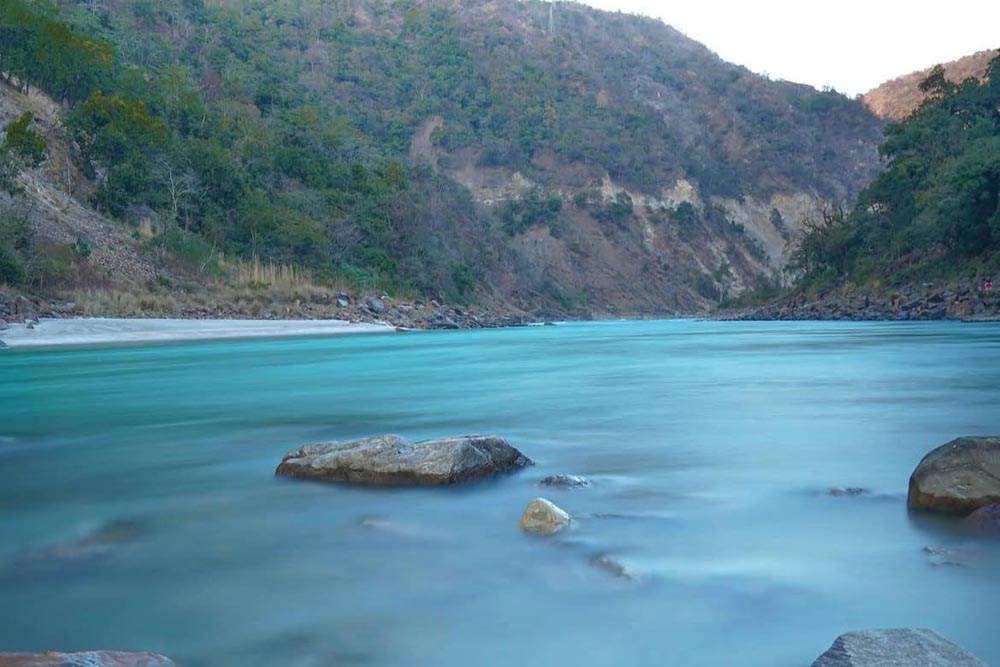
Tucked away in the Himalayan foothills near Rishikesh, Phool Chatti is one of those destinations in Uttarakhand where nature, spirituality and quiet adventure come together. Situated along the Neelkanth Temple Road in the Pauri Garhwal region, this peaceful area lies close to the sacred Ganga and is surrounded by forested hills, mountain streams and the tranquil landscapes of the Garhwal Himalayas. Although it is relatively close to the busy tourist centre of Rishikesh, Phool Chatti has a distinctly quieter character.
The name Phool Chatti is commonly associated with the meaning “land of flowers,” an appropriate description for a location surrounded by greenery and seasonal Himalayan vegetation. The area is particularly known for the historic Phool Chatti Yoga Ashram, a destination for yoga, meditation and traditional ashram living. There is also a Phool Chatti waterfall in the broader area, reached by a hiking trail from the Neelkanth Road side. These two attractions make Phool Chatti interesting to both spiritual travellers and visitors looking for a peaceful nature experience.
Where Is Phool Chatti?
Phool Chatti is located near Rishikesh in Uttarakhand, on the route leading towards Neelkanth Mahadev Temple. The Phool Chatti Yoga Ashram is approximately 5 kilometres from the Laxman Jhula area according to the ashram’s own travel information. It is situated in the Pauri Garhwal district and can be reached from Rishikesh by road.
The setting is one of the main attractions. Instead of the busy streets, cafés and commercial areas associated with central Rishikesh, visitors approaching Phool Chatti encounter a more natural landscape. The road follows the mountainous terrain, with the Ganga and forested slopes contributing to the scenery.
Its proximity to Rishikesh makes Phool Chatti particularly convenient for travellers who want to combine a conventional Rishikesh holiday with a quieter stay in the Himalayan foothills. Rishikesh itself is officially promoted by Uttarakhand Tourism as an important pilgrimage, yoga and adventure destination and as a gateway to the Garhwal Himalayas.
The Natural Beauty of Phool Chatti
The landscape around Phool Chatti is defined by the characteristic scenery of the lower Himalayas. Green hills rise around the road, while the presence of the Ganga adds an important spiritual and visual element to the area. Depending on the season, the surroundings can appear dramatically different. Summer brings greenery and relatively accessible trails, while the post-monsoon period can make the landscape especially lush.
The natural environment is one reason visitors often choose Phool Chatti when they want a break from conventional sightseeing. The sound of flowing water, mountain air, forest vegetation and relatively limited urban development create an atmosphere suited to walking, meditation and quiet observation.
For photographers, the combination of river scenery, hills, vegetation, traditional buildings and changing Himalayan light provides numerous opportunities. Early morning and late afternoon are particularly attractive times for landscape photography, when the hills and river can take on softer colours.
Visitors should nevertheless remember that this is a mountain environment. Paths can become slippery, especially after rain, and conditions can change quickly. A peaceful landscape should not be confused with an entirely risk-free one.
Phool Chatti Yoga Ashram
The most prominent attraction associated with the destination is Phool Chatti Yoga Ashram. The ashram describes itself as having been established in 1885 and as one of India’s longstanding centres for yoga and spiritual retreat. Its present tradition is particularly connected with yoga, meditation, devotional practices and simple ashram living.
The ashram occupies a beautiful setting near the Ganga and the Himalayan foothills. Its official website highlights yoga and meditation retreats, traditional yogic practices, nature walks, meditation, Ganga rituals, daily kirtan and other activities. It also offers accommodation for people who want to experience the environment beyond a short sightseeing visit.
Phool Chatti is therefore different from a conventional tourist attraction. Travellers coming primarily for sightseeing may spend only a short period in the area, whereas people joining a retreat may stay for several days and follow a structured programme.
The ashram’s retreats are aimed at beginners and intermediate participants, with programmes incorporating practices such as Hatha, Ashtanga, Bhakti and Karma Yoga. The organisation also describes its retreat experience as an opportunity to live in a traditional yogic environment while being surrounded by nature.
Yoga, Meditation and Spiritual Experience
Yoga is one of the central reasons travellers visit Phool Chatti. Rishikesh has developed an international reputation for yoga and meditation, and the quieter surroundings around Phool Chatti offer a setting that is particularly suitable for contemplative practices.
A stay at the ashram is generally more immersive than attending a casual yoga class. Visitors can experience scheduled practices, meditation, devotional activities and time spent in a natural environment. For someone accustomed to fast-paced urban travel, the slower rhythm can itself become an important part of the experience.
The spiritual atmosphere also reflects the wider culture of Rishikesh. Uttarakhand Tourism describes Rishikesh as a major centre for yoga and meditation, with numerous ashrams associated with philosophical studies, yoga and traditional Indian wellness practices.
Travellers should approach an ashram stay with an open mind and respect for its traditions. It is not simply another hotel with yoga classes. Depending on the programme, visitors may be expected to follow a particular daily routine and participate respectfully in communal or spiritual activities.
Phool Chatti Waterfall
Another attraction carrying the Phool Chatti name is Phool Chatti Waterfall, a natural waterfall located in the wider Neelkanth Road area. It is associated with a trekking route and is located near other small waterfalls, including Neer Gaddu and Garud Chatti.
The waterfall is reached through a hiking route rather than by simply driving directly to the cascade. Travel information for the area describes a trek of roughly 4.5 kilometres from the Garud temple side. The trail can be slippery, making suitable footwear particularly important.
This distinction is important for visitors planning a trip. Phool Chatti Ashram and Phool Chatti Waterfall are related geographically but are not the same attraction. Someone searching specifically for the waterfall should check the route carefully before starting the hike.
The waterfall is particularly appealing to travellers interested in nature photography, short hikes and secluded water landscapes. During the greener months, the surrounding vegetation can make the route especially scenic.
Trekking and Nature Walks
Phool Chatti provides opportunities for visitors to explore the Himalayan foothills on foot. The waterfall trek is one of the more obvious hiking experiences, while the broader Neelkanth Road area offers opportunities for walking and exploring the countryside.
Trekking here should be approached as a nature experience rather than a highly developed adventure-sports activity. Trails may include uneven ground, rocks, mud and slippery sections. Comfortable trekking shoes with good grip are preferable to ordinary sandals.
The monsoon period deserves additional caution. Heavy rain can increase water flow in streams and make mountain trails unstable or slippery. Visitors should avoid entering fast-flowing water or attempting difficult trails during poor weather.
For casual visitors staying at the ashram or nearby accommodation, shorter nature walks can be a rewarding alternative to a demanding trek. Walking slowly through the landscape allows travellers to experience the sounds of birds, flowing water and forest vegetation that can easily be missed when travelling by vehicle.
Ganga and the Riverside Environment
The proximity of the Ganga gives Phool Chatti much of its character. The river is not only a scenic feature but also a deeply significant element of the cultural and spiritual identity of the Rishikesh region.
The Phool Chatti Ashram’s official material specifically highlights its riverside Himalayan setting and activities connected with the Ganga. Its accommodation information also describes views towards the river and the presence of the river near the ashram.
Visitors should treat the river with respect. Mountain rivers can have strong currents and rapidly changing water levels. Swimming or entering the river should only be considered where it is specifically regarded as safe and permitted. During or after heavy rainfall, extra caution is essential.
Accommodation at Phool Chatti
Accommodation around Phool Chatti ranges from ashram rooms to resorts and other nature-oriented stays along the Neelkanth Road. The ashram itself offers simple accommodation associated with its retreat and stay programmes. Its information describes private guest rooms, yoga facilities and communal spaces, while its accommodation pages show different room arrangements.
For travellers seeking a spiritual retreat, staying at the ashram can be more meaningful than simply visiting for a few hours. For travellers who prefer conventional hospitality, several resorts are located in the surrounding Rattapani, Gattu Ghat and Neelkanth Road areas.
Him River Resort is located in the Phool Chatti area and provides a conventional resort-style alternative near the river. Other accommodation options can be found farther along the Neelkanth Temple Road, including Wooden River Resort and Riviera Resort.
Because accommodation availability and prices can change considerably by season, visitors should confirm current rates, facilities, road access and cancellation policies before booking.
How to Reach Phool Chatti
The easiest way to reach Phool Chatti is generally through Rishikesh. From central Rishikesh, travellers proceed towards Laxman Jhula and then continue along the road towards Neelkanth.
The official ashram directions explain that visitors arriving from New Delhi should first travel to Rishikesh and then proceed towards Laxman Jhula. From the Laxman Jhula side, a taxi can be taken towards Phool Chatti, while the ashram also describes a walking option along the Neelkanth Motor Road.
Private taxis are the most convenient option for visitors carrying luggage or travelling with family. Local transport options may also be available, but their frequency and exact operating patterns can vary.
Rishikesh is connected to major northern Indian cities by road and rail, while Dehradun’s Jolly Grant Airport is the closest major airport serving the wider region. Travellers arriving by air generally continue by road towards Rishikesh and then Phool Chatti.
Since mountain roads can be affected by weather, visitors should check road conditions before travelling, particularly during the monsoon and winter months.
Best Time to Visit Phool Chatti
The ideal time depends on the purpose of the trip. For hiking and exploring the waterfall, the greener months and the period following the monsoon can provide beautiful scenery, although trail conditions need to be considered carefully. Local travel information identifies summer and the post-monsoon period as favourable for visiting the waterfall.
For yoga and meditation, the experience can be enjoyable during several seasons because the main attraction is the ashram environment rather than a particular outdoor activity.
Winter generally provides pleasant daytime conditions but cooler mornings and evenings. Summer can be warm in the lower areas, although the surrounding hills and river environment can make the experience more comfortable than in heavily urbanised locations.
The monsoon brings abundant greenery but also introduces heavier rainfall, slippery trails and possible disruptions to outdoor activities. Travellers whose primary objective is trekking should plan accordingly.
Nearby Attractions
Phool Chatti works particularly well as part of a broader Rishikesh itinerary. Laxman Jhula and the surrounding areas are among the best-known parts of the city, although visitors should check the current access arrangements for bridges and roads because infrastructure and traffic patterns can change.
Neelkanth Mahadev Temple is another major destination along the same general route. The temple has considerable religious importance and attracts pilgrims travelling through the forested Himalayan landscape.
Rishikesh itself offers a wide range of attractions, including Triveni Ghat, Ram Jhula, Parmarth Niketan and the former ashram complex popularly known as the Beatles Ashram. The city also provides opportunities for rafting, trekking and other adventure activities.
This combination makes Phool Chatti suitable for travellers who want to balance spiritual activities with sightseeing and outdoor experiences.
Food and Daily Life
Visitors staying at an ashram should not expect the same dining experience offered by a luxury resort. Ashram food is generally connected with the simple lifestyle promoted by the retreat. Meal arrangements, timings and dietary practices should therefore be checked directly with the ashram before arrival.
Restaurants and cafés are more readily available around Rishikesh, while smaller eateries and accommodation properties can provide food closer to Phool Chatti. Travellers going on a trek should carry drinking water and a few appropriate snacks rather than assuming that refreshments will always be available along the trail.
The peaceful character of the area is partly due to its distance from dense commercial development, so visitors should plan their basic requirements in advance.
Who Should Visit Phool Chatti?
Phool Chatti is particularly suitable for people interested in yoga, meditation, spirituality, nature walks and peaceful mountain surroundings. It can also appeal to photographers, couples seeking a quieter Himalayan setting, solo travellers and visitors who want to experience a different side of Rishikesh.
It may be less suitable for travellers whose primary interest is nightlife, shopping or highly developed entertainment infrastructure. The appeal of Phool Chatti lies precisely in its slower pace and natural surroundings.
Families can also visit the region, although those planning the waterfall trek should consider the physical condition of all members of the group. The trail can become slippery and therefore may not be appropriate for young children, elderly visitors or anyone uncomfortable with uneven mountain paths. ([eUttaranchal][5])
Responsible Tourism in Phool Chatti
The natural environment around Phool Chatti deserves careful protection. Visitors should avoid littering, disturbing wildlife, damaging vegetation or leaving plastic waste near streams and trails. The quieter nature of the destination means that even small amounts of waste can have a visible impact.
Respect for the spiritual environment is equally important. Travellers visiting the ashram or nearby religious sites should dress appropriately, maintain reasonable noise levels and follow local rules regarding photography and participation in religious activities.
Water conservation and responsible use of resources are also important in mountain destinations. Travellers can contribute by carrying reusable bottles, reducing unnecessary plastic consumption and taking all non-biodegradable waste back with them when appropriate.
Tips for Planning a Phool Chatti Trip
A trip to Phool Chatti is easier when planned around the experience rather than a long checklist of attractions. Those visiting the ashram should first decide whether they want a short visit or a multi-day retreat. The official Phool Chatti website provides information about retreat dates, accommodation and booking arrangements, and its current programme includes seasonal retreat schedules.
Comfortable walking shoes are useful even if trekking is not the primary objective. A light jacket can be helpful during cooler periods, while rain protection is important during the wetter months. Visitors heading towards the waterfall should carry only essential belongings and should avoid attempting the trail during unsafe weather.
It is also sensible to keep some cash available because smaller establishments and local services may not always provide the same payment options as businesses in central Rishikesh.
Most importantly, travellers should allow enough time to appreciate the destination. Phool Chatti is not necessarily a place that needs to be rushed through in an hour. Its greatest attraction is the combination of river, forest, mountain landscape and spiritual atmosphere.
Phool Chatti as a Quiet Side of Rishikesh
Rishikesh is famous throughout the world for yoga, spirituality, adventure sports and the Ganga. Yet the busiest parts of the town can sometimes make it difficult to experience the silence associated with Himalayan travel. Phool Chatti provides an opportunity to move slightly away from that activity without travelling deep into the mountains.
The historic yoga tradition of Phool Chatti Ashram, the surrounding forests, the nearby river and the waterfall trails give the destination several distinct identities. A visitor can approach it as a yoga retreat, a nature escape, a hiking destination or simply a peaceful extension of a Rishikesh trip.
Its accessibility is another important advantage. The ashram is only around five kilometres from the Laxman Jhula area according to its official information, yet the surrounding landscape feels considerably removed from the urban environment.
Final Thoughts
Phool Chatti represents a quieter and more contemplative side of Uttarakhand. Rather than relying on grand monuments or heavily commercialised attractions, its appeal comes from a combination of natural surroundings, the sacred Ganga, Himalayan foothills, traditional yoga culture and simple living.
For spiritual travellers, the Phool Chatti Yoga Ashram offers an opportunity to experience yoga and meditation in a long-established ashram environment. For outdoor enthusiasts, the surrounding trails and Phool Chatti Waterfall provide opportunities for hiking and nature exploration. For ordinary visitors to Rishikesh, the area offers a peaceful escape from the busier tourist zones.
Whether approached as a retreat, a short excursion or part of a larger Uttarakhand journey, Phool Chatti demonstrates why the Rishikesh region continues to attract people seeking both adventure and inner quiet. Its landscape encourages a slower style of travel—one in which the river, forest, mountains and silence become as important as the destination itself.

