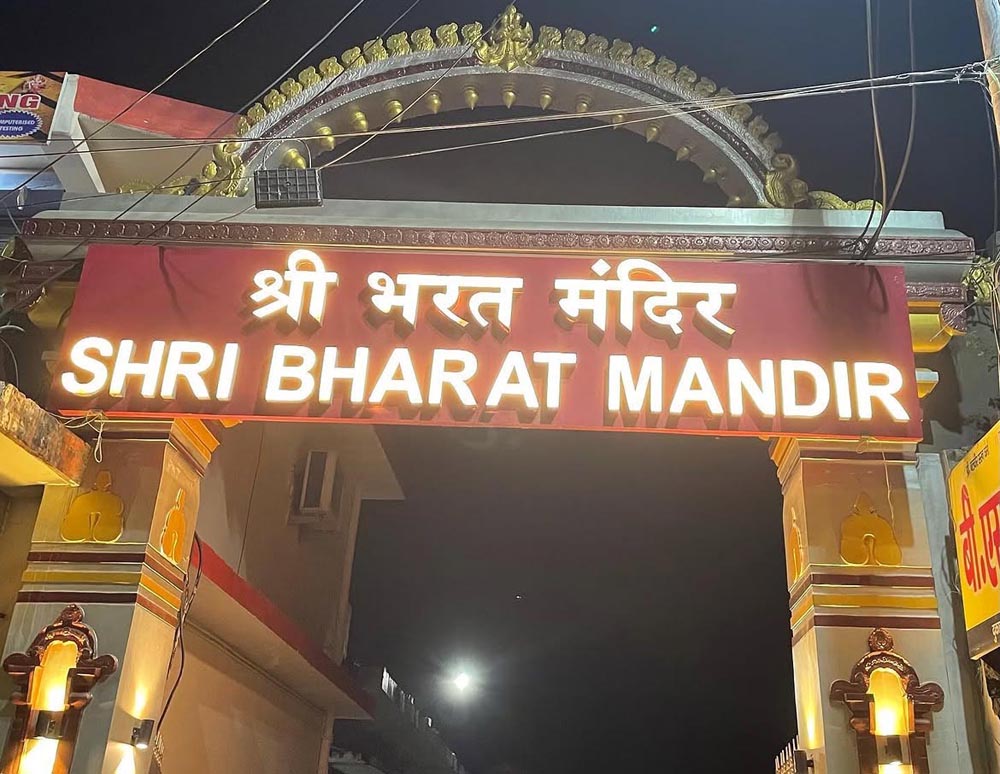
Nestled in the heart of Rishikesh in Uttarakhand, Bharat Mandir is one of the city’s most revered and historically significant temples. While Rishikesh is internationally known for yoga, meditation, ashrams and the sacred Ganga, Bharat Mandir represents another important dimension of the town’s identity: its ancient Vaishnavite and pilgrimage traditions. Located near Triveni Ghat and surrounded by the busy streets of central Rishikesh, the temple offers a remarkable contrast between the activity of the modern city and the atmosphere of an old Hindu shrine.
Dedicated to Lord Vishnu in the form of Hrishikesh Narayan, Bharat Mandir is traditionally associated with the penance of the sage Raibhya Rishi. The temple’s own historical and religious tradition connects the site with the Skanda Purana’s Kedarkhand, while Uttarakhand Tourism describes Bharat Mandir as one of the oldest shrines of Rishikesh.
For pilgrims, the temple is a place of worship and devotion. For history enthusiasts, it provides an opportunity to explore the religious heritage of one of Uttarakhand’s oldest pilgrimage centres. Its architecture, ancient sculptures, archaeological museum, festivals and legends make it an important destination for anyone interested in understanding the deeper cultural character of Rishikesh.
The Historical Importance of Bharat Mandir
Bharat Mandir is commonly described as one of the oldest temples in Rishikesh. Its history is closely connected with the traditional religious identity of the town itself. According to the temple’s official account, the glory of the shrine is described in the Kedarkhand section of the Skanda Purana, particularly chapters 115 to 120. The temple tradition identifies Lord Vishnu at this sacred location as Hrishikesh Narayan.
The temple’s history also has an important association with Adi Shankaracharya. According to the temple’s tradition, the idol of Hrishikesh Narayan was reinstalled by Adi Shankaracharya around 789 AD on the auspicious occasion of Basant Panchami. The annual Basant Panchami celebrations continue to commemorate this association. It is important to distinguish between traditional religious accounts and archaeological or historical evidence when discussing such an old shrine. The temple’s religious traditions extend far into antiquity, while archaeological material discovered at the site provides evidence of activity spanning several centuries. The temple museum preserves objects that the temple identifies as dating from approximately the third to the fourteenth centuries AD. The structure visible today has also undergone reconstruction and renovation over time. According to the temple’s official history, Maharaja Yashwant Singh Malvendra Bahadur of Nabha rebuilt the outer structure in 1832 AD. This combination of ancient religious traditions and later architectural reconstruction explains why Bharat Mandir should be viewed not simply as a single-period monument, but as a living site whose history developed over many centuries.
The Legend of Raibhya Rishi and Hrishikesh Narayan
The spiritual significance of Bharat Mandir is deeply connected with the story of Raibhya Rishi. According to temple tradition, the sage performed intense penance at this location. Pleased by his devotion, Lord Vishnu appeared before him and promised to remain at the site as Hrishikesh Narayan. The tradition further associates the name “Hrishikesh” with this divine presence.
This legend gives the temple a special place within the religious geography of Rishikesh. Rather than being regarded merely as a historical building, Bharat Mandir is understood by devotees as a sacred location where divine presence was revealed through the austerities of a great sage.
The temple’s own account also connects the site with Pundit Som Sharma and describes the sacred importance of bathing in the Ganga at Mayakund before seeking the darshan of Hrishikesh Narayan. These traditions help explain the close relationship between the temple, the Ganga and the wider pilgrimage culture of Rishikesh.
The Main Deity: Lord Hrishikesh Narayan
The principal deity of Bharat Mandir is Lord Vishnu, worshipped here as Hrishikesh Narayan or Bharat Bhagwan. One of the temple’s most distinctive features is the idol itself. It is carved from a single piece of black Shaligram stone and represents the four-armed form of Lord Vishnu. The temple states that the approximately five-foot-high idol is made from one piece of black Shaligram stone.
Shaligram stones have a particularly important place in Vaishnavite worship. The black stone gives the principal image a distinctive appearance and reinforces the temple’s association with Vishnu worship.
The temple’s official account also notes a traditional connection between the Shaligram stone used for the Hrishikesh Narayan image and the stone associated with the idols of Lord Tirupati and Lord Badrinath. Such traditions further strengthen the temple’s connection with the broader network of important Vishnu pilgrimage sites in northern India.
Alongside the principal deity is an image of Lord Varaha, another manifestation of Lord Vishnu. Visitors therefore encounter several layers of Vaishnavite symbolism within the relatively compact temple complex.
Architecture and Unique Features
Although Bharat Mandir has a relatively modest appearance compared with some of India’s enormous temple complexes, its architectural details are fascinating. The temple was built using large stones, and according to the temple’s official information, some of its walls are approximately seven to eight feet thick.
One of the most remarkable structural claims concerns the top of the temple’s dome. The temple states that a single piece of rock weighing approximately 125 tonnes forms the top of the dome. The main temple has sixteen corners, while the outer structure incorporates nine domes arranged in groups of three.
The architecture therefore reflects not only religious symbolism but also the engineering traditions of temple construction. The use of enormous stone elements demonstrates the scale and durability of traditional building techniques.
The present exterior also reflects its later reconstruction. The rebuilding attributed to Maharaja Yashwant Singh Malvendra Bahadur in 1832 means that visitors should not expect every visible component of the temple to date from the earliest period associated with the shrine. Instead, the complex represents layers of construction, preservation and renovation.
Archaeological Heritage and the Temple Museum
One of the most interesting aspects of Bharat Mandir is its archaeological dimension. Excavations around the temple have produced pottery, ornamental bricks, sculptures and other objects. These materials are preserved in the temple museum. According to the temple’s museum information, the objects were registered and certified by the Department of Archaeology and are broadly dated from the third to the fourteenth century AD.
The museum includes sculptures of Yakshas, Yakshinis and a four-armed Vishnu, among other artefacts. These objects provide a valuable window into the changing artistic and religious environment of the region over many centuries.
For visitors interested in history, the museum adds an important dimension to the temple experience. Bharat Mandir is therefore not only a place where religious traditions are preserved through rituals; it is also a site where physical archaeological remains help illuminate the area’s past.
The Buddha Connection
Another intriguing feature associated with Bharat Mandir is the presence of a Buddha image discovered during excavation. Incredible India reports that archaeological excavations uncovered a Buddha statue and other artefacts, with the Buddha image now kept beneath an old tree near the temple.
The discovery has contributed to discussions about the area’s complex religious history. Some accounts associate the site with a Buddhist period during the reign of Emperor Ashoka, although such historical interpretations should be distinguished from the temple’s traditional narratives.
The coexistence of Hindu religious traditions, archaeological Buddhist material and other ancient sculptures illustrates the long cultural history of the wider Rishikesh region. It also makes Bharat Mandir particularly interesting for visitors who want to explore India’s layered religious heritage rather than viewing the site only through one historical period.
The Sacred Tree and Local Traditions
Near the temple is another distinctive feature: an old tree traditionally described as a combination of banyan, peepal and bel trees whose roots have become intertwined. According to Incredible India, devotees associate these three trees with the Hindu Trinity of Brahma, Vishnu and Shiva.
Trees have traditionally held an important place in Indian sacred landscapes, and this particular tree adds another symbolic element to the Bharat Mandir complex. Its presence demonstrates how worship at an ancient temple can extend beyond the principal shrine to include natural elements, legends and spaces of contemplation.
Basant Panchami at Bharat Mandir
Basant Panchami is one of the most important annual occasions at Bharat Mandir. The festival marks the arrival of spring and has a special connection with the temple because tradition associates the reinstallation of the deity by Adi Shankaracharya with Basant Panchami.
During the festival, the Shaligram image of Lord Hrishikesh Narayan is taken from the temple for a ceremonial bath at Mayakund. It is subsequently carried in a procession through Rishikesh before being brought back to the temple. This creates a vibrant combination of religious ceremony, procession and community participation.
For travellers interested in experiencing Rishikesh’s living traditions rather than simply visiting monuments, festival periods can provide a particularly memorable insight into the temple’s cultural importance. Visitors should nevertheless expect larger crowds and should follow local instructions regarding access and photography.
Akshaya Tritiya and the 108 Parikramas
Another significant observance associated with Bharat Mandir is Akshaya Tritiya. According to the temple’s tradition, devotees who complete 108 circumambulations, or parikramas, of the temple on this auspicious day are believed to receive spiritual merit and fulfillment of their wishes. The tradition also associates this practice with the spiritual merit of visiting Badrinarayan.
The practice demonstrates how pilgrimage at Bharat Mandir involves more than simply entering the shrine and offering prayers. Circumambulation, bathing, processions and darshan form part of a larger ritual culture in which physical movement through sacred space is itself considered spiritually meaningful.
Bharat Mandir and the Cultural Life of Rishikesh
Bharat Mandir occupies an important position in the cultural geography of Rishikesh. The town is widely known for yoga and meditation and attracts pilgrims, spiritual seekers and international visitors throughout the year. Uttarakhand Tourism describes Rishikesh as a major pilgrimage and spiritual destination situated along the Ganga and identifies Bharat Mandir as one of its oldest shrines.
The temple is located in the central part of the city, near the main market and Triveni Ghat. This means that visiting Bharat Mandir can easily become part of a broader Rishikesh heritage walk.
A visitor can combine a temple visit with time at Triveni Ghat, where pilgrims traditionally bathe in the Ganga and attend the famous evening Ganga Aarti. Other attractions around Rishikesh include ashrams, yoga centres and historic spiritual institutions.
Bharat Mandir Sanskrit and Educational Institutions
The cultural contribution of the Bharat Mandir complex extends beyond worship. The temple’s official website records the establishment of Shri Bharat Sanskrit Mahavidyalaya in 1921, with the objective of promoting Vedic culture and Sanskrit education. The complex has also been associated with educational institutions serving the local community.
This educational role is significant because it shows how the temple has functioned as more than a place of pilgrimage. Traditional Indian temples historically often served as centres of learning, cultural transmission and community activity, and Bharat Mandir continues to reflect aspects of this wider role.
Location of Bharat Mandir
Bharat Mandir is situated at Jhanda Chowk, Main Bazaar, Rishikesh, Uttarakhand – 249201, in the centre of the city. The temple’s official website provides this address and contact information.
Its central location makes it relatively convenient for visitors staying in Rishikesh. It is also close to Triveni Ghat, making it practical to combine the temple with other major attractions in the city centre.
The temple is approximately a short local journey from Rishikesh Railway Station and the bus stand, although actual travel time can vary depending on traffic and local road conditions.
Temple Timings
The Government of India’s Incredible India tourism portal currently lists Bharat Mandir’s visiting hours as 5:00 AM to 12:00 PM and 4:00 PM to 9:00 PM.
Because temple schedules can change during festivals, special ceremonies and religious occasions, travellers should verify the current timings before making a dedicated visit. The official temple website is the most appropriate source for checking current information.
Visitors should also remember that Bharat Mandir is an active place of worship rather than simply a tourist monument. Modest clothing, respectful behaviour and adherence to temple instructions are appropriate.
Best Time to Visit Bharat Mandir
Rishikesh can be visited throughout much of the year, but the most comfortable period for exploring temples and outdoor attractions is generally during the cooler months. October through March is particularly suitable for travellers who want to combine Bharat Mandir with walking tours, riverside visits and other attractions.
The monsoon months bring heavier rainfall to Uttarakhand, which can affect outdoor sightseeing and travel conditions. Summer can be warmer, although mornings and evenings can still be suitable for temple visits.
Those specifically interested in religious celebrations may wish to plan around Basant Panchami or Akshaya Tritiya. However, festival visits require greater flexibility because crowds, processions and ceremonial activities can alter normal access arrangements.
Places to Visit Near Bharat Mandir
Bharat Mandir’s central location allows travellers to explore several important Rishikesh attractions in the same outing. Triveni Ghat is one of the closest major landmarks and is particularly well known for its evening Ganga Aarti.
Visitors can also explore the city’s markets and traditional neighbourhoods around the temple. Those with more time can travel toward the ashram areas of Rishikesh, including the famous spiritual centres along the Ganga.
For adventure-oriented travellers, Shivpuri is associated with white-water rafting, while Rajaji National Park provides opportunities to experience the region’s Himalayan foothill environment. Incredible India highlights both as attractions that can complement a visit to Bharat Mandir and Rishikesh.
Why Bharat Mandir Matters to Rishikesh
The importance of Bharat Mandir lies in the way several dimensions of Rishikesh come together within one complex. It is simultaneously an ancient Hindu shrine, a centre of Vaishnavite worship, a site associated with the traditions of Adi Shankaracharya, an archaeological location, a place connected with Sanskrit education and a continuing centre of community religious life.
Its significance cannot be understood only by looking at the temple’s architecture. The legends of Raibhya Rishi, the worship of Hrishikesh Narayan, the Shaligram idol, the Basant Panchami procession, the Akshaya Tritiya traditions and the archaeological discoveries collectively create the identity of the shrine.
For travellers, Bharat Mandir also provides a different perspective on Rishikesh. While the city’s modern international reputation is strongly connected with yoga, meditation and adventure tourism, Bharat Mandir points towards a much older pilgrimage tradition rooted in Hindu sacred literature and the spiritual geography of the Ganga.
Final Summary
Bharat Mandir is one of the most important heritage and pilgrimage sites to explore in Rishikesh, Uttarakhand. Its ancient religious traditions, association with Lord Hrishikesh Narayan, distinctive Shaligram idol, impressive stone construction, archaeological museum and annual festivals make it considerably more than an ordinary temple visit.
The temple’s story stretches between mythology, religious tradition, archaeology and living culture. Traditional accounts connect the sacred site with Raibhya Rishi and Lord Vishnu, while historical traditions associate the shrine with Adi Shankaracharya. Later reconstruction and centuries of continued worship have helped preserve the temple as part of Rishikesh’s evolving cultural landscape.
A visit to Bharat Mandir is therefore an opportunity to look beyond the contemporary image of Rishikesh and discover one of the ancient foundations of its identity. For pilgrims, it is a place of devotion and darshan; for history lovers, it offers archaeological and architectural interest; and for travellers exploring Uttarakhand’s cultural heritage, it provides an intimate connection with the spiritual traditions that have shaped Rishikesh for centuries.

