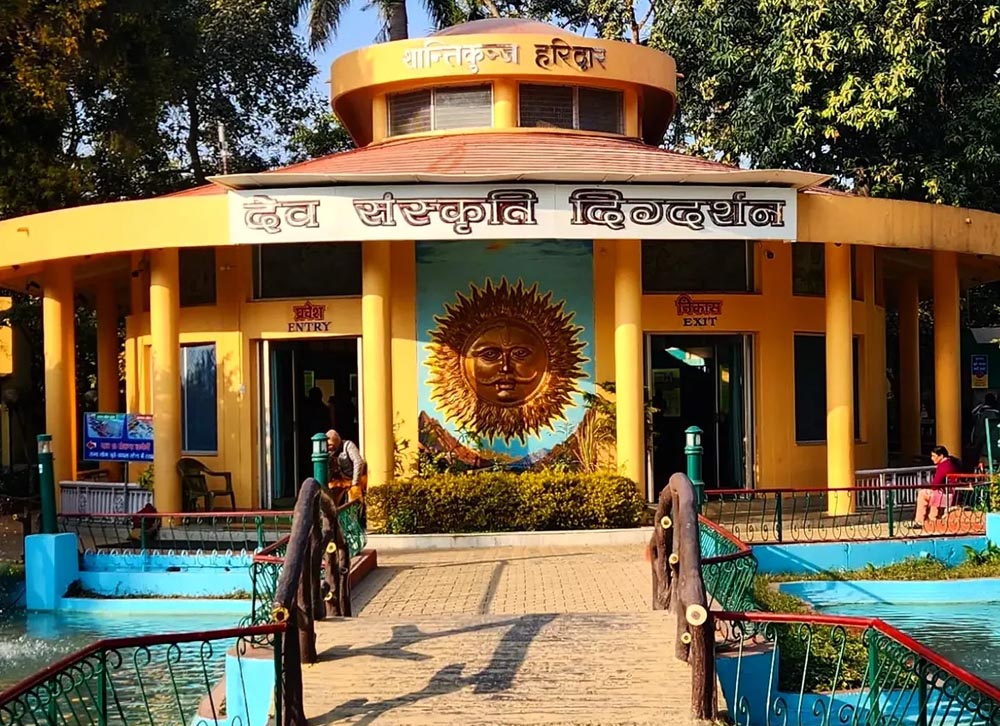
Nestled in the peaceful surroundings of Haridwar, Uttarakhand, Shantikunj is far more than an ordinary ashram or religious centre. It is a major spiritual, cultural and social institution associated with the All World Gayatri Pariwar (AWGP), and it attracts visitors, spiritual seekers, families, students and volunteers from different parts of India and abroad. Located in the Motichur area of Haridwar, near the foothills of the Himalayas, Shantikunj is known for its disciplined lifestyle, collective prayers, Gayatri worship, yajna, meditation, spiritual training and emphasis on character building.
Officially known as Gayatri Teerth Shantikunj, the centre describes itself as the spiritual headquarters of the All World Gayatri Pariwar. It was founded by Pandit Shriram Sharma Acharya in 1971 and subsequently developed into a large centre for spiritual awakening, moral education, social service and cultural activities.
For travellers visiting Haridwar, Shantikunj offers a different experience from the city’s crowded temples and ghats. Instead of simply visiting a monument, a visitor can observe and, where permitted, participate in an organized daily routine involving prayer, meditation, yajna, discourse and service. This combination of pilgrimage and disciplined community life is one of the defining characteristics of Shantikunj.
The Location and Spiritual Setting of Shantikunj
Shantikunj is situated in Haridwar district of Uttarakhand, in the Motichur area along the Delhi–Rishikesh Highway. Its postal address is Gayatri Teerth–Shantikunj, Haridwar, Uttarakhand 249411. The centre is approximately 6 kilometres from Haridwar Railway Station according to the official Shantikunj information.
Its geographical setting contributes greatly to its atmosphere. Haridwar is positioned where the Ganga enters the plains after descending from the Himalayan region, and the wider area is surrounded by the Shivalik landscape. This combination of river, hills, forests and religious traditions has made Haridwar one of India’s major pilgrimage destinations. Shantikunj’s location is particularly significant because its philosophy connects the centre with the ancient idea of the Himalayan rishi tradition. The institution’s own history describes the site as associated symbolically with the Sapt-Rishi tradition and the spiritual heritage of the Himalayas. The development of Shantikunj therefore was intended not merely as construction of an ashram but as the creation of a centre for spiritual practice and training.
The atmosphere is noticeably different from the busy commercial areas of Haridwar. Visitors encounter an environment centred on simplicity, routine, prayer, service and collective participation rather than conventional tourism.
History of Shantikunj
The history of Shantikunj is closely connected with Pandit Shriram Sharma Acharya and Mata Bhagwati Devi Sharma, the figures revered within the Gayatri Pariwar tradition.
According to the organisation’s account, the establishment of Shantikunj followed Acharya’s spiritual experiences and guidance associated with the Himalayan tradition. In 1971, he established Shantikunj in the Sapt-Sarovar area of Haridwar and began developing it as a centre for the revival of the rishi tradition.
The early Shantikunj was comparatively modest. Additional land was acquired and construction gradually expanded. The institution’s account states that the development included accommodation, a kitchen, meeting facilities, temples and spaces for spiritual practice. A temple dedicated to Gayatri and the Akhand Deep became important components of the developing complex.
The site was envisioned as a kind of modern rishi ashram where spiritual discipline, education and service would be integrated. Over the following years, Shantikunj expanded its training programmes and infrastructure. Its historical development also included the establishment of the Brahmavarchas Research Institute in 1979, reflecting the organisation’s interest in exploring connections between spirituality and scientific approaches.
The expansion transformed Shantikunj into an institutional centre rather than simply a small retreat. Today, its activities extend into education, social service, spiritual training, cultural programmes and various forms of community outreach.
The Philosophy Behind Shantikunj
The central philosophy of Shantikunj revolves around personal transformation and social transformation. According to the organisation, the development of an individual’s moral, spiritual and cultural qualities is connected with the broader improvement of society.
Gayatri worship occupies an important place in this philosophy. Meditation, mantra recitation, yajna, self-discipline and service are treated as practical methods for developing inner awareness and ethical living.
The institution also places considerable emphasis on what it describes as the integration of spirituality with everyday life. Rather than viewing spiritual practice as something limited to temples or periods of retreat, its programmes encourage participants to connect spiritual discipline with family life, social responsibility, education, professional conduct and service.
This explains why Shantikunj is not simply a place for sightseeing. A traveller interested only in seeing buildings may complete a visit relatively quickly, while someone interested in understanding its philosophy may benefit from spending more time observing the daily activities.
Gayatri Temple and Akhand Deep
Among the spiritually important features of Shantikunj are its Gayatri-related places of worship and the Akhand Deep, the continuously maintained sacred lamp associated with the institution’s tradition.
The Akhand Deep holds special symbolic importance within Shantikunj. It represents continuity of spiritual practice and is associated with the Gayatri tradition followed by the institution. Visitors can participate in darshan according to the centre’s established routine.
The complex also contains symbolic representations connected with Ganga, Uttarakhand and the ancient rishi tradition. The organisation’s historical account specifically describes temples associated with Ganga, Uttarakhand, the seven rishis and other revered rishis as part of the early development of the ashram.
For visitors interested in Indian spiritual traditions, these features provide an opportunity to understand how ancient symbols are interpreted within a modern institutional setting.
Daily Life at Shantikunj
One of the most distinctive aspects of Shantikunj is its highly structured daily routine. The schedule begins very early in the morning, reflecting the traditional Indian ashram concept of beginning spiritual practice before sunrise.
The official schedule lists morning prayer, aarti, collective meditation, darshan of the Akhand Deep, yajna and collective chanting among the early activities. Discourses and classes follow later in the morning, while afternoon and evening activities include meditation, collective chanting, aarti and spiritual programmes.
The exact schedule varies somewhat according to the season. The official timetable indicates earlier morning activities during April–September and slightly later timings during October–March. Night rest is scheduled relatively early, reinforcing the disciplined lifestyle of the institution.
The schedule is important for visitors because Shantikunj is not designed around the typical tourist model of arriving at any time, seeing a few attractions and leaving. Those staying inside the ashram are expected to participate in its activities.
Yajna and Spiritual Practices
Yajna is another important feature of Shantikunj. The practice involves a sacred fire ceremony rooted in Vedic traditions and occupies a regular place in the centre’s daily routine.
Morning yajna is conducted collectively, accompanied by mantra recitation and other ritual practices. For visitors familiar with Hindu religious traditions, this can be an especially meaningful part of the Shantikunj experience.
Meditation is also incorporated into the daily schedule. The official routine includes Jyoti Avadharan Sadhana in the afternoon and Naad Yoga meditation in the evening. Collective japa and spiritual discourses are also part of the programme.
These practices create an environment where spiritual activities are not isolated events but interconnected parts of daily life.
Training, Camps and Educational Activities
Shantikunj is also known for its training programmes. The institution offers spiritual camps designed for different levels of participants, including programmes focused on self-refinement and spiritual awakening. According to its visitor information, camps can range from several days to longer programmes.
The centre’s wider activities include programmes related to moral education, youth development, social reform, women’s empowerment, rural development, disaster management, Vedic culture and self-reliance. These activities reflect the organisation’s stated goal of combining spiritual development with social responsibility. For students, teachers and organised groups, Shantikunj also offers options for guided visits and short spiritual sessions. Such programmes can make a visit more educational than a simple sightseeing trip.
Accommodation at Shantikunj
Accommodation at Shantikunj follows the character of an ashram rather than a conventional hotel. According to the official accommodation information, lodging is primarily intended for people participating in spiritual training or camps, conducting sacramental activities or visiting the centre with appropriate permission. Visitors coming simply for pilgrimage may be permitted a maximum stay of two days and are expected to participate in the daily activities.
The official information states that accommodation is provided free of charge and that there is no prior reservation system for ordinary accommodation; space is subject to availability upon arrival. Spiritual seekers are generally provided group accommodation rather than individual rooms.
This is an important consideration for travellers. Someone looking for hotel-style privacy, flexible meal times and complete freedom of schedule may prefer to stay at a hotel or guesthouse in Haridwar and visit Shantikunj during the day. Visitors specifically seeking an ashram experience, however, may find the structured arrangement meaningful.
Crowds can increase during summer and major spiritual occasions such as Navratri, Vasant Panchami, Guru Purnima, Gayatri Jayanti and Raksha Bandhan, so accommodation may be more difficult to obtain during such periods.
Food and Community Living
Food at Shantikunj is connected with the institution’s emphasis on simple community living. Its official daily routine states that two meals are offered free of cost to visitors and residents through the ashram’s kitchen.
Meals are not simply a hospitality service; they form part of the ashram’s daily rhythm. Visitors staying inside the complex should therefore be prepared to follow the scheduled meal timings rather than expecting the flexibility of a commercial restaurant.
The overall lifestyle encourages simplicity, discipline and participation. This makes the experience particularly different from a conventional holiday.
Shantikunj as a Centre of Social Service
Another major dimension of Shantikunj is its social and cultural outreach. The institution identifies activities such as social reform, rural self-reliance, disaster management, youth transformation, women’s empowerment, Vedic studies, Ayurveda-related research and cultural education among its areas of work.
This broader mission has helped Shantikunj develop an extensive network associated with the Gayatri Pariwar movement. The organisation describes numerous centres and study groups connected with its work across India and beyond.
Consequently, Shantikunj can be understood on several levels: as an ashram, pilgrimage centre, training institution, cultural organisation and headquarters of a large spiritual movement.
How to Reach Shantikunj
Shantikunj is conveniently accessible from Haridwar. The official centre states that it is approximately 6 kilometres from Haridwar Railway Station and lies directly on the Delhi–Rishikesh Highway. Shared and private auto-rickshaws are commonly used to reach the centre from the railway station or bus stand.
Haridwar itself has strong rail connections with major Indian cities. The district administration lists direct railway connections with cities including Delhi, Mumbai, Kolkata, Chennai, Ahmedabad and Jaipur. By road, Haridwar is accessible from Delhi, Uttar Pradesh, Haryana, Punjab and other parts of Uttarakhand. For air travellers, Jolly Grant Airport near Dehradun is the nearest airport serving Haridwar. The district administration places it about 37 kilometres from Haridwar, while Shantikunj’s own information gives a distance of less than 30 kilometres from the centre. The difference reflects the different reference points used for the measurements.
Places to Visit Near Shantikunj
A visit to Shantikunj can easily be combined with other attractions in Haridwar. The city’s most famous religious landmark is Har Ki Pauri, the historic Ganga ghat where the evening Ganga Aarti attracts large numbers of devotees and visitors.
Mansa Devi Temple and Chandi Devi Temple are other major religious attractions. Both are associated with the Shakti tradition, and Chandi Devi Temple is situated on Neel Parvat. The district’s official tourism listings also include Rajaji National Park among Haridwar’s major attractions.
Visitors interested in ashram culture can also explore other spiritual institutions in and around Haridwar. The wider city offers an extensive range of temples, ashrams, ghats and traditional centres, making it possible to combine a Shantikunj visit with a broader spiritual tour of the region.
Best Way to Experience Shantikunj
The most meaningful way to experience Shantikunj is to treat it as a spiritual centre rather than simply another tourist attraction. Visitors should maintain quietness, respect the dress and behavioural expectations of the ashram, follow instructions from volunteers and avoid disrupting ongoing prayers or meditation.
If visiting for only a few hours, it is useful to learn the permitted visiting periods and important activities beforehand. Those staying within the ashram should be prepared for early mornings, scheduled meals, collective activities and limited personal flexibility.
Photography and other visitor activities should always follow the centre’s current rules. Since schedules, access arrangements and programme availability can change, checking the official Shantikunj information before travelling is advisable.
Why Shantikunj Is Significant to Haridwar
Haridwar is already one of India’s most important pilgrimage destinations, but Shantikunj adds another dimension to the city’s spiritual landscape. Instead of focusing primarily on ritual bathing, temple worship or festivals, it emphasises organised spiritual practice, education, character development and social service.
Its significance also lies in the way it attempts to connect traditional concepts with contemporary life. Meditation, yajna, mantra practice and the rishi tradition are presented alongside education, scientific research, social development and community programmes.
For some visitors, Shantikunj may be a place of prayer and meditation. For others, it may be an opportunity to learn about the Gayatri Pariwar movement or experience disciplined ashram life. Students and organised groups may approach it as an educational visit, while spiritual seekers may come specifically for training and longer programmes.
Final Thoughts
Shantikunj represents an important chapter in the modern spiritual history of Haridwar. Established in 1971 under the guidance of Pandit Shriram Sharma Acharya, it has grown from a comparatively small ashram into the headquarters of the All World Gayatri Pariwar and a centre associated with spiritual education, social service and cultural activities.
Its greatest distinction is the integration of spiritual practice with everyday discipline. Early-morning prayer, meditation, yajna, chanting, study, community meals, service and evening programmes create a rhythm quite different from ordinary urban life.
For travellers exploring Uttarakhand, Shantikunj can therefore offer an experience beyond conventional sightseeing. Its peaceful setting near the Ganga, proximity to Haridwar’s major pilgrimage sites and carefully organised daily routine make it a distinctive destination for those interested in spirituality, Indian culture, meditation and community living.
More than a place to see, Shantikunj is a place to experience. Its importance lies not only in its temples and buildings but also in the practices, ideas and community activities that continue to shape its identity. A visit becomes especially meaningful when approached with patience, respect and an openness to understanding the traditions that have made this institution one of the notable spiritual centres of Uttarakhand.

