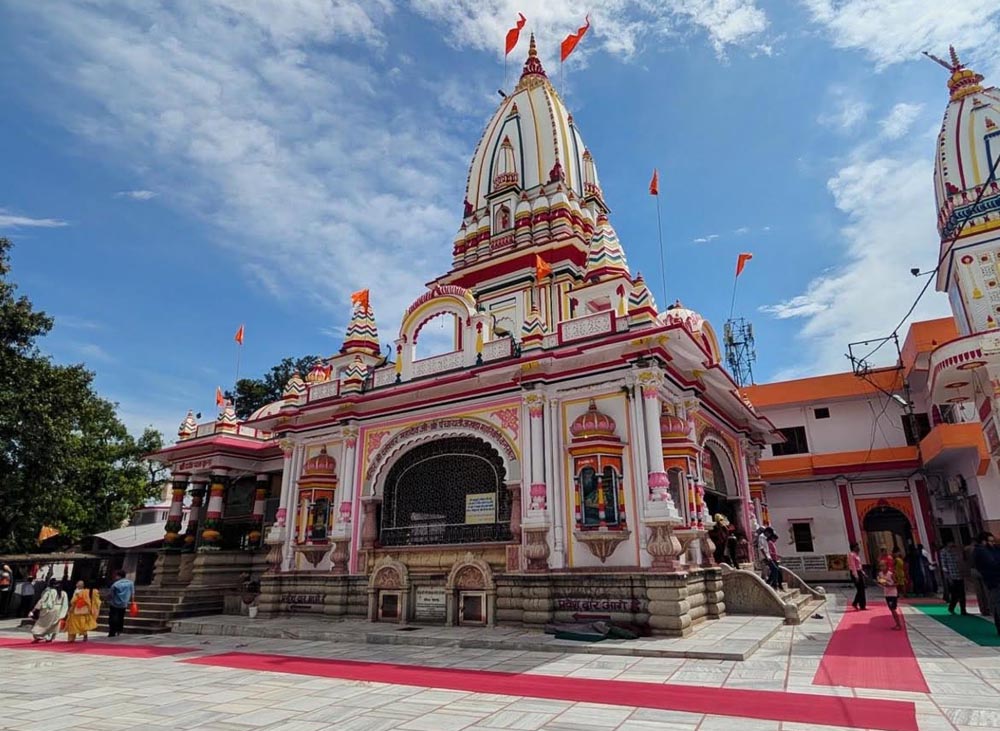
In the sacred landscape of Uttarakhand, where rivers, mountains and ancient shrines are closely woven into Hindu traditions, few places carry a mythological story as powerful as Daksh Mahadev Temple. Located in Kankhal, near Haridwar, the temple is also known as Daksheshwar Mahadev Temple or Daksha Mahadev Temple. It is dedicated to Lord Shiva and is traditionally associated with the legendary Daksha Yajna, the sacrifice performed by King Daksha Prajapati and the tragic self-immolation of Goddess Sati.
The temple is situated in Kankhal, one of the old sacred areas around Haridwar. Uttarakhand Tourism itself includes Daksh Prajapati in its Shaiv Circuit, reflecting the site’s place within the state’s wider network of Shiva pilgrimage destinations.
For pilgrims, the temple is a place of worship. For visitors interested in Indian mythology, it is a place where one of Hinduism’s best-known stories is traditionally connected to a physical landscape. And for travellers exploring Haridwar beyond the famous ghats and Ganga Aarti, Daksh Mahadev Temple offers an opportunity to experience the quieter religious character of Kankhal.
Where Is Daksh Mahadev Temple Located?
Daksh Mahadev Temple is located in Kankhal, in Haridwar district of Uttarakhand. Kankhal lies only a few kilometres from central Haridwar and is easily accessible by road. The temple’s address is generally given as Kankhal, Haridwar, Uttarakhand – 249407.
Its proximity to Haridwar makes it particularly convenient for pilgrims. A visit to the temple can be combined with other important religious places in Haridwar, including Har Ki Pauri, Mansa Devi Temple, Chandi Devi Temple and other shrines in and around Kankhal.
The temple is particularly significant because its importance does not depend only on its present-day architecture. Its identity is inseparable from the ancient story of Daksha Prajapati, Sati and Shiva. According to Hindu tradition, Kankhal was the setting for the great yajna organized by Daksha, making the area an important mythological landscape.
The Story of Daksha Yajna
The most important reason devotees visit Daksh Mahadev Temple is its association with the story of Daksha Yajna.
According to Hindu tradition, Daksha Prajapati was a powerful figure and the father of Sati, who later became the first wife of Lord Shiva. Sati chose Shiva as her husband, but Daksha was not pleased with the marriage. The story portrays a deep conflict between Daksha’s pride and Shiva’s unconventional, ascetic way of life.
Daksha eventually organized a grand yajna and invited numerous gods, sages and important personalities. Lord Shiva, however, was deliberately excluded from the gathering. Sati, despite not being invited, decided to attend because she wanted to visit her father’s house and participate in the family ceremony.
When Sati arrived, the situation became painful. The traditional account describes Daksha insulting Shiva in Sati’s presence. Unable to accept the humiliation directed toward her husband, Sati gave up her physical body by entering the sacrificial fire of the yajna.
This moment becomes the emotional centre of the entire story. Sati’s death transformed the yajna from a grand religious ceremony into a scene of cosmic conflict.
The account is preserved in Hindu religious literature in different forms and is an important part of the mythology surrounding Shiva and Shakti. Uttarakhand Open University material on tourism also identifies Kankhal’s Daksheshwar Mahadev Temple with this traditional account of Daksha’s yajna and Sati’s self-immolation.
Shiva’s Anger and the Arrival of Virabhadra
When Lord Shiva learned of Sati’s death, his grief and anger became immense. According to the traditional story, Shiva created or manifested the fierce warrior Virabhadra, who was sent to destroy Daksha’s yajna.
Virabhadra arrived at the sacrificial site with Shiva’s ganas. The ceremony was disrupted, and Daksha was eventually beheaded.
The story does not end with destruction. After the gods and other divine beings pleaded for mercy, Shiva eventually restored Daksha’s life. In the familiar version of the legend, Daksha was given the head of a goat.
This part of the story is particularly meaningful because the narrative moves from anger and destruction toward repentance, restoration and forgiveness. Consequently, Daksh Mahadev Temple is not simply associated with tragedy. For many devotees, it represents the power of devotion, the consequences of arrogance and the possibility of divine forgiveness.
Why Is the Temple Called Daksheshwar Mahadev?
The name itself explains much of the temple’s identity.
“Daksh” refers to Daksha Prajapati, while “Mahadev” is one of the revered names of Lord Shiva. The temple is therefore commonly known as Daksh Mahadev or Daksheshwar Mahadev.
The shrine is dedicated primarily to Shiva, and the mythology of Daksha gives the temple a distinctive character among Shiva temples. Rather than being connected primarily with a mountain legend, a Jyotirlinga tradition or a particular form of Shiva’s ascetic life, this shrine is strongly associated with the family and cosmic drama involving Shiva, Sati and Daksha.
The Government of India’s Incredible India tourism portal describes the shrine as a sacred temple devoted to Shiva and Sati and identifies the Sati Kund/Yagna Kund as an important part of the site’s religious association.
History of the Present Temple
Although the religious tradition associated with Kankhal is much older, the present temple structure has a more recent documented history.
According to tourism sources, the present structure was built in 1810 by Queen Dhankaur and subsequently renovated in 1962.
This distinction between mythological antiquity and architectural antiquity is important. The sacred story associated with the location belongs to Hindu religious tradition and is understood to be ancient, while the structure that visitors see today is comparatively recent.
The rebuilding and renovation of the temple illustrate how pilgrimage sites can evolve over centuries. A shrine may retain its traditional sacred identity even as its physical structures are repaired, reconstructed or renovated by later generations.
Architecture of Daksh Mahadev Temple
Daksh Mahadev Temple has a traditional North Indian temple character and is commonly described as having Nagara-style architectural features. The present structure is relatively modest compared with some of India’s enormous temple complexes, but its visual simplicity contributes to its devotional atmosphere.
The principal shrine is dedicated to Lord Shiva. The temple complex also contains sacred spaces associated with the Daksha Yajna tradition. Sources describe a Yajna Kund within the temple area, connecting the physical surroundings with the mythology for which Kankhal is famous.
The temple’s design is not the only aspect that attracts visitors. Its importance comes from the combination of architecture, religious practice and mythology. A devotee approaching the shrine is therefore not simply entering an old building; they are entering a place understood within a much larger sacred narrative.
Sati Kund and Its Importance
One of the most important places associated with the Daksha Mahadev tradition is Sati Kund.
Sati Kund is traditionally identified with the sacrificial fire associated with Sati’s death. It is located in Kankhal and is frequently visited along with Daksh Mahadev Temple.
For devotees, Sati Kund has a deeply emotional significance because it recalls Sati’s devotion to Shiva and the events that changed the divine story of Shiva and Shakti.
The story also has a wider importance in Hindu tradition because Sati’s death is connected with the later manifestation of Shakti traditions and the stories surrounding sacred Shakti Peetha sites. Different religious texts and traditions give variations in details, locations and interpretations, so visitors should understand the story as part of a broad and diverse body of Hindu sacred literature rather than as a single historical account.
Religious Significance of the Temple
Daksh Mahadev Temple holds a special position for devotees of Lord Shiva. The association with Daksha Yajna gives it a distinctive spiritual identity within Haridwar.
Uttarakhand is widely known for its religious heritage, and the state tourism department describes the region as a major spiritual destination containing numerous temples, sacred rivers and pilgrimage centres.
The temple is particularly significant for people who want to explore Shiva-related pilgrimage traditions. It also forms part of the wider sacred landscape of Haridwar, a city whose religious identity is closely linked with the Ganga.
Visiting Daksh Mahadev Temple can therefore feel different from visiting a conventional tourist attraction. The emphasis is on darshan, prayer, ritual and reflection rather than sightseeing alone.
Festivals at Daksh Mahadev Temple
The temple becomes especially lively during important Hindu festivals associated with Shiva and Shakti.
Maha Shivaratri is one of the most important occasions. Devotees gather to worship Lord Shiva, perform prayers and participate in special rituals. The atmosphere around Shiva temples throughout India becomes particularly devotional during Shivaratri, and Daksh Mahadev Temple is no exception.
The month of Shravan or Sawan is another important period. Devotees traditionally consider this month especially sacred to Lord Shiva. The temple attracts pilgrims during this period, with Mondays in particular holding special significance for Shiva worship.
Navratri also has relevance because of the temple’s connection with Sati and Shakti traditions. The Incredible India tourism portal notes the importance of Sawan, Maha Shivaratri and Navratri in connection with the temple.
During major festivals, visitors should expect larger crowds and a more intense pilgrimage atmosphere than on ordinary days.
The Spiritual Atmosphere of Kankhal
One of the pleasures of visiting Daksh Mahadev Temple is experiencing Kankhal itself.
Kankhal is not simply a suburb of Haridwar. It is an old religious settlement with temples, ashrams, ghats and traditional pilgrimage spaces. The area has a quieter character than some of Haridwar’s busiest tourist zones.
Walking through Kankhal can therefore become part of the pilgrimage experience. The narrow streets, temple bells, small shops selling religious items and the movement of devotees create an atmosphere very different from a conventional sightseeing destination.
The temple’s surroundings also remind visitors that Haridwar’s religious identity extends far beyond Har Ki Pauri. While Har Ki Pauri is the most internationally recognizable attraction in the city, Kankhal represents another important layer of Haridwar’s spiritual heritage.
Daksha Ghat and the Ganga
The sacred geography of the temple is also connected with the Ganga. Daksha Ghat is associated with the temple area, and devotees traditionally visit the river as part of their pilgrimage.
The Ganga is central to the religious identity of Haridwar. Uttarakhand Tourism describes the river as one of India’s most sacred rivers and highlights the importance of Haridwar within the state’s broader spiritual landscape.
For pilgrims, combining temple darshan with time beside the Ganga can make the visit more meaningful. However, visitors should always follow local safety instructions when approaching the river, particularly during periods of strong current or changing water levels.
How to Reach Daksh Mahadev Temple
Reaching the temple is relatively straightforward because Kankhal is close to Haridwar.
By train, visitors can travel to Haridwar Junction, which is the principal railway station serving the city. From the railway station, taxis, auto-rickshaws and other local transport can be used to reach Kankhal.
By road, Haridwar is well connected with Delhi and other cities in northern India. Uttarakhand Tourism’s own pilgrimage itineraries regularly use Haridwar as an important starting and ending point for major religious circuits.
For visitors arriving by air, Jolly Grant Airport near Dehradun is the nearest major airport generally used for reaching Haridwar. From the airport, the journey continues by road.
Because the temple is within the Haridwar-Kankhal urban area, visitors do not need to undertake a mountain trek to reach it. This makes it accessible to elderly pilgrims and families who may find high-altitude temple journeys difficult.
Best Time to Visit Daksh Mahadev Temple
Daksh Mahadev Temple can be visited throughout the year, but the experience changes considerably according to the season.
The Sawan season is ideal for those who want to experience the temple at its most active and devotional. Shiva worship becomes particularly prominent during this period, but crowds can also increase substantially.
Maha Shivaratri is another excellent period for experiencing the religious importance of the temple, although it is not necessarily the best choice for travellers seeking peace and quiet.
For visitors who prefer a calmer experience, ordinary weekdays and non-festival periods are generally more comfortable. Early morning is especially suitable for people who want to spend some quiet time in prayer before the day’s activity increases.
The climate of Haridwar should also be considered. Summer afternoons can be hot, while monsoon conditions may bring rainfall. Winter mornings can be cool but are often pleasant for temple visits.
Temple Timings and Visitor Considerations
Published sources currently give slightly different daily timings, with commonly reported opening hours beginning around 6:00 AM and closing between approximately 7:00 PM and 8:00 PM.
Because temple schedules can change during festivals, special religious occasions or administrative circumstances, visitors should verify the current timing locally before planning a tightly scheduled visit.
The temple is a place of worship, so visitors should dress respectfully and behave appropriately within the shrine. Photography rules can vary within religious complexes, particularly near the sanctum. It is best to follow signs and instructions from temple authorities rather than assuming that photography is permitted everywhere.
Nearby Places to Visit
A trip to Daksh Mahadev Temple can easily be combined with other attractions in Haridwar.
Har Ki Pauri is the city’s most famous riverside pilgrimage destination and is known for its Ganga Aarti. Uttarakhand Tourism identifies it as the major ghat where the daily Aarti takes place.
Mansa Devi Temple and Chandi Devi Temple are also important religious destinations associated with Haridwar. Visitors interested in Hindu pilgrimage can combine these temples with Daksh Mahadev to experience different aspects of the city’s sacred landscape.
Within Kankhal itself, travellers can explore other temples, ashrams and religious institutions. This makes Kankhal particularly suitable for visitors who enjoy slow, spiritually oriented travel rather than rushing between isolated attractions.
A Meaningful Place for Shiva and Shakti Devotees
What makes Daksh Mahadev Temple memorable is not its size. It is the story attached to it.
The temple represents a meeting point between mythology, devotion and place. The story of Daksha, Sati and Shiva is filled with themes that remain recognizable even today: family conflict, pride, love, grief, devotion, anger, repentance and forgiveness.
For devotees, these are not simply literary themes. They form part of a sacred tradition that gives meaning to the temple and the surrounding landscape.
For travellers, meanwhile, the temple provides a chance to understand how mythology shapes geography in India. A story preserved through generations becomes attached to a particular town, river, shrine and ritual tradition. The result is a living cultural landscape rather than a monument frozen in history.
Tips for a Respectful Visit
Visitors should plan enough time to experience the temple without rushing. Although the shrine itself may not require a very long visit, exploring the surrounding Kankhal area can take several hours.
It is sensible to carry water, particularly during the warmer months, and to wear comfortable footwear because a visit may involve walking through the surrounding streets. During Sawan and Maha Shivaratri, additional time should be allowed because of increased pilgrim activity.
Most importantly, Daksh Mahadev Temple should be approached as an active place of worship. Maintaining silence or speaking softly near the shrine, respecting queues and rituals, dressing appropriately and following local instructions can make the experience more comfortable for everyone.
Final Summary
Daksh Mahadev Temple is one of Kankhal’s most significant religious landmarks and an important Shiva shrine in the Haridwar region of Uttarakhand. Its connection with the story of Daksha Yajna, Goddess Sati and Lord Shiva gives the temple a spiritual identity that reaches far beyond its physical structure.
The present temple, associated with an 1810 construction attributed to Queen Dhankaur and later renovation, stands within a much older sacred landscape.
Nearby Sati Kund, the Ganga and the religious heritage of Kankhal add further depth to the pilgrimage experience.
A visit here is therefore about more than seeing another temple. It is an opportunity to encounter one of the most enduring stories of Hindu mythology in the landscape traditionally associated with it. Whether visited during the spiritually intense atmosphere of Sawan and Maha Shivaratri or on a quiet morning during an ordinary season, Daksh Mahadev Temple offers a distinctive window into the religious traditions of Haridwar and the wider cultural heritage of Uttarakhand.

