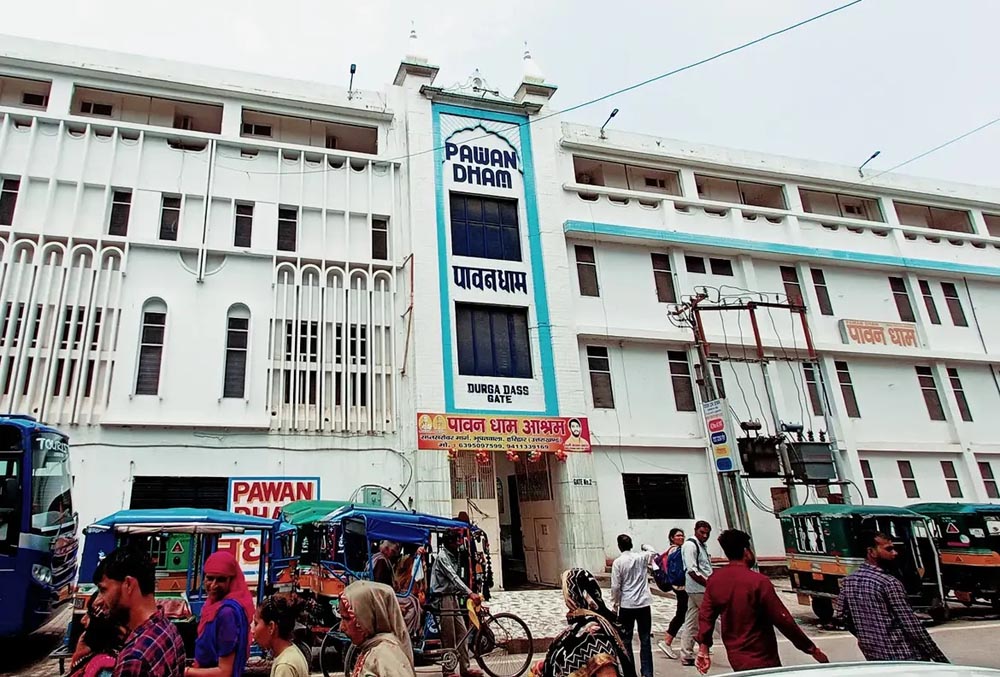
Nestled in the holy city of Haridwar, Uttarakhand, Pawan Dham is a distinctive temple complex that combines Hindu spirituality with extraordinary glass and mirror craftsmanship. Situated in the Bhupatwala area along the Sapt Sarovar Road, the temple is particularly known for its colorful interiors, intricate glasswork, elaborately decorated idols, and artistic representations of episodes from Hindu mythology. Unlike many of Haridwar’s traditional stone and marble temples, Pawan Dham creates a completely different visual experience, earning attention as one of the city’s distinctive modern religious attractions.
Pawan Dham is located at Bhagirathi Nagar, Bhupatwala, Haridwar, and is approximately 3 km from the famous Har Ki Pauri area according to travel sources. Its location also places it conveniently close to several other important spiritual and tourist attractions in northern Haridwar.
Introduction to Pawan Dham
Haridwar is one of India’s most important pilgrimage destinations, attracting visitors because of the sacred Ganga, ancient temples, ashrams, ghats and religious traditions that have developed around the city over centuries. Within this spiritually rich environment, Pawan Dham offers a somewhat different architectural experience.
Pawan Dham is associated with the Geeta Bhawan Trust Society of Moga, Punjab, and its Haridwar establishment functions as a religious and charitable institution. The temple is also described as a social and non-profit organization. Sources identify Swami Vedantanand Ji Maharaj with the establishment of the temple.
The name “Pawan Dham” itself conveys the idea of a sacred or pure spiritual place. For pilgrims, however, the attraction is not limited to religious worship. The temple has become notable for its artistic interiors, where mirrors, colored glass, sculptures and decorative elements work together to create an elaborate visual environment.
The temple is especially interesting for travelers who want to experience a side of Haridwar beyond the city’s famous riverfront and traditional pilgrimage landmarks.
The Famous Glass and Mirror Work
The defining feature of Pawan Dham is its spectacular glass and mirror decoration. The interiors feature extensive use of colorful glass pieces and reflective surfaces, creating an atmosphere in which light and imagery appear to merge together. Travel descriptions frequently highlight the intricate glasswork as the principal reason for visiting the temple.
The decorative approach gives Pawan Dham an appearance that is considerably different from conventional temple architecture. Walls and ceilings contain detailed decorative work, while religious figures are displayed amid colorful glass and mirror arrangements. As visitors move through the interior, reflections can multiply the appearance of the decorative elements, producing a striking visual effect.
The craftsmanship is particularly impressive because glass and mirrors are not merely used as occasional decorative additions. They form an important part of the overall visual identity of the temple. The result resembles a traditional “sheesh mahal” or palace of mirrors, although its purpose and atmosphere remain firmly connected with religious devotion.
For photographers and architecture enthusiasts, this makes the temple an interesting stop. Even visitors who have already explored many temples in Haridwar can encounter something visually different here.
Hindu Deities and Mythological Scenes
Another major attraction of Pawan Dham is its collection of elaborately decorated idols and religious tableaux. Various Hindu deities are represented within the temple, and descriptions of the site mention figures associated with traditions surrounding Lord Krishna, Lord Rama, Lord Shiva, Goddess Durga, Lord Ganesha and other revered deities.
One of the most notable scenes depicts Lord Krishna delivering the Bhagavad Gita to Arjuna. Krishna and Arjuna are shown in the famous chariot setting associated with the Kurukshetra battlefield and the teachings of the Gita. This scene is particularly meaningful because the Bhagavad Gita is one of the most influential texts within Hindu philosophical and spiritual traditions.
Other representations include Krishna and Radha, Rama, Sita, Lakshmana and Hanuman, Shiva and Shakti, Vishnu and Lakshmi, Goddess Durga and several forms of Ganesha. Some displays depict recognizable episodes or characters from the Ramayana and Mahabharata.
These displays make the temple more than a conventional shrine containing a single principal image. Instead, visitors encounter a visual presentation of several elements of Hindu mythology.
Architecture and Artistic Character
Pawan Dham’s architectural character is best understood through its combination of devotional sculpture and decorative glass craftsmanship. The temple’s exterior may appear comparatively restrained, but the interior reveals a much more elaborate environment. Visitor accounts frequently describe the contrast between the building’s outside appearance and its highly decorated interior.
The use of mirrors has a practical visual consequence: even relatively small decorative spaces can appear much larger because reflections repeat architectural and artistic details. Colored glass adds another dimension by introducing different shades and patterns into the interior.
This style also allows traditional religious imagery to be presented in a highly ornamental form. Rather than relying exclusively on painted murals or carved stone, Pawan Dham uses glass, mirrors and sculptural figures to tell religious stories.
For visitors interested in Indian decorative arts, this is one of the most compelling aspects of the temple.
Spiritual Significance
Pawan Dham functions primarily as a religious institution, and visitors should approach it as a place of worship rather than simply as a tourist attraction. Devotees come to pray, view the sacred images and spend time in a peaceful spiritual environment.
The temple’s location in Haridwar adds to this experience. Haridwar is closely associated with the River Ganga and with pilgrimage traditions that attract people from across India. A visit to Pawan Dham can therefore form part of a broader pilgrimage itinerary.
The religious displays also provide an accessible way for visitors to encounter stories and figures from Hindu traditions. Someone unfamiliar with the detailed architecture of India’s ancient temples may find the visual storytelling at Pawan Dham particularly approachable.
Pawan Dham as a Charitable and Pilgrim-Oriented Institution
Pawan Dham is not simply a temple building. Information from its official website identifies it as a branch of the Geeta Bhawan Trust Society of Moga, Punjab.
The broader institution is connected with pilgrim accommodation and charitable activities. Sources describing the facility mention accommodation and services associated with pilgrims and visitors. Current accommodation listings also describe rooms, food facilities, parking, drinking water and other basic amenities at the Pawan Dham property.
This is important because religious destinations in Haridwar have traditionally served not only as places of worship but also as places where pilgrims can stay during their journeys.
For travelers planning a longer pilgrimage, checking the current accommodation arrangements before arrival is advisable, because room availability, tariffs, check-in policies and facilities can change.
Location of Pawan Dham
Pawan Dham is situated in Bhupatwala, Haridwar, near Sapt Sarovar Road. Its address is listed as 03, Bhagirathi Nagar, Bhoopatwala, Haridwar, Uttarakhand 249410.
The temple is around 3 km from Har Ki Pauri according to travel information, making it relatively convenient to include during a Haridwar sightseeing itinerary. The surrounding Bhupatwala and Sapt Sarovar area is well known for religious institutions, ashrams and accommodation facilities. The Uttarakhand Urban Development Department’s documentation also lists Pawan Dham among the significant ashrams of Haridwar.
Its position away from the immediate Har Ki Pauri riverfront means visitors can combine a visit to Pawan Dham with other attractions rather than treating it as an isolated destination.
How to Reach Pawan Dham
Reaching Pawan Dham is relatively straightforward because Haridwar is well connected with major cities in northern India.
By Road
Haridwar has extensive road connections with Delhi, Dehradun, Rishikesh, Meerut, Chandigarh and other cities. Visitors arriving by bus or private vehicle can travel toward Bhupatwala and Sapt Sarovar Road. Local taxis, auto-rickshaws and other forms of local transport can generally be used for the final part of the journey.
For travelers coming from Delhi, Haridwar is a popular road-trip and bus destination. Once in Haridwar, Pawan Dham can be incorporated into a local sightseeing circuit.
By Train
Haridwar Junction is the principal railway station serving the city. Travel sources place the railway station approximately 5 km from Pawan Dham.
Because Haridwar has frequent rail connections with Delhi and other major Indian cities, traveling by train is convenient for many pilgrims.
From the railway station, visitors can hire a taxi or use local transport to reach Bhupatwala.
By Air
The nearest major airport is Jolly Grant Airport near Dehradun. Travel information places it roughly 35 km from Pawan Dham, although actual road distance and travel time can vary depending on the route and traffic.
Visitors arriving by air can continue toward Haridwar by taxi or other road transportation.
Best Time to Visit
Pawan Dham can be visited throughout the year, but the overall experience depends partly on Haridwar’s seasonal conditions.
The cooler months from roughly October through March are generally comfortable for exploring Haridwar because daytime temperatures are more pleasant for sightseeing. Winter mornings and evenings can be chilly, so warm clothing may be useful.
Spring can also be pleasant, while the summer months can become hot, particularly around midday. Visitors traveling during summer may prefer visiting religious attractions during morning or evening hours.
The monsoon season brings rainfall to the region. While the rain can make the surrounding landscape greener, travelers should consider weather and road conditions when planning a wider Uttarakhand itinerary.
Festival periods can make Haridwar especially lively, but they can also bring larger crowds and heavier traffic. Travelers who prefer a quieter temple visit may want to avoid the busiest pilgrimage periods.
Timings and Entry
Current online listings indicate that Pawan Dham is generally open from around 6:00 AM to 8:00 PM, although visitors should verify the schedule before making a special trip because temple timings can change.
Travel accounts have described entry as free, but visitors should always follow any current instructions displayed at the temple.
As with any Hindu place of worship, visitors should dress respectfully and behave appropriately within the temple premises.
Photography policies can also change, so it is sensible to check local instructions before photographing the interior or religious displays.
How Much Time Is Needed?
Pawan Dham does not generally require an entire day. Travel information estimates approximately one hour for exploring the attraction, while visitor accounts have described shorter visits of around 30 minutes depending on interest and crowd levels.
However, visitors interested in architecture, sculpture and photography may naturally spend more time examining the details.
A relaxed visit allows travelers to appreciate the different deity displays, mirror work, glass decorations and mythological scenes rather than simply entering and leaving after offering prayers.
Nearby Places to Visit
One of the advantages of visiting Pawan Dham is its location within Haridwar’s larger network of religious attractions.
Har Ki Pauri is perhaps the most famous landmark in Haridwar. Located several kilometers from Pawan Dham, it is associated with the Ganga and the renowned evening Ganga Aarti. Combining Pawan Dham with Har Ki Pauri creates a useful contrast between the colorful interior of the temple and the open riverfront atmosphere of Haridwar.
Shantikunj is another important destination in the wider area. It is associated with the All World Gayatri Pariwar and attracts visitors interested in spirituality, meditation and religious activities.
Bharat Mata Mandir is also located in Haridwar and is known for its distinctive multi-level temple concept.
The Sapt Rishi Ashram area is another nearby spiritual destination. Haridwar’s wider religious landscape contains numerous ashrams, temples and meditation centers, making it easy to create a full-day spiritual itinerary around Pawan Dham.
For visitors interested in wildlife and nature, Rajaji National Park is another major attraction in the broader Haridwar region.
Pawan Dham for Photography and Art Lovers
Although Pawan Dham is first and foremost a religious destination, its artistic character makes it appealing to people interested in photography and visual culture.
The mirrors create repeated reflections, while colored glass produces variations in light and color. Sculptural figures provide additional focal points. Together, these elements make the interior visually different from the stone, wood or painted surfaces commonly encountered in Indian religious architecture.
Photography should always be conducted respectfully. Visitors should avoid obstructing worshippers, disturbing religious activities or ignoring any restrictions established by temple authorities.
Things to Keep in Mind
A visit to Pawan Dham is generally simple, but a few practical considerations can make the experience more comfortable.
Wear comfortable clothing suitable for a religious setting. Footwear may need to be removed before entering the temple, so easily removable footwear is useful.
The reflective interiors can be visually intense, particularly when there are many visitors. Taking time to observe the details rather than rushing through the temple can make the visit more rewarding.
During major festivals and pilgrimage seasons, expect larger crowds around Haridwar. Traffic can also increase significantly, so travelers should leave additional time when moving between different attractions.
If staying at Pawan Dham or another pilgrim accommodation, confirm the current booking conditions, check-in and check-out times, room availability and applicable policies in advance. Current accommodation information lists check-in at 11:00 AM and check-out at 10:00 AM, but such policies are subject to change.
Why Pawan Dham Is Worth Including in a Haridwar Trip
Pawan Dham occupies an interesting position within Haridwar’s tourism landscape. The city is famous for ancient religious traditions, the Ganga, ghats and spiritual institutions, whereas Pawan Dham offers a more visually elaborate temple experience built around glass, mirrors and colorful religious sculptures.
Its greatest appeal lies in this combination. A visitor can encounter familiar Hindu deities and stories while simultaneously experiencing an unusual form of decorative craftsmanship.
The temple also demonstrates how contemporary religious spaces can use artistic techniques to communicate traditional stories. The Bhagavad Gita scene involving Krishna and Arjuna, representations from the Ramayana and Mahabharata, and numerous deity sculptures turn the temple into a visual narrative as well as a place of worship.
For travelers exploring Haridwar, therefore, Pawan Dham can provide a pleasant change of pace from the city’s major riverfront attractions.
Final Thoughts
Pawan Dham is one of those destinations that illustrates the diversity of Haridwar’s religious architecture. Its importance comes not from monumental size or ancient stone construction but from the unusual combination of spirituality, sculpture, mirrors and colored glass.
Located in Bhupatwala near Sapt Sarovar Road, the temple is conveniently accessible from the central parts of Haridwar and can be incorporated into a wider sightseeing or pilgrimage itinerary. Its elaborate interiors, decorated idols and representations of Hindu mythology provide visitors with both a religious and artistic experience.
For anyone visiting Haridwar, Pawan Dham offers an opportunity to see a different side of the city’s temple culture. The reflective glass interiors, colorful decorations and devotional atmosphere create an environment that is distinctly different from the traditional ghats and temples for which Haridwar is internationally known.
Whether the purpose of the journey is pilgrimage, cultural exploration, architecture, photography or simply discovering lesser-known attractions around Haridwar, Pawan Dham makes an interesting addition to the itinerary. A visit does not require an entire day, yet the artistic details can leave a lasting impression, particularly for travelers willing to slow down and appreciate the craftsmanship behind this distinctive glass temple.

