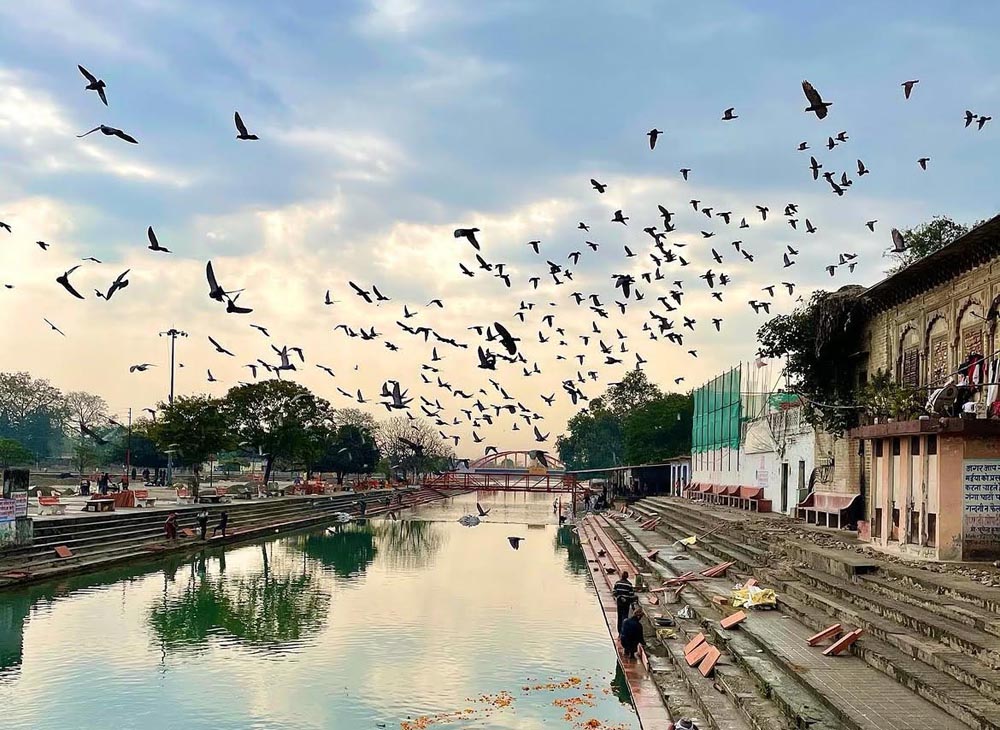
Just a few kilometres from the busy pilgrimage centre of Haridwar lies Kankhal, a place that feels quieter, older and deeply connected with the spiritual traditions of Uttarakhand. While Haridwar is famous for the spectacular Ganga Aarti at Har Ki Pauri, crowded ghats and enormous religious gatherings, Kankhal offers a different experience. Its narrow streets, ancient temples, ashrams, old residential neighbourhoods and sacred sites are closely associated with one of Hinduism’s best-known stories involving Lord Shiva, Goddess Sati and King Daksha Prajapati.
Kankhal is particularly important because tradition identifies it with the legendary Daksha Yajna, the sacrificial ceremony associated with Sati’s self-immolation and Shiva’s subsequent fury. The principal shrine connected with this story is the Daksheshwar Mahadev Temple, located in southern Kankhal. The present temple structure is generally dated to 1810, when Queen Dhankaur commissioned it, and it was subsequently renovated in 1962.
For travellers interested in Hindu mythology, pilgrimage, history and the quieter side of Haridwar, Kankhal deserves much more than a hurried visit. It can be explored as a destination in its own right or included in a broader Haridwar pilgrimage itinerary.
The Historical and Spiritual Identity of Kankhal
Kankhal is considered one of the ancient settlements associated with the religious landscape of Haridwar. Over centuries, the area developed as a centre of temples, monasteries, ashrams and spiritual institutions. Its proximity to the Ganga helped establish its importance as a pilgrimage destination, while its association with the Daksha Yajna gave it an especially strong place in Shaiva and Shakta traditions.
The character of Kankhal is noticeably different from the busiest parts of Haridwar. Instead of being dominated entirely by large commercial streets, sections of the town retain an intimate pilgrimage-town atmosphere. Small shrines appear along roads and residential lanes, religious establishments coexist with everyday neighbourhood life, and visitors may encounter pilgrims performing rituals alongside local residents going about their daily routines.
Kankhal’s importance is therefore not based on a single monument. Its significance comes from the combination of mythology, sacred geography, temples, ghats, religious institutions and living traditions that have developed around the area.
The Legend of Daksha Yajna
The central story associated with Kankhal concerns Daksha Prajapati, Goddess Sati and Lord Shiva. According to Hindu tradition, Sati was the daughter of Daksha and the consort of Shiva. Daksha is described as having organised a great yajna, or sacred ritual, but Shiva was not invited.
Sati nevertheless went to the ceremony. According to the traditional account, Daksha insulted Shiva, deeply humiliating Sati. Unable to accept the disrespect shown towards her husband, Sati entered the sacrificial fire and gave up her life.
When Shiva learned what had happened, his grief and anger became overwhelming. Tradition says that he sent the fierce warrior Virabhadra to destroy Daksha’s sacrifice. Daksha was killed during the destruction of the yajna, although Shiva later restored his life, giving him the head of a goat according to the traditional narrative.
The story is not simply a tale of destruction. It contains themes of devotion, pride, sacrifice, grief, reconciliation and the relationship between Shiva and Shakti. The location associated with this story is consequently regarded as extremely sacred by devotees. The Daksheshwar Mahadev Temple and Sati Kund preserve the memory of this mythology in the religious landscape of Kankhal.
For visitors, understanding this story makes a journey through Kankhal considerably more meaningful. The temples are not isolated architectural attractions; they are places embedded in a larger religious narrative.
Daksheshwar Mahadev Temple
The most important attraction in Kankhal is undoubtedly Shree Daksheshwar Mahadev – Daksh Prajapati Temple, also known as Daksha Mahadev or Daksheshwar Mahadev Temple. Dedicated to Lord Shiva, the temple stands at the heart of Kankhal’s religious identity.
The present temple dates to the early nineteenth century. According to the Ministry of Tourism’s Incredible India portal, Queen Dhankaur constructed the current structure in 1810, while renovation work was carried out in 1962. The temple complex includes the sacred Sati Kund associated with the traditional account of Sati’s self-immolation.
The temple is especially significant during the month of Sawan, when Shiva devotees undertake pilgrimages and perform abhishekam and other rituals. Maha Shivaratri is another major occasion when the shrine becomes particularly active, with devotional ceremonies and large numbers of worshippers. Navratri also has significance because of the temple’s association with Sati.
The temple’s relatively accessible location makes it easy to combine with other Haridwar attractions. Visitors should nevertheless remember that this is an active place of worship rather than simply a sightseeing monument. Modest clothing, respectful behaviour and sensitivity towards worshippers are appropriate.
Sati Kund and the Sacred Landscape
Close to Daksheshwar Mahadev Temple is Sati Kund, another site associated with the Daksha Yajna tradition. According to Hindu belief, this is connected with the place where Sati entered the sacrificial fire.
The importance of Sati Kund comes primarily from its religious and mythological association. The site helps visitors understand why Kankhal occupies such a prominent position in the stories surrounding Shiva and Sati. Rather than viewing the kund merely as an architectural structure, travellers can consider it part of a wider sacred landscape that includes the temple, nearby ghats and other Shiva shrines.
The present-day Sati Kund Mandir is among the local religious sites visitors may encounter while exploring Kankhal.
Daksha Ghat and the Ganga
Kankhal’s relationship with the Ganga is another important part of its spiritual character. Ghats around the area provide spaces for bathing, prayer and religious ceremonies. Daksha Ghat, associated with the Daksheshwar Mahadev area, is particularly relevant to pilgrims visiting the temple.
The experience here can be very different from the large and highly developed ghats of central Haridwar. Depending on the time of day and season, visitors may find a quieter environment in which the sound of the river, temple bells and devotional activity becomes more noticeable.
The Ganga is central to the religious identity of the entire Haridwar region. For many pilgrims, a visit to Kankhal is therefore combined with bathing, prayer or other rituals connected with the sacred river.
Other Temples and Religious Places
Kankhal contains several smaller temples and shrines beyond Daksheshwar Mahadev. Nileshwar Mahadev is traditionally associated with the sacred landscape surrounding Daksha Temple and is another Shiva shrine that can be incorporated into a temple walk. The concentration of religious sites means that visitors who enjoy exploring smaller temples may find Kankhal more rewarding than simply visiting one famous shrine.
The town also has numerous ashrams and religious establishments. These institutions reflect the long tradition of spiritual study, meditation, service and pilgrimage associated with Haridwar and its surrounding settlements.
One of the notable institutions in the area is the Ramakrishna Mission Sevashrama. The institution has a long history of charitable medical service in Kankhal, adding another dimension to the town’s religious and social identity. Historical accounts describe the Sevashrama as a major healthcare institution serving the region for more than a century.
Kankhal’s Ashrams and Spiritual Atmosphere
One of the most appealing aspects of Kankhal is its ashram culture. The town has historically attracted monks, spiritual seekers, pilgrims and religious organisations. Some establishments focus on meditation and spiritual study, while others are connected with charitable activities, education or healthcare.
The presence of ashrams contributes to the quieter atmosphere found in parts of Kankhal. Travellers interested in spirituality may find it worthwhile to spend time walking rather than moving immediately from one major attraction to another.
However, ashrams are functioning religious institutions, so visitors should always check whether photography, entry or participation in activities is permitted. Some places welcome visitors, while others are primarily intended for residents, students or devotees.
Festivals in Kankhal
Festivals are among the most significant times to experience Kankhal’s religious character. Maha Shivaratri is particularly important because Daksheshwar Mahadev is a Shiva temple. Devotees gather for prayers, offerings and special ceremonies, and the surrounding area becomes considerably more active.
Sawan is another important period. The month is traditionally dedicated to Lord Shiva, and devotees undertake various forms of worship and pilgrimage. The Incredible India tourism portal specifically identifies Sawan as an auspicious period for visiting Daksha Mahadev Temple.
Navratri is significant as well because of the site’s connection with Sati. During major religious festivals, visitors should expect larger crowds, traffic restrictions in some areas and longer waiting times at popular temples.
Kumbh and related major pilgrimage gatherings also transform the wider Haridwar region. Kankhal has historically been connected with the broader religious culture of Haridwar, and the town can become considerably busier during major pilgrimage periods.
The Cultural Side of Kankhal
Kankhal is not only a pilgrimage destination. It is also a living neighbourhood where religious traditions and ordinary life exist side by side. Walking through the streets provides glimpses of local shops, flower sellers, religious-item vendors, small eateries, homes and temples.
The architecture in older parts of Kankhal can also be interesting. Some traditional buildings and old residences reflect the history of the settlement and its connection with wealthy pilgrims and religious communities. Kankhal was historically an important residential and religious centre, and parts of this heritage can still be sensed while walking through the older neighbourhoods.
This everyday atmosphere is one of the reasons to avoid treating Kankhal as merely a quick temple stop. A slow walk can reveal details that are easily missed from a vehicle.
Food and Local Eating
Food in Kankhal generally reflects the vegetarian culinary culture of Haridwar. Pilgrims can find simple North Indian meals, snacks, sweets, tea and other vegetarian preparations. Because Haridwar is a major pilgrimage destination, vegetarian food is widely available.
Visitors looking for a contemporary casual meal can also find restaurants around Kankhal and nearby Haridwar. For example, Station 58 | Family Restaurant in Haridwar is located in Kankhal, while Chaap is another local restaurant option. Travellers should check current opening hours before visiting because local business hours can change.
Street food is also part of the broader Haridwar experience, although visitors should choose busy, hygienic establishments, particularly during hot weather.
Where to Stay
Kankhal and neighbouring parts of Haridwar offer a wide range of accommodation, from simple guesthouses and pilgrim-oriented lodging to hotels and more comfortable properties.
Travellers who want to remain close to Kankhal can consider hotels in the wider Mayapur and Kankhal area. Hotel Park Grand is situated on the Haridwar–Delhi road near Shankracharya Chowk in Kankhal. There are also more upscale options in nearby Haridwar, such as Devnadi- The Heritage Hotel.
For pilgrims, location may be more important than luxury. Staying close to the temples can make early-morning visits easier and reduce the need for repeated local travel. Visitors seeking quieter surroundings may prefer accommodation away from the busiest central Haridwar streets.
Best Time to Visit Kankhal
The best time depends largely on what kind of experience a traveller wants. October through March generally offers more comfortable weather for walking and sightseeing, particularly for visitors who want to explore Kankhal and nearby Haridwar attractions at a relaxed pace.
The summer months can become hot, especially during the daytime, so early morning and evening are preferable for walking. The monsoon brings rain and increased humidity, but Sawan also brings special religious significance and activity to Shiva temples.
Visitors who specifically want to experience Maha Shivaratri or Sawan should be prepared for crowds. Those looking for a quieter exploration may prefer visiting outside major festival periods.
How to Reach Kankhal
Kankhal is located very close to Haridwar and can easily be included in a Haridwar itinerary. Road transport is the most convenient way to reach the area. Auto-rickshaws, taxis and local transport connect Kankhal with central Haridwar.
Haridwar railway station is the principal rail gateway for travellers arriving by train. From the station, Kankhal can be reached by local transport. Travel guides generally place Daksha Mahadev Temple roughly four kilometres from Haridwar, although the exact distance and travel time depend on the starting point and route.
For air travellers, Jolly Grant Airport near Dehradun is the nearest major airport serving the Haridwar region. From the airport, travellers can continue by taxi or other road transport towards Haridwar and Kankhal.
Because Kankhal is integrated into the wider Haridwar urban area, visitors do not need to plan a complicated journey specifically for the town.
How Long Should You Spend in Kankhal?
A half-day is sufficient to see the principal religious sites at a relaxed pace, particularly if Kankhal is part of a larger Haridwar trip. However, travellers interested in temples, mythology, architecture, ashrams and local culture can easily spend a full day.
An ideal visit might begin early in the morning at Daksheshwar Mahadev Temple and Sati Kund, followed by a walk through nearby religious streets and shrines. Time can then be spent around the Ganga before returning towards central Haridwar.
Those staying overnight can explore Kankhal during the quieter morning and evening hours, when the atmosphere often feels more peaceful than during the middle of the day.
Places to Visit Near Kankhal
Kankhal’s location makes it convenient to explore several of Haridwar’s major attractions. Har Ki Pauri is one of the most famous places nearby and is associated with the Ganga Aarti and sacred bathing ghats. Visitors can combine the spiritual atmosphere of Kankhal with the energetic environment of central Haridwar.
Mansa Devi Temple and Chandi Devi Temple are also major pilgrimage destinations in Haridwar. Other temples and religious landmarks in the city can easily be added to a day-long itinerary.
Travellers interested in nature can extend their journey towards Rishikesh and the surrounding Himalayan foothills. Depending on available time, Haridwar can serve as a base for exploring a much larger portion of Uttarakhand.
Photography and Responsible Tourism
Kankhal offers plenty of opportunities for photography, particularly around its old streets, temple architecture, religious details and riverfront areas. However, visitors should remember that religious ceremonies are personal and sacred occasions. It is better to ask permission before photographing worshippers, priests or private rituals.
Plastic waste is another concern in pilgrimage destinations. Carrying reusable water bottles, avoiding unnecessary plastic and disposing of waste responsibly are simple ways travellers can help protect the environment.
Visitors should also avoid entering restricted temple areas, touching religious objects without permission or treating sacred spaces purely as photographic backgrounds.
A Different Side of Haridwar
Perhaps the greatest appeal of Kankhal is that it reveals another side of Haridwar. The famous city is often associated with crowds, Ganga Aarti, bustling markets and large-scale pilgrimage. Kankhal, by comparison, invites visitors to slow down and pay attention to mythology, temples and the layers of history that surround them.
Its importance comes from the extraordinary story associated with Daksha and Sati, but its identity today is much broader. It is a living pilgrimage town with temples, ghats, ashrams, charitable institutions, local markets and residential neighbourhoods.
The visit becomes particularly rewarding when travellers move beyond the headline attraction of Daksheshwar Mahadev and spend time understanding the wider sacred geography of the area.
Final Thoughts
Kankhal is one of those destinations where mythology and everyday life are inseparable. The streets may appear ordinary at first, but beneath them lies a religious history that has made this small part of Haridwar significant for generations.
Daksheshwar Mahadev Temple remains the heart of the experience, with its connection to the legendary Daksha Yajna, Sati Kund and Lord Shiva. The surrounding temples, ghats, ashrams and neighbourhoods add further depth to the visit. The present Daksha Mahadev temple dates from 1810 and was renovated in the twentieth century, but the story connected with the site belongs to the much older religious traditions of Hinduism.
For travellers exploring Uttarakhand, Kankhal is therefore much more than an extension of Haridwar. It is a destination for understanding mythology, experiencing living pilgrimage traditions and discovering a quieter cultural landscape alongside one of India’s most important sacred rivers. Whether visited during the energy of Sawan and Maha Shivaratri or on a peaceful winter morning, Kankhal offers an opportunity to experience the spiritual heritage of Haridwar at a slower and more intimate pace.

