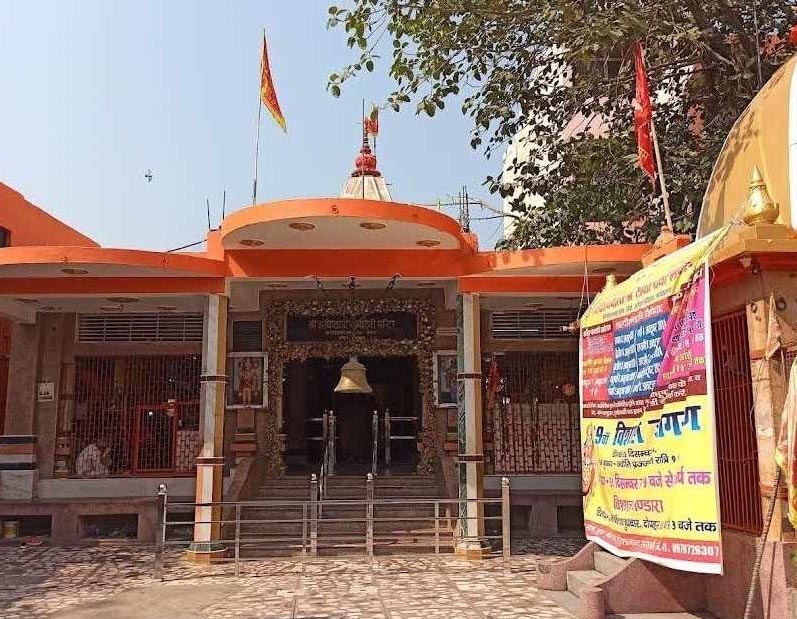
Haridwar is one of India’s most revered pilgrimage cities, where the sacred Ganga, ancient temples, bustling ghats and centuries-old traditions come together to create a distinctive spiritual atmosphere. Among the many shrines that give the city its religious identity, Maya Devi Temple holds a particularly important place. Dedicated to Goddess Maya Devi, the presiding deity traditionally associated with Haridwar, the temple is regarded as one of the city’s ancient Siddha Peeths and is also associated with the Shakti Peeth tradition.
Located in the old part of Haridwar, the temple attracts devotees throughout the year. Its importance becomes especially evident during Navratri and major religious gatherings, when pilgrims come to worship the goddess and participate in the wider spiritual life of Haridwar. For visitors interested in Hindu mythology, temple architecture, religious history and the cultural landscape of Uttarakhand, Maya Devi Temple provides an opportunity to experience a quieter but deeply significant side of the city.
The Religious Importance of Maya Devi Temple
Maya Devi Temple is dedicated to Goddess Maya, who is traditionally regarded as a manifestation of Shakti, the divine feminine power. The temple is especially important because of its association with the story of Goddess Sati and the Shakti Peeths. According to Hindu tradition, after Sati’s death, Lord Shiva carried her body while overcome with grief. To restore cosmic balance, Lord Vishnu is believed to have used his Sudarshan Chakra to separate Sati’s body into several parts. The places where those parts are believed to have fallen became sacred centres of Shakti worship.
The tradition associated with Maya Devi Temple holds that Sati’s heart and navel fell at this location. This belief gives the shrine a particularly powerful symbolic connection with Shakti worship. Different traditional accounts vary in how they enumerate and describe the Shakti Peeths, but Maya Devi Temple is consistently presented by major tourism sources as an important Shakti-associated shrine in Haridwar.
The temple is also described as a Siddha Peeth, a sacred place associated in popular devotional belief with the fulfilment of sincere prayers. Together with Mansa Devi Temple and Chandi Devi Temple, Maya Devi Temple forms an important trio of goddess shrines associated with Haridwar’s religious identity. Uttarakhand Tourism specifically identifies the three temples as part of the city’s important sacred landscape.
Why Haridwar Was Known as Mayapuri
The connection between Maya Devi and Haridwar goes beyond the temple itself. Haridwar has been known by several names throughout its religious history, including Mayapuri. The name is traditionally connected with Goddess Maya, highlighting the goddess’s longstanding association with the city.
The District Haridwar administration describes the city as an ancient pilgrimage centre and notes its traditional names, including Mayapuri, Kapila and Gangadwar. Haridwar occupies an important geographical and religious position at the point where the Ganga emerges from the Himalayan region toward the plains.
This setting helps explain why a temple devoted to a form of Shakti became so deeply embedded in the city’s religious identity. Haridwar is not simply a destination containing individual temples; rather, the entire city functions as a pilgrimage landscape. Ghats, shrines, ashrams, markets and sacred routes are interconnected through mythology and ritual.
Maya Devi Temple therefore makes the most sense when experienced as part of Haridwar’s larger sacred geography rather than as an isolated monument.
The Legend of Goddess Sati
The mythology surrounding Maya Devi Temple begins with the story of Sati, Shiva and King Daksha Prajapati.
According to Hindu tradition, Sati, the daughter of Daksha, married Lord Shiva. Daksha did not approve of Shiva and eventually organised a grand yajna without inviting him. Sati nevertheless went to her father’s ceremony. When Shiva was insulted, Sati was overcome by grief and indignation and sacrificed herself in the fire of the yajna.
Shiva was devastated by Sati’s death. Carrying her body, he is said to have wandered through the universe in sorrow and anger. His grief threatened cosmic balance, leading Vishnu to intervene. The body of Sati was divided, and the places where different parts were believed to have fallen became sacred sites associated with Shakti.
At Maya Devi Temple, the tradition identifies the heart and navel of Sati with the sacred ground. The symbolism is particularly meaningful: the heart can be understood as representing devotion and emotional power, while the navel is traditionally associated with life, vitality and the centre of the body.
For devotees, the story transforms the temple from an ordinary historical structure into a living centre of Shakti worship.
History of the Temple
Maya Devi Temple is considered one of the ancient temples of Haridwar. Incredible India describes the present shrine as having origins in the eleventh century, placing it among the city’s older surviving religious sites.
Its long history is significant because Haridwar has experienced centuries of religious activity, pilgrimage and urban development. Ancient shrines in the city have often survived alongside newer structures, creating an unusual mixture of old and new religious architecture.
The temple’s historical importance is also reflected in its continued association with the traditional identity of Haridwar. While the present building and its surroundings have inevitably experienced changes over time, the religious tradition connected with Maya Devi remains central to the shrine.
The temple is often discussed alongside the nearby Narayana-Shila and Bhairava temples, which are also regarded as important ancient religious sites. Their proximity demonstrates how several layers of sacred tradition coexist within the historic core of Haridwar.
Architecture and Temple Atmosphere
Maya Devi Temple does not depend on monumental scale to create its spiritual impact. Instead, its significance comes largely from its antiquity, religious associations and intimate atmosphere.
The temple is described as following traditional North Indian architectural principles. Inside, the sacred images and the sanctum are the primary focus rather than elaborate architectural spectacle. The comparatively simple character of the shrine is appropriate to its role as a place of worship where devotees come primarily for darshan and prayer.
The central deity is traditionally represented in a distinctive three-headed and four-armed form. According to the Incredible India description, the principal sanctum contains Maya Devi at the centre, with Goddess Kali and Goddess Kamakhya positioned on either side. The complex also includes representations associated with Chamunda and Sheetala Devi.
This concentration of different manifestations of the divine feminine gives the temple a particularly strong Shakti-oriented character.
Visitors should remember that a functioning Hindu temple is first and foremost a place of worship. The sounds of bells, devotional chanting, incense and the movement of worshippers can therefore be as important to the experience as the physical architecture.
Maya Devi and the Shakti Tradition
The concept of Shakti is fundamental to understanding the temple. In Hindu traditions, Shakti represents divine feminine energy and power. She can appear through many forms, names and manifestations, each reflecting different dimensions of the divine.
Maya Devi represents one expression of this sacred feminine principle. The presence of Kali and Kamakhya within the temple further demonstrates the interconnected nature of goddess worship.
The Shakti tradition also gives the temple a wider geographical significance. Pilgrims visiting different Shakti-associated shrines often understand these places as parts of a sacred network spread across the Indian subcontinent.
Consequently, a visit to Maya Devi Temple can be meaningful even for travellers who are not undertaking a formal pilgrimage. It offers an introduction to the mythology, symbolism and devotional practices surrounding one of India’s major goddess traditions.
Festivals and Religious Celebrations
The temple receives visitors throughout the year, but certain periods are particularly important. Navratri is among the most significant occasions because the festival is devoted to the worship of the divine feminine in her various forms.
During Navratri, temples dedicated to Shakti traditionally become especially active, with special prayers, devotional ceremonies and increased numbers of worshippers. Maya Devi Temple experiences a similar increase in devotional activity. Tourism sources also identify Kumbh gatherings as periods when the temple attracts large numbers of pilgrims.
Haridwar’s Kumbh Mela is one of the largest religious gatherings in the world. Uttarakhand Tourism identifies Haridwar as one of the four Indian cities associated with the Kumbh Mela and describes the city as an important pilgrimage centre and gateway to the Char Dham circuit.
During major festivals, travellers should expect crowded streets, longer queues and increased demand for accommodation and transportation. Those seeking a quieter temple experience may prefer visiting outside major festival periods.
Location of Maya Devi Temple
Maya Devi Temple is situated in Haridwar district of Uttarakhand, within the historic urban area of Haridwar. It is accessible from the main pilgrimage and commercial areas of the city.
Its location makes it relatively easy to combine with other important attractions. The temple can be included in a broader Haridwar itinerary covering Har Ki Pauri, Mansa Devi Temple, Chandi Devi Temple and other nearby religious sites.
The temple’s listed address is on Upper Road in the Birla Ghat area of Haridwar. Maya Devi Temple, Haridwar
Because Haridwar is a busy pilgrimage city, traffic and pedestrian congestion can vary considerably depending on festivals, weekends and bathing occasions.
How to Reach Maya Devi Temple
Haridwar is well connected to several major cities in northern India. The city has an important railway station, making train travel one of the convenient ways of reaching the destination. The nearest major airport commonly used by visitors is Jolly Grant Airport near Dehradun, while Indira Gandhi International Airport in Delhi is another option for travellers arriving from farther away. Incredible India lists Haridwar Junction as the nearest railway station and identifies Jolly Grant Airport and Delhi’s Indira Gandhi International Airport among the relevant airports for the temple.
Once in Haridwar, local transportation such as auto-rickshaws, taxis and other city transport can be used to reach the temple area. Since the temple lies within the developed part of the city, visitors generally do not need to undertake a mountain trek as they would for some of Uttarakhand’s hill temples.
Travellers staying near Har Ki Pauri can also include the temple in a sightseeing route through central Haridwar.
Temple Timings
Published tourism information currently lists Maya Devi Temple as opening in the morning from 6:30 AM to 12:00 PM and again in the afternoon from 3:00 PM to 9:00 PM.
Temple schedules can change during festivals, special religious ceremonies or other occasions. It is therefore sensible to confirm the day’s schedule locally before planning a visit around a particular darshan or ritual.
Early morning visits can provide a comparatively peaceful atmosphere, while evening visits allow travellers to experience the temple as part of Haridwar’s broader evening devotional environment.
Places to Visit Near Maya Devi Temple
One of the biggest advantages of visiting Maya Devi Temple is its location within Haridwar’s dense concentration of religious attractions.
Har Ki Pauri is among the most famous places nearby. The sacred ghat on the Ganga is closely associated with pilgrimage, ritual bathing and the evening Ganga Aarti. Uttarakhand Tourism describes the daily evening aarti as one of Haridwar’s most prominent experiences, with lamps, bells, conch shells, prayers and floating diyas creating a distinctive atmosphere along the river.
Mansa Devi Temple is another important goddess shrine. Situated on Bilwa Parvat, it is traditionally associated with the fulfilment of wishes and forms part of the three important goddess shrines of Haridwar alongside Maya Devi and Chandi Devi. Visitors can reach Mansa Devi by trekking or by ropeway. Chandi Devi Temple, located on Neel Parvat, provides another dimension to Haridwar’s goddess tradition. The temple is associated with Goddess Chandi and is also regarded as a Siddha Peeth. Visitors interested in mythology can also travel toward Kankhal, where Daksha Mahadev Temple and Sati Kund are associated with the story of Daksha and Sati. This creates an especially interesting thematic connection with Maya Devi Temple because the two locations are linked through the same major mythological narrative.
The Best Time to Visit
Haridwar can be visited throughout the year, but the experience varies considerably with season and pilgrimage activity.
Winter generally provides pleasant conditions for walking around the city and exploring temples. The cooler months can be especially comfortable for visitors who want to combine temple visits with sightseeing around the ghats and surrounding attractions.
Summer can be hot, particularly during the afternoon. Visitors may therefore prefer early morning or evening temple visits.
The monsoon season brings rainfall to the region, but it also gives parts of Uttarakhand a fresh appearance. Travellers should nevertheless remain aware of changing weather conditions when planning journeys beyond Haridwar into the surrounding hills.
Navratri and Kumbh-related occasions can be spiritually significant but also considerably busier. Anyone who wants to participate in these celebrations should plan accommodation and transportation well in advance.
What Makes Maya Devi Temple Special
The appeal of Maya Devi Temple lies in the combination of mythology, history and living devotion. It is not simply an old building preserved as a tourist attraction. It continues to function as an active religious centre where devotees come to pray, make offerings and seek blessings.
Its connection with Goddess Sati gives it a place within the wider Shakti tradition, while its association with Mayapuri connects the temple directly with the historical religious identity of Haridwar.
The shrine’s comparatively modest scale also creates an interesting contrast with Haridwar’s larger and more heavily visited attractions. Visitors who take time to observe the rituals and atmosphere can gain a better understanding of the city’s religious culture beyond the most famous tourist viewpoints.
Visiting Maya Devi Temple Respectfully
As with any active place of worship, visitors should dress modestly and behave respectfully. Photography rules may vary within temple areas, so travellers should follow instructions from temple authorities. Footwear generally needs to be removed before entering the appropriate sacred areas.
Visitors should also be conscious that religious rituals may take priority over sightseeing. During crowded festivals, queues can become lengthy, and patience is important.
Rather than treating the temple simply as another stop on a sightseeing itinerary, it is worth allowing some time to observe the atmosphere, listen to the devotional sounds and understand the significance of the shrine to worshippers.
Maya Devi Temple in the Spiritual Landscape of Uttarakhand
Uttarakhand is often called Dev Bhoomi, or the “Land of the Gods,” because of its extraordinary concentration of pilgrimage centres and sacred landscapes. Haridwar forms one of the most accessible gateways into this wider religious geography.
Maya Devi Temple represents the plains-side beginning of a journey that can continue toward the Himalayan pilgrimage centres. Haridwar is recognised by Uttarakhand Tourism as a gateway to the Char Dham circuit, which includes Badrinath, Kedarnath, Gangotri and Yamunotri.
For travellers beginning a pilgrimage through Uttarakhand, visiting Maya Devi Temple can therefore provide an introduction to the region’s devotional traditions before travelling farther into the mountains.
Final Thoughts
Maya Devi Temple is one of Haridwar’s most historically and spiritually significant shrines. Its importance comes from several interconnected traditions: the worship of Goddess Maya, the Shakti Peeth tradition associated with Goddess Sati, the ancient identity of Haridwar as Mayapuri, and its position alongside Mansa Devi and Chandi Devi as one of the city’s important goddess shrines.
For a traveller, the temple offers more than an opportunity to see an ancient religious structure. It opens a window into the mythology and living traditions that have shaped Haridwar for centuries. The story of Sati, the worship of Shakti, the nearby Ganga ghats and the surrounding temples all contribute to a broader experience in which history, faith and everyday life remain closely connected.
A visit to Maya Devi Temple is therefore best combined with exploration of Har Ki Pauri, the other goddess temples, Kankhal and the historic areas of Haridwar. Whether approached as a pilgrimage destination, a cultural landmark or part of a wider Uttarakhand journey, Maya Devi Temple remains an important symbol of the sacred character of Haridwar.

