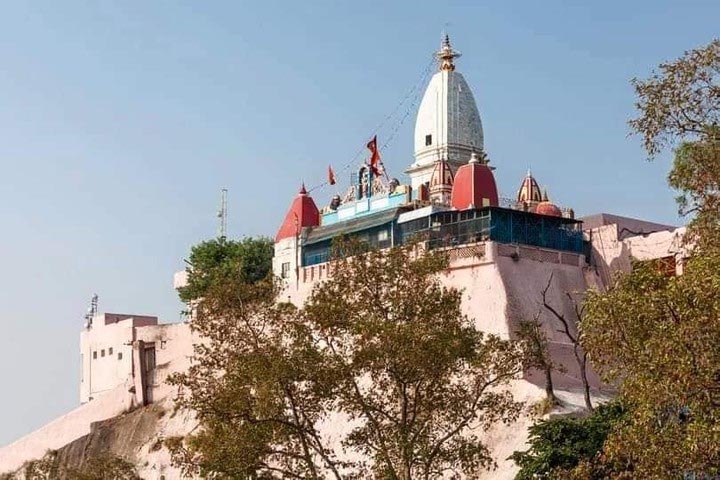
Rising above the holy city of Haridwar, Mansa Devi Temple is one of the most revered pilgrimage destinations in Uttarakhand. Perched on Bilwa Parvat in the Shivalik Hills, the temple combines religious significance, mythology, hill scenery and the timeless atmosphere of Haridwar. For centuries, devotees have travelled to this sacred shrine to worship Goddess Mansa Devi and seek her blessings, particularly for the fulfilment of their heartfelt wishes. The temple is also associated with an old devotional tradition in which pilgrims tie threads to a sacred tree as a symbolic expression of their wishes and return to untie them after those wishes are fulfilled.
Mansa Devi Temple is particularly important because it forms part of Haridwar’s sacred pilgrimage landscape. Uttarakhand Tourism identifies Bilwa Tirtha, where Mansa Devi Temple stands, as one of the Panch Tirth, or five important pilgrimage sites, within Haridwar. Together with Chandi Devi Temple and Maya Devi Temple, it also forms an important group of Shakti shrines associated with the religious identity of the city.
The Location and Setting of Mansa Devi Temple
Mansa Devi Temple is located on Bilwa Parvat overlooking Haridwar. The hill is part of the Shivalik range, giving the temple a setting that is dramatically different from the busy streets and markets of the city below. From the hilltop, visitors can enjoy broad views across Haridwar and the surrounding landscape, making the journey to the shrine both a spiritual and scenic experience.
Haridwar itself occupies a special position in Hindu pilgrimage. The city stands where the Ganga enters the plains and has developed over centuries around temples, ghats, ashrams and pilgrimage traditions. Mansa Devi therefore does not exist as an isolated shrine; it forms part of a much larger sacred landscape that includes Har Ki Pauri, Maya Devi Temple, Chandi Devi Temple and numerous other religious sites.
The elevated location gives the temple an additional sense of separation from the city. As pilgrims climb towards the shrine, the atmosphere gradually changes from the bustle of Haridwar to the more devotional environment around the temple. During clear weather, the elevated viewpoint provides memorable views of the city, the Ganga and the surrounding hills.
Who Is Goddess Mansa Devi?
Mansa Devi is worshipped as a powerful manifestation of the divine feminine, and she is especially associated with the fulfilment of wishes. The name “Mansa” is commonly connected with the idea of desire or wish, which helps explain why devotees visit the temple with personal prayers and aspirations.
Traditions associated with the temple describe Mansa Devi as a form of Shakti. Different accounts explain her origin in different ways. Incredible India describes a tradition in which the goddess is associated with Lord Shiva’s consciousness, while other commonly circulated traditions connect her with Sage Kashyap. These variations reflect the richness of Hindu mythology, in which the same deity can be understood through different regional and scriptural traditions.
The goddess is also associated with serpents in Hindu tradition, and this connection contributes another layer to her identity. Rather than being understood only as a deity who grants worldly wishes, Mansa Devi is revered as a manifestation of divine power to whom devotees bring their hopes, fears and prayers.
History and Origin of the Temple
The history of Mansa Devi Temple combines documented construction traditions with legends that have been passed down through generations. According to Incredible India, the present temple was established between 1811 and 1815 under the patronage of Maharaja Gopal Singh of Manimajra. The story of the shrine’s origin, however, reaches further back into sacred tradition.
One popular legend tells of a cow that would regularly climb the hill and offer milk at a particular location. Devotees reportedly noticed this unusual occurrence and discovered three stones that were regarded as sacred manifestations connected with the goddess. These stones eventually became associated with the divine presence of Mansa Devi, and the location developed into a place of worship.
Such stories are an important part of understanding Indian pilgrimage temples. The religious importance of a shrine is often preserved not only through architectural records but also through oral traditions, local legends and generations of devotional practice. At Mansa Devi, mythology, landscape and living worship are closely intertwined.
Religious Significance of Mansa Devi Temple
The temple’s importance is closely linked to Haridwar’s status as one of India’s major pilgrimage cities. Uttarakhand Tourism lists Bilwa Tirtha, associated with Mansa Devi, among Haridwar’s Panch Tirth. The other sites include Gangadwara or Har Ki Pauri, Kankhal, Kushwart and Neel Parvat, associated with Chandi Devi.
Mansa Devi is also traditionally regarded as a Siddhapeeth, a sacred place associated with the fulfilment of sincere prayers and wishes. Together, Mansa Devi, Chandi Devi and Maya Devi form a particularly significant trio of Shakti shrines in Haridwar. This relationship encourages many pilgrims to include more than one of these temples in the same journey.
For devotees, visiting the temple is not simply a sightseeing activity. The journey often involves prayer, offerings, darshan and personal rituals. Many visitors arrive carrying specific hopes relating to family, relationships, education, career, prosperity or other aspects of life. The temple consequently has a deeply personal meaning for many pilgrims.
The Wish-Fulfilment Tradition
Perhaps the most famous tradition associated with Mansa Devi Temple is the practice of tying a sacred thread to a tree within the temple complex. Devotees tie the thread while making a wish or prayer. When they believe their wish has been fulfilled, they return to the temple and untie the thread as an act of gratitude.
This simple ritual gives the pilgrimage a personal and emotional dimension. The thread becomes a physical representation of an individual’s hope. Thousands of such threads can therefore be seen as reminders of the many private prayers that visitors have brought to the goddess.
Along with the thread ritual, devotees commonly offer coconuts, flowers, incense and other traditional offerings. These practices create an atmosphere filled with devotional activity, particularly during busy pilgrimage periods.
The Temple’s Deities and Inner Shrine
The inner shrine of Mansa Devi Temple contains two principal forms of the goddess. One is described as an eight-armed representation, while another is a three-headed and five-armed form. These distinctive representations contribute to the temple’s religious and artistic character.
The presence of multiple forms of the deity is significant within Hindu temple traditions. Different forms can represent different aspects of divine power, allowing worshippers to understand the goddess through several symbolic dimensions. At Mansa Devi, the forms of the deity reinforce the temple’s association with Shakti and divine protection.
Visitors should remember that the temple is primarily a place of worship. Photography and other visitor activities should therefore always follow the instructions of temple authorities, particularly around the sanctum and during rituals.
Reaching Mansa Devi Temple
One of the distinctive features of a visit to Mansa Devi is that pilgrims have more than one way to reach the hilltop. Visitors can walk up the hill using the pilgrimage route or use the Mansa Devi Udankhatola ropeway. Uttarakhand Tourism specifically notes both trekking and ropeway access.
The ropeway is particularly popular because it reduces the physical effort required to climb the hill. It also transforms the journey itself into an attraction, providing elevated views of the surrounding landscape. A government environmental assessment describes the Mansa Devi ropeway as approximately 540 metres long, covering an elevation difference of about 178 metres.
Those who prefer walking can take the pedestrian route. The climb offers a more traditional pilgrimage experience, although visitors should consider their fitness, the weather and the amount of time available. During hot weather, carrying drinking water and beginning the climb earlier in the day can make the experience more comfortable.
Best Time to Visit
Mansa Devi Temple can be visited throughout the year, but the experience varies considerably according to season. Haridwar becomes particularly busy during major Hindu festivals and pilgrimage periods. Navratri is especially significant for Shakti worship, and the temple can attract large numbers of devotees during these occasions.
For visitors primarily interested in comfortable sightseeing, the cooler months are generally more pleasant for exploring Haridwar and its surrounding temples. October through March offers comparatively comfortable conditions for walking and sightseeing, although winter mornings can be cold.
Summer can be hot, particularly during the middle of the day. Visitors planning to trek should consider starting early. Monsoon weather can bring rain to the region, making hill routes wet and potentially more difficult. The surrounding landscape, however, becomes especially green during this season.
Because temple schedules and ropeway operations can change due to festivals, maintenance, weather or administrative arrangements, travellers should confirm the current timings before setting out.
Temple Timings and Visiting Information
Official tourism information currently lists Mansa Devi Temple’s opening hours as 5:00 AM to 10:00 PM in summer and 4:00 AM to 9:00 PM in winter, with a daily bhog period around 11:00 AM.
However, published timings can differ between sources, particularly because temple operations may change seasonally or during special occasions. For this reason, travellers should verify the schedule locally or through an official tourism source before planning a visit.
It is sensible to arrive early if the main purpose of the trip is darshan. Early hours can also be more comfortable for people who want to avoid the heat and the heavier crowds that develop later in the day.
How to Reach Haridwar and Mansa Devi Temple
Haridwar has strong transport connections with major Indian cities. Haridwar Junction is the principal railway station and is connected with several major destinations across India. Uttarakhand Tourism also identifies Jolly Grant Airport near Dehradun as the nearest airport serving Haridwar, with road transport available from the airport.
Once in Haridwar, travellers can make their way towards the Mansa Devi ropeway area and continue to the temple by cable car, or choose the walking route. The temple is relatively close to central Haridwar compared with many Himalayan pilgrimage destinations, making it possible to combine a visit with several other attractions in the city.
The District Haridwar administration also identifies Haridwar Railway Station as the nearest major railway connection and notes road accessibility to the temple area.
Nearby Attractions
A visit to Mansa Devi Temple can easily be combined with other major attractions in Haridwar. Har Ki Pauri is one of the city’s most famous landmarks and is particularly renowned for its evening Ganga Aarti. The sight of lamps, prayers and devotees gathered beside the Ganga has become one of the defining experiences of a Haridwar pilgrimage.
Maya Devi Temple is another important religious site in the city. It is traditionally associated with Shakti worship and is regarded as one of Haridwar’s significant Siddhapeeths. The temple is part of the city’s ancient religious landscape and can be included in a wider temple circuit.
Chandi Devi Temple, located on Neel Parvat, provides another important hilltop pilgrimage experience. Like Mansa Devi, it can be reached by ropeway or trekking route. Together, Mansa Devi and Chandi Devi allow visitors to experience two of Haridwar’s most prominent hill temples in the same trip.
Visitors can also explore Haridwar’s ghats, ashrams, markets and traditional pilgrimage areas. The city’s religious atmosphere becomes particularly vivid around the Ganga, where daily rituals continue from morning until evening.
Festivals at Mansa Devi Temple
Festivals bring an especially energetic atmosphere to Mansa Devi Temple. Navratri is among the most important periods because the festival is dedicated to manifestations of the divine feminine. Devotees visit temples dedicated to Shakti throughout these days, and Haridwar experiences a significant increase in religious activity.
Other Hindu festivals and important pilgrimage occasions can also bring large crowds. During such periods, visitors should allow additional time for transportation, ropeway queues, darshan and security arrangements.
The increased crowds are part of the character of festival pilgrimage, but travellers seeking a quieter experience may prefer ordinary weekdays outside major festival periods.
What Makes the Visit Special?
The appeal of Mansa Devi Temple comes from the combination of several experiences. It is a place of worship, but it is also a hilltop viewpoint, a historical temple and an important component of Haridwar’s pilgrimage circuit.
For religious visitors, the central experience is darshan and prayer. For others, the climb or ropeway journey provides an opportunity to experience the Shivalik landscape from above. The view of Haridwar from Bilwa Parvat creates a striking contrast between the crowded sacred city and the peaceful elevation of the hill.
The tradition of tying a thread adds another distinctive dimension. Even visitors who arrive simply to explore the temple can observe how deeply personal the pilgrimage is for devotees. Each thread represents an individual’s hope, and the collection of threads reflects generations of faith and tradition.
Travel Tips for Visitors
Visitors should dress respectfully because Mansa Devi is an active place of worship rather than simply a tourist attraction. Comfortable footwear is useful, particularly for those taking the walking route. Travellers planning to trek should consider the temperature and start early when possible.
During peak pilgrimage periods, queues can become long. Keeping valuables secure and following instructions from temple staff is important in crowded areas. Visitors should also be cautious around monkeys and avoid openly carrying food near them.
Photography should be approached respectfully. Certain areas of the temple may have restrictions, and religious rituals should not be interrupted for photographs.
It is also worth keeping some time for the surrounding area rather than treating the temple as a quick stop. The combination of the ropeway or trek, temple visit, panoramic views and nearby Haridwar attractions can easily make the pilgrimage a half-day or full-day experience.
Mansa Devi Temple as Part of Haridwar’s Spiritual Identity
Mansa Devi Temple represents much more than a single religious monument. Its position on Bilwa Parvat, its connection with Shakti worship and its relationship with the other sacred sites of Haridwar make it an important part of the cultural identity of the city.
Haridwar has always been a meeting point between the mountains and the plains, the Ganga and the pilgrimage routes, ancient traditions and modern travel. Mansa Devi reflects this character particularly well. An ancient devotional tradition now sits alongside a modern ropeway, while pilgrims continue to perform rituals that have been passed through generations.
The journey to the temple therefore has two dimensions. One is physical: travelling to Haridwar, climbing Bilwa Parvat or taking the ropeway and reaching the hilltop shrine. The other is spiritual: carrying a prayer, expressing a hope and participating in a tradition that has given the temple its enduring identity.
Final Summary
Mansa Devi Temple is one of the defining pilgrimage landmarks of Haridwar and one of the most memorable temple experiences in Uttarakhand. Situated on Bilwa Parvat, the shrine brings together mythology, Shakti worship, traditional rituals, hill scenery and the sacred atmosphere of the Ganga city.
Its association with wish fulfilment remains at the heart of its popularity. The simple tradition of tying a thread while making a wish provides visitors with a tangible connection to the temple’s devotional culture. The temple’s distinctive forms of Goddess Mansa Devi, its historical traditions and its place within Haridwar’s Panch Tirth further enhance its importance.
Whether approached by the traditional walking route or by the Mansa Devi Udankhatola ropeway, the journey offers something distinctive. The hilltop setting provides expansive views, while the temple itself remains a living centre of worship. Combined with Har Ki Pauri, Maya Devi Temple, Chandi Devi Temple and the many other attractions of Haridwar, Mansa Devi makes an important addition to any Uttarakhand pilgrimage or cultural journey.
For travellers interested in experiencing Uttarakhand beyond its famous mountain landscapes, Mansa Devi Temple offers a different perspective: one in which sacred geography, local tradition, mythology and everyday devotion come together on a hill overlooking one of India’s most important holy cities.

