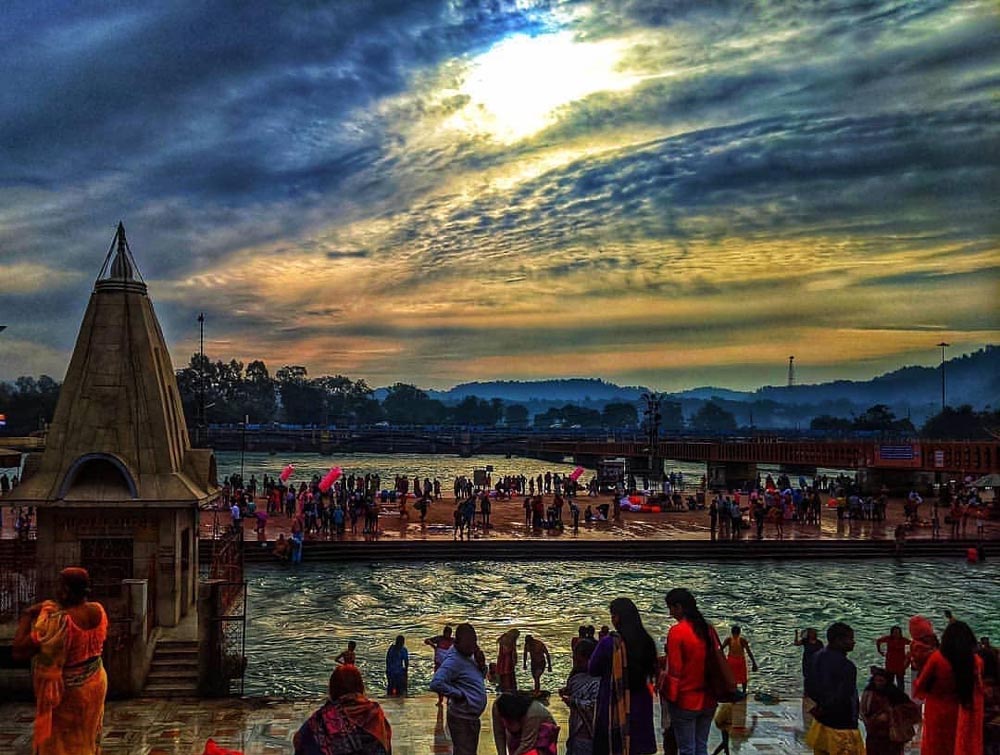
Few places in India bring together faith, history, culture and the timeless movement of a sacred river as beautifully as Har Ki Pauri in Haridwar, Uttarakhand. Situated on the banks of the Ganga, this celebrated ghat is far more than a tourist attraction. For pilgrims, it is a place of worship and spiritual reflection; for photographers, it offers striking scenes of lamps, river water and temple architecture; and for travelers, it provides an opportunity to experience one of northern India’s most enduring religious traditions.
The Uttarakhand Tourism Development Board describes Har Ki Pauri as the most famous ghat on the Ganges at Haridwar and identifies it with the daily Ganga Aarti. It is also traditionally associated with the name Brahmakund, and local religious tradition connects the site with Lord Vishnu and Lord Shiva.
Haridwar itself is regarded as one of Uttarakhand’s major spiritual destinations and serves as an important gateway for pilgrims traveling onward toward the Himalayan pilgrimage centers. The state’s tourism authorities describe Uttarakhand as a land deeply associated with temples, sacred rivers and pilgrimage traditions.
Understanding the Meaning of Har Ki Pauri
The name Har Ki Pauri is commonly understood as referring to the “footsteps of Hari,” with Hari traditionally referring to Lord Vishnu. The site is also associated with Brahmakund, an area of particular religious importance. According to traditional belief, a footprint at the ghat is associated with Lord Vishnu.
These traditions form an important part of the spiritual identity of the place, although they belong to the realm of religious belief and mythology rather than modern historical documentation. Uttarakhand Tourism itself notes the traditional association of the site with Lord Vishnu and Lord Shiva and describes the footprint as being believed to represent the imprint of Lord Vishnu.
For devotees, however, Har Ki Pauri’s significance goes beyond questions of historical verification. The relationship between the Ganga, ritual bathing, prayer and Hindu spirituality has developed over centuries, making the ghat one of the most recognizable pilgrimage landscapes in India.
The river is the central presence. The sound of flowing water, bells from nearby temples, devotional songs, priests conducting rituals and pilgrims gathering along the steps combine to create an atmosphere that is difficult to reproduce anywhere else.
Har Ki Pauri and the Sacred Ganga
The importance of Har Ki Pauri cannot be separated from the importance of the Ganga itself. In Hindu tradition, the Ganga is revered as a sacred river and is personified as the goddess Ganga. Her waters are associated with purification, religious rituals and spiritual renewal.
Uttarakhand Tourism emphasizes the importance of sacred rivers within the state’s spiritual landscape and describes the Ganga as one of India’s most sacred rivers.
Haridwar has a particularly important geographical and religious position because it marks the transition of the Ganga from the Himalayan region toward the plains. The Uttarakhand Tourism Development Master Plan describes Har Ki Pauri as the place believed to be where the sacred Ganga enters the plains and identifies it as one of the holiest places on the river.
This geographical setting helps explain why Haridwar became such an important pilgrimage destination. Travelers arriving from the plains encounter the river here in a landscape where religious traditions, temples and the Himalayan foothills remain closely connected.
The Famous Ganga Aarti
For many visitors, the defining experience of Har Ki Pauri is the Ganga Aarti.
The ceremony takes place in the evening and attracts large numbers of devotees and visitors. Priests perform rituals facing the river while lamps are raised as devotional chants, bells and prayers fill the surroundings. The reflection of the illuminated lamps on the flowing Ganga creates one of Haridwar’s most recognizable scenes.
Uttarakhand Tourism specifically highlights the daily Aarti at Har Ki Pauri and recommends visiting the ghat in the evening to experience the ceremony.
The Aarti is not simply a performance for tourists. It is a religious ritual in which the river is honored and worshipped. Visitors who attend should therefore treat the ceremony as a sacred occasion rather than merely a photographic spectacle.
The atmosphere changes dramatically as daylight fades. The stone steps become increasingly crowded, the river reflects the warm light of lamps, and devotional sounds carry across the ghat. Even travelers who are visiting Haridwar primarily for sightseeing often find this evening experience to be one of the most memorable parts of their journey.
Taking a Holy Dip in the Ganga
Bathing in the Ganga at Har Ki Pauri is an important religious practice. Pilgrims traditionally enter the river to perform a sacred bath, often accompanied by prayers and rituals.
For believers, the bath represents purification and spiritual renewal. Some visitors also collect Ganga water in containers to take home for religious ceremonies and family traditions.
However, visitors should remember that the river can have strong currents, particularly around flowing sections of the ghat. Bathing should therefore be approached carefully, using designated areas and following local instructions. Children and elderly travelers should receive particular attention around the water.
It is also important to avoid treating the river as an ordinary swimming area. Har Ki Pauri is primarily a sacred pilgrimage environment, and respectful behavior is an important part of visiting.
Har Ki Pauri and Haridwar’s Religious Heritage
Har Ki Pauri is only one part of a much larger religious landscape. Haridwar contains numerous temples, ghats, ashrams and pilgrimage sites.
Uttarakhand Tourism identifies the traditional Panch Tirth of Haridwar as Gangadwara, associated with Har Ki Pauri, along with Kushwart, Kankhal, Bilwa Tirtha and Neel Parvat. The city is also one of the four locations associated with the Kumbh Mela cycle.
This broader context is important when planning a visit. Travelers who spend only a few hours at Har Ki Pauri see the most famous landmark, but staying longer allows them to experience Haridwar as an entire pilgrimage city.
Nearby religious attractions include Mansa Devi Temple, Chandi Devi Temple, Daksh Mahadev Temple in Kankhal and various smaller shrines and ashrams. The old markets around Haridwar also provide an opportunity to experience the city’s traditional commercial and religious culture.
Har Ki Pauri During Kumbh and Major Festivals
Har Ki Pauri becomes exceptionally busy during major religious events. Haridwar is one of the four cities where the Kumbh Mela is held on a rotational basis. The event brings enormous numbers of pilgrims to the city and gives the ghats an extraordinary religious and cultural significance.
During major bathing festivals, the relationship between the city and the river becomes particularly visible. Pilgrims arrive from different parts of India, temporary facilities are established to accommodate crowds, and the entire city becomes part of a large-scale religious gathering.
For travelers who prefer a quieter experience, ordinary days outside major festival periods can provide more opportunities to walk along the ghats, observe rituals and appreciate the surroundings without the enormous crowds associated with major events.
The Architecture and Atmosphere Around the Ghat
Har Ki Pauri is characterized by its broad riverfront steps, bridges, shrines, temples, railings and surrounding buildings. The architecture is not isolated from everyday city life. Instead, the ghat forms part of a larger urban environment in which religious activity, shopping, accommodation and transportation overlap.
The nearby old market areas are especially interesting for visitors who enjoy cultural exploration. Uttarakhand’s tourism planning documents describe Haridwar’s main bazaar as a dense network of narrow streets and lanes extending around the area between Har Ki Pauri and other parts of the city.
Walking through these areas can become an important part of the Haridwar experience. Shops sell religious items, prayer accessories, souvenirs, sweets, traditional clothing and devotional objects. Food stalls and small restaurants serve visitors throughout the day.
The contrast between the crowded market and the comparatively contemplative atmosphere beside the river is one of Haridwar’s defining characteristics.
Best Time to Visit Har Ki Pauri
Har Ki Pauri can be visited throughout the year, but the experience changes significantly with the seasons.
The cooler months from roughly October to March are generally comfortable for sightseeing and walking around the city. Winter evenings can become chilly, so warm clothing is useful if you plan to attend the evening Aarti.
The summer months can be hot, particularly during the afternoon. Early morning and evening are therefore more comfortable for exploring the ghats.
The monsoon season requires additional caution. Heavy rainfall in the Himalayan region can affect river conditions, and water levels may rise. Visitors should follow local safety instructions and avoid entering restricted sections of the river.
Festival periods can be particularly crowded. They offer an extraordinary cultural experience but require patience, advance planning and awareness of crowd-management arrangements.
How to Reach Har Ki Pauri
Haridwar is one of the better-connected pilgrimage cities in northern India.
By rail, Haridwar railway station provides connections with several major Indian cities. Travelers arriving by train can continue toward Har Ki Pauri by local taxi, auto-rickshaw or other local transportation.
By road, Haridwar has connections with Delhi, Dehradun, Rishikesh, Meerut and other cities of northern India. Uttarakhand Tourism notes that Haridwar is connected to other parts of India by a broad road network and places Delhi at approximately 220 km by road in one of its Char Dham itineraries.
The nearest major airport for most air travelers is Jolly Grant Airport near Dehradun. From there, travelers can continue toward Haridwar by road.
Once in Haridwar, Har Ki Pauri is relatively easy to reach because it is one of the city’s primary landmarks. During busy religious occasions, however, traffic restrictions and pedestrian diversions can affect local travel.
Where to Stay
Haridwar offers accommodation across a wide range of budgets, from inexpensive guesthouses and dharamshalas to hotels and larger properties.
Staying near Har Ki Pauri is convenient for travelers who want to attend the evening Aarti without depending heavily on transportation. It also makes early-morning visits easier.
Budget-conscious pilgrims may find basic accommodation close to the religious areas, while families and leisure travelers can choose hotels farther from the busiest lanes. Uttarakhand Tourism specifically notes the availability of both budget and luxury accommodation near Har Ki Pauri.
When choosing accommodation, travelers should consider more than just distance. During festivals and peak pilgrimage seasons, roads around the ghat can become crowded, so a hotel that appears very close on a map may not necessarily provide the easiest vehicle access.
Food and Local Shopping
A visit to Har Ki Pauri naturally extends into Haridwar’s food and shopping culture.
Vegetarian food dominates the pilgrimage areas, with restaurants and small eateries serving North Indian dishes, snacks, sweets and beverages. Travelers can also find traditional sweets and local preparations that are popular among pilgrims.
Shopping around Har Ki Pauri is another enjoyable activity. Visitors will encounter shops selling rudraksha beads, religious books, prayer accessories, brass items, idols, devotional pictures, incense, bangles and other traditional products.
It is worth exploring beyond the first shop encountered. Prices and quality can vary, and a relaxed walk through the market provides a better sense of the city’s commercial character.
Places to Visit Around Har Ki Pauri
A trip to Har Ki Pauri can easily be combined with several other attractions in Haridwar.
Mansa Devi Temple is one of the city’s major hilltop shrines and can be reached using a ropeway or by walking along the traditional route. Chandi Devi Temple, situated on Neel Parvat, provides another important religious experience and views over the surrounding region.
Kankhal is another historically important area of Haridwar, particularly associated with Daksh Mahadev Temple and ancient religious traditions. Visitors interested in spirituality can also explore the city’s ashrams and smaller temples.
Nature enthusiasts may consider combining Haridwar with Rajaji National Park, which lies close to the city. Uttarakhand Tourism describes Rajaji National Park as a major forest and wildlife destination near Haridwar.
Rishikesh is also within convenient traveling distance and can be incorporated into a broader Uttarakhand itinerary. This combination allows travelers to experience both the traditional pilgrimage atmosphere of Haridwar and the yoga, adventure and riverside culture associated with Rishikesh.
Photography at Har Ki Pauri
Har Ki Pauri offers numerous photographic opportunities, particularly around sunrise and sunset.
Morning photography can capture the softer atmosphere of the riverfront, with pilgrims beginning their rituals and the city gradually becoming active. Evening photography focuses more strongly on the Aarti, illuminated temples, lamps and crowds.
Photographers should remember that religious ceremonies involve real worshippers, not performers. Asking permission before taking close-up portraits is a simple but important courtesy.
During Aarti, it is also better to avoid obstructing people who are praying. A respectful distance can often produce better photographs anyway, because it captures the entire relationship between the river, lamps, priests and gathering crowd.
A Place of Faith, Not Just Tourism
Perhaps the most important thing to understand about Har Ki Pauri is that it should not be approached solely as a sightseeing attraction.
For many people, the journey to Haridwar is a pilgrimage rather than a holiday. They may come to bathe in the Ganga, perform ancestral rituals, offer prayers, attend the Aarti or simply sit beside the river in contemplation.
The Uttarakhand Tourism Development Board’s own tourism material presents Har Ki Pauri within this larger religious landscape, placing it among the central experiences of a Haridwar visit and incorporating the evening Ganga Aarti into its recommended pilgrimage itinerary.
This mixture of everyday life and sacred tradition gives the ghat its distinctive character. A visitor might see a family completing a religious ceremony beside another traveler taking photographs, while vendors move through the surrounding streets and bells sound from nearby temples.
It is this living quality that makes Har Ki Pauri different from a monument that can simply be viewed and left behind.
Responsible Travel at Har Ki Pauri
Because the site attracts large numbers of pilgrims, responsible tourism is particularly important.
Visitors should avoid throwing plastic, food packaging or other waste into the Ganga. Religious offerings should be handled according to local arrangements rather than casually discarded in the river. Travelers should also respect bathing areas, religious ceremonies and restricted sections.
Water safety deserves special attention. The Ganga is a powerful river, and conditions can change. Visitors should follow warnings from local authorities and avoid taking unnecessary risks for photographs.
Keeping noise under control during religious ceremonies, dressing respectfully around temples and avoiding intrusive photography are simple ways of showing consideration to local residents and pilgrims.
Why Har Ki Pauri Remains Special
Har Ki Pauri’s importance comes from the way several dimensions of Indian culture meet in one place. It is simultaneously a riverfront, pilgrimage center, historic urban landmark, religious gathering place and gateway to the wider spiritual landscape of Uttarakhand.
Its most famous moment comes at sunset, when the Ganga Aarti transforms the riverfront into a landscape of lamps, chants and reflections. Yet the character of Har Ki Pauri is not limited to those few minutes. The early morning rituals, pilgrims bathing in the river, temple bells, busy markets and quiet moments beside the water are equally important parts of the experience.
For someone visiting Uttarakhand for the first time, Har Ki Pauri offers an accessible introduction to the state’s spiritual identity. Uttarakhand is officially promoted as a destination where spirituality, nature, pilgrimage and cultural heritage come together, and Har Ki Pauri captures many of those themes in a single location.
Ultimately, Har Ki Pauri is best understood not simply as a place to see but as a place to experience. The river continues to flow, pilgrims continue to arrive, lamps continue to be raised at dusk, and generations of visitors continue to stand along the same sacred waterfront. That continuity is perhaps the most remarkable feature of this celebrated ghat in Haridwar.
Har Ki Pauri — Uttarakhand therefore deserves a place in any journey through the region, whether the purpose is pilgrimage, cultural exploration, photography, family travel or simply the desire to spend time beside one of India’s most revered rivers.

