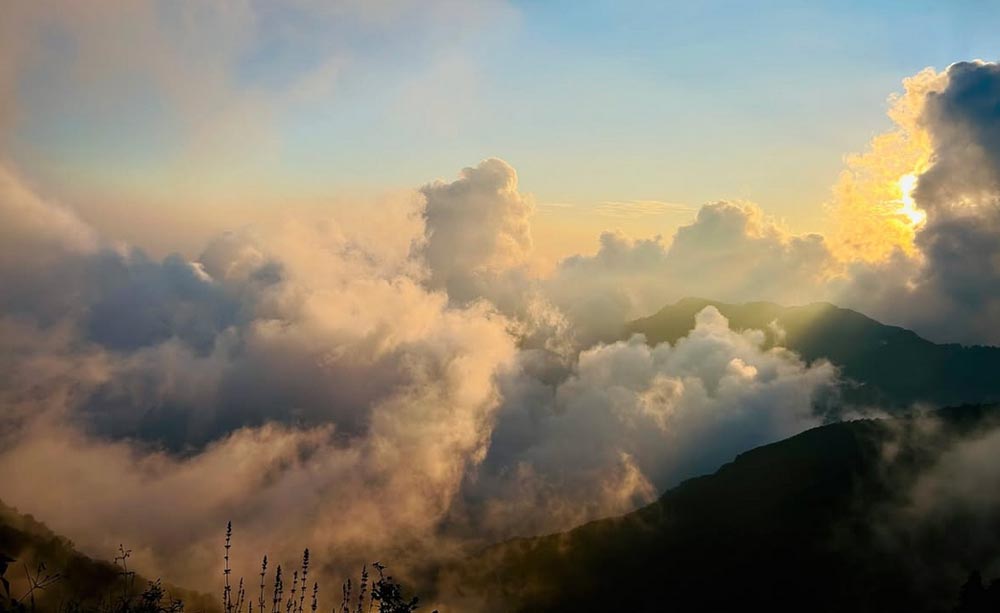
George Everest Peak, located near the celebrated hill station of Mussoorie in Uttarakhand, is a destination where history, Himalayan scenery, adventure and colonial heritage come together in a remarkably atmospheric setting. Although Mussoorie is famous for Mall Road, Gun Hill, Kempty Falls and Lal Tibba, the George Everest area offers a quieter experience, particularly for travelers interested in mountain landscapes and the scientific history of India.
The attraction is closely associated with Sir George Everest, the British surveyor and Surveyor General of India whose work contributed significantly to the Great Trigonometrical Survey of India. His former residence and laboratory, popularly known as George Everest House or Park Estate, stands near the peak. Built in 1832, the property was once an important base for surveying and astronomical observations. Today, the surrounding landscape attracts tourists, photographers, hikers, campers and travelers looking for panoramic views away from the busiest parts of Mussoorie.
Where Is George Everest Peak?
George Everest Peak is situated in the Mussoorie region of Dehradun district, Uttarakhand. It lies a short distance from central Mussoorie, making it convenient to include in a sightseeing itinerary. The George Everest House is approximately 8 kilometres from Mussoorie according to Incredible India, while local travel descriptions commonly place the site roughly 6 kilometres from the Library Chowk area depending on the route and starting point.
The destination is particularly appealing because it feels different from central Mussoorie. Instead of busy markets and crowded streets, visitors encounter open mountain slopes, forested stretches, broad skies and expansive Himalayan views. The location overlooks the Doon Valley on one side, while the Aglar Valley and Himalayan ranges can be seen from the other side.
For travelers staying in Mussoorie, George Everest can therefore serve as a half-day excursion or as part of a longer exploration of the western side of the hill station.
The Story of Sir George Everest
The most fascinating aspect of this destination is its connection with Sir George Everest. Born in Wales in 1790, George Everest became an important figure in the scientific and geographical surveying work carried out in British India. He served as Surveyor General of India from 1830 to 1843 and played a major role in the Great Trigonometrical Survey.
The Great Trigonometrical Survey was an enormous scientific undertaking designed to accurately measure and map large portions of the Indian subcontinent. The project involved difficult fieldwork, astronomical observations, mathematical calculations and extensive triangulation across challenging terrain.
George Everest’s association with Mussoorie is particularly important because his residence at Park Estate functioned not simply as a home but also as a working location connected with his surveying activities. The building was constructed in 1832 and served as his residence, observatory and laboratory. He lived there for approximately eleven years.
His name became permanently connected with the world’s highest mountain. The Himalayan summit then known to surveyors as Peak XV was eventually named Mount Everest in his honour. The naming recognizes his contribution to the surveying work that helped establish the mountain’s position and height.
Interestingly, Sir George Everest himself was not the person who climbed the mountain that eventually carried his name. The first successful ascent of Mount Everest was achieved much later, in 1953, by Tenzing Norgay and Edmund Hillary. Thus, the George Everest site represents the scientific and surveying chapter of Everest’s story rather than the mountaineering chapter.
George Everest House and Park Estate
George Everest House is arguably the most historically significant feature of the destination. The white colonial-era structure stands against a dramatic mountain backdrop, giving visitors an opportunity to see a physical location connected with one of the most ambitious surveying projects in history.
The house was constructed in 1832 and was known as Park Estate. Its elevated position was strategically useful for observations, and the surrounding landscape provided extensive lines of sight toward the mountains and valleys.
Today, the building and its surroundings provide an unusual combination of heritage and natural beauty. Visitors can explore the exterior, admire the old architecture and imagine the difficult surveying work that was undertaken in an era without modern GPS equipment, satellite imagery or digital surveying instruments.
The contrast between the old structure and the surrounding Himalayan landscape is one of the strongest visual attractions of the area. For photographers, the house can provide an atmospheric subject, particularly when clouds and changing mountain light transform the landscape.
The Panoramic Views from George Everest
The scenery is one of the primary reasons travelers visit George Everest Peak. The location offers extensive views rather than the enclosed feel found in some forest attractions around Mussoorie.
The Doon Valley spreads out below one side of the site, while the Aglar River valley and Himalayan mountains form part of the wider panorama in the opposite direction. On clear days, the distant mountain ranges become particularly impressive.
The experience can change dramatically depending on weather conditions. During clear mornings, the atmosphere may be crisp and visibility excellent. Clouds can later gather around the ridges, creating the characteristic misty Himalayan appearance associated with Mussoorie.
Sunrise and sunset can be especially attractive for photographers, although visitors planning an early or late visit should consider access conditions, weather and local opening arrangements rather than assuming the site is accessible at all hours.
George Everest Peak as a Hiking Destination
The area around George Everest is popular with people who enjoy walking and hiking. The combination of relatively accessible terrain, mountain scenery and historical interest makes it appealing even to visitors who are not experienced trekkers.
The walk toward the higher viewpoint provides an opportunity to experience the landscape more intimately. Rather than simply arriving by vehicle, walking allows visitors to appreciate changes in vegetation, mountain slopes and distant views.
The trail conditions can vary according to the season and recent weather. During or after rain, sections may become slippery, while winter conditions can bring cold temperatures and occasional snow around higher parts of the Mussoorie region. Comfortable footwear with a good grip is therefore advisable.
It is also worth remembering that this is a mountain environment. Visitors should avoid treating the walk like an urban park stroll, particularly if they intend to explore less-used paths. Carrying water, wearing suitable footwear and allowing sufficient time for the return journey can make the experience much more comfortable.
Best Time to Visit George Everest Peak
George Everest can be visited in different seasons, but each period offers a distinct experience.
Spring brings relatively pleasant weather and fresh greenery. The landscape can be particularly attractive as vegetation becomes more vibrant and the surrounding hills regain their seasonal colour.
Summer is one of Mussoorie’s busiest travel periods because visitors from the plains seek relief from the heat. George Everest can provide a welcome escape from the crowded centre of town, although popular weekends and holidays can still bring significant visitor numbers.
The monsoon season creates lush surroundings, but rain can reduce visibility and make walking surfaces slippery. Travelers primarily interested in panoramic Himalayan views may prefer to avoid days with heavy rainfall.
Autumn is among the most rewarding periods for landscape photography because the air can become clearer after the monsoon. Mountain visibility is often better when weather conditions cooperate.
Winter brings cold temperatures and the possibility of snow in the Mussoorie area. The combination of snow, mist and the historic house can create a striking landscape. Incredible India specifically highlights October to February as a particularly good period for experiencing Mussoorie’s attractions, including the George Everest area.
How to Reach George Everest Peak
The easiest approach is generally through Mussoorie. Travelers first need to reach Mussoorie from Dehradun and then continue toward the George Everest area by road.
Dehradun is the nearest major city and an important transportation gateway to Mussoorie. The district administration describes Mussoorie as approximately 38 kilometres from Dehradun.
For visitors arriving by air, Jolly Grant Airport near Dehradun is the principal airport serving the region. Those arriving by train generally use Dehradun railway station before continuing by road.
Once in Mussoorie, visitors can use local taxis or other available transport to reach the George Everest area. Travelers should check current local road and access conditions before setting out, particularly during monsoon or winter weather.
The destination is also suitable for visitors who want to combine a vehicle journey with walking. The exact amount of walking depends on the chosen access point and current road conditions, so it is better to confirm the route locally rather than relying on a single fixed distance.
Things to Do at George Everest
The most obvious activity is enjoying the views. However, George Everest offers considerably more than a conventional viewpoint.
Photography is one of the area’s strongest attractions. The old colonial house, rugged slopes, distant mountains, clouds and valley views create numerous photographic compositions. Early morning and late afternoon can provide especially interesting natural light.
History enthusiasts can spend time examining the architecture and learning about Sir George Everest and the Great Trigonometrical Survey. Understanding the historical background makes the visit considerably more meaningful because the building is not simply an old colonial structure; it represents a period when scientists and surveyors attempted to map enormous areas using sophisticated but entirely non-digital techniques.
Hiking is another popular activity. Visitors can explore the surrounding paths and enjoy the changing landscape. Camping and picnicking are also associated with the George Everest area, and Incredible India describes the house and nearby peak as popular locations for camping, picnics and adventure outings.
The area can also be a peaceful place to simply sit and appreciate the landscape. Unlike attractions where visitors move quickly from one photo opportunity to another, George Everest rewards travelers who spend time observing the mountains and atmosphere.
George Everest for Photography
For photographers, George Everest is one of the more interesting locations around Mussoorie because it combines several different subjects in one setting.
The colonial architecture provides a historical foreground, while the valley and mountains create depth behind it. Clouds moving across the ridges can dramatically alter the appearance of the scene. During clear weather, distant Himalayan peaks may become visible, while mist can produce a more mysterious and atmospheric composition.
Portrait photographers can also use the open landscape as a backdrop. However, visitors should be respectful of other tourists and avoid climbing onto fragile historic structures simply to obtain photographs.
Nearby Attractions
One advantage of visiting George Everest is that it can easily be combined with other Mussoorie attractions.
Gun Hill is one of the prominent viewpoints in Mussoorie and stands at more than 2,024 metres. It provides views toward the Doon Valley and Himalayan ranges and is accessible by a cable car from Mall Road.
Lal Tibba is another important viewpoint, particularly for travelers interested in distant mountain scenery. Benog Wildlife Sanctuary offers a different experience, focusing more on forest landscapes and Himalayan biodiversity.
Kempty Falls, one of Mussoorie’s best-known attractions, can also be included in a broader itinerary. The Mussoorie Lake, Landour and its colonial atmosphere, Christ Church and other heritage locations provide additional options.
This makes George Everest particularly suitable for travelers staying in Mussoorie for two or more days. Instead of treating the peak as an isolated destination, visitors can incorporate it into a wider exploration of the region.
Food and Facilities
The George Everest area is more peaceful and less commercially developed than central Mussoorie. Travelers should therefore avoid expecting the same range of restaurants, shops and facilities available around Mall Road.
Tourism information notes that food stalls can be found around the base area, with simple items such as Maggi and momos available at times. Visitors can also carry their own snacks and drinking water for a picnic.
Because mountain weather can change quickly, carrying essential supplies is sensible. Travelers should also take all waste back with them or use designated disposal facilities. Protecting the relatively quiet character of the landscape is particularly important as visitor numbers increase.
Responsible Tourism at George Everest
George Everest is both a natural landscape and a heritage destination, so responsible tourism is essential.
Visitors should avoid littering, damaging vegetation or writing on historic walls. Old buildings are fragile, and even seemingly harmless graffiti contributes to the gradual deterioration of heritage structures.
Noise should also be kept under control. The attraction’s appeal comes partly from its peaceful atmosphere, and excessive music or loud gatherings can diminish the experience for other visitors.
Plastic waste should be minimized, and travelers should carry reusable water bottles whenever possible. Anyone planning to camp should follow local rules and leave no trace behind.
Responsible tourism is particularly important in Uttarakhand, where fragile mountain ecosystems face increasing pressure from tourism, construction and waste generation.
Entry Timings and Practical Considerations
The official Incredible India listing currently gives opening hours for George Everest House as 9:00 AM to 6:00 PM. Because mountain attractions can occasionally have changes related to weather, maintenance or local administration, checking current conditions before visiting is advisable.
Travelers should carry comfortable shoes, water, a light jacket and sun protection. Even when temperatures feel pleasant, mountain weather can change quickly. A rain jacket is useful during unsettled weather.
Those planning to hike should begin early enough to enjoy the route without rushing. Mobile connectivity can also vary depending on location, so visitors should avoid depending entirely on their phones for navigation.
Why George Everest Peak Deserves a Place on Your Uttarakhand Itinerary
George Everest Peak is unusual because its appeal does not depend on a single attraction. It brings together a fascinating historical story, colonial architecture, scientific heritage, hiking opportunities and panoramic Himalayan scenery.
For someone visiting Mussoorie only for shopping and conventional sightseeing, the destination provides a chance to see a quieter side of the hill station. For history lovers, it offers a connection with the Great Trigonometrical Survey. For photographers, it presents a remarkable combination of architecture and mountains. For hikers, it provides an accessible outdoor excursion. And for travelers simply seeking a beautiful place to spend a few hours, the views alone make the journey worthwhile.
The story of George Everest also gives the landscape an unusual sense of significance. The mountain that carries his name lies thousands of kilometres away, yet his own home and working environment can be found on a hill above Mussoorie. Standing beside the historic estate and looking toward the Himalayan ranges creates a fascinating connection between the history of scientific measurement and the mountains that inspired it.
Final Thoughts
George Everest Peak is one of Uttarakhand’s more distinctive destinations, particularly for travelers who enjoy places where nature and history overlap. Located near Mussoorie, it provides sweeping views of valleys and Himalayan landscapes while preserving the memory of Sir George Everest and his contribution to India’s surveying history.
The historic George Everest House, built in 1832, remains the heart of the attraction. Its former role as a residence, observatory and laboratory gives the site an importance far beyond its picturesque appearance.
A visit here is therefore not simply about reaching another viewpoint. It is about walking through a landscape shaped by scientific ambition, colonial-era history and the extraordinary geography of the Himalayas. Whether you arrive for photography, hiking, heritage exploration, camping or simply a peaceful mountain escape, George Everest Peak offers a memorable experience and deserves to be included among the places worth exploring around Mussoorie, Uttarakhand.

