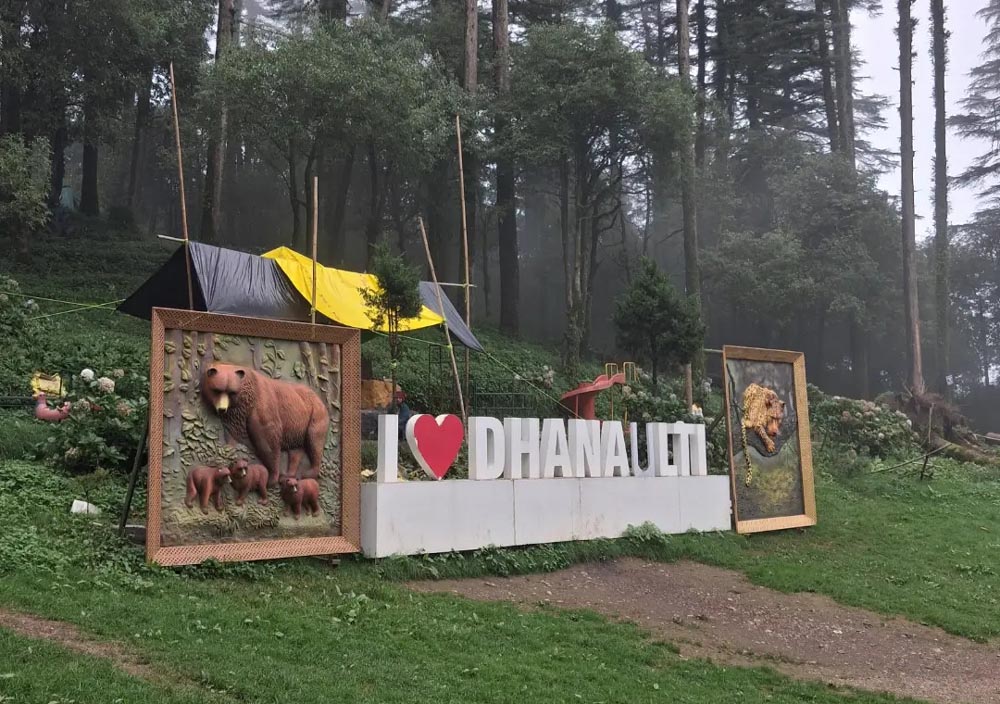
Far from the crowded streets and commercial atmosphere of many popular hill stations, Dhanaulti offers a slower, greener and more peaceful side of Uttarakhand. Among its most appealing attractions is Eco Park, a forest-based recreation and nature destination where tall deodar trees, cool mountain air, walking trails and Himalayan scenery come together. Located along the Chamba–Mussoorie Road, the park is particularly attractive to travellers looking for a short nature break, a family outing or an opportunity to experience the forests of the Garhwal Himalayas without undertaking a demanding trek.
Dhanaulti itself lies in the Tehri Garhwal district and is surrounded by forests of deodar, rhododendron and oak. The district administration describes the area as a peaceful retreat with wooded slopes, cool breezes and views toward snow-covered mountains. Dhanaulti is situated on the Mussoorie–Chamba route, making it convenient to combine with a wider Uttarakhand itinerary.
Understanding Eco Park, Dhanaulti
Eco Park is not simply a landscaped urban garden placed in the mountains. Its character comes from its setting within a natural forest environment. The attraction is spread across roughly 13 hectares and is traditionally described as having two principal sections, Amber and Dhara, located approximately 200 metres apart. Deodar and oak trees dominate the landscape, while pathways, seating areas, small huts and recreational facilities have been integrated into the forest surroundings.
One of the most interesting aspects of the park is its connection with local community participation. The park was developed with the involvement of the Forest Department and local residents, with eco-tourism also providing opportunities for local employment. Research into the Dhanaulti Eco Park has documented how visitor activities and facilities contributed to local income generation and created a model of community-linked tourism.
This community dimension is important because the attraction demonstrates how a natural landscape can become a tourism resource without completely separating tourism from the people who live around it. Rather than being only a sightseeing stop, Eco Park forms part of Dhanaulti’s broader identity as a quieter alternative to heavily commercialised Himalayan destinations.
The Deodar Forest Experience
The most memorable part of visiting Eco Park is arguably not a particular attraction but the forest itself. Deodar trees rise around the pathways, creating a distinctly Himalayan atmosphere. Their tall trunks, dense foliage and resinous fragrance give the park a character very different from conventional recreational gardens.
Walking beneath these trees can be especially pleasant during the morning, when the air is crisp and the surroundings are comparatively quiet. Depending on the weather, mist can drift between the trees, creating an almost dreamlike atmosphere. On sunny days, patches of light filter through the canopy, while during cloudy weather the forest takes on a deeper, more dramatic appearance.
The surrounding Dhanaulti landscape also contains oak and rhododendron forests. These natural habitats contribute to the area’s biodiversity and provide an opportunity for visitors to observe the vegetation typical of the middle Himalayan region. The park is therefore particularly enjoyable for travellers who would rather walk slowly and appreciate the landscape than rush between sightseeing points.
Amber and Dhara: Exploring the Two Sections
Eco Park is commonly identified with its two sections, Amber and Dhara. Although they are close to one another, the division gives visitors a natural reason to explore more of the forest rather than treating the attraction as a single viewpoint.
The paths through the park provide opportunities for casual walking and short forest exploration. Visitors can pause beneath the trees, sit in designated areas or simply enjoy the changing views between the trunks. The park’s relatively accessible nature makes it suitable for families and travellers who want a taste of Himalayan woodland without committing to a strenuous hike.
Because the park is situated in a forest environment, the experience changes considerably according to season and weather. In misty conditions, the trees become the main attraction. During clear weather, the surrounding Himalayan landscape becomes more visible. In spring and summer, vegetation adds colour to the forest, while winter can bring a distinctly colder and more atmospheric experience.
Memory Sapling Plantation: A Meaningful Eco-Tourism Tradition
One of the most distinctive features associated with Dhanaulti Eco Park is memory sapling plantation. The idea is simple but meaningful: visitors can plant a sapling in memory of a loved one. Instead of taking home only photographs and souvenirs, a traveller can leave behind something living.
This tradition gives the park an emotional dimension. A tree planted during a family holiday, anniversary, memorial occasion or personal milestone can become a lasting connection between a person and the Himalayan landscape.
The concept also fits naturally with the park’s environmental character. Tourism can place pressure on mountain ecosystems, but activities connected with planting and conservation can encourage visitors to think about their relationship with nature. Sources describing the park have highlighted memory plantation as one of its distinctive eco-tourism practices.
Walking, Relaxation and Nature Appreciation
Eco Park is best approached as a place to slow down. The walking paths are suitable for leisurely exploration, and visitors can spend time simply observing the forest. Small open huts and seating areas provide places to rest, making the park suitable for people who do not want an intensive outdoor adventure.
Families with children can enjoy the open spaces and recreational facilities, while older visitors may prefer sitting beneath the trees and enjoying the mountain air. Couples and photographers often appreciate the peaceful forest surroundings, particularly when the park is less crowded.
The appeal is also connected to Dhanaulti’s elevation and climate. Compared with the plains, the mountain environment offers noticeably cooler air, although temperatures vary significantly according to season, time of day and weather conditions.
Adventure Activities at Eco Park
For visitors who want more excitement, Eco Park has also been associated with adventure activities such as sky walking, flying fox or zip-line-style experiences, rock climbing and rope-based activities. Availability and prices can change, so these should be confirmed at the park rather than assumed to operate every day.
Current travel information lists activities such as sky walking, rock climbing and rope crossing, with separate charges from the basic park entry.
These activities can make Eco Park especially attractive to families travelling with older children and to younger travellers who want to combine nature sightseeing with a little adventure. However, visitors should follow the operator’s safety instructions, use the required equipment properly and avoid participating if weather conditions make an activity unsuitable.
The adventure component should be regarded as an addition rather than the defining attraction. The forest environment remains the central reason to visit.
Eco Huts and Forest Architecture
Another appealing element is the presence of small eco-friendly huts and shelters integrated into the surroundings. Rather than dominating the landscape with large concrete structures, these facilities are intended to blend into the forest setting.
The idea of eco-friendly construction is particularly appropriate in a destination where the natural environment is the primary attraction. Visitors can sit inside or near these structures, take shelter from changing weather and enjoy the surrounding trees.
Older research on the park also documented eco-huts as an important component of the tourism model and noted that accommodation facilities generated income alongside park activities.
Today, travellers should verify locally whether any particular hut or accommodation facility is available for overnight use, as facilities and operating arrangements can change over time.
A Good Place for Families
Eco Park is one of the easier Dhanaulti attractions to enjoy as a family. Children can experience a forest environment without needing to undertake a difficult mountain trek, while adults can relax among the trees.
The presence of swings, open areas and adventure activities adds variety to the visit. At the same time, the forest setting gives children an opportunity to experience something different from the usual amusement parks found in cities.
Parents should nevertheless keep children within sight, particularly near slopes, forest paths and adventure facilities. Comfortable shoes are preferable to fashionable but slippery footwear because parts of the park involve walking over uneven terrain.
Photography at Eco Park
Photographers will find plenty of opportunities within and around Eco Park. The tall deodar trunks create strong vertical compositions, while forest paths can provide natural leading lines. Mist, sunlight and changing cloud conditions can dramatically alter the appearance of the same location.
Early morning is particularly attractive for atmospheric photographs. Mist among the trees can create a soft, mysterious appearance, while clear weather allows greater visibility of the surrounding mountains.
The late afternoon can also be rewarding because the changing light gives the forest warmer tones. Some travel sources specifically recommend sunrise and sunset periods for the scenic atmosphere around the park.
Travellers using professional photography equipment should remain mindful of other visitors and avoid disturbing wildlife or blocking pathways.
Best Time to Visit Eco Park
Dhanaulti can be visited during several seasons, but the experience varies considerably.
Spring and early summer are pleasant periods for walking and outdoor sightseeing. The weather is generally comfortable, and the surrounding vegetation gives the landscape a fresh appearance.
Monsoon brings lush greenery and mist. The forest can look exceptionally beautiful during this season, but rainfall may make paths slippery and road travel more challenging. Travellers visiting during the rainy season should keep weather conditions in mind.
Autumn can be one of the most rewarding periods for photography because clearer skies can improve mountain visibility. The crisp atmosphere also makes forest walks enjoyable.
Winter gives Dhanaulti a colder, more dramatic character. Snowfall is possible in the wider region during favourable conditions, although it should never be guaranteed for a particular travel date. Visitors travelling during winter should carry warm clothing and check road and weather conditions before setting out.
In general, a visit between September and June is often recommended for comfortable sightseeing, while the exact best month depends on whether a traveller prioritises greenery, clear mountain views, cold weather or the possibility of snow.
Eco Park Timings and Entry Fee
Published information about Dhanaulti Eco Park is not completely consistent because entry fees and operating arrangements have changed over time. Several current travel sources list the park’s general operating hours as approximately 9:00 AM to 5:00 PM, while recent sources report somewhat different seasonal timings and fees.
For this reason, visitors should treat online prices as indicative rather than permanent. The ticket counter at the park is the best place to confirm the current entry fee and individual activity charges before planning a detailed budget.
A visit of approximately one and a half to three hours is generally sufficient for a relaxed exploration, although families and photographers may easily spend longer.
How to Reach Eco Park, Dhanaulti
Eco Park is conveniently located near the main Dhanaulti area on the Chamba–Mussoorie road. It is close enough to the local market that visitors staying in Dhanaulti can reach it without a complicated journey.
Dhanaulti is connected by road to Mussoorie, Chamba and Dehradun. The Uttarakhand Tourism itinerary identifies Dehradun as roughly 60 km from Dhanaulti and notes that taxis are a practical way of reaching the hill station. It also places Jolly Grant Airport at approximately 80 km away.
For travellers arriving by train, Dehradun is the principal nearby railway connection. From Dehradun, visitors can hire a taxi or use shared transport where available.
Travelling by road is generally the most convenient option because it allows visitors to stop at viewpoints and other attractions along the route. Mountain roads can be winding, so journeys may take considerably longer than the distance suggests.
Eco Park as Part of a Dhanaulti Itinerary
The park is particularly easy to combine with other attractions in and around Dhanaulti. Travellers can build a relaxed day around Eco Park, nearby forest areas and local viewpoints rather than treating the park as an isolated destination.
Surkanda Devi Temple is one of the most notable nearby attractions, while Kanatal, Kaudia Forest, Chamba and Tehri Lake can be incorporated into longer itineraries. The wider region provides opportunities for trekking, camping, photography, temple visits and scenic drives.
A two-day Dhanaulti trip can therefore include Eco Park on the first day along with local sightseeing, followed by nearby attractions on the second day. Those with more time can extend the journey toward Chamba or the Tehri region.
Responsible Tourism at Eco Park
The word “eco” should not be treated merely as part of the attraction’s name. Visitors have an important role in ensuring that tourism does not damage the forest that brings them there.
The simplest practices make a significant difference. Avoid throwing plastic or food waste on the trails, do not carve names into trees, avoid plucking flowers or plants and keep noise levels low. Visitors should remain on designated paths wherever possible and follow instructions from park staff.
It is also wise to carry a reusable water bottle rather than repeatedly purchasing disposable plastic bottles. Food should be consumed responsibly, and all waste should be taken to designated disposal points or carried out if appropriate facilities are unavailable.
The quieter visitors are, the greater their chance of experiencing the natural character of the forest. Loud music, unnecessary shouting and careless behaviour can disturb birds and other wildlife as well as other visitors.
Where to Stay and Eat
Dhanaulti has accommodation ranging from hotels and guesthouses to camps and forest-related lodging options. Because Eco Park is close to the main settlement, visitors do not necessarily need to stay immediately beside the attraction.
The town and surrounding roads have small restaurants, cafés and roadside food establishments where travellers can find simple meals and hot beverages. During cold weather, a hot cup of tea or a warm meal can become part of the mountain experience itself.
Visitors planning to stay overnight should book accommodation in advance during weekends, holidays and peak travel periods, when Dhanaulti can become considerably busier.
Important Tips Before Visiting
A little preparation can make a visit to Eco Park much more enjoyable. Comfortable walking shoes are recommended because the experience involves walking through a natural forest environment. A light jacket is useful even during warmer months because mountain weather can change quickly.
During winter, substantially warmer clothing is necessary. During monsoon, a raincoat or umbrella and footwear with good grip are advisable.
Travellers should also carry sufficient drinking water, especially if they plan to spend several hours exploring the surrounding attractions. Since activity charges and park regulations can change, it is sensible to confirm current prices and availability at the entrance.
Weekdays are generally preferable for travellers seeking a quieter experience. Weekends and holidays can attract family groups, tourists from nearby cities and visitors travelling through Mussoorie and Dhanaulti.
Why Eco Park Deserves a Place on Your Uttarakhand Trip
Eco Park, Dhanaulti, represents a different kind of Himalayan tourism. It does not depend entirely on grand monuments or spectacular commercial attractions. Its charm comes from something much simpler: trees, fresh air, walking paths, mountain weather and the opportunity to spend a few peaceful hours in nature.
The combination of protected forest, community participation, recreational facilities and eco-tourism initiatives makes the park more interesting than an ordinary picnic garden. Its memory sapling tradition adds a particularly meaningful dimension, while the adventure activities provide enough variety for visitors who want something more energetic.
Perhaps the greatest attraction is the atmosphere. Dhanaulti’s forests create a sense of distance from busy city life, even though the destination remains relatively accessible from Mussoorie and Dehradun. The experience is one of slowing down, listening to the wind through the trees, walking beneath deodars and allowing the mountains to become the focus of the journey.
For travellers exploring Uttarakhand, Eco Park is therefore best experienced not as a quick box to tick on a sightseeing list, but as part of the broader Dhanaulti experience. Spend time walking rather than rushing, explore both sections, appreciate the forest, try an activity if it interests you, and leave the landscape exactly as you found it. In a Himalayan destination increasingly shaped by tourism, that approach captures the real spirit of an eco-park: enjoy the mountains while helping preserve the reason they are worth visiting in the first place.

