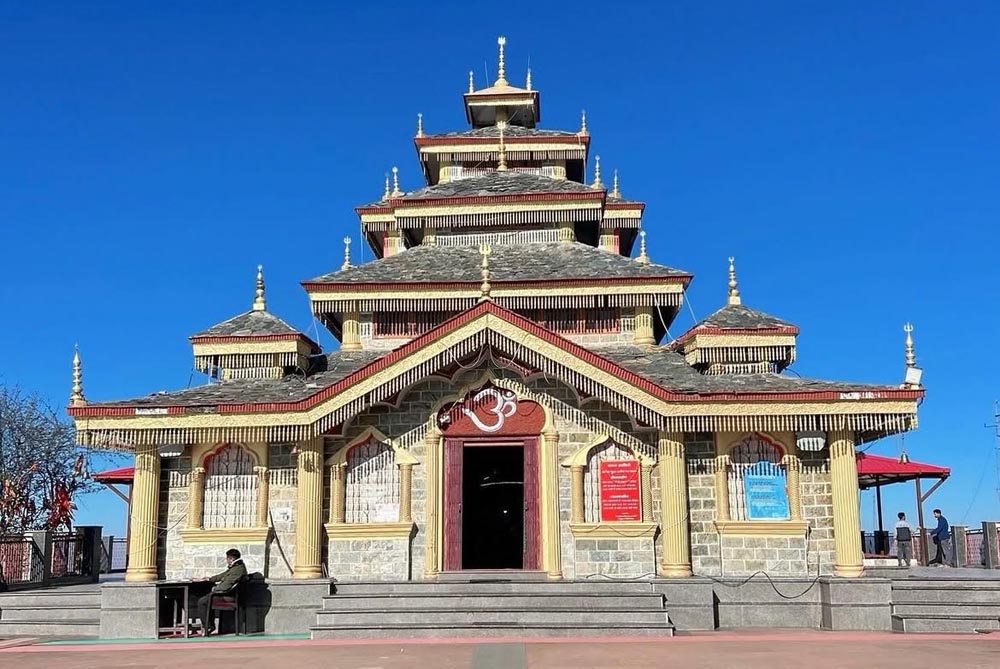
High above the forests of Tehri Garhwal, where mountain clouds drift across ridges and the Himalayas stretch toward the horizon, stands the revered Surkanda Devi Temple. Perched at roughly 2,750 metres above sea level, the temple is among the most important spiritual destinations in this part of Uttarakhand. It is situated near Kaddukhal, along the road connecting Dhanaulti, Mussoorie and Chamba, and is surrounded by dense Himalayan forest.
Surkanda Devi Temple is particularly revered because local Hindu tradition identifies it with a Shakti Peetha, the sacred sites associated with parts of Goddess Sati’s body. According to the legend, Sati’s head fell here after Lord Shiva carried her body during his grief-stricken cosmic dance. This association gives the temple a significance that goes beyond its beautiful mountain setting. At the same time, the journey to the shrine combines pilgrimage, trekking, nature, mountain scenery and the distinctive cultural atmosphere of Garhwal.
Location and Setting of Surkanda Devi Temple
Surkanda Devi Temple is located in the Tehri Garhwal district of Uttarakhand, near Kaddukhal and approximately 8 kilometres from Dhanaulti by road. The temple itself is reached by ascending the mountain from Kaddukhal. The District Tehri Garhwal administration describes the final approach as a steep uphill walk of about 2.5 kilometres, while other sources describe the walking route somewhat differently depending on the access point and route used.
The setting is one of the temple’s greatest attractions. Unlike shrines situated in busy towns, Surkanda Devi is surrounded by forest and mountain wilderness. The hill is covered with vegetation, including local trees and flowering plants, while Himalayan birds can sometimes be seen around the temple. Mist frequently moves across the summit, creating an atmosphere that can feel almost otherworldly.
From the higher slopes, visitors can enjoy broad views toward the surrounding valleys and mountain ranges. On clear days, the landscape opens dramatically, with views extending toward areas around Dehradun, Rishikesh, Chakrata, Pratapnagar and Chandrabadni.
The combination of altitude, forest, clouds and open mountain views makes Surkanda different from an ordinary temple visit. The physical climb itself becomes part of the pilgrimage experience.
The Legend Behind Surkanda Devi
The spiritual importance of Surkanda Devi is closely connected with the ancient story of Sati and Shiva. According to Hindu mythology, Sati was the daughter of Daksha and the wife of Lord Shiva. Daksha was unhappy with Sati’s marriage to Shiva and eventually organised a grand yajna to which Shiva was not invited.
Sati nevertheless went to her father’s ceremony. When Daksha insulted Shiva, Sati was deeply distressed. Unable to accept the disrespect shown toward her husband, she sacrificed herself in the fire of the yajna.
When Shiva learned of Sati’s death, he was overwhelmed with grief and anger. He carried her body and began the destructive Tandava. The gods feared that Shiva’s grief and fury could disturb the balance of the universe.
According to the traditional account, Lord Vishnu intervened and used his Sudarshan Chakra to separate Sati’s body into various parts. These parts are believed to have fallen at different locations across the Indian subcontinent. The sacred places associated with these remains became known as Shakti Peethas.
At Surkanda, local tradition holds that Sati’s head fell. The District Tehri Garhwal administration also records this legend and explains the traditional connection between the word associated with the head, “sir”, and the name Surkanda.
The story gives the temple its distinctive spiritual identity. For devotees, Surkanda is not simply a mountain shrine dedicated to a goddess; it represents a place where the divine feminine is believed to have manifested through the sacred geography of the Himalayas.
Religious Significance
Surkanda Devi is worshipped as a powerful form of the Goddess. The temple attracts devotees throughout the year, particularly during major Hindu festivals.
The concept of Shakti is central to Hindu traditions that worship the divine feminine. Shakti represents divine energy, power and creative force. The Shakti Peetha tradition connects particular landscapes with this sacred feminine energy, making pilgrimage to such places an important religious practice.
For devotees visiting Surkanda Devi, the climb can therefore have a symbolic meaning. The journey from the road to the mountaintop shrine requires physical effort, and reaching the temple after walking through the forest can feel like a transition from the ordinary world into a sacred landscape.
Many visitors come to pray for health, prosperity, family well-being, protection and the fulfilment of personal wishes. Others visit simply to experience the atmosphere of the shrine and the serenity of the Himalayan surroundings.
The Temple and Its Mountain Architecture
Surkanda Devi Temple has the intimate character of a traditional Himalayan shrine rather than the monumental scale of a large urban temple. Its design is closely connected with the mountain environment.
Traditional accounts describe the shrine as a stone temple adapted to the challenging Himalayan climate. The temple has undergone repairs and rebuilding over time, as is common with mountain shrines exposed to rain, snow, cold temperatures and strong winds.
The temple’s relatively modest scale contributes to its charm. Bells, religious offerings, flags and other devotional elements create a distinctly sacred atmosphere around the shrine.
The surrounding trees and mountain slopes are equally important to the visual character of the temple. Rather than dominating the landscape, the shrine appears integrated into it. During periods of fog, the temple can seem to emerge from the clouds, creating one of the most memorable visual experiences associated with Surkanda.
The Journey and Trek to the Temple
One of the defining features of visiting Surkanda Devi is the uphill journey. Vehicles reach Kaddukhal, after which visitors traditionally continue toward the shrine on foot. The District Tehri Garhwal website states that the temple is reached from Kaddukhal by an uphill walk of approximately 2.5 kilometres.
The route passes through the mountain landscape, and the gradual change in surroundings makes the walk more than simply a means of transportation. The sound of traffic diminishes, forest vegetation becomes more prominent and the air becomes noticeably cooler.
For regular trekkers, the route is relatively manageable, although the steep sections can be tiring for people who are not accustomed to walking at altitude. Older visitors, young children and people with limited mobility may prefer to consider available transport assistance where operational.
The climb should not be underestimated simply because it is short. The altitude and incline can make the walk more demanding than a similar distance at lower elevation. Comfortable footwear, water and sufficient time are advisable.
Ropeway and Accessibility
The development of ropeway access has made the temple easier to reach for many visitors. A ropeway project was developed to address the steep approach between Kaddukhal and the temple, particularly for pilgrims who might find the uphill walk difficult. A government project document describes the temple as being approached from the motorable road by a steep footpath and identifies the ropeway as an alternative means of negotiating the difficult ascent.
Because ropeway operations, maintenance schedules and weather-related closures can change, travellers should confirm its current operating status before making their journey.
Even when using the ropeway, visitors should remember that this is a high-altitude mountain destination. Weather can change rapidly, particularly during monsoon and winter.
Festivals at Surkanda Devi
The most important festival associated with Surkanda Devi is Ganga Dussehra. The District Tehri Garhwal administration notes that the festival is celebrated annually during May and June and attracts large numbers of pilgrims.
During festival periods, the normally peaceful mountain environment becomes considerably livelier. Devotees gather for prayers and religious ceremonies, while the surrounding area develops the atmosphere of a traditional Himalayan fair.
Navratri is another important period for devotees of the Goddess. During Navratri, temples dedicated to forms of Shakti across northern India receive increased numbers of worshippers, and Surkanda Devi is no exception.
For travellers interested in experiencing the cultural side of Uttarakhand, visiting during a festival can be especially rewarding. However, visitors should also expect larger crowds, more traffic and greater demand for accommodation and transportation.
Natural Beauty Around the Temple
Surkanda Devi is an excellent destination for people who want to combine spirituality with nature. The temple stands amid forests containing Himalayan vegetation, and the surrounding landscape changes dramatically with the seasons.
Spring can bring flowering plants and fresh vegetation to the slopes. Summer generally offers relatively comfortable daytime conditions compared with the plains, although mornings and evenings can still be cool.
The monsoon transforms the hills into a lush landscape. Clouds and mist are common, and the forests become particularly green. However, rain can make mountain roads and walking paths slippery, so travellers should exercise caution.
Autumn is often especially attractive because clearer skies can improve mountain visibility. The combination of crisp air, forest colours and distant Himalayan views makes this a popular period for mountain travel.
Winter brings a very different experience. Temperatures can fall considerably at the summit, and snowfall is possible in the higher areas during suitable weather conditions. The landscape can become extremely atmospheric, but visitors should be properly equipped for cold weather.
Best Time to Visit
There is no single perfect season for everyone because the best time depends on what a visitor wants to experience.
For comfortable sightseeing and trekking, spring and autumn are excellent choices. The period from roughly March to June generally provides pleasant conditions before the monsoon, while September to November often brings clearer post-monsoon skies.
The summer months are attractive to people escaping the heat of the plains. Surkanda’s elevation provides a cooler environment than Delhi and many lower-altitude parts of northern India.
Monsoon travel requires more planning. Heavy rainfall can reduce visibility and make roads and trails slippery. The surrounding scenery is beautiful during this period, but visitors should monitor weather and road conditions.
Winter is suitable for travellers who specifically want a cold-weather Himalayan experience. Warm clothing is essential, and weather-related changes should be expected.
How to Reach Surkanda Devi Temple
Surkanda Devi is accessible by road from several important destinations in Uttarakhand.
From Dhanaulti, the temple is approximately 8 kilometres away according to the District Tehri Garhwal administration. Kaddukhal serves as the important access point for the final ascent.
From Mussoorie, travellers can follow the Mussoorie–Chamba route toward Dhanaulti and Kaddukhal. This makes Surkanda Devi a convenient excursion for people staying in Mussoorie or Dhanaulti.
From Chamba and New Tehri, the shrine can also be reached by road through the mountain road network. The district administration places New Tehri approximately 41 kilometres away and Narendra Nagar approximately 61 kilometres away.
For travellers arriving by air, Jolly Grant Airport near Dehradun is the nearest major airport identified by the district administration, while Dehradun Railway Station is the nearest major railway station.
Because Uttarakhand mountain journeys can take longer than expected, travellers should plan according to road conditions rather than relying solely on map distance.
Nearby Places to Explore
A visit to Surkanda Devi can easily be combined with other attractions in the Dhanaulti–Kanatal–Mussoorie–Tehri region.
Dhanaulti is one of the closest destinations and is known for its peaceful forest environment and mountain climate. Kanatal offers another scenic Himalayan escape and is popular for nature-oriented travel.
Mussoorie is considerably more developed and provides numerous accommodation, dining and sightseeing options. Visitors staying there can make Surkanda Devi part of a longer mountain itinerary.
Travellers interested in exploring Tehri Garhwal can also consider New Tehri and Tehri Lake. The district administration lists Surkanda Devi, Dhanaulti, Kanatal, Tehri Lake and several other destinations among the region’s tourism attractions.
This makes Surkanda particularly useful as part of a multi-day Uttarakhand trip rather than an isolated destination.
What Makes Surkanda Devi Special?
Many Himalayan temples are associated with mythology, but Surkanda Devi combines several experiences unusually well. It is simultaneously a pilgrimage centre, a mountain trek, a viewpoint and a nature destination.
The spiritual dimension comes from the Sati legend and the temple’s association with Shakti. The adventure element comes from the uphill journey through the forest. The scenic dimension comes from the high-altitude location and expansive views.
Perhaps the most memorable feature is the changing atmosphere. A visitor may arrive under clear blue skies, watch clouds roll across the ridge and later see the temple surrounded by mist. The mountain weather becomes part of the experience.
The District Tehri Garhwal administration specifically notes the area’s dense forest, flowers, indigenous herbs and Himalayan birds, highlighting the natural richness surrounding the shrine.
Practical Tips for Visitors
Anyone planning a visit should wear comfortable shoes with good grip because the final approach involves uphill walking. Carrying drinking water is sensible, particularly during warmer months.
A light jacket is useful even during summer because temperatures can change quickly at high altitude. During winter, proper woollen clothing, gloves and other cold-weather protection become important.
Visitors should also avoid treating the temple route as an ordinary tourist trail. Surkanda Devi is an active place of worship, so modest clothing, respectful behaviour and sensitivity toward local customs are appropriate.
Photography should be handled carefully, particularly inside or immediately around sacred areas where restrictions may apply. It is also important not to leave plastic, food packaging or other waste in the forest.
Festival days can be crowded, so visitors seeking a quiet experience may prefer an ordinary weekday outside major religious celebrations.
A Spiritual Experience Above the Garhwal Hills
Surkanda Devi Temple represents one of the most fascinating combinations of faith and landscape in Uttarakhand. Its significance comes first from its association with the powerful story of Sati and Shiva, but its appeal extends far beyond mythology.
The journey to the summit passes through forests, climbs toward the clouds and eventually opens into a remarkable Himalayan setting. At the top, the small temple stands as a spiritual centre surrounded by an enormous natural landscape.
For pilgrims, the destination is a sacred Shakti site. For trekkers, it is a rewarding mountain walk. For photographers, it provides changing Himalayan scenery and dramatic weather. For nature lovers, the surrounding forests offer a peaceful escape from crowded urban environments.
Most importantly, Surkanda Devi demonstrates why Uttarakhand is often described as Devbhoomi, the Land of the Gods. Here, mythology is not separated from geography. Sacred stories are woven into mountains, forests, rivers and ridges, and the journey itself becomes part of the experience.
Whether visited during the colourful Ganga Dussehra celebrations, beneath autumn’s clear skies, through the green monsoon forests or in the cold atmosphere of winter, Surkanda Devi offers a distinctive encounter with the spiritual and natural character of the Garhwal Himalayas. For anyone exploring Uttarakhand, it deserves a place among the state’s most memorable mountain temples.

