High above the busy streets of Mussoorie lies a place that seems to belong to another era. Wrapped in deodar forests, old stone pathways, colonial-era cottages and sweeping Himalayan views, Landour in Uttarakhand offers a slower and more intimate experience of the mountains. Although it is now closely connected with Mussoorie, Landour has retained an identity of its own. Its narrow roads, peaceful walking trails, historic churches, old cantonment buildings, traditional bakeries and literary associations make it one of the most distinctive hill destinations in Uttarakhand.
Landour is not a destination that needs a long list of entertainment options. In fact, its greatest attraction is the absence of excessive activity. Visitors come here to walk beneath tall trees, drink hot tea while looking across the mountains, explore old neighbourhoods, enjoy freshly baked food, read a book, photograph colonial architecture and experience the quiet rhythm of Himalayan life. Its elevation is above 7,000 feet, giving it a cooler atmosphere than the plains and contributing to its characteristic mountain landscape.
A Glimpse into Landour’s History
Landour’s story is closely connected with the British military presence in the Himalayan region. The settlement began developing in the early nineteenth century after British officers explored the hills around present-day Mussoorie. Captain Frederick Young, associated with the first Gurkha battalion raised by the British, is traditionally credited with establishing one of the earliest permanent residences in the area. His house, Mullingar, became an important part of Landour’s early history. Sources place its construction in the 1820s, with the British subsequently establishing a convalescent depot in Landour in 1827.
The purpose of Landour was significantly different from that of the increasingly social and commercial Mussoorie. Landour developed primarily as a military sanatorium and cantonment, where soldiers and officers could recover from illnesses associated with life in India’s warmer regions. The cool climate, mountain air and forests made the location suitable for convalescence. This military history explains much of Landour’s distinctive architecture and its unusually peaceful atmosphere.
The name itself has an interesting colonial connection. It is generally associated with Llanddowror, a village in southwest Wales. Like several settlements established or renamed during the colonial period, the name reflected the nostalgia of British residents for places associated with home.
Over time, churches, cemeteries, cottages and institutional buildings appeared across the hillside. Many of these structures remain important visual reminders of Landour’s past. Unlike heavily commercialized hill stations, portions of Landour retained restrictions on construction and development, helping preserve much of its old-world character.
Landour and Mussoorie: Close Neighbours with Different Personalities
For many travellers, the distinction between Mussoorie and Landour can initially be confusing. Geographically, they form a continuous urban area, but culturally and atmospherically they feel different.
Mussoorie is the larger and more commercially developed hill station. Its Mall Road, markets, hotels, restaurants and sightseeing attractions attract large numbers of visitors, particularly during the summer holiday season. Landour, on the other hand, rises above Mussoorie and retains a quieter cantonment character.
The climb from the central parts of Mussoorie toward Landour helps create this transition. A relatively short journey can take visitors from busy streets into quieter lanes surrounded by trees and old homes. The change is particularly noticeable around the Landour cantonment and the areas near Lal Tibba and Char Dukan.
This difference is one of Landour’s greatest strengths. It allows travellers to combine the attractions of Mussoorie with the peacefulness of a smaller mountain neighbourhood.
Lal Tibba: Landour’s Famous Viewpoint
One of the most famous places in Landour is Lal Tibba, a viewpoint associated with magnificent Himalayan panoramas. On a clear day, the elevated location offers views toward distant mountain ranges and surrounding valleys. The landscape changes dramatically according to season and weather. During clear winter mornings, the mountains can appear sharply defined, while monsoon clouds create a completely different atmosphere.
Lal Tibba Scenic Cafe is one of the recognizable visitor stops around the viewpoint, and the surrounding area has cafés and places where travellers can pause after exploring the roads of Landour.
Lal Tibba is particularly enjoyable for visitors who appreciate scenery rather than organized entertainment. Instead of rushing through the area, it is worth spending time simply watching clouds move across the mountains, listening to birds and observing the changing light over the valleys.
Char Dukan and the Food Culture of Landour
Another iconic Landour landmark is Char Dukan, whose name literally means “four shops.” Historically, the cluster consisted of four small establishments, although the area has evolved and additional businesses now operate nearby. Despite these changes, the traditional name remains firmly attached to the location.
Char Dukan has become one of Landour’s most popular food stops. The experience is less about sophisticated dining and more about enjoying simple comfort food in a mountain setting. Hot tea, coffee, pancakes, omelettes, sandwiches, pakoras and other snacks are particularly popular.
The appeal of Char Dukan lies partly in its atmosphere. Visitors can sit outside, enjoy the cool mountain air and watch people walking through the old cantonment neighbourhood. On cold mornings, a steaming cup of tea or coffee becomes almost part of the sightseeing experience itself.
Near Char Dukan is St. Paul’s Church, adding another layer of historical character to the neighbourhood. The combination of old architecture, tall trees, cafés and quiet roads makes this one of the most recognizable areas of Landour.
Sister’s Bazaar and the Traditional Side of Landour
Sister’s Bazaar is another important part of the Landour experience. Historically associated with nurses who served the military community, the neighbourhood developed around the cantonment’s institutional history. Today, it is known for its small shops, cafés and food establishments.
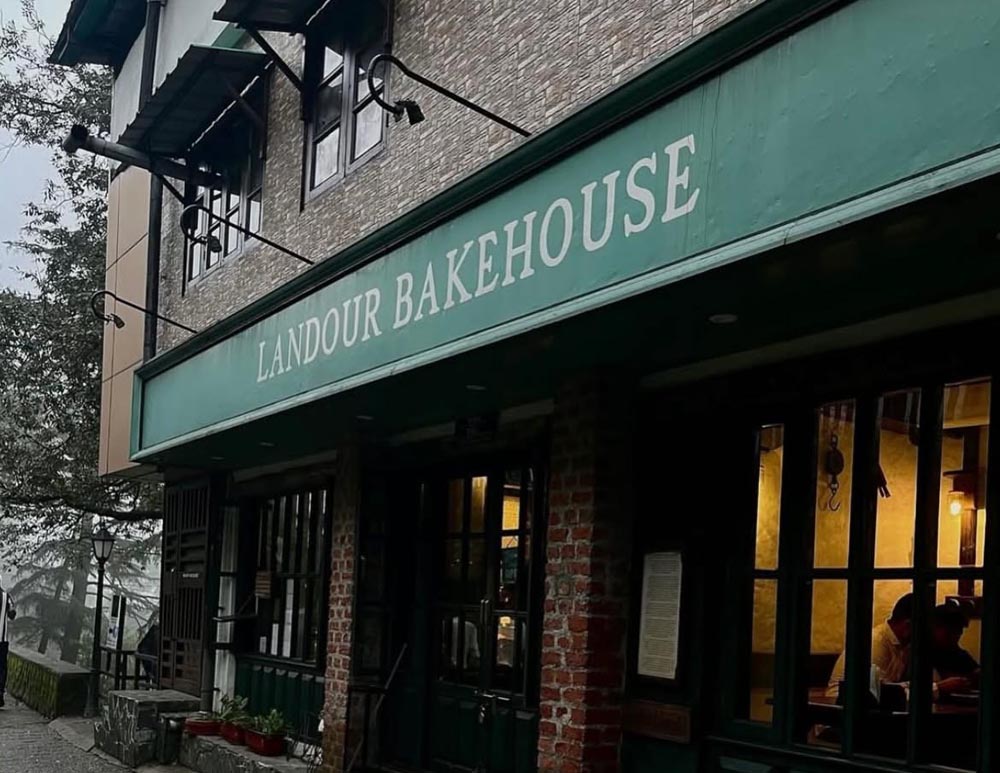
One of its best-known attractions is Landour Bakehouse, a popular stop for visitors looking for baked goods and café-style food. The area also has small local stores that contribute to the old-fashioned character of the neighbourhood.
The charm of Sister’s Bazaar is its modest scale. Rather than resembling a conventional shopping district, it feels like a small mountain community where cafés, houses and shops exist alongside one another.
Landour’s Churches and Colonial Architecture
Architecture is an important part of the destination’s appeal. Landour contains several old churches and colonial-era buildings whose design reflects its military and European history. Gabled roofs, stone structures, wooden elements, gardens and weathered walls contribute to the distinctive visual character.
St. Paul’s Church and Kellogg’s Church are among the better-known religious landmarks in the area. Their presence is a reminder that Landour was once a carefully planned colonial settlement rather than simply a tourist destination.
Walking through the neighbourhood provides an opportunity to appreciate these structures without the pressure of a conventional sightseeing schedule. Some buildings are private residences or institutional properties, so visitors should respect signs, boundaries and restricted areas.
Landour Cemetery and the Stories of the Past
The Landour Cemetery offers another perspective on the town’s history. Located amid trees and old pathways, the cemetery contains graves connected with the colonial-era community. Many people who died from diseases while serving in the region were buried in such hill-station cemeteries.
Beyond its historical value, the cemetery contributes to Landour’s atmosphere of mystery. Old graves, weathered stones and tall trees naturally encourage stories about people who lived in the hills generations ago. Landour’s long association with writers and storytellers has further strengthened this connection between history, memory and local folklore.
Visitors should approach the cemetery respectfully. It is not simply a sightseeing attraction but also a historical burial ground.
Ruskin Bond and Landour’s Literary Identity
Perhaps no modern personality is more closely associated with Landour than writer Ruskin Bond. His long relationship with Mussoorie and Landour has helped transform the area into a destination for literature lovers. Many readers visit the hills after encountering his descriptions of mountains, forests, small towns, childhood memories and ordinary people.
Landour’s atmosphere seems naturally suited to literary inspiration. Quiet lanes, old houses, mist-covered trees, mountain views and changing seasons create the kind of environment that encourages observation. The town has also been associated with other writers and artists over the decades.
However, visitors should remember that Landour is a residential community rather than a literary theme park. The pleasure of following its literary history comes from exploring the landscape and atmosphere that inspired writers, rather than expecting celebrity encounters.
The Chukker Trail and Walking Culture
Walking is arguably the best way to experience Landour. The Chukker Trail, a roughly three-kilometre circuit, provides an opportunity to explore the ridge and surrounding neighbourhood at a relaxed pace. The route passes through areas where visitors can experience forests, mountain views, old homes and the quiet side of Landour.
The walking experience is very different from sightseeing in a conventional city. There is no need to constantly search for the next attraction. A bend in the road may reveal a valley view, an old cottage, a flowering tree or an unexpectedly peaceful stretch of forest.
Because Landour is hilly, comfortable walking shoes are essential. Even relatively short distances can feel demanding because of the elevation and slopes. Travellers should also allow additional time during rainy or foggy weather.
Nature and Wildlife Around Landour
Landour’s natural setting is one of its defining characteristics. Tall deodar, oak and other Himalayan trees surround many parts of the settlement. Rhododendrons bring colour to the landscape during their flowering season, while birds add another dimension to the quiet environment.
Birdwatchers may find the area particularly rewarding. The absence of heavy traffic and extensive urban development creates a pleasant environment for observing Himalayan birdlife. Even travellers without a specific interest in birds can appreciate the sounds and movement of wildlife while walking.
The changing seasons also transform Landour. Spring brings flowers and fresh greenery, summer offers relief from the heat of the plains, monsoon creates mist and lush vegetation, while winter brings cold mornings and occasionally snowy conditions in the wider Mussoorie region.
Food, Cafés and the Landour Experience
Food in Landour is closely connected with the destination’s slow-travel character. Rather than rushing between major restaurants, visitors often spend time at cafés enjoying hot beverages, baked goods and simple meals.
Apart from Landour Bakehouse, travellers can explore establishments such as Cafe Ivy, La La Landour and Doma’s Inn. Each contributes to the broader café-and-food culture that has developed around the old neighbourhood.
For accommodation, Rokeby Manor, Mussoorie and Tree of Life Highlands, Mussoorie are among the options in and around Landour. Staying overnight makes it easier to experience the town before day visitors arrive and after many tourists have left.
Best Time to Visit Landour
Landour can be visited throughout much of the year, but the ideal season depends on what kind of experience you want.
Spring is particularly attractive for flowers, fresh vegetation and pleasant walking conditions. Summer is popular with travellers escaping the intense heat of northern India’s plains. The weather is considerably cooler, making mornings and evenings especially enjoyable.
The monsoon brings mist, rain and vibrant greenery. Although the landscape becomes beautiful, slippery roads, cloud cover and occasional travel disruptions can make outdoor sightseeing less predictable.
Autumn and winter are excellent for travellers seeking crisp mountain air and clearer views. Winter mornings can be very cold, so warm clothing is essential. Visitors who enjoy atmospheric fog, fireplaces and quiet cafés may find winter especially appealing.
How to Reach Landour
Landour is most commonly accessed through Mussoorie and Dehradun. The nearest major railway station is Dehradun, while the nearest major airport is Jolly Grant Airport near Dehradun. From Dehradun, travellers can continue by road toward Mussoorie and then proceed into Landour.
For visitors already staying in Mussoorie, reaching Landour is relatively straightforward. Depending on the starting point, travellers can drive, take local transport or walk toward the upper areas. The journey itself becomes part of the experience as the roads climb into quieter surroundings.
Because some parts of Landour are within cantonment areas, visitors should not assume that every road or property is open for unrestricted access.
Where to Stay in Landour
Staying in Landour is ideal for travellers who want a quiet mountain holiday rather than a packed sightseeing schedule. Heritage-style properties and boutique accommodations allow visitors to experience the architecture and atmosphere of the old hill settlement.
The advantage of staying overnight is that Landour feels particularly different early in the morning. Before cafés become busy and day visitors arrive, the roads can be remarkably peaceful. Morning walks through the deodar-lined lanes can be one of the most memorable parts of a trip.
Travellers who prefer a greater variety of hotels, restaurants and transportation options can stay in Mussoorie and visit Landour during the day.
Things to Keep in Mind
Landour’s charm depends heavily on its peaceful character, so responsible tourism is particularly important. Visitors should avoid loud music, littering and unnecessary disturbance in residential areas. Photography should also be approached thoughtfully, especially around private homes, military establishments and religious sites.
The steep terrain means that elderly travellers, young children and people with mobility difficulties may need to plan routes carefully. Weather can change rapidly in the mountains, so carrying a light rain jacket and warm layer is advisable even during warmer months.
Mobile connectivity and modern conveniences are available, but Landour is best enjoyed when travellers do not expect the intensity of a major tourist centre.
Why Landour Deserves a Place on Your Uttarakhand Itinerary
Landour’s greatest attraction is its atmosphere. It does not compete with other Himalayan destinations through adventure sports, enormous shopping districts or a long catalogue of attractions. Instead, it offers something increasingly rare: the opportunity to slow down.
A walk along the Chukker Trail, breakfast near Char Dukan, a visit to Lal Tibba, time spent exploring Sister’s Bazaar, an afternoon reading in a quiet café and an evening surrounded by deodar trees can create a far richer experience than rushing through a checklist of attractions.
The destination’s history, architecture and literary associations add depth to its natural beauty. Its British-era origins, military heritage, churches and old cemeteries tell the story of an earlier Himalayan settlement, while its cafés, boutique stays and contemporary visitors represent the newer chapter of Landour’s history.
Ultimately, Landour is a place for travellers who enjoy the journey as much as the destination. It is ideal for walkers, photographers, readers, nature lovers, architecture enthusiasts, food lovers and anyone looking for a peaceful mountain escape. Its greatest luxury is not extravagance but silence—the sound of wind through deodar branches, birds calling from the forest, footsteps along an old road and distant mountains appearing through gaps in the trees.
For anyone exploring Uttarakhand, Landour offers a beautiful reminder that some of the most memorable Himalayan experiences come not from doing more, but from slowing down enough to notice what is already there.

