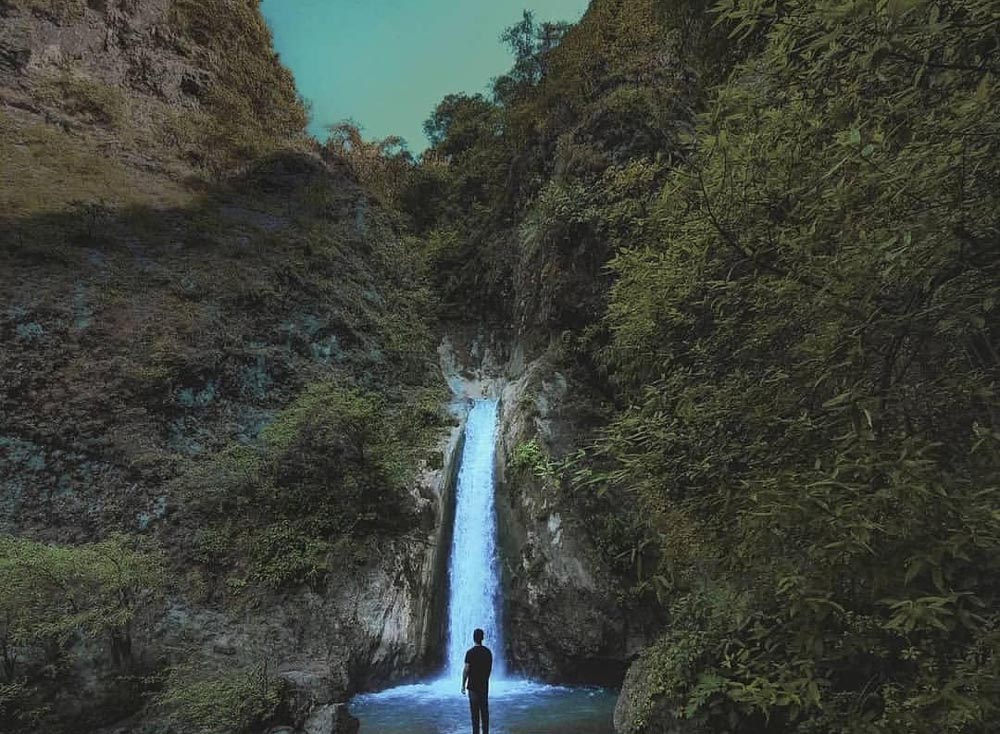
When travellers think about Mussoorie, the first images that usually come to mind are Mall Road, Gun Hill, Kempty Falls, Landour, Camel’s Back Road and the sweeping views of the Himalayan foothills. Yet beyond the better-known attractions lies a quieter side of the hill station where forests, mountain paths and cascading streams create a very different experience. Jharipani Falls is one such destination.
Located near Jharipani on the Mussoorie–Dehradun route, Jharipani Falls is a relatively peaceful waterfall surrounded by greenery and mountain scenery. The waterfall is reached by road up to the surrounding village area and then by a short walk or trek, depending on the approach used. Sources place the falls roughly 7–9 kilometres from central Mussoorie, while the final approach is commonly described as around 1.5 kilometres on foot.
Jharipani Waterfall is particularly appealing to travellers who prefer natural surroundings over heavily commercialised tourist attractions. The sound of falling water, forest vegetation, mountain air and views towards the Doon Valley make it a rewarding addition to a Mussoorie itinerary.
Where Is Jharipani Falls?
Jharipani Falls lies in the Jharipani area on the southern and southeastern side of Mussoorie, in Uttarakhand’s Dehradun district. It is situated along the Mussoorie–Jharipani road and close to the historic Oak Grove School. Depending on the starting point and route, travel sources give slightly different distances from Mussoorie, generally putting the waterfall around 7–9 kilometres away.
The location is interesting because it sits away from the busiest commercial areas of Mussoorie. Rather than arriving at a large tourist complex with extensive shops, restaurants and entertainment facilities, visitors gradually transition from the hill roads into a quieter landscape of villages, forest and walking paths.
The surrounding terrain also provides an opportunity to appreciate the geography of the Mussoorie hills. Looking away from the waterfall, visitors can find views towards the Doon Valley and the lower mountain landscape. This combination of waterfall, forest and valley scenery is one of the main reasons Jharipani appeals to photographers, walkers and nature lovers.
What Makes Jharipani Falls Special?
The biggest attraction of Jharipani Falls is not simply the waterfall itself but the environment in which it is located. The experience is more intimate than that of some of Mussoorie’s heavily visited attractions. Instead of spending the entire visit at a developed viewpoint, travellers generally walk through the surrounding landscape before reaching the cascade.
The waterfall becomes particularly attractive after the rains, when the surrounding vegetation becomes lush and the volume of water increases. Monsoon and post-monsoon conditions can transform the hills into vivid shades of green, creating excellent opportunities for nature photography.
The forest environment is another important part of the experience. Oak and other Himalayan vegetation can be encountered around the wider Jharipani landscape, while wildflowers, creepers and shrubs are also reported in the vicinity of the falls.
For someone who wants to escape the crowded centre of Mussoorie for a few hours, this natural setting can be more rewarding than simply visiting another viewpoint.
The Journey to the Waterfall
One of the appealing aspects of Jharipani Falls is that reaching it involves a small element of adventure. Visitors can travel towards Jharipani by road from Mussoorie and then continue on foot. Travel sources commonly describe a final walk of approximately 1.5 kilometres, although the exact distance varies according to the point where a visitor leaves the vehicle and the route taken.
The walk is part of the attraction. The landscape gradually changes from the roadside environment to a quieter natural setting. Depending on the season, the path can be surrounded by dense greenery, damp rocks, fallen leaves and mountain vegetation.
Travellers coming from Dehradun also have the option of incorporating Jharipani into a longer walking experience. The historic Dehradun–Mussoorie trekking corridor passes through Jharipani and Barlowganj. One documented version of this route describes the Jharipani-to-Mussoorie section as approximately 5 kilometres.
For experienced hikers, this creates the possibility of making Jharipani part of a broader mountain walk rather than treating it simply as a roadside attraction.
Jharipani and the Historic Mountain Trail
The wider Jharipani region has a connection with old walking routes between Dehradun and Mussoorie. The route popularly associated with the Kipling Trail follows the historic corridor from the Dehradun side through Jharipani and Barlowganj towards Mussoorie.
This historical landscape adds another layer to a visit. Long before modern tourists travelled to Mussoorie by cars and buses, hill paths were an important means of movement between the valley and the hill station.
The route around Jharipani also passes heritage structures and the Oak Grove School area. Oak Grove School was established in 1888 by the East India Railway Company and remains an important historical landmark along the broader trail.
Consequently, a trip to Jharipani can combine several experiences: a short nature walk, a waterfall visit, mountain scenery and an encounter with the historic character of the Mussoorie hills.
Best Time to Visit Jharipani Falls
The best time depends on whether the traveller prioritises waterfall volume or comfortable walking conditions.
July to September generally brings the strongest rainfall and therefore better water flow. The landscape is also exceptionally green during this period. However, monsoon conditions create an important trade-off: paths and rocks can become slippery, and heavy rain can make mountain travel unpredictable.
October and November can be an excellent compromise. The monsoon greenery remains attractive, the waterfall can still have substantial flow, and clearer skies may make the surrounding mountain views more enjoyable.
March to June is another practical period for visitors who want easier walking conditions. The weather is generally more suitable for outdoor exploration, although the waterfall may not be as powerful as during or immediately after the monsoon.
During the winter months, the water flow may be considerably reduced. Nevertheless, winter can provide crisp mountain air and clearer views, making the area appealing to travellers more interested in hiking and landscapes than in seeing the waterfall at maximum volume.
Monsoon Safety at Jharipani Falls
The monsoon is visually beautiful but should not be treated casually. Mountain waterfalls can become dangerous when rainfall is heavy. Rocks become slippery, streams can rise quickly and loose sections of trail may become unstable.
Visitors should therefore avoid standing directly beneath the cascade, climbing wet rocks or attempting to reach inaccessible sections simply for photographs. A pair of shoes with good grip is considerably more useful than fashionable footwear.
Heavy rainfall is another reason to avoid lingering too late in the day. If the weather begins deteriorating, returning towards the road should take priority over continuing towards the waterfall.
Travellers unfamiliar with the area should also avoid assuming that a narrow trail is safe simply because other people have used it. Some routes around Jharipani are informal walking paths rather than developed tourist trails. Current local conditions are worth checking before starting, particularly during the rainy season.
Flora, Forests and Natural Surroundings
The natural environment is one of Jharipani Falls’ greatest attractions. The wider Mussoorie landscape supports Himalayan forest vegetation, including oak-dominated areas and other mountain species. Sources describing the waterfall area mention wildflowers, creepers and shrubs, while the broader Jharipani trekking corridor is associated with banj oak forests.
Walking through these forests provides a different experience from sightseeing in central Mussoorie. Instead of traffic, shops and crowds, visitors may hear birds, insects and the sound of running water.
The forest also changes dramatically with the seasons. During the rainy months, vegetation becomes dense and vibrant. In autumn, the atmosphere becomes clearer and drier. Winter produces a more open landscape, while spring and early summer can bring fresh vegetation and flowers.
For nature lovers, therefore, the journey can be just as interesting as the waterfall.
Photography at Jharipani Falls
Jharipani Falls offers several kinds of photographic opportunities. The obvious subject is the waterfall, but photographers should also look beyond the cascade.
Long-exposure photographs can capture the movement of the falling water, while wider compositions can include rocks, forest and surrounding slopes. During the monsoon, saturated greenery provides a dramatic backdrop, while post-monsoon conditions can offer a combination of flowing water and clearer skies.
The walking trail also creates opportunities for landscape photography. Forest paths, mountain vegetation, village scenery and glimpses of the Doon Valley can all become part of a broader visual story.
Because the surroundings can be slippery, photography should never take priority over safety. It is particularly unwise to step onto wet rocks or approach an exposed edge simply to obtain a better angle.
Picnic and Relaxation
Jharipani Falls is also associated with picnicking and relaxed nature outings.
The relative quietness of the location makes it suitable for travellers who want to sit for a while, listen to the water and enjoy the forest environment.
However, visitors should follow a simple principle: leave the place as clean as they found it. Carrying snacks and water is sensible because facilities immediately around the waterfall are limited. Any wrappers, bottles or food packaging should be taken back rather than left along the trail.
The quieter character of Jharipani is part of its appeal. Preserving that character requires visitors to avoid loud music, littering and unnecessary disturbance to wildlife.
How to Reach Jharipani Falls from Mussoorie
From central Mussoorie, visitors generally travel towards the Jharipani area via the Mussoorie–Jharipani road. The distance is commonly reported at around 7–9 kilometres depending on the starting point and destination reference.
Local taxis and shared transport can be used to reach the Jharipani area. From the roadhead, visitors continue on foot towards the waterfall. Different route descriptions give different distances for the final walking section, but approximately 1.5 kilometres is frequently cited. Travellers starting from Dehradun can approach Jharipani via the Mussoorie road or incorporate the waterfall into the historic walking route towards Mussoorie. The broader Dehradun–Mussoorie trek through Jharipani and Barlowganj is considerably longer and should be treated as a proper hiking excursion rather than a simple waterfall visit.
Because local paths and access conditions can change, it is wise to confirm the current road and trail situation locally before setting out.
What to Carry
A Jharipani Falls excursion does not require complicated trekking equipment, but a few basic items can make the experience considerably more comfortable.
Carry sufficient drinking water, especially because there may not be reliable shops immediately beside the trail. Light snacks are useful for a longer outing. During monsoon, a rain jacket or compact umbrella can be valuable, although an umbrella may be inconvenient on narrow paths.
Good walking shoes with traction are among the most important things to carry. A small first-aid kit, mobile phone, power bank and waterproof bag for electronics are also sensible additions.
Visitors travelling during sunny months should consider sunscreen, sunglasses and a hat. In the wetter months, insect repellent can also be useful.
Most importantly, avoid carrying unnecessary heavy luggage. A small backpack is much easier to manage on a downhill and uphill forest trail.
Nearby Attractions
Jharipani Falls can easily be incorporated into a wider Mussoorie sightseeing itinerary. The central attractions of Mussoorie are within convenient driving distance, although exact travel times depend heavily on traffic and weather.
The Jharipani and Barlowganj areas also connect with the historic walking route towards Mussoorie. Travellers interested in heritage can explore the surroundings of Oak Grove School and the old trail landscape.
Other well-known attractions around Mussoorie include Kempty Falls, Bhatta Falls, Gun Hill, Camel’s Back Road, Lal Tibba, George Everest and Landour. The choice depends on whether a traveller wants waterfalls, viewpoints, heritage, hiking or relaxed sightseeing.
One advantage of visiting Jharipani is that it can provide a quieter natural experience between visits to the more popular attractions.
Is Jharipani Falls Worth Visiting?
For travellers expecting a huge waterfall surrounded by elaborate tourist infrastructure, Jharipani Falls may seem modest. Its appeal lies elsewhere.
This is a destination for people who enjoy the journey as much as the final viewpoint. The walk, forest, mountain air, sound of water and relatively peaceful atmosphere create a distinctly different experience from Mussoorie’s commercial centre.
It is especially worthwhile for photographers, couples looking for a quiet outing, families with older children who enjoy short hikes, nature lovers and travellers interested in exploring lesser-known parts of the Mussoorie landscape.
The waterfall is also a good reminder that the beauty of Uttarakhand is not limited to its famous destinations. Sometimes the most memorable experiences come from following a small trail away from the main tourist road.
Responsible Tourism at Jharipani Falls
The future of places such as Jharipani depends heavily on responsible tourism. As more travellers discover lesser-known attractions, increased footfall can bring litter, trail erosion and disturbance to the natural environment.
Visitors should avoid plastic waste, respect local residents, stay on established paths where possible and refrain from damaging plants. Natural pools and streams should also be treated carefully, particularly after heavy rainfall.
There is no need to turn a quiet Himalayan waterfall into another crowded commercial attraction. Its value comes precisely from its relatively natural character.
Supporting local transport providers and small businesses in the surrounding villages can also help ensure that tourism contributes to the local economy without overwhelming the landscape.
Final Thoughts
Jharipani Falls is one of those Mussoorie destinations that rewards travellers willing to look beyond the conventional sightseeing circuit. Its waterfall may not have the scale or commercial popularity of Kempty Falls, but its combination of forest, mountain paths, flowing water and Doon Valley scenery gives it a distinctive charm.
The experience is particularly beautiful during and after the monsoon, when the surrounding hills become intensely green and the waterfall gains strength. October and November can offer an appealing balance between scenery and more comfortable weather, while the drier months are better suited to travellers who prioritise walking conditions.
Whether visited as a short excursion from Mussoorie or incorporated into a longer Dehradun–Mussoorie hiking experience, Jharipani offers an opportunity to slow down and experience a quieter side of Uttarakhand. For travellers who value nature, photography, walking and peaceful surroundings, it deserves a place on a well-planned Mussoorie itinerary.

