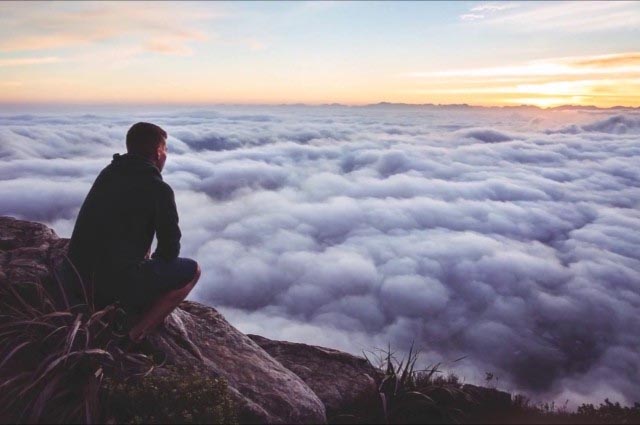
At the western edge of Mussoorie, far away from the busy Mall Road, crowded viewpoints and constant movement of the central hill station, lies a remarkably peaceful destination known as Cloud’s End. Surrounded by dense oak and deodar forests, mist-covered hills and expansive Himalayan landscapes, Cloud’s End offers a very different experience of Mussoorie. Here, the atmosphere changes from that of a lively tourist town to a quiet mountain wilderness where forest paths, old colonial architecture and distant valleys create an unforgettable setting.
Cloud end is generally described as the western end of Mussoorie and is located roughly 6–8 kilometres from the Library area, depending on the route and point of measurement. The destination is particularly attractive to travellers who want to experience the quieter side of the hill station. Thick forests surround the area, while the historic Cloud End bungalow provides an important connection to Mussoorie’s colonial past.
Discovering the Quiet Side of Mussoorie
Mussoorie is famous for its Mall Road, Gun Hill, Kempty Falls, Camel’s Back Road and colonial architecture, but the character of the town changes considerably as one travels towards Cloud’s End. The shops and busy streets gradually disappear, the roads become quieter and forest cover becomes increasingly dominant.
This transition is one of the most appealing aspects of Cloud’s End. Rather than being a conventional tourist attraction filled with commercial establishments, it feels like a retreat into nature. The sound of traffic is replaced by birdsong and the movement of wind through tall trees. On misty days, clouds drift between the surrounding hills, sometimes reducing visibility and creating an almost dreamlike landscape.
The destination is therefore especially appealing to nature lovers, photographers, couples, hikers and travellers who prefer peaceful surroundings over heavily commercialised attractions.
The Fascinating History of Cloud’s End
One of the most important reasons Cloud’s End stands apart from ordinary viewpoints is its historical significance. The area is associated with Major Edmund Swetenham, a British officer who built the famous Cloud End bungalow in 1838. The property is considered one of the early colonial-era buildings associated with Mussoorie.
According to the traditional story associated with the estate, Major Swetenham encountered a local mountain woman while travelling through the area and eventually married her with the permission of her family. Her father, described in the estate’s history as a local zamindar, is said to have given the estate as a dowry. Swetenham subsequently selected a hill near Moolti Tibba for the construction of his home.
The bungalow was completed in 1838, reportedly with the help of hundreds of local workers. Four generations of the Swetenham family are said to have lived there before the family eventually returned to England in the 1960s.
The name “Cloud End” itself has an interesting story. The estate’s official history states that the house was named after a peak near the Swetenham family’s home in Wales. Over the decades, the name became closely associated with this remote western corner of Mussoorie.
Today, the old property survives as a heritage destination, allowing visitors to experience an atmosphere that recalls the early days of the hill station.
The Heritage Bungalow and Colonial Character
The historic bungalow is one of the major attractions of Cloud’s End. Its architecture represents an earlier period of Mussoorie when colonial officers established large residences in secluded forested locations rather than the densely developed urban landscape seen today.
The heritage property retains elements associated with its colonial past, and its setting is arguably just as important as the building itself. Surrounded by mature trees and mountains, the bungalow appears to belong naturally to the landscape.
The present-day Cloud End Forest Resort describes the original structure as a 1838 bungalow and maintains heritage accommodation and facilities associated with the estate. Its property includes forested areas and nature trails.
For travellers interested in architecture and history, the bungalow provides an opportunity to see a different side of Mussoorie’s heritage. Instead of visiting a monument in isolation, visitors encounter a historic structure still surrounded by the forests and landscape that shaped its original character.
Oak and Deodar Forests
Perhaps the greatest attraction of Cloud’s End is its forest environment. Thick oak and deodar trees cover the surrounding hills, creating a cool and shaded landscape that feels remarkably different from central Mussoorie.
The forests are particularly beautiful during the monsoon and post-monsoon seasons, when vegetation becomes lush and the atmosphere is frequently filled with mist. During autumn, changing foliage and clear mountain light can make the area especially attractive for photography.
The official Cloud End property describes its estate as containing extensive private forest and nature trails, while travel sources also highlight the oak and deodar forests around the destination.
Walking through these forests is not necessarily about reaching a particular destination. The experience lies in slowing down, listening to the forest and enjoying the changing views between the trees. Visitors should nevertheless stay on established paths and respect private-property and forest-access restrictions.
Views, Clouds and the Mountain Landscape
Cloud’s End is particularly atmospheric because of its location on the western side of the Mussoorie ridge. Depending on weather conditions, visitors can experience views towards valleys and distant mountain ridges.
On clear days, the landscape opens up dramatically. On cloudy or misty days, however, the experience can be completely different. Clouds may move across the hills and sometimes seem to rise from the valleys below.
This changing weather is one of the destination’s defining characteristics. A sunny morning can transform into a misty afternoon, while an overcast landscape may suddenly open to reveal distant mountain ranges.
The nearby Cloud End property also highlights views towards the Doon Valley, Himalayan ranges and the surrounding forest landscape.
The Famous Winter Line
Another atmospheric phenomenon associated with Mussoorie is the winter line. During the colder months, especially around autumn and winter evenings, atmospheric conditions can create striking horizontal bands of colour near the horizon around sunset.
Cloud’s End can be a particularly attractive location for watching changing evening colours because of its relatively open western-facing setting and distance from the busiest parts of Mussoorie.
Photographers often visit the western side of Mussoorie during late afternoon because the combination of forests, clouds, mountains and sunset light can produce dramatic photographs. The exact appearance of the winter line naturally depends on weather and atmospheric conditions, so it should be regarded as a seasonal possibility rather than a guaranteed daily spectacle.
Things to Do at Cloud’s End
Cloud’s End is not a destination where visitors need a long list of organised activities. Its greatest attraction is the environment itself.
Nature walks are among the most enjoyable things to do. The forest surroundings provide opportunities to walk beneath oak and deodar trees while enjoying cooler temperatures and quiet surroundings. The wider area also provides access to trails and routes towards places such as Benog, Bhadraj and other western Mussoorie attractions.
Photography is another major attraction. The historic bungalow, forest pathways, mist, mountain scenery and changing sky provide numerous subjects. Early morning is excellent for soft light and atmospheric forest photography, while late afternoon can be ideal for landscapes and sunset conditions.
Birdwatching can also be rewarding. The forests around the western Mussoorie region provide habitat for Himalayan birdlife, making the area interesting for visitors who enjoy observing birds and nature.
For travellers who simply want to relax, sitting quietly amid the forest can be more rewarding than trying to complete a packed sightseeing schedule.
Cloud’s End and Benog Wildlife Sanctuary
The proximity of Cloud’s End to the Benog area makes it an attractive base for travellers interested in nature and hiking. Benog is known for its forest environment, mountain trails and birdlife.
Visitors should distinguish between Cloud’s End itself, private estate areas and forest or sanctuary areas, because access conditions can differ. Forest trails may have their own rules, entry requirements and operating hours. Current local instructions should always be checked before beginning a longer hike.
For experienced walkers, the western Mussoorie landscape can become part of a larger hiking itinerary. Routes around Benog and neighbouring areas offer a much more immersive Himalayan experience than simply visiting central Mussoorie’s roadside viewpoints.
Best Time to Visit Cloud’s End
Cloud’s End can be visited during much of the year, but the experience changes considerably with the seasons.
Summer is comfortable compared with the plains and is particularly attractive for travellers escaping hot weather. Mussoorie becomes busy during the summer holiday period, but Cloud’s End generally retains a quieter atmosphere because it lies away from the central tourist zone.
Monsoon transforms the landscape into a lush green environment. Mist, rain and clouds can make Cloud’s End exceptionally atmospheric. However, wet roads, slippery trails and reduced visibility require additional caution.
Autumn is one of the most appealing periods for photographers and nature lovers. The weather often becomes clearer after the monsoon, while the forests retain much of their greenery.
Winter offers crisp air, clearer views on suitable days and opportunities to experience the winter atmosphere and sunset colours. Warm clothing is essential because temperatures can fall significantly, particularly in the mornings and evenings.
For a balance between pleasant weather, greenery and relatively good visibility, the post-monsoon and autumn period is often an excellent choice.
How to Reach Cloud’s End
Cloud’s End is accessible from Mussoorie by road, although the final approach is much quieter than the roads around the main tourist centre. The Cloud End Forest Resort’s official directions describe the route from the Doon–Mussoorie road towards Hathipaon and then onward to Cloud End. From the Library end of Mall Road, the destination is approximately 7 kilometres away.
Visitors arriving by car can generally drive towards the destination, although hill roads require careful driving, particularly during rain, fog and winter conditions.
Those without private transport can hire a taxi from Mussoorie. Since local transport arrangements and fares can change, it is sensible to confirm the return arrangement with the driver before leaving town.
Dehradun is the nearest major transport hub. The nearest railway station is Dehradun Railway Station, while Jolly Grant Airport serves the wider Dehradun region. The official property information places the railway station roughly 34 kilometres away and the airport about 58 kilometres from Mussoorie.
Cloud’s End as a Peaceful Alternative to Mall Road
The greatest advantage of Cloud’s End is its contrast with central Mussoorie.
Mall Road is energetic, social and commercial. Cloud’s End is quiet, forested and contemplative. Both experiences are valuable, but they appeal to different kinds of travellers.
Someone visiting Mussoorie for the first time should certainly experience the famous attractions of the town, but adding Cloud’s End to the itinerary provides a deeper understanding of why Mussoorie became such a celebrated mountain retreat.
The area demonstrates how dramatically the character of the landscape can change within only a few kilometres. The crowded streets gradually give way to forests, old estates and mountain silence.
Photography at Cloud’s End
Photographers will find plenty of opportunities around Cloud’s End. The old bungalow is particularly interesting for architectural photography, while the surrounding forest provides natural frames for landscape compositions.
During misty weather, trees disappearing into clouds can create atmospheric photographs. After rainfall, wet foliage and diffused light can make the forest particularly photogenic.
Sunset photography is another attraction. Instead of photographing only the sun, visitors can focus on the changing colours of the sky, silhouettes of trees and layered mountain ridges.
A tripod can be useful during low-light conditions, but visitors should avoid obstructing pathways or entering restricted areas simply to obtain a photograph.
Practical Travel Tips
Cloud’s End is best approached as a nature and heritage destination rather than as a conventional entertainment spot. Visitors should wear comfortable shoes, particularly if they plan to walk through forest paths.
Weather can change quickly in the hills, so carrying a light rain jacket is useful even when the forecast appears favourable. During winter, warm layers are important, especially for early morning and evening visits.
Because the destination is comparatively secluded, visitors should carry water and any essential personal items with them. Mobile connectivity and other services may not be as convenient as they are in central Mussoorie.
It is also important to respect the forest environment. Plastic waste should not be left behind, loud music should be avoided and wildlife should never be approached or fed.
Most importantly, visitors should verify current access arrangements before travelling. The heritage property’s own website currently notes that room reservations are closed for a period while day entry is open for its museum, photo gallery and viewpoint, with an advertised adult and child entry charge. These arrangements can change, so checking directly before departure is advisable.
Nearby Attractions
Cloud’s End can easily be combined with other western Mussoorie attractions. Benog Wildlife Sanctuary is an obvious choice for nature enthusiasts, while Bhadraj Temple offers a more adventurous excursion for hikers.
George Everest House is another worthwhile addition to a western Mussoorie itinerary, particularly for travellers interested in history and panoramic mountain landscapes. Happy Valley and the Tibetan Buddhist cultural sites around Mussoorie can also be incorporated into a broader sightseeing route.
Travellers should avoid attempting to cover too many places in one day. The western side of Mussoorie is best enjoyed slowly, with time reserved for walking, photography and simply appreciating the mountain environment.
Why Cloud’s End Deserves a Place on Your Mussoorie Itinerary
Cloud’s End represents a quieter and more atmospheric side of Uttarakhand’s famous hill station. Its importance comes from the combination of history, forests, mountains and solitude rather than from a single dramatic attraction.
The 1838 heritage bungalow connects the area to Mussoorie’s early colonial history. The oak and deodar forests provide a natural setting for walking and birdwatching. The surrounding hills create opportunities for photography, while mist and changing weather give the landscape a constantly evolving appearance.
Perhaps the best way to understand Cloud’s End is to think of it as a place where Mussoorie slows down. The lively hill station gradually disappears behind you, replaced by tall trees, mountain air and distant valleys. Instead of rushing from one attraction to another, visitors can spend a few peaceful hours walking through the forest, exploring the heritage surroundings and watching clouds move across the mountains.
For travellers looking beyond the familiar tourist circuit, Cloud’s End offers exactly what its name promises: a beautiful meeting point between the built-up world of Mussoorie and the immense, quiet landscape of the Himalayas.

