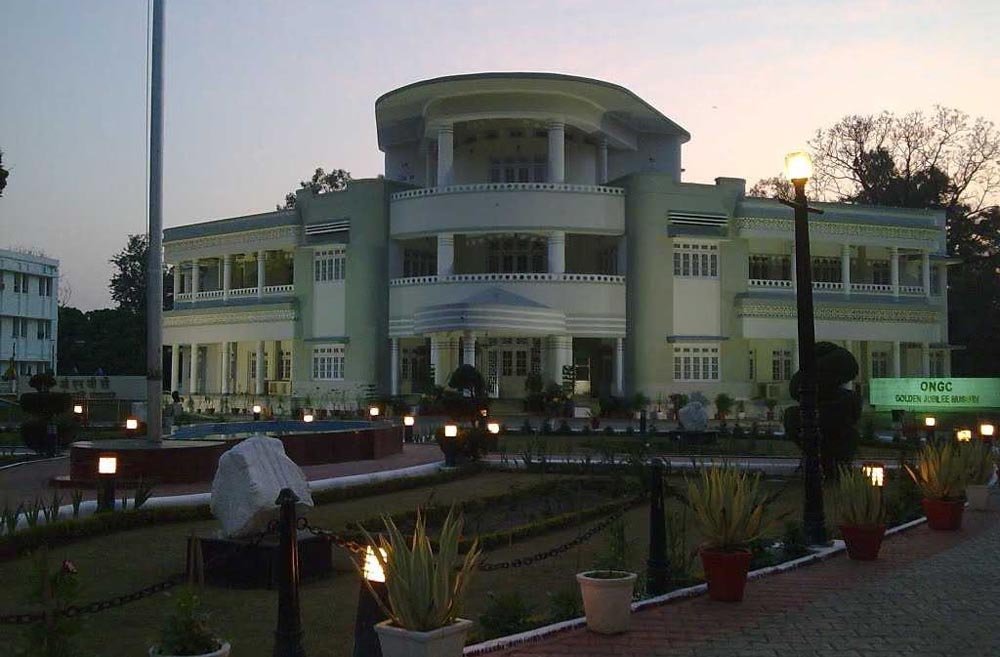
Nestled in the culturally rich city of Dehradun, Uttarakhand, the Zonal Anthropological Museum is one of those destinations that quietly preserves stories that are often overlooked by conventional tourist attractions. Rather than focusing on grand monuments, royal histories or spectacular architecture, the museum takes visitors into the fascinating world of human communities, their lifestyles, traditions, material culture and relationship with their environment.
Popularly known as the Zonal Museum, it is associated with the Anthropological Survey of India (An.S.I.), an institution under the Ministry of Culture, Government of India. The museum is particularly significant because it presents aspects of the lives and cultures of communities associated with the Himalayan region and northern India through ethnographic collections and displays. The Anthropological Survey of India itself works to study India’s populations from biological and cultural perspectives and has established a network of anthropological museums in different parts of the country.
For travellers interested in history, anthropology, tribal culture, Himalayan traditions and the everyday lives of people, the museum offers an experience that is very different from the usual sightseeing itinerary in Dehradun.
Where Is the Zonal Anthropological Museum Located?
The Zonal Anthropological Museum is located in the Kaulagarh Road/FRI area of Dehradun, close to the famous Forest Research Institute. The museum’s listed address is on Pearson Road in the Forest Research Institute area, Dehradun, Uttarakhand 248195.
Its location makes it convenient to combine with other attractions in the western part of Dehradun. Travel information sources place the museum roughly 500 metres from the Forest Research Institute and about 5 kilometres from Dehradun Railway Station.
The surroundings are themselves part of the attraction. Dehradun is positioned in the Doon Valley, between the Himalayan foothills and the Shivalik ranges, and has long served as an important meeting point between plains and mountain regions. This geographical setting makes it an appropriate location for an institution concerned with Himalayan communities and cultural diversity.
The History and Purpose of the Museum
The Zonal Anthropological Museum in Dehradun was established in 1971 by the Anthropological Survey of India. Its broader purpose is connected with the Survey’s efforts to document India’s remarkable biological and cultural diversity.
The Anthropological Survey of India has an important role in studying communities from both biological and cultural perspectives. Its responsibilities have included the preservation of human skeletal remains, collection of tribal arts and crafts, anthropological research, training and dissemination of research findings.
The establishment of zonal museums allowed some of this research and documentation to become accessible to the public. Instead of keeping cultural objects exclusively within research archives, museums provide an opportunity for students, researchers and ordinary visitors to encounter material evidence of India’s diverse traditions.
The Dehradun museum is particularly relevant to the northwestern and Himalayan cultural landscape. Its collections have been associated with communities such as the Gaddi, Jaunsari, Bhotia, Bhoksa, Kinnaura, Lahuli, Kashmiri, Raji, Swangla and Ladakhi Bodh, illustrating the broad geographical and cultural range represented in its ethnographic collections.
What Does the Museum Tell Visitors?
The most interesting aspect of the Zonal Anthropological Museum is that its subject is essentially human life. It does not simply present old objects as isolated antiques. Instead, objects can be understood in relation to the communities that created, used and valued them.
The exhibits introduce visitors to the ways people adapted to their surroundings, organised their communities and developed distinctive cultural practices. Clothing, ornaments, tools, household objects and other forms of material culture can reveal a great deal about a community’s environment, occupations, social organisation and artistic traditions.
This is especially meaningful in the Himalayan context. Mountain communities have historically developed lifestyles adapted to difficult terrain, seasonal variations and locally available resources. Their houses, clothing, agricultural practices, tools and craft traditions reflect generations of adaptation to their surroundings.
A visit therefore becomes more than an examination of old artefacts. It becomes an opportunity to ask broader questions: How did people live before modern technology? How did geography influence clothing and architecture? Why do different communities develop different ornaments? How were tools designed according to local occupations? And how are traditions transmitted from one generation to another?
Ethnographic Collections and Traditional Objects
Ethnographic objects form the heart of an anthropological museum. Unlike objects displayed simply for their artistic or monetary value, ethnographic objects are important because they provide information about people’s everyday lives.
The museum’s displays have been described as including cultural artefacts, traditional costumes, tools, ornaments and other objects connected with communities of northern India and the Himalayan region.
Traditional clothing is particularly valuable in understanding Himalayan culture. Clothing is not merely decorative; it can reflect climate, occupation, social identity and local resources. Heavy garments, woollen materials, distinctive headgear and other forms of traditional dress demonstrate how communities responded to mountain environments while simultaneously developing recognisable cultural identities.
Ornaments provide another fascinating window into society. Jewellery and decorative objects may communicate age, marital status, social position, community affiliation or aesthetic preferences. Looking carefully at these objects allows visitors to appreciate the fact that traditional art frequently combines beauty with cultural meaning.
Tools and household implements offer an equally important perspective. Modern visitors may be accustomed to machines performing everyday tasks, but traditional implements demonstrate the ingenuity with which communities solved practical problems using locally available materials.
Communities of the Himalayan Region
One of the museum’s greatest strengths is its ability to introduce visitors to communities whose cultures are sometimes unfamiliar even to Indians from other parts of the country.
The Himalayan region is not culturally uniform. It contains numerous linguistic, ethnic, religious and occupational communities, each with its own traditions and historical experiences. Communities such as the Jaunsari, Bhotia, Gaddi, Bhoksa and Raji, among others, have developed distinctive cultural expressions.
The Jaunsari community, for example, has a strong cultural association with the Jaunsar-Bawar region of Uttarakhand. The Bhotia communities have historically been associated with Himalayan trade and mountain settlements. Other communities represented in anthropological collections have their own distinctive relationships with agriculture, pastoralism, trade, forests and high-altitude environments.
An anthropological museum helps visitors understand these communities without reducing them merely to stereotypes. The objects provide evidence of real social practices and everyday experiences.
Understanding Traditional Himalayan Lifestyle
Perhaps the most rewarding part of visiting the museum is gaining an understanding of how closely traditional life was connected with the environment.
Before roads, modern transportation and mass-produced goods transformed Himalayan life, communities depended heavily on local resources. Wool, wood, metal, leather, fibres and agricultural products could all become part of everyday material culture.
The objects displayed in an anthropological museum therefore tell a story of sustainability as well as survival. People used what their environment provided and developed techniques that suited their surroundings.
This does not mean that traditional life should be romanticised as perfect or static. Communities have always changed. Migration, education, markets, technology, government policies and modern communications have transformed lifestyles across the Himalayan region. Museums are valuable partly because they allow visitors to see evidence of earlier practices while thinking about how cultures evolve.
Why the Museum Is Important for Anthropology
Anthropology is the study of humans, their societies, cultures and biological development. A museum can make this subject tangible.
Reading about traditional communities in a textbook provides one kind of understanding. Seeing an actual garment, tool, ornament or household object creates another. Physical objects allow visitors to connect abstract anthropological concepts with real examples.
The museum is also part of a wider institutional effort by the Anthropological Survey of India to document and preserve India’s cultural diversity. Government documentation describes the dissemination of culture through Zonal Anthropological Museums as one of the Survey’s outreach activities.
This preservation role becomes increasingly important as lifestyles change. Some traditional objects may no longer be commonly produced or used. Without systematic documentation and preservation, knowledge associated with them can gradually disappear.
Educational Value for Students
The museum can be especially useful for students studying history, anthropology, sociology, geography, cultural studies and environmental studies.
For younger visitors, museum displays can transform cultural history into something visual and understandable. Instead of simply memorising the names of communities, students can observe the objects associated with their lifestyles and begin to understand the relationship between geography, economy and culture.
College and university students can also view the museum from a more analytical perspective. An anthropological collection can stimulate discussions about material culture, cultural adaptation, indigenous knowledge, migration, social organisation and cultural change.
The museum’s educational importance is consistent with the wider objectives of the Anthropological Survey of India, which include research, preservation, training and dissemination of anthropological knowledge.
A Different Kind of Tourist Attraction in Dehradun
Dehradun is better known for its pleasant climate, educational institutions, nearby Himalayan destinations and attractions such as the Forest Research Institute. The Zonal Anthropological Museum offers something different.
Visitors who enjoy conventional sightseeing may initially find an anthropological museum quieter than a major tourist monument. Yet that quietness can be part of its appeal. Instead of rushing from one landmark to another, visitors can spend time examining objects and thinking about the people behind them.
It is particularly suitable for travellers who want to explore the cultural side of Uttarakhand rather than concentrating exclusively on mountains and natural scenery.
The museum can also complement a visit to the nearby Forest Research Institute. Together, the two attractions can provide an interesting contrast: one focuses heavily on forests and forestry, while the other opens a window into people, communities and cultural life.
Location, Timings and Entry Information
Current business listings place the museum on Pearson Road in the Forest Research Institute/ONGC area of Dehradun. The listed regular hours are 10:00 AM to 5:00 PM from Monday to Friday.
Travel sources commonly list a lunch break, with visiting hours of approximately 10:00 AM to 1:00 PM and 2:00 PM to 5:00 PM, and report closures on Sundays, second Saturdays and public holidays. However, visitor information can change, so it is sensible to verify the schedule before travelling.
Some tourism sources list an admission fee of around ₹15 per person, although fees and visitor policies can change.
Because official and third-party listings do not always provide identical information, visitors should check the latest information with the museum or the Anthropological Survey of India’s Dehradun centre before making a dedicated trip.
How Much Time Should You Spend There?
A visit can reasonably take around an hour if you are primarily interested in seeing the main displays. However, visitors who enjoy reading descriptions and examining objects carefully may want to spend considerably longer.
A visitor review has suggested allowing two to three hours for a thorough experience, although the actual duration depends heavily on individual interest and the current arrangement of displays.
Students and researchers should ideally avoid rushing. Anthropological exhibits become much more meaningful when visitors take time to understand what an object was used for, which community it belonged to and what it reveals about everyday life.
Best Time to Visit
The museum is an indoor cultural attraction, so it can be visited throughout much of the year. Nevertheless, visiting during comfortable daytime hours can make it easier to combine the museum with other Dehradun attractions.
Dehradun experiences pleasant periods during autumn and spring, while summers can be warmer and monsoon weather can bring rain. If you are planning a broader sightseeing itinerary, it is worth checking local weather conditions and museum opening days in advance.
Weekdays can be particularly suitable for students and travellers who prefer a quieter cultural experience.
Who Should Visit the Zonal Anthropological Museum?
The museum is especially appealing to people interested in anthropology, history, tribal culture, Himalayan communities, traditional crafts, sociology and Indian heritage.
Families can also find it educational because children are often fascinated by unfamiliar objects and traditional lifestyles. For students, the museum provides a useful real-world complement to classroom learning.
Photographers and cultural enthusiasts may also appreciate the visual character of traditional clothing, ornaments, tools and displays, although visitors should always follow the museum’s current photography rules.
Most importantly, the museum is worth visiting for anyone who wants to understand Uttarakhand beyond its scenic landscapes.
The Museum as a Record of Cultural Change
One of the deeper reasons to visit the Zonal Anthropological Museum is to think about cultural change.
Cultures are not frozen in time. Traditional communities continuously adapt to new circumstances. Modern education, improved transport, tourism, digital technology, migration and changing economic opportunities have altered many aspects of Himalayan life.
The museum preserves objects associated with earlier periods and practices, making it possible to compare past and present. A traditional garment, for example, can encourage visitors to consider how clothing has changed. An old agricultural implement can lead to questions about mechanisation. Traditional household objects can reveal how domestic life has been transformed by modern consumer goods.
In this sense, the museum is not simply about the past. It also encourages visitors to think about the present and future of India’s diverse communities.
Nearby Attractions and Making a Day of It
Because the museum is situated near the Forest Research Institute area, visitors can combine their trip with other attractions in Dehradun.
The Forest Research Institute is an obvious companion destination. Its historic campus and museum complex make it one of the city’s most recognisable attractions. Other parts of Dehradun can then be explored depending on the time available.
A cultural itinerary might therefore begin with the Zonal Anthropological Museum, continue to the Forest Research Institute and then explore other museums, markets, temples or natural attractions in the city.
This approach allows travellers to experience several different dimensions of Dehradun rather than treating the city simply as a stopover on the way to Mussoorie or other Himalayan destinations.
Why the Zonal Anthropological Museum Deserves More Attention
The Zonal Anthropological Museum does not necessarily have the same visibility as Dehradun’s most famous landmarks. Yet its significance lies precisely in what it preserves.
India’s cultural diversity is enormous, and much of that diversity exists in everyday practices rather than monumental buildings. Clothing, tools, ornaments, domestic objects, crafts and other forms of material culture can tell intimate stories about communities and their relationships with their surroundings.
The museum brings some of these stories together in one place. Its collections demonstrate that heritage is not limited to palaces, forts and ancient temples. The ordinary objects used by ordinary people can be equally valuable historical evidence.
For visitors willing to look beyond conventional sightseeing, the museum offers an opportunity to encounter the human side of Himalayan history.
Final Thoughts
The Zonal Anthropological Museum, Dehradun, is a compact but culturally significant destination that provides a different perspective on Uttarakhand. Established in 1971 by the Anthropological Survey of India, it forms part of a wider national effort to research, document, preserve and communicate India’s extraordinary biological and cultural diversity.
Its greatest attraction is not a single spectacular artefact but the collective story told through its ethnographic displays. Traditional clothing, ornaments, tools and other objects help visitors understand how Himalayan communities lived, worked, adapted and expressed their identities.
For tourists, the museum adds cultural depth to a trip to Dehradun. For students, it can serve as an accessible introduction to anthropology. For researchers and cultural enthusiasts, it represents an important institutional record of communities and traditions.
Ultimately, a visit to the Zonal Anthropological Museum is an invitation to look at Uttarakhand not only as a land of mountains and forests, but also as a landscape shaped by generations of people, their knowledge, customs, creativity and relationship with the environment. In a rapidly changing world, preserving and understanding these stories is an important part of preserving India’s living cultural heritage.

