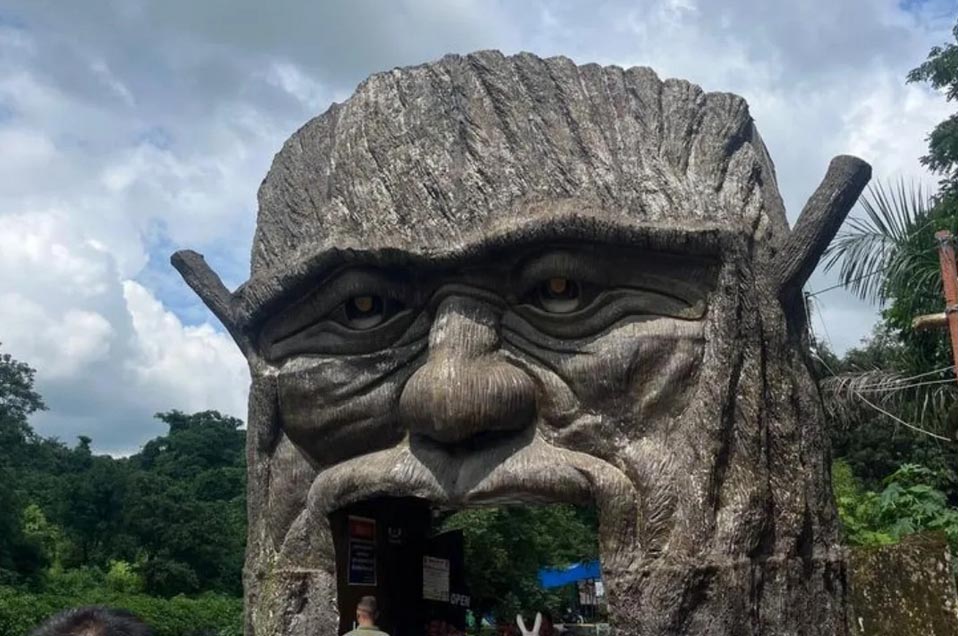
Hidden in the green surroundings of Dehradun, Uttarakhand, Robber’s Cave is one of those destinations that feels far more adventurous than its distance from the city would suggest. Locally known as Gucchu Pani, this unusual natural attraction combines a narrow rocky gorge, a flowing stream, shadowy passages, waterfalls and fascinating local legends. Unlike a conventional cave that requires visitors to enter a completely underground chamber, Robber’s Cave is essentially a dramatic river gorge where water flows through and, in places, appears to disappear beneath the rocks before emerging again.
Located near Anarwala village, roughly 8 kilometres from central Dehradun, Gucchu Pani has become a popular destination for families, students, couples, photographers, nature lovers and travellers looking for a refreshing outdoor experience. The Nagar Nigam Dehradun also describes it as a popular picnic and recreational destination known for its cold stream and distinctive cave-like formation.
What makes Robber’s Cave especially memorable is that the attraction is not something visitors merely observe from a viewpoint. The stream itself becomes part of the experience. Visitors can walk through sections of the shallow water, move between towering rock walls and explore the changing character of the gorge. The combination of cold water, unusual geology and the mystery associated with its name gives Gucchu Pani an atmosphere that is difficult to find elsewhere around Dehradun.
Where Is Robber’s Cave?
Robber’s Cave is situated in the Dehradun district of Uttarakhand, close to Anarwala village and in the general direction of the Mussoorie foothills. It is approximately 8 kilometres from Dehradun city centre, making it one of the easiest natural attractions to include in a Dehradun sightseeing itinerary.
The attraction is particularly convenient for travellers who do not want to undertake a long mountain trek. The surrounding landscape gradually changes from the urban environment of Dehradun to greener, rockier terrain, and the final approach leads visitors toward the gorge. The relatively short distance from the city is one of the reasons the site is so popular for short outings and half-day excursions.
Robber’s Cave can also be combined with other attractions in and around Dehradun. Travellers often plan visits to places such as Sahastradhara, Tapkeshwar Temple and other nearby natural or cultural attractions on the same day. However, it is worth allowing enough time at Gucchu Pani itself rather than treating it as a quick photo stop, because the most interesting part of the visit is actually walking through the rocky watercourse.
Why Is It Called Gucchu Pani?
The name Gucchu Pani is closely associated with the unusual behaviour of water at the site. The destination is famous for its stream, which flows through the narrow gorge and appears to vanish beneath or between rock formations before becoming visible again. This disappearing-and-reappearing water is one of the features that gives the place its mysterious reputation.
The exact interpretation of the local name can vary, and visitors may encounter different explanations. Regardless of the linguistic interpretation, the name has become inseparable from the identity of the attraction. For local residents, Gucchu Pani is the familiar name, while tourists from outside Uttarakhand generally know it as Robber’s Cave.
The combination of hidden water and narrow rock passages also explains why the destination has such a strong sense of mystery. As sunlight enters the gorge from above, different sections can alternate between bright, open stretches and dark, enclosed-looking passages. The sound of running water echoes against the rocks, making the environment feel much more remote than it actually is.
The Story Behind the Name Robber’s Cave
The most famous story surrounding Gucchu Pani concerns robbers who supposedly used the natural formation as a hiding place during the British colonial period. According to local tradition, the narrow passages and concealed sections of the gorge provided an ideal location for people trying to evade authorities and hide stolen goods.
The story is repeated widely in descriptions of the attraction and has become an important part of its tourism identity. Some accounts specifically connect the legend with bandits operating during the late nineteenth century. However, the historical details should be treated as local folklore rather than as a fully documented historical record. Sources discussing the site note that the robber-hideout story is primarily based on local accounts, and there is limited verified historical evidence establishing every detail of the legend.
That uncertainty actually adds another layer to the attraction. The physical appearance of the gorge makes the legend easy to imagine. The narrow rock walls, hidden water passages and sudden changes in visibility create a natural environment that would certainly have offered secluded hiding places before the area became a popular tourist destination.
Whether the stories are completely accurate or have grown through generations of storytelling, they have helped give Robber’s Cave an identity that goes beyond its geology.
The Geology of Robber’s Cave
The real story of Robber’s Cave is perhaps even more fascinating than its legends. The attraction is a natural geological formation shaped by water and erosion. It consists of an unusually narrow gorge associated with conglomerate and limestone-rich rock formations in the Dehradun Valley. Specialist descriptions of Gucchu Pani identify it more precisely as a narrow gorge rather than a conventional enclosed cave.
The gorge is generally described as being around 600 metres long and divided into two principal sections. Its narrowest areas create the impression of a cave, while other stretches are more clearly open gorges with daylight visible overhead. A waterfall of roughly 10 metres is also associated with the formation.
Water has played the central role in shaping this landscape. Over a very long period, flowing water gradually eroded and modified the rock, creating channels, narrow passages and unusual formations. The result is a landscape where the visitor can see the effects of erosion rather than simply looking at a static rock formation.
This makes Robber’s Cave particularly interesting for people fascinated by geology. The smooth and irregular surfaces of the rocks, the narrow gorge and the movement of water demonstrate how natural landscapes can be continuously modified by erosion.
Walking Through the River
The most distinctive aspect of a visit to Gucchu Pani is the opportunity to walk through the stream. Rather than following a conventional dry trail, visitors encounter water flowing directly along their route. Depending on the conditions and the particular section being explored, the water can range from shallow stretches around the feet to deeper areas.
Walking through cold mountain water while surrounded by high rock walls creates an unusual sensory experience. The temperature drops noticeably as visitors move into the shaded portions of the gorge. The sound of the stream becomes more prominent, and the outside world seems to fade away.
The rocky riverbed can be uneven and slippery, so this part of the experience should be approached carefully. Good grip footwear or footwear suitable for wet conditions is far more useful than fashionable shoes. Visitors should also avoid rushing through the water simply because some sections look shallow.
The experience is particularly refreshing during the warmer months, when the cool stream provides a welcome contrast to Dehradun’s summer temperatures. Travel descriptions of the attraction frequently highlight its cold water and its popularity as a summer escape.
The Disappearing River Phenomenon
One of the most intriguing features associated with Gucchu Pani is the apparent disappearance of the stream. At certain points, water flows into concealed channels or beneath rock formations and becomes temporarily hidden from view before reappearing farther along.
This phenomenon is responsible for much of the destination’s mysterious character. Visitors can watch the stream flowing normally and then encounter a section where the water seems to vanish into the landscape. A few moments later, it may appear again downstream.
The effect is not supernatural, of course. It is a consequence of the local geology, rock structure and movement of water through natural channels. But seeing the process in person is considerably more impressive than reading about it.
For photographers, these transitions between visible water, shadow and rock provide some of the most interesting compositions at the site.
What Does the Cave Look Like?
Robber’s Cave does not resemble the enormous underground caverns found in some other parts of India. Instead, its appeal comes from its narrow, twisting character. Tall rocky walls rise around the stream, while certain sections become enclosed enough to create a genuine cave-like atmosphere.
Light enters from openings above, creating dramatic contrasts between sunlight and shadow. In some places the gorge feels open and airy, while only a short distance away it can feel narrow and enclosed. This changing environment is part of what makes the walk exciting.
The rocks themselves display the effects of long-term weathering and erosion. Water has created smooth sections alongside rough and irregular surfaces, while the constantly changing flow gives the landscape a sense of movement.
There are also small natural formations and water features along the route. During favourable conditions, sections of the gorge can become particularly attractive after rainfall, although increased water flow can also make exploration more hazardous.
Best Time to Visit Robber’s Cave
The best time to visit Robber’s Cave depends largely on what kind of experience you want. Summer is especially popular because the cold stream and shaded gorge provide relief from the heat. The water makes the destination feel refreshing even when temperatures outside are uncomfortable.
The monsoon season creates a different atmosphere. Rain can make the surrounding vegetation greener and the water more dramatic, but it can also increase the flow and make rocks slippery. Because visitors have to negotiate a stream, weather conditions should always be considered before entering the gorge.
The safest approach is to check local conditions before travelling, particularly during periods of heavy rainfall. A seemingly gentle stream can change considerably after intense rain, and visitors should never enter sections where the water appears unusually fast or deep.
For photography and a more relaxed experience, visiting earlier in the day can also be advantageous. Morning light can create attractive patterns across the rock walls, while early arrival may help visitors avoid some of the busiest periods.
How to Reach Robber’s Cave
Reaching Robber’s Cave is relatively straightforward because of its proximity to Dehradun. The destination is approximately 8 kilometres from the city centre, near Anarwala village.
Travellers arriving in Dehradun by train can continue toward the Robber’s Cave area by taxi, auto-rickshaw or other local transport. Dehradun is well connected to major Indian cities by rail and road, while Jolly Grant Airport serves the city and surrounding region. The Nagar Nigam Dehradun notes that the airport is around 25 kilometres from Dehradun city and that taxis are available for onward travel.
By road, the journey from central Dehradun is short compared with many other Uttarakhand attractions. Visitors using private vehicles or taxis should follow local directions toward Anarwala and the Robber’s Cave entrance area.
Those interested in public transport should check the latest local routes before travelling because transport schedules and availability can change. The final approach may involve walking, depending on where a visitor is dropped off or parks.
What to Do at Robber’s Cave
Walking through the stream is undoubtedly the main activity, but Robber’s Cave offers several other experiences. Photography is particularly popular because the location provides a combination of water, rocks, vegetation, shadows and unusual geological formations.
Instead of photographing only the entrance, visitors can look for contrasting scenes inside the gorge. Reflections on the water, narrow passages, shafts of sunlight and the changing textures of the rock can all produce distinctive photographs.
The destination is also suitable for simply spending time in nature. Families can enjoy the cool surroundings, while younger visitors often find the stream crossing itself exciting. Couples and groups of friends frequently visit for the unusual atmosphere and the opportunity to experience something different without travelling far from the city.
The surrounding area also has food stalls and small shops serving snacks and refreshments. A government-supported North India travel publication notes that a food court operates outside the attraction, with offerings ranging from snacks such as samosas to noodles, tea and cold drinks.
Robber’s Cave for Families
Gucchu Pani can be an enjoyable family destination, particularly for children who enjoy water and outdoor exploration. However, parents should remember that this is a natural rocky environment rather than a purpose-built amusement attraction.
Children should be supervised closely near the stream. Wet rocks can be slippery, and the depth and speed of water may vary from one section to another. It is better to let children explore only areas that adults have assessed as safe.
Families should also carry a change of clothes because getting wet is a normal part of the experience. Waterproof bags can be useful for protecting phones, wallets and other valuables.
Safety Tips for Visitors
Safety deserves special attention at Robber’s Cave because the attraction involves water and uneven rocks. Visitors should wear footwear with good traction and avoid walking barefoot if the rocks are uncomfortable or slippery.
During or immediately after heavy rainfall, visitors should exercise particular caution. The water level can rise quickly, and strong currents can make sections of the gorge unsafe. If local authorities or staff restrict access to a particular area, those instructions should be followed.
It is also sensible to keep electronic devices protected from water. A waterproof phone pouch can be useful for photography without putting an expensive device at risk.
Visitors should avoid climbing unstable rock faces or entering narrow sections simply for photographs. The natural environment is part of the attraction, and there is no need to take unnecessary risks to reach every corner.
Responsible Tourism at Gucchu Pani
The popularity of Robber’s Cave brings an environmental responsibility for visitors. The gorge is a natural formation, and litter can quickly spoil both its appearance and ecological character.
Visitors should carry their waste back to designated disposal points and avoid throwing plastic, food packaging or bottles into the stream. Natural rock surfaces should not be painted, scratched or otherwise damaged.
Noise should also be kept under control. The echoes created by the narrow gorge can amplify sound considerably, and excessive noise can disturb other visitors as well as wildlife in the surrounding area.
Responsible tourism is particularly important at popular natural attractions because thousands of visitors can collectively cause significant damage even when each individual visit seems harmless.
Nearby Attractions
One advantage of visiting Robber’s Cave is its location within the wider Dehradun sightseeing circuit. Travellers can combine the visit with other attractions depending on the amount of time available.
Sahastradhara, known for its springs and scenic surroundings, is another well-known destination in the Dehradun area. Tapkeshwar Temple, a cave temple associated with Lord Shiva, offers a very different cultural and spiritual experience. The broader Dehradun region also provides opportunities for visiting parks, viewpoints, temples and other natural attractions.
Combining several destinations can turn a visit to Gucchu Pani into a full-day itinerary rather than a standalone excursion.
Why Robber’s Cave Is Worth Visiting
What makes Robber’s Cave special is not a single spectacular monument. Its attraction comes from the combination of several smaller wonders. There is the cold stream beneath your feet, the tall rocky walls around you, the changing light, the disappearing water, the geological formations and the stories of hidden robbers.
It is also unusually accessible. Many dramatic Himalayan landscapes require long drives or strenuous treks, whereas Robber’s Cave can be reached relatively easily from Dehradun. This accessibility has helped it become one of the city’s best-known natural attractions.
The experience is also interactive. Visitors do not simply stand in front of a waterfall or look at a mountain from a viewpoint. They become part of the landscape by walking through the water and following the gorge.
Final Thoughts
Robber’s Cave, or Gucchu Pani, is a destination where geology, folklore and adventure come together. Its roughly 600-metre gorge, flowing stream and unusual disappearing-water phenomenon make it one of Dehradun’s most distinctive natural attractions.
The legend of robbers hiding in its passages gives the site an intriguing historical personality, even though many details of that story belong to local folklore rather than firmly documented history. The geology, meanwhile, provides a fascinating explanation for the cave’s unusual shape and the movement of water through the rocks.
For travellers, the real pleasure is simple: stepping into the cool stream, moving through the narrow gorge, listening to the water echo against the rocks and watching sunlight appear and disappear overhead. It is an experience that feels adventurous without requiring an arduous trek.
If you are visiting Dehradun and want to experience a natural attraction that is refreshing, photogenic, unusual and close to the city, Robber’s Cave deserves a place on your itinerary. Just remember to check weather and local access conditions before visiting, wear suitable footwear, respect the natural environment and allow yourself enough time to enjoy the gorge rather than rushing through it.

