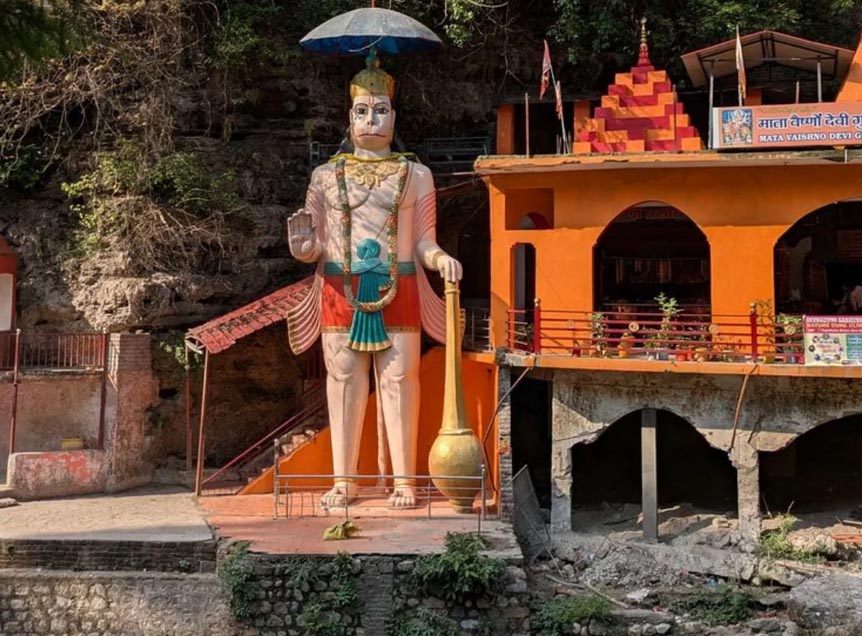
Nestled amid the green surroundings of Dehradun in Uttarakhand, Tapkeshwar Temple is one of the region’s most fascinating and spiritually significant Shiva temples. Unlike many large and architecturally elaborate temples, Tapkeshwar Mahadev is distinctive because its principal shrine lies inside a natural cave, where water droplets continuously fall from the rock above onto the Shivling. This unusual natural phenomenon is at the heart of the temple’s identity and is also responsible for its name.
For devotees, Tapkeshwar is an important pilgrimage destination dedicated to Lord Shiva. For travelers, it offers something more: a chance to experience spirituality, mythology, natural geology and the peaceful landscape of the Doon Valley in one place. The temple is situated only a few kilometers from central Dehradun, making it relatively easy to visit while exploring the city and surrounding attractions.
Where Is Tapkeshwar Temple Located?
Tapkeshwar Mahadev Temple is located in the Garhi Cantt area of Dehradun, Uttarakhand. The temple complex stands close to a seasonal river or stream and is surrounded by rocky terrain and greenery. Government tourism sources place it approximately 6.5 km from Dehradun city, while other official descriptions give distances of around 5.5 km from the city bus stand.
Its relatively close location to the city makes Tapkeshwar convenient for both pilgrims and tourists. A visit can easily be combined with other Dehradun attractions, allowing travelers to experience several destinations within a single day.
The natural setting is an important part of the temple experience. As visitors move away from the busier portions of the city and approach the temple, the surroundings become greener and quieter. The combination of rocks, water, trees and the cave gives Tapkeshwar a very different atmosphere from conventional urban temples.
Why Is Tapkeshwar Temple Famous?
The most remarkable feature of Tapkeshwar Temple is the natural Shivling situated inside the cave. Water droplets emerge from the rock ceiling and fall directly onto the Shivling. This continuous dripping resembles an uninterrupted abhishekam, or ritual bathing of Lord Shiva.
The name “Tapkeshwar” is generally associated with the Hindi word tapak, meaning a drop or dripping. In this context, it refers to the water that naturally drips onto the Shivling. Thus, the physical character of the cave is closely connected with the religious identity of the temple.
The constant sound of falling water contributes to the distinctive atmosphere inside the shrine. The cave is naturally cooler and darker than its surroundings, and the presence of the Shivling beneath the dripping rock creates a sense of intimacy and antiquity.
The temple is therefore interesting not simply because it is an old place of worship, but because nature itself appears to participate in the worship. Devotees do not have to imagine a symbolic connection between the natural world and Shiva; they can actually see water emerging from the cave roof and falling onto the sacred stone.
Tapkeshwar Temple and the Legend of Dronacharya
Tapkeshwar Temple has a strong association with the Mahabharata tradition. According to local belief, the cave was once connected with Guru Dronacharya, the legendary teacher of the Pandavas and Kauravas. Because of this association, the cave is also known as Drona Cave or Dron Gufa. The Dehradun district administration describes Tapkeshwar as a legendary site and records the traditional belief that Dronacharya lived here with his family during the Dwapara Yuga.
The most popular story associated with the temple involves Dronacharya’s son, Ashwatthama.
According to the legend, Dronacharya was extremely poor and could not afford a cow to provide milk for his young son. Ashwatthama wanted milk, but his father was unable to fulfill his wish. In his distress, the child turned toward Lord Shiva and prayed to him.
According to the traditional story, Shiva was pleased with Ashwatthama’s devotion and answered his prayer. Milk began to appear through the sacred cave and fall upon the Shivling. This miraculous event is said to have established the connection between Ashwatthama, Lord Shiva and the cave.
The Dehradun district’s official tourism information preserves this traditional account and specifically connects Ashwatthama’s story with the name Tapkeshwar.
It is important to understand this story as a religious tradition rather than a historically verified account. Like many pilgrimage sites associated with the Mahabharata, Tapkeshwar’s significance comes from the centuries-old beliefs and oral traditions surrounding the place.
The Spiritual Meaning of the Dripping Water
The water falling onto the Shivling is more than a visual curiosity for devotees. In Hindu worship, water is commonly used in the abhishekam of Shiva lingams. At Tapkeshwar, nature appears to perform this act continuously.
This creates a particularly powerful spiritual symbolism. Instead of devotees having to pour water onto the Shivling at specific moments, water is continuously supplied by the cave itself. The phenomenon can be interpreted as a representation of perpetual devotion and the eternal connection between Shiva and nature.
For many visitors, the experience is deeply atmospheric. The cave’s natural rock formations, the sound of water, the fragrance of incense and the presence of worshippers combine to create an environment that feels very different from an ordinary temple hall.
The shrine also demonstrates how sacred spaces in India have often developed around natural features. Caves, springs, rivers, mountains and unusual rock formations have frequently become associated with religious traditions. Tapkeshwar is an especially striking example because the natural feature is directly incorporated into the central ritual experience.
Religious Importance of Tapkeshwar Mahadev
Tapkeshwar is primarily a Shiva temple, and Lord Shiva is worshipped here as Tapkeshwar Mahadev. The shrine attracts devotees throughout the year, particularly those who wish to perform prayers and seek Shiva’s blessings.
The temple becomes especially important during the Hindu month of Shravan, which is traditionally associated with Shiva worship. Devotees visit Shiva temples in large numbers during this period and offer water, flowers, bilva leaves and other traditional offerings.
However, the biggest celebration at Tapkeshwar is associated with Mahashivratri. The Dehradun district administration notes that a major fair takes place at Tapkeshwar on Shivratri and that thousands of devotees gather at the temple to offer prayers.
During this period, the normally peaceful temple surroundings become much more energetic. Religious ceremonies, devotional activities and crowds of pilgrims transform the area into an important local festival center.
Tapkeshwar Mela and Mahashivratri Celebrations
Mahashivratri is one of the most important festivals dedicated to Lord Shiva, and Tapkeshwar becomes a major gathering place during the celebration.
The Tapkeshwar Mela attracts devotees from Dehradun and surrounding areas. The festival is not merely a religious ceremony but also an important part of the cultural life of the city. Local people gather to worship, participate in festivities and experience the atmosphere of the fair.
The Uttarakhand Environment Protection and Pollution Control Board has also documented Tapkeshwar Mela as a significant local festival associated with Shivratri.
Visitors planning to attend during Mahashivratri should be prepared for considerably larger crowds than on ordinary days. Queues can become lengthy, and access around the temple may be more congested. For people primarily interested in quiet exploration, an ordinary weekday can provide a more relaxed experience.
For devotees, however, visiting during Mahashivratri can be particularly meaningful because the temple becomes the center of a large collective celebration of Shiva.
The Cave Experience
Entering the cave is one of the most memorable parts of visiting Tapkeshwar. The shrine does not feel like a conventional temple constructed entirely through human architecture. Instead, the natural cave forms the setting for the principal deity.
The rock walls and ceiling create an intimate environment, while water continues to fall naturally from above. The cave is generally cooler than the outside surroundings, making the interior especially refreshing during warmer months.
The limited space inside also means that visitors should be respectful of other devotees. Speaking quietly, avoiding unnecessary disturbance and following instructions from temple authorities can help preserve the spiritual atmosphere.
Because water is naturally present around the cave, visitors should also walk carefully. Wet stone surfaces can become slippery, particularly during busy periods.
Natural Beauty Around the Temple
One of Tapkeshwar’s attractions is the combination of spirituality and natural surroundings. The temple is situated beside a seasonal watercourse and within a landscape that includes rocky formations and vegetation.
This setting makes the temple different from many religious attractions located in dense urban areas. The natural landscape contributes to the feeling that the shrine grew organically from its environment.
Government tourism information describes Tapkeshwar as a cave temple situated near a river and notes the natural surroundings as part of its appeal.
The surrounding area can therefore appeal to travelers who enjoy combining cultural sightseeing with nature. However, because Tapkeshwar is primarily a religious site, visitors should treat the surroundings as a sacred environment rather than simply as a picnic destination.
How to Reach Tapkeshwar Temple
Tapkeshwar is easily accessible from Dehradun by road. According to the Nagar Nigam Dehradun, the temple is approximately 6.5 km from the city and can be reached by bus or auto-rickshaw.
Dehradun Railway Station is the nearest major railway station, and the municipal information places it roughly 7 km from the temple. Jolly Grant Airport, which serves Dehradun, is considerably farther away, at approximately 32 km.
Travelers arriving by train can therefore reach the temple relatively conveniently by local taxi or auto-rickshaw. Visitors staying in Dehradun can also hire a cab for a more comfortable journey.
Because the temple is within the city area rather than deep in the Himalayas, travelers do not need a long mountain journey to reach it. This accessibility is one reason Tapkeshwar works well as both a pilgrimage destination and a short sightseeing excursion.
Best Time to Visit Tapkeshwar Temple
Tapkeshwar can be visited throughout the year, but the ideal time depends on the type of experience you want.
Those interested in experiencing the religious energy of the temple should consider visiting around Mahashivratri. This is when the temple hosts its major annual gathering and attracts large numbers of devotees.
Travelers looking for a quieter experience may prefer visiting outside major festivals, particularly on a weekday. Early morning can also be a pleasant time for devotees who want to spend a few peaceful moments at the shrine.
The broader Dehradun region has a pleasant appeal during the cooler months, while summer visits can still be comfortable because the cave itself offers a naturally cool environment. During the monsoon, however, visitors should take extra care around wet rocks and watercourses.
Temple Timings
Published information about Tapkeshwar’s opening hours varies. The Dehradun tourism material emphasizes the temple’s accessibility, while several travel sources list different daily schedules. One commonly cited schedule is approximately 6:00 AM to 7:00 PM.
Because timings can change during festivals, religious ceremonies and special occasions, visitors should verify the current schedule before making a dedicated trip, particularly if they are traveling from outside Dehradun.
Mahashivratri and other major religious occasions may involve special arrangements and extended activity, so the normal daily schedule should not automatically be assumed to apply.
What Should Visitors Keep in Mind?
A visit to Tapkeshwar is relatively straightforward, but a few simple precautions can make the experience more comfortable.
The cave environment can be damp, and the stone surfaces may be slippery. Comfortable footwear with a good grip is advisable, particularly for visitors traveling during or after rainfall.
Since this is an active religious site, modest and respectful clothing is appropriate. Visitors should follow local customs, temple instructions and any restrictions regarding photography or movement within the shrine.
Keeping the area clean is particularly important. Plastic waste, food wrappers and other litter can damage the natural surroundings and reduce the quality of the experience for both pilgrims and residents.
During Mahashivratri, patience is essential. Large crowds can result in long queues, restricted movement and traffic congestion. Visitors who are not specifically attending the festival may prefer another day.
Nearby Attractions in Dehradun
Tapkeshwar can easily be included in a broader Dehradun sightseeing itinerary. The city is known for its combination of natural landscapes, colonial-era heritage, educational institutions and religious sites.
Robber’s Cave, also known as Guchhupani, is one of the best-known natural attractions in the area. Sahastradhara, famous for its springs and scenic landscape, is another popular destination. The Forest Research Institute is an important architectural and educational landmark, while several temples and monasteries provide additional opportunities for cultural exploration.
A traveler interested primarily in religious tourism can combine Tapkeshwar with other temples in and around Dehradun. Those more interested in nature can pair the temple with nearby caves, springs and green spaces.
This makes Tapkeshwar particularly convenient for travelers who have only one or two days in Dehradun and want to experience different aspects of the city.
Tapkeshwar Temple as a Blend of Mythology and Nature
What makes Tapkeshwar truly distinctive is the way mythology and nature overlap.
The Mahabharata tradition gives the cave an ancient sacred narrative. The story of Dronacharya and Ashwatthama provides a powerful mythological foundation, while the naturally dripping water provides the physical phenomenon around which the shrine’s identity has developed.
At the same time, the temple does not depend entirely on elaborate architecture to create its spiritual atmosphere. The cave itself becomes the temple’s most important architectural feature.
This relationship between landscape and worship is common in India’s sacred geography, but Tapkeshwar presents it in an especially tangible way. The visitor can see the natural rock, hear the water and observe the Shivling receiving its continuous flow.
Why Tapkeshwar Temple Is Worth Visiting
Tapkeshwar Temple is worth visiting even for travelers who are not undertaking a traditional pilgrimage. Its combination of religious history, mythology, natural geology and peaceful surroundings makes it one of Dehradun’s most distinctive attractions.
For devotees, the continuously dripping water over the Shivling represents an extraordinary manifestation of Shiva worship. For history and mythology enthusiasts, the association with Dronacharya and Ashwatthama adds another layer of interest. For nature lovers, the cave and surrounding landscape provide an opportunity to experience a quieter side of Dehradun.
Most importantly, Tapkeshwar offers an experience that cannot easily be replicated by a conventional temple. The shrine’s defining feature is not a massive gateway, elaborate dome or grand courtyard. It is the simple, continuous movement of water falling from natural rock onto a sacred Shivling.
That combination gives the temple its unique character.
Final Thoughts
Tapkeshwar Mahadev Temple occupies a special place among the religious and cultural attractions of Dehradun. Its natural cave, continuously dripping water and association with Lord Shiva make it visually and spiritually distinctive, while the traditional connection with Dronacharya and Ashwatthama gives the site a strong place in local mythology.
The temple also demonstrates how India’s sacred spaces can emerge from the landscape itself. Here, the cave is not simply a backdrop for the temple; it is an essential part of the shrine. The water dripping from the rock provides a natural form of abhishekam, creating a remarkable meeting point between geology, nature and faith.
Whether visited during the vibrant Mahashivratri celebrations or on a quiet ordinary morning, Tapkeshwar offers a memorable glimpse into the spiritual traditions of Uttarakhand. For anyone exploring Dehradun, this ancient cave shrine deserves a place on the itinerary—not only as a temple dedicated to Shiva, but as a fascinating example of how mythology, natural beauty and living religious tradition can exist together in one remarkable place.

