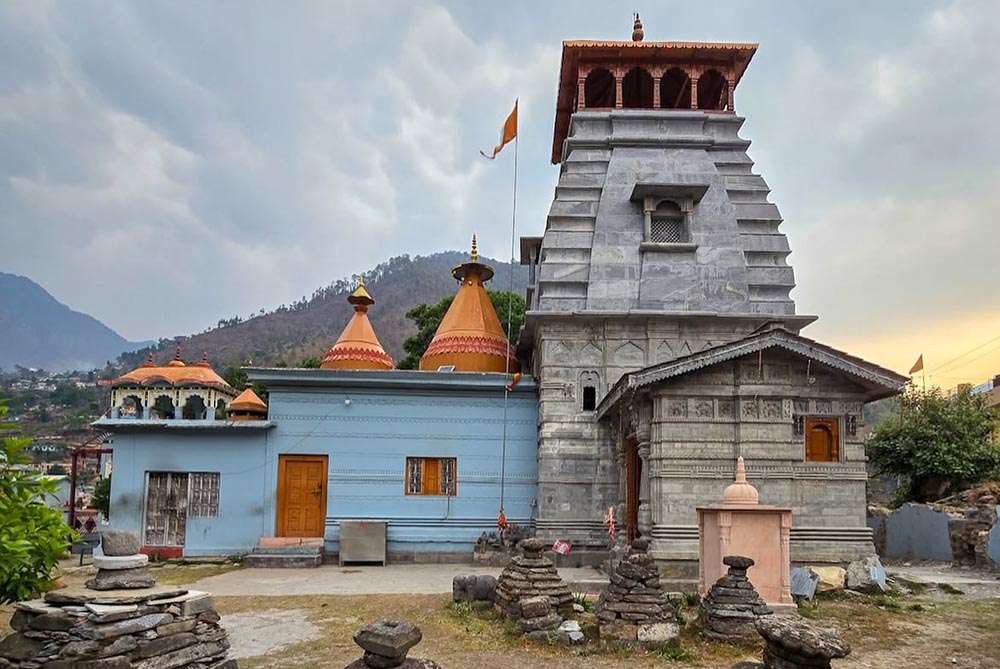
Nestled in the serene mountains of Tehri Garhwal, Uttarakhand, Budha Kedar Temple is one of those sacred Himalayan destinations that remains relatively peaceful compared with the more famous shrines of the state. Dedicated to Lord Shiva, the temple is associated with ancient Hindu traditions, legends of the Pandavas and the meeting of sacred mountain rivers. Surrounded by green hills, forests and the dramatic landscape of the Garhwal Himalayas, Budha Kedar offers a combination of spirituality, mythology, nature and rural Himalayan culture.
The name Budha Kedar is generally understood in connection with the idea of “Old Kedar” or “Ancient Kedar.” The shrine is also associated with the name Vriddha Kedareshwar in local religious traditions. According to popular belief, this is a place where Lord Shiva appeared before the Pandavas in an old-man form. The temple’s mythology, therefore, connects it to the great Mahabharata tradition and to the wider network of Shiva pilgrimage sites across Uttarakhand.
Unlike Kedarnath, which attracts enormous numbers of pilgrims every year, Budha Kedar is comparatively less crowded and offers a quieter spiritual experience. It is particularly appealing to travelers who want to explore a less commercialized side of Uttarakhand while visiting a place of deep religious significance.
Where Is Budha Kedar Temple Located?
Budha Kedar Temple is located in the Tehri Garhwal district of Uttarakhand, in the Garhwal Himalayan region. The surrounding area is characterized by mountain valleys, forests, terraced landscapes and rivers. Budha Kedar lies close to the confluence of the Bal Ganga and Dharam Ganga, a geographical feature that contributes considerably to the sacred character of the destination.
The temple’s setting is one of its greatest attractions. Rather than being situated in a busy urban environment, the shrine is surrounded by the natural landscape of the mountains. The journey itself becomes part of the experience, with winding Himalayan roads, small settlements, forests and panoramic mountain views appearing along the way.
Budha Kedar is often included by travelers exploring the less-visited religious and cultural destinations of Tehri Garhwal. Its relatively secluded atmosphere makes it especially attractive to pilgrims, photographers, nature lovers and travelers interested in Himalayan heritage.
The Mythological Story of Budha Kedar
The most fascinating aspect of Budha Kedar is its association with the Pandavas of the Mahabharata. According to local tradition, after the devastating Kurukshetra war, the Pandavas wanted to seek forgiveness from Lord Shiva for the sins associated with the war. They began searching for Shiva, who, according to the legend, did not wish to reveal himself easily.
The Pandavas eventually reached the Himalayan region while continuing their search. Local tradition says that they encountered an old man who was meditating at the confluence of the sacred rivers. The old man was believed to be Lord Shiva himself in disguise.
According to the popular version of the story, when the Pandavas approached him, the mysterious old man disappeared and a large Shiva Lingam appeared at the site. The Pandavas were then instructed to embrace the Shiva Lingam as an act of devotion and repentance. This legend is one of the reasons the site came to be associated with Budha Kedar, or the ancient/old form of Kedar.
It is important to understand that these accounts belong to the religious and oral traditions associated with the temple rather than being historical records that can be independently verified. Nevertheless, such traditions form an important part of the cultural identity of Himalayan pilgrimage sites. For devotees, the story provides a spiritual explanation for the sanctity of the location and its relationship with Lord Shiva.
The Sacred Shiva Lingam
The Shiva Lingam is the spiritual centre of Budha Kedar Temple. The shrine is particularly known in travel and local religious accounts for its large Shiva Lingam, which is frequently described as one of the most prominent Shiva Lingams in the region. Recent coverage has also highlighted the temple’s association with a very large Shiva Lingam and its importance during Shiva festivals.
For devotees, the Lingam is not simply an architectural object. It represents Lord Shiva and becomes the focus of prayer, offerings, meditation and ritual worship. Visitors may offer water, flowers, bilva leaves and other traditional offerings according to the practices permitted at the temple.
The atmosphere inside and around the shrine can be especially meaningful during early morning worship. The combination of bells, chants, incense and the surrounding Himalayan landscape creates an experience that is very different from visiting a large temple in a city.
Religious Importance of Budha Kedar
Budha Kedar occupies an important position within the religious landscape of Uttarakhand. The state is popularly known as Devbhoomi, or the “Land of the Gods,” because of its enormous number of temples, pilgrimage routes, sacred rivers and places connected with Hindu mythology. Uttarakhand Tourism itself emphasizes the state’s strong spiritual and cultural identity.
The importance of Budha Kedar comes particularly from its connection with Lord Shiva and the Pandava tradition. The meeting of the Bal Ganga and Dharam Ganga further contributes to the sacred character of the area.
The temple should not, however, be confused with the much more famous Kedarnath Temple, which is one of the twelve Jyotirlingas and one of the major pilgrimage destinations of Uttarakhand. Kedarnath is located in Rudraprayag district at a much higher elevation, whereas Budha Kedar is situated in Tehri Garhwal. The two places share the powerful religious association with Shiva and the name “Kedar,” but they are distinct pilgrimage destinations.
The Natural Beauty Around Budha Kedar
One of the strongest reasons to visit Budha Kedar is the scenery. The temple is surrounded by the characteristic landscapes of Garhwal, where steep mountain slopes meet deep valleys and narrow rivers. Depending on the season, the hills can appear dramatically different.
During spring and early summer, the surrounding vegetation becomes fresh and vibrant. The monsoon brings lush greenery to the mountains, although heavy rainfall can make travel conditions more challenging. Autumn is particularly attractive because the skies are often clearer, allowing visitors to appreciate the Himalayan scenery more comfortably.
The landscape also provides opportunities for travelers to experience the quieter side of mountain life. Villages, terraced fields, traditional houses and forested slopes provide glimpses into the everyday culture of Garhwal.
For photographers, Budha Kedar offers more than temple photography. The surrounding valleys, rivers, village landscapes and changing mountain light can provide excellent opportunities for capturing the character of rural Uttarakhand.
How to Reach Budha Kedar Temple
Road travel is the principal way of reaching Budha Kedar. The temple is connected with New Tehri and other parts of the Garhwal region through the Himalayan road network. Travel information sources place Budha Kedar roughly 80–90 kilometres from New Tehri, although exact distances can vary depending on the route and the point from which the measurement is taken.
Travelers coming from New Tehri can use local buses, shared transportation or private vehicles. There are also connections from areas such as Ghansali, while routes through Dhauntari and the Uttarkashi side are mentioned in regional travel information.
For visitors arriving by train, Rishikesh Railway Station is generally regarded as the nearest major railway connection. From Rishikesh, travelers can continue by road toward Tehri and then onward to Budha Kedar. Jolly Grant Airport in Dehradun is the nearest major airport commonly cited for travelers arriving by air.
Because Himalayan road conditions can change due to weather, landslides, road maintenance and seasonal restrictions, travelers should verify the current road situation before beginning the journey. It is also sensible to avoid planning a tightly timed itinerary in the mountains.
Best Time to Visit Budha Kedar
The ideal time to visit Budha Kedar depends on whether the priority is pilgrimage, pleasant weather or experiencing the green Himalayan landscape.
The spring and early summer months, particularly April to June, are generally comfortable for mountain travel. Temperatures are comparatively pleasant, and the landscape begins to become greener as the season progresses.
The post-monsoon period, particularly September through November, is another attractive period. After the rains, the mountains can look exceptionally fresh, while clearer weather often improves visibility.
The monsoon season requires greater caution. Uttarakhand’s mountainous roads can be affected by heavy rain, landslides and temporary disruptions. Travelers planning a visit during July and August should check local weather and road conditions before setting out.
Winter can bring colder conditions, particularly in the higher Himalayan areas. Budha Kedar itself is at a considerably lower elevation than Kedarnath, but winter travel should still be planned with appropriate clothing and awareness of local conditions.
Festivals and Worship at the Temple
Maha Shivaratri is naturally one of the most significant occasions for a Shiva temple such as Budha Kedar. During the festival, devotees gather to offer prayers and perform worship dedicated to Lord Shiva. The atmosphere becomes more devotional, with religious ceremonies and increased visitor activity.
Other important occasions in the Hindu calendar may also attract devotees. Mondays, traditionally associated with Shiva worship, can be spiritually significant for visitors wishing to offer prayers at the shrine.
Visitors should remember that temple schedules and ritual arrangements can change. Rather than relying on travel websites for exact daily timings, it is advisable to confirm current information locally before visiting.
Budha Kedar and the Himalayan Pilgrimage Experience
A visit to Budha Kedar is not simply about reaching a temple, taking photographs and leaving. The journey can be viewed as a traditional Himalayan pilgrimage experience in which the landscape itself becomes part of the spiritual journey.
The winding roads, river valleys, forests and remote settlements create a gradual transition from the busy plains into the quieter mountain environment. For devotees, this physical journey can also represent an inward journey toward prayer and reflection.
The relative lack of commercialization can be another advantage. Travelers accustomed to the extremely busy atmosphere of major pilgrimage destinations may find Budha Kedar calmer and more intimate.
At the same time, visitors should not expect the same level of tourist infrastructure available at major destinations. Accommodation, restaurants, transport and medical facilities can be more limited in remote Himalayan areas. Planning ahead is therefore important.
Places and Experiences Around Budha Kedar
The wider Tehri Garhwal region contains numerous attractions for travelers who want to extend their visit. New Tehri, the district headquarters, can serve as an important stop for supplies and onward travel. The surrounding region is known for mountain landscapes, villages and viewpoints.
Travelers interested in spiritual tourism can also explore other Shiva temples and religious destinations across Garhwal. Those interested in nature can combine their temple visit with short walks, village exploration and scenic drives.
One of the most rewarding aspects of visiting lesser-known Himalayan destinations is the opportunity to experience local life. Instead of rushing between famous tourist attractions, visitors can spend time observing traditional architecture, agricultural practices, local food and the rhythm of village life.
Accommodation and Food
Accommodation around Budha Kedar is more limited than in major tourist centres. Depending on the season and availability, travelers may find basic guesthouses, small lodges or homestay-style accommodation in the surrounding area. New Tehri and other larger settlements provide additional choices for travelers who prefer greater convenience.
It is advisable to confirm accommodation before travelling, particularly during festivals and peak pilgrimage periods. Travelers should also keep some cash available because digital payment facilities may not be equally reliable in remote mountain areas.
Food in the region is generally simple and influenced by traditional Garhwali cuisine. Visitors may encounter dishes prepared with local grains, lentils, vegetables and spices. Trying local food can add another dimension to the trip, although travelers should choose hygienic establishments and carry basic snacks and drinking water for the journey.
Things to Keep in Mind Before Visiting
A journey to Budha Kedar requires a little more preparation than a normal city trip. Mountain roads can be narrow and winding, and travel times can be considerably longer than the distance on a map might suggest.
Weather should always be considered. Even when conditions are pleasant in the plains, mountain weather can change quickly. Carrying warm clothing, comfortable footwear, rain protection and essential medicines is sensible.
Visitors should respect the religious nature of the temple. Modest clothing, respectful behaviour and compliance with temple rules are appropriate. Photography should only be undertaken where permitted, especially inside sacred areas.
Travelers should also avoid littering. Himalayan ecosystems are fragile, and responsible tourism is essential to protect the rivers, forests and villages that make destinations such as Budha Kedar special.
Why Budha Kedar Deserves More Attention
Budha Kedar does not have the international recognition of Kedarnath, nor does it attract the same scale of pilgrimage tourism. Yet this relative obscurity may actually be one of its greatest strengths.
The temple brings together several elements that define the spiritual character of Uttarakhand: Lord Shiva, ancient legends, sacred rivers, Himalayan landscapes and traditional village culture. The association with the Pandavas gives the site a fascinating mythological identity, while its natural surroundings make the journey memorable even for visitors who are not undertaking a pilgrimage.
For spiritual travelers, Budha Kedar provides a place for prayer and reflection. For history and mythology enthusiasts, it offers a connection with one of India’s great epic traditions. For nature lovers, it provides access to a beautiful and comparatively peaceful Himalayan environment. And for travelers searching for destinations beyond the standard Uttarakhand itinerary, it offers an opportunity to discover a lesser-known corner of Garhwal.
Final Thoughts
Budha Kedar Temple in Uttarakhand is a destination where mythology and mountain landscapes come together. Its connection with Lord Shiva and the Pandavas, its location near the confluence of the Bal Ganga and Dharam Ganga, and its peaceful Himalayan surroundings make it an intriguing destination for both pilgrims and travelers.
The true appeal of Budha Kedar lies not only inside the temple but also in the journey toward it. The winding mountain roads, green valleys, sacred rivers and quiet villages create an atmosphere in which travel itself becomes part of the experience.
While planning a visit, travelers should remember that Budha Kedar is a relatively less-developed pilgrimage destination, so flexibility and preparation are important. Checking weather and road conditions, arranging transportation and accommodation in advance, and respecting local religious customs can make the journey considerably more comfortable.
For anyone looking to explore the spiritual heritage of Uttarakhand beyond its most famous destinations, Budha Kedar is well worth considering. It represents a quieter, more intimate side of Devbhoomi Uttarakhand—a place where the ancient stories of Shiva and the Pandavas continue to live alongside the rivers, forests and mountains of the Garhwal Himalayas.

