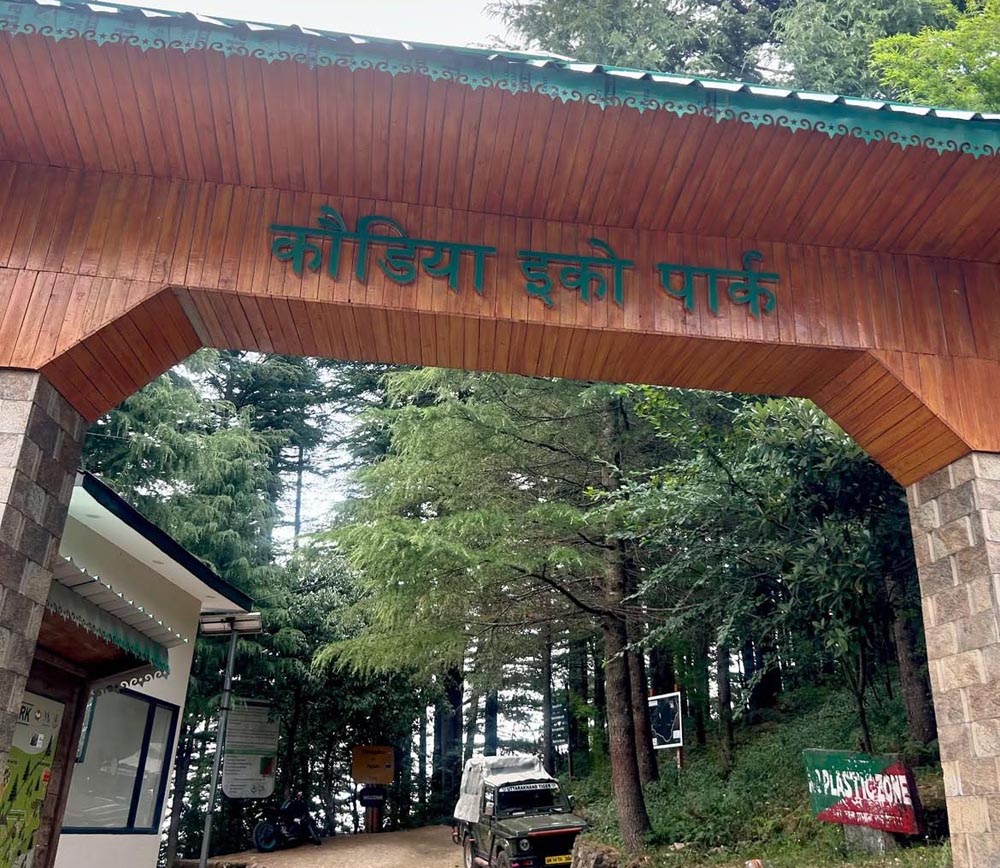
Hidden amid the beautiful mountain landscapes of Tehri Garhwal, Kaudia Forest, also popularly known as Kodia Jungle, is one of the most peaceful natural attractions around Kanatal in Uttarakhand. Unlike the busy hill stations where sightseeing often means crowded markets, traffic and commercial attractions, Kaudia Forest offers something much simpler: tall Himalayan trees, quiet walking trails, mountain air, birdsong, natural springs and spectacular views of valleys.
Located close to Kanatal along the Chamba–Mussoorie road, the forest has become a favourite destination for people looking for a short Himalayan escape. It is particularly appealing to nature lovers, photographers, families, hikers and travellers who want to experience the quieter side of Uttarakhand. A relatively gentle forest trail of around 6 kilometres passes through wooded sections and opens periodically toward undulating hills and valleys.
What makes Kaudia especially attractive is that it does not require an extremely demanding trek. Visitors can explore sections of the forest on foot or experience the landscape through a local jeep safari, depending on prevailing arrangements and permissions. The combination of forest, mountain scenery and peaceful surroundings makes it an excellent addition to a Kanatal itinerary.
Where Is Kaudia Forest Located?
Kaudia Forest is situated near Kanatal in Tehri Garhwal district of Uttarakhand. Kanatal itself is a small Himalayan destination located between Chamba and Mussoorie and is known for forests, mountain views, camping and outdoor activities. Kaudia Forest is only a short distance from the Kanatal area, making it convenient to visit while staying at one of the local hotels, resorts or camps.
The wider region is characterised by Himalayan forests, mountain slopes and valleys. From the forest trails, visitors can experience a dramatic transition between dense woodland and open viewpoints. According to local tourism information, Kanatal is approximately 12 kilometres from Chamba, around 38 kilometres from Mussoorie and roughly 78 kilometres from Dehradun, although actual travel times vary according to traffic, road conditions and the chosen route.
The location is one of Kaudia Forest’s greatest advantages. It is close enough to established tourist destinations to be accessible but sufficiently removed from major urban centres to retain a peaceful atmosphere.
The Natural Beauty of Kaudia Forest
The first thing visitors notice at Kaudia Forest is the sense of enclosure created by the trees. Tall Himalayan vegetation forms a natural canopy over portions of the trail, creating cool and shaded walking conditions. Deodar, pine, oak and other Himalayan vegetation contribute to the characteristic mountain-forest landscape, while seasonal vegetation adds changing colours throughout the year.
The forest does not look exactly the same throughout the trail. Some sections are heavily wooded, while other stretches open toward hills, valleys and expansive mountain scenery. This changing landscape is one of the reasons the walk remains interesting even though the route itself is relatively gentle.
Small natural springs and water channels can also be encountered along parts of the route. The sound of flowing water combined with rustling leaves and bird calls creates an atmosphere very different from that of a conventional sightseeing attraction.
For photographers, these changing environments provide numerous subjects. Instead of focusing only on panoramic mountain views, visitors can photograph tree trunks, forest paths, moss, flowers, birds, streams, sunlight filtering through branches and distant mountain ridges.
The Famous Kaudia Forest Walk
The forest walk is arguably the best way to appreciate Kaudia. Tourism sources commonly describe a roughly 6-kilometre level trail through the forest, although the exact walking distance experienced by a visitor depends on where they start, how far they proceed and the route available on the day.
The relatively gentle nature of the trail makes it suitable for people who want a Himalayan experience without undertaking a strenuous high-altitude trek. Nevertheless, visitors should remember that this is a natural forest environment rather than a manicured urban park. Uneven ground, mud, stones and seasonal changes in trail conditions are possible.
Walking slowly is the best approach. Rather than treating the route as a race, travellers can pause to listen to birds, observe vegetation and enjoy the changing views. Early hours are particularly pleasant because the forest is generally quieter and bird activity can be rewarding.
The walk can also be combined with photography and birdwatching. Nature lovers may find that the smaller details of the forest are just as memorable as the larger mountain vistas.
Jeep Safari in Kaudia Forest
For visitors who do not want to walk the entire trail, jeep exploration is another popular way to experience Kaudia. Local tourism operators describe jeep safari experiences through forest tracks, while some sources note that permission or local arrangements may be required.
A jeep safari offers a different perspective. Instead of concentrating solely on the walking trail, passengers can cover more ground while enjoying the surrounding landscape. It can be particularly useful for families, older travellers or groups who want a forest experience without committing to a longer walk.
However, visitors should confirm the current safari arrangements, vehicle charges and permitted routes locally before travelling. Prices and operating arrangements can change with season, local regulations and operators. One current Kanatal outdoor operator, for example, lists jeep safari experiences separately from its guided Kaudia nature trek.
Wildlife sightings should also be treated as a bonus rather than a guarantee. A forest is not a zoo, and animals may remain hidden. The real attraction is the ecosystem itself—the opportunity to travel quietly through a Himalayan woodland.
Flora and Fauna
Kaudia Forest provides an opportunity to observe the characteristic flora of the middle Himalayan region. Forests around Kanatal include coniferous and broadleaf vegetation, with deodar, pine and oak frequently associated with the landscape. Rhododendrons can also add seasonal colour in the broader region.
The forest environment also supports birds and wildlife. Visitors may encounter signs of animals or, with luck and patience, see species such as barking deer and wild boar. Local tourism descriptions also highlight the area’s birdlife and opportunities for birdwatching.
Birdwatching is particularly rewarding for travellers who are willing to slow down. Instead of walking continuously, stop occasionally in quiet areas and listen. Birds can often be heard before they are seen.
It is important not to approach wildlife, feed animals or attempt to attract them for photographs. Maintaining distance protects both visitors and wildlife and helps preserve the natural character of the forest.
Birdwatching at Kaudia Forest
Birdwatching is one of the quieter pleasures of visiting Kaudia. The dense vegetation provides habitat for a variety of Himalayan birds, and the forest environment is particularly appealing during the morning when bird activity can be high.
A local Kanatal outdoor adventure operator specifically promotes birdwatching as part of its nature experiences and mentions species such as Himalayan blue magpies, verditer flycatchers and rosefinches.
Visitors interested in birds should carry binoculars if available and avoid making unnecessary noise. A telephoto lens is preferable to getting physically close to birds.
The best photographs often come from patience. Instead of trying to photograph every bird encountered, spend several minutes observing its behaviour and waiting for a clear view.
Photography Opportunities
Kaudia Forest is an excellent destination for nature photography because the scenery changes continually. A single walk can provide opportunities to photograph dense woodland, distant hills, forest trails, springs, flowers, birds and atmospheric mountain weather.
Morning light can produce particularly attractive photographs as sunlight filters between trees. Mist and clouds can also dramatically change the appearance of the forest. During different seasons, vegetation creates different photographic moods, from fresh green landscapes to colourful flowering periods.
Landscape photographers should consider carrying a wide-angle lens, while wildlife and bird photographers may benefit from a longer focal length. A tripod can be useful for certain low-light compositions, although it may be unnecessary for casual visitors.
The most important photographic rule is to respect the environment. Avoid breaking vegetation, disturbing birds or animals, or leaving any material behind simply to obtain a better photograph.
Best Time to Visit Kaudia Forest
Kaudia Forest can be visited in different seasons, but the experience varies considerably.
Spring is attractive because temperatures are generally pleasant and vegetation becomes increasingly lively. Flowers in the wider Himalayan region can add colour to the landscape.
Summer can be a comfortable escape from hotter plains. The forest canopy provides shade, and Kanatal’s elevated location generally offers much cooler conditions than many lowland destinations.
Monsoon brings lush greenery and a dramatically fresh appearance. However, rain can make forest trails slippery and roads more difficult. Travellers should check local conditions before planning a monsoon visit.
Autumn and early winter are excellent for clear mountain views. After the monsoon, the atmosphere can become remarkably crisp, making distant landscapes more visible.
Winter brings colder temperatures, especially during mornings and evenings. Travellers should carry appropriate warm clothing.
Overall, the best season depends on what you want to experience: greenery and freshness favour the wetter months, while clearer mountain scenery is often more attractive after the monsoon.
Kaudia Forest Timings and Entry Fee
Published tourism information commonly lists Kaudia Forest’s visitor hours as approximately 9:00 AM to 5:00 PM and an entry charge of around ₹20 per person. However, visitors should verify these details locally because forest access, charges and operating hours can change.
Different sources also report different opening hours and safari arrangements, which makes checking locally especially important if you are planning an early-morning or late-afternoon visit.
Do not assume that an online listing is a substitute for current forest-department or local guidance. Weather, wildlife conditions, road conditions or temporary restrictions can affect access.
How to Reach Kaudia Forest
The easiest approach for most travellers is to first reach Kanatal and then travel toward the forest area. Kanatal is connected by road with Chamba, Mussoorie and other parts of Uttarakhand.
Travellers arriving from Delhi generally travel toward Dehradun and then continue into the mountains. Another common approach is through Mussoorie and Dhanaulti before reaching Kanatal. The exact route depends on road conditions and the starting point.
Dehradun is the nearest major transport hub for many travellers. Jolly Grant Airport near Dehradun provides air connectivity, while Dehradun railway station serves as an important railhead for the region. From there, visitors can continue by taxi or road transport toward Kanatal.
Because mountain travel times are affected by road construction, weather and traffic, it is better to plan the journey based on driving time rather than simply calculating the distance.
Places to Visit Near Kaudia Forest
A visit to Kaudia Forest can easily become part of a larger Kanatal holiday.
Surkanda Devi Temple is one of the best-known attractions near Kanatal. The temple sits at a high elevation and requires a hike, rewarding visitors with extensive mountain views. Local outdoor operators list the Surkanda trek as a separate experience from the Kaudia nature trek.
Kanatal itself is worth exploring for its peaceful mountain environment, resorts, camps and outdoor activities. It is particularly suitable for travellers who prefer a quieter alternative to more crowded Uttarakhand hill stations.
Dhanaulti can also be included in a wider itinerary. Its forests and mountain landscapes complement the natural experience of Kaudia.
Chamba provides another useful stop, particularly for travellers travelling between the Tehri region and other parts of Uttarakhand.
The wider Tehri Garhwal area also provides access to numerous mountain viewpoints and the spectacular landscapes surrounding Tehri Lake.
Where to Stay
There are several accommodation options around Kanatal, ranging from camps and homestays to resorts and hotels. Staying near Kanatal is generally more convenient than attempting to visit Kaudia as a rushed day trip from a distant city.
For nature lovers, a forest-facing resort or campsite can make the trip more immersive. Families may prefer properties with comfortable rooms and easy road access, while adventure travellers may enjoy camps offering guided trekking and outdoor activities.
It is sensible to select accommodation based on the overall itinerary rather than Kaudia alone. If you also want to visit Surkanda Devi, Dhanaulti or other attractions, Kanatal provides a convenient base.
What to Carry
A Kaudia Forest visit does not require an elaborate trekking kit, but sensible preparation makes the experience much more comfortable.
Wear comfortable walking shoes with a good grip, particularly if visiting after rain. Carry drinking water, some light snacks, sun protection and a light jacket because mountain temperatures can change quickly.
A small backpack is preferable to a large suitcase. Birdwatchers should carry binoculars, while photographers should protect camera equipment from unexpected rain and dust.
Most importantly, carry a reusable bag for your waste. Avoid disposable plastic wherever possible and take everything you bring into the forest back with you.
Responsible Tourism at Kaudia Forest
Kaudia’s greatest attraction is its relative natural tranquillity, and preserving that quality requires responsible tourism.
Visitors should stay on established trails where possible, avoid loud music and unnecessary shouting, never feed wildlife and refrain from damaging plants. Plastic waste, cigarette butts and food packaging can seriously affect a forest environment.
The principle is simple: leave Kaudia Forest looking as though you were never there.
Hiring local guides or using locally operated nature experiences can also contribute to the local tourism economy. Guided experiences may provide better understanding of the forest while helping visitors explore responsibly.
Is Kaudia Forest Suitable for Families?
Yes, Kaudia can be a good family destination, particularly for families who enjoy nature rather than amusement-park-style attractions. The relatively gentle nature of the walking route makes it more accessible than many steep Himalayan treks.
However, children should remain supervised, especially near uneven terrain, steep edges, streams and unfamiliar forest areas. Families should also follow local instructions regarding where they may walk and how far they may explore independently.
For older travellers or anyone uncomfortable with longer walks, a locally arranged jeep experience may provide an easier alternative.
Is Kaudia Forest Worth Visiting?
Absolutely, particularly if your idea of a mountain holiday involves forests, silence, fresh air and slow exploration rather than crowded sightseeing.
Kaudia Forest does not depend on a single spectacular monument. Its attraction comes from the combination of many small experiences: walking beneath tall trees, hearing birds in the canopy, watching clouds move across distant hills, finding a spring beside the trail and suddenly emerging from dense woodland to an expansive Himalayan view.
That simplicity is precisely what makes it memorable.
For travellers staying in Kanatal, Kaudia Forest is one of the easiest ways to experience the region’s natural side. It can be enjoyed as a short nature outing or incorporated into a longer hiking and sightseeing itinerary. Current local activity providers also offer guided Kaudia nature treks, demonstrating the growing interest in forest-based experiences around Kanatal.
Final Thoughts
Kaudia Forest is a reminder that some of Uttarakhand’s most rewarding experiences are not necessarily its most famous ones. Away from crowded hill-station centres, this peaceful forest provides an opportunity to reconnect with the landscape at a slower pace.
The approximately 6-kilometre forest route, Himalayan vegetation, natural springs, birdlife, mountain viewpoints and possibilities for local jeep exploration make Kaudia appealing to a wide range of travellers.
The best way to experience it is not to hurry. Give yourself enough time to walk slowly, listen to the forest and appreciate the landscape. Combine the visit with Kanatal, Surkanda Devi, Dhanaulti or other nearby attractions, and Kaudia can become part of a memorable Uttarakhand mountain holiday.
For anyone seeking a destination where the mountains are experienced through trees, trails, birds, clouds and silence rather than crowds, Kaudia Forest deserves a place on the Uttarakhand travel map.

