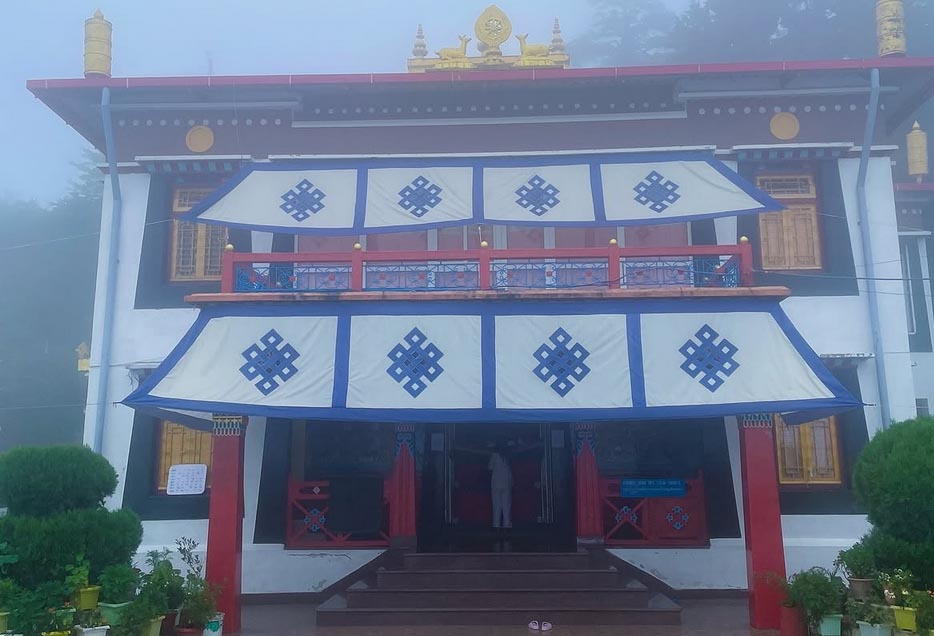
Perched amid the green slopes of Mussoorie, Shedup Choepelling Temple is one of those places that offers something very different from the busy sightseeing experience for which the hill station is famous. Also known as the Tibetan Buddhist Temple or Happy Valley Temple, it is situated in Happy Valley near the IAS Academy and forms an important part of Mussoorie’s Tibetan cultural landscape. The temple is known for its peaceful atmosphere, colorful prayer flags, Buddhist artwork, prayer wheels and association with the Tibetan community that settled in Mussoorie after 1959.
For travelers interested in spirituality, Tibetan culture, Himalayan history, architecture or simply quiet places with beautiful mountain scenery, Shedup Choepelling Temple can be a rewarding stop. The temple is relatively modest compared with some of India’s larger Buddhist monasteries, but its historical associations and serene surroundings give it a distinctive character. Its location in Happy Valley also makes a visit particularly attractive because the surrounding hills, forests and viewpoints complement the contemplative atmosphere of the monastery.
Where Is Shedup Choepelling Temple?
Shedup Choepelling Temple is located in Happy Valley, Mussoorie, in Uttarakhand’s Dehradun district. The temple is close to the IAS Academy and is roughly 2–3 kilometres from Library Chowk, depending on the route and starting point. Its address is generally given as Happy Valley Road near the IAS Academy, Mussoorie.
The location is one of the temple’s greatest attractions. Instead of being surrounded by the commercial activity associated with Mall Road, the temple lies in a quieter neighborhood characterized by steep mountain roads, greenery and Tibetan settlement areas. As visitors approach Happy Valley, the environment gradually becomes more peaceful, making the temple feel somewhat removed from the crowded tourist centre.
The temple is also associated with the nearby Dalai Hill area, another popular destination for visitors who want to enjoy panoramic views and experience the natural beauty of Mussoorie. This makes it possible to combine a cultural and spiritual visit to the temple with a short excursion into the surrounding hills.
Historical Significance of the Temple
The history of Shedup Choepelling Temple is closely connected with the modern history of the Tibetan community in India. In 1959, following the Dalai Lama’s flight from Tibet, he came to Mussoorie and stayed in Happy Valley before the Tibetan administration eventually moved to Dharamshala. The arrival of Tibetan refugees created an important Tibetan settlement in the area, leaving a lasting cultural influence on Mussoorie.
The temple emerged from this Tibetan presence and became an important religious and cultural centre. Several travel sources describe it as one of the earliest Tibetan religious sites established in India following the Tibetan refugee movement. Because of its connection with the Dalai Lama and the Tibetan settlement, the temple is more than simply a sightseeing attraction. It represents a chapter in the story of Tibetan displacement, settlement and cultural preservation in India.
Happy Valley itself retains evidence of this history. Tibetan institutions, homes and cultural influences can be found around the area, giving visitors an opportunity to understand how a refugee community gradually established a new home while maintaining its religious traditions, language, art and customs.
This historical connection is one of the reasons a visit to Shedup Choepelling Temple feels different from visiting an ordinary tourist attraction. The temple stands as a reminder of the resilience of a community that carried its cultural and spiritual traditions across the Himalayas and continued practicing them in a new homeland.
Tibetan Buddhist Culture at Shedup Choepelling
The strongest impression many visitors receive at Shedup Choepelling Temple is its atmosphere. The temple is generally quiet, and the colorful elements of Tibetan Buddhist design contrast beautifully with the green Himalayan surroundings.
Prayer flags are an important visual feature. Traditionally, Buddhist prayer flags are associated with prayers, compassion, peace and goodwill. As they move in the mountain breeze, they create a constantly changing visual element around the temple. Their bright colors also stand out against the natural greens and blues of Mussoorie.
Prayer wheels are another significant feature. Visitors may see rows of prayer wheels around the premises and can observe the traditional practice of turning them clockwise. These wheels traditionally contain sacred mantras and are used as part of Buddhist devotional practice. Visitors should approach them respectfully rather than treating them simply as decorative objects.
Inside the prayer area, Buddhist imagery, paintings and religious objects contribute to the spiritual character of the space. Sources describing the temple mention Buddha images, representations associated with the Dalai Lama, colorful murals, clay lamps and Tibetan literature.
The combination of religious art, traditional architecture, prayer flags and mountain scenery gives the temple a distinct visual identity.
Architecture and Artistic Features
Shedup Choepelling Temple reflects Tibetan Buddhist architectural and decorative traditions. It is not a gigantic monastery complex, but its colorful appearance, religious artwork and carefully decorated interiors make it culturally interesting.
Bright colors are commonly associated with Tibetan Buddhist architecture, and visitors can notice vibrant shades on the temple’s exterior and decorative elements. Inside, murals and Buddhist imagery add depth to the prayer space. The use of traditional artistic motifs helps communicate Buddhist philosophy and stories visually, making the temple interesting even for visitors who may not be familiar with Buddhist teachings.
The temple’s artistic appeal becomes particularly noticeable when viewed against the natural surroundings. The colorful building, prayer flags and Buddhist symbols contrast with the forested slopes of Mussoorie, producing an atmosphere that feels both peaceful and visually distinctive.
The Spiritual Atmosphere
One of the biggest reasons to visit Shedup Choepelling Temple is simply to experience its calmness. Mussoorie can become crowded during peak tourist periods, particularly around its major commercial areas. Happy Valley provides a quieter alternative, and the temple offers an opportunity to slow down.
Visitors do not necessarily need to be practicing Buddhists to appreciate the atmosphere. People of different backgrounds can spend some quiet time observing the surroundings, learning about Tibetan traditions or sitting peacefully. The temple’s environment encourages visitors to behave more quietly and respectfully than they might at a conventional sightseeing attraction.
For some travelers, the most memorable part of the visit may not be a particular statue or architectural detail but the feeling of standing among prayer flags and mountain scenery away from the noise of the main town.
Views and Natural Surroundings
The location of Shedup Choepelling Temple adds another dimension to the experience. Mussoorie is famous for its Himalayan landscapes, and Happy Valley provides opportunities to enjoy views of the surrounding hills and valleys.
The area around the temple is especially appealing to photography enthusiasts. Prayer flags, mountain slopes, trees, traditional Buddhist architecture and distant landscapes can all become part of a photograph. Visitors have also highlighted the scenic viewpoints around the temple and nearby Dalai Hill.
Morning and late afternoon can be particularly pleasant because the light is softer and the mountain landscape often appears more atmospheric. However, visibility in the Himalayan hills depends heavily on weather conditions, so distant mountain views cannot always be guaranteed.
The surrounding natural environment also means that visitors should remember that this is a hill destination. Roads can be steep, and walking surfaces may become slippery during rainy weather.
What Can Visitors Do at Shedup Choepelling Temple?
A visit to the temple does not require a long itinerary. Most people can explore the main areas in around one to two hours, depending on how much time they spend in quiet contemplation, photography and exploring the surroundings.
The first activity is simply exploring the temple and observing its architecture and religious artwork. Visitors can also observe the prayer wheels and prayer flags while learning about their significance.
Another worthwhile experience is spending a few peaceful minutes inside or around the prayer area, provided visitors follow the temple’s rules. Those interested in Tibetan history can also use the visit as an opportunity to learn about the Tibetan settlement in Happy Valley and the broader history of Tibetan refugees in India.
Photography is another popular activity, particularly outside the prayer hall. However, photography rules may vary within religious areas, so visitors should always ask before photographing interiors, statues, monks or worshippers. Some accounts specifically note restrictions on photography inside the prayer room.
After visiting the temple, travelers can explore Happy Valley and continue toward nearby viewpoints and Dalai Hill.
Best Time to Visit
Mussoorie can be visited throughout much of the year, but the most comfortable periods are generally spring, summer and autumn. The months from March to June are popular because the weather is comparatively pleasant and the hill station provides relief from the heat of the plains.
September to November can also be attractive because the monsoon greenery remains fresh while the weather generally becomes clearer. October and November can provide particularly pleasant conditions for sightseeing and photography.
The monsoon season requires more caution. Rain can make hill roads and walking surfaces slippery, while clouds and mist can reduce visibility. On the other hand, travelers who enjoy misty mountain scenery may find the rainy season beautiful.
Winter brings colder conditions. Visitors traveling during December, January or February should carry adequate warm clothing, particularly if they intend to spend considerable time outdoors.
Temple Timings and Entry
Published travel sources currently list different opening hours, so visitors should verify the day’s timings locally before making a special trip. Commonly published timings range from approximately 7 AM to 5 PM, while another local travel source lists 9 AM to 5 PM.
There is generally no entry fee for visiting Shedup Choepelling Temple.
Because it is an active religious site rather than merely a tourist monument, visitors should remember that opening arrangements may be affected by religious activities, maintenance or local circumstances. Checking locally before visiting is therefore sensible.
How to Reach Shedup Choepelling Temple
Reaching Shedup Choepelling Temple is relatively straightforward once you are in Mussoorie. From Library Chowk, the temple is only a few kilometres away. Visitors can hire a local taxi or use local transport toward Happy Valley. Those staying nearby can also consider walking, although Mussoorie’s steep terrain means that even a short distance can involve considerable uphill or downhill walking.
Travelers arriving in Mussoorie by road can first reach the main town and then continue toward Happy Valley. Dehradun is the nearest major city and an important gateway for travelers arriving by rail or air.
Because the roads in the hill station can become congested during holidays and peak tourist seasons, allowing extra travel time is advisable. A private vehicle can provide convenience, but parking around smaller attractions may be limited.
Nearby Places to Explore
One advantage of visiting Shedup Choepelling Temple is that it can easily be included in a larger Mussoorie itinerary. Happy Valley and Dalai Hill are natural companions to the temple visit.
The central areas of Mussoorie, including Library Chowk and Mall Road, can be visited afterward. Travelers interested in gardens and scenic areas can also explore Company Garden, while those looking for dramatic mountain landscapes can consider attractions such as Gun Hill, Lal Tibba and Camel’s Back Road.
The temple can therefore fit into either a relaxed half-day exploration or a larger full-day sightseeing route. However, visitors should avoid rushing through the temple simply to check it off a list. Its main attraction is its peaceful environment, and spending some time there is part of the experience.
Tibetan Food and Local Culture
Happy Valley is also interesting from a cultural perspective because of its Tibetan connections. Travelers can encounter Tibetan influences in the local food scene and community around the area. Tibetan-style dishes such as momos and thukpa are popular in Mussoorie, and nearby eateries can provide an opportunity to experience some of the flavors associated with the region’s Tibetan heritage.
Food, however, should ideally be treated as a complement to the cultural experience rather than the primary reason for visiting the temple. Shedup Choepelling remains a religious and spiritual place, and maintaining a respectful attitude is important.
Responsible and Respectful Tourism
Visitors should remember that Shedup Choepelling Temple is an active place of worship. Wearing reasonably modest clothing, maintaining a quiet voice and avoiding disruptive behavior are appropriate.
Shoes may need to be removed before entering designated prayer areas. Visitors should follow signs and instructions from temple staff or monks rather than assuming that every area is open to tourists.
Photography should be handled carefully. If photography is restricted inside a prayer hall or around particular religious objects, those restrictions should be respected. Travelers should also avoid photographing people without permission.
The prayer wheels and other religious objects should be treated as sacred items rather than tourist props. Likewise, visitors should not touch statues or religious displays unless it is clearly permitted.
The surrounding environment deserves equal care. Mussoorie’s mountain ecosystem is fragile, and visitors should avoid littering, disturbing wildlife or leaving plastic waste behind. Recent visitor accounts have also mentioned langurs in the surrounding area; feeding them is best avoided, both for the animals and for visitor safety.
Why Shedup Choepelling Temple Is Worth Visiting
There are many famous attractions in Mussoorie, but Shedup Choepelling Temple stands apart because its appeal comes from a combination of history, spirituality, culture and landscape.
Its connection with the Tibetan community gives it historical importance. Its Buddhist artwork and architecture provide cultural interest. Its prayer flags and mountain setting make it visually beautiful. Most importantly, its peaceful atmosphere provides a welcome contrast to the crowded areas of Mussoorie.
For travelers interested in the history of Tibetan refugees in India, the temple provides an opportunity to connect with a living cultural story rather than simply observing an old monument. For photographers, the combination of colorful Buddhist elements and Himalayan scenery provides plenty of visual inspiration. For spiritual travelers, the quiet environment offers a place for reflection. And for ordinary tourists, it can simply be a beautiful and calming stop during a Mussoorie trip.
Final Thoughts
Shedup Choepelling Temple is a small but culturally significant destination in the hills of Uttarakhand. Located in the peaceful surroundings of Happy Valley, the temple brings together Tibetan Buddhist traditions, Himalayan scenery and an important chapter in the history of the Tibetan community in India.
Its association with the Dalai Lama and the Tibetan settlement makes the site historically meaningful, while its prayer flags, prayer wheels, Buddhist artwork and tranquil surroundings make it appealing to visitors of many backgrounds.
A visit does not need to be hurried. The best way to experience Shedup Choepelling is to take time to observe the colorful details, listen to the quietness of the surroundings, appreciate the mountain landscape and understand the history that shaped Happy Valley. In a destination as busy as Mussoorie, this ability to pause and experience a different side of the hill station is perhaps the temple’s greatest attraction.
For anyone planning a trip to Mussoorie, Shedup Choepelling Temple deserves a place on the itinerary—not merely as another sightseeing point, but as a window into Tibetan culture, Himalayan spirituality and the remarkable history of a community that made the mountains of Uttarakhand part of its new home.

