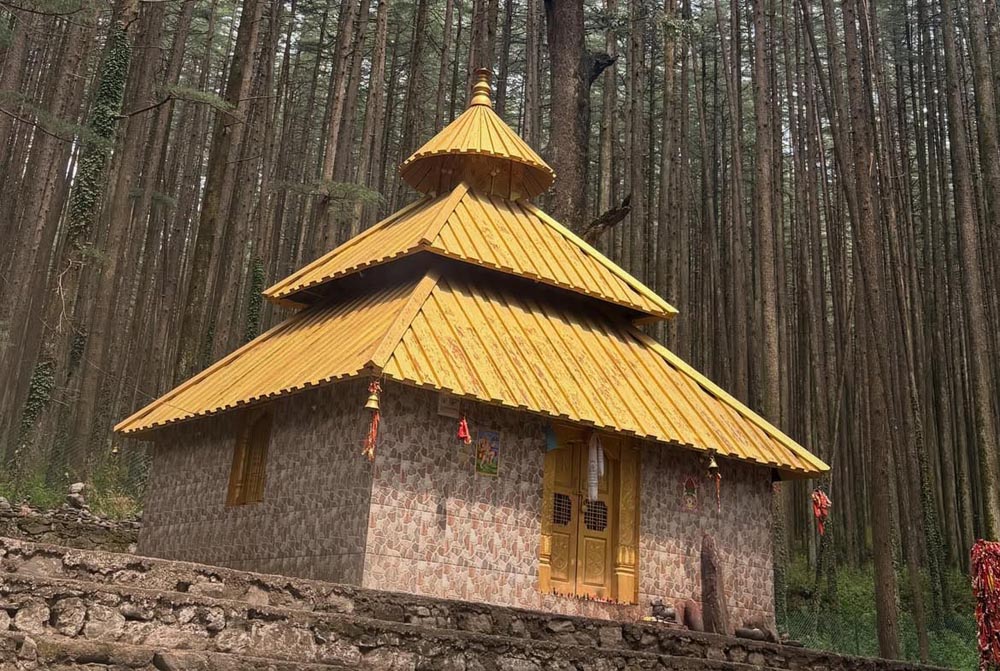
Tucked away in the peaceful hills of Tehri Garhwal, far from the crowded pilgrimage routes and busy tourist centers, Koneshwar Mahadev Temple at Devalsari is one of Uttarakhand’s fascinating lesser-known spiritual destinations. Surrounded by towering deodar trees, mountain trails, village landscapes and the quiet atmosphere of the Garhwal Himalayas, the temple offers an experience that combines devotion, folklore, nature and local culture.
Known locally as Devalsari Temple or Devalsari Mahadev Temple, the shrine is dedicated to Lord Shiva and is closely associated with the traditions and beliefs of the Jaunpur region. The temple is particularly interesting because its history is intertwined with local legends about a mysterious sadhu, the transformation of agricultural land into a deodar forest and the appearance of a sacred Shivling.
For travelers who have already explored the more famous destinations around Mussoorie and are looking for somewhere quieter, Devalsari can be a rewarding excursion. The journey itself becomes part of the experience as roads gradually leave behind the urban landscape and enter a world of forests, mountain villages and fresh Himalayan air.
Where Is Koneshwar Mahadev Temple Located?
Koneshwar Mahadev Temple is located at Devalsari in the Tehri Garhwal district of Uttarakhand, in the Jaunpur region. Devalsari lies in the broader Aglar Valley landscape and is situated close to the Mussoorie–Thatyur route. It is surrounded by forest and is particularly known for its deodar trees and biodiversity.
The temple is represented on local mapping services as Devalsari Temple/Koneshwar Temple, with the surrounding area falling around Moldhar and Devalsari. Devalsari Temple
The location is important to the character of the shrine. Unlike temples located in densely populated towns, Koneshwar Mahadev sits in a relatively secluded natural environment. The forest creates a feeling of separation from everyday life, making the visit feel more like a pilgrimage into nature than simply a stop on a sightseeing itinerary.
Devalsari is also known for its biodiversity. The region attracts birdwatchers and butterfly enthusiasts, and several accounts describe the area as particularly rich in butterflies and Himalayan birdlife.
The Ancient History of Devalsari Temple
The exact historical chronology of Koneshwar Mahadev Temple is difficult to establish with complete certainty because much of its history survives through oral traditions and local accounts. Different sources describe the temple as several centuries old, with some traditions placing its construction around the 16th century and others referring to the 1600s.
This difference in dates is worth remembering when discussing the temple. Rather than treating one particular date as conclusively established, it is more accurate to describe Koneshwar Mahadev as an old Shiva shrine whose history has been preserved through local tradition and generations of storytelling.
The temple is especially significant because it is connected to the religious culture of Jaunpur and Tehri Garhwal. While many village shrines in the wider Jaunpur region are associated with local Nag Devta traditions, Devalsari is particularly known for its devotion to Lord Shiva.
Its setting among old deodar trees adds another dimension to its identity. The forest is not simply scenery surrounding the temple; according to local belief, the origin of the forest itself is connected with the divine story of Koneshwar Mahadev.
The Fascinating Legend Behind Koneshwar Mahadev
One of the most captivating aspects of Devalsari is the legend explaining how the temple and forest came into existence.
According to local tradition, the area that is now covered by deodar trees was once agricultural land where villagers cultivated jowari, or sorghum. A sadhu arrived in the area and requested a small piece of land where he could establish a hut and meditate. The villagers, concerned about their crops, refused his request.
The sadhu is said to have become angry and declared that the jowari would be transformed into deodar trees. The following day, according to the legend, the villagers discovered that the agricultural fields had indeed changed into a forest. A Shivling and other sacred objects were also believed to have appeared in the area.
The story continues through a series of divine experiences and dreams. According to the traditional account, Lord Shiva revealed himself to the villagers and indicated that the sacred place would become known as Devalsari and that a temple dedicated to Koneshwar Mahadev would eventually be established there.
Another part of the legend tells of a cow that would regularly release its milk over the Shivling. When the owner discovered what was happening, he became angry and struck the Shivling with an axe. The traditional story says that the axe rebounded and caused a fatal injury to the man. The incident was interpreted by the villagers as a sign of Shiva’s divine presence, strengthening their resolve to build a temple at the site.
Whether one understands these stories literally, symbolically or as part of the region’s oral heritage, they are an important part of Devalsari’s cultural identity. They explain why the forest and temple are regarded as sacred together.
Why the Deodar Forest Is So Important
The deodar forest is arguably one of the most memorable features of a visit to Koneshwar Mahadev. The tall trees create a natural canopy that filters sunlight and gives the landscape a distinctive Himalayan character.
Devalsari’s association with deodar trees is also deeply embedded in local mythology. The traditional story says that Shiva’s presence is connected with the continued protection of the forest. This makes environmental preservation more than a modern tourism concern; it is closely connected with the spiritual identity of the place.
Walking beneath the trees can be remarkably peaceful. The sound of wind passing through branches, birds calling from the canopy and the occasional sound of a mountain stream create an atmosphere quite different from that of crowded temple towns.
For photographers, nature lovers and people interested in forest landscapes, the surroundings can be almost as rewarding as the temple itself.
Architecture and Character of the Temple
Koneshwar Mahadev is not an enormous temple complex with monumental gateways or elaborate modern structures. Its attraction lies in its traditional Himalayan character and intimate setting.
Local accounts describe the temple’s construction as being closely connected with locally available timber, particularly deodar. One traditional account also mentions a locally growing plant or tree material whose wood was used for important components of the temple. Some of the wooden elements reportedly required restoration, with refurbishment carried out in 2014.
The relatively modest scale of the shrine is part of its charm. Instead of overwhelming visitors with architecture, the temple appears integrated into its forest surroundings.
The sacred center of the temple is Lord Shiva’s Shivling. Devotees come to offer prayers, flowers, water and other traditional offerings. The atmosphere is generally quiet, allowing visitors to experience the shrine in a contemplative way.
Religious Importance and Local Traditions
Koneshwar Mahadev occupies an important place in the spiritual traditions of the surrounding villages. Devotees particularly visit the temple during auspicious periods associated with Lord Shiva, including the month of Sawan and festivals such as Maha Shivratri.
Local traditions also connect the temple with a ceremonial doli, or palanquin, associated with the deity. Accounts of the region describe village-based religious traditions in which the deity’s doli participates in ceremonial journeys and festivals.
The temple therefore represents more than individual worship. It is connected with the social and cultural life of nearby communities. Religious festivals provide opportunities for villagers to come together, maintain traditions, prepare food and participate in rituals that have been passed from one generation to another.
A particularly notable local tradition is the Kaalratri festival, which is associated with Devalsari and Bangseel and is described in local accounts as attracting thousands of people.
Devalsari as a Nature Destination
A trip to Koneshwar Mahadev does not have to be limited to temple worship. Devalsari is an attractive destination for people interested in forests, wildlife, birds, butterflies and Himalayan village landscapes.
The region has gained attention among nature enthusiasts because of its butterfly diversity. Various species have been recorded in the wider Devalsari landscape, and birdwatching is another popular activity.
This makes Devalsari particularly appealing during seasons when flowers, insects and birds are active. Rather than rushing through the destination, visitors can spend time walking slowly along forest paths and observing the natural surroundings.
The area is also associated with the Nag Tibba trekking region, with Devalsari serving as one of the approaches or base areas for trekking toward Nag Tibba.
Consequently, the destination can appeal to several kinds of travelers at once: pilgrims, photographers, hikers, birdwatchers, nature lovers and travelers simply looking for a peaceful mountain escape.
How to Reach Koneshwar Mahadev Temple
For most visitors, the journey begins from Dehradun or Mussoorie. From Mussoorie, the road leads toward the Suwakholi and Thatyur side before approaching the Devalsari area. Travel information sources put Devalsari at roughly 50–55 km from Mussoorie, although the actual distance and travel time can vary depending on the route and precise starting point.
From Dehradun, the journey is considerably longer and normally involves traveling through the Mussoorie side of the hills. One recent travel guide estimates roughly 70–85 km by road depending on the route.
The final approach is more rural than the roads around Mussoorie. Travelers should therefore expect winding mountain roads, changing weather and occasional rough stretches.
Once near the temple area, visitors may need to walk along a forest trail. One travel source describes the final walk as approximately 1 km and relatively easy, although actual conditions can vary depending on weather and trail maintenance.
Because mountain travel takes longer than an equivalent distance on plains, it is better to focus on journey time rather than simply calculating kilometers.
Best Time to Visit
The ideal time depends on what you want to experience.
March to June is generally comfortable for exploring the forests and surrounding mountain areas. The weather is relatively pleasant, making it suitable for walking, photography and nature observation.
The monsoon season brings lush greenery but also requires greater caution. Heavy rainfall can make mountain roads slippery and forest trails muddy. Landslides and temporary road disruptions are also possibilities in the Himalayan region, so weather conditions should be checked before departure.
September to November is another excellent period. After the monsoon, the landscape is fresh and green, while clearer weather can provide beautiful mountain views.
Winter can be cold, particularly in forested and elevated areas. Visitors traveling during colder months should carry warm clothing and avoid assuming that daytime temperatures will remain comfortable simply because the plains are mild.
Where to Stay Around Devalsari
Devalsari is not a conventional commercial tourist town, so accommodation options are relatively limited compared with Mussoorie.
Visitors can consider staying in local homestays or guesthouses around Devalsari, while Mussoorie and Thatyur offer a wider range of accommodation. There is also a Devalsari Forest Rest House listed in the area, although travelers should confirm availability and booking requirements before planning around it. Devalsari Forest Rest House
A local homestay can be a particularly enjoyable choice because it allows visitors to experience village life, local food and the quiet atmosphere of the region. A listed option in the Devalsari area is Devalsari Retreat.
However, travelers should not expect the same variety of restaurants, cafés, shops and commercial services available in Mussoorie. Carrying essential medicines, drinking water, snacks, cash and other necessities is advisable.
Food and Local Experience
One of the pleasures of visiting remote Himalayan destinations is experiencing simple local food. Around Devalsari, travelers may encounter traditional Garhwali dishes depending on where they stay.
Food traditions of the broader Garhwal region include dishes prepared with local grains, lentils and seasonal vegetables. Local meals tend to be simple, nutritious and suited to the mountain environment.
If staying with a local family or homestay, visitors can ask about regional dishes rather than expecting a large restaurant menu. This can turn a temple excursion into a more complete cultural experience.
Things to Do Around Koneshwar Mahadev
The temple should naturally be the main focus of a spiritual visit, but Devalsari’s surroundings provide plenty to explore. Walking through the deodar forest is one of the simplest and most rewarding activities.
Birdwatching is another possibility, particularly for visitors who are patient enough to spend time quietly observing the canopy. Butterfly enthusiasts can also find the region interesting because of its documented diversity.
Trekkers can use the wider Devalsari area as an access point for Nag Tibba, one of the better-known trekking destinations near the Mussoorie region.
Photography is naturally suited to the destination. The combination of traditional temple architecture, deodar forests, mountain paths, village houses, changing clouds and Himalayan light creates numerous opportunities for landscape and cultural photography.
Most importantly, visitors should leave enough time simply to sit quietly. Devalsari is not a destination that needs to be conquered through a long checklist of attractions. Its greatest appeal is its atmosphere.
Responsible Tourism at Devalsari
Because Koneshwar Mahadev is located in a relatively natural and sensitive environment, responsible tourism is especially important.
Visitors should avoid littering, damaging plants, making excessive noise or disturbing birds and wildlife. Plastic waste should be carried back or disposed of responsibly. The forest should be treated as part of the sacred landscape rather than simply as a picnic area.
Temple customs should also be respected. Photography may not be appropriate in every part of the shrine, particularly during rituals. Visitors should follow instructions from priests and local residents rather than assuming that everything is open for photography.
Supporting local homestays, guides and small businesses can also help ensure that tourism benefits the surrounding communities.
Practical Tips for Visiting
A visit to Koneshwar Mahadev is easiest when planned as a full-day excursion from Mussoorie or as part of a longer Devalsari and Nag Tibba trip.
Start early, especially if traveling from Dehradun. Mountain roads can be slow, and spending some time walking around the forest is worthwhile. Comfortable shoes are strongly recommended because even a short forest walk can become slippery after rain.
Carry drinking water, snacks, a basic first-aid kit, medicines you personally require, cash and a power bank. Mobile connectivity can be inconsistent in remote mountain areas.
Weather can change quickly, so a light rain jacket is useful even when the morning begins with clear skies. During winter, warm layers are essential.
Most importantly, do not rush. The combination of the road journey, village landscape, forest walk and temple visit is the real Devalsari experience.
Why Koneshwar Mahadev Temple Is Worth Visiting
Koneshwar Mahadev Temple does not compete with Uttarakhand’s biggest pilgrimage centers in terms of scale. That is precisely what makes it special.
Here, spirituality is closely connected with the natural landscape. The deodar forest, local legends, ancient traditions and quiet mountain setting all contribute to the character of the shrine. The story of the sadhu and the transformation of the fields into a forest gives the destination a distinctive identity, while the continuing religious traditions keep it connected to the living culture of the surrounding villages.
For travelers coming from Mussoorie, Dehradun or other parts of Uttarakhand, Devalsari provides an opportunity to see a different side of the Himalayas—one that is less commercial, more intimate and strongly rooted in local traditions.
A journey to Koneshwar Mahadev is therefore not simply a temple visit. It is a slow passage into the forests of Garhwal, where mythology, faith, village culture and Himalayan biodiversity exist side by side.
Final Thoughts
Koneshwar Mahadev Temple, Devalsari, is one of those Uttarakhand destinations that becomes memorable precisely because it does not feel like a conventional tourist attraction. Hidden amid the deodar forests of Tehri Garhwal, the temple offers a peaceful spiritual atmosphere and a fascinating connection to local legends.
The ancient Shiva shrine, the stories surrounding its origin, the traditional festivals, the forest trails, butterflies, birds and nearby trekking routes together make Devalsari an appealing destination for both pilgrims and nature lovers.
If you are searching for a quieter experience beyond the crowded attractions of Mussoorie, Devalsari deserves a place on your Uttarakhand itinerary. Come for the blessings of Koneshwar Mahadev, but allow yourself time to experience the forest, the villages and the silence around it. That combination is what makes this hidden corner of Garhwal truly special.

