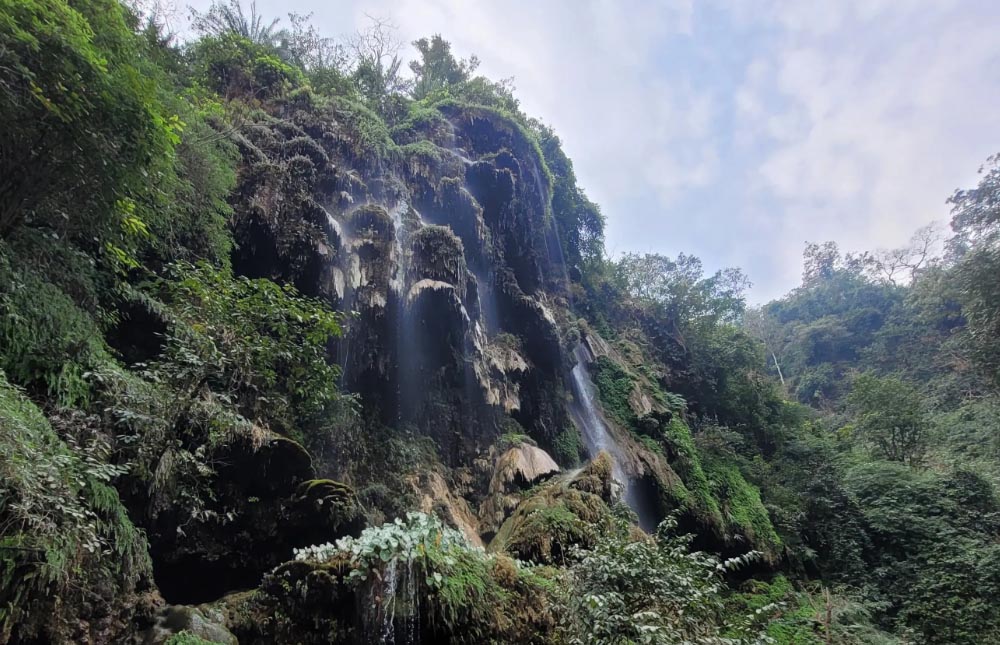
Tucked away in the forested hills near Rishikesh, Patna Waterfall is one of Uttarakhand’s lesser-known natural attractions. Surrounded by the greenery of the lower Himalayan foothills and reached by a short forest trek, the waterfall offers a refreshing change from the busy streets, ashrams and riverside attractions of Rishikesh. Its combination of rocky landscapes, seasonal mountain water, forest trails and limestone formations makes the journey almost as interesting as the waterfall itself.
Patna Waterfall is situated near Patna village on the road toward Neelkanth Mahadev Temple. It is generally approached from the Rishikesh side via the Neelkanth Temple Road, and several travel sources place it roughly 6–7 kilometres from the Lakshman Jhula area and about 13 kilometres from Rishikesh railway station.
The waterfall is particularly attractive during and immediately after the monsoon, when rainwater gives the cascade greater volume and the surrounding forest becomes intensely green. Because the waterfall is seasonal, however, its appearance can change considerably throughout the year.
Where Is Patna Waterfall?
Patna Waterfall is located near Patna village in Uttarakhand, in the Rishikesh region. The waterfall lies along the route towards Neelkanth Mahadev Temple, an important pilgrimage destination surrounded by forested hills.
One commonly cited route takes visitors along Neelkanth Temple Road from the Rishikesh area. The waterfall is located beyond Garud Chatti, and the final section involves leaving the road and walking through the forest. Sources differ somewhat on the exact road and walking distances, with estimates ranging from approximately 1 to 1.5 kilometres for the final trail depending on the starting point used.
The location itself is part of the attraction. Rather than being a large roadside waterfall surrounded by extensive commercial development, Patna Waterfall has a more natural and forested character. The approach takes visitors away from the traffic and activity of central Rishikesh and into a quieter landscape.
Why Is Patna Waterfall Famous?
Patna Waterfall is best known for its natural forest setting, short trekking route and limestone formations. Unlike some of Uttarakhand’s dramatic high-altitude waterfalls, Patna is a relatively small cascade. Its appeal comes from the entire experience rather than simply the height or volume of the waterfall.
The water flows over rocky limestone formations, and small limestone caves or cavities can be found around the waterfall. These geological features give the area a distinctive appearance and are one of the reasons Patna Waterfall is often mentioned separately from other waterfalls around Rishikesh.
The surrounding vegetation also contributes significantly to the atmosphere. During the rainy season, moss-covered rocks, wet tree trunks and dense greenery create a dramatic contrast with the white movement of the falling water. The forest trail itself becomes an important part of the excursion.
The Patna Waterfall Trek
For many visitors, the trek is one of the most enjoyable parts of the trip. Depending on the exact trailhead, travel sources describe the walk to the waterfall as roughly 1 to 1.5 kilometres one way. Some guides describe the overall outing as an easy or moderate short hike, while others point out that sections can become steep and slippery.
The trail passes through forest terrain rather than a fully developed tourist walkway. You may encounter uneven rocks, exposed tree roots, muddy sections and slippery surfaces, particularly during the monsoon. Good footwear with a strong grip is therefore considerably more useful than fashionable shoes.
The walk is not generally comparable with a demanding Himalayan trek. It is a relatively short excursion that can be incorporated into a half-day Rishikesh itinerary. Nevertheless, visitors should not underestimate the terrain simply because the distance is short. Wet rocks around waterfalls can be hazardous, and conditions can change quickly after heavy rain.
The forest environment also means that visitors should remain attentive to their surroundings. Rather than treating the route as an urban sightseeing path, it is better to approach it as a nature trail.
Patna Waterfall During the Monsoon
The monsoon is arguably the most visually dramatic period at Patna Waterfall. Rainfall increases the amount of water flowing through the seasonal stream, while the surrounding vegetation becomes lush and vibrant.
July, August and September are generally associated with stronger monsoon conditions in Uttarakhand. During this period, the waterfall can look considerably more impressive than during the dry months.
However, monsoon travel requires additional caution. Heavy rainfall can make the trail muddy and slippery, while sudden increases in water flow can occur after rain higher in the catchment. Visitors should avoid standing directly in fast-moving water or attempting to cross swollen streams.
The safest approach is to enjoy the waterfall from stable ground and pay attention to local conditions. A waterfall that looks calm from a distance can have strong currents or slippery rocks close to the cascade.
Best Time to Visit Patna Waterfall
The best time depends on whether your priority is water flow, greenery or easier trekking.
For the fullest waterfall and lushest surroundings, the monsoon and immediate post-monsoon period is generally the most attractive. July through September can provide the strongest visual experience, although trail conditions can be more difficult.
September and October can offer a useful compromise because the landscape may remain green while conditions gradually become more manageable. Some travel sources also recommend the broader September-to-November period for visitors who want a combination of pleasant weather and reasonable water flow. During the dry summer period, the waterfall may become substantially weaker and can sometimes be close to dry.
Winter can provide comfortable trekking weather, but visitors should not expect the same waterfall volume that can be seen during the rainy season.
How to Reach Patna Waterfall from Rishikesh
Rishikesh is the principal base for visiting Patna Waterfall. From the city, travellers generally take the road towards Neelkanth Mahadev Temple. The route follows the forested landscape beyond the more developed sections of Rishikesh.
From the Lakshman Jhula area, published sources give a distance of approximately 6.5 kilometres to the waterfall area, although exact distances vary depending on the starting point and route. From Rishikesh railway station, the distance is commonly given as approximately 13 kilometres.
Visitors can use a taxi, hired two-wheeler or other local transport to reach the trailhead. Some travel guides also mention walking along the Neelkanth Temple Road as an option, although this adds considerable distance to the outing. The final approach is on foot. Depending on where you begin the trail, expect roughly 1–1.5 kilometres of walking through forest terrain.
Because trail descriptions and starting points vary between sources, visitors should confirm the current trailhead locally rather than relying exclusively on an old map pin or online description.
Patna Village and Its Connection With the Waterfall
The waterfall takes its name from Patna village, the settlement associated with the area. The village provides an interesting contrast to the tourism-oriented parts of Rishikesh.
Travelling toward the waterfall gives visitors an opportunity to experience a quieter side of the region. Instead of large hotels and busy commercial streets, the landscape becomes increasingly rural and forested. Small local establishments may provide basic refreshments along or near the route, but visitors should not expect the extensive facilities available in central Rishikesh.
The village is therefore more than simply a geographical reference. It forms part of the cultural and landscape setting in which the waterfall exists.
Limestone Caves and Geological Features
One of Patna Waterfall’s distinctive features is the presence of limestone caves and cavities near the waterfall. These formations contribute to the area’s unusual visual character.
Water gradually shapes limestone through natural erosion and dissolution. Over long periods, this process can produce hollows, ledges and small cave-like formations. Around Patna Waterfall, these rocky structures create interesting compositions for photographers and give the site a more enclosed appearance than a simple open cascade.
Visitors should nevertheless avoid climbing unstable rock faces or entering narrow formations without knowing whether they are safe. Wet limestone can be extremely slippery.
Photography at Patna Waterfall
Patna Waterfall offers numerous opportunities for nature photography. The waterfall itself is an obvious subject, but the forest trail, rocks, moss, tree roots and limestone formations provide equally interesting compositions.
During the monsoon, photographers can capture the contrast between bright green vegetation and flowing white water. Overcast conditions can also produce softer natural light, making it easier to photograph the waterfall without harsh shadows.
A wide-angle lens can be useful for showing the waterfall together with the surrounding rock formations. For close-up photography, water droplets, moss and wet textures can provide attractive details.
Visitors should be careful not to sacrifice safety for photographs. Moving closer to the edge of wet rocks or standing beneath unstable sections of the waterfall is not worth the risk.
Things to Do at Patna Waterfall
The main activity is, naturally, enjoying the waterfall and surrounding forest. The short hike makes the destination suitable for people who want a taste of Himalayan nature without committing to a full-day mountain trek.
Nature walks are another attraction. The forest environment provides an opportunity to observe vegetation, insects and birds, although wildlife should always be observed from a respectful distance.
Photography and quiet relaxation are also popular reasons for visiting. Rather than treating Patna Waterfall as a place that requires a long list of activities, many travellers visit simply to spend some peaceful time in nature.
The excursion can also be incorporated into a broader journey along the Neelkanth road, potentially combining sightseeing with a visit to the Neelkanth Mahadev Temple, subject to the day’s route and local conditions.
Is Patna Waterfall Suitable for Families?
Patna Waterfall can be visited by families, but the suitability depends on the fitness and mobility of individual family members. Some trekking sources describe the hike as suitable for beginners, while other descriptions characterize parts of the route as moderately steep.
Families travelling with young children should pay particular attention to slippery rocks, uneven paths and stream crossings. Elderly travellers may also find the uneven forest trail more challenging than the relatively short distance suggests.
For families visiting during the monsoon, extra caution is essential. The combination of wet rocks, mud and stronger water flow can make the trail significantly more difficult.
Facilities and What to Carry
Patna Waterfall is comparatively natural and does not have the extensive infrastructure associated with major tourist attractions. Visitors should therefore prepare before beginning the walk.
Carry sufficient drinking water, particularly during warmer months. Comfortable trekking shoes with good grip are strongly recommended. A small waterproof bag can protect phones, cameras and other electronic equipment during the rainy season.
If you intend to spend several hours in the area, carry basic snacks rather than depending entirely on facilities near the trail. It is equally important to carry your waste back with you.
Visitors should also avoid using soap, shampoo or other products in natural water sources. Keeping the area clean helps preserve the waterfall for future visitors and protects the surrounding ecosystem.
Safety Tips for Visiting Patna Waterfall
Safety deserves particular attention because waterfalls can become dangerous even when they appear peaceful.
During heavy rain, avoid approaching the main flow closely. Water levels can rise rapidly, and rocks around waterfalls become extremely slippery. Never attempt to climb the waterfall itself.
Good footwear is one of the simplest precautions. Flip-flops and smooth-soled shoes can be particularly problematic on wet rocks.
It is also advisable to start the walk during daylight hours. Forest trails become significantly more difficult to navigate after dark, and visitors should allow enough time to return before evening.
Mobile connectivity may also vary depending on the precise location. It is sensible to inform someone about your plans if travelling alone and to avoid wandering away from established trails.
Patna Waterfall vs Other Rishikesh Waterfalls
Rishikesh has several waterfalls that can be reached through short excursions, including Neer Garh and Garud Chatti. The Government of India’s tourism portal also includes Patna Waterfall among the notable waterfalls around Rishikesh.
Neer Garh is generally more developed and is known for its multiple levels and pools, while Patna offers a more forest-oriented experience with limestone formations. Garud Chatti is another waterfall destination along the broader Neelkanth-side landscape.
This makes it possible to choose a waterfall based on the type of experience you want rather than assuming that every waterfall around Rishikesh offers the same landscape.
Nearby Attractions
One of the advantages of visiting Patna Waterfall is its location within the broader Rishikesh tourism circuit.
Neelkanth Mahadev Temple is one of the most significant nearby destinations. Located in a forested mountain setting, the temple is associated with the religious traditions of Lord Shiva and attracts pilgrims throughout the year.
Back in Rishikesh, visitors can explore attractions such as Lakshman Jhula, Ram Jhula, Triveni Ghat and the various ashrams along the Ganga. The city is also famous for yoga, meditation and adventure activities.
Nature enthusiasts can also explore other waterfalls and forest destinations in the surrounding hills. Combining Patna Waterfall with other nearby attractions can turn the short waterfall trek into a more complete Rishikesh day excursion.
Responsible Tourism at Patna Waterfall
The relatively natural character of Patna Waterfall makes responsible tourism particularly important. Visitors should avoid littering, damaging vegetation or carving names into rocks and trees.
Plastic bottles, food wrappers and other waste should never be left along the trail. Loud music can also disturb other visitors and wildlife, so keeping noise levels low is preferable.
The local environment is more valuable when visitors leave it essentially as they found it. Supporting small local businesses when available can also contribute to the local tourism economy without encouraging excessive commercialization.
Frequently Asked Questions
How far is Patna Waterfall from Rishikesh?
Published travel sources commonly place Patna Waterfall about 6.5 kilometres from the Lakshman Jhula area and around 13 kilometres from Rishikesh railway station. The exact distance varies according to the starting point and route.
How long is the Patna Waterfall trek?
The final forest walk is commonly described as approximately 1 to 1.5 kilometres one way, depending on the trailhead. A complete outing can generally be completed within a few hours.
Is Patna Waterfall open throughout the year?
The destination can be visited in different seasons, but the waterfall’s flow is seasonal and can become very weak during dry periods. Monsoon and post-monsoon months generally provide a more substantial cascade.
Is there an entry fee?
Online information about fees is inconsistent. Some sources describe the waterfall as having free access, while others mention possible local or maintenance charges. Visitors should therefore confirm the current situation locally rather than relying on a fixed online figure.
Can visitors swim at Patna Waterfall?
Patna is better approached as a waterfall and nature-trekking destination rather than a dedicated swimming site. Water conditions can change, and rocks around the cascade may be slippery. Entering fast-moving water or standing directly beneath a strong cascade should be avoided.
Final Thoughts
Patna Waterfall represents a quieter side of Uttarakhand tourism. Its appeal does not depend on enormous height or elaborate tourist infrastructure. Instead, it combines a short forest trek, seasonal waterfall, limestone formations and the peaceful landscape surrounding Patna village.
For travellers staying in Rishikesh, the waterfall can provide a welcome break from the busy riverside areas. The journey is short enough to fit into a half-day itinerary, while the forest walk gives the excursion a sense of adventure.
The experience changes with the seasons. Monsoon brings stronger water flow and brilliant greenery, while drier months offer different trekking conditions but potentially much less water. Whatever season you choose, appropriate footwear, daylight travel, weather awareness and respect for the natural environment are essential.
Patna Waterfall is therefore best understood not simply as a waterfall to photograph, but as a small Himalayan nature experience near Rishikesh—one where the trail, forest, rocks, village landscape and falling water together create the attraction.

