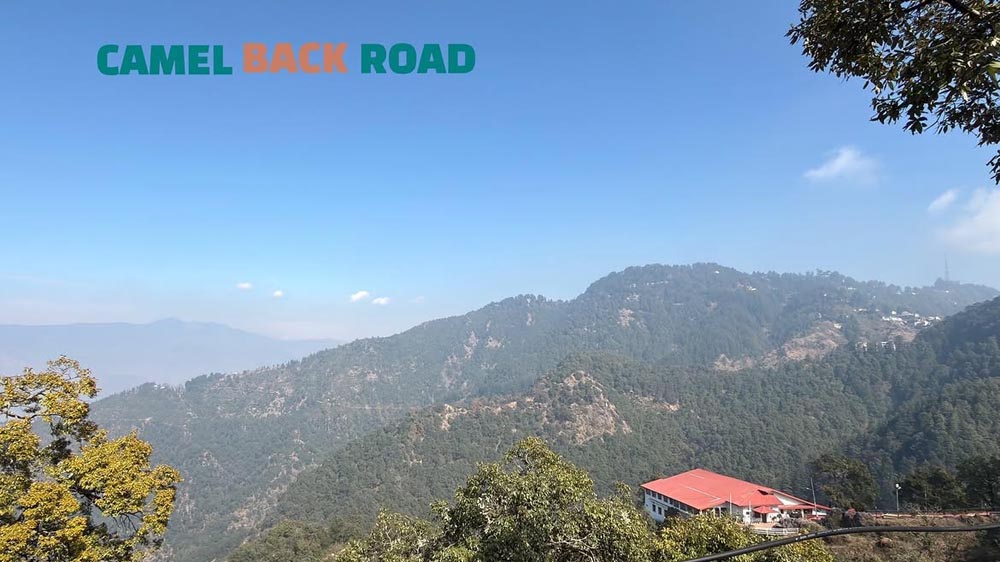
Nestled in the picturesque hill station of Mussoorie in Uttarakhand, Camel’s Back Road is one of those places where the journey itself becomes the attraction. Away from the crowded shops and lively atmosphere of Mall Road, this scenic stretch offers a slower, more peaceful side of the Queen of the Hills. The road is famous for its unusual camel-shaped rock formation, sweeping mountain scenery, colonial-era history, fresh Himalayan air and beautiful sunrise and sunset views.
Located in the heart of Mussoorie, Camel’s Back Road stretches for roughly 3 kilometres between the Library area and Kulri Bazaar, although descriptions of its exact endpoints and total length vary slightly between travel sources.
For many visitors, the attraction is not about reaching a particular destination but about enjoying an unhurried walk along the hillside while looking over the Doon Valley and surrounding Himalayan landscape.
The Story Behind Camel’s Back Road
Camel’s Back Road has been part of Mussoorie’s landscape for generations. The road was developed during the British period and is generally dated to around 1845. It was designed as a scenic walking and riding route, allowing residents and visitors to enjoy the mountain environment away from the busier commercial parts of the town.
The name comes from a naturally formed rocky outcrop that resembles the hump and back of a resting camel. From the appropriate viewing angle, the resemblance becomes surprisingly clear, and this distinctive geological feature eventually gave the entire road its memorable name.
Today, the road retains much of the character that made it attractive as a promenade. Instead of being primarily about shopping, restaurants or entertainment, Camel’s Back Road is about walking, observing nature and enjoying the views. It provides an opportunity to experience Mussoorie at a gentler pace.
The road also reflects the layered history of the hill station. Along the route is an old Christian cemetery dating from the colonial period. Sources differ slightly on the cemetery’s exact date, with references placing it in the late 1820s or 1829, but it is widely regarded as one of Mussoorie’s historic burial grounds.
What Makes Camel’s Back Road Special?
The biggest attraction of Camel’s Back Road is its combination of natural scenery and accessibility. Visitors do not need to undertake a difficult mountain trek to experience impressive Himalayan surroundings. Instead, they can enjoy a relatively easy walk while remaining close to central Mussoorie.
The landscape changes subtly as you move along the road. At some points, trees and rocky slopes dominate the scene, while at others the hillside opens to reveal the valley below. On clear days, distant mountain peaks can become visible, creating an especially memorable experience for photographers and nature lovers. The district administration also notes that Mussoorie’s elevated viewpoints can offer views of major Himalayan peaks on clear days.
The peaceful character of the road is another major attraction. Mall Road is undoubtedly one of Mussoorie’s essential experiences, but its crowds, shops, traffic and constant activity can sometimes feel overwhelming. Camel’s Back Road provides an appealing contrast. You can walk without the feeling that you have to shop, eat or constantly move from one attraction to another.
For couples, families, solo travellers and photography enthusiasts, this makes the road particularly versatile.
The Famous Camel-Shaped Rock
The natural rock formation responsible for the road’s name is its most recognizable feature. Weathering and erosion have created a distinctive rocky profile that resembles the back of a camel.
The formation is not necessarily dramatic from every location, so finding a suitable viewing angle is part of the experience. Rather than simply stopping for a photograph and leaving, visitors can take time to observe how the changing sunlight affects the rock.
During the late afternoon, the low-angle sunlight can give the rocky landscape a warmer appearance. This is also one reason Camel’s Back Road is frequently associated with sunset photography.
The rock formation illustrates an important characteristic of Himalayan landscapes: some of the most interesting attractions are not constructed monuments but natural features that have acquired meaning through local history and tourism.
A Walk Through Nature
Walking is undoubtedly the best way to experience Camel’s Back Road. The route is approximately 3 kilometres according to several current travel references, and a comfortable walk generally takes around an hour, although stopping for photographs, views and refreshments can make the outing considerably longer.
The surrounding vegetation adds to the charm. Depending on the section and season, visitors can encounter mountain trees, greenery, exposed rocks and changing views across the slopes. The atmosphere can be especially pleasant during the cooler months when the air feels crisp and the visibility is often better.
Early morning walks have a particularly different character. The road tends to feel calmer, the air is cool, and mist may sometimes linger around the hills. Bird calls and the sound of wind through the trees can replace much of the urban noise found elsewhere in Mussoorie.
For people accustomed to city life, this simple experience can be surprisingly refreshing.
Views of the Doon Valley and Himalayas
One of Camel’s Back Road’s greatest attractions is the scenery. The road provides elevated views toward the Doon Valley, while clear weather can reveal distant Himalayan ranges.
The visibility, however, depends heavily on weather conditions. Mussoorie is a mountain destination where clouds, mist and rain can appear quickly. A visitor arriving on a cloudy afternoon may see very little, while another traveller visiting on a clear morning could enjoy spectacular views.
This unpredictability is part of the mountain experience. Instead of expecting a guaranteed panoramic view, travellers should consider the road an opportunity to enjoy whatever landscape the weather reveals.
Winter and post-monsoon periods can sometimes provide particularly clear conditions. Conversely, monsoon weather can bring mist, slippery surfaces and reduced visibility.
Sunrise and Sunset at Camel’s Back Road
Camel’s Back Road is particularly popular during the early morning and evening because of its scenic orientation and open views.
Sunrise can be rewarding for travellers who prefer quiet surroundings. The morning light gradually illuminates the mountains and valley, while the cooler temperatures make walking comfortable. Early morning is also an excellent time for people who want to photograph Mussoorie without large crowds.
Sunset is arguably the more popular experience. As the sun drops behind the mountains, the sky can develop shades of orange, pink, gold and purple. The rocky formations and hills become silhouettes against the changing sky.
The road is therefore a good choice for travellers who want something more peaceful than a conventional viewpoint. Instead of standing at a crowded platform for a few minutes, you can combine sunset watching with a leisurely mountain walk.
The Historic Cemetery
One of the more unusual features along Camel’s Back Road is the historic British-era Christian cemetery. Its presence adds a layer of history to what otherwise appears to be a scenic walking route.
The cemetery reflects Mussoorie’s development as a colonial hill station and the lives of people who lived in the region during the British period. Some sources identify notable individuals associated with the cemetery, making it of interest to visitors fascinated by colonial history and old Himalayan settlements.
Visitors should remember that a cemetery is a place of remembrance rather than simply a tourist attraction. Photography should be respectful, and travellers should avoid entering restricted areas or disturbing graves.
The contrast between the peaceful cemetery, old stonework and surrounding Himalayan landscape gives this section of the road a distinctive atmosphere.
Best Time to Visit Camel’s Back Road
Camel’s Back Road can be visited during much of the year, but the experience varies significantly according to season.
March to June brings pleasant weather and the beginning of the main tourist season. The hills are green, temperatures are generally comfortable, and the road becomes an attractive escape from warmer plains.
July to September is the monsoon period. Mussoorie can receive substantial rainfall during these months. The landscape becomes lush and dramatic, but rain can make walking surfaces slippery and clouds can obscure mountain views. Travellers should check local weather and road conditions before setting out.
October and November are among the most attractive months for mountain views. Following the monsoon, the atmosphere can become clearer, making distant landscapes more visible. Temperatures are also comfortable for walking.
December to February brings colder weather and a distinctly wintery atmosphere. Warm clothing is essential, particularly in the morning and evening. On exceptionally clear days, the Himalayan scenery can be impressive.
If the primary purpose of the visit is photography and mountain views, choosing a day with good visibility is more important than following a rigid seasonal schedule.
How to Reach Camel’s Back Road
Camel’s Back Road is centrally located in Mussoorie and can be reached relatively easily from major parts of town. The route is close to Mall Road, with access from areas around Library Chowk and Kulri Bazaar.
Travellers arriving by road can first reach Mussoorie and then use local taxis, shared transport or walking routes to approach the road.
The nearest major railway connection is Dehradun, while Jolly Grant Airport near Dehradun serves air travellers. From Dehradun, Mussoorie is connected by road.
For visitors staying in central Mussoorie, walking may be the simplest option. Since the attraction is itself a walking route, arriving on foot can make the experience feel more natural.
Things to Do Around Camel’s Back Road
A visit to Camel’s Back Road can easily be combined with other Mussoorie attractions. Mall Road is an obvious companion because it provides restaurants, cafés, shops and a more energetic atmosphere.
Gun Hill is another nearby attraction and is known for its elevated views of Mussoorie and the surrounding mountains. Incredible India lists Camel’s Back Road among the attractions that can be visited alongside Gun Hill and other Mussoorie destinations.
Visitors interested in quieter colonial surroundings can also explore Landour, while Lal Tibba is another popular viewpoint for Himalayan scenery. Families may prefer to combine the walk with a visit to Company Garden or another nearby attraction.
The best approach is not to overload the itinerary. Camel’s Back Road is most enjoyable when enough time is allowed for walking rather than treating it as a five-minute photographic stop.
Photography at Camel’s Back Road
Photography is one of the easiest ways to appreciate the road. The combination of mountains, valley, trees, old structures, rocks and changing light creates many possibilities.
Wide-angle photographs can capture the scale of the landscape, while telephoto lenses are useful for distant mountain views. The camel-shaped rock is an obvious subject, but photographers should also look for smaller details such as old stone walls, trees emerging through mist, mountain silhouettes and changing clouds.
Sunset photographs can be particularly attractive, but early morning photography has its own advantages. The soft light and lower number of visitors can make the road feel almost completely different from its busier afternoon character.
Travellers using smartphones should avoid relying entirely on zoom for distant mountains because atmospheric haze can reduce image quality. Instead, wider landscape compositions often produce more natural results.
Horse Riding and Other Experiences
Horse riding has historically been associated with Camel’s Back Road, and some travel sources continue to mention horse or pony rides as an optional activity.
However, availability and pricing can change, so visitors should confirm current arrangements locally rather than relying on old published rates.
For most travellers, walking remains the most rewarding option because it allows them to stop whenever they want, examine the landscape and enjoy the changing atmosphere.
The road can also be suitable for a relaxed family outing, provided children remain supervised around edges and uneven sections. Older travellers should walk at their own pace and take breaks when necessary.
Food and Refreshments
Camel’s Back Road itself is not primarily a food destination, which is part of its appeal. However, because it lies close to central Mussoorie, visitors have easy access to cafés, restaurants and small food outlets before or after their walk.
A common strategy is to complete the walk and then head toward Mall Road for tea, coffee, snacks or a meal. This allows travellers to combine the peaceful atmosphere of Camel’s Back Road with Mussoorie’s lively culinary scene.
Carrying a bottle of water is still advisable, particularly if visiting during warmer months.
Important Travel and Safety Considerations
Although Camel’s Back Road is not a demanding trekking route, visitors should still treat it as a mountain environment. Comfortable walking shoes are recommended, especially during wet weather.
Rain can make surfaces slippery, while mist can reduce visibility. Travellers should avoid approaching unstable edges or climbing rocks simply to obtain a photograph.
It is also sensible to finish the walk before it becomes too dark. Mountain roads and paths can become difficult to navigate after sunset, and visibility may deteriorate quickly.
Most importantly, visitors should check local conditions before travelling because mountain roads and tourist routes can be affected by rainfall, landslides or other disruptions.
This is especially relevant at present. A report published on September 8, 2026, says a section of Camel’s Back Road was closed to vehicular traffic after heavy rainfall caused a landslide and approximately a 10-metre stretch of the road to subside near Ambedkar Chowk. Travellers should therefore verify the latest local access conditions before visiting rather than assuming that older travel information is still accurate.
Why Camel’s Back Road Deserves a Place in a Mussoorie Itinerary
Mussoorie has no shortage of famous attractions, but Camel’s Back Road offers something different. It is not simply another viewpoint where visitors arrive, take photographs and leave. Its appeal develops gradually as you walk.
The road combines natural beauty, colonial history, mountain scenery and the simple pleasure of walking. Its camel-shaped rock provides the identity, the cemetery contributes historical character, the Doon Valley provides the panorama, and the changing Himalayan weather ensures that no two visits necessarily feel identical.
Perhaps its greatest strength is that it allows visitors to slow down. In a destination where tourists often move quickly between waterfalls, viewpoints, markets and cafés, Camel’s Back Road encourages a different rhythm. You can walk without a strict schedule, stop for photographs, watch clouds move across the mountains and simply enjoy the cool mountain air.
For couples, it offers a romantic sunset stroll. For families, it provides an accessible outdoor experience. For photographers, it offers changing light and landscapes. For history enthusiasts, the old cemetery adds an intriguing connection to Mussoorie’s past. And for travellers who simply want peace, it provides one of the easiest ways to escape the busiest parts of town without leaving the city.
Final Thoughts
Camel’s Back Road is a reminder that some of the finest travel experiences do not require expensive tickets, elaborate activities or strenuous adventures. Sometimes, a quiet road, a mountain view and an hour of walking are enough.
With its distinctive camel-shaped rock, historic surroundings, views toward the Doon Valley and Himalayan landscape, the road has earned its place among Mussoorie’s enduring attractions. Official district tourism information also highlights Camel’s Back as a scenic location offering attractive sunset views and a distinctive camel-like natural formation.
The ideal visit is simple: choose a day with favourable weather, wear comfortable shoes, carry water, begin your walk at a convenient end of the route and give yourself plenty of time to stop along the way. If the skies are clear, stay long enough to watch the mountains change colour as the sun begins to disappear.
Camel’s Back Road may not be the loudest or most adventurous attraction in Uttarakhand, but that is precisely why it remains special. It offers a quieter introduction to Mussoorie—one where the mountains, trees, rocks, history and sky take centre stage.
In a hill station famous for its crowds and viewpoints, Camel’s Back Road is ultimately an invitation to slow down and walk into the landscape.

