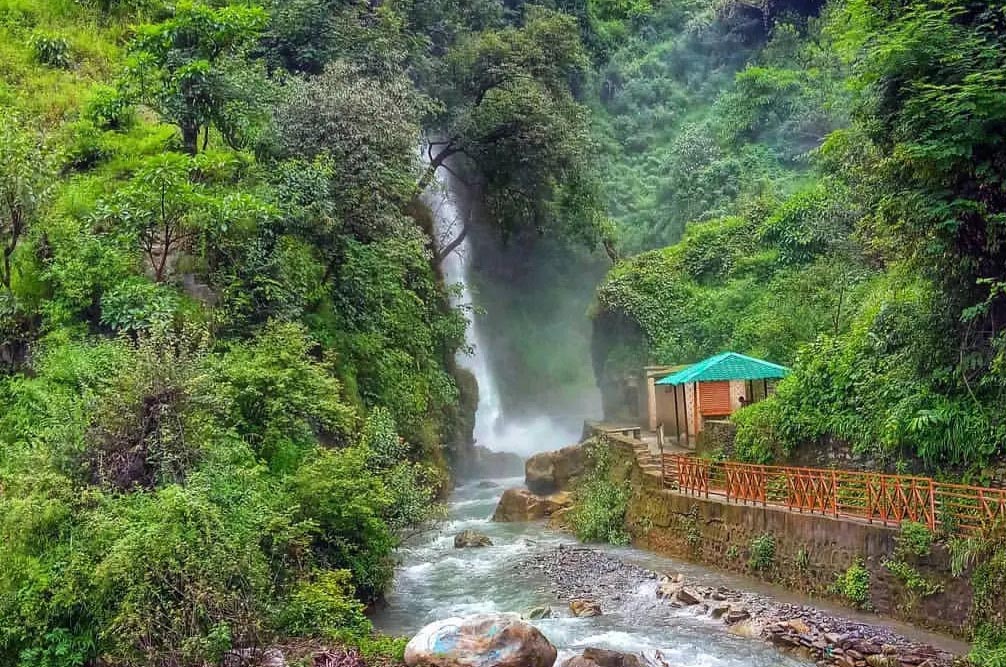
Nestled deep within the forested hills of western Uttarakhand, Tiger Falls near Chakrata is the kind of destination that rewards travelers who are willing to go beyond the usual tourist circuit. Surrounded by dense oak, deodar and rhododendron forests, the waterfall plunges dramatically down a rocky mountainside before collecting in a natural pool below. Its remote setting, refreshing mountain air and relatively peaceful surroundings make it one of the most appealing natural attractions around Chakrata.
Unlike many famous waterfalls in Uttarakhand that can be reached almost directly by road, Tiger Falls involves a walk through the forest. This short journey is an important part of the experience because the sound of rushing water gradually becomes louder as visitors move deeper into the greenery. The waterfall then appears through the trees, creating a memorable contrast between the quiet forest and the powerful cascade.
Official Uttarakhand Tourism information describes Tiger Falls as being around 20 km from Chakrata and notes a trek of roughly 5 km through rhododendron and oak forests. The same source gives the waterfall’s drop as approximately 312 feet and mentions that water collects in a small pool at the bottom.
Where Is Tiger Falls?
Tiger Fall is located in the Chakrata region of Dehradun district in Uttarakhand, within the forested landscape of the Jaunsar-Bawar area. Chakrata itself is a quiet hill station situated at roughly 2,000 metres above sea level and is known for its forests, mountain scenery and relatively relaxed atmosphere.
The exact distances quoted by different travel sources vary considerably because they may measure from different points in Chakrata or refer to different roadheads. Uttarakhand Tourism lists Tiger Falls at approximately 20 km from Chakrata, while other tourism resources describe shorter approaches from particular parts of the town.
For this reason, travelers should not plan their journey solely around a single distance figure. The important point is that Tiger Falls is reached by traveling from Chakrata toward the waterfall area and then continuing on foot along a forest trail.
Chakrata’s relatively secluded character is one of the reasons Tiger Falls has retained much of its natural appeal. The town itself was historically associated with the British period and is surrounded by extensive forests and mountain landscapes. Uttarakhand Tourism describes Chakrata as a destination for trekking, mountain activities and nature experiences.
Why Is Tiger Falls Famous?
The biggest attraction is, naturally, the waterfall itself. Tiger Falls is famous for its impressive vertical drop, with Uttarakhand Tourism putting it at approximately 312 feet. It is frequently described by travel sources as one of the highest waterfalls in the region.
What makes the experience especially attractive is the combination of height and surroundings. Tiger Falls does not stand in an urbanized or heavily commercialized setting. Instead, the cascade is enclosed by forest and rocky mountain terrain. The absence of a large city-like tourist infrastructure gives the place a distinctly adventurous character.
The waterfall is also known by local names including Keraao Pachad and Kailu Pachad.
For photographers, the waterfall provides several different perspectives. From a distance, it can be photographed against the surrounding forest and mountains, while from closer viewpoints the falling water becomes the dominant subject. On bright days, mist and sunlight can create beautiful atmospheric effects around the cascade.
The Journey to Tiger Falls
One of the most enjoyable aspects of visiting Tiger Falls is that the journey does not end when the vehicle stops. Depending on the route and road conditions, visitors have to walk downhill through forested terrain to reach the waterfall.
The official Uttarakhand Tourism description characterizes the trek as relatively short and easy, passing through rhododendron and oak trees. Other travel sources describe different trail distances because approaches and starting points vary.
The trail itself can be considered part of the attraction. The forest provides shade, birdsong and cool mountain air, while the sound of running water gradually becomes more noticeable. During the monsoon and immediately afterward, the surroundings can become particularly green and atmospheric.
Although the descent may feel easy, visitors should remember that the return journey is uphill. A trail that feels effortless while walking toward the waterfall can become considerably more tiring when climbing back toward the road.
Comfortable walking shoes are therefore more useful than fashionable footwear. The trail can also become muddy or slippery after rain, so travelers should exercise extra caution during wet weather.
What Does Tiger Falls Look Like?
Tiger Falls is essentially a dramatic mountain cascade surrounded by forest. Water drops from the rocky upper section and gathers in a natural pool below. The combination of the vertical waterfall, rocks, trees and flowing water gives the site a distinctly Himalayan appearance.
During periods of stronger rainfall, the waterfall becomes more forceful and visually impressive. The sound of the falling water can dominate the surroundings, creating an immersive natural experience.
During drier periods, the volume of water may be reduced, but the waterfall remains attractive because of its setting. The forest, rocky formations and clear mountain atmosphere continue to provide excellent opportunities for photography and relaxation.
This changing character means that Tiger Falls can offer a different experience depending on when you visit. Someone visiting after the monsoon may see a powerful cascade surrounded by intensely green vegetation, while a visitor during a drier season may experience clearer trails and a calmer waterfall.
Best Time to Visit Tiger Falls
The best time to visit Tiger Falls depends largely on what you want from the trip.
Uttarakhand Tourism recommends April to June and September to November as the best general periods for visiting Chakrata.
These months generally provide a good balance between pleasant weather and manageable travel conditions.
April, May and June are attractive for travelers who prefer relatively dry conditions and comfortable outdoor activities. The forests around Chakrata are particularly pleasant during this period, although temperatures can rise during the daytime.
The post-monsoon period, particularly September through November, is another excellent choice. The landscape remains green after the rains, while conditions can become more comfortable for walking. The waterfall can also retain a strong flow after the monsoon.
The monsoon season offers a completely different experience. Heavy rainfall can increase the volume of the waterfall dramatically and make the surrounding landscape lush and dramatic. However, rain also creates slippery trails, muddy roads and potentially difficult driving conditions. Visitors should therefore avoid taking unnecessary risks during periods of heavy rain.
Winter can be beautiful as well, especially for travelers who enjoy cold-weather mountain scenery. Chakrata experiences much colder conditions during winter, and occasional snowfall can add another dimension to the landscape. However, the water at the waterfall and the surrounding trail can be extremely cold.
Can You Bathe in Tiger Falls?
The natural pool below Tiger Falls is one of the reasons visitors are tempted to get into the water. Tourism sources mention bathing and swimming as activities associated with the waterfall.
However, visitors should approach this activity with caution. Natural waterfall pools are not controlled swimming pools, and their depth, currents and underwater rocks can change after rainfall. During the monsoon, fast-moving water and falling debris can make entering the pool particularly dangerous.
It is better to observe the conditions before entering the water and avoid swimming close to the actual impact zone of the waterfall. Children should remain under close supervision, and anyone who is not a confident swimmer should avoid entering deep water.
The safest approach is to enjoy the cool spray and scenery without assuming that every section of the pool is suitable for swimming.
Things to Do at Tiger Falls
The main activity is, of course, experiencing the waterfall itself. Sitting beside the water, listening to the cascade and enjoying the forest surroundings can be more rewarding than trying to fill the visit with too many activities.
Photography is another major attraction. The waterfall provides opportunities for landscape photography, nature photography and travel portraits. Early morning and late afternoon can produce softer natural light, while cloudy weather can create a dramatic atmosphere around the falls.
The trek itself is also an enjoyable outdoor activity. Even though it is not considered a major technical trek, the combination of forest paths, slopes and mountain scenery makes it a pleasant experience for people who enjoy short nature walks.
Picnicking is another popular activity, and Uttarakhand Tourism specifically identifies picnics and photography among the things visitors enjoy at Tiger Falls.
However, visitors should avoid leaving plastic, food packaging or other waste behind. The appeal of Tiger Falls comes largely from its natural environment, and responsible tourism is essential to preserving it.
How to Reach Tiger Falls from Delhi
For travelers coming from Delhi, the journey generally involves reaching Dehradun or Chakrata first and then continuing toward Tiger Falls.
Road travel is the most convenient option because Chakrata is a road-oriented mountain destination. A traveler can drive from Delhi toward Dehradun and then continue into the hills toward Chakrata. The final portion of the journey involves winding mountain roads, so travel times can vary substantially depending on traffic, weather and road conditions.
Travelers arriving by train can use Dehradun as a major rail gateway and continue toward Chakrata by road. Dehradun is also the practical gateway for many travelers arriving by air, with Jolly Grant Airport serving the Dehradun region. Tourism information for Tiger Falls identifies Dehradun railway station and Jolly Grant Airport among the principal access points for the area.
Once in Chakrata, visitors can arrange local transportation toward the waterfall route and complete the remaining journey on foot.
Because mountain roads can be affected by rain, landslides and maintenance, it is sensible to check local road conditions before starting the journey, particularly during the monsoon.
What to Carry for the Trip
A visit to Tiger Falls does not require highly specialized trekking equipment, but a little preparation makes the experience considerably more comfortable.
Comfortable shoes with a good grip are among the most important things to carry. A light backpack, drinking water, snacks, sunscreen, sunglasses and a rain jacket are also useful. During the rainy season, waterproof protection for phones and cameras can prevent unnecessary damage.
A basic first-aid kit can also be helpful, particularly for families or travelers planning to spend several hours outdoors.
It is advisable to carry sufficient cash as connectivity and digital payment facilities may not always be dependable in remote mountain areas. Mobile connectivity can also be inconsistent around forested sections.
Most importantly, visitors should avoid carrying unnecessary single-use plastic and should take all waste back with them.
Tiger Falls and the Natural Environment
The natural environment surrounding Tiger Falls is a major part of its identity. Chakrata is known for its extensive forests, including oak, deodar and rhododendron vegetation. Uttarakhand Tourism also highlights the region’s diverse wildlife and medicinal plants.
The wider Chakrata landscape provides habitat for a variety of birds and animals. Official tourism information mentions species such as wild fowl, spotted deer and panthers in the surrounding forests.
Visitors should therefore treat the forest as a living ecosystem rather than simply a backdrop for photographs. Loud music, feeding wildlife, damaging vegetation and littering can disturb the environment.
Quiet observation is often the best way to experience the region. Bird calls, wind moving through the trees and the distant sound of water are all part of the attraction.
Places to Visit Near Tiger Falls
Tiger Falls can easily be incorporated into a broader Chakrata itinerary. Travelers staying for two or three days can explore several attractions rather than making the waterfall a standalone excursion.
Deoban is one of the best-known nature destinations around Chakrata. Situated amid dense deodar forests, it is associated with trekking and panoramic Himalayan views. Uttarakhand Tourism places Deoban around 13 km from Chakrata and highlights it as a destination for birdwatching and mountain scenery.
Ram Tal Horticulture Garden is another interesting stop. Located around 12 km from Chakrata, it combines a natural pond, greenery and an apple garden and is also known for birdlife. Lakhamandal, located farther from Chakrata, is particularly interesting for travelers interested in mythology, history and temples. The ancient Shiva temple complex is associated with stories from the Mahabharata and offers a cultural dimension to a Chakrata trip. Budher Caves are another option for adventure-oriented travelers. The cave system is known for stalactite and stalagmite formations and provides a different type of experience from the waterfall and forest walks.
Chilmiri Neck, Kanasar and other forested areas around Chakrata can also be incorporated into a longer itinerary depending on available time and local travel conditions.
Where to Stay
Chakrata is the most convenient base for exploring Tiger Falls. Accommodation ranges from hotels and guesthouses to smaller homestay-style properties and camps in the wider region.
Staying in Chakrata rather than trying to visit Tiger Falls as a rushed day excursion has several advantages. Travelers can explore the waterfall at a relaxed pace and then dedicate another part of the day to viewpoints, forests or nearby attractions.
The choice of accommodation depends on the type of trip. Hotels are convenient for travelers who prefer conventional facilities, while homestays can offer a more local experience. Visitors looking for a quieter nature-focused trip may also find camps and forest-oriented stays around the broader Chakrata region.
During popular holiday periods, advance booking is advisable because accommodation options in an offbeat destination can be more limited than in major hill stations.
Is Tiger Falls Suitable for Families?
Tiger Falls can be a good family destination, especially for families accustomed to walking on uneven terrain. The journey is not a technical mountain trek, but the downhill and uphill sections require reasonable fitness.
Families with very young children should consider the trail conditions carefully. Carrying children for a significant portion of the route can be tiring, particularly on the return climb.
Older travelers should also assess their comfort with slopes before starting. There is no need to rush; taking regular breaks can make the walk considerably easier.
The waterfall itself can be enjoyed without participating in adventurous activities, making it suitable for families who simply want to experience nature.
Important Safety Tips
The most important rule at Tiger Falls is to respect the mountain environment. Wet rocks around waterfalls can be extremely slippery even when they appear safe.
Visitors should stay away from unstable edges and avoid climbing wet rocks simply for photographs. During heavy rainfall, the volume and force of water can change rapidly.
The forest trail should ideally be completed during daylight. It is not advisable to begin the return journey so late that darkness catches you on an unfamiliar mountain path.
Weather conditions should also be taken seriously. If heavy rain begins, visitors should reconsider continuing toward the waterfall or remaining near the water.
Travelers should also avoid littering and should not disturb local residents or wildlife. A responsible visitor leaves the area looking as close as possible to how it was found.
Tiger Falls vs. More Commercial Waterfalls
One of Tiger Falls’ biggest advantages is its atmosphere. Popular waterfalls around major hill stations can become crowded, particularly during weekends and holidays. Tiger Falls offers a more nature-oriented experience because visitors have to make an effort to reach it.
That does not mean it is completely unknown or deserted. It has become an established tourist attraction, and visitor numbers can increase during weekends and holiday seasons. Nevertheless, its forest setting and walking approach give it a more adventurous personality.
Travelers who prefer shopping malls, restaurants, amusement facilities and highly developed tourist infrastructure may find the area relatively quiet. But for those looking for forests, waterfalls and mountain scenery, this is precisely what makes Tiger Falls appealing.
Why Tiger Falls Deserves a Place on Your Uttarakhand Itinerary
Tiger Falls is more than simply a waterfall to photograph. It is an experience that combines a mountain journey, a forest walk and the spectacle of a powerful cascade.
Its setting in the Chakrata hills gives it a character distinctly different from the heavily visited attractions of Mussoorie and other major Uttarakhand destinations. The walk through the forest allows travelers to slow down and appreciate the landscape instead of simply arriving, taking a photograph and leaving.
The waterfall’s impressive height, natural pool, surrounding forests and relatively peaceful environment make it particularly attractive to photographers, couples, families, nature lovers and travelers searching for an offbeat Himalayan experience.
Most importantly, Tiger Falls demonstrates why some of Uttarakhand’s most memorable destinations are not necessarily the ones with the biggest tourist infrastructure. Sometimes the most rewarding experiences come from following a forest trail, listening to the sound of water grow louder and finally seeing a magnificent waterfall emerge between the trees.
If you are planning a trip to Chakrata, Tiger Falls is therefore well worth including in your itinerary. Visit with comfortable shoes, adequate water, a little patience and respect for the natural surroundings, and the journey can become one of the highlights of your Uttarakhand adventure.
A Note on Distances and Waterfall Height
Travel information about Tiger Falls contains differing figures for distance, trail length and even waterfall height. Official Uttarakhand Tourism currently describes the waterfall as approximately 312 feet high and gives a roughly 20-km distance from Chakrata, while other travel websites use different starting points and measurements.
For practical trip planning, travelers should follow the locally applicable route and road conditions rather than relying on a single distance figure found online.

