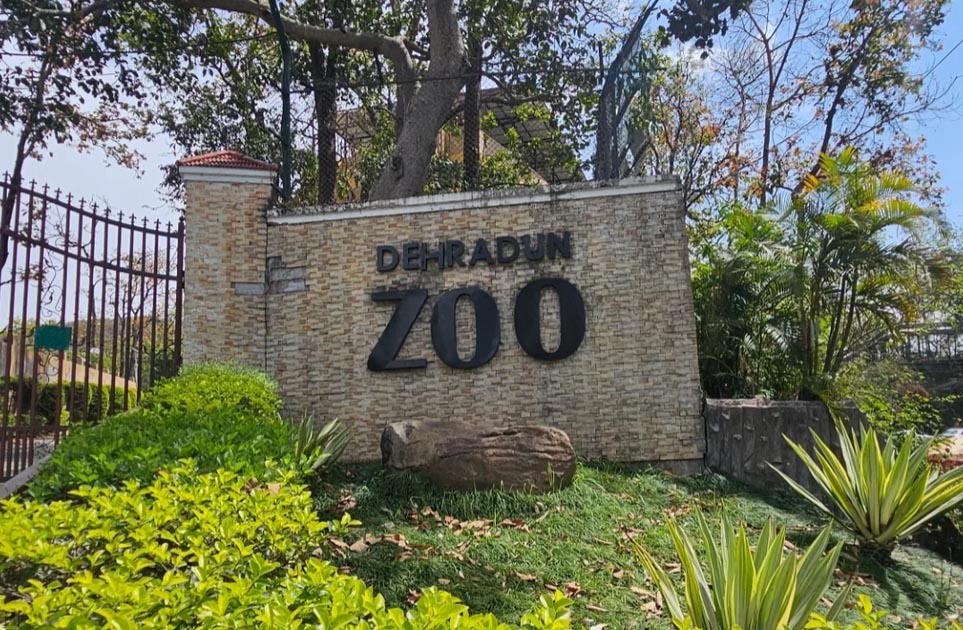
Nestled against the picturesque foothills of the Shivalik range, Malsi Deer Park, now officially known as Dehradun Zoo, is one of the most popular family attractions on the Dehradun–Mussoorie road in Uttarakhand. Surrounded by greenery and hills, the park combines wildlife viewing, nature, education and recreation in a relatively compact setting. Its location makes it particularly convenient for visitors who are exploring Dehradun before continuing toward Mussoorie.
Although many people still affectionately call it Malsi Deer Park, the attraction has evolved considerably from its original identity as a deer-focused park. Today, it functions as a mini-zoological park with conservation and educational objectives. The Nagar Nigam Dehradun describes the zoo as being developed for ex-situ conservation of wild animals, biodiversity conservation, environmental education and wildlife rescue.
Where Is Malsi Deer Park Located?
Malsi Deer Park is located on Mussoorie Road in the Malsi area of Dehradun, Uttarakhand. The municipal government describes it as approximately 9 km from Dehradun Clock Tower, while other official district tourism information places it at roughly 10 km from Dehradun. It lies en route to Mussoorie, making it an easy stop for tourists travelling toward the hill station.
The park’s setting is one of its greatest attractions. Rather than being surrounded by dense urban development, it sits amid the foothills of the Shivaliks, giving visitors a sense of being closer to nature. The surrounding landscape becomes especially attractive when the hills are green and the weather is pleasant.
Its position also makes Malsi Deer Park useful for travellers who want to combine wildlife and sightseeing. A visit can easily be included in a broader Dehradun itinerary involving places such as Robber’s Cave, Sahastradhara and other attractions around the city.
From Malsi Deer Park to Dehradun Zoo
The name Malsi Deer Park remains widely used because of the attraction’s history and its association with deer. However, visitors should know that the facility is now referred to as Dehradun Zoo or Dehradun Mini Zoo in official records.
The transformation reflects its development from a relatively simple recreational deer park into a zoological facility with a wider conservation and educational role. The Central Zoo Authority’s inventory identifies it as Dehradun Mini Zoo (Malsi Deer Park). Its current animal inventory includes birds, mammals and reptiles, illustrating how much broader its collection has become.
This evolution is important because the attraction should not be viewed simply as a place to see deer. It is better understood as a small zoological and educational facility where visitors can learn about different species while enjoying a natural environment.
A Brief History of Malsi Deer Park
Malsi Deer Park was established in 1976, according to historical information associated with Dehradun Zoo. It originally served as a wildlife-oriented recreational and conservation facility and gradually expanded its role.
Over the years, the facility developed additional infrastructure and began housing a greater variety of animals and birds. It was upgraded as a mini zoo under the Central Zoo Authority framework in 2012. Subsequent development focused on improving animal enclosures, visitor facilities, veterinary support and educational attractions.
The transformation from the original deer park into a more comprehensive zoo explains why older travel guides and local residents may use different names for the same place. Visitors searching for Malsi Deer Park today will generally find information under Dehradun Zoo.
The historical development also demonstrates how small wildlife facilities can evolve when conservation, education and visitor management become increasingly important.
Wildlife You Can See
Wildlife is naturally the main reason many visitors come to Malsi Deer Park. Deer remain strongly associated with the attraction, but the collection extends considerably beyond them.
The Central Zoo Authority’s recent inventory for the facility records a range of species across different groups. Its bird collection has included species such as Alexandrine parakeets, blue-and-gold macaws, budgerigars, cockatiels, ostriches, golden pheasants and other birds.
The reptile collection also forms part of the zoo’s biodiversity display. The latest available CZA inventory records several reptile species and a total reptile population of 56 in its reported closing stock.
Depending on the period and current animal-management programme, visitors may encounter animals such as deer, nilgai and other mammals, along with birds and reptiles. The exact collection can change because zoos regularly adjust animal populations for breeding, conservation, veterinary care and management purposes.
This is worth remembering when planning a visit: a list found in an old travel article may not represent the animals currently present.
The Deer That Gave the Park Its Name
The deer are undoubtedly part of Malsi Deer Park’s identity. For generations, the attraction has been associated with the opportunity to observe deer in a relatively accessible environment.
For children, watching deer move around their enclosure can be an exciting introduction to wildlife. Adults, meanwhile, often appreciate the opportunity to observe their behaviour and physical characteristics at close range without travelling to a large national park.
However, visitors should remember that these are wild animals rather than domestic animals. Feeding, teasing, shouting at or attempting to touch animals should be avoided. Responsible observation is more enjoyable for both the visitor and the animal.
Birds and Avian Diversity
Bird lovers can find another interesting dimension of the zoo in its avian collection. The CZA inventory demonstrates that the zoo has maintained a variety of birds, ranging from familiar species such as budgerigars and cockatiels to larger and more exotic birds including macaws and ostriches.
The presence of birds makes the attraction particularly interesting for children because it introduces them to differences in size, colour, behaviour and habitat.
Some birds may be particularly active during cooler portions of the day. Visitors interested in photography should therefore consider arriving earlier rather than assuming that every animal will be equally active throughout the afternoon.
A Place for Wildlife Education
One of the most important aspects of Dehradun Zoo is its educational purpose. The municipal description specifically identifies biodiversity conservation and education among the objectives of the facility.
This makes the zoo particularly appropriate for school groups and families. A zoo visit can become more meaningful when children are encouraged to understand why species need suitable habitats, why wildlife should not be disturbed and how conservation programmes contribute to protecting biodiversity.
Instead of treating the visit simply as entertainment, parents can use the opportunity to explain concepts such as endangered species, food chains, habitat destruction and responsible tourism.
The Natural Setting
The landscape surrounding Malsi Deer Park is an attraction in its own right. The park is positioned at the foothills of the Shivalik range, and its greenery gives the site a refreshing character compared with the more heavily built-up parts of Dehradun.
The combination of trees, landscaped areas, animal enclosures and surrounding hills creates a relaxed atmosphere. This is one reason the park has traditionally been regarded as both a wildlife attraction and a picnic destination. The district administration itself describes Malsi Deer Park as a mini-zoological park with a children’s park and natural surroundings, making it suitable for sightseeing and picnics.
The landscape can look particularly attractive during and after the monsoon, when the surrounding vegetation becomes lush. However, visitors should also consider rain when planning outdoor activities.
Things to Do at Malsi Deer Park
The simplest activity is, of course, exploring the zoo and observing its animals. A leisurely walk through the facility allows visitors to see different species while enjoying the greenery.
Families with children can make the visit more recreational by spending time in the children’s areas and taking breaks between animal exhibits. Older visitors may prefer to concentrate on wildlife observation, photography and the surrounding scenery.
Photography is another popular activity, although visitors should follow all zoo rules and avoid using photography in ways that disturb animals. Patience is particularly valuable when photographing wildlife. Waiting quietly often produces better results than trying to attract an animal’s attention.
The park can also serve as a relaxed stop before or after travelling toward Mussoorie. Because of its location on the route, tourists can combine the visit with a larger sightseeing programme.
Malsi Deer Park for Families
For families travelling with children, Malsi Deer Park can be an appealing alternative to purely historical or architectural sightseeing. Children generally respond well to the combination of animals, greenery and outdoor exploration.
The attraction is also relatively accessible compared with a trip to a distant wildlife sanctuary. Visitors do not need to dedicate an entire day to a safari-style excursion. Instead, they can spend a few hours exploring the zoo and then continue with their Dehradun or Mussoorie itinerary.
Parents should nevertheless prepare children for responsible wildlife behaviour. Animals should be observed quietly, and visitors should never attempt to feed or provoke them.
Best Time to Visit
The most comfortable time to explore Malsi Deer Park is generally during the cooler months, particularly from autumn through spring. Dehradun’s pleasant winter and early-spring weather makes walking around the zoo considerably more comfortable than visiting during intense summer afternoons.
The monsoon season brings its own charm because the vegetation around the Shivalik foothills can become especially green. However, rain can make outdoor walking less convenient, so visitors should check the weather forecast before setting out.
Summer visitors may prefer morning hours when temperatures are comparatively manageable. Wildlife behaviour can also vary with temperature, so early visits may provide a more pleasant overall experience.
Opening Hours and Entry Information
Published information about the zoo’s opening hours and ticket prices can vary between sources and may change over time. Recent listings indicate morning opening and closure in the late afternoon, while the current business listing for Dehradun Zoo shows hours of approximately 9:00 a.m. to 5:30 p.m. on open days.
Older travel sources commonly mention a 10 a.m. to 5 p.m. schedule, demonstrating why visitors should verify the latest timings before travelling.
The same applies to admission charges. Older published guides have quoted relatively low entry fees, but prices can change as facilities and management policies are updated. It is therefore advisable to confirm the current ticket price at the official facility or through current local information before visiting.
How to Reach Malsi Deer Park
Reaching Malsi Deer Park is relatively straightforward because it is located on Mussoorie Road.
From central Dehradun, visitors can travel toward the Mussoorie side of the city by taxi, auto-rickshaw or other local transport. The municipal government identifies the park as being around 9 km from Dehradun Clock Tower.
For travellers arriving by train, Dehradun railway station provides access to the city, from where the park can be reached by road. Visitors arriving by air can travel from Jolly Grant Airport toward Dehradun and then continue to Mussoorie Road. The municipal government lists Jolly Grant Airport as the nearest airport serving Dehradun and notes that it is approximately 25 km from the city.
Road travel is particularly convenient for visitors who are already planning to go toward Mussoorie because the zoo lies along that route.
How Much Time Should You Spend There?
A visit to Malsi Deer Park does not necessarily require an entire day. For most travellers, a few hours can be sufficient to explore the animal enclosures, enjoy the greenery and spend some time with family.
The amount of time required depends on the pace of the visit. Families with young children may spend longer because of play areas and frequent breaks, while wildlife enthusiasts may want additional time for observation and photography.
If the zoo is included in a larger Dehradun itinerary, allocating approximately two to three hours can be a practical approach, although visitors should adjust this according to their interests and the current facilities.
Malsi Deer Park as a Responsible Tourism Experience
The real value of Malsi Deer Park extends beyond entertainment. Small zoological facilities can provide opportunities for people who might otherwise have little exposure to wildlife.
A responsible visit means observing animals without disturbing them, following enclosure rules, avoiding littering and respecting restrictions on feeding. Visitors should also understand that animals may not always be visible. An enclosure without an immediately visible animal does not necessarily mean that something is wrong; animals may be resting, sheltering or occupying another part of their habitat.
Responsible tourism also means appreciating the park as a conservation and educational institution rather than simply a place for photographs.
Nearby Attractions
One of the advantages of visiting Malsi Deer Park is its location within Dehradun’s wider sightseeing circuit. The surrounding region offers several attractions, including natural sites and destinations associated with the city’s history and culture.
Robber’s Cave, locally known as Guchhupani, is another well-known attraction in the Dehradun area. The Nagar Nigam describes it as a cave and spring-based picnic destination surrounded by hills.
Travellers heading toward Mussoorie can also continue their journey into the hills after visiting the zoo. This makes Malsi Deer Park especially useful as part of a combined Dehradun–Mussoorie trip.
Why Malsi Deer Park Is Worth Visiting
Malsi Deer Park has survived the changing character of Dehradun because it offers something that many city attractions cannot: a combination of wildlife, greenery and recreation in an easily accessible location.
Its history as a deer park gives it a distinctive identity, while its development into Dehradun Zoo has expanded its conservation and educational significance. The presence of mammals, birds and reptiles allows visitors to encounter a broader range of wildlife than the original name might suggest. Current Central Zoo Authority records confirm the diversity of species maintained at the facility.
For families, it provides an educational outdoor experience. For tourists, it is a convenient stop on the way to Mussoorie. For nature lovers, it offers a chance to spend time amid greenery without leaving the city far behind.
Final Thoughts
Malsi Deer Park, now known as Dehradun Zoo, is much more than a traditional picnic spot. Its evolution from a deer-focused attraction into a mini zoological park reflects the changing role of wildlife facilities in India, where conservation, education and public awareness increasingly accompany recreation.
Set against the Shivalik foothills, the park offers an accessible introduction to wildlife for visitors of different ages. Its collection of mammals, birds and reptiles, combined with its natural surroundings and family-friendly character, makes it a worthwhile addition to a Dehradun itinerary.
Whether you are travelling with children, exploring Dehradun before heading to Mussoorie, interested in wildlife photography or simply looking for a peaceful outdoor attraction, Malsi Deer Park provides a pleasant way to experience nature. The best way to appreciate it is not merely as a place to see animals, but as a reminder of the importance of protecting the diverse wildlife and ecosystems that surround India’s cities and hill regions.

