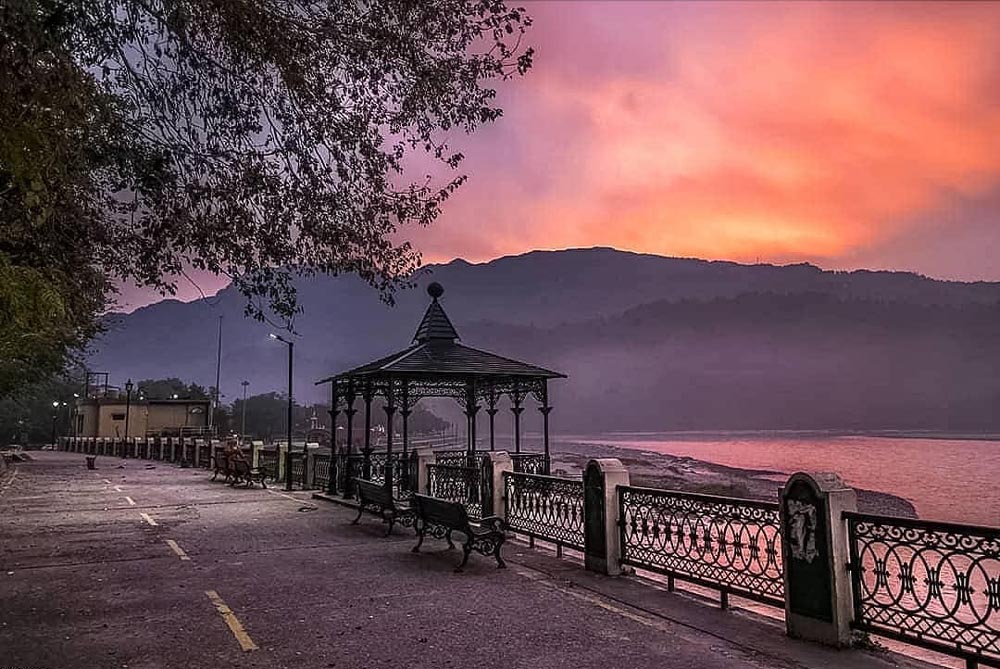
When people hear the name Marine Drive, Mumbai’s famous coastal boulevard may immediately come to mind. But in Rishikesh, Uttarakhand, the name has a very different setting. Here, Marine Drive refers to a scenic riverside stretch associated with the Ganga, where mountain landscapes, flowing water, forested slopes and the road to the upper Himalayan region come together. At the same time, the name is also commonly used for Aastha Path, the developed riverside promenade within Rishikesh, creating some confusion for visitors. The Aastha Path is a pedestrian-friendly Ganga-side walkway near Barrage Colony and Triveni Ghat, while the upstream Marine Drive stretch is associated with the Rishikesh–Badrinath highway and adventure activities such as rafting and camping.
Aastha Path Rishikesh is particularly popular for leisurely walks, cycling, photography and enjoying the Ganga away from the busiest parts of the city. Meanwhile, the upstream stretch offers a more rugged Himalayan experience, with riverside beaches, forest scenery and access to some of Rishikesh’s better-known rafting routes. Understanding this distinction is important when planning a visit.
Understanding Marine Drive in Rishikesh
Marine Drive in Rishikesh is not a traditional seafront promenade. There is no sea here; the landscape is entirely Himalayan. The nickname comes from the visual character of the road and river, with stretches of roadway running beside the Ganga and offering expansive water and mountain views.
The term is used in two related but geographically different contexts. The first is Aastha Path, the developed riverside walkway within Rishikesh. This paved path provides an easy environment for walking and cycling, with the Ganga on one side and the surrounding urban and rocky landscape on the other. It has been described as Rishikesh’s own version of a riverside “Marine Drive.”
The second refers to the upstream section of the Rishikesh–Badrinath highway, particularly the area around Shivpuri, Marine Drive and Byasi. This is a very different experience. Rather than a landscaped urban promenade, it is a mountainous highway overlooking the Ganga, surrounded by forests and rocky hills. The stretch is strongly connected with white-water rafting and riverside camping. Recent travel sources describe Marine Drive village as a major put-in area for longer rafting routes.
For a traveller, therefore, it is useful to confirm whether a hotel, taxi driver or tour operator means Aastha Path inside Rishikesh or the upstream Marine Drive rafting/camping area.
Aastha Path: The Urban Riverside Marine Drive
Aastha Path is perhaps the easiest version of Marine Drive to experience. The promenade runs along the Ganga and is designed for pedestrians rather than vehicles. Its broad paved surface, railings, seating areas and river views make it suitable for people who simply want to spend time beside the river without undertaking an adventure activity.
The atmosphere changes considerably throughout the day. Early morning is generally quiet, with walkers, joggers, yoga practitioners and visitors enjoying the cooler air. As the sun rises, the mountains and river gradually become brighter, producing attractive conditions for photography.
Evening is another popular period. The changing light creates reflections across the Ganga, while the promenade becomes a pleasant place for a relaxed walk. Local and visitor accounts frequently highlight sunset as one of the most attractive times to experience the walkway.
One of the greatest advantages of Aastha Path is that visitors do not need to participate in rafting, trekking or camping to enjoy it. It can be included in a conventional Rishikesh sightseeing itinerary and works particularly well for families, older travellers, couples, photographers and people looking for a peaceful break between visits to temples and markets.
The Ganga and the Landscape
The defining feature of Marine Drive is, naturally, the Ganga. Rishikesh is located where the river emerges from the Himalayan foothills toward the plains, and the surrounding terrain gives the city an unmistakable combination of river, forest and mountain scenery.
At Aastha Path, the river is experienced from a carefully constructed promenade. The upstream Marine Drive area presents a more natural landscape. The highway follows the river through the hills, and travellers encounter rocky slopes, forested areas, beaches and stretches where the Ganga appears dramatically below the road.
The visual character can also change with the season. During the monsoon, the Ganga becomes considerably more powerful and conditions around riverside beaches and adventure activities can change quickly. In drier periods, sections of sandy riverbank become more visible, creating the landscapes associated with riverside camping and photography.
The contrast between the developed promenade and the wild upstream river corridor is one of the most interesting aspects of the Marine Drive experience.
Marine Drive and White-Water Rafting
For adventure travellers, the upstream Marine Drive area is particularly significant because it is associated with longer white-water rafting routes. The rafting stretches around Shivpuri, Marine Drive, Byasi and Kaudiyala provide progressively different river experiences.
Recent information for 2026 identifies Marine Drive as a put-in for a roughly 26-kilometre commercial rafting route, while longer and shorter routes operate from other points along the river. The exact route, difficulty and permitted operations can change according to water levels and government regulations, so travellers should confirm the day’s route with a licensed operator before booking.
Rafting from this section is substantially different from simply sitting beside the Ganga. The river contains rapids and requires participants to follow the instructions of trained guides. The longer routes are intended for people who meet the operator’s age and safety requirements and are comfortable with an active outdoor experience.
A rafting excursion usually includes transport from Rishikesh to the put-in point, safety instructions and equipment. Because river conditions can vary, visitors should not assume that a route advertised online will necessarily operate in exactly the same form on their travel date.
Camping Near Marine Drive
Riverside camping is another major attraction associated with the upstream Marine Drive area. The combination of sandy riverbanks, forests and the Himalayan landscape makes this section particularly appealing for travellers who want to spend a night away from the more urban parts of Rishikesh.
Camping can provide a very different experience from staying in a hotel in Tapovan or central Rishikesh. During the day, guests can enjoy the river scenery and outdoor activities, while evenings can be spent around the campsite and under the open sky.
However, camping beside a major Himalayan river requires awareness of environmental and safety conditions. River levels can rise rapidly, particularly during heavy rainfall. Visitors should choose established operators, follow instructions about where they may approach the river and avoid entering the water without appropriate supervision.
The camping environment also changes considerably according to the season. Areas that appear to be broad sandy beaches during dry conditions may not remain the same throughout the year.
Walking and Cycling
Walking is one of the simplest ways to experience Marine Drive, particularly the Aastha Path section. Unlike an adventure activity, a riverside walk requires no special preparation beyond comfortable footwear and adequate drinking water.
The promenade is suitable for a slow morning walk, evening stroll or light exercise. Its position beside the Ganga means that the scenery remains the principal attraction rather than shops or entertainment facilities. Recent visitor-oriented sources describe it as a place for walking, cycling, sitting beside the river and watching the sunset.
Cycling can also be enjoyable, although visitors should distinguish between the paved Aastha Path and the highway-based upstream Marine Drive. Cycling along a busy mountain highway requires considerably more caution than cycling on a pedestrian promenade.
For photography enthusiasts, walking provides opportunities to capture the river from different perspectives. Rather than taking a single photograph from a viewpoint, visitors can move along the path and find changing combinations of water, mountains, trees, bridges and sky.
Sunrise and Sunset at Marine Drive
The soft light of early morning is particularly attractive along the Ganga. At sunrise, the surrounding hills can appear layered and atmospheric, while the river reflects changing shades of the sky.
Morning is also useful for travellers who prefer a quieter environment. A walk before the city becomes busy can make Marine Drive feel considerably more peaceful.
Sunset is perhaps the more popular photography period. As the sun drops, the light becomes warmer and the surface of the river can take on golden and silver reflections. Aastha Path is especially convenient for sunset because visitors can combine the walk with other sightseeing around Rishikesh.
Photography at Marine Drive
Marine Drive offers several different types of photographic opportunities. Landscape photographers can focus on the relationship between the Ganga and the Himalayan foothills, while casual visitors can capture reflections, boats, bridges and changing skies.
The upstream stretch provides a more dramatic landscape, especially where the highway curves above the river. White-sand riverbanks, forested slopes and rocky cliffs can create strong compositions.
Aastha Path, meanwhile, is more suitable for urban-river photography. Its railings, lamps, seating areas and pathway can be used as leading lines toward the river and mountains.
The best results usually come from photographing during the softer hours of morning and evening rather than under harsh midday sunlight.
Spiritual Side of Marine Drive
Rishikesh is not only an adventure destination. It is one of India’s important spiritual centres, and the Ganga is central to its religious identity.
The riverside environment around Aastha Path can therefore be experienced as both a recreational space and a spiritual landscape. Visitors may see people sitting quietly beside the river, meditating, practicing yoga or simply observing the water.
The proximity to important religious places also makes Marine Drive easy to combine with a spiritual itinerary. A visitor can spend the morning walking beside the Ganga, visit temples during the day and attend an evening Ganga Aarti ceremony at one of the city’s major ghats.
The contrast is particularly appealing: Rishikesh can move from a quiet riverside morning to an energetic adventure afternoon and then return to a deeply spiritual atmosphere in the evening.
Best Time to Visit Marine Drive
The ideal time depends on which Marine Drive experience you want.
For Aastha Path, the attraction can generally be visited throughout the year, but early morning and evening are more comfortable than the hottest part of the afternoon. Recent travel information lists the promenade as an all-year attraction, with evening particularly popular for sunset.
For upstream Marine Drive, seasonality is more important. Rafting operations are affected by monsoon conditions, and recent 2026 sources describe the principal rafting season as extending roughly from mid-September through June, with operations paused during the peak monsoon period.
September and October can provide attractive post-monsoon scenery, while October and November are often associated with pleasant weather and clearer mountain views. March and April are also popular for outdoor activities.
July and August require particular caution. Heavy monsoon rainfall can produce dangerous river conditions and increase the possibility of landslides along Himalayan roads. Travellers should always check current road and weather conditions before heading into the hills.
How to Reach Marine Drive
Getting to Aastha Path is relatively straightforward because it lies within Rishikesh. Visitors staying around central Rishikesh, Barrage Colony or nearby neighbourhoods can reach the riverside promenade by local transport, taxi, auto-rickshaw or private vehicle, depending on their starting point.
The upstream Marine Drive area requires more planning. It lies along the Rishikesh–Badrinath highway, and the journey follows the Ganga upstream through the foothills. Recent travel information places the principal Marine Drive/rafting area several kilometres upstream of Rishikesh, with distances varying according to which section is being called Marine Drive.
For rafting trips, transport is commonly arranged by the operator. This is often more convenient than independently finding the put-in point, particularly for first-time visitors.
Travellers coming from Delhi generally reach Rishikesh first and then continue toward the upstream rafting and camping areas. Dehradun’s Jolly Grant Airport is another useful gateway, while Haridwar provides important rail and road connections.
Because road conditions in the Himalayan foothills can change, travel times should be treated as approximate rather than fixed.
Places to Combine With Marine Drive
One of the advantages of visiting Marine Drive is its location within the wider Rishikesh tourism circuit. A trip can easily be combined with Triveni Ghat, Ram Jhula, the city’s temples, yoga centres and other riverside attractions.
For visitors interested in adventure tourism, Shivpuri and Byasi can be incorporated into the same general excursion because they lie along the same upstream corridor. For spiritual tourism, Triveni Ghat and nearby temples provide a natural continuation of the river experience.
A visitor interested in nature can also combine the trip with forest and mountain excursions around the Rishikesh region. This makes Marine Drive more suitable as part of a broader itinerary rather than an isolated attraction.
Food and Facilities
Aastha Path’s urban location means visitors can easily return to the main city for food, cafés and other facilities. It is therefore convenient for travellers who do not want to carry extensive supplies.
The upstream Marine Drive area is more dependent on camps, rafting operators and roadside facilities. Visitors heading into the more remote sections should carry drinking water, sun protection and any personal necessities they may require.
If staying at a riverside camp, meals may be included in the package. However, travellers should confirm inclusions, meal timings and other facilities before booking rather than assuming that every camp provides identical services.
Safety and Responsible Tourism
The most important rule around Marine Drive is to respect the river. The Ganga may look calm from the bank while strong currents exist beneath the surface. Swimming in unfamiliar sections is therefore unsafe.
During the monsoon, additional caution is essential. River levels can change quickly, and areas that appear safe during dry weather may become hazardous.
For rafting, visitors should use reputable, properly licensed operators and listen carefully to the safety briefing. Personal choices such as alcohol consumption before water activities should be avoided, as they can significantly increase risk.
Environmental responsibility is equally important. Visitors should not leave plastic, food packaging or other waste on the riverbank. The beauty of Marine Drive depends heavily on its natural setting, and responsible tourism helps preserve that setting for future visitors.
Why Marine Drive Is Worth Visiting
Marine Drive represents several different sides of Rishikesh at once. Aastha Path offers an accessible riverside promenade where visitors can walk, cycle, meditate and watch the sunset. The upstream Marine Drive corridor provides something more adventurous: mountain roads, forests, sandy riverbanks, camps and white-water rafting.
The attraction’s greatest strength is therefore not a single monument or structure. It is the landscape itself. The Ganga remains the central character, while the mountains, forests and changing light provide a constantly shifting backdrop.
For first-time visitors, an evening walk along Aastha Path can be an easy introduction. Those seeking adventure can travel farther upstream for rafting and camping. Photography enthusiasts can explore both settings, while spiritual travellers can combine the riverside experience with Rishikesh’s temples and Ganga Aarti traditions.
Ultimately, Marine Drive in Rishikesh is best understood not as one conventional tourist attraction but as a collection of riverside experiences connected by the Ganga. Whether experienced through a peaceful sunset walk or an exhilarating rafting journey through the Himalayan foothills, it provides another perspective on why Rishikesh remains one of Uttarakhand’s most distinctive destinations.

