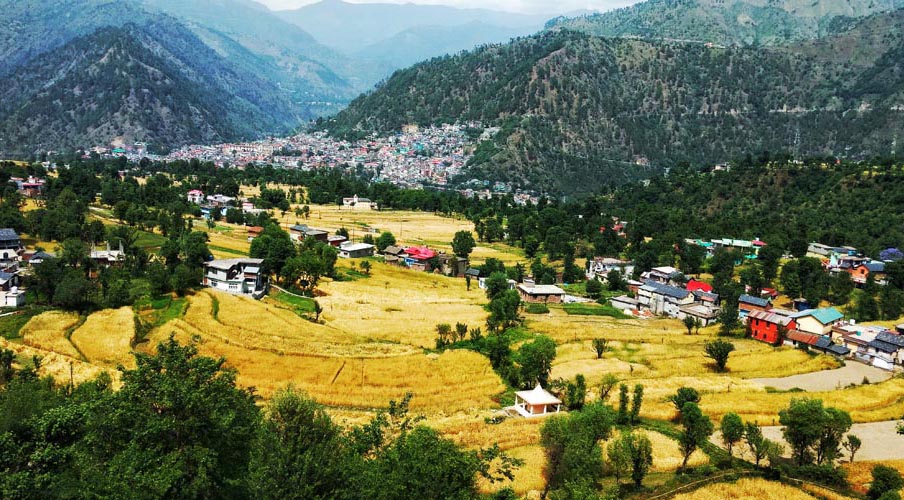
Tucked away in the peaceful hills of Tehri Garhwal, Uttarakhand, Chamba is a charming mountain town that often remains quieter than the state’s better-known destinations such as Mussoorie, Nainital and Rishikesh. Surrounded by forested slopes, Himalayan landscapes and traditional Garhwali villages, Chamba offers the kind of slow, scenic holiday that appeals to travellers who want to experience the mountains without the crowds of major hill stations. The town is also strategically located between Mussoorie, Dhanaulti, New Tehri and Tehri Lake, making it an excellent base for exploring several attractions in the region.
Chamba should not be confused with the famous Chamba in Himachal Pradesh. Chamba of Uttarakhand is a hill town in Tehri Garhwal, positioned on an important mountain road connecting the Mussoorie-Dhanaulti side with New Tehri and the Tehri Lake region. Its setting provides a combination of peaceful Himalayan scenery, pleasant weather, forested hills, village culture and access to religious and adventure destinations.
Where Is Chamba in Uttarakhand?
Chamba is located in Tehri Garhwal district of Uttarakhand, in the middle Himalayan region. It lies close to New Tehri and is connected by road with important destinations including Rishikesh, Mussoorie, Dhanaulti, Narendra Nagar and Tehri. New Tehri is approximately 11 km from Chamba according to the district administration, making it one of the most convenient nearby towns for travellers.
The geographical position of Chamba is one of its biggest advantages. Travellers can approach the town from Rishikesh and Narendra Nagar, or travel through the Mussoorie and Dhanaulti side. This makes Chamba particularly suitable for road trips through the Garhwal Himalayas.
The town sits amid mountains covered with forests and agricultural terraces. During a clear day, the surrounding landscape can reveal expansive views of distant Himalayan ranges, while the valleys below create a dramatic contrast with the green mountain slopes. The relatively peaceful atmosphere is one of the reasons Chamba is increasingly attractive to travellers searching for lesser-known destinations in Uttarakhand.
The Natural Beauty of Chamba
The first impression of Chamba is generally its landscape rather than a particular monument. The town is surrounded by mountains, forests, valleys and scattered settlements, creating a traditional Himalayan environment. Instead of the dense commercial development found in some popular hill stations, Chamba retains a more relaxed character.
The surrounding hills change dramatically with the seasons. During spring and summer, greenery dominates the landscape, while the monsoon brings fresh vegetation and mist-covered mountains. Autumn often provides clearer skies and excellent visibility, making it a particularly attractive season for photography. Winter brings a colder atmosphere, and higher surrounding areas can become especially chilly.
One of the pleasures of visiting Chamba is simply walking around the quieter roads and viewpoints. The landscape encourages travellers to slow down, enjoy the mountain air and observe everyday life in the villages and hills. Early mornings can be especially beautiful, when sunlight gradually reaches the slopes and clouds move through the valleys.
Chamba and the Garhwali Culture
Chamba is not simply a scenic destination; it is also part of the cultural landscape of Garhwal. Traditional villages, terraced farming, local temples, regional food and mountain architecture provide visitors with opportunities to experience a quieter side of Uttarakhand.
Garhwali culture remains strongly connected to the natural environment. Agriculture, livestock, seasonal festivals and religious traditions have historically shaped life in the mountains. Visitors travelling around Chamba may see terraced fields carved into slopes, traditional houses and small shrines along mountain roads.
Local food is another important part of the experience. Travellers can look for regional Garhwali preparations such as kafuli, chainsoo, aloo ke gutke, jhangore ki kheer and mandua-based dishes, depending on what is available locally. These foods are closely associated with the ingredients traditionally cultivated or used in the Himalayan region.
Rather than expecting a large restaurant scene, visitors should approach Chamba as a destination where simple local meals and small eateries can be part of the experience.
Chamba as a Base for Exploring Tehri Garhwal
One of Chamba’s greatest strengths is its location. The town can be used as a convenient base for exploring several important destinations in Tehri Garhwal.
New Tehri is one of the most obvious excursions. The modern town serves as the administrative headquarters of Tehri Garhwal and stands at an elevation between approximately 1,550 and 1,950 metres. It overlooks the enormous Tehri Lake and is only about 11 km from Chamba.
The Tehri Lake and Tehri Dam are among the most significant attractions in the wider region. The enormous reservoir has transformed the landscape around the former Tehri area and has also become an important destination for tourism and water-based activities. The district administration identifies Tehri Dam and Tehri Lake among the major attractions of Tehri Garhwal.
For travellers interested in combining peaceful mountain scenery with adventure, the Chamba-New Tehri area can therefore provide a good balance between relaxation and outdoor activities.
Dhanaulti: A Perfect Excursion from Chamba
Another major attraction nearby is Dhanaulti, a peaceful hill destination situated on the Mussoorie-Chamba route. The Uttarakhand government describes Dhanaulti as being surrounded by thick forests of deodar, rhododendron and oak. It is approximately 29 km from Chamba.
Dhanaulti is particularly appealing to travellers who enjoy forests and peaceful mountain environments. Compared with crowded hill stations, it has a more relaxed atmosphere, and the wooded landscape makes it suitable for nature walks, photography and leisurely outdoor activities.
The journey between Chamba and Dhanaulti is itself part of the attraction. Mountain roads wind through forests and highland landscapes, creating numerous opportunities to stop for photographs. Travellers making a circuit that includes Mussoorie, Dhanaulti and Chamba can experience several different sides of the Garhwal mountains within a relatively short trip.
Surkanda Devi Temple and the Spiritual Side of the Region
For visitors interested in religious tourism, Surkanda Devi Temple is one of the most important places to include in a Chamba itinerary.
The temple is located on Surkanda Peak at an elevation of around 2,750 metres. According to the Tehri district administration, it lies about 8 km from Dhanaulti on the Mussoorie-Chamba road. The traditional approach involves leaving the main road at Kadu Khal and climbing approximately 2.5 km on foot.
The temple’s mountain setting is a major part of its appeal. Dense forest surrounds the route, while the summit provides expansive views across the surrounding Himalayan landscape. On clear days, visitors can see towards Dehradun, Rishikesh, Chandrabadni, Pratapnagar and Chakrata.
The religious importance of the temple also attracts pilgrims, particularly during festivals. The annual Ganga Dussehra period is traditionally an important time for visitors.
For tourists, the Surkanda Devi excursion offers something more than sightseeing: it combines a mountain walk, forest environment, religious heritage and panoramic scenery.
Mussoorie and Chamba: Combining Two Hill Destinations
Travellers coming from Mussoorie can easily include Chamba in a broader Garhwal itinerary. Dhanaulti lies along the route and acts as a natural transition between the more developed environment of Mussoorie and the quieter landscapes around Chamba.
This route is particularly enjoyable for road-trip enthusiasts. Instead of spending an entire holiday in one crowded hill station, travellers can create a circuit involving Mussoorie, Dhanaulti, Chamba and New Tehri.
Such a journey allows visitors to experience colonial-era hill-station surroundings, dense Himalayan forests, small mountain settlements, reservoir landscapes and traditional Garhwali environments within the same trip.
Best Time to Visit Chamba
Chamba can be visited throughout much of the year, but the ideal season depends on the type of experience a traveller wants.
March to June is generally comfortable for sightseeing and outdoor activities. The weather is pleasant compared with the plains, and the surrounding vegetation becomes increasingly green as summer progresses. This is a good period for travellers wanting to explore nearby attractions without dealing with extreme cold.
July to September is the monsoon period. The mountains become exceptionally green, and mist can create beautiful scenery. However, mountain roads can become challenging during periods of heavy rainfall. Landslides and road disruptions are genuine considerations in Himalayan travel, so visitors should check local road and weather conditions before travelling.
October and November are excellent months for clear mountain views. The post-monsoon landscape is fresh, while the skies are often clearer. Photographers and travellers interested in Himalayan panoramas may particularly enjoy this period.
December to February brings winter conditions. Temperatures can fall considerably, especially during the night and early morning. Travellers visiting in winter should carry adequate woollens and be prepared for cold mountain weather.
How to Reach Chamba, Uttarakhand
Road travel is the most practical way to reach Chamba. The town is connected by motorable roads with several major destinations in Uttarakhand. Rishikesh, Narendra Nagar, Mussoorie, Dhanaulti, New Tehri and other towns provide useful connections.
From Rishikesh, the road journey takes travellers through Narendra Nagar and onward into the hills. Chamba is also accessible from Mussoorie through Dhanaulti. Road travel is particularly rewarding because the route itself provides mountain scenery and changing landscapes.
For air travellers, Jolly Grant Airport near Dehradun is the nearest major airport for the Tehri Garhwal region. The district administration lists Jolly Grant as the nearest airport to New Tehri, approximately 86 km away.
From the airport, travellers can continue by taxi or other road transport.
For rail travellers, Rishikesh Railway Station is the closest major rail connection for the New Tehri-Chamba area. The district administration gives the distance from New Tehri to Rishikesh railway station as approximately 72 km.
Travellers from Delhi can therefore consider a combination of train or flight to the Rishikesh/Dehradun area followed by a road journey into the mountains.
Things to Do in Chamba
Chamba is not a destination where travellers need to follow a packed sightseeing schedule. Its appeal lies partly in its slower pace.
One of the best activities is simply exploring the surrounding mountain roads and viewpoints. Photography enthusiasts will find plenty of opportunities to capture valleys, forests, terraced fields, villages and changing Himalayan skies.
Nature walks are another rewarding activity. Instead of searching for heavily commercialized attractions, visitors can explore quieter trails around the town and surrounding villages, while taking care to respect private farmland and local property.
A visit to New Tehri and Tehri Lake can add an entirely different landscape to the trip. Depending on current local operations and weather conditions, visitors can explore lake-related attractions and adventure activities.
Religious travellers can visit nearby temples, with Surkanda Devi being one of the most prominent excursions. The wider Tehri district also contains several important religious destinations, including Kunjapuri and Chandrabadni.
Accommodation and Food
Accommodation in Chamba is generally more peaceful and modest than in heavily commercialized tourist destinations. Visitors can find hotels, guesthouses and other stays in and around the town, while additional accommodation options are available towards New Tehri, Dhanaulti and nearby destinations.
Travellers seeking luxury should research their property carefully before arriving, while those interested in nature and quiet surroundings may find smaller hotels and homestay-style accommodation more appealing.
Food options are also relatively simple. Local restaurants generally serve North Indian staples, while some accommodations offer regional Garhwali food. Trying locally prepared dishes can make the trip more memorable, especially for visitors interested in understanding the culinary traditions of the mountains.
Chamba for Families, Couples and Nature Lovers
Chamba works particularly well for travellers looking for a quiet mountain holiday rather than a nightlife-oriented destination.
For families, its relatively relaxed atmosphere can be preferable to busier hill stations. Parents can combine sightseeing with nature walks and short excursions to New Tehri, Dhanaulti and other nearby attractions.
For couples, Chamba provides peaceful mountain scenery, scenic drives and opportunities to stay away from crowded tourist centres. Sunrise and sunset views, forest walks and quiet evenings can make the destination particularly appealing for a romantic getaway.
Nature lovers will appreciate the surrounding forests and landscapes, while photographers can use the changing light, clouds and mountain scenery as a constant source of subjects.
Adventure enthusiasts can use Chamba as part of a larger itinerary incorporating trekking, water-based activities around Tehri Lake and excursions into the surrounding hills. The Tehri district as a whole offers numerous trekking opportunities and adventure destinations.
Responsible Tourism in Chamba
As Chamba and the wider Tehri region become more popular, responsible tourism is increasingly important. Mountain environments are fragile, and even small increases in tourism can create problems involving waste, water consumption, traffic and damage to natural areas.
Visitors should avoid throwing plastic or food waste along roads and trails, carry reusable water bottles where practical and avoid disturbing wildlife. It is equally important to respect village life. Photography of people, homes and religious ceremonies should be done respectfully.
Supporting locally owned accommodation, restaurants, guides and small businesses can help ensure that tourism benefits the communities living in the region.
Travellers should also remember that Himalayan weather can change quickly. During the monsoon and winter, road conditions can be unpredictable, so checking local advisories before beginning a journey is sensible.
A Suggested Chamba Travel Experience
A two- or three-day trip can provide a good introduction to the area. Travellers could arrive in Chamba and spend the first day relaxing, exploring local surroundings and enjoying mountain views.
The second day could be devoted to New Tehri and Tehri Lake, allowing visitors to experience the modern side of the region and its enormous reservoir landscape. Depending on time and local conditions, additional activities can be included around the lake.
A third day could be used for a road trip towards Dhanaulti and Surkanda Devi, with time for the temple visit and exploration of the forested surroundings. Travellers with additional time can continue towards Mussoorie and turn the trip into a wider Garhwal circuit.
Those with four or five days could expand the itinerary to include Mussoorie, Dhanaulti, Chamba, New Tehri and nearby religious or nature destinations.
Why Chamba Deserves More Attention
Chamba does not necessarily compete with Mussoorie in terms of shopping, nightlife or large-scale tourist infrastructure. Its strength lies somewhere else. It provides a chance to experience the mountains at a slower pace.
The town offers access to forests, valleys, Himalayan viewpoints, Garhwali villages, temples, Tehri Lake and several popular destinations without requiring travellers to remain in a heavily commercialized hill station. Its location makes it especially useful for people who want to explore more of Tehri Garhwal rather than simply visit one attraction.
The wider Tehri district itself contains an impressive mixture of natural, spiritual and adventure tourism, ranging from Dhanaulti and Surkanda to Tehri Lake, New Tehri and numerous trekking destinations.
Final Thoughts
Chamba, Uttarakhand, is a destination for travellers who value scenery, tranquillity and authentic mountain experiences over crowds and commercial entertainment. Its forested hills, pleasant climate, Garhwali culture and strategic location make it an appealing base for exploring Tehri Garhwal.
The nearby attractions add considerably to its appeal. A traveller can begin the day surrounded by quiet mountain landscapes, visit New Tehri and Tehri Lake, explore the forests of Dhanaulti, undertake the climb to Surkanda Devi or simply spend an afternoon watching clouds move across the Himalayan valleys.
For anyone planning a Uttarakhand road trip beyond the usual tourist circuit, Chamba deserves a place on the itinerary. It may not be the loudest or most famous hill station in the state, but that is precisely what makes it special. Chamba offers the slower, quieter and more intimate side of the Himalayas—one where the journey, the landscape and the mountain way of life become as important as the destination itself.

