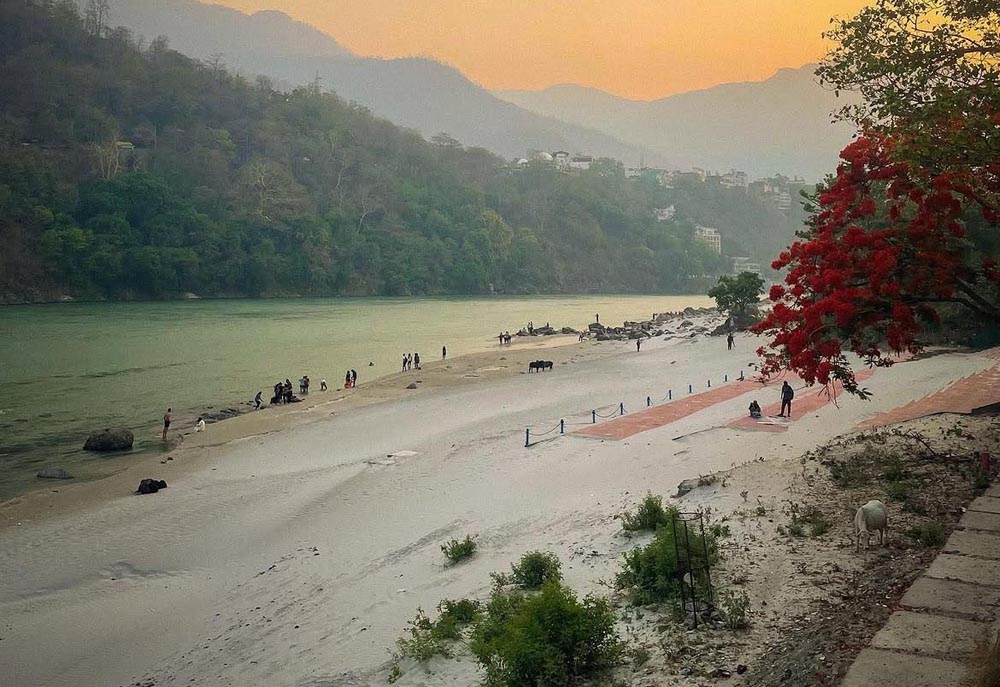
Ganga Beach in Uttarakhand is one of those places where the attraction lies as much in the atmosphere as in the destination itself. Located in the Rishikesh area, along the banks of the sacred River Ganga, the beach offers a distinctive combination of mountain scenery, flowing water, spirituality, adventure and quiet moments by the river. Unlike conventional seaside beaches, Ganga Beach is a Himalayan riverside landscape, with stretches of sand and rocks framed by forested hills and the sound of the river constantly moving through the valley.
The wider Rishikesh region is internationally known for yoga, meditation, pilgrimage and adventure tourism. Uttarakhand Tourism describes Rishikesh as a major spiritual and adventure destination in the Himalayan foothills, with the Ganga flowing through the town and numerous ashrams, temples and adventure activities surrounding it.
For visitors looking for a place where they can slow down, enjoy nature and experience the cultural character of the Ganga, Ganga Beach provides a memorable setting.
The Character of Ganga Beach
The most important thing to understand about Ganga Beach is that it is not a conventional ocean beach. There are no waves rolling in from a sea, but there is a powerful Himalayan river flowing between hills. Depending on the particular stretch and season, visitors may find sandy banks, smooth stones, rocky sections and open areas beside the river.
The river landscape changes considerably throughout the year. Water levels, river flow and the amount of exposed sand or riverbank can vary according to weather and seasonal conditions. This changing character is part of the appeal. A place that appears wide and sandy during one period can look considerably different when the river is flowing more strongly.
The setting around Rishikesh gives the beach its distinctive identity. Mountains rise around the river valley, vegetation covers many of the surrounding slopes and the atmosphere changes from the busy energy of central Rishikesh to a more relaxed riverside environment.
Ganga Beach is particularly attractive for travellers who want photographs, peaceful walks, meditation, riverside relaxation and an opportunity to experience the landscape of the Ganga without restricting their visit to temples and conventional sightseeing.
Why Ganga Beach Is Special
The importance of Ganga Beach comes partly from its location beside one of India’s most culturally and spiritually significant rivers. The Ganga is worshipped as a goddess in Hindu tradition, and Uttarakhand contains several major sacred locations associated with the river and its tributaries. The state’s tourism department highlights the spiritual importance of the Ganga and the sacred river confluences of Uttarakhand.
Rishikesh itself has developed around this combination of spirituality and nature. Pilgrims come for temples, ghats and religious ceremonies, while international and domestic travellers arrive for yoga, meditation, adventure sports and the Himalayan landscape.
This mixture makes the riverside experience different from a purely recreational beach destination. Sitting beside the Ganga can be a leisure activity, but it can also become a quiet spiritual experience. The sound of flowing water, surrounding hills and relatively open river views create an environment suitable for reflection.
Ganga Beach and the Rishikesh Experience
A visit to Ganga Beach is best understood as part of a larger Rishikesh journey rather than as an isolated sightseeing stop. Rishikesh contains a remarkable variety of experiences within a relatively compact region.
The town is famous for its suspension bridges, ghats, temples and ashrams. Triveni Ghat is one of the best-known bathing ghats and is particularly famous for its evening Ganga Aarti, when lamps, chanting and ritual ceremonies create a highly atmospheric riverside experience.
Visitors can also explore the areas around Ram Jhula, Swargashram and the numerous yoga centres and ashrams along the river. The famous Beatles Ashram, officially associated with the former ashram of Maharishi Mahesh Yogi, is another major attraction in the area.
Consequently, travellers can combine a quiet morning beside the Ganga with sightseeing, yoga, temple visits, cafés, hiking or adventure activities later in the same day.
Activities to Enjoy at Ganga Beach
One of the simplest pleasures at Ganga Beach is sitting beside the river. In an increasingly crowded world, an open riverside setting surrounded by mountains can provide an opportunity to disconnect from everyday routines. Visitors often come simply to watch the river, photograph the landscape, read, talk with friends or enjoy a peaceful break.
Walking beside the river can also be enjoyable, although the exact accessibility of the riverbank depends on the location and seasonal conditions. Visitors should remain alert because riverbanks can contain slippery rocks, uneven ground and sudden changes in water conditions.
Photography is another major attraction. Early morning can provide soft light over the hills and river, while late afternoon creates changing colours across the surrounding landscape. The combination of water, mountains, trees, sandy riverbanks and traditional riverside activity provides numerous photographic opportunities.
For people interested in meditation or yoga, the riverside environment can be particularly appealing. Rishikesh is internationally associated with yoga and meditation, and Uttarakhand Tourism identifies yoga as one of the destination’s major attractions.
River Rafting Near Ganga Beach
For adventure lovers, the Ganga around Rishikesh is one of the most important rafting destinations in India. However, it is important to distinguish relaxing at a river beach from participating in white-water rafting. The river may look calm in one location while containing powerful rapids elsewhere.
Uttarakhand Tourism identifies rafting stretches around Shivpuri and Kaudiyala and describes rapids ranging from Grade I to Grade IV on different sections. The department specifically advises that challenging stretches should not be attempted without an expert guide.
Shivpuri is particularly significant because it is both a rafting centre and a place where visitors can experience riverside scenery. Uttarakhand Tourism notes that the Shivpuri-to-Rishikesh stretch is approximately 16 kilometres and includes several named rapids, while the surrounding area also features sandy Ganga beaches.
Rafting should therefore be treated as a separate adventure activity rather than something to attempt casually from a beach. Visitors should use properly authorised operators, trained guides and appropriate safety equipment.
Camping and Riverside Experiences
The broader Ganga valley around Rishikesh has developed a strong connection with adventure tourism and riverside camping. Government environmental documentation notes that rafting and temporary camping along suitable river beaches have become important tourism activities in the Ganga valley between Kaudiyala and Rishikesh.
A riverside camp can offer an entirely different experience from staying in a conventional hotel. The attraction is the landscape: waking up near the river, seeing mountains in the distance and spending evenings beneath the open sky.
However, the environmental sensitivity of the river valley should not be overlooked. Responsible tourism is particularly important around rivers and forests. Visitors should avoid littering, damaging vegetation, disturbing wildlife or leaving plastic and other waste behind.
Spiritual Significance
The spiritual character of Ganga Beach is inseparable from the larger identity of Rishikesh. The Ganga is not merely a scenic river in the cultural imagination of India; it is a sacred presence.
Rishikesh contains numerous temples, ashrams and ghats where religious rituals take place. The district administration describes Rishikesh as a spiritual town associated with temples, ashrams, meditation, yoga and Hindu traditions.
Visitors should therefore approach the river with appropriate respect. Even when visiting primarily for photography or recreation, it is useful to remember that people around the river may be bathing, praying, performing rituals or conducting ceremonies.
This coexistence of tourism and spirituality is one of the defining characteristics of the Rishikesh riverside.
Best Time to Visit Ganga Beach
The best time depends on what kind of experience a traveller wants. For pleasant sightseeing, walking and enjoying the riverside environment, the cooler months are generally more comfortable than the peak summer period.
Rishikesh has a broad tourism season, while rafting conditions and operating periods can vary. Uttarakhand Tourism currently identifies September through June as the best period for rafting in Rishikesh.
The monsoon deserves particular caution. Heavy rainfall in the Himalayan region can affect river levels, currents, roads and access to riverbanks. A riverside location that looks peaceful under normal conditions can become hazardous when water levels rise.
Visitors should therefore follow local restrictions and warnings rather than assuming that a particular beach is safe simply because it was accessible on a previous visit.
How to Reach Ganga Beach
Ganga Beach is associated with the Rishikesh area and is accessible as part of a Rishikesh sightseeing itinerary. The nearest major transport connections include Rishikesh railway station and Jolly Grant Airport near Dehradun.
For visitors travelling by road, Rishikesh is well connected with major cities in northern India. Uttarakhand Tourism also describes Delhi–Rishikesh as a popular road journey and places Rishikesh at roughly 250 kilometres from Delhi by road in its tourism itinerary.
Once in Rishikesh, local taxis, auto-rickshaws and other local transport options can be used depending on the particular riverside location being visited.
Because “Ganga Beach” can refer to riverside beach areas rather than one large, uniformly defined coastal-style beach, travellers should check the exact location before setting out. This is especially important if a trip involves camping, rafting or a specific riverside activity.
Nearby Attractions
One of the advantages of visiting Ganga Beach is the number of attractions available nearby. A traveller can easily build a complete Rishikesh itinerary around the river.
Triveni Ghat is an obvious addition, particularly for visitors interested in experiencing the evening Ganga Aarti. The ceremony provides a very different perspective of the river from the quiet atmosphere of a daytime beach.
Ram Jhula and the surrounding Swargashram area are also worth exploring. Swargashram is home to numerous ashrams and spiritual institutions, making it an important part of Rishikesh’s religious and wellness landscape.
Shivpuri is another important stop for adventure enthusiasts. Located around 19 kilometres from Rishikesh according to Uttarakhand Tourism, it is well known for white-water rafting. Further into the surrounding hills, travellers can explore destinations such as Byasi, another rafting and adventure centre along the Ganga. Uttarakhand Tourism places Byasi around 30 kilometres from Rishikesh.
The Beatles Ashram is particularly interesting for international travellers and music enthusiasts, while yoga centres and traditional ashrams provide opportunities for meditation and wellness experiences.
Food and Accommodation
Rishikesh offers a wide range of accommodation, from budget guesthouses and hostels to resorts, ashram accommodation and more luxurious properties. Visitors wanting a peaceful riverside holiday can choose accommodation away from the busiest central streets, while those prioritising sightseeing may prefer to stay closer to the main town.
Food is another enjoyable part of the Rishikesh experience. The city has numerous cafés, restaurants and vegetarian establishments catering to both Indian travellers and international visitors. Traditional Indian food, North Indian dishes, simple vegetarian meals, snacks and wellness-oriented food are widely available.
Travellers staying near the river should nevertheless avoid treating the riverside as a picnic area where food packaging and disposable items can be left behind. Keeping the banks clean is essential to protecting the character of the destination.
Safety at Ganga Beach
River safety should be the most important consideration during a visit. The Ganga can be deceptively powerful. Calm-looking water does not necessarily mean that swimming is safe.
Visitors should avoid entering the river in unfamiliar areas, particularly where currents are strong, the riverbed is uneven or local authorities have restricted access. Children should be supervised closely around the water, and people who are not confident swimmers should stay away from deeper sections.
During rafting, visitors should follow the instructions of professional guides and use the prescribed safety equipment. Uttarakhand Tourism’s rafting information specifically stresses the need for expert guidance on challenging stretches.
Weather should also be taken seriously. Sudden rainfall upstream can affect river conditions even when the weather immediately around the beach appears manageable.
Responsible Tourism at Ganga Beach
The natural beauty of Ganga Beach also creates a responsibility for visitors. Rivers, beaches and mountain ecosystems are vulnerable to excessive waste, plastic pollution and uncontrolled tourism.
Visitors can contribute to responsible tourism by carrying reusable water bottles, avoiding single-use plastics, disposing of waste properly and respecting local religious practices. Loud music and disruptive behaviour should be avoided, especially around spiritual sites and quieter riverside areas.
Camping should be undertaken only in permitted areas, and visitors should respect local environmental regulations. The growing popularity of rafting and riverside tourism has created economic opportunities in the region, but long-term tourism depends on protecting the river environment. Government environmental documentation has recognised both the livelihood potential and conservation importance of responsible adventure tourism in this region.
Ganga Beach for Different Types of Travellers
Ganga Beach can appeal to several different categories of visitors. Couples may enjoy the peaceful river scenery and sunset atmosphere. Families can appreciate the open landscape, although children should always be supervised near the river. Solo travellers may enjoy the opportunity for photography, reflection and exploration.
Adventure travellers can combine the beach experience with rafting, trekking and other activities around Rishikesh. Spiritual travellers can integrate the visit with temples, ashrams, yoga sessions and Ganga Aarti.
Photography enthusiasts will find particularly strong opportunities in the changing Himalayan light, while travellers who simply want a quiet break can spend time beside the river without following a packed itinerary.
Ganga Beach as a Year-Round Destination
One of the appealing qualities of the Rishikesh region is that its attractions extend beyond a single season. The river, mountains, temples and ashrams remain central to the destination throughout the year, although individual activities and access conditions vary.
Summer can be warm but is attractive for travellers interested in water-based activities. The monsoon transforms the landscape but requires additional caution because of rainfall and river conditions. Autumn brings clearer skies and comfortable conditions, while winter offers a cooler and often tranquil atmosphere.
Rather than asking only when Ganga Beach is “best,” it is more useful to consider what the traveller wants to do. Relaxation, photography, spiritual sightseeing and adventure may each have different ideal conditions.
A Peaceful Side of Rishikesh
Ganga Beach represents an important aspect of Rishikesh that can sometimes be overshadowed by its reputation for rafting and adventure sports. The destination is not only about adrenaline. It is also about sitting beside a sacred river, watching the Himalayan landscape, listening to flowing water and experiencing the slower rhythm of riverside life.
The broader Rishikesh region has successfully developed a tourism identity that brings together spirituality, wellness, nature and adventure. Uttarakhand Tourism itself presents the city through this combination of yoga, meditation, pilgrimage, rafting and Himalayan scenery.
For travellers, this means a visit to Ganga Beach does not have to be rushed. A few hours beside the river can become one of the most memorable parts of a Rishikesh trip.
Final Summary
Ganga Beach in Uttarakhand offers a distinctive riverside experience shaped by the sacred Ganga, the Himalayan foothills and the diverse culture of Rishikesh. Its appeal lies in its natural scenery and peaceful atmosphere, but its location also makes it a gateway to much more: rafting in the Ganga, yoga and meditation, temples and ghats, riverside camping, mountain excursions and the spiritual traditions for which Rishikesh is internationally known.
For someone visiting Uttarakhand, Ganga Beach can therefore be more than a simple sightseeing stop. It is a place to experience the river at close range, appreciate the surrounding mountains and understand why Rishikesh has developed into one of northern India’s most distinctive spiritual and adventure destinations. The most rewarding visit is one that balances enjoyment with respect—respect for the river, the local culture, the surrounding environment and the people who consider the Ganga sacred. With responsible tourism and sensible river safety, Ganga Beach can provide a memorable introduction to the natural and cultural character of Uttarakhand.

